
In This Article
Center drive vs front drive elliptical comes down to one thing: where the flywheel lives. Put it ahead of you and you get a steeper, stair-climber-flavored stride at a friendlier price. Tuck it beneath you and you get an upright posture, a rounder path, and a smaller footprint that costs more. That’s the whole fight in two sentences.
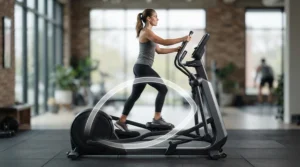
The stakes are bigger than they look. An elliptical trainer is a machine you stand on for 30 minutes, several times a week, for years. The layout of its guts decides how your hips feel, how much floor you surrender, and whether the thing becomes a daily habit or a very expensive coat rack. The category is only about three decades old. Rear-drive designs came first, front-drive was the second generation, and center-drive is the newest arrival.
This guide sorts out the drive-system maze with 7 real machines, real specs, and the honest trade-offs. We lean on published specs and the genuine review sentiment from independent testers and retail listings, and we say plainly where the review data runs thin. Prices appear as ranges only, so check current pricing before you buy.
You’ll get a side-by-side snapshot first. Then come the seven picks, followed by deep dives on footprint, stride, and compact design. After that you’ll find buyer frameworks, real-life scenarios, and FAQs. By the end you’ll know which elliptical drive best matches your body, your room, and your budget. 🏋️
Quick Comparison: Center Drive vs Front Drive Elliptical at a Glance
| Feature | Front-Drive | Center-Drive |
|---|---|---|
| Flywheel position | In front of you, usually under the console | Directly beneath you |
| Stride feel | Steeper, climb-like, slight natural incline | Upright, rounder path, gentler transitions |
| Posture | Tends to pull you forward | Encourages standing tall |
| Typical footprint | Long and narrow (about 24-25 in. wide in this guide) | Wider and squarer (about 30-35 in. wide) |
| Typical cost | Lower | Often noticeably higher |
| Examples here | NordicTrack AirGlide 14i, Sole E25, Niceday CT11S | NordicTrack FS14i, Landice E7, Best Fitness BFE2 |
| Best for | Budget buyers, glute and quad focus, climb-style intensity | Upright comfort, tight spaces, tall or mixed-height households |
Read the table as a trade, not a scoreboard. Front-drive machines buy you value and a stair-flavored burn. Center-drive machines buy you posture and a tidier shape. One catch is that “smaller” is not automatic: some center-drive models are wider than front-drive ones, which the footprint section below untangles. If you’re torn, the wallet usually breaks the tie, since center-drive designs can cost double what a comparable front-drive machine does.
💬 Just one click — help others make better buying decisions too!😊
Top 7 Elliptical Picks: Expert Analysis
Each pick below mixes real specs with what they mean on your living-room floor and the aggregated sentiment from published reviews. Where verified review data is thin, we say so instead of dressing it up.
1. NordicTrack FS14i — 32-inch auto-adjustable stride, three machines in one
The headline here is stride. It auto-adjusts up to 32 inches, which testers describe as roughly double what many comparable ellipticals offer. In practice, the machine follows your gait instead of dictating it, so a 5’4″ user and a 6’3″ user can share it without anyone shuffling.
Key specs: a 20-lb flywheel sitting under your body weight, 26 resistance levels, incline and decline, a 14-inch touchscreen, and a 375-lb capacity. The footprint is about 58.5 x 29.5 x 74 inches. On paper that looks compact. In reality a 32-inch stride needs generous clearance front and back, so measure motion space, not just the frame.
Based on the spec comparison, this is the pick for taller users, mixed-height households, or anyone who wants stair-step and run-style modes in one chassis. If you want a plain elliptical, you’d be paying for a lot you won’t use. Reviewers echo that: one major tester’s verdict was that the machine tries to do too much. Some users report a rocking sensation, though one tester didn’t experience it, and NordicTrack’s own page lists reviews only for workouts, not the machine, so the review pool is thin.
Pros:
- ✅ Auto-adjusting stride up to 32 inches
- ✅ Upright, balanced center-drive posture
- ✅ 375-lb capacity suits most users
Cons:
- ❌ Premium price plus iFIT membership costs
- ❌ Heavy at nearly 300 lbs, needs clearance
Price: around $2,300-$2,800 range, so check current price. The value verdict is strong only if you’ll use the multi-mode trick.
2. Landice E7 — steel-framed stability with side rails
If your priority is feeling rock-solid, this is the one. The Landice E7 carries a 500-lb user capacity, which independent testers note is about 200 lbs over the industry standard. Add steel side rails and a step-up height listed at around 7 inches, and you have the most mobility-friendly machine in this guide.
The stride is 21 inches on the model most testers describe, though some retailer listings mention an adjustable 17-23 inch range on certain console versions, so verify the exact configuration. Physical footprint is about 35 x 68 inches, growing to roughly 76 inches in active use. There’s no touchscreen on the base version, and 20 resistance levels cover most training needs.
Here’s what the spec sheet hints at: those side rails and the low step-up matter more for older adults or anyone with balance concerns than any console wizardry. Reviewers single it out as a strong pick for seniors, praising the durability and rail support. Retail pages show no customer reviews yet, so the evidence here is expert testing rather than crowd data.
Pros:
- ✅ 500-lb capacity with sturdy steel construction
- ✅ Side rails and low step-up height
- ✅ Lifetime parts warranty
Cons:
- ❌ Premium pricing, well above most rivals
- ❌ Heavy, needs two people to move
Price: roughly $4,300-$4,900 range. Verdict: expensive, but defensible if durability and safety are the point.
3. Best Fitness BFE2 — the budget-minded way into center-drive
Center-drive without the four-figure sticker shock is a short list, and the Best Fitness BFE2 sits on it. Testers call it about as close to a budget center-drive as you’ll find, which tells you something about the category.
Specs worth translating: a 21-inch stride, longer than the 18-20 inch industry norm, so taller users get a full range of motion instead of a stepper-like chop. Footprint is 48 x 30 x 66 inches, genuinely compact. It offers 12 preset programs, a 5-inch display, a 15-year frame warranty, and a low step-up height.
The catch is the 275-lb weight capacity, which testers flag as disappointing. A higher-capacity alternative like the Landice E7 exists, but at a much higher price. There’s also no touchscreen, so this is a “do the workout, not the app” machine. Independent reviewers rate it well for value, though verified customer-review volume appears limited, so lean on the testing and the warranty.
Pros:
- ✅ 21-inch stride beats the industry norm
- ✅ Compact 48 x 30 inch footprint
- ✅ 15-year frame warranty
Cons:
- ❌ Only 275-lb user capacity
- ❌ No touchscreen or app ecosystem
Price: about $1,100-$1,500 range, so confirm current pricing. Verdict: the best entry ticket to the center-drive layout.
4. NordicTrack AirGlide 14i — front-drive muscle with a 32-lb flywheel
This is a front-drive machine with real heft behind it. The NordicTrack AirGlide 14i pairs a 32-lb flywheel, the heaviest in this lineup, with auto-adjusting stride of roughly 17.8-18.5 inches, incline from -5% to 15%, and a 14-inch touchscreen for iFIT workouts. The footprint is about 69 x 25 x 71 inches.
What the numbers mean: a heavier flywheel generally smooths out momentum at higher resistance, and the narrow 25-inch width makes side clearance forgiving. The stride tops out around 18.5 inches, so very tall users may want something longer. The incline and decline range lets you shift between glute-heavy climbing and flatter striding without changing machines.
Reviewer sentiment is solid but not unanimous. Testers praise the quiet drive and cushioned pedals, and some retail reviewers love the iFIT auto-control. Others find the machine less thrilling than the price suggests. Retail ratings hover in the middle, with a handful of mixed reviews. The main complaint from testers is cost: the machine is pricey, and iFIT needs a monthly membership after the trial.
Pros:
- ✅ Heavy 32-lb flywheel for smooth momentum
- ✅ Incline and decline training range
- ✅ Narrow 25-inch width eases placement
Cons:
- ❌ 300-lb capacity trails center-drive rivals
- ❌ iFIT membership adds ongoing cost
Price: around $1,600-$2,000 range. Verdict: good value if you’ll actually use the interactive workouts.
5. Sole E25 — the quiet, durable workhorse under $1,500
Sometimes the best machine is the boring one that works. The Sole E25 is a front-drive elliptical with a fixed 20-inch stride, a 20-lb flywheel, 20 resistance levels, and 20 incline levels. It supports 350 lbs, and testers credit its heavy steel frame for the stability.
Footprint is the trade: about 70 inches long and 24 inches wide, narrow but lengthy. At roughly 209-212 lbs, it’s not something you’ll rearrange casually. A frame with a lifetime warranty plus three years on electronics is a reassuring package for the money.
What the spec sheet won’t tell you, but reviewers note: it runs quietly, and assembly is the pain point, with unclear instructions. If you’re fine spending an afternoon with a wrench, you’re rewarded with a smooth, no-nonsense machine. The 20-inch stride suits most adults, though the fixed length means very tall or very short users get no adjustment. A heart-rate chest strap is included, which is a nice touch at this level.
Pros:
- ✅ Quiet drive with 350-lb capacity
- ✅ Lifetime frame warranty included
- ✅ Chest strap and 10 programs included
Cons:
- ❌ Assembly instructions reportedly confusing
- ❌ Stride length does not adjust
Price: about $1,200-$1,400 range, so check current price. Verdict: arguably the best long-term value among front-drive options here.
6. Niceday CT11S — the compact apartment budget pick
Small room, smaller budget? The Niceday CT11S is built for that. It’s sold in 15.5-inch, 16-inch, and 20-inch stride variants, with 16 magnetic resistance levels and a listed capacity of 400 lbs (some listings claim 500). Footprints cited run roughly 40-48 inches long by about 24 inches wide.
A quick honesty note: Amazon-style listings use drive labels loosely. Several roundups list the CT11S in the front-drive category, but others describe it differently. Check the exact listing before you assume.
Analysis: the 15.5-inch version is fine for shorter users, but taller buyers should pay up for the 20-inch variant, since a short stride makes a long-legged person feel like they’re marching in place. Buyers in published listings praise the small footprint, quick assembly (one reported under an hour), and quiet operation. A common complaint is the short, non-adjustable stride on the base version, which one 5’4″ reviewer still called too short. Others use it for knee rehab and call it stable.
Pros:
- ✅ Very small footprint, great for apartments
- ✅ Quiet magnetic resistance system
- ✅ Multiple stride variants available
Cons:
- ❌ Base stride feels short to many
- ❌ Drive labeling varies across listings
Price: under $500 to roughly $700 range, depending on variant. Verdict: the best bang-for-space on this list.
7. pooboo E399 — foldable convenience for tiny spaces
If storage matters more than anything, meet the pooboo E399. Listings describe a foldable frame, front transport wheels, 16 resistance levels, a 16-lb flywheel, a 15.5-17 inch stride range, and a 350-lb capacity. Roundups often categorize it among budget front-drive options.
The spec read: a 16-lb flywheel is lighter than most machines here, so expect less momentum at high resistance. That’s fine for steady cardio but won’t feel like a gym machine during hard intervals. The fold-and-roll design is the real appeal, because it lets you slide the machine behind a door after a session.
On reviews, honest disclosure: we could not verify a deep pool of independent customer reviews, and the glowing claims come largely from affiliate-style roundups. Treat the “best overall” labels skeptically and read recent buyer comments directly. For a first elliptical or a spare-room machine, it’s a reasonable gamble, but not a long-haul choice.
Pros:
- ✅ Folds for easy storage
- ✅ Front transport wheels for moving
- ✅ Budget-friendly entry point
Cons:
- ❌ Light 16-lb flywheel limits momentum
- ❌ Limited verified independent review data
Price: budget tier, generally well under $1,000, so check current price. Verdict: a cautious buy for convenience seekers.
| Product | Drive | Stride | Capacity | Footprint | Best For |
|---|---|---|---|---|---|
| NordicTrack FS14i | Center | up to 32 in. | 375 lbs | 58.5 x 29.5 in. | Tall or mixed-height households |
| Landice E7 | Center | 21 in. | 500 lbs | 35 x 68 in. | Seniors and stability seekers |
| Best Fitness BFE2 | Center | 21 in. | 275 lbs | 48 x 30 in. | Budget center-drive buyers |
| NordicTrack AirGlide 14i | Front | about 18.5 in. | 300 lbs | 69 x 25 in. | Interactive training fans |
| Sole E25 | Front | 20 in. | 350 lbs | 70 x 24 in. | Durable value seekers |
| Niceday CT11S | Front (per roundups) | 15.5-20 in. | 400 lbs | about 40-48 x 24 in. | Small apartments |
| pooboo E399 | Front (per roundups) | 15.5-17 in. | 350 lbs | folds | Storage-first buyers |
Looking at the table, the Landice E7 and NordicTrack FS14i deliver the capacity and stride headroom, but at several times the price of the front-drive group. The Sole E25 offers the best capacity-per-dollar ratio of the front-drive crowd, while the Niceday CT11S wins when floor space is the only currency that matters. Note that Best Fitness BFE2 is the exception: its 275-lb ceiling is the lowest here despite its premium layout.
Elliptical Drive Systems Explained: What Is Actually Happening Under You
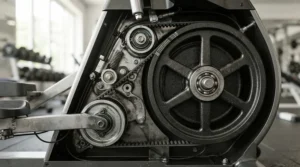
Strip away the marketing and elliptical drive systems share the same job: convert your leg motion into a smooth, repeatable loop while a flywheel and resistance system add load. What changes is the geometry around that flywheel.
Front-drive machines place the flywheel ahead of you, often beneath the console. Because your pedals ride a linkage that rises toward the front, you feel a slight incline before you touch any setting. Center-drive designs put the drive wheel at the middle, with pedals on rollers and a crankshaft. Testers say this tends to create rounder paths and gentler transitions than front-drive models. Rear-drive machines, the oldest layout, sit behind you and usually run longer and flatter.
Why does that matter? Geometry changes muscle emphasis. A front-drive machine’s climb-style path tends to load the quads and glutes more, while upright center-drive posture asks more of your core and keeps your torso stacked. Neither is “better” in the abstract. The question that actually matters is which path your joints enjoy for 30 minutes at a time.
Footprint Comparison: How Much Floor You Really Surrender
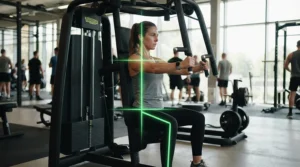
Here’s where marketing and measuring tape part ways. A proper footprint comparison needs two numbers: the frame size and the clearance you need to use it.
| Machine | Drive | Footprint (L x W) | Best For |
|---|---|---|---|
| NordicTrack FS14i | Center | 58.5 x 29.5 in. | Short length, long motion needs |
| Landice E7 | Center | 68 x 35 in. (76 active) | Roomy gym corners |
| Best Fitness BFE2 | Center | 48 x 30 in. | Tight, squarish nooks |
| NordicTrack AirGlide 14i | Front | 69 x 25 in. | Long, narrow hallways |
| Sole E25 | Front | 70 x 24 in. | Narrow spaces with length to spare |
| Niceday CT11S | Front | about 40-48 x 24 in. | Studio apartments |
The pattern is clear. Center-drive units in this guide run about 30-35 inches wide but can be shorter, while front-drive units run 24-25 inches wide and 70 inches long. So the claim that center-drive is “more compact” is true for length but not width. The Best Fitness BFE2 shows the benefit: 48 inches long is far shorter than the Sole E25, though it’s six inches wider. The Landice E7 is the counterexample, a premium center-drive that’s still big.
Clearance matters just as much. Consumer Reports’ elliptical buying guide recommends leaving at least 20 inches of free space on one side and either the front or back for safety. A long stride like the NordicTrack FS14i‘s demands extra room fore and aft, so measure your motion space, not just the frame.
Stride Feel Differences: What Your Hips and Knees Will Notice
Specs describe machines. Stride feel differences describe your body’s experience, and they’re the real reason people switch layouts.
On a front-drive machine, the incline built into the geometry can feel like stepping over a low hurdle or climbing a gentle stair. Testers note you may need to fight the urge to lean forward, which can pull you off balance if you grip the handles too hard. That climb is a feature for glute and quad work, and a liability if you want a flat, walking-like glide.
Center-drive designs sit between front and rear layouts: they keep a slight natural incline but stand you more upright, and pedal spacing tends to be narrower, which some find kinder to hips. Testers describe the path as rounder, with fewer “kick” sensations at the ends of the stride.
A practical tip from Harvard-affiliated physical therapists, summarized in Harvard Health’s guide to ellipticals: keep your body upright and feet flat to engage your core and protect your lower back, and start at a steady tempo with low incline. Both drive types can follow that advice, but center-drive posture makes it easier by default. Stride length matters too: published guidance suggests 18 inches or more as a safe zone for tall users.
Compact Design Benefits: Why Small Frames Win More Than Floor Space
The compact design benefits of a well-built elliptical go beyond squeezing into a corner.
First, a smaller footprint means you’ll actually leave the machine set up, and a machine you can see gets used. Second, shorter frames reduce the chance of bumping a wall mid-stride. Third, a center-mounted flywheel lowers the machine’s center of gravity, which can improve stability and reduce wobble. Testers describing the Best Fitness BFE2 highlight its low center of gravity and balanced frame as the reason it resists rocking.
There are limits. Compact designs sometimes shorten the stride, and a short stride can feel like a stepper instead of an elliptical. The Niceday CT11S shows both sides: it’s genuinely tiny, yet buyers of the base version frequently call the stride short. For tall users, compact design benefits only count if the stride stays at 18 inches or more.
How to Choose Between Center Drive and Front Drive: 7 Steps
- Measure your room, including motion space. Allow at least 20 inches of clearance beside and front or back, plus ceiling height for your head at the top of the stride.
- Match stride to your height. Aim for 18 inches or more if you’re tall, and prioritize adjustable stride if several people will share the machine.
- Decide on posture. If you want to stand tall, favor center-drive. If you’re happy leaning slightly into a climb, front-drive is fine.
- Check weight capacity with headroom. Choose a capacity comfortably above the heaviest user. The Landice E7 leads here, and the Best Fitness BFE2 trails.
- Pick your training style. Steep, glute-focused climbs favor front-drive layouts. Upright, smooth cardio favors center-drive.
- Weigh the subscription. iFIT-style platforms can add monthly costs, so budget for them or skip the touchscreen models.
- Read the warranty. Frame coverage of 10-15 years or lifetime is a good sign of build quality.
Which Elliptical Drive Best Fits Your Situation?
So, which elliptical drive best matches you? Use this decision framework.
- If you’re tall or share the machine with a taller partner, choose a long or adjustable stride, such as the NordicTrack FS14i, because a 32-inch range removes the guesswork.
- If you have balance concerns or need extra support, choose a center-drive with rails like the Landice E7, because the low step-up and rails reduce risk.
- If your budget is tight but you want center-drive, choose the Best Fitness BFE2, because it delivers the layout without the premium price.
- If you love a leg-burning, stair-like workout, choose a front-drive such as the NordicTrack AirGlide 14i or Sole E25, because the geometry loads quads and glutes.
- If your floor space is minimal, choose the Niceday CT11S or foldable pooboo E399, because they shrink to apartment size.
A rule of thumb: when the decision is close, pick the one with the longer stride and the better warranty.
✨ Ready to Find Your Perfect Stride?
🔍 Take your home cardio to the next level with these carefully selected machines. Click on any highlighted product to check current pricing and availability. The right drive layout will help you build a routine you actually keep!
Real-World Scenarios: Matching Machines to Real Lives
Scenario 1: The studio-apartment commuter. You work long days, have a 9-by-10 nook, and want 30 minutes of low-impact cardio after dinner. A Niceday CT11S in the 18 or 20-inch variant fits the space and the budget, and its quiet magnetic resistance won’t annoy neighbors. Expect to spend under $700.
Scenario 2: The mixed-height family. Two adults, one 5’4″ and one 6’3″, plus a teenager. A fixed 15.5-inch stride will frustrate someone. The NordicTrack FS14i auto-adjusts, so everyone gets a natural stride, though the premium price and clearance needs are real.
Scenario 3: The older adult prioritizing stability. You want something safe, durable, and easy to step on. The Landice E7 combines rails, a low step-up, and a 500-lb capacity. It’s a big investment, but one built to last.
Scenario 4: The glute-focused budget lifter. You want a stair-flavored burn without a gym membership. A front-drive like the Sole E25 gives you incline, resistance, and durability for about $1,200-$1,400.
Whatever you choose, aim for consistency. The CDC’s adult physical activity guidelines call for at least 150 minutes of moderate-intensity activity per week, such as 30 minutes on five days. The best machine is the one that makes that routine easy.
Setup and First-30-Days Guide: Getting Your Elliptical Right
Most buyers rush the unboxing. Slow down and you’ll avoid the early annoyances.
Placement. Put the machine on a rubber mat to protect floors and cut vibration, and leave the recommended clearance. Assembly. Block out an afternoon, especially for models with confusing instructions like the Sole E25. Tighten every bolt after the first few sessions, since hardware can settle.
First two weeks. Follow Harvard-affiliated advice: begin with a steady pace at zero or low incline, feet flat, torso upright. Keep resistance low, in the single digits, so your joints adapt. Weeks three and four. Add short intervals or modest incline, and alternate direction if the console allows.
Common mistakes in the first 30 days: gripping the handles too tightly, leaning on the console, and cranking resistance before your form is stable. Listen for new noises early, because routine checks catch small issues before they become service calls.
Common Mistakes When Buying an Elliptical
Mistake 1: Buying on footprint alone. A short frame can still demand big motion space. Always measure clearance.
Mistake 2: Ignoring stride length. A 15-inch stride is fine for shorter users, but taller people often find it choppy. Match stride to your inseam.
Mistake 3: Trusting drive labels blindly. Listings use “front-drive” loosely, and some machines are described inconsistently across retailers. Confirm flywheel placement in the specs.
Mistake 4: Paying for features you won’t use. A multi-mode machine like the NordicTrack FS14i is brilliant if you’ll switch modes and wasteful if you won’t.
Mistake 5: Overlooking ongoing costs. Interactive platforms can add monthly fees, and delivery or assembly can add hundreds more.
Long-Term Cost and Value: What You Really Pay
| Tier | Example | Price Range | Drive | Best For |
|---|---|---|---|---|
| Budget | Niceday CT11S, pooboo E399 | Under $700 | Front | Small spaces, first-timers |
| Mid-range | Sole E25, Best Fitness BFE2 | About $1,100-$1,500 | Front / Center | Durable value |
| Upper mid | NordicTrack AirGlide 14i | About $1,600-$2,000 | Front | Interactive training |
| Premium | NordicTrack FS14i | About $2,300-$2,800 | Center | Multi-mode versatility |
| Luxury | Landice E7 | About $4,300-$4,900 | Center | Stability and longevity |
Looking at the price ladder, the jump from front-drive mid-range to center-drive premium is steep, and independent testers say center-drive machines can cost easily double a comparable front-drive unit. Whether that premium pays off depends on posture comfort, stride range, and warranty length. Spread over a decade of use, a lifetime-warranty machine like the Sole E25 or the Landice E7 can have a lower cost per workout than a cheaper unit you replace in three years. Budget buyers should note the Niceday CT11S trades stride length and flywheel heft for its low price.
FAQ
❓ Is a center drive elliptical worth the extra money?
❓ Do front drive ellipticals work glutes better?
❓ Which elliptical is best for a very small apartment?
❓ How much space do I need around an elliptical?
❓ Do I need a touchscreen elliptical?
Conclusion
Center drive vs front drive elliptical isn’t a contest with one winner. It’s a match between your body, your room, and your wallet. Front-drive machines deliver a stair-flavored climb, narrow frames, and friendlier prices, and the Sole E25 and NordicTrack AirGlide 14i show how far that value stretches. Center-drive machines offer an upright posture, rounder transitions, and potentially tighter lengths, with the NordicTrack FS14i, Landice E7, and Best Fitness BFE2 covering everything from long strides to rail-supported stability.
If you only remember three things, make them these. Match stride length to your height. Measure motion clearance, not just the frame. And choose the machine with the best warranty you can afford, because the elliptical you keep using beats the one you admire. Tiny-apartment dwellers can lean on the Niceday CT11S, while shared households should seriously consider an adjustable stride.
Whichever layout you choose, consistency does the real work. Aim for the weekly activity targets, start gently, and let the machine earn its place in your routine. Happy striding! 🏃♂️
✨ Don’t Miss These Exclusive Deals!
🔍 Ready to bring the gym home? Click on any highlighted product above to check current pricing and availability, then pick the drive layout that fits your stride, your space, and your goals. Your future self will thank you! 💪
Recommended for You
- Center Drive Elliptical: 7 Ultimate Picks For 2026
- Commercial Rear Drive Elliptical: 7 Best Picks For 2026 (Ranked)
- Rear Drive Elliptical Benefits: 7 Proven Picks For 2026
Disclaimer: This article contains affiliate links. As an Amazon Associate, I earn from qualifying purchases. If you purchase products through these links, we may earn a small commission at no additional cost to you.
✨ Found this helpful? Share it with your friends! 💬🤗
