
In This Article
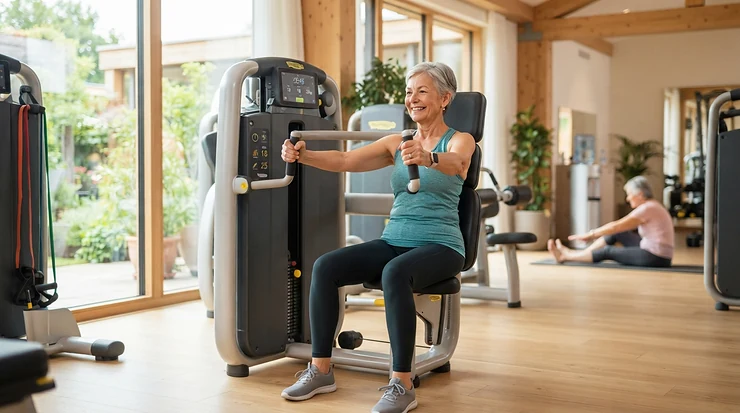
What is the best elliptical trainer? It’s the machine whose stride, resistance range, build quality and footprint match your body, your space and your budget, so you actually use it. For most homes, that means a sturdy, quiet machine with a stride near 20 inches, a wide resistance range and a frame warranty that outlasts your enthusiasm.
Here’s the thing about home cardio: the machine you buy matters less than the machine you use. A treadmill that becomes a coat rack burns exactly zero calories. The best elliptical trainer is the one comfortable enough to climb onto on a Tuesday night, while the couch whispers sweet nothings.
Public-health guidance backs the habit. The CDC’s physical activity guidelines call for at least 150 minutes of moderate-intensity activity a week for adults, plus muscle-strengthening work on two days. An elliptical trainer for home use makes the cardio half of that sentence easier to hit. The glide is gentle, the weather never cancels your session, and nobody judges your 6 a.m. hair.
I narrowed the field to seven real machines across budget, mid-range and premium tiers. The analysis draws on published spec sheets, independent tester write-ups and recurring themes in buyer feedback. It is analysis, not a diary of personal ownership, and I won’t pretend otherwise. Whether you’re comparing top rated elliptical machines, skimming elliptical trainer reviews or weighing a home cardio investment against a gym membership, the goal is the same: help you choose well the first time. Prices below are ranges at the time of research, so always check current price before you buy.
Best Elliptical Trainer Quick Comparison (2026)
| Product | Stride | Resistance | Weight Capacity | Price Range | Best For |
|---|---|---|---|---|---|
| Sole E35 | 20″ | 20 levels | ~350-375 lb (listings vary) | $1,300-$1,600 | Daily users who want a durable all-rounder |
| NordicTrack AirGlide 16 | Auto-adjusting (listed 19″) | 26 levels | 300 lb | $2,500-$3,000 | Tech fans who want guided classes |
| Schwinn 470 | 20″ | 25 levels | 300 lb | $1,000-$1,300 | Program lovers who want motorized incline |
| Sole E25 | 20″ | 20 levels | 350 lb | $1,100-$1,300 | Incline training and heavier users |
| Horizon EX-59 | 18″ | 10 levels | 300 lb | $500-$700 | Beginners on a tight budget |
| Bowflex Max Trainer M6 | 16″ (stair-style) | 16 levels | 300 lb | $1,100-$1,300 | Short HIIT sessions in small spaces |
| Sunny Health & Fitness SF-E3912 | 15.5″ | 16 levels | 330 lb | Under $700 | Entry-level buyers and shorter users |
Look at the pattern in this table. The Sole E35 and Sole E25 share a 20-inch stride but split on price, flywheel weight and warranty depth. The Horizon EX-59 and Sunny Health & Fitness SF-E3912 undercut everything else by a wide margin, and the 10 and 16 resistance levels, lighter flywheels and shorter strides are where that saving comes from. If you’re tall, the stride column should matter more to you than the price column.
💬 Just one click — help others make better buying decisions too!😊
Top 7 Best Elliptical Trainer Picks for 2026: Expert Analysis
Each pick below pairs the specs with what they mean in practice, then adds the themes that appear in tester and buyer feedback. Where I couldn’t verify a broad sample of buyer reviews, I say so rather than guess.
1. Sole E35 — best all-around workhorse for daily use
The Sole E35 earns its spot by doing the unglamorous things well. It stays planted, runs quietly and carries a warranty that suggests the maker means it.
A 20-inch stride matches the average experts cite, so most adults find a natural glide without hunting for adjustments. Add a 25-pound flywheel and 20 resistance levels, and the pedal path carries its own momentum. Think heavy bicycle wheel versus toy wheel. The steel frame is listed at roughly 350 to 375 pounds of capacity depending on the retailer (confirm before ordering), and the lifetime frame warranty is rare at this price tier.
The honest take: this is the machine for a household that will use it four or five days a week. Families sharing one unit, taller users and anyone who prizes stability over screen sparkle benefit most. Console details vary by production year, with some listings showing a 7.5-inch LCD and newer ones a larger touchscreen. The Studio app is a free trial followed by a paid plan.
Reviewers consistently praise the sturdiness and near-silent operation. A common complaint is assembly: buyers describe tiny instructions and a heavy, awkward build, and a few report squeaks or a slight wobble at high speed.
Pros:
- ✅ Smooth, quiet ride from a 25-pound flywheel
- ✅ Lifetime frame warranty for long-term peace of mind
- ✅ Power incline adds hill-style variety
Cons:
- ❌ Large, tall footprint and hard to relocate
- ❌ Stride length doesn’t adjust
Price range: roughly $1,300-$1,600. If you’ll use it often, the cost per workout shrinks quickly, which makes the Sole E35 a strong value verdict for committed users.
2. NordicTrack AirGlide 16 — best for guided, tech-driven workouts
The NordicTrack AirGlide 16 is the one to buy if you want a trainer on a screen telling you when to push.
It pairs a 16-inch touchscreen with an auto-adjusting stride listed at 19 inches, 26 resistance levels and a hefty 32-pound flywheel. Incline runs from -5% to 15%, and the decline setting is unusual. Shifting your body angle redistributes effort toward the glutes and hamstrings, a useful change of pace when forward-only gliding gets stale. Capacity is 300 pounds, and the warranty includes a 10-year frame term.
Based on the spec comparison, this machine suits people who love structured classes and want the console to handle resistance and incline automatically. Garage Gym Reviews named it the best elliptical its team has tested and described the machine as very stable through resistance and incline changes. The catch is the ecosystem: full functionality depends on an iFIT membership, a recurring cost that belongs in your budget math.
I couldn’t verify a representative sample of buyer reviews for this exact model, so tester feedback is the main evidence here. Testers flag the big footprint, the premium price and the difficulty of moving it.
Pros:
- ✅ Automatic resistance and incline with guided classes
- ✅ Very stable with a heavy 32-pound flywheel
- ✅ Incline and decline range widens muscle variety
Cons:
- ❌ Full features require a paid iFIT membership
- ❌ Large footprint, premium price, hard to move
Price range: roughly $2,500-$3,000, plus membership. The value verdict is conditional: worth it if you’ll use the classes, overkill if you just want a quiet glide.
3. Schwinn 470 — best for variety with 29 programs and motorized incline
The Schwinn 470 is the buffet option: plenty of workouts, plenty of resistance, and a reasonable bill.
It offers 25 resistance levels, a motorized incline with 10 settings, a 20-inch stride and 29 preloaded programs. Bluetooth syncs with the Schwinn Trainer app, and heart rate and distance tracking are built in. Those 25 levels give finer steps between easy and hard, so you can progress gradually rather than lurching up a big jump. The warranty includes 10 years on the frame, two on parts and 90 days on labor.
Here’s what the spec sheet won’t tell you, but reviewers note: the console is straightforward, which suits users who don’t want to wrestle menus. NBC Select named it the most comfortable pick in its roundup. One review outlet found the machine felt a bit cramped and less sturdy than pricier rivals, and the 300-pound capacity trails some similarly priced competitors.
Buyer feedback is mixed on noise, with many reporting a very quiet machine and others disagreeing. Assembly draws repeated complaints as extensive, and it goes better with a second person.
Pros:
- ✅ 29 programs and 25 resistance levels
- ✅ Motorized incline changes terrain on the fly
- ✅ Longer 20-inch stride suits taller users
Cons:
- ❌ Lengthy assembly that’s easier with help
- ❌ 300-pound capacity trails some rivals
Price range: roughly $1,000-$1,300. For program lovers who want automation without a subscription, it’s strong value.
4. Sole E25 — best for steep incline and heavier users
The Sole E25 is the stripped-down sibling of the Sole E35, and it’s a smarter buy than its lower sticker suggests.
Specs worth translating: a 20-pound flywheel, 20 resistance levels, a power incline spanning 1% to 20% and a 350-pound capacity. That incline range lets you mimic a steep hill climb for glute work, and the capacity is more generous than the Schwinn 470. One tester measured the stride closer to 21.5 inches, which longer-legged users may appreciate. The warranty covers the frame and flywheel for life, with two years on parts.
The analytical take: choose the Sole E25 if incline training and sturdy construction matter more than a flashy console. Garage Gym Reviews’ testers liked the adjustable footbeds for different stepping styles and appreciated the included chest strap and preset programs. Compared with the Sole E35, you give up some refinement, including the adjustable pedals the E35 adds, but your workouts feel similar.
Reviewers’ main complaint is assembly, with unclear instructions on a heavy machine. One tester recommended professional assembly. The stride doesn’t adjust, and the machine’s weight makes it a permanent resident once it’s in place.
Pros:
- ✅ Wide 1%-20% incline for hill-style training
- ✅ Heavy-duty steel frame with 350-pound capacity
- ✅ Lifetime frame and flywheel warranty
Cons:
- ❌ Difficult assembly with confusing instructions
- ❌ Fixed stride and a heavy, hard-to-move build
Price range: roughly $1,100-$1,300. For heavier users or incline fans, the Sole E25 offers excellent value.
5. Horizon EX-59 — best for first-timers on a budget
The Horizon EX-59 proves you don’t need to spend a mortgage payment to start.
It brings an 18-inch stride, 10 magnetic resistance levels, a 14-pound flywheel, Bluetooth and five preset programs. The lighter flywheel means a slightly less fluid glide than the 20-pound-plus machines, especially at slow cadence. The 18-inch stride suits users under roughly 5’10”, and taller people may feel constrained. Capacity is 300 pounds, and the frame warranty is lifetime, though parts and labor get only a year.
My read of the spec comparison: this is a smart first elliptical for apartment dwellers, casual users and anyone testing whether they’ll stick with the habit. At about 145 pounds assembled, it’s far easier to position than the 200-plus-pound machines. Garage Gym Reviews called it a top budget pick and noted a locked-down feel for the price. Several outlets cite assembly in about half an hour.
Buyers should plan around the high 10.75-inch step-up (awkward for anyone with mobility issues), the lack of incline and the basic LCD. Reviewers who want a touchscreen or flexibility should look elsewhere.
Pros:
- ✅ Budget-friendly with a lifetime frame warranty
- ✅ Light and relatively quick to assemble
- ✅ Bluetooth and built-in device holder
Cons:
- ❌ Lighter 14-pound flywheel feels less smooth
- ❌ No incline and a high step-up height
Price range: roughly $500-$700 at the time of research, with retailer prices varying. For beginners, the Horizon EX-59 delivers solid value.
6. Bowflex Max Trainer M6 — best for 15-minute HIIT in tight spaces
The Bowflex Max Trainer M6 isn’t a traditional elliptical, and that’s the whole point.
Its vertical, stair-style motion produces a steep, high-effort stride. It has 16 magnetic resistance levels and a 300-pound capacity. The footprint is compact at about 46 by 26 inches, a fraction of the Sole E35‘s sprawl. A one-year JRNY membership is included, and the warranty covers two years on frame and parts. Because the motion is shorter and steeper, intervals feel intense quickly, which is why sessions are often 15 minutes or less.
Here’s what to weigh: it’s ideal for busy people who want HIIT in a small room. Garage Gym Reviews’ tester called the workouts intense but noted the machine felt shaky at first until floor stabilizers were adjusted. The motion also feels different from a gliding elliptical, so it’s less natural for long, steady sessions.
Reviewers flag the very basic LCD display, the lack of a touchscreen and a premium price for the feature set. The 90-day labor warranty is also short.
Pros:
- ✅ Compact footprint ideal for small rooms
- ✅ Stair-style motion for intense short sessions
- ✅ One-year JRNY membership included
Cons:
- ❌ Basic display with no touchscreen
- ❌ Unconventional motion and short labor warranty
Price range: roughly $1,100-$1,300. The Bowflex Max Trainer M6 is good value only if short, hard intervals are your thing.
7. Sunny Health & Fitness SF-E3912 — best entry-level price for shorter users
The Sunny Health & Fitness SF-E3912 is the “I just want to try this” machine.
It has 16 magnetic resistance levels, 24 built-in programs, a 330-pound capacity and a 15.5-inch stride. It weighs about 105 pounds, so one person can move it. The stride is shorter than the 18-to-20-inch norm, which works for shorter users but may feel cramped for taller ones. A 13-pound flywheel keeps the glide basic, and the warranty is three years on the frame and 180 days on parts.
As an analytical take, this is a low-risk starter for beginners and users under roughly 5’6″. Garage Gym Reviews noted an Amazon average in the low-4-star range across a couple thousand reviews, and buyers praised the quiet operation and straightforward programs. Common complaints include irritating assembly and pedal squeaks appearing after a few months, plus isolated reports of frame or weld issues.
Don’t expect premium touches. The LCD is simple, and the short parts warranty suggests you shouldn’t count on a decade of service.
Pros:
- ✅ Very low entry price for the feature set
- ✅ 24 programs and a high 330-pound capacity
- ✅ Light enough to move and store
Cons:
- ❌ Short 15.5-inch stride and 13-pound flywheel
- ❌ Squeaks and assembly frustrations reported
Price range: under $700 at the time of research. The Sunny Health & Fitness SF-E3912 is solid value for a first elliptical, not a forever machine.
Your First 30 Days: Setup, Maintenance and Mistakes to Skip
Buying the best elliptical trainer is the easy part. Making it last, and making yourself use it, is the real project.
Setup that pays off. Assemble with a second person if the machine is heavy, and tighten every bolt twice. Level the floor feet before the first workout, because a rocking machine accelerates wear and feels worse. Put a rubber mat underneath to absorb vibration and protect flooring. Then set your foot position so your knees track over your toes.
A simple progression. Week one, aim for 10 minutes at low resistance, handles loose. Week two, push toward 20 minutes. By week four, try 25-30 minutes with two or three short intervals. Pedal in reverse for a minute or two each session to hit your muscles differently.
Maintenance rhythm. Wipe the machine after each use, since sweat corrodes. Check bolts monthly, because loosening is the usual source of knocking and squeaks, a pattern buyers of several models describe. Every few months, inspect pedals, power cord and console connections.
First-30-day mistakes.
- Gripping the handles like a lifeline, which turns a full-body workout into an arm hang.
- Cranking resistance too high, so form collapses.
- Always pedaling the same way and at the same pace.
- Ignoring a wobble until it becomes a repair.

Real-World Scenarios: Matching a Machine to Your Life
Specs mean little until they meet a real living room. These profiles show how the reasoning plays out.
The apartment dweller (budget under $700, 20 minutes at lunch, four days a week). She’s 5’5″, shares walls with neighbors and wants low noise. The Horizon EX-59 fits her stride and budget, and it’s light enough to shift for floor cleaning. The Sunny Health & Fitness SF-E3912 is the cheaper alternative if she accepts the shorter stride.
The busy parent (budget around $1,200, 15 minutes, three or four days a week). He’s short on time and wants sweat fast in a small bonus room. The Bowflex Max Trainer M6 compresses a hard interval session into a quarter hour, and its compact footprint leaves space for the kids’ toys.
The joint-conscious couple (budget $1,300-$1,600, daily use, different heights). One partner is 5’4″ and the other 6’1″, and both want a smooth, forgiving glide. The Sole E35 is the reliable pick for daily use and shared height ranges. If they want guided classes and can stretch the budget, the NordicTrack AirGlide 16 brings structured workouts and adjustable stride.
✨ Ready to Find Your Match?
🔍 Take your home cardio to the next level with these carefully selected products. Click on any highlighted item to check current pricing and availability. These machines can help you build low-impact fitness your joints will thank you for!
How to Choose the Best Elliptical Trainer: 7 Steps That Matter
Choosing the best elliptical trainer comes down to seven checks, each with a reason behind it.
- Start with stride length. Around 20 inches is the common average, so taller users should lean 20 or above and shorter users can manage 18 or less. Adjusting your foot position can also improve comfort.
- Check flywheel weight. Experts recommend about 20 pounds for stability. Lighter flywheels, like the 13 to 14 pounds on budget models, feel choppier.
- Prefer magnetic resistance. It’s quieter and cheaper to maintain than friction systems, though it often costs more upfront.
- Verify weight capacity with headroom. If you’re near the limit, choose a machine with more capacity, since stability usually improves with a sturdier frame.
- Match the console to your habits. Love classes? Budget for a membership. Prefer simple programs? A basic console is fine.
- Measure space and the delivery route. Machines range from about 105 to well over 200 pounds assembled, and every door, stairway and corner matters.
- Read the warranty fine print. Frame coverage lasts years, while parts and labor are often one or two years, or just 90 days on some models.
Elliptical Trainer for Home: Space, Noise and Assembly Reality Checks
An elliptical trainer for home use lives or dies on the boring details. Start with the footprint. The Sole E35 runs about 82 by 31 inches, while the Horizon EX-59 is closer to 74 by 25, and the Bowflex Max Trainer M6 is more compact still. Also check ceiling clearance, because pedals lift your standing height.
Noise is next. Magnetic systems are generally quieter, and reviewers repeatedly describe the Sole E35 as near-silent. Even so, a squeak from a loose bolt can travel through floors, which is why a mat and monthly tightening matter in apartments.
Then there’s the assembly question. Heavy machines like the Sole E25 draw complaints about unclear instructions, and the Schwinn 470 gets “extensive assembly” flags. Lighter machines like the Horizon EX-59 are reported in about half an hour. Professional assembly typically costs a couple hundred dollars, which is real money but cheaper than a stripped bolt or a hurt back.
Finally, think about where the machine will live. If it’s in a spare room, great. If it’s in front of the TV, the glide becomes entertainment instead of chore.
Elliptical Trainer Reviews: What Buyers and Testers Keep Saying
Reading elliptical trainer reviews takes some skill. Star averages hide the patterns, and complaints often cluster around the same few issues.
Across the machines above, praise repeats: smooth motion, quiet operation and sturdy frames on the heavier models. The complaints repeat too: assembly pain, occasional squeaks and wobbles, and the heft of premium units. Independent testers add useful context. Garage Gym Reviews says its team has tested and scored more than 30 ellipticals, which gives its comparisons a wider reference set than a single buyer’s experience.
Here’s how I’d read them. Weight independent tester observations more heavily than isolated one-star rants, but don’t ignore a pattern. If multiple buyers mention the same squeak at the six-month mark, plan to tighten bolts early. Treat ratings from a retailer’s own site cautiously, since they can differ from third-party marketplaces. I’ve avoided quoting star averages for most models because they shift constantly, and I couldn’t verify a broad sample for every machine.
Top Rated Elliptical Machines: Features That Actually Matter (and Those That Don’t)
Top rated elliptical machines share a short list of fundamentals, and the rest is marketing garnish.
Features that matter:
- Stride and fit. If the stride feels wrong, no app will fix it.
- Flywheel and frame. These govern smoothness and stability, which show up in tester notes on the NordicTrack AirGlide 16 and Sole E35.
- Step-up height. The Horizon EX-59‘s 10.75-inch step is a real consideration for some users.
- Warranty depth. Lifetime frame coverage, like the Sole E25‘s, is meaningful.
Features that matter less:
- Program count. Twenty-nine programs sound better than five, but most people rotate through three.
- Touchscreen size. Lovely, but it won’t fix a bad stride.
- Calorie counters. Console calorie numbers are estimates, and you shouldn’t treat them as a receipt for fat lost.
Common Mistakes When Buying an Elliptical Trainer
A few predictable errors waste money. The first is buying on price alone, and a cheap machine you quit is the priciest option. The second is ignoring the membership. The NordicTrack AirGlide 16 needs iFIT for full features, and that recurring cost should sit in your plan.
Third, buyers forget the delivery path. A 200-pound box that won’t turn a stairwell corner becomes a nightmare. Fourth, they overlook step-up height, which matters for older users or anyone with balance concerns. Fifth, they skip the warranty details: lifetime frame coverage sounds great, but parts and labor are often short.
Finally, many people assume a machine will fix motivation. It won’t. Pick a spot where you’ll see it, schedule sessions like appointments and start small.
Full-Body Workout Machines: Elliptical vs Treadmill vs Bike
Full-body workout machines come in several flavors, and the elliptical is the only common one that works arms and legs together while keeping feet planted. The moving handles let you push and pull, spreading effort across more muscle groups than a bike or treadmill typically asks for.
On calories, honesty beats hype. Harvard Health’s calorie table lists roughly 324 calories for 30 minutes of general elliptical use for a 155-pound adult. That compares with about 288 at 5 mph running and about 360 at 6 mph. In other words, effort beats machine choice.
| Factor | Elliptical | Treadmill | Stationary Bike | Best For |
|---|---|---|---|---|
| Joint impact | Low | Higher when running | Low | Elliptical: Sole E35 or Schwinn 470 for smooth strides |
| Upper-body involvement | Yes, moving handles | Minimal | Minimal | Elliptical: NordicTrack AirGlide 16 for varied effort |
| Calories (155 lb, 30 min, Harvard estimate) | ~324 | ~288-360 running | ~252-378 | Depends on intensity, not machine |
| Space and setup | Moderate to large | Large | Small to moderate | Tight spaces: Bowflex Max Trainer M6 |
The table makes one thing clear: no machine wins everywhere. The elliptical’s advantage is low-impact exercise equipment that still engages the whole body, while a treadmill suits runners who want running-specific training. If you want a machine you can use for long, steady sessions without pounding your joints, the elliptical earns its place.
Home Cardio Investment: Long-Term Cost and Maintenance
A home cardio investment looks expensive on day one and cheap by year three. Do the math: a machine in the $1,000-$1,500 range used four times a week for three years covers about 624 sessions, which works out to under $2.50 each before maintenance. Compare that with a monthly gym fee and the arithmetic often favors the machine, provided you use it.
| Tier | Typical Range | Examples | What You Gain | Best For |
|---|---|---|---|---|
| Budget | Under $700 | Sunny Health & Fitness SF-E3912, Horizon EX-59 | Low entry cost, lighter machines | Beginners, tight budgets |
| Mid-range | $1,000-$1,300 | Schwinn 470, Sole E25, Bowflex Max Trainer M6 | Programs, incline, sturdier builds | Regular users |
| Upper-mid | $1,300-$1,600 | Sole E35 | Durability, smoothness, strong warranty | Daily users |
| Premium | $2,500-$3,000+ | NordicTrack AirGlide 16 | Auto-adjusting stride, classes, big screen | Tech-driven users |
Read this table as a trade-off map. Moving from budget to mid-range typically buys a heavier flywheel, a longer stride and better warranties, while the jump to premium mostly buys technology and subscription-dependent features. For most households, the mid-range and upper-mid tiers offer the best return.
Maintenance costs are small but real. Plan on tightening bolts, wiping rails and replacing a worn power adapter or console cable now and then. Add membership fees if you choose a connected machine. Do this and a good elliptical can serve for years.
Low-Impact Exercise Equipment: Safety, Joints and When to Check With a Doctor
Low-impact exercise equipment lowers the pounding that comes with running, which is why ellipticals are popular with people protecting knees, hips and backs. Cleveland Clinic describes the elliptical as a low-impact, full-body option and notes that overdoing any exercise can invite burnout and injury. It also cautions that the gentle motion won’t do much for bone density, so pair it with strength training.
“Low impact” doesn’t mean “no joint load,” so details matter. Keep your posture upright, avoid leaning heavily on the handles and set resistance where your form stays smooth. If something hurts, change your foot position, reduce resistance or stop.
The CDC notes that moderate-intensity activity is safe for most people, but those with chronic conditions or concerns should talk to a doctor first. Older adults can benefit from the stability of a machine with fixed handles, though a high step-up like the Horizon EX-59‘s deserves a second look. Whatever your age, start easy, build slowly and treat discomfort as information.
FAQ: Best Elliptical Trainer Questions Answered
❓ Do I need a subscription to use the best elliptical trainer?
❓ How much space does an elliptical trainer for home use need?
❓ Are top rated elliptical machines worth the extra money?
❓ Is professional assembly worth it for an elliptical trainer?
❓ Can I use an elliptical trainer every day?
Conclusion: Picking the Best Elliptical Trainer for Your Home
The best elliptical trainer isn’t the one with the biggest screen or the longest program list. It’s the one that fits your stride, your room and your routine well enough to become habit. For most households, the Sole E35 is the dependable all-rounder, and the Schwinn 470 is the strong value pick for program lovers. The Sole E25 suits heavier users and incline fans, and the NordicTrack AirGlide 16 serves those who want classes. On a budget, the Horizon EX-59 and Sunny Health & Fitness SF-E3912 get you started, while the Bowflex Max Trainer M6 rewards short, hard intervals.
Remember the larger picture. Top rated elliptical machines, careful elliptical trainer reviews and a sensible home cardio investment all point to the same idea: choose comfort, stability and a warranty you trust, then use the machine consistently. As full-body workout machines go, ellipticals earn their keep, and as low-impact exercise equipment they let you train hard without punishing your joints. Measure your space, check current price and start small.
Recommended for You
- Apartment Elliptical Machine: 7 Best Quiet Picks For 2026
- Foldable Compact Elliptical: 7 Best Picks For 2026
- Compact Elliptical Under Desk: 7 Best Picks For 2026
Disclaimer: This article contains affiliate links. As an Amazon Associate, I earn from qualifying purchases. If you purchase products through these links, we may earn a small commission at no additional cost to you.
✨ Found this helpful? Share it with your friends! 💬🤗
