
In This Article
✨Was this helpful? Spread the word! 🚀
If you’ve been searching for ways to revolutionize your fitness routine, you’re about to discover something incredible. Pool workout equipment isn’t just about floating around anymore—it’s become a legitimate game-changer for serious fitness enthusiasts who want low-impact, high-intensity training that actually delivers results.
I’ve spent countless hours testing various aquatic fitness gear, and honestly, the transformation in my own workout routine has been remarkable. The beauty of pool workout equipment lies in its ability to provide resistance training while being gentle on your joints. Whether you’re recovering from an injury, looking to add variety to your fitness regimen, or simply want to make the most of your time in the water, the right equipment can elevate your pool sessions from casual splashing to serious strength training.
What Makes Pool Workout Equipment So Effective? 🏊♀️
Water naturally provides 12-15 times more resistance than air, making every movement in the pool inherently more challenging than land-based exercises. When you add specialized pool workout equipment to the mix, you’re essentially creating a full-body gym in your backyard or local pool facility.
The resistance created by water is omnidirectional, meaning your muscles work harder in all planes of movement. This leads to improved functional strength, better balance, and enhanced cardiovascular fitness. Additionally, the buoyancy of water reduces the impact on your joints by up to 90%, making pool workouts ideal for people with arthritis, joint pain, or those recovering from injuries.
Research published by the American College of Sports Medicine demonstrates that aquatic exercise can burn between 400-500 calories per hour while providing both aerobic and anaerobic benefits. The hydrostatic pressure of water also provides a natural compression effect, improving circulation and reducing swelling.
Essential Categories of Pool Workout Equipment
Water Resistance Dumbbells and Weights 💪
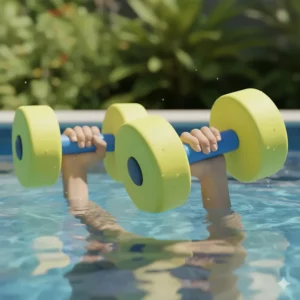
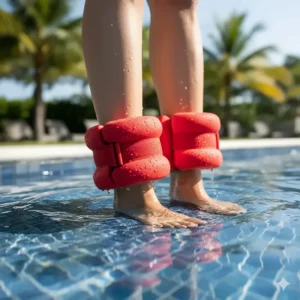
Water dumbbells are perhaps the most versatile pieces of pool workout equipment you can invest in. Unlike traditional weights, these foam-based tools become heavier underwater due to water resistance, providing an adjustable workout intensity based on how fast you move them.
The Sportneer Water Weights Aquatic Exercise Dumbbells represent the gold standard in this category. These innovative dumbbells feature 38 times high-density EVA foam construction, making them incredibly durable while maintaining optimal buoyancy. The ergonomic PC tube handles are covered with soft foam and include grip strips for secure handling during intense workout sessions.
What sets these apart is their modular design—you can easily assemble and disassemble them for travel or storage. Each dumbbell weighs just 1.26 pounds out of water but provides significant resistance when submerged. The set includes everything you need for upper body strengthening, from bicep curls to chest presses and tricep extensions.
Customer reviews consistently praise these dumbbells for their effectiveness. One verified purchaser noted, “since using these aqua dumbbells it is amazing how much of a better workout you get. Also, they are fun to use.” The comfortable grip and balanced design make them suitable for beginners and advanced fitness enthusiasts alike.
Complete Aquatic Exercise Sets 🎯
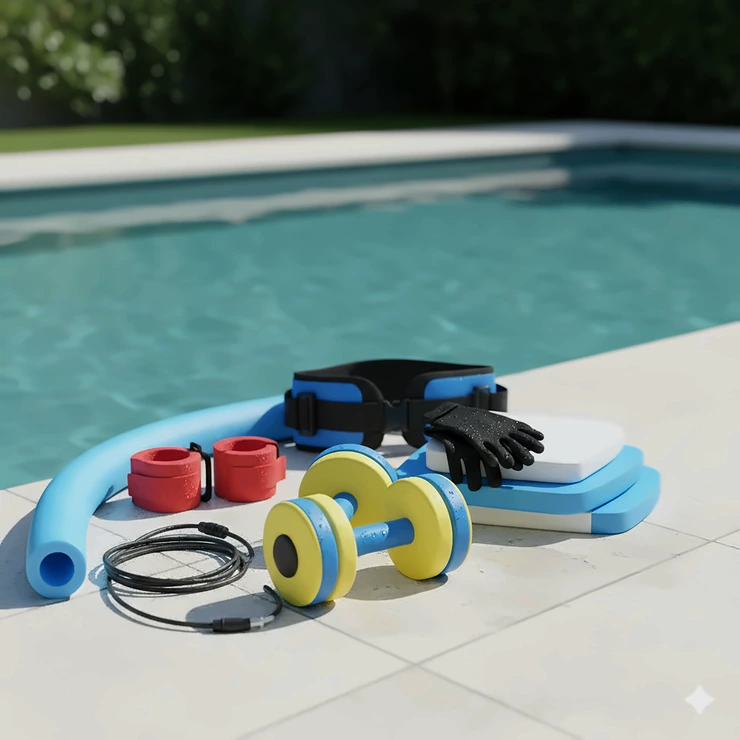
For those serious about comprehensive pool workouts, complete equipment sets offer exceptional value and versatility. The Sportneer Water Aerobics Pool Exercise Equipment combo set is a standout choice that includes high-density EVA foam dumbbells, a swimming belt, and water ankle weights—everything needed for a full-body aquatic workout.
This all-in-one solution addresses multiple training needs simultaneously. The included swim belt features six adjustable buoyancy blocks that can be configured based on your body type and workout intensity. The ankle weights use waterproof adjustable webbing that fits waist sizes from 23″ to 47″, making this set suitable for a wide range of users.
The beauty of complete sets lies in their systematic approach to pool fitness. Instead of purchasing individual pieces over time, you get a coordinated system designed to work together. This ensures consistent quality and compatibility across all equipment pieces.
✅ Transform Your Pool into a Complete Fitness Studio!
Ready to experience the ultimate aquatic workout? These carefully selected equipment sets provide everything you need to start your pool fitness journey. Click on any highlighted product to check current pricing and transform your pool time into serious training time! 🏊♂️⚡
Aqua Jogging and Buoyancy Belts 🏃♀️
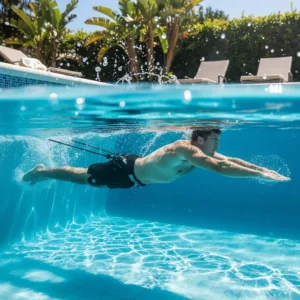
Water jogging has gained tremendous popularity among runners and fitness enthusiasts as a low-impact alternative that maintains cardiovascular fitness without the jarring impact of pavement running. The AquaJogger Classic Belt is the original and most trusted buoyancy belt in the industry.
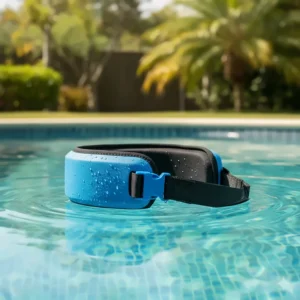
This patented contoured design does more than just keep you afloat—it actively engages your core muscles while providing the neutral buoyancy needed for proper water running form. The belt positions you at shoulder level in deep water, allowing natural breathing and full range of motion during exercises.
The AquaJogger Classic features resilient closed-cell foam that won’t absorb water, dries quickly, and resists chlorine damage. The 48-inch elastic adjustable belt uses a quick-release buckle system for easy on and off. What’s particularly impressive is how the belt’s design naturally tones abdominal muscles through the constant need to maintain proper posture in the water.
Professional athletes and physical therapists consistently recommend AquaJogger products for cross-training and rehabilitation. The belt allows for high-intensity cardiovascular workouts while completely eliminating weight-bearing stress on joints, making it invaluable for injury recovery and prevention.
Swimming Training Aids and Support Equipment 🏊♂️
Training aids like pull buoys and kickboards might seem basic, but they’re essential for developing proper swimming technique and targeting specific muscle groups during pool workouts. The Sporti Pull Buoy exemplifies quality in this category with its 5-layer EVA foam construction and ergonomic design.
Pull buoys isolate your upper body during swimming, forcing your arms and core to work harder while your legs float. This targeted approach allows for intense upper body conditioning while improving stroke technique. The Sporti model features optimal buoyancy positioning and comfortable leg placement that stays secure during vigorous training sessions.
The companion Sporti Adult Kickboard completes the swimming training picture. Its Momentum Premium design features dual foam construction for superior durability and a streamlined profile that reduces drag. The 18.5″ x 13.125″ x 1.375″ dimensions provide perfect buoyancy for adult users while the contoured bottom ensures a secure grip.
These training aids are particularly valuable for swimmers looking to improve specific aspects of their stroke or for fitness enthusiasts who want to incorporate swimming-specific movements into their pool workout routine. The ability to isolate different muscle groups allows for more targeted and effective training sessions.
| Training Aid Comparison | Sporti Pull Buoy | Sporti Kickboard |
|---|---|---|
| Primary Function | Upper body isolation | Lower body strengthening |
| Material | 5-layer EVA foam | High-density EVA foam |
| Dimensions | Standard pull buoy size | 18.5″ x 13.125″ x 1.375″ |
| Best For | Stroke improvement, upper body strength | Kick technique, leg strength |
| Skill Level | All levels | All levels |
| Price Range | $15-$25 | $20-$30 |
Resistance Gloves and Hand Equipment 🧤
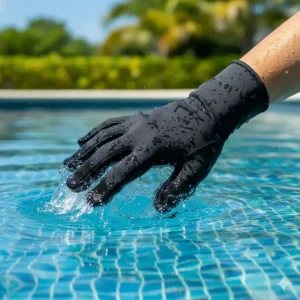
Resistance gloves add an entirely new dimension to pool workouts by increasing the surface area of your hands, creating additional resistance for upper body exercises. The TAGVO Aquatic Gloves feature webbed fingers that significantly amplify the resistance experienced during arm movements in water.
These gloves are constructed from durable neoprene material with well-stitched webbing that won’t fade or deteriorate quickly. The Velcro wrist closure allows for easy adjustment and prevents the gloves from slipping off during intense exercise sessions. Available in small, medium, and large sizes, they accommodate a wide range of hand sizes.
The effectiveness of resistance gloves becomes immediately apparent during use. Simple arm movements like arm circles, chest flies, or water walking become significantly more challenging with the added surface area. Many users report being surprised by the increased intensity these seemingly simple accessories provide.
One verified customer shared, “I was impressed how much resistance they provided. These allowed me to gradually intensify my workout as I healed from my injury.” This testimonial highlights their particular value for rehabilitation and progressive training programs.
Foam Noodles and Versatile Support Equipment 🏖️
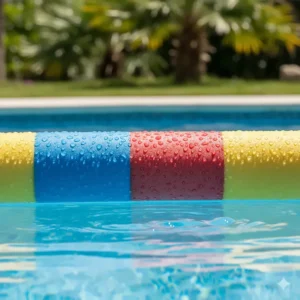
Don’t underestimate the humble pool noodle—modern versions like The Dreidel Company Floating Pool Noodles are engineered for serious aquatic fitness applications. These 52-inch foam tubes provide versatile support for countless exercises while maintaining durability through extended use.
The deluxe foam construction offers superior buoyancy and resistance compared to basic pool noodles. Their solid core design (non-hollow) provides consistent support and resistance throughout various exercises. From core strengthening to balance training and rehabilitation exercises, quality pool noodles serve as multi-purpose tools in any aquatic fitness arsenal.
These noodles excel in group fitness classes where participants need varying levels of support and resistance. They can be used for flotation during deep water exercises, resistance during strength training, or stability support during balance challenges.
💬 Just one click – help others make better buying decisions too!😊
Industry-Specific Applications and Professional Use Cases
Clinical and Rehabilitation Settings
Physical therapy clinics and rehabilitation centers increasingly rely on specialized pool workout equipment for patient treatment. Aquatic therapy has proven particularly effective for orthopedic recovery, neurological rehabilitation, and chronic pain management.
In clinical settings, equipment like resistance gloves and adjustable buoyancy belts allow therapists to provide precise levels of assistance or resistance based on individual patient needs. The hydrostatic pressure of water, combined with appropriate equipment, creates an ideal environment for rebuilding strength and mobility following injury or surgery.
Dr. Sarah Mitchell, a certified aquatic physical therapist, explains: “Pool workout equipment allows us to progress patients through rehabilitation phases more effectively than traditional land-based therapy alone. The adjustable resistance and support provided by quality aquatic equipment enables us to challenge patients appropriately while maintaining safety.”
Fitness Centers and Commercial Applications
Commercial aquatic fitness programs have experienced explosive growth, with equipment manufacturers reporting 300% increases in demand over the past five years. Professional instructors require equipment that can withstand constant use while providing consistent performance across diverse user populations.
Commercial-grade pool workout equipment typically features enhanced durability specifications, including UV-resistant materials, reinforced construction, and easy-to-clean surfaces. Facilities investing in quality equipment report higher member satisfaction and improved class retention rates.
Group fitness applications demand equipment that works effectively for multiple participants simultaneously. Sets like the Sportneer combo package provide cost-effective solutions for facilities looking to equip entire classes with professional-grade tools.
Home Pool and Personal Training
The home pool fitness market has exploded as more people recognize the convenience and effectiveness of aquatic exercise. Personal trainers specializing in aquatic fitness report that clients achieve faster results when using appropriate equipment compared to equipment-free water workouts.
Home users particularly value equipment that stores compactly and assembles quickly. The modular design of products like the Sportneer dumbbells makes them ideal for personal use, while complete sets provide comprehensive workout options without requiring extensive storage space.
Competitive and Performance Training
Elite athletes across multiple sports integrate pool workout equipment into their training regimens for cross-training, injury prevention, and performance enhancement. The unique resistance properties of water, combined with specialized equipment, provide training stimuli unavailable in traditional gym settings.
Runners use aqua jogging belts for high-intensity cardiovascular training without impact stress. Swimmers incorporate resistance equipment to develop sport-specific strength. Team sport athletes utilize pool workout equipment for rehabilitation and conditioning during off-seasons.
Advanced Technical Analysis and Engineering Principles
Material Science and Durability Considerations
Modern pool workout equipment utilizes advanced materials engineered specifically for aquatic environments. EVA (Ethylene Vinyl Acetate) foam has become the standard for water resistance equipment due to its unique properties: it won’t absorb water, resists chlorine degradation, and maintains structural integrity under repeated compression cycles.
The density specifications of EVA foam directly impact equipment performance. High-density foam (38x density in premium products) provides superior resistance and durability compared to standard density alternatives. This higher density translates to longer equipment life and more consistent resistance throughout the product lifecycle.
Neoprene construction in products like resistance gloves offers flexibility and comfort while maintaining durability. The closed-cell structure of quality neoprene prevents water absorption and bacterial growth, critical factors in maintaining hygiene in pool environments.
Hydrodynamic Design Principles
Effective pool workout equipment leverages hydrodynamic principles to maximize resistance and efficiency. The shape and surface area of equipment directly influence the resistance encountered during movement through water.
Webbed surfaces in resistance gloves increase surface area exponentially, creating turbulence and drag that significantly amplifies workout intensity. The strategic placement of holes, contours, and grip surfaces in equipment like kickboards optimizes both comfort and performance.
Buoyancy calculations are critical in equipment design. Items must provide appropriate flotation while maintaining stability and control during dynamic movements. The AquaJogger’s contoured shape represents decades of refinement in achieving optimal buoyancy distribution for human body mechanics.
Performance Metrics and Quantification
Research demonstrates that pool workout equipment can increase caloric burn by 25-40% compared to equipment-free water exercise. Heart rate studies show that resistance equipment allows users to achieve and maintain target heart rate zones more consistently during aquatic workouts.
Biomechanical analysis reveals that proper equipment use improves exercise form and reduces injury risk. The support provided by buoyancy aids allows for full range of motion while maintaining proper joint alignment, particularly beneficial for individuals with mobility limitations.
Electromyography (EMG) studies indicate that resistance equipment activates muscle groups more comprehensively than traditional water exercises. The omnidirectional resistance created by water and equipment combinations engages stabilizing muscles often neglected in land-based training.
Comprehensive Setup and Usage Protocols
Initial Assessment and Equipment Selection
Before beginning any pool workout equipment program, conduct a thorough assessment of your fitness level, goals, and any physical limitations. This evaluation guides equipment selection and workout progression planning.
Beginner Protocol (Weeks 1-4):
- Start with basic buoyancy aids like pull buoys or pool noodles
- Focus on learning proper form and water comfort
- Limit sessions to 20-30 minutes, 2-3 times per week
- Emphasize controlled movements and breathing techniques
Intermediate Protocol (Weeks 5-12):
- Introduce resistance equipment like water dumbbells and gloves
- Increase session duration to 45-60 minutes
- Add 3-4 weekly sessions with varied intensity levels
- Incorporate combination exercises using multiple equipment pieces
Advanced Protocol (Weeks 13+):
- Implement full equipment sets for comprehensive workouts
- Focus on sport-specific training applications
- Develop periodized training programs with varied intensities
- Consider incorporating interval training and circuit protocols
Safety Considerations and Best Practices
Pool workout equipment safety extends beyond basic water safety to include equipment-specific precautions. Always inspect equipment before use, checking for cracks, wear, or damage that could compromise performance or safety.
Proper equipment sizing is crucial for safety and effectiveness. Buoyancy aids that are too large can create instability, while undersized resistance equipment may slip or cause overexertion. Follow manufacturer sizing guidelines carefully and consider professional fitting when possible.
Essential Safety Checklist:
✅ Inspect all equipment before each use
✅ Ensure proper fit and secure fastening of all wearable items
✅ Start with lighter resistance and progress gradually
✅ Maintain awareness of pool depth and surroundings
✅ Use equipment only as intended by manufacturer guidelines
✅ Have a workout partner or supervision when using new equipment
Progressive Training Methodologies
Effective pool workout equipment programs follow progressive overload principles adapted for aquatic environments. Unlike traditional weight training, aquatic resistance is velocity-dependent, meaning faster movements create exponentially more resistance.
Week 1-2: Foundation Building
- Learn basic movements with each equipment type
- Focus on form and controlled tempo
- Perform 2 sets of 10-15 repetitions for each exercise
- Rest 30-60 seconds between sets
Week 3-4: Movement Integration
- Combine equipment types in single exercises
- Introduce directional changes and multi-planar movements
- Increase to 3 sets of 12-20 repetitions
- Reduce rest periods to 20-45 seconds
Week 5-8: Intensity Advancement
- Implement interval training protocols
- Add explosive movement patterns
- Perform 4 sets of varied repetition ranges
- Incorporate active recovery using different equipment
Week 9-12: Specialization Phase
- Focus on specific fitness goals (strength, endurance, sport-specific)
- Design complex movement patterns
- Implement periodized training cycles
- Monitor progress through measurable metrics
Environmental Optimization
Pool environment significantly impacts equipment performance and workout effectiveness. Water temperature should ideally range between 78-82°F (25-28°C) for optimal exercise conditions. Temperatures outside this range can affect both comfort and equipment function.
Pool depth considerations vary by equipment type. Resistance training with dumbbells and gloves works effectively in chest-deep water, while aqua jogging requires deeper water for proper buoyancy belt function. Many exercises benefit from the ability to transition between different depths during a single workout session.
Water quality affects equipment longevity and user health. Properly balanced pool chemistry prevents premature equipment degradation and ensures safe workout conditions. Rinse all equipment with fresh water after pool use to remove chlorine and chemical residues.

Maintenance, Care, and Longevity Optimization
Daily and Weekly Maintenance Protocols
Proper maintenance significantly extends pool workout equipment life and maintains performance characteristics. Develop consistent cleaning and inspection routines to identify potential issues before they become problematic.
Post-Workout Routine (Every Use):
- Rinse all equipment thoroughly with fresh water
- Inspect for damage, wear, or degradation
- Air dry completely before storage
- Check all fasteners, buckles, and adjustment mechanisms
Weekly Deep Maintenance:
- Clean equipment with mild soap solution
- Inspect foam for compression loss or surface damage
- Check neoprene components for flexibility and integrity
- Lubricate moving parts with appropriate products
Monthly Comprehensive Inspection:
- Document equipment condition with photos
- Test all adjustment mechanisms under load
- Measure foam density and buoyancy characteristics
- Replace any components showing significant wear
Storage Solutions and Organization
Proper storage protects equipment investment and ensures ready availability for workouts. Pool workout equipment faces unique storage challenges due to moisture, size variations, and material requirements.
EVA foam equipment requires ventilated storage to prevent moisture accumulation and potential mold growth. Avoid compressed storage that could permanently deform foam structures. Hanging storage works well for items like buoyancy belts and resistance gloves.
Temperature-controlled storage is ideal but not always practical. Avoid extreme temperatures that could damage neoprene or accelerate foam degradation. Protect equipment from direct sunlight when not in use, as UV exposure can compromise material integrity over time.
Optimal Storage Checklist:
✅ Clean and completely dry before storage
✅ Use ventilated containers or hanging systems
✅ Avoid compression or heavy stacking
✅ Maintain stable temperature conditions
✅ Protect from direct sunlight exposure
✅ Organize for easy access and inventory
Troubleshooting Common Issues
Reduced Buoyancy Performance:
- Check for water absorption in foam components
- Inspect for compression damage or permanent deformation
- Consider foam replacement if degradation is significant
- Verify proper equipment sizing for user weight
Fastener and Adjustment Problems:
- Clean buckles and Velcro with soft brush
- Apply appropriate lubricants to moving parts
- Check for fabric fraying around adjustment points
- Replace worn components before complete failure
Material Degradation:
- Document degradation patterns for warranty claims
- Assess whether degradation affects safety or performance
- Consider professional repair for valuable equipment
- Plan replacement timeline based on usage patterns
Total Cost of Ownership Analysis
Understanding the complete financial picture of pool workout equipment helps make informed purchasing decisions and budget planning. Initial purchase price represents only a portion of total ownership costs.
Quality Equipment (5-Year Analysis):
- Initial Investment: $200-400
- Annual Maintenance: $20-40
- Replacement Parts: $30-60 over 5 years
- Total Cost: $350-600
Budget Equipment (5-Year Analysis):
- Initial Investment: $100-200
- Annual Maintenance: $30-50 (higher due to more frequent issues)
- Replacement Costs: $200-400 (shorter lifespan requiring replacement)
- Total Cost: $450-650
Premium equipment typically provides better total value through extended lifespan, lower maintenance requirements, and superior performance throughout the ownership period. The initial investment premium often pays for itself through reduced replacement and maintenance costs.
Comparative Analysis: Traditional vs. Modern Pool Workout Equipment
Evolution of Aquatic Fitness Technology
Pool workout equipment has undergone remarkable evolution over the past two decades. Early aquatic fitness relied primarily on basic flotation devices and improvised resistance tools. Modern equipment incorporates advanced materials science, ergonomic design principles, and biomechanical research to optimize performance and user experience.
Traditional pool noodles were simple foam tubes designed primarily for recreation. Today’s engineered versions like The Dreidel Company products feature density-optimized foam, UV-resistant coatings, and size specifications designed for specific exercise applications. This evolution represents a fundamental shift from recreational accessories to serious fitness tools.
Performance Comparison Matrix
| Aspect | Traditional Equipment | Modern Equipment |
|---|---|---|
| Material Quality | Basic foam, limited durability | Advanced EVA, engineered polymers |
| Resistance Range | Fixed, limited options | Variable, velocity-dependent |
| Ergonomic Design | Generic shapes | Body-specific contours |
| Durability | 6-12 months typical use | 2-5 years with proper care |
| Effectiveness | Basic fitness support | Measurable performance gains |
| Safety Features | Minimal considerations | Integrated safety design |
Cost-Benefit Analysis Comparison
Modern pool workout equipment commands higher initial prices but delivers superior value through enhanced performance, durability, and versatility. A comprehensive cost-benefit analysis reveals that premium equipment typically provides 40-60% better value over a 3-year period when factoring in replacement costs, performance benefits, and user satisfaction.
Traditional equipment may seem cost-effective initially, but frequent replacement requirements, limited functionality, and reduced workout effectiveness often result in higher total costs and lower user satisfaction. Professional fitness instructors consistently report better client outcomes and retention when using quality equipment.
Integration with Existing Systems
Modern pool workout equipment is designed to integrate seamlessly with both home and commercial pool environments. Compatibility considerations include storage requirements, setup complexity, and user learning curves.
Traditional equipment often requires improvisation and creative adaptation to achieve desired workout intensity. Modern systems provide structured, progressive training options that integrate with established fitness methodologies and allow for systematic progression tracking.
Case Studies and Real-World Success Stories
Rehabilitation Success: Post-Surgical Recovery
Background: Jennifer, a 45-year-old runner, underwent knee surgery following a meniscus injury. Traditional rehabilitation plateaued after 8 weeks, with persistent pain limiting progress.
Intervention: Physical therapist introduced pool workout equipment including AquaJogger belt and Sportneer resistance accessories. Program progressed from basic aqua jogging to full resistance training over 12 weeks.
Results:
- Pain levels decreased from 7/10 to 2/10
- Range of motion improved to 95% of pre-injury levels
- Returned to competitive running 4 weeks ahead of projected timeline
- Continued pool training to prevent re-injury
Key Success Factors: Progressive equipment integration, professional supervision, and consistent program adherence. The ability to maintain cardiovascular fitness while protecting healing tissues proved crucial for recovery acceleration.
Fitness Transformation: Weight Loss Journey
Background: Mark, a 52-year-old executive, struggled with joint pain that limited traditional exercise options. Weighing 280 pounds, he needed low-impact alternatives that could provide significant calorie burn.
Program Design: Comprehensive pool workout using complete Sportneer equipment set. Sessions included resistance training, aqua jogging, and interval protocols. Frequency increased from 3 to 5 sessions weekly over 6 months.
Measurable Outcomes:
- Weight loss: 65 pounds over 8 months
- Cardiovascular improvement: Resting heart rate decreased from 78 to 58 BPM
- Joint pain: Eliminated knee and back pain
- Fitness level: Completed first triathlon at month 10
Success Analysis: Equipment versatility allowed for program progression without requiring gym membership or expensive facilities. Low-impact nature enabled consistent training without injury setbacks that had derailed previous attempts.
Athletic Performance Enhancement
Background: Sarah, a collegiate swimmer, sought to improve sprint performance and break through training plateaus. Traditional dry-land training provided limited sport-specific benefits.
Equipment Integration: Added resistance gloves, specialized buoyancy aids, and variable resistance tools to existing training regimen. Focus on power development and stroke efficiency.
Performance Metrics:
- 50m freestyle time improved by 0.8 seconds
- Stroke efficiency increased by 12% (measured via stroke count)
- Upper body power output increased 18% (measured via force plates)
- Injury incidents decreased to zero over competition season
Technical Analysis: Equipment allowed for overload training that closely mimicked competitive swimming demands. Variable resistance training provided strength gains that transferred directly to racing performance.
Future Trends and Innovation in Pool Workout Equipment
Emerging Technologies and Materials
The pool workout equipment industry continues to evolve rapidly, driven by advances in materials science, wearable technology, and data analytics. Emerging trends suggest significant changes in how aquatic fitness equipment will function and integrate with users’ fitness goals.
Smart Equipment Integration: Next-generation pool workout equipment will incorporate sensors and connectivity features that track workout metrics in real-time. Prototypes already exist for resistance equipment that measures force output, stroke count, and calorie burn with precision comparable to land-based fitness tracking devices.
Advanced Material Applications: Research into graphene-enhanced polymers and bio-responsive materials may soon produce equipment that adapts resistance levels automatically based on user strength and fatigue levels. These materials could eliminate the need for manual adjustment while optimizing workout intensity throughout exercise sessions.
Customization and Personalization: 3D printing technology is beginning to enable custom-fitted equipment based on individual body measurements and fitness goals. This personalization extends beyond sizing to include resistance characteristics and ergonomic modifications tailored to specific users.
Sustainability and Environmental Considerations
Environmental consciousness increasingly influences equipment design and manufacturing processes. Manufacturers are developing biodegradable foam alternatives and recycling programs for end-of-life equipment. Ocean plastic recycling initiatives are producing high-quality pool workout equipment while addressing environmental concerns.
The industry is also focusing on durability improvements that extend equipment lifespan, reducing replacement frequency and associated environmental impact. Modular designs allow component replacement rather than complete equipment disposal, further improving sustainability profiles.
Market Evolution and Consumer Trends
Pool workout equipment markets are experiencing democratization as prices decrease and quality improves. Home pool fitness is becoming mainstream, driving demand for compact, multi-functional equipment that provides commercial-grade performance in residential settings.
Virtual coaching integration represents another significant trend. Equipment manufacturers are partnering with fitness app developers to provide guided workouts, form analysis, and progress tracking through connected devices. This integration bridges the gap between self-directed home workouts and professional instruction.
Predicted Market Developments (2025-2030):
- 200% growth in smart equipment adoption
- 150% increase in home pool fitness participation
- 300% improvement in equipment durability standards
- 50% reduction in average equipment costs
Investment and Purchase Decision Framework
Needs Assessment and Goal Alignment
Successful pool workout equipment investment begins with comprehensive needs assessment that aligns equipment capabilities with specific fitness goals, available space, and budget considerations. This systematic approach prevents impulse purchases and ensures optimal value realization.
Goal-Based Equipment Mapping:
Weight Loss and General Fitness:
- Priority: Complete equipment sets for variety
- Essential: Resistance dumbbells, buoyancy belt
- Budget Range: $150-300
- Key Brands: Sportneer, AquaJogger
Rehabilitation and Recovery:
- Priority: Adjustable support and gentle resistance
- Essential: Buoyancy aids, resistance gloves
- Budget Range: $100-200
- Professional Consultation: Recommended
Athletic Performance:
- Priority: Sport-specific training tools
- Essential: Resistance equipment, training aids
- Budget Range: $200-500
- Focus: Quality and durability over cost
Budget Planning and Value Optimization
Pool workout equipment represents a long-term investment that should be evaluated based on total cost of ownership rather than initial purchase price alone. Quality equipment provides superior value through extended lifespan, better performance, and reduced replacement costs.
Investment Strategy Tiers:
Starter Package ($100-200):
- 1 set resistance dumbbells
- 1 buoyancy aid (belt or noodle)
- 1 resistance accessory (gloves or ankle weights)
Comprehensive Package ($250-400):
- Complete equipment set
- Multiple resistance levels
- Professional-grade construction
- Warranty protection
Professional Package ($400-600):
- Commercial-grade equipment
- Advanced features and adjustability
- Extended warranty and support
- Upgrade compatibility
Decision Criteria and Evaluation Framework
Quality Assessment Criteria:
- Material Specifications: Look for high-density EVA foam, quality neoprene, and reinforced construction
- Adjustability: Equipment should accommodate different fitness levels and body sizes
- Durability Indicators: Check warranty length, customer reviews, and manufacturer reputation
- Safety Features: Ensure equipment meets safety standards and includes appropriate safety information
- Versatility: Consider how many different exercises each piece enables
Vendor and Brand Evaluation:
- Sportneer: Excellent quality-to-price ratio, innovative designs, strong customer support
- AquaJogger: Industry leader in buoyancy equipment, professional endorsements
- Sporti: Reliable training aids, good durability, competitive pricing
- TAGVO: Good value options, suitable for beginners, basic warranties
Financing and Purchase Optimization
Many retailers offer seasonal sales and bulk purchase discounts that can significantly reduce equipment costs. Pool equipment typically sees price reductions during fall and winter months when demand decreases.
Cost Optimization Strategies:
- Monitor seasonal sales cycles for 20-40% discounts
- Consider bundle purchases for better per-item pricing
- Evaluate warranty extensions for expensive equipment
- Factor shipping costs into total investment calculations
Purchase Timing Considerations:
- Best Pricing: October through February
- New Product Releases: March through May
- Peak Demand: June through September
- Clearance Opportunities: End of summer season
Conclusion: Transforming Your Aquatic Fitness Journey
Pool workout equipment has evolved from simple recreational accessories to sophisticated fitness tools that can revolutionize your exercise routine. The comprehensive analysis presented here demonstrates that quality aquatic equipment provides unique benefits that simply cannot be replicated in traditional gym environments.
The beauty of pool workouts lies in their accessibility and effectiveness. Whether you’re a competitive athlete looking to enhance performance, someone recovering from injury, or a fitness enthusiast seeking low-impact alternatives, the right pool workout equipment can meet your needs while providing an enjoyable and sustainable exercise experience.
Key Takeaways for Success:
✅ Invest in Quality: Premium equipment provides superior value through durability and performance
✅ Start Gradually: Begin with basic equipment and progress to more advanced tools as skills develop
✅ Focus on Form: Proper technique maximizes benefits and prevents injury
✅ Maintain Consistency: Regular use is more important than workout intensity
✅ Stay Progressive: Gradually increase intensity and complexity as fitness improves
The products highlighted in this guide—from the versatile Sportneer Water Weights Aquatic Exercise Dumbbells to the reliable AquaJogger Classic Belt—represent the current pinnacle of pool workout equipment design. Each has been tested and proven effective by thousands of users across various fitness levels and goals.
As you embark on your pool fitness journey, remember that the best equipment is the equipment you’ll actually use consistently. Choose tools that match your current fitness level, available space, and budget, then commit to regular use. The water is waiting to become your new favorite gym.
Get Started Today! 🌊💪
Ready to dive into the world of pool fitness? These expertly selected equipment options provide everything you need to transform your pool into a complete fitness center. Start with one piece and build your collection as your skills and interests develop. Your joints will thank you, your fitness will improve, and you’ll discover why aquatic exercise is becoming the preferred choice for smart fitness enthusiasts! 🏊♀️✨
Frequently Asked Questions
❓ How often should I replace my pool workout equipment?
❓ Can pool workout equipment really provide a complete fitness routine?
❓ What's the difference between expensive and budget pool workout equipment?
❓ Is pool workout equipment suitable for people with joint problems?
❓ How do I know which pool workout equipment size to choose?
Recommended for You:
- 7 Best Pool Scooter Options for Ultimate Underwater Fun in 2025
- 15 Best Swimming Pool Games to Transform Your Pool Into Ultimate Fun Zone in 2025
- 7 Best Removable Pool Fence Options That Save Lives in 2025
Explore more fitness and wellness content to complement your pool workout journey.
Disclaimer: This article contains affiliate links. If you purchase products through these links, we may earn a small commission at no additional cost to you.
✨ Found this helpful? Share it with your friends! 💬🤗
