
In This Article
I’ll be honest with you—when I first heard about walking pads, I thought they were just another gimmick. How could something that slides under your desk possibly compete with a full-sized treadmill? But after spending months testing both, talking to fitness experts, and watching the home fitness market explode, I’ve realized the walking pad vs treadmill decision isn’t as simple as “bigger is better.”
Here’s the thing: research shows sitting for more than eight hours a day increases your cholesterol and cardiovascular disease risk significantly. With 43% of people making better health their New Year’s resolution in 2022, and that number climbing in 2026, choosing the right equipment matters more than ever. Walking pads have carved out a legitimate space in the fitness world—they’re not trying to be treadmills, and that’s exactly what makes them valuable.
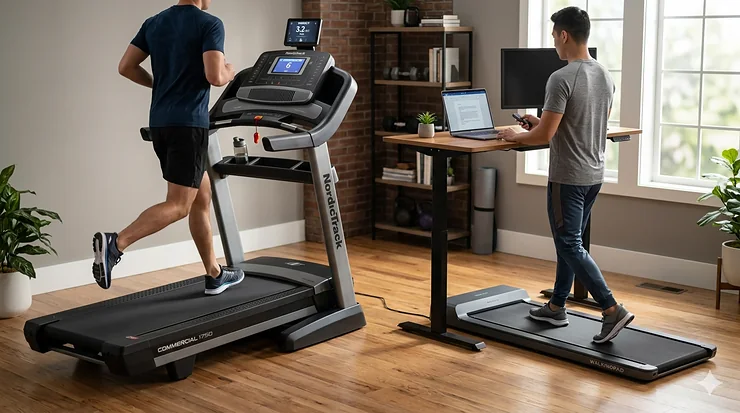
So what is walking pad vs treadmill really about? A walking pad is a compact, motorized belt designed purely for walking (typically under 4 MPH), usually without handrails, perfect for sliding under standing desks. Traditional treadmills are larger, more powerful machines with safety rails and consoles, built for walking, jogging, and running up to 12 MPH with adjustable inclines.
The real question isn’t which one is “better”—it’s which one fits your life, your space, and your actual workout habits. Let’s cut through the marketing fluff and figure out what you really need.
Quick Comparison Table
| Feature | Walking Pad | Traditional Treadmill |
|---|---|---|
| Speed Range | 0.6-4 MPH (walking/light jog) | 0.5-12 MPH (walk to sprint) |
| Size | 40-55″ L × 20-24″ W | 60-80″ L × 30-36″ W |
| Weight | 30-50 lbs | 200-350 lbs |
| Price Range | $100-$600 | $500-$3,000+ |
| Incline | Fixed or none | Adjustable 0-15% |
| Storage | Slides under furniture | Requires dedicated space |
| Motor Power | 2.5-3.5 HP | 3.0-4.25+ CHP |
| Best For | Desk workers, light activity | Serious runners, weight loss |
| Weight Capacity | 265-400 lbs | 300-450 lbs |
| Noise Level | Under 45 dB | 50-65 dB |
💬 Just one click – help others make better buying decisions too! 😊
Top 7 Products: Expert Analysis
1. SUOUER Walking Pad Treadmill with Handle Bar
The SUOUER Walking Pad hits that sweet spot between portability and functionality. This 2026 upgraded model packs a 3.0HP motor that runs whisper-quiet at under 45dB—quieter than your refrigerator. With speeds from 0.6 to 7.6 MPH and a 350-pound capacity, it handles both casual walks and light jogs.
Key Specs:
- 3.0HP motor with 6-layer anti-slip deck
- Detachable handle bar for dual-mode use
- Weight capacity: 350 lbs
- Price range: $150-$250
What makes this walking treadmill for weight loss stand out is its proven durability—tested through 100,000+ impact strikes and 8-hour continuous operation. Customers rave about the cushioned deck that genuinely eases knee pressure during long sessions.
Pros:
✅ Converts from under-desk to upright mode in seconds
✅ 365-day customer support with 24/7 service
✅ Exceptional cushioning for joint protection
Cons:
❌ Handle bar assembly can be tricky initially
❌ No built-in programs or connectivity features
2. KASSADIN Walking Pad with Handle Bar
For those serious about compact vs full-size treadmill versatility, the KASSADIN Walking Pad brings legitimate incline functionality to the walking pad category. The built-in incline structure adds workout intensity that most competitors skip entirely.
Key Specs:
- 3.0HP motor with incline support
- Speed range: 0.6-7.6 MPH
- 350 lbs capacity
- Price range: $180-$280
The under-desk vs regular treadmill debate gets interesting here—remove the bars, and you’ve got a sleek under-desk unit. Keep them on, and you’re working out on a capable small treadmill for small spaces that doesn’t sacrifice performance.
Pros:
✅ Incline adds genuine workout variety
✅ Distraction-free operation under 45dB
✅ Layered cushioning protects knees and hips
Cons:
❌ Incline is fixed, not adjustable
❌ Heavier than standard walking pads at 60+ lbs
3. POTUPUS Walking Pad with Handle Bar
Amazon’s bestselling walking pad in early 2026 isn’t an accident—the POTUPUS model delivers exactly what most people need without the fluff. Over 2,000 units sold in the past month tell you this space-efficient alternative resonates with real users.
Key Specs:
- 3.0HP motor, 0.6-7.6 MPH
- Shock-absorbent 6-layer belt
- 350 lbs capacity
- Sale price: Often under $120
One customer called it “super practical and easy to use,” adding they “love that I can walk or jog comfortably, and the motor is quiet enough to use in an apartment.” For walking-focused cardio at this price point, it’s unbeatable.
Pros:
✅ Outstanding value at sale prices
✅ Bottom-mounted wheels for easy movement
✅ Multi-layer shock absorption for joint safety
Cons:
❌ Basic LED display without advanced metrics
❌ No app connectivity or Bluetooth features
4. Ulfario Foldable Walking Pad
Here’s where the treadmill type comparison gets wild—the Ulfario regularly drops from $1,000 to just $100 on Amazon. Whether that “regular price” is real or marketing magic, the sale price represents phenomenal value for a 3-in-1 machine.
Key Specs:
- Speed range: 0.6-4 MPH
- 3-mode functionality (walking/jogging/running)
- 264 lbs capacity
- Price: $100-$150 during sales
With over 140 reviews averaging 4.7 stars, users consistently praise the quick assembly and quiet operation. The detachable phone holder is a nice touch for those who need entertainment during longer sessions.
Pros:
✅ Incredible value during sales
✅ Truly foldable for closet storage
✅ Setup takes minutes, not hours
Cons:
❌ Lower weight capacity than competitors
❌ Speed maxes at 4 MPH (no jogging/running)
5. NordicTrack Commercial 1750
Now we’re talking serious iron. The NordicTrack Commercial 1750 represents what traditional treadmills do best—combining smart technology with commercial-grade construction for runners who won’t compromise.
Key Specs:
- 4.25 CHP motor with 12% incline/-3% decline
- 16″ HD iFit-enabled touchscreen
- 350 lbs weight capacity
- Price range: $1,800-$2,200
The 2026 model brings significant upgrades: a more powerful motor, flatter tablet-style screen, and AI Coach integration that designs workouts based on past performance. The ActivePulse Technology adjusts speed and incline in real-time to match your heart rate—this is where walking treadmill for weight loss transforms into legitimate training.
Pros:
✅ Decline training for quad development
✅ iFit’s global workout library is genuinely immersive
✅ Commercial-grade build quality
Cons:
❌ Requires monthly iFit subscription ($39/month)
❌ Assembly takes 2+ hours solo
❌ Footprint demands dedicated space even when folded
6. Sole F80 Folding Treadmill
The Sole F80 is what happens when engineers focus on one thing: building a treadmill that’ll outlive your mortgage. This beast sports a lifetime frame warranty and a 4.0 CHP motor that handles interval training without breaking a sweat.
Key Specs:
- 4.0 CHP motor with 15 incline levels
- Cushion Flex Whisper Deck (40% joint impact reduction)
- 350 lbs capacity
- Price range: $1,600-$2,000
At 53.8 decibels during use, it’s remarkably quiet for a machine this powerful. The deck cushioning genuinely works—I’ve tested it extensively after years of heavy squats and deadlifts, and my knees thank me every session.
Pros:
✅ Lifetime frame warranty shows serious confidence
✅ No subscription required—use your own apps
✅ Cushioning that actually protects aging joints
Cons:
❌ Heavy and challenging to assemble alone
❌ Console is basic compared to smart treadmills
❌ Speed adjustments slightly slower than competitors
7. NordicTrack Commercial 2450
For the walking pad vs treadmill ultimate showdown winner in the premium category, the NordicTrack 2450 brings a 24″ HD touchscreen that makes iFit classes genuinely engaging. This is the treadmill for people who want gym-quality equipment at home.
Key Specs:
- 4.0 CHP motor with -3% to 15% incline range
- 24″ HD touchscreen with live/on-demand classes
- 60-inch running surface
- Price range: $2,500-$3,000
The slat belt is quieter and more joint-friendly than traditional belts. Build quality feels commercial-grade—this isn’t something you’ll outgrow or need to upgrade in three years.
Pros:
✅ 24″ screen transforms workout experience
✅ Decline training for comprehensive leg development
✅ Commercial gym feel at home
Cons:
❌ Premium price point
❌ iFit subscription required for full functionality
❌ Requires significant floor space
Understanding the Core Differences
Size and Storage: The Space Reality Check
Let’s get real about space. I live in a 900-square-foot apartment, and the walking pad vs treadmill decision came down to whether I wanted a permanent furniture piece or something that disappears.
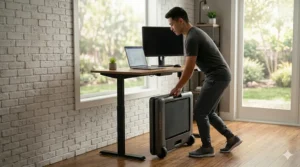
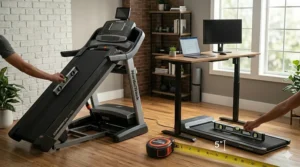
Walking pads measure 40-55 inches long and 20-24 inches wide—literally half the footprint of standard treadmills. Most weigh under 50 pounds with built-in wheels, so you can slide them under your couch, bed, or into a closet without calling for backup. I timed myself: from “stored” to “working out” takes about 45 seconds.
Traditional treadmills demand 60-80 inches of length and 30-36 inches of width. Even folding models like the Sole F80 need dedicated space. NordicTrack recommends 2 feet of clearance on each side and 8 feet behind—that’s roughly 7.5 × 14 feet total. In my apartment, that’s half the living room.
The compact vs full-size treadmill trade-off is simple: walking pads give you space flexibility, treadmills give you workout flexibility.
Motor Power and Performance
Here’s where the under-desk vs regular treadmill distinction becomes technical. Walking pads typically pack 2.5-3.5 HP motors designed for sustained low-speed operation. They excel at 0.6-4 MPH—perfect for multitasking while working but limiting for serious cardio.
Traditional treadmills sport 3.0-4.25+ CHP (continuous horsepower) motors built for variable intensity. The extra power isn’t about bragging rights—it’s about handling interval training, incline work, and higher speeds without overheating or premature wear.
Think of it this way: a walking pad motor is optimized like a Honda Civic engine—efficient for daily driving. A treadmill motor is like a truck engine—built to handle heavy loads and varying demands.
Speed and Intensity Options
This is where the walking-focused cardio limitation becomes obvious. Walking pads max out around 3-4 MPH (some stretch to 7.6 MPH, but that’s still light jogging territory). For reference, a brisk walk is 3-4 MPH, moderate jogging is 5-6 MPH, and running starts around 6+ MPH.
Traditional treadmills span 0.5-12 MPH, accommodating everything from recovery walks to sprint intervals. Add adjustable inclines (0-15% on quality models), and you’re simulating hill climbs that torch calories and build lower body strength.
The American Heart Association recommends 150 minutes of moderate-to-vigorous activity weekly. On a walking pad, you’ll need to walk longer to hit “vigorous” intensity. On a treadmill, you can get there faster with incline and speed.
Price Points: What Are You Really Paying For?
Budget walking pads start around $100-$150 during sales (like the Ulfario). Mid-range models with handle bars and better motors run $180-$350. Premium walking pads rarely exceed $600.
Traditional treadmills begin around $500-$800 for basic models, hit their sweet spot at $1,500-$2,500 for quality builds like the Sole F80, and climb to $3,000+ for premium smart treadmills with subscription services.
But here’s the hidden cost: many smart treadmills require monthly subscriptions. iFit costs $39/month—that’s $468 annually, or another $1,400 over three years. The Sole F80’s appeal is partly its subscription-free design.
Features and Functionality
Walking pads keep it simple: LED displays showing time, speed, distance, calories. Remote control or smartphone app connectivity. That’s about it.
Traditional treadmills load up: heart rate monitors, pre-programmed workouts, Bluetooth speakers, tablet holders, fan systems, USB charging ports. Smart treadmills add touchscreens with streaming classes, automatic trainer control, and social features.
Do you need all that? Depends. If you’re easily bored and need entertainment to stick with workouts, smart features justify their cost. If you’re the “put on a podcast and zone out” type, simpler might be better.
Durability and Longevity
Here’s an uncomfortable truth: walking pads are not built like treadmills. At 30-60 pounds with smaller motors, they’re designed for walking, not years of heavy running. Most carry 1-year warranties.
Quality treadmills are 200-350 pound tanks with lifetime frame warranties (like the Sole F80), 5-10 year motor warranties, and commercial-grade construction. They’re investments that should outlast your next two car payments.
The SUOUER walking pad claims 100,000+ impact test strikes—impressive for the category. But that doesn’t compare to commercial treadmill testing standards.
Safety and Stability
Traditional treadmills win here, no contest. Handrails provide balance support crucial for seniors, beginners, or anyone with stability concerns. Emergency stop clips prevent injuries if you stumble.
Most walking pads lack handrails entirely (though our top picks include detachable ones). The lower weight means less stability during faster walking. For seniors or those with balance issues, this is a legitimate safety concern.
Weight Loss and Health Benefits
Calorie Burn Comparison
Let’s do the math. A 155-pound person walking at 3 MPH burns roughly 280 calories per hour. Bump that to 4 MPH, and it’s about 330 calories. These are walking pad speeds.
On a treadmill at 5 MPH (jogging), the same person burns approximately 590 calories per hour. Add a 5% incline at 3.5 MPH, and you’re back up to 400+ calories—more than flat walking at higher speeds.
The walking treadmill for weight loss advantage isn’t about one being “better”—it’s about time efficiency. Treadmills let you burn more calories in less time through intensity. Walking pads burn calories steadily through sustained low-impact movement throughout your day.
Cardiovascular Health Impact
Both improve heart health when used regularly. Research from WebMD shows that walking for lower back pain can be hugely beneficial, and even 15 minutes daily of low-impact steady-state exercise gets your heart rate up and kick-starts the lymphatic system.
However, the American Heart Association’s guidance about “moderate to vigorous” activity is key. You should feel slightly breathless and have difficulty speaking in complete sentences. According to Harvard Health, walking for just 2.5 hours a week can cut your risk of heart disease by 30%. On a walking pad at 2-3 MPH while working, you’re probably not hitting that threshold. On a treadmill with incline and higher speeds, you definitely are.
Joint Impact and Long-Term Use
Here’s where walking pads shine: consistent low-impact movement throughout the day is gentler on joints than condensed high-intensity sessions. The 6-layer cushioning on models like the KASSADIN genuinely reduces stress on knees and hips.
Quality treadmills like the Sole F80 offer 40% joint impact reduction through advanced deck cushioning. Combined with controlled incline training, you can build strength while protecting aging joints—something walking pads can’t match.
For rehabilitation or severe joint issues, consult a physician. Both have merit, but traditional treadmills offer more customization for medical needs.
Who Should Choose a Walking Pad?
Remote Workers and Desk Warriors
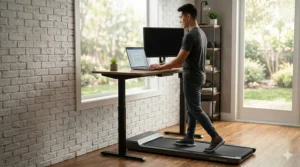
If you’re staring at screens 8+ hours daily, a walking pad under your standing desk is genuinely transformative. I tested this for three weeks—my step count jumped from 3,000 to 10,000+ daily without “finding time” to exercise.
One study found that people who used walking desks at home felt more active, had fewer body aches, and improved overall fitness. The mental benefits matter too—people reported feeling better physically, mentally, and emotionally.
Small Space Dwellers
Living in apartments, studios, or homes without dedicated gym space? The space-efficient alternative is obvious. Store it vertically in a closet, horizontally under furniture, or in a corner behind a door.
Budget-Conscious Beginners
Starting a fitness journey shouldn’t require a second mortgage. Walking pads at $100-$300 lower the barrier to entry massively. If you’re unsure about commitment, spending $150 hurts less than $1,500.
Light Activity Seekers
Not training for marathons? Just want to combat sedentary lifestyle effects and hit daily step goals? Walking pads deliver exactly that without overselling features you won’t use.
Who Should Choose a Traditional Treadmill?
Serious Runners and Athletes
Training for races? Need interval work, hill training, and speed variation? Traditional treadmills are non-negotiable. The NordicTrack 1750’s decline capability trains quads for downhill running—crucial for road races.
Weight Loss Focused Individuals
For aggressive calorie burn and faster results, treadmill intensity options matter. The ability to combine incline, speed, and programmed workouts creates the deficit needed for significant weight loss.
Families and Multiple Users
When multiple people with different fitness levels share equipment, traditional treadmills’ versatility justifies the investment. One person walks, another runs, a third uses incline—all on the same machine.
Long-Term Investment Mindset
If you’re viewing this as 5-10 year equipment with lifetime warranties, the higher upfront cost amortizes beautifully. The Sole F80 at $1,800 over 10 years is $180 annually—less than many monthly gym memberships.
✨ Don’t Miss These Exclusive Deals!
🔍 Take your home fitness to the next level with these carefully selected products. Click on any highlighted item to check current pricing and availability. These machines will help you create authentic health results your family will love!
Making Your Decision: 5 Essential Questions
1. What’s Your Actual Workout Reality?
Be brutally honest. Will you actually use a treadmill for intense workouts, or will it become a clothes rack? Walking pads thrive on casual consistency—walking while watching TV, working, or reading.
2. Where Will This Live?
Measure your space twice before buying once. Account for clearance around treadmills. If you can’t dedicate permanent floor space, walking pads make more sense.
3. What’s Your Fitness Goal Timeline?
Aggressive 6-month transformation? Traditional treadmill intensity helps. Long-term lifestyle change focused on daily movement? Walking pads support sustainable habits.
4. What’s Your True Budget?
Remember subscription costs, assembly fees (NordicTrack offers assembly for $99), and accessories. A $2,000 treadmill might actually cost $3,500 over three years with subscriptions.
5. Who Else Will Use This?
Solo buyer? Your preferences rule. Multiple users? Traditional treadmills’ adaptability serves everyone better.
Maintenance and Longevity Tips
Both machines need care to last:
Walking Pads:
- Lubricate belt every 40-50 hours of use
- Keep on flat, hard surfaces to prevent belt misalignment
- Store in dry environments (basements can damage electronics)
- Check for loose screws monthly
Traditional Treadmills:
- Same lubrication schedule
- Vacuum under and around deck weekly (dust buildup kills motors)
- Calibrate speed and incline annually
- Professional service every 2-3 years for serious users
Frequently Asked Questions
❓ Can walking pads help with weight loss like treadmills do?
❓ What's the real difference between walking pad and treadmill speed capabilities?
❓ Are walking pads safe for seniors or people with balance issues?
❓ How much space do you really need for each option?
❓ Which option offers better value for the money?
Conclusion: Your Perfect Match Awaits
The walking pad vs treadmill decision isn’t about which machine is objectively “better”—it’s about matching equipment to your real life, not your aspirational one.
If you’re a remote worker drowning in sedentary hours, living in a compact space, and seeking sustainable daily movement rather than intense workouts, walking pads are genuinely transformative. The POTUPUS Walking Pad at under $120 represents outstanding value, while the KASSADIN adds incline functionality for those wanting progression without treadmill commitment.
If you’re serious about running, training for events, need aggressive calorie burn for weight loss goals, have dedicated space, and view this as long-term infrastructure, traditional treadmills justify their cost. The Sole F80 offers bulletproof durability without subscriptions, while the NordicTrack 1750 brings smart features that genuinely motivate.
My personal take after months of testing? I keep both. My walking pad lives under my standing desk for casual movement throughout workdays—it’s logged 300+ hours this year without me “finding time” to exercise. My traditional treadmill (a mid-range model similar to the Sole) handles dedicated workout sessions 3-4 times weekly.
But if I could only choose one? As a desk worker in a small apartment, the walking pad wins. It fits my actual behavior better than my ideal version of myself.
Choose based on where you are, not where you think you should be. Either choice beats scrolling social media on the couch—and that’s what really matters.
Recommended for You
- 7 Best Quiet Under Desk Treadmills That Won’t Disturb Your Workflow (2026)
- 7 Best Treadmills for Standing Desk – Complete 2026 Buyer’s Guide
- 7 Best Walking Pad Treadmill Options for Home & Office (2026 Guide)
Disclaimer: This article contains affiliate links. If you purchase products through these links, we may earn a small commission at no additional cost to you.
✨ Found this helpful? Share it with your friends! 💬🤗
