
In This Article
You’ve finally built your dream home gym—dumbbells scattered everywhere, resistance bands tangled in corners, and weight plates creating an obstacle course across your floor. Sound familiar? I’ve been there, and trust me, the chaos isn’t just annoying; it’s actually sabotaging your workouts before they even begin.
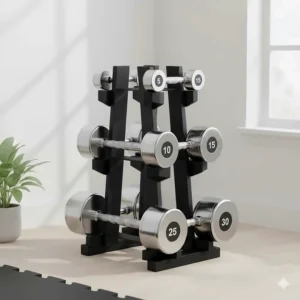
fitness equipment storage isn’t just about aesthetics (though a clean gym definitely looks impressive). It’s about creating a functional training space that keeps you motivated, protects your expensive gear, and prevents those frustrating moments when you spend ten minutes hunting for a 25-pound plate mid-workout. Proper storage enhances efficiency, functionality, equipment longevity, and overall enjoyment of your workout space.
According to Wikipedia’s definition, exercise equipment encompasses any apparatus used during physical activity, and organizing these tools properly can make or break your fitness journey. Whether you’re working with a compact apartment corner or a spacious garage gym, the right fitness equipment storage system transforms cluttered chaos into an organized, inspiring training environment.
In this comprehensive guide, I’ll walk you through the seven best fitness equipment storage solutions available in 2025, complete with real product recommendations, pricing details, and expert insights to help you make the smartest choice for your space and budget.
Quick Comparison Table
| Product | Type | Weight Capacity | Price Range | Best For |
|---|---|---|---|---|
| CAP Barbell 24″ Dumbbell Rack | 2-Tier Rack | 300 lbs | $40-50 | Budget-conscious buyers |
| Titan Fitness Wall Mounted Plate Rack | Wall-Mounted | 200 lbs per peg | $85-95 | Space savers |
| Yes4All Horizontal Plate Rack | Mobile Storage | 350 lbs | $95-112 | Versatile setups |
| PowerBlock Large Compact Stand | Dumbbell Stand | 90 lbs per side | $100-130 | PowerBlock owners |
| Marcy 3-Tier Dumbbell Rack | 3-Tier Stand | Heavy-duty | $150-170 | Mid-range option |
| Yes4All Home Gym Storage Rack | Multi-Function | 440 lbs | $110-140 | All-in-one solution |
| CAP Barbell Dumbbell & Kettlebell Rack | 4-Tier Combo | 300 lbs | $100-120 | Mixed equipment |
💬 Just one click – help others make better buying decisions too! 😊
Top 7 Fitness Equipment Storage Solutions: Expert Analysis
1. CAP Barbell 24″ Dumbbell Storage Rack – Best Budget-Friendly Option
When you’re just starting your home gym journey and don’t want to empty your wallet, the CAP Barbell 24″ Dumbbell Storage Rack delivers impressive functionality without the premium price tag.
Key Specifications:
- Two-tier design with 48 inches of storage space
- Holds dumbbell pairs from 5-25 lbs
- 2mm flat steel and 1.5mm cold rolled steel construction
- Rubber grommet trimmed cradles prevent floor damage
This rack represents over 30 years of CAP’s fitness industry experience, and it shows in the thoughtful design details. The angled lower rack provides easy access to your weights, while the flat top rack keeps everything organized and visible. What really impressed me is how the rubber trimming protects both your expensive dumbbells and your floors from scratches.
Customer feedback consistently praises the sturdy construction and straightforward assembly, though some note that neoprene-coated dumbbells fit more snugly than traditional metal ones. One verified buyer mentioned it took about 30 minutes to assemble using a basic ratchet set—significantly faster than many competitors.
Quick Pros & Cons:
✅ Extremely affordable entry point
✅ Compact footprint (24″ width)
✅ Protects equipment and flooring
❌ Limited to smaller dumbbell weights
❌ Not ideal for neoprene-coated weights
Price: $40-50
2. Titan Fitness Wall Mounted 4-Peg Olympic Bumper Plate Weight Rack – Ultimate Space Saver
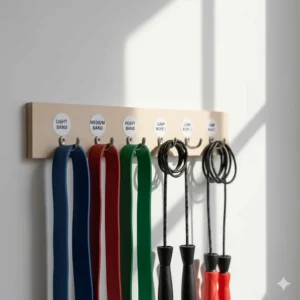
For those working with limited square footage, the Titan Fitness Wall Mounted 4-Peg Olympic Bumper Plate Weight Rack is an absolute game-changer that transforms vertical wall space into functional storage.
Key Specifications:
- Four weight plate sleeves, 200 lbs capacity each
- Dual anchor design reduces mounting stress
- Angled design leans into wall (not pulling away)
- Takes up less than 12 inches of floor space
This innovative angled mounting system is what sets Titan’s solution apart from competitors. Instead of plates pulling away from the wall under gravity’s force, they lean back into it—a brilliant engineering touch that enhances both safety and longevity. Each post can accommodate up to four 45-pound plates with room to spare.
Customers rave about how this rack declutters their training area while keeping plates accessible. One reviewer mentioned a minor assembly hiccup with a misaligned hole but emphasized that the final product’s quality and price point made it worthwhile. The wall-mounted approach frees up valuable floor space for actual training movements.
Quick Pros & Cons:
✅ Maximizes vertical space utilization
✅ Heavy-duty 800 lb total capacity
✅ Angled design prevents wall stress
❌ Requires wall mounting hardware (not included)
❌ Installation demands proper stud placement
Price: $84.97 (currently 10% off)
3. Yes4All Horizontal Weight Plate Rack Holder – Best Mobile Storage Solution
The Yes4All Horizontal Weight Plate Rack Holder combines portability with substantial storage capacity, making it perfect for dynamic gym setups or shared spaces.
Key Specifications:
- Five storage slots plus two barbell holders
- 350 lbs total weight capacity
- Built-in transport wheels with rubber handle
- Accommodates 2-inch Olympic barbells
What makes this rack particularly clever is its mobility. Those built-in wheels aren’t just an afterthought—they’re engineered for smooth transport around your gym without requiring heavy lifting. The rubber handle enhances grip friction while preventing accidental hand injuries during repositioning.
The powder-coated steel construction resists scratches and chipping, ensuring your investment looks professional for years. Customer reviews highlight the rack’s stability even when fully loaded, though several mentioned the low-profile design makes weight changes exceptionally efficient during workouts.
Quick Pros & Cons:
✅ Mobile design for flexible gym layouts
✅ Combo plate and barbell storage
✅ Durable powder-coated finish
❌ Horizontal footprint requires floor space
❌ Not suitable for extremely tight areas
Price: $95-112
4. PowerBlock Large Compact Stand – Premium Adjustable Dumbbell Solution
If you’ve invested in PowerBlock adjustable dumbbells, the PowerBlock Large Compact Stand is the purpose-built companion that elevates your entire setup.
Key Specifications:
- Compatible with expandable sets up to 90 lbs
- Folds completely flat (2 inches high)
- Center channel for adder weight storage
- 18″W x 17″D x 26″H dimensions
This stand’s signature feature is its incredible space-saving design. When you’re finished training, it folds almost completely flat—thin enough to slide under most couches or beds. Yet when deployed, it provides rock-solid stability for weight changes and a dedicated channel for those critical adder weights that often get misplaced.
PowerBlock users consistently rate this stand as essential rather than optional, noting how the proper height reduces strain when lifting dumbbells on and off during rapid weight transitions. One five-star reviewer emphasized the sturdy construction means zero wobble even with the heaviest 90-pound setting.
Quick Pros & Cons:
✅ Folds flat for storage (2″ height)
✅ Purpose-built for PowerBlock system
✅ Includes adder weight storage
❌ Only compatible with PowerBlock dumbbells
❌ Premium pricing reflects specialized design
Price: $100-130
5. Marcy 3-Tier Steel Dumbbell Rack – Professional-Grade Organization
The Marcy 3-Tier Steel Dumbbell Rack (Model DBR-86) brings commercial gym aesthetics and functionality to your home setup with its robust multilevel design.
Key Specifications:
- Three angled storage tiers
- Commercial-grade 14-gauge steel construction
- Powder-coated finish resists sweat and moisture
- Accommodates various dumbbell sizes and styles
This rack’s three-tier configuration isn’t just about maximizing vertical space—it’s about creating an intuitive organization system where lighter weights sit higher and heavier ones lower, following natural workout flow patterns. The rubberized feet protect your flooring while preventing the rack from sliding during vigorous restocking.
Marcy’s reputation for durability shines through in the welded frame construction, which provides enhanced stability even under heavy loads. Customer feedback highlights the rack’s ability to hold everything from small 5-pound dumbbells to massive 50-pound pairs without any structural concerns.
Quick Pros & Cons:
✅ Commercial-grade steel construction
✅ Fits multiple dumbbell styles
✅ Powder-coated rust resistance
❌ Higher price point than basic racks
❌ Requires more assembly time
Price: $150-170
6. Yes4All Weight Rack for Home Gym (440 lbs Capacity) – Ultimate All-in-One Organizer
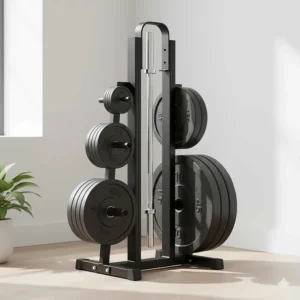
When you need comprehensive storage beyond just dumbbells, the Yes4All Weight Rack for Home Gym delivers an impressive multi-functional design that tackles virtually every home gym storage challenge.
Key Specifications:
- 440 lbs total weight capacity
- Two-tier dumbbell rack with side mat holders
- Bottom storage for larger equipment
- 2-tier ball storage rack included
This storage powerhouse is essentially four solutions in one compact unit. The main shelving accommodates dumbbells and kettlebells, while the side holders grip yoga mats securely. The bottom area stores larger items like yoga balls or foam rollers, and there’s even dedicated space for sports balls like basketballs or soccer balls.
What impressed customers most was the versatility—one reviewer mentioned using it for everything from weights to resistance bands to skateboard storage. The heavy-duty iron construction supports the substantial 440-pound capacity, making this suitable for serious home gym enthusiasts with diverse equipment collections.
Quick Pros & Cons:
✅ Multi-functional storage zones
✅ Massive 440 lb weight capacity
✅ Accommodates diverse equipment types
❌ Requires significant floor space
❌ Mat holders may be tight for bulky mats
Price: $110-140
7. CAP Barbell Dumbbell and Kettlebell Storage Rack – Best Combination Storage
The CAP Barbell Dumbbell and Kettlebell Storage Rack (Model B00E5S19B2) cleverly combines specialized storage for two essential training tools in one space-efficient design.
Key Specifications:
- Holds four pairs of dumbbells (3-35 lbs)
- Two integrated storage trays for kettlebells
- 300 lbs total weight capacity
- 20.5″L x 10″W x 24″H assembled dimensions
This rack’s genius lies in its dual-purpose design. The rubber grommet-trimmed cradles protect your dumbbells from damage, while the flat trays accommodate kettlebells, jump ropes, or resistance bands. The compact vertical design means you’re not sacrificing valuable floor space for organization.
Customer reviews consistently mention the solid steel construction and the protective rubber trimming that prevents floor scratches. Several buyers noted that while assembly took 60-75 minutes working alone, the finished product’s stability and organization benefits made it absolutely worthwhile. One five-star reviewer called it “perfect for compact workout areas.”
Quick Pros & Cons:
✅ Dual storage for dumbbells and kettlebells
✅ Compact vertical footprint
✅ Rubber protection prevents damage
❌ Assembly requires patience and time
❌ May wobble slightly when empty
Price: $100-120
✨ Don’t Miss These Exclusive Deals!
🔍 Take your fitness equipment storage to the next level with these carefully selected products. Click on any highlighted item to check current pricing and availability. These tools will help you create an organized home gym your family will love working out in!
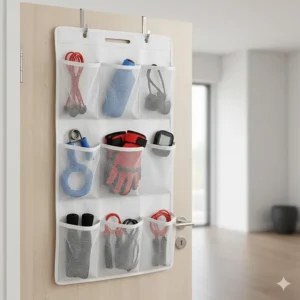
Understanding fitness equipment storage: Why Organization Matters
Before diving into specific storage solutions, let’s address the fundamental question: What exactly is fitness equipment storage, and why should you care?
fitness equipment storage refers to any system, rack, shelf, or organizational tool designed to safely store, protect, and organize your exercise equipment when not in use. This encompasses everything from simple wall hooks to sophisticated multi-tier rack systems.
The benefits extend far beyond mere tidiness. An organized home gym ensures you maximize training time instead of wasting minutes searching for equipment. When you have 60 minutes for a workout, spending 10 minutes locating collars or resistance bands isn’t just annoying—it’s stealing from your actual training time.
Moreover, proper storage dramatically extends equipment lifespan. Dumbbells left scattered on concrete floors develop rust spots and coating damage. Barbells leaning haphazardly against walls bend over time. Resistance bands exposed to direct sunlight lose elasticity. Quality storage protects these investments and enhances functionality.
Safety considerations matter too. Organized equipment reduces tripping hazards and makes your workout area significantly safer. This becomes especially critical if you share your space with family members or pets.
Types of fitness equipment storage Solutions
Wall-Mounted Storage Systems
Wall-mounted solutions maximize vertical space utilization—a game-changer for compact home gyms. These systems keep equipment accessible while freeing precious floor space for actual training movements.
Advantages:
- Saves maximum floor space
- Professional aesthetic appearance
- Keeps equipment at ergonomic height
- Prevents floor-level clutter
Considerations:
- Requires proper wall stud mounting
- Installation demands basic carpentry skills
- Difficult to relocate once installed
- Load limits depend on wall construction
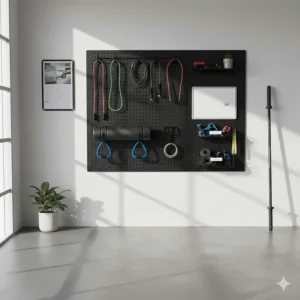
Popular wall-mounted options include barbell holders, plate racks, and pegboard accessory systems that maximize vertical space. The Titan Fitness wall-mounted solutions have garnered particular praise for their engineering quality and load-bearing capacity.
Freestanding Rack Systems
Freestanding racks offer flexibility without permanent installation commitments. These systems range from simple dumbbell trees to elaborate multi-tier storage towers.
Advantages:
- No wall damage or drilling required
- Easily repositionable
- Suitable for rental properties
- Wider product variety available
Considerations:
- Occupies floor space
- May tip if improperly loaded
- Can shift during earthquakes
- Often requires assembly
The Yes4All and Marcy freestanding options exemplify quality in this category, combining stability with thoughtful design features.
Hybrid and Multi-Function Systems
Modern fitness equipment storage increasingly embraces hybrid designs that tackle multiple organizational challenges simultaneously. These all-in-one solutions combine dumbbell racks with kettlebell holders, accessory trays, and even workout mat storage.
Advantages:
- Maximizes storage efficiency
- Reduces overall footprint
- Simplifies gym organization
- Often more cost-effective than separate systems
Considerations:
- Higher upfront investment
- May include features you don’t need
- Larger assembly projects
- Less flexibility for specialized needs
The Yes4All 440-pound capacity model demonstrates this approach brilliantly, offering comprehensive storage in one cohesive unit.
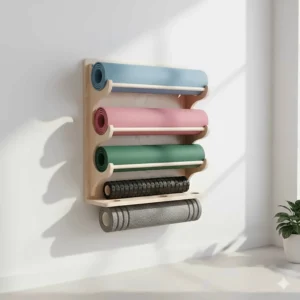
How to Choose the Right fitness equipment storage for Your Space
Step 1: Assess Your Equipment Inventory
Start by cataloging everything you own. Create categories: dumbbells, kettlebells, barbells, weight plates, resistance bands, yoga equipment, and accessories. Note quantities, weights, and dimensions.
This inventory prevents the common mistake of purchasing storage that’s too small or doesn’t accommodate your specific equipment types. For instance, hexagonal dumbbells require different cradle designs than round ones.
Step 2: Measure Your Available Space
Accurate measurements are non-negotiable. Note:
- Floor dimensions (length × width)
- Ceiling height (crucial for vertical storage)
- Wall stud locations (for mounted systems)
- Doorway clearances
- Existing furniture or equipment placement
Don’t forget to account for workout space requirements. A perfectly organized gym that leaves no room for exercises defeats the purpose entirely.
Step 3: Determine Your Budget Range
fitness equipment storage spans from $30 basic dumbbell racks to $500+ comprehensive systems. Establish realistic budget parameters early, but remember this is protecting investments potentially worth thousands of dollars.
Consider:
- Budget options: $30-75 (basic racks, single-purpose storage)
- Mid-range: $80-150 (quality multi-tier systems, wall-mounted options)
- Premium: $150-300+ (comprehensive solutions, commercial-grade materials)
Step 4: Prioritize Essential Features
Not all features matter equally for everyone. Rank these based on your specific situation:
Must-have features might include:
- Weight capacity matching your heaviest equipment
- Rust-resistant coatings for humid environments
- Rubber protection if protecting expensive flooring
- Mobility (wheels) for flexible layouts
Nice-to-have features could be:
- Aesthetic finish matching gym décor
- Expandable design for future equipment
- Accessory storage integration
- Compact folding capability
Step 5: Consider Long-Term Flexibility
Your fitness journey evolves, and smart storage grows with you. Will this system accommodate additional equipment? Can it be reconfigured for different layouts? Does it support expansion kits or modular additions?
PowerBlock’s expandable stand systems exemplify this thinking—starting with basic capacity but supporting substantial future growth.
Installation and Setup Tips
Wall-Mounted Installation Best Practices
Wall-mounted fitness equipment storage demands careful installation to ensure safety and longevity.
Critical steps:
- Locate wall studs accurately using a quality stud finder. Never rely on drywall anchors alone for heavy weight storage.
- Use appropriate hardware rated for weight loads. Most manufacturers don’t include mounting hardware, so purchase 5/16″ or larger lag screws specifically rated for the anticipated load.
- Pre-drill pilot holes to prevent wood splitting and ensure straight installation.
- Level meticulously before final tightening. Even slight angles create uneven weight distribution that accelerates wear.
- Test with lighter weights first before loading to maximum capacity.
Freestanding System Assembly
Pro assembly tips:
- Clear adequate workspace before starting
- Organize all hardware and parts systematically
- Use power tools (socket wrenches) to speed assembly
- Don’t fully tighten bolts until entire unit is assembled
- Place on level surface and adjust feet as final step
- Load heavier items on lower tiers for stability
Most quality racks include detailed instructions with visual guides. Budget 30-90 minutes depending on complexity.

Maintenance and Organization Strategies
Regular Maintenance Checklist
Weekly:
- Wipe down surfaces to remove sweat and moisture
- Check for loose bolts or connections
- Reorganize misplaced equipment
Monthly:
- Inspect rubber padding for wear
- Tighten all hardware connections
- Clean thoroughly with mild disinfectant
- Check weight distribution and adjust as needed
Quarterly:
- Apply rust-prevention treatment to exposed metal
- Inspect structural integrity for cracks or bending
- Lubricate moving parts (wheels, hinges)
- Reassess organization system effectiveness
Smart Organization Principles
Weight organization strategies:
- Ascending method: Lightest weights on top tiers, heaviest bottom
- Frequency-based: Most-used equipment at easiest access height
- Workout-flow: Arrange based on typical exercise sequence
- Visual clarity: Create clear spacing between weight increments
Color-coding and labeling: Many gym enthusiasts use colored tape or labels to mark weight stations, especially useful for home gyms used by multiple family members with different strength levels.
Cost vs. Value Analysis: What’s Worth the Investment?
Budget Options ($30-75)
Basic single-purpose racks in this range provide essential organization without breaking the bank. Perfect for beginners or minimalist setups.
Best for:
- First-time home gym builders
- Limited equipment collections
- Temporary or rental spaces
- Supplemental storage needs
Limitations:
- Basic construction materials
- Limited weight capacities
- No expandability options
- Minimal protective features
Mid-Range Solutions ($80-150)
This sweet spot offers substantial quality improvements, better materials, and often multi-functional designs. Most home gym enthusiasts find optimal value here.
Best for:
- Serious home gym enthusiasts
- Growing equipment collections
- Long-term home ownership
- Quality-conscious buyers
Key advantages:
- Commercial-grade construction
- Higher weight capacities
- Protective coatings and padding
- Better aesthetic designs
Premium Systems ($150-300+)
Top-tier options deliver maximum durability, specialized features, and often modular expandability. These represent the “buy once, cry once” philosophy.
Best for:
- Comprehensive home gym setups
- Commercial or shared spaces
- Equipment protection priority
- Professional training environments
Premium features:
- Heavy-duty steel construction
- Lifetime or extensive warranties
- Customizable configurations
- Professional aesthetics
Common Mistakes to Avoid
Mistake #1: Underestimating Weight Capacity
Always add 25-30% buffer to your calculated weight needs. Equipment collections grow, and you don’t want to replace storage within months because you exceeded capacity.
Mistake #2: Ignoring Equipment-Specific Requirements
Not all dumbbells are created equal. Rubber hex dumbbells require different storage than round cast iron. PowerBlock adjustable dumbbells need specialized stands. Research compatibility before purchasing.
Mistake #3: Overlooking Future Expansion
That minimalist setup today might double next year. Choose storage systems that support growth through modular additions or increased capacity ratings.
Mistake #4: Sacrificing Quality for Price
That $25 “heavy-duty” rack might seem appealing until it bends under actual weight or rusts within months. This is protecting expensive equipment—invest accordingly.
Mistake #5: Forgetting Accessory Storage
Focusing solely on weights while ignoring resistance bands, jump ropes, and yoga mats creates new clutter problems. Comprehensive planning prevents this.
Maximizing Small Space Gyms
Vertical Storage Strategies
When floor space is limited, thinking vertically becomes crucial. Vertical storage represents one of the most efficient ways to organize equipment while keeping spaces clutter-free.
Vertical maximization tactics:
- Wall-mounted plate racks up to ceiling height
- Tall multi-tier dumbbell stands
- Overhead storage for resistance bands and straps
- Fold-away equipment (benches, racks) when not in use
Multi-Purpose Furniture Integration
Some clever storage solutions double as functional gym equipment. Plyo boxes with internal storage, benches with built-in weight cradles, or resistance band anchors that mount to door frames all maximize utility per square foot.
Compact Equipment Selection
Sometimes the best storage solution is choosing equipment that requires less storage. Adjustable dumbbells (like PowerBlock) replace 5-10 fixed pairs. Resistance bands substitute for bulky cable machines. Foldable benches create more flexibility than fixed ones.

Comparing fitness equipment storage vs Traditional Solutions
| Feature | Dedicated Storage | Traditional Solutions |
|---|---|---|
| Space Efficiency | Optimized vertical/horizontal use | Often wastes space |
| Equipment Protection | Padding and coatings included | Risk of damage increases |
| Accessibility | Designed for quick access | May require moving items |
| Safety | Reduces tripping hazards | Creates cluttered areas |
| Longevity | Extends equipment lifespan | Accelerates wear and tear |
| Aesthetics | Professional gym appearance | Cluttered, disorganized look |
| Cost | Upfront investment required | Free but false economy |
| Flexibility | Purpose-built configurations | Limited by improvisation |
The data speaks clearly: dedicated fitness equipment storage represents genuine value despite upfront costs. Proper storage solutions enhance equipment longevity and overall workout enjoyment.
Advanced Organization Techniques for Serious Enthusiasts
Creating Training Zones
Divide your gym into functional zones: free weights area, cardio zone, stretching space, and accessory corner. Store equipment within or immediately adjacent to its primary use zone.
Zone-based storage advantages:
- Reduces movement during workouts
- Creates intuitive organization
- Simplifies equipment maintenance
- Improves workout efficiency
Implementing the “One-Touch Rule”
This principle from professional organization applies perfectly to home gyms: every piece of equipment should have exactly one designated storage location that requires only one motion to access or return.
Violating this rule—stacking multiple dumbbells in one cradle, for instance—creates friction that discourages proper equipment return and gradually degrades organization.
Seasonal and Specialty Equipment Storage
Not all equipment gets used equally throughout the year. Create a rotation system where frequently-used items occupy prime locations while seasonal or specialty equipment (heavy sleds, climbing gear, specialty bars) stores in less accessible areas.
Frequently Asked Questions
❓ How much should I spend on fitness equipment storage?
❓ Can I build my own fitness equipment storage instead of buying?
❓ What's the best fitness equipment storage for apartment gyms?
❓ How do I organize dumbbells by weight effectively?
❓ Do I need different storage for rubber vs metal dumbbells?
Conclusion: Building Your Organized Fitness Sanctuary
Creating an organized home gym through proper fitness equipment storage represents far more than aesthetic preference—it’s an investment in consistent training, equipment longevity, and workout efficiency. Whether you’re working with a compact corner or an entire garage, the right storage solutions transform chaos into motivation.
The seven products reviewed here span the spectrum from budget-friendly basics to premium comprehensive systems, ensuring options for every situation and need. The CAP Barbell 24″ rack provides exceptional entry-level value, while the Yes4All 440-pound capacity system tackles virtually every storage challenge simultaneously.
Remember these key principles:
- Assess before purchasing: Know your equipment inventory and space constraints
- Prioritize quality: Storage protects expensive investments; cheap solutions cost more long-term
- Plan for growth: Your fitness journey evolves; choose expandable systems when possible
- Implement immediately: Organization compounds over time; start today rather than tomorrow
The beautiful truth? Once you implement proper fitness equipment storage, you’ll wonder how you ever trained without it. That scattered chaos transforms into an inspiring, professional space that beckons you to work out rather than discouraging you before you start.
Your home gym deserves the same organizational respect as your training program. Take action today, choose the storage solution that matches your unique situation, and watch how dramatically your training environment—and by extension, your results—improve.
Recommended for You
- 7 Best Travel Fitness Equipment 2025 – Portable Workout Gear
- 7 Best Bodyweight Fitness Equipment 2025: Transform Your Home Gym
- 7 Best Aqua Fitness Equipment for Pool Workouts (2025)
Disclaimer: This article contains affiliate links. If you purchase products through these links, we may earn a small commission at no additional cost to you.
✨ Found this helpful? Share it with your friends! 💬🤗
