
In This Article
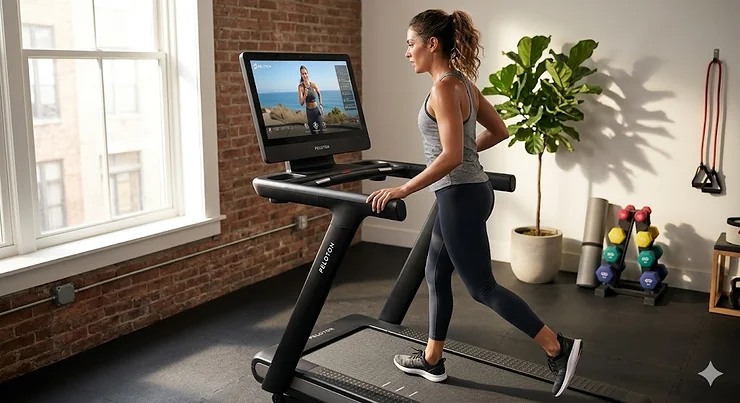
What is peloton tread review? A Peloton Tread review is an expert analysis evaluating whether Peloton’s premium interactive treadmills justify their higher price point compared to traditional home cardio equipment, examining build quality, technology integration, workout content value, and long-term ownership costs.
Here’s what most buyers don’t realize until after they’ve dropped three grand on a treadmill: the monthly subscription costs more over three years than many competitors’ entire purchase price. I’ve tested dozens of premium treadmills, and the Peloton Tread occupies this weird space where it’s simultaneously overpriced for what you get hardware-wise and absolutely worth every penny if instructor-led motivation is what keeps you running.
The real question isn’t whether the Peloton Tread is good—it objectively delivers a premium experience. The question is whether you need what makes it premium, or if you’d be equally happy (and richer) with a NordicTrack Commercial 1750 that costs $700 less with similar specs. This review cuts through the marketing to show you exactly what you’re paying for, who benefits most from Peloton’s ecosystem, and which seven treadmills deserve consideration if you’re serious about home cardio in 2026.
According to research from the National Institutes of Health, treadmill exercise provides comparable cardiovascular benefits to outdoor running when programmed appropriately, making home treadmills a legitimate training tool rather than just a convenience purchase.
Quick Comparison Table: Top 7 Treadmills at a Glance
| Model | Motor Power | Running Surface | Incline Range | Price Range | Best For |
|---|---|---|---|---|---|
| Peloton Tread | Not disclosed (est. 3.0-3.5 HP) | 59″ × 22″ | 0-12.5% | Around $3,300 | Connected fitness enthusiasts |
| Peloton Tread+ | Not disclosed (est. 4.0+ HP) | 67″ slat belt | 0-15% | Around $6,700 | Serious runners wanting premium |
| NordicTrack Commercial 1750 | 3.75 CHP | 60″ × 22″ | -3% to 12% | $1,900-$2,100 range | iFIT users seeking value |
| Sole F80 | 3.5 HP | 60″ × 22″ | 0-15% | $1,800-$2,000 range | Subscription-free durability |
| Horizon 7.4 AT | 3.5 CHP (est.) | 60″ × 22″ | 0-15% | $1,600-$1,800 range | Quick-dial speed enthusiasts |
| ProForm Carbon T10 | 2.75 CHP | 55″ × 20″ | 0-12% | $1,100-$1,400 range | Budget iFIT integration |
| LifeSpan TR5500i | 4.0 HP | 60″ × 22″ | -2% to 13% | $2,400-$2,700 range | High-power without subscriptions |
Looking at this comparison, the pricing gap tells an important story: Peloton charges roughly $1,400 more than the NordicTrack Commercial 1750 despite similar deck dimensions and motor capabilities. That premium buys you Peloton’s class production quality and rotating touchscreen—but you’re also committing to around $600 annually in membership fees. The LifeSpan TR5500i splits the difference with a powerful 4.0 HP motor and no subscription requirement, though it lacks the immersive software experience. If your training style demands precise interval controls, the Horizon 7.4 AT’s QuickDial system responds faster than any touchscreen interface, making it ideal for HIIT workouts despite its mid-tier pricing.
💬 Just one click — help others make better buying decisions too! 😊
Top 7 Peloton Tread Alternatives: Expert Analysis
1. Peloton Cross Training Tread — The Connected Fitness Standard
The Peloton Cross Training Tread positions itself as more than a treadmill—it’s a full-body fitness hub with a 24″ HD touchscreen that rotates 360 degrees, letting you transition from running to yoga, strength, or barre without leaving your equipment footprint. That 59-inch running surface is comfortable for most users under 6’3″, though taller runners with longer strides might occasionally feel constrained during sprints.
What the spec sheet won’t tell you: the manual incline controls mean you’re reaching down mid-run to adjust, which breaks your rhythm during instructor-led classes. The auto-incline option adds convenience but requires careful attention to instructor cues. At around $3,300, you’re paying primarily for Peloton’s instructor quality and production value, which admittedly rivals professional fitness studios. The front-facing speakers deliver crisp audio, and the red centerline stripe helps maintain proper running form.
Customer feedback consistently praises the build quality and instructor energy, though many note frustration with the mandatory $50 monthly All-Access Membership making total ownership exceed $4,900 over three years. The real differentiator here is community engagement—leaderboards, high-fives from other runners, and the genuine sense of working out alongside thousands of people. If that social element doesn’t motivate you, you’re paying for features you won’t use.
Pros:
✅ 360-degree rotating screen unlocks cross-training versatility
✅ Studio-quality instructor-led classes with unmatched production value
✅ Strong community features keep motivation high
Cons:
❌ Manual incline adjustment disrupts workout flow
❌ Mandatory $50/month subscription adds $1,800 over three years
Value Verdict: In the $3,000-$3,500 range, justified only if instructor-led motivation is your primary training driver and you’ll actually use the off-treadmill workout library.
2. Peloton Tread+ — The Slat-Belt Premium Experience
The Peloton Tread+ takes everything from the standard Tread and elevates it with a slat-belt system that feels noticeably more cushioned than traditional belt treadmills—imagine the difference between running on a wooden deck versus asphalt. That 67-inch slat belt accommodates even the tallest runners comfortably, and the 15% max incline (versus 12.5% on the standard Tread) provides genuine hill training capability.
The standout feature here is self-propelled mode: kill the motor and power the belt purely with your leg drive, creating a completely different training stimulus that engages your posterior chain more aggressively. Peloton IQ adds AI-powered form feedback and rep tracking for strength sessions, genuinely useful tech rather than gimmicky additions. The Sonos-tuned speakers and three-speed fan represent the kind of attention to detail you expect at this price point.
Customer reviews reveal this machine’s biggest strength and weakness simultaneously: at around $6,700, it delivers an absolutely premium experience that some users describe as transformative for their training consistency. Others candidly admit they could’ve achieved similar fitness results with a $2,000 treadmill and better self-discipline. The lifetime on the frame and three-year parts warranty provides some insurance on this substantial investment.
Pros:
✅ Slat-belt cushioning reduces joint impact significantly
✅ Self-propelled mode offers unique training stimulus
✅ 67-inch belt accommodates tall runners without compromise
Cons:
❌ Nearly $7,000 purchase price plus $50/month membership
❌ Massive footprint requires dedicated space commitment
Value Verdict: Around $6,500-$7,000 range makes sense only for serious runners with disposable income who value premium hardware feel over ROI calculations.
3. NordicTrack Commercial 1750 — The Value Alternative
The NordicTrack Commercial 1750 delivers approximately 85% of Peloton’s experience at 60% of the cost—smart shoppers notice this math immediately. The 3.75 CHP motor handles speeds up to 12 MPH without thermal throttling, and the -3% to 12% incline/decline range simulates actual terrain variation better than Peloton’s incline-only approach. That 16″ pivoting touchscreen isn’t as large as Peloton’s 24″ display, but it’s perfectly functional for following workout content.
Here’s what you need to know about the iFIT ecosystem: it auto-adjusts speed and incline to match instructor cues, eliminating the manual fiddling that frustrates Peloton Tread users. The RunFlex cushioning provides adequate joint protection, though not quite matching the Peloton Tread+’s slat-belt feel. The foldable design saves substantial floor space—a practical advantage Peloton doesn’t offer.
The trade-off becomes apparent after six months of ownership: iFIT’s instructor roster is solid but doesn’t match Peloton’s production polish or personality-driven coaching style. Customer feedback divides between those who find iFIT perfectly adequate and those who miss Peloton’s energy after switching. At around $1,900-$2,100, the 1750 saves you roughly $1,400 upfront versus Peloton Tread, though iFIT’s $39/month subscription still adds up.
Pros:
✅ -3% decline capability adds training variation
✅ Auto-adjusting controls match instructor cues hands-free
✅ Foldable design maximizes space efficiency
Cons:
❌ iFIT production quality trails Peloton noticeably
❌ Slightly longer belt replacement interval than commercial-grade options
Value Verdict: In the $1,900-$2,100 range, this is the smartest buy for most people who want connected fitness without Peloton’s price premium.
4. Sole F80 — The Subscription-Free Workhorse
The Sole F80 represents a fundamentally different value proposition: pay once, run forever, skip the monthly fees entirely. That 3.5 HP motor powers through daily training sessions without complaint, and the 22″ × 60″ deck matches premium competitors dimension-for-dimension. The 10.1″ touchscreen includes built-in streaming apps (Netflix, YouTube, Disney+) plus FTMS connectivity for Peloton App and Zwift—meaning you can access third-party content without Sole’s involvement.
What makes this machine interesting for practical buyers: the CushionFlex Whisper Deck provides a firmer, road-like feel that delivers honest pacing. According to biomechanical research published in PeerJ, outdoor running surfaces increase lower limb muscle activity compared to treadmills, so a firmer treadmill deck helps bridge that training gap. Softer treadmills can create a false sense of speed that doesn’t translate to outdoor performance. The 15-level incline range supports serious training, and the reversible deck essentially doubles its usable lifespan—flip it when one side shows wear.
Customer feedback centers on durability and value retention. Multiple reviewers report 1,500-2,000 miles on their F80 with minimal maintenance beyond occasional belt lubrication. The lifetime frame and motor warranty, plus three years on parts, provides confidence your $1,800-$2,000 investment won’t become a clothes rack. The absence of automatic incline control means more button-pushing during intervals, but that’s a small trade for eliminating $600 annual subscription fees.
Pros:
✅ Zero ongoing subscription costs saves $1,500+ over three years
✅ Reversible deck doubles functional lifespan
✅ Built-in streaming apps eliminate external device dependency
Cons:
❌ No automatic speed/incline adjustment during guided workouts
❌ Touchscreen not adjustable, limiting viewing angles
Value Verdict: Around $1,800-$2,000, unbeatable value for self-motivated runners who don’t need instructor-led classes to maintain consistency.
5. Horizon 7.4 AT — The HIIT Specialist
The Horizon 7.4 AT earned its reputation among interval training enthusiasts for one specific reason: those QuickDial controls adjust speed and incline faster than any touchscreen interface can match. When your workout demands rapid transitions between recovery pace and sprint efforts, rotating a physical dial beats tapping buttons every single time. The 3.5 CHP motor responds quickly to these changes without the lag that plagues cheaper models.
The 3-zone variable response cushioning system does something clever most treadmills ignore—it provides softer landings at heel-strike while maintaining firmness at push-off, mimicking natural running surface properties. That 22″ × 60″ deck accommodates most users comfortably, and the 15% max incline supports legitimate hill training. Bluetooth connectivity lets you sync with Peloton App, Zwift, or Nike Running Club without requiring proprietary subscriptions.
Customer reviews consistently mention the build quality feeling solid underfoot without wobbling during sprint intervals—a testament to Horizon’s frame engineering. The included Bluetooth heart rate chest strap (most competitors charge extra) makes zone-based training accessible immediately. At around $1,600-$1,800, you’re getting serious performance hardware without premium software costs.
Pros:
✅ QuickDial controls provide fastest speed/incline adjustments available
✅ 3-zone cushioning adapts to different phases of running gait
✅ Included Bluetooth chest strap adds immediate value
Cons:
❌ No built-in touchscreen limits entertainment options
❌ Incline motor adjusts slightly slower than NordicTrack’s system
Value Verdict: In the $1,600-$1,800 range, ideal for HIIT enthusiasts who prioritize responsive controls over entertainment features.
6. ProForm Carbon T10 — The Budget iFIT Gateway
The ProForm Carbon T10 occupies an interesting market position: it’s the cheapest way to access iFIT’s connected fitness ecosystem with a built-in touchscreen. That 2.75 CHP motor handles walking and light jogging comfortably, though serious runners exceeding 6 MPH for extended sessions should look elsewhere. The 10″ touchscreen provides adequate viewing for class content, and the 12% max incline supports the popular 12-3-30 walking workout that’s gained massive social media traction.
Here’s the honest assessment: the 55″ × 20″ deck feels noticeably smaller than competitors’ 60″ × 22″ standard, constraining taller users or those with longer strides. The ProShox cushioning delivers comfort for walkers and casual joggers, making this suitable for entry-level fitness rather than marathon training. The SpaceSaver foldable design is genuinely space-efficient for apartments or smaller home gyms.
Customer feedback reveals polarized experiences—buyers using this primarily for walking workouts report excellent satisfaction, while those attempting serious running quickly outgrow its capabilities. The 10-year frame warranty provides some confidence, though the motor warranty lags behind premium competitors. At around $1,100-$1,400, you’re making a calculated trade: accepting hardware limitations to access iFIT content at an accessible price point.
Pros:
✅ Most affordable iFIT-integrated treadmill with built-in screen
✅ 12% incline supports trending 12-3-30 workout
✅ Compact folded footprint fits smaller spaces
Cons:
❌ 2.75 CHP motor insufficient for serious running training
❌ 55″ × 20″ deck constrains taller users
Value Verdict: Around $1,100-$1,400, appropriate for walkers and light joggers prioritizing iFIT access over performance capacity.
7. LifeSpan TR5500i — The High-Power Independent
The LifeSpan TR5500i answers a specific question: what if you want commercial-grade motor power without subscription lock-in? That 4.0 HP continuous-duty motor is the most powerful option in this comparison, sustaining speeds up to 13.5 MPH—faster than the standard 12 MPH ceiling most home treadmills impose. The -2% to 13% incline/decline range provides genuine terrain simulation, and those eight compression shocks underneath the 1-inch-thick deck deliver substantial joint protection.
The 10″ touchscreen offers screen mirroring for YouTube workouts, plus the LifeSpan app syncs fitness data via Bluetooth. What you won’t get: the polished instructor-led class experience Peloton and iFIT provide. The 50+ built-in programs include races and fitness tests, adequate for self-directed training but lacking the production quality of subscription services. The isolated frame design (an industry exclusive) prevents foot-strike vibrations from transferring to the console—a subtle engineering detail that enhances the premium feel.
Customer reviews emphasize reliability and power—users logging 15-20 miles weekly report zero performance degradation after years of consistent use. The lifetime frame and motor warranty, plus five years on parts, demonstrates LifeSpan’s confidence in durability. At around $2,400-$2,700, you’re paying for build quality and motor capacity rather than software ecosystem.
Pros:
✅ 4.0 HP motor provides highest power capacity in comparison
✅ 13.5 MPH max speed exceeds standard 12 MPH ceiling
✅ Screen mirroring enables YouTube workout content without apps
Cons:
❌ No polished instructor-led class ecosystem
❌ Higher price than similarly-sized competitors without subscriptions
Value Verdict: Around $2,400-$2,700, justified for serious runners wanting commercial-grade power without recurring subscription costs.
Real-World Training Scenarios: Which Treadmill Fits Your Life?
Scenario 1: The Daily Commuter Replacing Gym Membership
You’re working from home three days weekly and tired of fighting traffic for gym access. Your primary goal is maintaining cardiovascular fitness through 30-45 minute sessions, mixing jogging with incline walking. Budget allows $2,000-$2,500, and you value equipment that won’t require replacement within five years.
Recommendation: Sole F80 or NordicTrack Commercial 1750
The Sole F80 eliminates subscription costs entirely, saving approximately $1,400 over three years compared to Peloton or NordicTrack with active memberships. Its lifetime frame and motor warranty plus reversible deck provide genuine longevity. Choose the NordicTrack 1750 instead if instructor-led variety significantly impacts your training consistency—the auto-adjusting iFIT classes create accountability some users need.
Scenario 2: The Marathon Trainer Seeking Performance Tools
You’re targeting a sub-4-hour marathon and need equipment supporting high-mileage weeks (35-50 miles) with interval sessions, tempo runs, and recovery jogs. Your budget stretches to $3,000 if the equipment genuinely enhances training quality.
Recommendation: LifeSpan TR5500i or Peloton Tread+
The LifeSpan’s 4.0 HP motor handles sustained high-speed running without thermal concerns, and the 13.5 MPH ceiling provides headroom for sprint intervals faster than most treadmills allow. The eight compression shocks reduce cumulative joint stress across high-volume weeks. Alternatively, the Peloton Tread+ justifies its premium if structured class programming keeps you consistent—the slat-belt cushioning genuinely reduces impact compared to traditional belts, potentially extending your injury-free training window.
Scenario 3: The Space-Conscious Apartment Dweller
You’re living in 850 square feet and need equipment that genuinely disappears when not in use. Your budget caps around $1,500, and noise concerns matter since neighbors share walls.
Recommendation: ProForm Carbon T10 or Horizon 7.4 AT
Both fold compactly, though the ProForm’s smaller deck footprint saves additional floor space. The Carbon T10’s whisper-quiet 2.75 CHP motor won’t disturb neighbors during early morning sessions. If your training includes significant running rather than primarily walking, stretch budget slightly for the Horizon 7.4 AT—its 3.5 CHP motor and larger deck justify the extra $200-$400 investment.
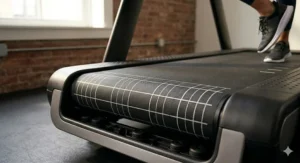
How to Choose Your Premium Treadmill: Decision Framework
Priority 1: Identify Your Training Motivation Driver
Instructor-Led Classes: Peloton Tread or NordicTrack Commercial 1750
Self-Directed Training: Sole F80 or LifeSpan TR5500i
Third-Party App Integration: Horizon 7.4 AT or Sole F80
Most buyers overestimate their long-term engagement with instructor-led content. If you haven’t consistently completed online workout classes in the past, don’t assume a $3,300 treadmill purchase will suddenly change your behavior. The Sole F80 and LifeSpan TR5500i accommodate future app integration if you discover you want guided workouts later, while eliminating the pressure of justifying monthly subscription costs.
Priority 2: Calculate Total Cost of Ownership (Three Years)
Peloton Tread: ~$3,300 + ($50 × 36 months) = ~$5,100
NordicTrack 1750: ~$2,000 + ($39 × 36 months) = ~$3,404
Sole F80: ~$1,900 + $0 = ~$1,900
LifeSpan TR5500i: ~$2,600 + $0 = ~$2,600
That $3,200 difference between Peloton Tread and Sole F80 over three years could fund a gym membership, running shoes, race entries, or simply remain in your investment account. If instructor-led motivation genuinely maintains your consistency, that $3,200 buys approximately 270 hours of professional coaching—arguably worthwhile. If you’re equally consistent with self-directed training, it’s money paying for features you don’t use.
Priority 3: Match Motor Power to Training Intensity
Walking/Light Jogging (under 5 MPH): 2.75-3.0 HP adequate
Regular Running (5-7 MPH): 3.0-3.5 HP minimum
Serious Training/Sprint Work (7+ MPH): 3.5-4.0+ HP recommended
Motor specifications matter more than most marketing materials admit. A 2.75 CHP motor running at 85% capacity during your typical 6 MPH jog will wear faster than a 3.5 HP motor coasting at 60% capacity doing the same work. If you’re genuinely planning high-mileage training weeks, spending extra for motor headroom prevents premature replacement.
Priority 4: Assess Your Space Realistically
Non-Folding Models: Require dedicated permanent space
Folding Models: Still occupy 3-4 feet width when stored
Vertical Clearance: Account for 7-8 feet minimum ceiling height
Walk your intended space with a tape measure before assuming equipment will fit. The Peloton Tread requires 78.7 inches clearance directly behind for safe usage—that’s nearly seven feet of dead space you cannot furnish or utilize. Folding models like the NordicTrack 1750 or ProForm T10 reduce footprint when stored but still demand permanent floor space.
Common Mistakes When Buying Premium Treadmills
Mistake 1: Choosing Screen Size Over Motor Quality
That massive 24-inch touchscreen looks impressive in showrooms, but it doesn’t power your running sessions—the motor does. Buyers routinely prioritize display size and entertainment features while accepting underpowered motors that struggle during actual training. A 3.75 CHP motor with a modest 10-inch screen outperforms a 2.75 CHP motor with a cinema-sized display every single workout.
Mistake 2: Ignoring Subscription Cost Reality
Marketing materials emphasize monthly pricing ($39-$50) because it sounds palatable. The reality: that’s $468-$600 annually, totaling $1,404-$1,800 over three years. For many households, that subscription eventually feels like a gym membership you’re locked into—except you already paid thousands upfront for the equipment. If you’re honest about your engagement with guided content, subscription-free models provide superior long-term value.
Mistake 3: Underestimating Deck Size Impact
A 55-inch deck versus 60-inch deck sounds like a minor five-inch difference until you’re actually running. Taller individuals or those with longer strides quickly discover that those five inches determine whether your gait feels natural or constrained. If you’re over 6 feet tall, that 60-inch minimum deck length is non-negotiable regardless of how good the price looks on a compact model.
Mistake 4: Overlooking Warranty Fine Print
“Lifetime warranty” sounds reassuring until you read the asterisk: lifetime on frame only, not motor or electronics. The NordicTrack Commercial 1750 provides lifetime frame warranty but just 10 years on motor—after a decade, replacement becomes your expense. Meanwhile, the Sole F80 offers lifetime coverage on both frame and motor, a meaningful difference if you’re planning 15+ years of ownership.
Peloton Tread vs Traditional Treadmill: What the Premium Buys You
You’re Paying For: Production Quality and Instructor Personality
Peloton’s classes genuinely feel like professional fitness studios condensed into your home. The instructors bring energy and personality that creates accountability—when Robin Arzon is yelling at you to push harder, quitting feels like letting down a friend rather than just stopping a machine. Competitors like iFIT offer solid instructors, but Peloton’s casting and production polish remains unmatched.
You’re Paying For: Social Connectivity Features
The leaderboard, high-fives, and community challenges create competition that self-directed treadmill users cannot replicate. Seeing your ranking among thousands of concurrent users taps into competitive psychology that drives some people to performance levels they wouldn’t reach alone. If social comparison motivates you—if tracking friends’ activity on Strava makes you lace up your shoes—Peloton’s community features might justify the premium.
You’re NOT Paying For: Superior Hardware Engineering
Strip away the touchscreen and subscription ecosystem, and Peloton’s hardware specifications look pedestrian compared to similarly-priced competitors. The LifeSpan TR5500i at $700 less delivers a more powerful 4.0 HP motor. The NordicTrack 1750 at $1,400 less includes decline capability Peloton doesn’t offer. You’re buying the software experience, not breakthrough hardware innovation.
You’re NOT Paying For: Flexibility and Equipment Longevity
Subscription-based models create dependency—if Peloton changes pricing, modifies content library, or pivots business strategy, you’re along for the ride or your expensive treadmill becomes a manual machine. The Sole F80 or LifeSpan TR5500i function identically in year one or year fifteen regardless of manufacturer decisions, providing genuine equipment independence.
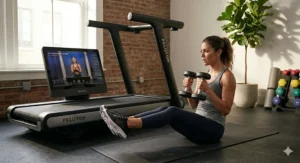
What to Expect: Real-World Performance Over Time
Months 1-3: The Honeymoon Phase
Every treadmill feels amazing when it’s new. The belt runs smoothly, the motor purrs quietly, and motivation runs high. Peloton users typically log 12-15 workouts monthly during this period, justifying the purchase with enthusiastic social media posts. Subscription-free treadmill users settle into their baseline frequency—usually 8-10 sessions monthly—without the pressure of justifying membership costs.
Months 4-12: The Consistency Test
This window separates buyers who genuinely needed instructor-led content from those who thought they did. Research examining treadmill exercise adherence shows that structured programs maintain engagement, but only if users authentically enjoy that training style. Peloton’s retention metrics remain strong in this phase, while some iFIT users report content fatigue as instructor personalities become overly familiar.
Years 2-3: The Value Realization
Subscription costs now exceed $1,000 total, creating the first moment of buyer’s remorse for some Peloton owners. Meanwhile, Sole F80 and LifeSpan TR5500i users have paid nothing beyond electricity costs, and their equipment performs identically to day one. Belt replacement becomes the primary maintenance concern across all models—expect $150-$300 depending on belt quality and installation complexity.
Years 4-5: The Longevity Question
Quality engineering reveals itself through sustained performance. Commercial-grade motors (3.5+ HP) continue delivering consistent power, while budget motors (under 3.0 HP) may develop thermal throttling or require replacement. Warranty coverage becomes crucial—lifetime motor warranties (Sole, LifeSpan) eliminate replacement costs that plague models with limited coverage.
Long-Term Cost & Maintenance Reality
Initial Investment Breakdown
Premium Tier ($3,000-$7,000): Peloton Tread, Peloton Tread+
Mid-Tier ($1,600-$2,700): NordicTrack 1750, LifeSpan TR5500i, Sole F80, Horizon 7.4 AT
Budget Tier ($1,100-$1,500): ProForm Carbon T10
Recurring Costs (Annual)
Subscription Models: $468-$600 annually (Peloton, iFIT)
Subscription-Free Models: $0-$50 (optional app subscriptions)
Maintenance: $50-$150 (belt lubrication, minor adjustments)
Major Replacement Costs (Every 5-7 Years)
Running Belt: $150-$350
Motor (out of warranty): $400-$800
Console/Electronics: $200-$500
The math reveals an uncomfortable truth for subscription-model buyers: over ten years, you’ll spend more on Peloton or iFIT memberships ($4,680-$6,000) than the entire purchase price of a Sole F80 or ProForm T10. That subscription expense funds nothing tangible—cancel the membership, and your equipment value drops immediately since the core experience disappears.
Features That Actually Matter (And Those That Don’t)
Features Worth Paying For
Motor Power Above 3.5 HP: Directly impacts longevity and performance consistency
Deck Size 60″ × 22″ or Larger: Accommodates natural running stride without constraints
Incline Range 12%+ Maximum: Enables meaningful hill training simulation
Lifetime Frame/Motor Warranty: Eliminates most expensive potential replacement costs
Features That Sound Better Than They Perform
Integrated Tablets/Entertainment Systems: Most users prefer their own devices for content
Fancy Cushioning Names: All modern treadmills provide adequate joint protection; exotic naming is marketing
Built-In Workout Programs (100+): Most users follow 3-5 favorite routines; having 200 options creates choice paralysis
Wi-Fi Connectivity (for non-subscription models): Adds complexity without meaningful functionality if you’re not using guided classes
The One Feature Everyone Regrets Skipping
Adequate Ceiling Clearance: Treadmill plus your height plus arm extension requires 8+ feet vertical space. Too many buyers discover ceiling fans, light fixtures, or low basement ceilings make their treadmill unusable after purchase. Understanding proper treadmill setup and safety guidelines helps prevent these costly mistakes. Measure twice, buy once.
Treadmill for Different Training Levels
Beginners Starting From Sedentary Lifestyles
Best Choice: ProForm Carbon T10 or Sole F80
Starting runners don’t need premium features—they need equipment that removes barriers to consistency. The ProForm’s 12-3-30 workout compatibility makes it dead simple to follow trending beginner programs, while the Sole F80’s zero subscription pressure eliminates the guilt of “wasting money” during inevitable motivation slumps. Both provide adequate specs for building cardiovascular base without overwhelming new users with complex features.
Intermediate Runners Training for First Half-Marathon
Best Choice: NordicTrack Commercial 1750 or Horizon 7.4 AT
Structured training plans become crucial at this level, making the NordicTrack’s auto-adjusting iFIT classes genuinely valuable for interval sessions and tempo runs. The Horizon 7.4 AT serves self-directed trainers who want quick speed adjustments for fartlek workouts without the subscription commitment. Both provide adequate motor power and deck size for 25-35 mile weekly volume.
Advanced Runners Maintaining Marathon Fitness
Best Choice: LifeSpan TR5500i or Peloton Tread+
High-mileage training demands serious motor capacity and joint protection. The LifeSpan’s 4.0 HP motor handles 40-50 mile weeks without stress, while its eight compression shocks reduce cumulative impact across long runs. The Peloton Tread+ justifies its premium through slat-belt cushioning that genuinely feels different during 10+ mile sessions, plus the accountability of scheduled classes that maintain consistency through training fatigue.
FAQ Section
❓ How much does peloton tread cost including membership?
❓ Is peloton tread worth it compared to cheaper treadmills?
❓ Can you use peloton tread without subscription?
❓ What's the difference between Peloton Tread and Tread Plus?
❓ How long do peloton tread treadmills last with regular use?
Conclusion: Making Your Premium Treadmill Decision
The Peloton Tread delivers exactly what it promises: an immersive, instructor-led fitness experience that maintains consistency for people who thrive on external motivation and community competition. That rotating 24-inch touchscreen, the energy Robin Arzon brings to 6 AM classes, the leaderboard showing you’re currently crushing your personal record—these elements create accountability that generic treadmills cannot replicate.
But here’s the truth most buyers don’t want to hear: you’re spending around $3,200 more over three years compared to the Sole F80, primarily for psychological reinforcement. If instructor-led classes genuinely keep you running when you’d otherwise quit, that $3,200 buys roughly 270 hours of professional coaching—arguably worthwhile. If you’re equally consistent with Spotify playlists and self-directed training, you’re paying premium prices for features you won’t use.
The NordicTrack Commercial 1750 splits the difference brilliantly: iFIT’s auto-adjusting classes provide structure at $1,400 less total investment than Peloton. The Sole F80 and LifeSpan TR5500i eliminate recurring costs entirely while delivering commercial-grade durability. The Horizon 7.4 AT serves HIIT enthusiasts better than any competitor through QuickDial controls. The ProForm Carbon T10 makes connected fitness accessible under $1,500.
Choose based on honest self-assessment rather than aspirational thinking. The “best” treadmill is the one you’ll actually use consistently for years, whether that requires Peloton’s community energy or just a solid motor and adequate deck space.
Recommended for You
- 7 Best Compact Treadmill with Incline for Small Spaces 2026
- 7 Best Mini Treadmill for Apartment Living – 2026
- 7 Best Compact Treadmill for Apartments & Small Homes 2026
Disclaimer: This article contains affiliate links. As an Amazon Associate, I earn from qualifying purchases. If you purchase products through these links, we may earn a small commission at no additional cost to you.
✨ Found this helpful? Share it with your friends! 💬🤗
