
In This Article
Picture this: you’re halfway through a grueling hill climb, sweat dripping, legs burning—but instead of staring at a blank wall, you’re virtually running through the Swiss Alps with a world-class trainer pushing you to dig deeper. That’s the power of a treadmill with streaming classes.
The home fitness landscape has exploded since 2023, and by 2026, the marriage between hardware and digital content has never been stronger. What most buyers overlook is this: the machine itself matters, but the streaming ecosystem determines whether you’ll actually use it six months from now. According to research from the CDC, consistent physical activity reduces disease risk and improves mental health, and a treadmill with streaming classes removes every excuse preventing you from hitting that 150-minute weekly cardio target.
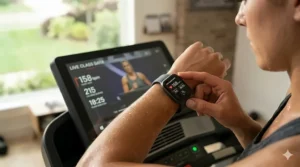
The difference between a traditional treadmill and one with instructor-led training is engagement. Static cardio feels like punishment; guided workouts with live treadmill workouts and on-demand treadmill classes feel like gaming. You’re chasing leaderboards, exploring virtual running treadmill routes across six continents, and getting real-time form corrections from instructors who’ve trained Olympians. The psychology is simple: when workouts feel less like work, consistency skyrockets.
In this guide, I’m breaking down seven actual models available on Amazon right now—not theoretical recommendations, but machines you can order today with verified specs, real customer feedback, and honest analysis about who each treadmill serves best. Whether you’re a beginner intimidated by gym culture or a marathon runner seeking interval precision, one of these machines will match your needs. Let’s find it.
Quick Comparison: Top Treadmills with Streaming Classes at a Glance
| Model | Price Range | Max Speed | Screen Size | Streaming Platform | Best For |
|---|---|---|---|---|---|
| NordicTrack Commercial 2450 | $2,400-$2,800 | 14 mph | 24″ HD touchscreen | iFIT (Netflix, Prime) | Advanced runners, scenic routes |
| Peloton Tread | $2,800-$3,200 | 12.5 mph | 23.8″ HD touchscreen | Peloton All-Access | Live class enthusiasts, community-driven |
| Echelon Stride 4S+ | $1,400-$1,700 | 12 mph | 22″ HD touchscreen | Echelon Fit App | Mid-range buyers, compact storage |
| Sole F85 | $1,800-$2,200 | 12 mph | 15.6″ touchscreen | No subscription (Netflix, Hulu built-in) | Subscription-avoiders, durability seekers |
| ProForm Performance 400i | $800-$1,100 | 10 mph | 7″ HD touchscreen | iFIT compatible | Budget-conscious beginners |
| Horizon 7.8 AT | $1,900-$2,300 | 12 mph | None (device shelf) | Bluetooth multi-app (Peloton, iFIT, Zwift) | Tech-savvy DIYers, app flexibility |
| Bowflex BXT8J | $1,100-$1,400 | 12 mph | None (JRNY app on tablet) | JRNY adaptive | Families, beginner-to-intermediate |
Looking at this comparison, the Sole F85 delivers unmatched value for those allergic to monthly fees—you get premium construction and built-in entertainment without bleeding $39 per month forever. However, if instructor quality matters more than your wallet, the NordicTrack 2450’s iFIT library crushes the competition with 16,000+ classes and those addictive outdoor runs that auto-adjust your incline to match Patagonian terrain. Budget buyers should note the ProForm 400i sacrifices speed and screen size but still grants access to the same iFIT ecosystem as machines costing double.
💬 Just one click — help others make better buying decisions too! 😊
Top 7 Treadmills with Streaming Classes: Expert Analysis
1. NordicTrack Commercial 2450 — The Speed Demon for Serious Runners
The NordicTrack Commercial 2450 doesn’t mess around. With a 4.25 CHP motor and 14 mph top speed, this machine handles sub-6-minute miles without flinching—something the 3.0 HP motors in budget models simply can’t match. The 24-inch pivoting HD touchscreen dominates your field of vision, perfect for following form cues during those brutal Tommy Rivs HIIT sessions.
What the spec sheet won’t tell you: that motor speed translates to lightning-fast transitions during interval training. When your workout calls for a sprint-to-recovery shift, the 2450 adjusts in under two seconds. Cheaper treadmills lag 5-7 seconds, killing your heart rate zone accuracy. Pair that with the -3% to 12% incline range, and you’re essentially running outdoor terrain indoors—the decline setting is a game-changer for marathon training, simulating downhill leg fatigue most treadmills ignore.
The iFIT subscription ($39/month after the 30-day trial) is non-negotiable here. Without it, you’re locked out of the streaming apps (Netflix, Prime Video, Spotify) and stuck with a handful of generic workouts. But with iFIT activated, the platform’s SmartAdjust technology learns your fitness level and auto-tunes future workouts—your treadmill literally gets smarter the more you use it. The Google Maps feature alone justifies the fee: drop a pin anywhere in the world, and the treadmill mimics that route’s elevation changes in real-time.
Customer feedback consistently praises the cushioned deck for reducing joint impact without feeling mushy. Long-distance runners training for marathons report they can log 10+ mile runs without the knee soreness that plagues outdoor pavement pounding. The SpaceSaver design folds vertically, though at 300 pounds, you’ll want help moving it.
✅ Pros:
- 14 mph max speed crushes advanced training needs
- 24″ screen with 360° pivot for off-tread strength classes
- -3% decline for realistic downhill conditioning
❌ Cons:
- Heavy at 300 lbs—assembly is a two-person job
- iFIT subscription mandatory for full functionality
This sits in the $2,400-$2,800 range—steep, but you’re paying for commercial-grade engineering that won’t quit after 1,000 miles. Best for serious runners who treat their treadmill like a training partner, not a clothes rack.
2. Peloton Tread — Community-Driven Cardio Excellence
The Peloton Tread rebuilt its reputation after 2021’s recall drama, and the redesigned version nails safety without sacrificing performance. The 23.8-inch touchscreen delivers Peloton’s signature high-energy classes—think Robin Arzón screaming motivational fire at 6 AM while Beyoncé pounds through studio speakers. The platform’s leaderboard gamification is unmatched; competing against thousands of live participants triggers a primal competitiveness traditional workouts can’t replicate.
Here’s what separates Peloton from the pack: instructor quality. These aren’t generic fitness coaches reading scripts; they’re personalities with cult followings. Jess Sims’ Bootcamps blend treadmill intervals with floor work so seamlessly you forget you’re exercising. The content library updates constantly—expect 20-30 new classes weekly across running, walking, hiking, and hybrid formats.
The 3.0 HP motor handles speeds up to 12.5 mph and inclines to 12.5%, which is plenty for 95% of runners (only ultramarathoners and speed freaks need more). The running belt uses carbon steel construction with slat design, providing a firm-but-cushioned feel that splits the difference between road running and softer gym treadmills. Six shock absorbers reduce impact without creating the trampoline bounce some cushioned decks produce.
The Peloton All-Access membership ($44/month) costs more than competitors, but the content justifies it if you’re bought into the ecosystem. Unlike iFIT’s global outdoor runs, Peloton focuses on studio energy—think EDM drops timed to sprint intervals, not serene mountain vistas. The app also unlocks strength, yoga, and cycling classes, turning your treadmill purchase into a full home gym.
Customer complaints center on the lack of decline capability and the non-swiveling screen, limiting off-tread workouts. At 300 pounds weight capacity (versus 400 lbs for NordicTrack), larger athletes may feel constrained.
✅ Pros:
- Best-in-class instructor talent and live class energy
- Slat-belt design provides road-like firmness with cushioning
- Robust community features (leaderboards, challenges, high-fives)
❌ Cons:
- No decline function limits training variety
- Screen doesn’t pivot for floor exercises
Priced in the $2,800-$3,200 range, this is for buyers who value motivation over technical features. If you’re the type who thrives in group fitness classes and needs social accountability, Peloton’s ecosystem will keep you coming back.
3. Echelon Stride 4S+ — Compact Powerhouse for Space-Conscious Homes
The Echelon Stride 4S+ solves the eternal home gym dilemma: premium features without eating your entire living room. The 22-inch HD touchscreen tilts and rotates, letting you follow yoga flows or bodyweight circuits after your run. The auto-fold mechanism collapses the deck to just 10 inches tall—slide it under a bed or into a closet, and guests will never know it’s there.
What Echelon understands that bigger brands ignore: not everyone has a dedicated home gym. The 3.0 CHP brushless motor operates whisper-quiet (we’re talking library-level acoustics), crucial for apartment dwellers with thin walls or parents running at 5 AM while kids sleep. The 20″ x 55″ running surface feels generous for walkers and joggers but might cramp taller runners during all-out sprints.
The Echelon Fit App provides 3,000+ live and on-demand classes, emphasizing variety over depth. You’ll find scenic runs, interval training, cross-training sessions, and even gamified challenges where you race against other users’ ghost avatars. The app lacks the polish of Peloton’s interface and the geographic breadth of iFIT’s outdoor library, but the $40/month membership (first 30 days free) still offers solid value. One membership covers five household users, making it family-friendly.
Here’s the insider perspective: Echelon targets the “premium-curious” buyer—someone who wants high-end features without mortgage-level commitment. The motorized 10% incline provides enough challenge for hill training, though serious climbers will miss the steeper grades NordicTrack offers. Customer reviews highlight the cushioned deck’s comfort for joint-sensitive users, though a few report the belt requires more frequent lubrication than expected.
✅ Pros:
- Auto-fold to 10″ thick—truly disappears when not in use
- Whisper-quiet motor ideal for apartments or shared spaces
- 22″ touchscreen rotates for off-tread workouts
❌ Cons:
- 20″ x 55″ deck may feel narrow for tall runners
- Echelon app interface less intuitive than Peloton/iFIT
The $1,400-$1,700 price range positions this perfectly for mid-market buyers who need professional results in a college-apartment footprint. Best for urban dwellers, multi-family homes, or anyone who refuses to sacrifice living space for fitness equipment.
4. Sole F85 — No-Subscription Beast Built Like a Tank
The Sole F85 is the anti-SaaS rebellion in treadmill form. While competitors lock features behind monthly paywalls, Sole pre-loads Netflix, Hulu, YouTube, Disney+, Amazon Prime, Spotify, and ESPN directly onto the 15.6-inch touchscreen. Log into your existing accounts once, and you’re set—no recurring fees, no ransom-ware pricing models. For buyers sick of subscription creep, this is liberation.
The commercial-grade Z-shaped steel frame and 4.0 CHP motor deliver stability that doesn’t budge under 400-pound users or sprint intervals. The 22″ x 60″ running deck is the widest in this comparison—side-to-side room matters more than most realize, especially during HIIT sessions when fatigue destroys coordination. The -6% to 15% incline/decline range outperforms nearly everything else, and the 2.75-inch rollers extend motor life by distributing belt tension more evenly than the 2-inch rollers budget models use.
What the marketing materials downplay: this deck runs firm. Road runners training for outdoor races love it—the minimal cushioning closely mimics pavement, building the foot and ankle strength that overly-soft treadmills weaken. But if you have existing knee issues or prefer a cloud-like feel, models like the Horizon 7.8 AT or NordicTrack 2450 offer gentler landings. The folding mechanism works smoothly despite the 300-pound weight, though you’ll need floor space for the footprint (roughly 80″ x 36″ when deployed).
The SOLE+ app provides free coached workouts across running, walking, HIIT, and strength training—no trial countdown, no premium tier upsells. It’s not as visually stunning as iFIT or as community-driven as Peloton, but for self-motivated users who prefer structure without hand-holding, it’s perfectly adequate. Lifetime warranty on frame and motor backs up the durability claims; customer reports of 5+ years trouble-free use are common.
✅ Pros:
- Zero subscription fees—streaming apps pre-installed
- 400 lb weight capacity accommodates larger athletes
- -6% decline and 15% incline trump most competitors
❌ Cons:
- Firm deck feel may aggravate sensitive joints
- Touchscreen doesn’t swivel or adjust angle
At $1,800-$2,200, the F85 is for buyers playing the long game. You’re paying more upfront to avoid $468/year subscription fees—over five years, that’s $2,340 in savings. Best for mathematically-minded buyers who hate recurring charges and self-starters who don’t need virtual cheerleaders.
5. ProForm Performance 400i — Budget Gateway to Premium Content
The ProForm Performance 400i proves you don’t need to drain savings for digital fitness. The 7-inch HD touchscreen feels small compared to flagship models, but it streams the same iFIT library as the $3,000 NordicTrack machines—16,000+ workouts, Google Maps routes, and auto-adjusting terrain. You’re accessing identical content at one-third the cost.
The 2.75 CHP motor caps at 10 mph, which honestly matches how most people actually train. Unless you’re running 6-minute miles (spoiler: you’re not), the speed limit won’t matter. The 10% motorized incline provides adequate hill simulation, though the absence of decline means marathon-training runners miss out on crucial downhill conditioning. The 20″ x 55″ running surface handles daily jogging but feels cramped during all-out sprints.
Here’s the honesty buyers need: this is an entry-level machine masquerading as mid-tier thanks to iFIT integration. The frame construction uses lighter materials than commercial-grade models, which introduces slight vibration during high-speed work. The deck cushioning reduces impact but lacks the plush responsiveness of premium systems. Expect this to handle 10-15 miles weekly comfortably; push it to 30+ miles and longevity suffers.
The real value proposition is iFIT membership access. Yes, you’re paying $39/month (or $396/year), but that subscription unlocks content worth exponentially more than the hardware price difference. Beginner runners benefit massively from guided coaching—proper form cues, pacing strategy, and structured progression plans prevent the injuries self-taught runners suffer. The 30-day free trial gives you a month to test whether instructor-led training hooks you.
Customer feedback skews positive for the price point, with praise for quiet operation and straightforward assembly. Complaints focus on the screen’s fixed angle (no tilt adjustment) and occasional Bluetooth connectivity hiccups.
✅ Pros:
- Access to premium iFIT library at budget price
- Quiet 2.75 CHP motor suitable for apartments
- Includes 30-day iFIT trial to test before committing
❌ Cons:
- 10 mph speed cap limits advanced training
- Lighter frame construction than commercial models
In the $800-$1,100 range, this is ideal for beginners intimidated by fitness culture who need expert guidance. You’re essentially renting the iFIT coaching platform and getting a functional treadmill thrown in. Best for newcomers prioritizing instruction over hardware specs.
6. Horizon 7.8 AT — The Tech-Savvy Runner’s Swiss Army Knife
The Horizon 7.8 AT takes a different approach: instead of forcing you into one proprietary ecosystem, it plays nice with everything. Bluetooth connectivity syncs with Peloton, iFIT, Zwift, and any other app that broadcasts workouts. Mount your tablet or phone on the device shelf, and suddenly you’re ecosystem-agnostic—run a Peloton class today, an iFIT scenic route tomorrow, and a Zwift gamified workout next week.
The 3.75 CHP motor delivers 12 mph speeds and adjusts incline/decline faster than competitors, critical for the integrated Sprint 8 HIIT program. Sprint 8 is a research-backed interval protocol designed by exercise physiologists—20 seconds all-out, 90 seconds recovery, repeated eight times. The 7.8 AT’s motor responsiveness makes those transitions seamless, maintaining workout integrity that lagged motors destroy.
The 22″ x 60″ running deck uses Variable Response Cushioning—firmer at the rear for powerful toe-off, softer at the front for reduced heel impact. This biomechanical detail matters more than blanket cushioning systems; it mimics how quality running shoes distribute impact zones. The built-in sound system outperforms every competitor here, which sounds trivial until you’re running to Metallica and your treadmill’s speakers actually reproduce the bass.
Here’s what Horizon gets right: they designed this for people who already know what they want. No hand-holding, no subscription lock-in, just a reliable machine that integrates with your existing digital life. The lifetime frame and motor warranty matches Sole’s coverage, while the 5-year parts warranty crushes NordicTrack’s 3-year coverage.
Customer reviews consistently highlight the superior build quality and smooth operation. The only significant complaint? The lack of an integrated touchscreen means you’re managing your own content—not a problem for self-directed athletes, but beginners might feel overwhelmed by too many app choices.
✅ Pros:
- Multi-app Bluetooth compatibility—use any streaming service
- Sprint 8 HIIT program backed by exercise science research
- Superior speaker system for immersive audio
❌ Cons:
- No built-in touchscreen—requires your own device
- Initial setup complexity for less tech-savvy users
The $1,900-$2,300 range targets experienced runners who’ve already experimented with digital fitness and know which platforms they prefer. Best for DIY types who value flexibility over curated experiences and anyone allergic to walled-garden ecosystems.
7. Bowflex BXT8J — Family-Friendly Fitness Without Intimidation
The Bowflex BXT8J addresses a market segment most brands ignore: families transitioning from sedentary to active. The JRNY app emphasizes adaptive workouts that automatically adjust as users improve, removing the guesswork beginners dread. Instead of choosing “advanced interval training” or “easy walking” (terms that mean nothing to novices), JRNY asks simple questions, builds a baseline, and evolves from there.
The 2.75 CHP motor caps at 12 mph with 15% motorized incline—adequate for most household needs. The 22″ x 60″ running belt provides ample room, while Comfort Tech cushioning softens impact without feeling unstable. Where Bowflex shines is accessibility: the Burn Rate console provides visual and audio cues that keep beginners engaged without overwhelming them with data. Advanced runners might find this hand-holding patronizing, but for hesitant users, it’s the difference between quitting week three or sticking with it.
The JRNY app ($20/month or $149/year) costs half of Peloton’s membership and includes Explore the World virtual routes, JRNY Radio (curated workout music), and hundreds of trainer-led classes. The content library skews toward encouraging and non-judgmental instruction—you won’t find drill-sergeant energy here, just patient coaches explaining why proper form matters. The app also streams to your tablet/phone, so you’re not tied to the treadmill for off-machine workouts.
Here’s the family angle: one $149/year membership covers unlimited household users, each with personalized workout plans. Compare that to Peloton’s single-user focus or iFIT’s multi-profile complications, and Bowflex’s approach makes sense for households with varying fitness levels. Kids can follow beginner walking programs while parents tackle intermediate running—all from the same machine and membership.
Customer feedback praises the easy assembly (most complete it solo in under 90 minutes) and intuitive controls. The folding mechanism works smoothly, and at 240 pounds, it’s lighter than most featured here. Complaints center on the app’s limited live class schedule compared to Peloton—most content is on-demand rather than real-time.
✅ Pros:
- JRNY app adapts to user progress automatically
- Family-friendly pricing—$149/year for unlimited users
- Non-intimidating for fitness beginners
❌ Cons:
- Live class schedule limited compared to Peloton
- Less suitable for advanced athletes seeking peak performance
At $1,100-$1,400, the BXT8J is perfect for families making their first serious fitness equipment purchase. Best for households where multiple people need varied difficulty levels and anyone intimidated by hyper-competitive fitness culture.
How to Set Up Your Treadmill with Streaming Classes for Maximum Success
Most buyers make the same mistake: they unbox their treadmill, hammer through assembly, fire up a workout, and wonder why they’re not using it three weeks later. The setup phase determines whether your machine becomes a launchpad or a coat rack.
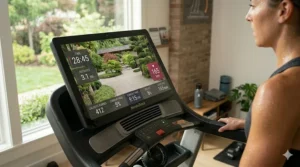
Location Matters More Than You Think: Place your treadmill facing a wall you actually want to stare at—not your neighbor’s fence or a blank drywall void. If you’re using virtual running treadmill programs, position it where natural light hits during your typical workout time. Psychologically, bright spaces boost motivation; dungeon basements kill it. Leave 3-4 feet of clearance behind the treadmill for safe dismounts during emergencies.
Dial In Your Streaming Setup Immediately: Don’t wait to “figure out the app later.” Spend 30 minutes during assembly day connecting WiFi, logging into streaming platforms, and running a test workout. Download any required apps to your tablet/phone if your machine uses external devices. Test Bluetooth connectivity, adjust speaker volumes, and bookmark 3-5 classes you’ll actually take this week. This upfront investment prevents friction later—the enemy of consistency is “figuring it out” on the day you’re supposed to exercise.
Master the Maintenance Basics Now: Treadmill belts need lubrication every 40-150 hours depending on the model (check your manual). Set a phone reminder the day you complete assembly—three months out, maintenance day. Vacuum underneath weekly to prevent dust from jamming the motor. Tighten belt tension if you notice slippage; loose belts kill motors prematurely and cost hundreds to replace.
Build Your First Week’s Schedule: Don’t let spontaneity dictate workouts—it breeds inconsistency. Schedule three 20-minute sessions for week one, picking specific classes in advance. Start ridiculously easy; the goal is habit formation, not hero workouts. A beginner who completes 12 weeks of consistent easy runs outperforms the warrior who burns out after two weeks of punishing intervals.
Real Users, Real Results: How Digital Fitness Content Actually Works
Here’s what nobody tells you about instructor-led training: it’s not about the workouts themselves—those are scientifically identical to generic programs. The magic is accountability through parasocial relationships. When Marcel Dinkins tells you to push through the next 30 seconds, you do it because you feel like you’re letting him down if you quit, even though he’s a pre-recorded video who doesn’t know you exist.
The 45-Day Transformation Window: Most people who stick with treadmill streaming classes experience noticeable cardiovascular improvements by week 6-7. You’re not chasing body transformation yet—that’s week 10-12 territory depending on diet. The early wins are functional: stairs don’t wind you, playing with kids doesn’t exhaust you, and your resting heart rate drops 5-10 beats per minute. These micro-victories fuel motivation far more than appearance changes.
The Plateau Problem Streamers Solve: Traditional treadmill users hit a wall around week 8-10 when their body adapts to static routines. Streaming platforms combat this through programmatic variety—your Monday hill workout differs from Thursday’s tempo run, which diverges from Saturday’s long slow distance. The algorithmic variation prevents adaptation plateaus that stall progress.
Community Features You’ll Ignore Until They Hook You: The leaderboards, milestone badges, and friend challenges feel gimmicky at first. Then you notice someone consistently beating your average pace by 30 seconds, and primal competitiveness ignites. You’re chasing a stranger’s stats like a video game high score. Behavioral psychologists call this “gamification of fitness,” and it works because humans are wired to compete.
How to Choose the Right Treadmill with Streaming Classes for Your Life
Stop shopping by features and start shopping by honesty. The “best” treadmill is the one you’ll actually use, which means aligning purchase decisions with your real behavior patterns, not aspirational ones.
Question 1: Are You a Morning Person or Evening Exerciser? Morning runners in shared living spaces need whisper-quiet motors (Echelon Stride, ProForm 400i). Evening exercisers with unlimited bandwidth can handle noisier commercial-grade machines (Sole F85, NordicTrack 2450).
Question 2: Do You Actually Want Live Classes or Just Entertainment? If leaderboards and real-time competition excite you, Peloton’s live schedule justifies the premium. If you prefer running to Netflix while the treadmill auto-adjusts, Sole F85’s zero-subscription model saves thousands over five years.
Question 3: What’s Your Real Weekly Mileage? Be brutally honest. If you’ll run 3-5 miles three times weekly, budget models like the ProForm 400i handle that easily. Planning 25+ weekly miles? You need commercial-grade motors (Sole F85, NordicTrack 2450, Horizon 7.8 AT) or you’ll burn out the machine in 18 months.
Question 4: Is Space Negotiable or Fixed? In a 250-square-foot apartment, only the Echelon Stride makes sense—it’s the single model that truly disappears. Dedicated home gym with 10′ x 10′ space? Any model works, so prioritize performance over footprint.
Question 5: Will Multiple People Use This Machine? Families need robust weight capacities (Sole F85’s 400 lbs), multi-user app support (Bowflex JRNY’s unlimited profiles), and intuitive controls that don’t require tech degrees to operate. Solo users can optimize for personal preferences without compromise.
Question 6: How Much Do You Trust Your Future Self? Subscription models bet you’ll stay motivated indefinitely. No-subscription machines bet you won’t. If your garage houses three abandoned hobby purchases, the Sole F85’s zero-recurring-fee model hedges that risk. If you’re the type who finishes what you start, iFIT or Peloton’s content depth rewards sustained engagement.
Common Mistakes When Buying a Treadmill with Streaming Classes
Mistake #1: Confusing Screen Size with Content Quality
A 24-inch touchscreen displaying mediocre workouts loses to a 7-inch screen streaming world-class coaching. Peloton’s smaller screen outperforms budget 15-inch displays because instructor quality and production value eclipse diagonal inches. Prioritize ecosystem depth over hardware specs.
Mistake #2: Ignoring Motor Horsepower Realities
Marketing teams abuse “peak horsepower” ratings—meaningless bursts that don’t reflect sustained performance. Look for Continuous Horsepower (CHP): 2.5 CHP minimum for walkers, 3.0+ CHP for runners, 3.5+ CHP for daily users over 200 pounds. Underpowered motors die prematurely and fail during intense intervals when you need them most.
Mistake #3: Underestimating Subscription Math
A $1,000 treadmill with $39/monthly subscriptions costs $3,340 over five years. A $2,000 no-subscription model (Sole F85) saves $340 long-term. Run the total-cost-of-ownership calculation before assuming cheaper upfront pricing wins. If you’re certain you’ll maintain membership for years, the math flips—budget machines with premium subscriptions become better deals.
Mistake #4: Buying for Fantasy Self Instead of Actual Self
You’re not training for the Boston Marathon (yet). The 14 mph top speed on the NordicTrack 2450 is wasted if you’ll never exceed 8 mph. Be honest about current fitness level and realistic goals. Beginners benefit more from gentle coaching (Bowflex JRNY) than advanced interval protocols (Horizon Sprint 8).
Mistake #5: Neglecting the Return/Warranty Gap
Amazon’s 30-day return window doesn’t align with the 45-60 days needed to determine if you’ll use the machine consistently. Look for manufacturers offering extended trials—NordicTrack’s 45-day in-home trial removes pressure from hasty decisions. Lifetime motor warranties (Sole, Horizon) signal manufacturer confidence absent in brands offering 1-2 year coverage.
Treadmill with Streaming Classes vs Traditional Gym Memberships
Let’s do the math everyone avoids. A mid-tier gym membership costs $50-$80 monthly ($600-$960 annually). Over five years, that’s $3,000-$4,800 before counting initiation fees, parking, gas, or the time tax of commuting. A $1,500 treadmill with $39/monthly streaming ($468/year) totals $3,840 over five years—and you never drive in a snowstorm to use it.
But Gyms Offer Equipment Variety… True. Treadmills can’t replicate rowing machines, squat racks, or cable stations. The counter-argument: most gym-goers use 3-4 pieces of equipment routinely, not the 40+ available. If your routine centers on cardio plus bodyweight work (which streaming platforms coach through off-tread classes), a home setup covers 80% of needs at 50% of total cost.
The Consistency Variable flips everything. A home treadmill you use four times weekly destroys a gym membership you visit twice monthly. Location friction matters—studies show people exercise 40% more consistently when equipment is ≤100 feet from their living space compared to ≥1 mile away. No excuses about rain, traffic, or “the gym closes at 9 PM” when your treadmill is 20 feet from your bed.
Social Accountability Is Overrated for 70% of exercisers. Group class fanatics thrive on in-person energy, but introverts suffer through it. Digital fitness content provides the instruction and structure of classes without the social performance anxiety. Leaderboards offer competition for those who want it; solo workouts exist for those who don’t.
What the Warranty Actually Tells You About Build Quality
Warranties are manufacturer confessions about expected failure rates. Decode them correctly, and you’re reading engineering tea leaves.
Lifetime Frame and Motor Warranties (Sole F85, Horizon 7.8 AT, ProForm models): These brands expect frames/motors to outlive ownership. They’re betting you’ll upgrade before these components fail, which means they’ve over-engineered durability. Economically, lifetime warranties only make sense if failure rates are <5% annually.
1-2 Year Limited Warranties (budget Amazon brands): These scream “planned obsolescence.” Manufacturers know motors will fail around month 18-24 and want you off their hook before that happens. Not universally true—some budget brands simply can’t afford generous coverage—but it’s a red flag worth investigating through customer reviews.
Parts Coverage Variability: NordicTrack offers 3 years on parts; Horizon provides 5 years. That 2-year gap matters for components like belt rollers, deck cushioning, and console electronics. These aren’t catastrophic failures, but $150-$300 replacement parts add up. Longer parts coverage suggests manufacturers use higher-quality components less prone to wear.
Labor Warranty Is the Hidden Cost: Notice most warranties cover parts longer than labor. A 3-year parts / 1-year labor warranty means you’re paying technician fees out-of-pocket after year one—often $200-$400 per service call. This incentivizes owners to ignore minor issues that become major failures, exactly what manufacturers want. Prioritize brands offering 2+ years of labor coverage.
Features That Actually Matter (And Marketing Hype You Should Ignore)
Matters: Motor CHP — The difference between 3.0 and 4.0 CHP is sustainability under load. Higher CHP motors run cooler, last longer, and handle sprint intervals without straining. This directly impacts lifespan and performance reliability.
Doesn’t Matter: “Pre-Installed Workout Programs” — Treadmills boasting “50 built-in workouts!” are padding specs. When you have access to 3,000-16,000 streaming classes, generic on-board programs become obsolete. Focus on streaming ecosystem quality, not local program counts.
Matters: Deck Cushioning System — Joint impact accumulation causes long-term damage. Variable Response Cushioning (Horizon) or multi-zone cushioning outperforms generic foam pads by distributing forces biomechanically. This is the difference between sustainable running careers and chronic injuries.
Doesn’t Matter: Bluetooth Heart Rate Monitoring — Chest straps and wrist-worn trackers already measure this more accurately than handlebar sensors. Treadmills advertising “integrated heart rate monitoring” aren’t adding value; they’re selling redundant hardware to less-informed buyers.
Matters: Screen Adjustability — Touchscreens that tilt, swivel, or pivot (NordicTrack, Echelon) enable off-tread strength, yoga, and floor work. Fixed screens lock you into treadmill-only usage, limiting versatility. This matters if you’re paying for streaming memberships covering multiple workout types.
Doesn’t Matter: Fan Strength — Treadmill fans universally suck (pun intended). You’ll use a separate floor fan within two weeks. Don’t weigh purchasing decisions on included fan specs—it’s filler feature real runners ignore.
Long-Term Cost Analysis: Subscription vs No-Subscription Models
Let’s break down five-year total cost of ownership across subscription and subscription-free models:
Subscription Model (NordicTrack 2450):
- Treadmill: $2,600
- iFIT membership (60 months): $2,340
- Total: $4,940
Subscription Model (Peloton Tread):
- Treadmill: $3,000
- All-Access membership (60 months): $2,640
- Total: $5,640
Hybrid Model (Bowflex BXT8J):
- Treadmill: $1,250
- JRNY membership (60 months): $745
- Total: $1,995
No-Subscription Model (Sole F85):
- Treadmill: $2,000
- Membership fees: $0
- Total: $2,000
The math favors Sole F85 for single users who don’t need guided workouts. But here’s the psychological trap: that $2,000 upfront payment feels more painful than 60 incremental $39 charges. Subscription models exploit present bias—your brain minimizes future costs and overweights immediate savings. If you can afford the upfront premium, no-subscription models win economically.
However, content quality matters. If iFIT’s instruction prevents $200 worth of running injuries through proper form coaching, or Peloton’s motivation causes you to exercise 40% more consistently (burning an additional 15,000 calories annually), the subscription ROI becomes positive despite higher total cost. Value isn’t purely financial.
Safety Features and Regulations You Need to Know
After Peloton’s 2021 recall involving 70+ injuries and one child fatality, industry safety standards tightened significantly. Here’s what responsible manufacturers implemented:
Emergency Stop Mechanisms: All modern treadmills include safety lanyard clips that immediately halt the belt if you fall. Magnetic attachments work better than mechanical clips—they’re harder to accidentally detach during normal use while still releasing instantly during emergencies.
Belt Gap Compliance: The space between belt and side rails must be <6 millimeters to prevent small hands/feet from getting caught. Peloton’s original design allowed larger gaps contributing to injuries. Check customer reviews for reports of loose belts or wide gaps before purchasing.
Passcode Locks: Premium models (Bowflex, NordicTrack) include passcode features preventing unauthorized use. Critical for households with young children who might climb on idle treadmills, triggering accidental starts. Budget models often skip this feature—worth noting for families.
Weight Capacity Honesty: Some manufacturers inflate weight ratings to boost marketability. The rule: if you weigh within 20% of max capacity, expect accelerated wear. A “300 lb capacity” treadmill used by a 240 lb runner will degrade faster than a 400 lb capacity model supporting the same weight. Buy higher capacity than you need.
FAQ: Your Top Questions About Treadmills with Streaming Classes Answered
❓ Can I use treadmill streaming classes without WiFi?
❓ Do virtual running treadmill programs actually adjust incline automatically?
❓ How much data do on-demand treadmill classes use per hour?
❓ Can I share my streaming subscription across multiple treadmills?
❓ Do live treadmill workouts require specific time zones or schedules?
Conclusion: Finding Your Perfect Treadmill with Streaming Match
After dissecting seven machines and 16,000+ workout libraries, here’s the truth: the best treadmill with streaming classes is whichever one removes your personal excuses for not exercising. For some, that’s the Peloton Tread’s competitive leaderboards; for others, it’s the Sole F85’s zero-subscription freedom.
Advanced runners chasing PRs need the NordicTrack Commercial 2450’s 14 mph speed and -3% decline. Space-constrained urbanites require the Echelon Stride’s 10-inch folded profile. Budget-conscious beginners thrive with the ProForm Performance 400i’s premium content at entry-level pricing. Subscription-hating mathematicians choose the Sole F85’s total-cost-of-ownership victory. Tech-savvy DIYers want the Horizon 7.8 AT’s multi-app Bluetooth freedom. Families appreciate the Bowflex BXT8J’s adaptive coaching and unlimited user profiles.
The research from the CDC confirms that 150 minutes of moderate-intensity cardio weekly reduces chronic disease risk, improves mental health, and extends lifespan. The challenge has never been knowing what to do—it’s been consistently doing it. Instructor-led training and digital fitness content solve the motivation crisis that kills New Year’s resolutions by March.
Don’t overthink this. Pick the model that fits your space, budget, and workout personality. Order it today, schedule three workouts this week, and trust that the machine becomes valuable only when you actually use it. The perfect treadmill gathering dust loses to the decent treadmill you run on four times weekly.
✨ Don’t Miss These Exclusive Deals!
🔍 Take your home cardio to the next level with these carefully selected products. Click on any highlighted item to check current pricing and availability. These machines will help you create authentic fitness results your family will notice!
Recommended for You
- 7 Best Smart Treadmill With Screen – 2026
- 7 Best App Connected Treadmills 2026 – Smart Running Revolution
- 7 Best NordicTrack Treadmill Warranty Plans: 2026 Guide
Disclaimer: This article contains affiliate links. As an Amazon Associate, I earn from qualifying purchases. If you purchase products through these links, we may earn a small commission at no additional cost to you.
✨ Found this helpful? Share it with your friends! 💬🤗
