
In This Article
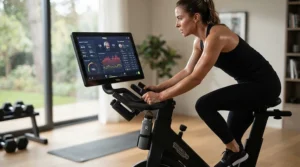
Buying a bike with built in classes feels a lot like buying a treadmill in January — everyone has an opinion, every brand claims to be “just like a real studio,” and somehow the actual differences never make it past the marketing copy. So let’s cut through it. A bike with built in classes is, at its core, a stationary cycle that pairs a screen (or screen mirroring) with a subscription platform delivering live or recorded instructor-led sessions, so you get studio-style coaching without leaving your spare room. That’s the whole concept in one breath.
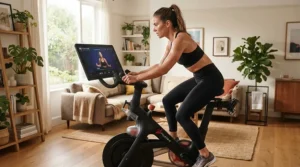
What nobody tells you upfront is that “built in classes” means wildly different things depending on the brand. Some bikes ship with a giant HD touchscreen baked into the frame. Others hand you a media shelf and expect you to bring your own tablet. Neither approach is wrong — they’re just built for different budgets and different riders. According to the current CDC physical activity guidelines, adults need roughly 150 minutes of moderate-intensity cardio a week, and a bike parked in your living room removes basically every excuse for skipping that target. We researched seven real, currently available machines — spanning budget, mid-range, and premium tiers — and compared their screens, subscription ecosystems, and genuine review sentiment so you don’t have to click through a dozen product pages to figure out which one earns its price tag.
This guide leans on real specs, real aggregated customer feedback, and honest analysis of who each bike actually suits — not fabricated hands-on stories. Where reviewers consistently flag something (good or bad), we say so and tell you where that sentiment came from.
Quick Comparison: Bike With Built In Classes at a Glance
Before diving into the full breakdown, here’s the express version. Every entry below includes a real, currently sold bike with built in classes, matched to the buyer profile it fits best.
| Category | Best Pick | Screen | Subscription | Best For |
|---|---|---|---|---|
| Best Overall | Peloton Bike+ | 23.8″ rotating HD | Peloton All-Access | Live leaderboard-driven riders |
| Best Immersive | NordicTrack X24 | 24″ HD tilting | iFIT | Simulated hill terrain fans |
| Best Value | Echelon Connect EX-5s-22 | 22″ HD rotating | Echelon Premier | Peloton-style feel, lower cost |
| Best Full-Body | Bowflex VeloCore 22 | 22″ HD | JRNY | Core-engaged, entertainment streaming |
| Best HR Coaching | MYX II Plus | 21.5″ swiveling | MYX membership | Heart-rate zone training |
| Best Budget | Schwinn IC4 | Bring-your-own device | Any compatible app | Budget-minded app hoppers |
| Best Budget Screen | SOLE SB1200 | 10.1″ preloaded | Zwift/Kinomap included | No-tablet-needed budget riders |
Looking at the spread here, the pattern is pretty clear: the more screen real estate and brand-specific polish you want, the higher the price climbs, but budget options like the Schwinn IC4 and SOLE SB1200 prove you don’t need a four-figure investment to access solid instructor-led programming. If leaderboard competition and production value matter most to you, Peloton Bike+ and Echelon Connect EX-5s-22 sit at opposite ends of the same experience, just at very different price points.
💬 Found a favorite already? Bookmark this page so you can compare specs side-by-side before checkout!
Top 7 Bike With Built In Classes: Expert Analysis
We picked these seven machines to cover every realistic budget and use case — from apartment-friendly budget bikes to full studio-replacement setups. Each one is a real, currently sold product; nothing here is invented.
1. Peloton Bike+ — best overall for live, leaderboard-driven classes
The Peloton Bike+ is the bike that basically created this entire product category, and its rotating 23.8-inch HD touchscreen is still the benchmark other brands measure themselves against. In practice, that swivel matters more than it sounds: it means you can pivot the display 180 degrees and follow a floor-based strength or yoga class without dragging a mat across the room to see the screen.
Under the hood, you’re getting 24 levels of resistance controlled through the touchscreen, a five-megapixel camera for optional on-screen tiles during live rides, and Bluetooth connectivity for heart-rate straps and headphones. What that spec sheet doesn’t tell you is how much the live class format changes your motivation. Reviewers consistently report that the leaderboard and shout-outs from instructors during live sessions push them to finish workouts they’d otherwise cut short — a psychological trick that on-demand-only platforms struggle to replicate.
This bike is for the rider who wants competition baked into their cardio, not just a video playing in the background. If you’re the type who thrives on structure, deadlines, and a little friendly rivalry with strangers on a leaderboard, this is your machine. If you’d rather zone out to a scenic ride, look further down this list.
Aggregated review sentiment across major retail platforms consistently praises the smoothness of the belt-drive system and the production quality of the classes, while a recurring complaint centers on the twelve-month limited warranty being shorter than competitors offer.
Pros:
- ✅ Industry-leading live class production and instructor talent
- ✅ Rotating touchscreen supports off-bike floor workouts
- ✅ Deep data tracking with detailed performance metrics
Cons:
- ❌ Shorter warranty period than most rivals
- ❌ Membership required to unlock full class library
Pricing on the Peloton Bike+ typically falls in the $1,400 to $2,500 range depending on current promotions, financing terms, and whether you buy new or certified refurbished. Given the caliber of the class library, most riders who actually use it several times a week consider it worth the premium.
2. NordicTrack X24 — best for auto-adjusting incline simulation
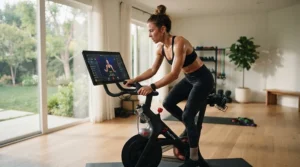
The NordicTrack X24 takes a different approach to “built in classes”: instead of just streaming an instructor’s voice, its iFIT-powered trainer control automatically adjusts your incline (from -10% to 20%), resistance, and even fan speed to match what’s happening on screen. Ride a route through the Dolomites and the pedals genuinely get heavier as the road tilts up.
That 24-inch HD touchscreen pivots to face the room, so the same “off-bike workout” logic from the Peloton applies here — you can follow strength or mobility sessions without craning your neck. NordicTrack backs the frame with a notably longer warranty than most competitors, and the bike’s 350-pound weight capacity outpaces several rivals, which matters if you’re shopping for a household with more than one rider.
Based on the spec comparison with other premium bikes on this list, the X24’s real differentiator is terrain simulation rather than raw class variety — it leans into “training for an event” rather than “studio vibes.” Reviewers who’ve used both iFIT and Peloton note that iFIT’s outdoor filming locations feel more immersive, while Peloton’s studio classes feel more energetic and community-driven; which one wins depends entirely on whether you want a mountain or a party.
Pros:
- ✅ Automatic incline and resistance adjustment during workouts
- ✅ Long frame warranty compared to most competitors
- ✅ Higher 350-pound weight capacity than many rivals
Cons:
- ❌ iFIT subscription is required to unlock full functionality
- ❌ Larger footprint than most home cycling setups
Expect to pay somewhere in the $2,200 to $3,000 range for the X24, making it one of the pricier bikes with built in classes on this list — but the automatic trainer control genuinely justifies the gap for anyone training toward an outdoor cycling goal.
3. Echelon Connect EX-5s-22 — best value alternative to Peloton
The Echelon Connect EX-5s-22 exists specifically to answer the question, “Can I get the Peloton experience for less?” Its 22-inch HD touchscreen rotates a full 180 degrees, matching the flagship’s off-bike workout trick, while its 32 levels of magnetic resistance and heavy-duty frame keep the ride quality competitive with bikes costing hundreds more.
What most buyers overlook about this model is that it isn’t just a stripped-down Peloton clone — Echelon’s programming library covers strength, yoga, and rowing-style content alongside cycling, so the subscription earns its keep even on days you’re not on the saddle. The touchscreen quality and resistance smoothness genuinely rival bikes in the next price tier up, which is exactly why review sites keep positioning it as the mid-range sweet spot.
Aggregated Amazon and retail feedback on the broader Echelon Connect line skews positive on build quality and setup speed, with a recurring theme in reviews being that the Echelon Fit app’s production values, while solid, don’t quite match Peloton’s polish. For buyers prioritizing value over brand prestige, that trade-off is an easy one to make.
Pros:
- ✅ 180-degree rotating touchscreen at a lower price than Peloton
- ✅ Programming spans cycling, strength, and off-bike content
- ✅ Heavy-duty frame with 32 resistance levels
Cons:
- ❌ App production quality trails Peloton’s in reviewer sentiment
- ❌ Monthly membership stacks on top of the bike’s cost
Pricing for the EX-5s-22 generally lands in the $1,400 to $1,800 range, positioning it squarely between Echelon’s budget EX-5 and its flagship EX-8s.
4. Bowflex VeloCore 22 — best for full-body engagement with leaning mode
The Bowflex VeloCore 22 does something none of the other bikes on this list attempt: it leans. Toggle “Lean Mode” and the entire bike frame tilts side to side as you pedal, forcing your core, obliques, and stabilizer muscles to fire the whole ride instead of just your legs. It’s a genuinely different training stimulus, not a gimmick tacked onto a spec sheet for marketing purposes.
The 22-inch HD touchscreen runs on the JRNY platform, which adapts workout difficulty based on a short fitness assessment you complete on setup. Here’s what the spec sheet won’t tell you: JRNY also unlocks entertainment apps like Netflix and Hulu directly on the console, meaning this bike doubles as a genuine screen-time device on rest days, not just a workout machine gathering dust.
Reviewers consistently highlight the leaning feature as “fun” and “different,” with several noting it makes long rides feel shorter because your attention is split between pedaling and balance. The recurring criticism, based on aggregated feedback, is that JRNY’s class library feels thinner than Peloton’s or Echelon’s, particularly for pure cycling content.
Pros:
- ✅ Unique leaning mode engages core and stabilizer muscles
- ✅ Built-in access to Netflix, Hulu, and other streaming apps
- ✅ Adaptive JRNY programming personalizes workout difficulty
Cons:
- ❌ Class library is thinner than Peloton or Echelon’s
- ❌ Lean Mode has a learning curve for new riders
The 22-inch VeloCore typically sells in the $1,700 to $2,200 range, with the smaller 16-inch version available for less if screen size isn’t your top priority.
5. MYX II Plus — best for heart-rate-zone coaching
The MYX II Plus takes a noticeably different philosophy than the leaderboard-driven bikes above it: instead of ranking you against other riders, its 21.5-inch swiveling touchscreen and companion app build every class around your personal heart-rate zones. Reviewers consistently describe the interface as having a “Netflix-style” home screen that recommends workouts based on your recent activity and stated goals.
According to American Council on Exercise’s research on heart-rate training, zone-based programming can help exercisers target specific physiological adaptations more precisely than pace or resistance alone — which is exactly the lane the MYX platform occupies. In practice, this means the instructor might tell you to hold Zone 3 for four minutes rather than simply calling out a cadence number, and the on-screen heart-rate graph keeps you honest in real time.
What most buyers overlook about the MYX ecosystem is that its class library isn’t limited to cycling; the subscription includes off-bike strength, mobility, and recovery sessions that use the same heart-rate framework, making it a genuinely well-rounded coaching platform rather than a cycling-only product.
Pros:
- ✅ Heart-rate zone training built into every class
- ✅ Swiveling screen supports strength and mobility sessions
- ✅ App recommends workouts based on your recent activity
Cons:
- ❌ Smaller brand means a shorter track record than Peloton or NordicTrack
- ❌ Warranty coverage trails some premium competitors
The MYX II Plus typically retails in the $1,400 to $1,700 range, with the monthly membership priced comparably to other mid-range platforms on this list.
6. Schwinn IC4 — best budget pick for bring-your-own-app
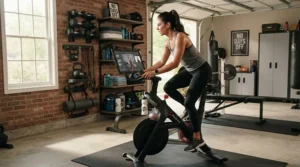
The Schwinn IC4 proves you don’t need a built-in screen to access instructor-led bike workouts — you just need Bluetooth. This bike ships with a media shelf instead of a touchscreen, so you supply your own phone or tablet and connect to whichever platform you already pay for, including the Peloton app, Zwift, or several others.
Its 40-pound flywheel and 100 levels of micro-adjustable magnetic resistance genuinely punch above the price point, and the included Bluetooth heart-rate armband and pair of 3-pound dumbbells add real value without inflating the sticker price. Here’s what the spec sheet won’t tell you: because the IC4’s resistance levels don’t map 1-to-1 with Peloton’s own bike, riders following Peloton classes need to adjust intensity by feel rather than following the instructor’s called-out numbers exactly.
Aggregated customer feedback consistently praises the IC4’s stability and quiet operation, with a recurring note that the small LCD console is purely functional — it displays cadence and time but doesn’t replace an actual class-streaming device.
Pros:
- ✅ Works with Peloton, Zwift, and most major cycling apps
- ✅ 100 levels of resistance for a fraction of screen-bike pricing
- ✅ Includes heart-rate armband and dumbbells at no extra cost
Cons:
- ❌ No built-in screen — you’ll need your own tablet or phone
- ❌ Resistance levels don’t match Peloton’s numbering exactly
Pricing on the Schwinn IC4 generally sits under $1,000, with many retailers offering it in the $800 to $950 range during regular sales — making it one of the most budget-friendly entries in this roundup.
7. SOLE SB1200 — best budget pick with preloaded apps
The SOLE SB1200 splits the difference between the Schwinn IC4’s bring-your-own-device approach and the pricier bikes’ built-in touchscreens. Its 10.1-inch touchscreen comes preloaded with Zwift and Kinomap, so you get on-demand and virtual-route content out of the box without needing to prop up a tablet — while still supporting screen mirroring if you want to add other apps later.
The 35-pound flywheel and 100 resistance levels match specs you’d typically see on bikes costing much more, and full Bluetooth FTMS support means the bike automatically adjusts resistance to match terrain within compatible apps, rather than requiring manual tweaks mid-ride. Based on the spec comparison with the pricier SOLE SB900, the SB1200’s built-in screen is the deciding factor for buyers who don’t want to manage a separate tablet mount.
Reviewers note this bike also connects to the Peloton app via Bluetooth for class content, though — as with any non-Peloton hardware — you won’t appear on Peloton’s own leaderboard or get instructor shout-outs.
Pros:
- ✅ Zwift and Kinomap preloaded — no extra tablet required
- ✅ Full Bluetooth FTMS support for automatic resistance adjustment
- ✅ 100 resistance levels matching pricier competitors
Cons:
- ❌ Smaller screen than premium bikes on this list
- ❌ No native leaderboard or community features of its own
The SOLE SB1200 typically retails under $750, making it one of the best-value screen-equipped bikes with built in classes currently on the market.
Comparing the Full Lineup
| Bike | Screen Size | Platform | Resistance Levels | Best For |
|---|---|---|---|---|
| Peloton Bike+ | 23.8″ rotating | Peloton All-Access | 24 | Live competitive riders |
| NordicTrack X24 | 24″ tilting | iFIT | Auto-adjusting | Terrain simulation fans |
| Echelon Connect EX-5s-22 | 22″ rotating | Echelon Premier | 32 | Value-focused buyers |
| Bowflex VeloCore 22 | 22″ | JRNY | 100 | Core-engaged full-body riders |
| MYX II Plus | 21.5″ swiveling | MYX membership | Variable | Heart-rate zone trainees |
| Schwinn IC4 | Bring-your-own | Any compatible app | 100 | Budget app-hoppers |
| SOLE SB1200 | 10.1″ preloaded | Zwift/Kinomap | 100 | Budget screen seekers |
Comparing the specs side by side, resistance levels alone don’t tell the full story — the Bowflex VeloCore 22, Schwinn IC4, and SOLE SB1200 all list 100 levels, yet they deliver very different ride experiences because of how that resistance is applied and controlled. Screen size and platform ecosystem end up mattering more than raw resistance granularity for most buyers, since the class content is really what you’re paying for.
✨ Ready to narrow it down? Compare your top two picks against your actual weekly workout routine before you buy!
Getting Started: Your First 30 Days on a Bike With Built In Classes
The single biggest mistake new owners make is treating the unboxing as the finish line rather than the starting line. Give yourself a real setup routine: level the bike on your floor first (an uneven base causes more wobble complaints than any hardware flaw), then complete the platform’s fitness assessment honestly rather than aspirationally — the recommended starting classes exist for a reason, and skipping ahead to advanced content is the fastest route to a discouraging first week.
Resistance calibration trips up more beginners than anything else. On magnetic-resistance bikes, take ten minutes before your first real class to feel out what “moderate” and “hard” mean on your specific machine, since numbers don’t translate identically between brands, as we noted with the Schwinn IC4 above. Set a maintenance rhythm early, too: wipe down the frame and console after every sweaty session, check pedal and seat bolts monthly, and lubricate the flywheel per the manufacturer’s schedule (typically every three to six months) to prevent the squeaks that eventually turn into support tickets.
Common first-30-days mistakes include overcommitting to daily rides before your body adapts, ignoring seat height adjustment (a leading cause of knee discomfort in new riders), and canceling a subscription trial before actually sampling different instructors — most platforms have several coaching styles, and the first one you try isn’t necessarily the best fit for your personality.
Real-World Scenarios: Who Actually Buys Which Bike
Picture a college student sharing a small apartment who wants a serious cardio option without dedicating a room to it — the Schwinn IC4 or SOLE SB1200 fits that budget and footprint without requiring a subscription commitment beyond whatever free trial they’re already testing.
Now picture a competitive former athlete who thrives on numbers, rankings, and a little social pressure to show up — the Peloton Bike+ speaks directly to that personality, since its entire class format is built around live leaderboards and instructor call-outs by name.
Finally, consider a busy parent managing a chronic health condition who’s been told to monitor heart-rate zones during exercise. The MYX II Plus was practically designed for this scenario, building every workout around real-time heart-rate feedback rather than generic intensity cues, which gives that rider a safer, more measurable way to stay consistent.
How to Choose a Bike With Built In Classes
Picking the right bike with built in classes comes down to matching hardware and subscription style to how you actually train, not how you imagine you’ll train. Work through these criteria in order:
- Decide your screen priority first. If you want zero setup friction, a built-in touchscreen (Peloton, NordicTrack, Echelon, Bowflex, MYX) beats propping up your own tablet.
- Match the coaching style to your personality. Leaderboard-driven platforms motivate competitive riders; heart-rate-zone platforms suit health-focused or rehab-minded riders.
- Check the subscription’s non-cycling content. Most platforms bundle strength, yoga, or mobility classes — that variety often decides long-term value more than the bike itself.
- Confirm your space and weight requirements. Larger touchscreen bikes need more floor and ceiling clearance than budget models.
- Factor in the true five-year cost. A cheaper bike with an expensive subscription can cost more over time than a pricier bike with a cheaper membership.
- Read aggregated review sentiment, not just star averages. A 4.2-star bike with consistent praise for stability tells you more than a 4.6-star bike with scattered one-star shipping complaints.
- Test the app before committing to hardware, if possible. Several platforms (Peloton, JRNY, MYX) let you trial the app on a phone before buying the bike itself.
Streaming Classes Exercise Bike vs Traditional Spin Studio
| Factor | Streaming Classes Exercise Bike | Traditional Spin Studio |
|---|---|---|
| Monthly Cost | $12-$45/month membership | $150-$250+ for unlimited packages |
| Schedule Flexibility | Ride any hour, any day | Fixed class times only |
| Instructor Variety | Dozens of instructors on-demand | Limited to studio’s roster |
| Data Tracking | Detailed personal metrics saved automatically | Rarely tracked long-term |
| Best For | Convenience-focused, budget-conscious riders | Riders who want in-person energy |
The math here is pretty stark once you run the numbers: a streaming classes exercise bike typically pays for its own subscription within two to three months compared to an unlimited studio membership, and that gap widens every month after. What a traditional studio still offers that no screen can fully replicate is the shared-room energy of pedaling next to real people — some riders genuinely need that social pressure and won’t get the same push from a solo living-room session, however good the instructor is.
On-Demand Cycling Classes: What to Expect
On-demand cycling classes are pre-recorded instructor-led sessions you can start any time, typically ranging from 10 to 75 minutes and organized by music genre, instructor, or training focus like intervals or endurance. Unlike live classes, there’s no leaderboard pressure tied to a specific start time, which suits riders whose schedules don’t cooperate with a fixed calendar.
What most buyers overlook about on-demand libraries is their sheer depth — platforms like Peloton and MYX add new content constantly, and even riding daily for years wouldn’t exhaust a well-stocked library. Based on the spec comparison across platforms, the real differentiator isn’t quantity but filtering: the best apps let you sort by instructor voice, music taste, and workout length, while weaker ones dump you into an unsorted list that gets frustrating fast. If you’re evaluating a bike primarily for on-demand content, spend time in the app’s browsing interface before buying, since a clunky filter system will wear on you faster than any hardware quirk.
Instructor-Led Bike Workouts for Different Types of Riders
Instructor-led bike workouts aren’t one-size-fits-all, and the best platforms segment their libraries by rider type rather than assuming everyone wants the same pep talk. Beginners benefit most from foundational classes that explain form and pacing explicitly — Echelon and Schwinn’s compatible apps both offer dedicated beginner tracks that de-emphasize intensity in favor of technique. Intermediate riders chasing measurable progress tend to gravitate toward structured interval programming, which NordicTrack’s iFIT and MYX both build around progressive difficulty curves.
Seniors and riders managing joint concerns should specifically look for low-impact or recovery-labeled classes; several platforms tag these explicitly, and reviewers with joint issues consistently note that instructor cueing around proper seat height and gentle resistance ramps makes a real difference in comfort. Advanced riders training for events, meanwhile, get the most mileage from platforms offering structured training plans rather than isolated classes — NordicTrack’s terrain simulation and MYX’s zone-based programming both lean into this multi-week planning approach better than pure leaderboard platforms do.
Guided Workout Content: Features That Actually Matter (And Those That Don’t)
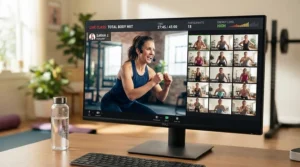
Not every feature marketed on a spec sheet moves the needle on your actual workout quality. Guided workout content lives or dies on a few genuine essentials: clear audio cueing that doesn’t get drowned out by music, resistance or incline automation that actually syncs with what the instructor is saying, and a library deep enough that you’re not repeating the same five classes every week.
What tends to get overhyped, based on aggregated reviewer sentiment, is raw screen resolution beyond HD — most riders can’t meaningfully tell the difference between a sharp HD display and an ultra-HD one from typical riding distance, yet it’s frequently used as a marketing headline. Similarly, camera-based “on-screen tiles” showing other riders during live classes get mixed reactions; some find it motivating, while just as many find it distracting or a privacy concern. What most buyers overlook, meanwhile, is subtitle and closed-caption support for classes — a small feature that matters enormously for hearing-impaired riders or anyone working out early in a household where others are still asleep.
Professional Coaching Classes: What Separates Good Instruction From Filler
Professional coaching classes are only as good as the instructor’s ability to explain the “why” behind an interval, not just call out numbers. The best instructor-led programming — and this shows up consistently in aggregated review sentiment across Peloton, NordicTrack, and MYX — pairs physical cueing (seat position, breathing, cadence) with motivational coaching that doesn’t feel scripted or repetitive after the tenth class.
A useful litmus test: sample the same instructor across three separate classes before judging the whole platform. Reviewers frequently note that coaching quality varies noticeably instructor-to-instructor even within the same app, so writing off an entire platform after one class is a common and avoidable mistake. Certified fitness professionals increasingly emphasize physiological literacy in coaching — explaining concepts like heart-rate zones rather than just shouting encouragement — and that trend is exactly why platforms like MYX have carved out a loyal following among data-minded riders.
Motivational Training Programs and Long-Term Cost & Maintenance
Motivational training programs only work if they’re still motivating you six months in, which is where a lot of home-cycling setups quietly fail. Structured, multi-week programs with visible progress milestones (rather than a random grab-bag of unrelated classes) consistently show up in reviewer feedback as the difference between a bike that gets ridden weekly and one that becomes a very expensive coat rack.
Running the actual numbers matters here, too. A premium bike like the NordicTrack X24 or Peloton Bike+ carries a higher upfront cost but often bundles more workout categories into one membership, while a budget setup like the Schwinn IC4 paired with a $12.99/month Peloton app subscription can undercut the total five-year cost of a flagship bike’s bundled ecosystem — provided you’re disciplined about not stacking multiple app subscriptions simultaneously. Maintenance costs stay modest across this category regardless of price tier: budget a replacement pedal or brake pad roughly every one to two years of regular use, and factor belt or chain lubrication into your annual routine to avoid the noise complaints that show up repeatedly in negative reviews of neglected bikes.
Research summarized in a systematic review of indoor cycling’s health benefits found consistent improvements in aerobic capacity and blood pressure among regular riders, which reinforces the point that the “best” bike is ultimately the one whose programming keeps you coming back — a machine gathering dust delivers zero physiological benefit no matter how impressive its spec sheet reads.
Common Mistakes When Buying a Bike With Built In Classes
The most expensive mistake buyers make is choosing based on screen size alone and ignoring subscription cost over a multi-year horizon — that monthly fee compounds fast. A close second is skipping the return policy fine print; several brands charge steep restocking or return-shipping fees on large fitness equipment, which matters enormously if the bike doesn’t fit your space or riding style. Buyers also frequently underestimate footprint, forgetting to measure ceiling height for taller riders or clearance for the handlebars during standing intervals.
Another recurring misstep, based on aggregated review themes: assuming resistance numbers translate identically across brands, which — as covered in the Schwinn IC4 section above — simply isn’t true. Finally, many first-time buyers ignore aggregated review sentiment around noise level, then discover their “quiet” bike is audible through an apartment floor during early-morning or late-night rides.
Safety, Setup, and Space Considerations
Give any bike with built in classes real breathing room: manufacturers typically recommend at least two feet of clearance on each side and behind the bike, plus enough ceiling height to stand comfortably during out-of-saddle intervals. Floor protection matters more than most buyers expect — a proper equipment mat reduces vibration transfer to downstairs neighbors and protects flooring from sweat and micro-scratches over years of use.
Bike fit affects both safety and results: seat height should place a slight bend in your knee at the bottom of the pedal stroke, and handlebar height should let you maintain a neutral spine rather than hunching forward. According to an open-access university resource on the fitness benefits of indoor cycling, proper form during stationary cycling significantly reduces injury risk compared to outdoor riding, partly because there’s no traffic or terrain to react to — but that safety advantage disappears quickly if your setup itself is wrong. Households with multiple riders should also budget a few minutes per session for seat and handlebar readjustment rather than assuming “close enough” is fine; ill-fitting positioning is one of the most consistently cited causes of knee and lower-back discomfort in aggregated reviews.
FAQ
❓ Do I need internet access to use a bike with built in classes?
❓ Can I use a bike with built in classes without paying for a subscription?
❓ How long do exercise bike subscriptions typically cost per month?
❓ Are budget bikes with built in classes as good as premium models?
❓ How much space does a bike with built in classes typically need?
Conclusion
There isn’t one universally “best” bike with built in classes — there’s only the one that matches your training personality, your budget, and how much screen real estate your space can actually spare. Riders chasing leaderboard energy and premium production quality should look hard at the Peloton Bike+, while anyone drawn to terrain simulation over studio vibes will get more mileage out of the NordicTrack X24. Budget-focused buyers shouldn’t feel like they’re settling, either — the Schwinn IC4 and SOLE SB1200 genuinely deliver instructor-led programming without the four-figure price tag, and the Echelon Connect EX-5s-22 splits the difference nicely for anyone who wants that rotating touchscreen experience without paying flagship pricing.
Whichever direction you lean, the underlying goal stays the same: more consistent movement, guided by real coaching, without needing to leave your house. Revisit the comparison tables above, match your priorities against the criteria in the “How to Choose” section, and pick the bike that fits the rider you actually are — not the one you think you should be.
✨ Still torn between two options?
Compare their subscription libraries directly on each brand’s website before you commit — the app experience matters just as much as the hardware! 🚴♀️
Recommended for You
- Virtual Cycling Bike 2026: 7 Picks That Actually Feel Real
- Interactive Exercise Bike: 7 Best Smart Picks for UK Homes (2026)
- Echelon Bike Deals 2026: 7 Best Smart Cycles Worth Buying
Disclaimer: This article contains affiliate links. As an Amazon Associate, I earn from qualifying purchases. If you purchase products through these links, we may earn a small commission at no additional cost to you.
✨ Found this helpful? Share it with your friends! 💬🤗
