
In This Article
Let’s be honest: shopping for a smart exercise bike feels a little like buying a used car. Everyone’s got an opinion, the sticker price never seems to mean anything, and you’re pretty sure the guy in the forum bragging about his 40%-off haul is either lying or has a secret coupon the rest of us don’t. That’s exactly why so many people start searching for echelon bike deals instead of just clicking “buy now” on the first listing they see. Echelon has quietly built one of the most sprawling smart-bike lineups in the industry — seven distinct models spanning barebones folding frames to a flagship with a curved 24-inch display — and the gap between “full price” and “actually paid” can be enormous depending on when and where you shop.

This guide digs into all seven current Echelon Connect bikes, based on real specs, real published pricing patterns, and aggregated review sentiment from outlets that have actually put hands on the hardware. You’ll get honest commentary on who each bike is for, a side-by-side breakdown of where the value really lives, and a practical playbook for timing your purchase around the sales calendar instead of guessing. No invented five-star testimonials here — just what the research actually shows, plus the reasoning to help you land the best echelon bike deals without getting burned on a bike that doesn’t fit your space, your budget, or your goals.
What Is an Echelon Bike Deal?
An echelon bike deal is any price reduction — a seasonal sale, a retailer markdown, a bundled membership offer, or a coupon — that brings one of Echelon’s Connect-series smart exercise bikes below its typical list price. Because Echelon rarely displays a single fixed price across retailers, “the deal” usually means comparing several current price ranges rather than chasing one magic number.
Echelon’s bikes occupy a specific niche in home fitness: connected, app-driven indoor cycles that compete directly with Peloton and NordicTrack but generally launch $300 to $900 lower. The CDC’s physical activity guidelines call for 150 minutes of moderate-intensity movement a week for most adults, and an indoor bike parked in a spare room removes most of the friction — weather, commute time, class schedules — that keeps people from hitting that number consistently.
Quick Comparison: Echelon Bikes at a Glance
Before diving into the full breakdown, here’s how the seven current models stack up on price positioning and who each one suits best.
| Bike | Price Range (at time of research) | Best For |
|---|---|---|
| Echelon Connect Sport 2 | roughly $260–$350 | Renters and tiny apartments |
| Echelon Connect EX-30-RCX | roughly $490–$600 | Budget buyers who still want a console |
| Echelon GT+ Connect Bike | roughly $850–$900 | Style-conscious first-time smart-bike buyers |
| Echelon Connect EX-3 | roughly $799–$1,050 range | Best all-around value pick |
| Echelon Connect EX-5 | roughly $799–$999 range | Serious riders who’ll supply their own tablet |
| Echelon Connect EX-5s-22 | roughly $1,499–$1,799 range | Built-in touchscreen without flagship pricing |
| Echelon Connect EX-8s | roughly $2,299–$2,999 range | Buyers who want the full immersive studio feel |
Looking at the spread, there’s a genuine “good, better, best” ladder rather than seven bikes competing for the same buyer. What most shoppers miss is that the jump from the Echelon Connect EX-5 to the Echelon Connect EX-5s-22 isn’t really about ride quality — both share the same 32-level magnetic resistance and steel frame — it’s almost entirely paying for the integrated screen. If you already own a tablet, that’s a few hundred dollars you can potentially skip.
💬 Just one click — help others make better buying decisions too!😊
Top 7 Echelon Bikes: Expert Analysis
Here’s the full lineup, budget to flagship, with honest analysis on the specs that actually matter — not just a rewritten spec sheet.
1. Echelon Connect Sport 2 — most budget-friendly foldable pick
The standout here is the folding frame, which shrinks the bike’s footprint to something closer to a bar stool than a home gym fixture. Under the hood, the Echelon Connect Sport 2 runs a lighter magnetic flywheel with a manageable resistance range, and it’s built to be a bring-your-own-device (BYOD) setup — you strap in a phone or tablet and connect through the Echelon Fit app rather than getting a built-in screen.
Based on the spec comparison with Echelon’s pricier models, this is clearly the entry point of the lineup, and it reads that way: it’s for someone testing whether at-home cycling sticks before committing to a four-figure bike, not for a marathon-training cyclist chasing power data. Reviewers consistently note the fold-and-store design as the single biggest selling point, particularly from renters and small-apartment dwellers, alongside generally positive ratings for the price tier.
What most buyers overlook is that the lighter flywheel means a slightly less “flywheel-heavy” road feel compared to the steel-frame models further up the list — fine for steady-state cardio, less ideal if you’re chasing the momentum feel of a spin-studio bike.
Pros:
- ✅ Compact folding frame fits small apartments easily
- ✅ Lowest price point in the entire Echelon lineup
- ✅ Simple BYOD setup works with phone or tablet
Cons:
- ❌ Lighter flywheel feels less substantial than pricier models
- ❌ No built-in console or touchscreen included
Price sits in the low-$300s range on most retail sites, occasionally dipping under $300 during promotional windows — for the money, it’s a legitimate way to test the Echelon ecosystem before upgrading.
2. Echelon Connect EX-30-RCX — best compact console bike under $600
The Echelon Connect EX-30-RCX splits the difference between the ultra-budget Sport line and the mid-range Connect bikes, and its standout is a sturdier stationary frame that trades foldability for stability. Key specs worth flagging: it keeps the magnetic resistance system Echelon uses across the range, a BYOD device mount, and a more traditional (non-folding) chassis that tends to feel steadier under harder efforts.
Here’s what to weigh — this model occupies an awkward middle position where you’re paying more than the Sport 2 without yet reaching the upgraded handlebar and pedal hardware of the EX-3 or EX-5, so the appeal is mostly about frame rigidity rather than added features. Aggregated retailer review sentiment puts it around a strong 4.5-star average, though the review pool is considerably smaller than Echelon’s flagship models, which is worth factoring into how much weight you give that average.
On paper, this is the bike for someone who wants “smart bike, not folding bike” without stretching into four figures.
Pros:
- ✅ Sturdier stationary frame than folding alternatives
- ✅ Comes in well under the $600 price range
- ✅ Same 32-level magnetic resistance as pricier models
Cons:
- ❌ Smaller review pool makes ratings less conclusive
- ❌ No integrated screen or touchscreen console
At roughly $490 to $600, the value case is straightforward: solid core mechanics, minus the frills that drive up Echelon’s higher-tier pricing.
3. Echelon GT+ Connect Bike — most colorful budget-to-mid crossover
What immediately stands out about the Echelon GT+ Connect Bike is that it doesn’t look like every other black-and-chrome smart bike crowding this category — Echelon lets you customize the frame and flywheel color, which sounds cosmetic until you realize it’s one of the only home cycles that doesn’t scream “gym equipment” in a living room. Underneath the color options sit 32 levels of silent magnetic resistance, a belt-drive system (smoother and quieter than chain-drive alternatives), and a 300-pound weight capacity that’s on par with Echelon’s pricier models.
Based on the spec comparison, the GT+ essentially replaced the discontinued EX-1 and slots in as the “recreational” tier — Echelon’s own positioning, not just marketing spin, since it lacks Bluetooth connectivity in some configurations and leans on manual app pairing instead.
Reviewers consistently flag the attached dumbbell rack and dual bottle holders as thoughtful touches, but also call out that customer service response times can lag, a recurring theme across the brand rather than unique to this model.
Pros:
- ✅ Customizable frame and flywheel colors are genuinely unique
- ✅ Quiet belt-drive system beats chain-driven competitors
- ✅ Attached dumbbell rack adds functional value
Cons:
- ❌ Some configurations lack built-in Bluetooth connectivity
- ❌ Customer service response times reportedly slow
Priced just under $900 in most listings, it competes directly with the Schwinn IC4 and Bowflex C6 — worth cross-shopping if resistance-level count matters more to you than color customization.
4. Echelon Connect EX-3 — best value workhorse under $1,000
The Echelon Connect EX-3 earns its “value workhorse” tag from a genuinely heavy 13 kg (roughly 29-pound) flywheel paired with a full steel frame — hardware you’d expect to see at a higher price tier. What most buyers overlook about this model is the six-inch lever-style seat adjustment, which sounds like a minor spec until you’re actually trying to dial in position for multiple riders in the same household; it’s noticeably faster than the knob-based adjusters on cheaper bikes.
The dual-function SPD-compatible pedals mean you can ride in sneakers or clip in with cycling shoes, covering both casual and serious-rider use cases without needing an accessory swap.
Reviewers consistently describe the ride quality as “punching above its price,” frequently framed as nearly half the cost of a comparable Peloton, though several also note the 300-pound weight capacity sits slightly below category average and the standard one-year warranty feels tight compared to competitors offering longer coverage.
Pros:
- ✅ Heavy 13 kg flywheel delivers a substantial ride feel
- ✅ Fast lever-style seat adjustment beats knob-based rivals
- ✅ Dual-function pedals work with sneakers or cleats
Cons:
- ❌ 300-lb weight capacity is below category average
- ❌ Standard one-year warranty is shorter than rivals
Current pricing generally runs from the high-$700s to just over $1,000 depending on retailer promotions, making the Echelon Connect EX-3 one of the strongest candidates when hunting for a genuine discount echelon bike rather than a stripped-down budget model.
5. Echelon Connect EX-5 — best bring-your-own-screen upgrade pick
The Echelon Connect EX-5 takes the EX-3’s bones and adds meaningful ergonomic upgrades: bullhorn-style handlebars with elbow rests, a device holder that flips a full 180 degrees for off-bike workouts, and a weight rack tucked behind the seat for strength intervals mid-ride. Here’s what to weigh — this bike deliberately skips a built-in touchscreen, which keeps the price meaningfully lower than the EX-5s-22 while giving you the freedom to mount whatever tablet you already own.
On paper this means you’re paying almost entirely for hardware quality (4-way seat and handlebar adjustment, SPD pedals with toe cages, a full steel frame) rather than electronics that depreciate the moment a new model launches.
Aggregated Amazon review sentiment for this model is notably strong, hovering around 4.5 stars across well over a thousand ratings, with recurring praise for build quality and stability during hard intervals, though some buyers note connectivity hiccups pairing older tablets over Bluetooth.
Pros:
- ✅ Upgraded bullhorn handlebars with elbow rest support
- ✅ Device holder flips 180° for off-bike workouts
- ✅ Strong aggregated review average across large sample size
Cons:
- ❌ No built-in touchscreen — requires your own device
- ❌ Some users report Bluetooth pairing hiccups with older tablets
Retail pricing typically ranges from around $799 to $999, and this is frequently the model featured in flash sales and clearance events — worth watching closely if you’re comparing an echelon bike sale against the EX-3’s everyday price.
6. Echelon Connect EX-5s-22 — best mid-tier with a built-in touchscreen
The headline feature on the Echelon Connect EX-5s-22 is exactly what the name implies: a 22-inch HD touchscreen that swivels a full 180 degrees, letting you flip it around for floor workouts like yoga or strength training without dismounting. Based on the spec comparison, it shares the same 32-level magnetic resistance and heavy-duty frame as the EX-5, so the price premium is almost entirely the integrated display and the tablet-free convenience it buys you.
Independent testing has ranked this bike fourth out of thirteen competitors overall, with especially strong marks for comfort and user interface, slightly softer scores on features and portability.
What most buyers overlook is the membership structure tied to this model: Echelon’s Premier tier active subscribers get a five-year extended warranty, a substantial upgrade over the standard one-year coverage non-subscribers receive — effectively making the ongoing subscription part of the total value calculation, not just an add-on cost.
Pros:
- ✅ 22-inch touchscreen swivels 180° for floor workouts
- ✅ Ranked top-five among thirteen competing indoor bikes
- ✅ Active members get extended five-year warranty coverage
Cons:
- ❌ Meaningful price jump over the screen-free EX-5
- ❌ Warranty upgrade requires an ongoing paid membership
Typical pricing lands between roughly $1,499 and $1,799, positioning it as a genuine mid-range alternative to Peloton’s flagship bike — a common comparison point for shoppers weighing smart bike discounts against brand-name pricing.
7. Echelon Connect EX-8s — flagship pick with the biggest curved display
At the top of the lineup, the Echelon Connect EX-8s trades up to a 24-inch curved HD display and a dual-ring LED lighting system that pulses with workout intensity — genuinely unusual hardware in this price category. The flywheel jumps to 38 pounds, the heaviest in the entire Echelon range, which translates to noticeably smoother momentum through hard intervals compared to the EX-5’s lighter setup. On paper this means less resistance “chatter” during sprints, a detail spec sheets rarely explain but that dedicated riders notice immediately.
At roughly 157 pounds, it’s also the heaviest and least portable bike in the lineup — once assembled, this is a bike that stays exactly where you put it, so measure your space carefully before buying.
Reviewers consistently frame this as Echelon’s answer to Peloton’s Bike+, with the same core value proposition across the lineup: comparable hardware at a lower price than premium competitors, though the total cost climbs quickly once you add the required Premier membership.
Pros:
- ✅ Largest curved touchscreen in the entire lineup
- ✅ Heaviest 38-lb flywheel for the smoothest ride feel
- ✅ Distinctive dual-ring LED lighting system included
Cons:
- ❌ At 157 lbs, it’s difficult to reposition once set up
- ❌ Highest total cost once membership fees are included
Expect a price range from roughly $2,299 to $2,999 depending on bundled accessories — the biggest ticket in the family, and the one where waiting for a proper seasonal sale event matters most.
Setting Up and Getting the Most From Your New Echelon Bike
Getting the hardware home is only half the job — the first 30 days determine whether your bike becomes a fixture or a coat rack. Start with the floor stabilizers before your first ride; nearly every Echelon model ships with adjustable levelers, and skipping them is the most common source of the “wobbly bike” complaints that show up in reviews. Next, dial in the seat and handlebar position using the same reference points cyclists use outdoors: seat height level with your hip when standing beside the bike, and handlebars close enough that your elbows keep a slight bend at full extension.
If you’re chasing an echelon bike coupon or subscription bundle, redeem it during setup rather than after — many promotional codes (including free trial periods for the Echelon Fit app) expire on a countdown that starts at account creation, not at purchase. It’s also worth pairing your device before your first scheduled class, since Bluetooth hiccups are far easier to troubleshoot without a live instructor waiting on you. Finally, build a light maintenance habit: wipe down the flywheel monthly, check pedal and seat-post bolts for creep every few weeks, and avoid over-tightening resistance to the maximum setting during your first few rides, since most soreness complaints in the first month trace back to riders going too hard, too soon.
Which Echelon Bike Fits Your Life? Real-World Scenarios
Rather than picking a bike off spec sheets alone, it helps to see how the lineup maps onto actual living situations.
If you’re a grad student sharing a 500-square-foot apartment and cycling three times a week between study sessions, the Echelon Connect Sport 2 solves the real problem — storage — better than any spec upgrade could. If you’re a parent of two who wants a serious daily ride but already owns a tablet gathering dust in a drawer, the Echelon Connect EX-5 delivers studio-grade hardware without paying for a screen you don’t need. If you’re recovering from a running injury and your physical therapist has cleared low-impact cardio, the Echelon Connect EX-3‘s heavier flywheel and SPD pedal compatibility make it easy to ease into structured resistance work at a controlled pace. And if you’re a former spin-studio regular who canceled a $200-a-month membership and wants the closest thing to that experience at home, the Echelon Connect EX-5s-22 or Echelon Connect EX-8s — depending on budget — recreate the immersive class format that made studio cycling addictive in the first place.
Common Echelon Bike Shopping Headaches (And How to Solve Them)
Shopping for a discount echelon bike surfaces the same handful of problems again and again — here’s how to work through them.
Problem: You can’t tell if a listed “sale” price is genuine. Solution: cross-check the same model across two or three retailers (Amazon, Walmart, Echelon’s own site) before buying; if all three show the same “discounted” number as their everyday price, it’s not really a discount.
Problem: The bike you want is sold out during a big sales event. Solution: set a price-tracking alert rather than settling for a different model out of impatience — Echelon’s lineup gets restocked frequently, and off-cycle restocks sometimes come with their own smaller promo codes.
Problem: You bought a bike, then found a lower promotional price a week later. Solution: check the retailer’s price-adjustment policy immediately; many honor price matches within a short window after purchase, but only if you ask.
Problem: An echelon bike coupon won’t apply at checkout. Solution: confirm the code hasn’t been restricted to a specific bundle (bike-plus-membership packages often use separate codes from bike-only purchases).
How to Choose an Echelon Bike
- Start with your space, not the spec sheet. Measure the footprint before comparing flywheel weights — a beautiful 38-pound flywheel means nothing if the bike can’t fit where you need it.
- Decide if you actually want a built-in screen. If you already own a tablet, the screen-free models save real money without sacrificing ride quality.
- Match weight capacity to every household rider, not just yourself. The lowest-capacity models sit around 300 pounds — check this against every person likely to use the bike.
- Budget for the membership, not just the bike. The Echelon Fit subscription runs roughly $39.99 a month, and it materially changes what you get out of the hardware.
- Check the warranty terms before checkout. Standard coverage is typically one year; some tiers extend to five years with an active membership.
- Compare at least two retailers before buying. Pricing varies enough between Amazon, Walmart, and Echelon’s direct site that a few minutes of comparison shopping regularly saves real money.
- Time your purchase around a known sales event when possible. Patience during a slow month can mean the difference between full price and a genuine discount.
Echelon Bike vs Peloton and NordicTrack
The comparison shoppers ask about most is Echelon versus Peloton, and the honest answer is that the hardware gap has narrowed considerably while the price gap has not. Peloton’s original Bike and Bike+ carry a brand premium built on a famously large content library and a highly produced instructor roster; Echelon’s Fit app covers similar ground — live and on-demand classes, off-bike strength and yoga content — at a comparable $39.99 monthly fee, but with a smaller total class catalog and a shorter track record of software polish. NordicTrack’s iFit-powered bikes lean harder into scenic and terrain-adaptive rides, using auto-adjusting resistance that mimics real-world hills, a feature Echelon’s lineup doesn’t currently match.
Where Echelon wins decisively is entry price: the Echelon Connect EX-5 undercuts Peloton’s cheapest current bike by several hundred dollars for genuinely comparable core hardware — steel frame, 32-level magnetic resistance, SPD pedals. Where it loses ground is at the top end; the Echelon Connect EX-8s narrows the gap with Peloton’s Bike+ but doesn’t fully close it on content depth or screen software polish. If content library breadth is your top priority, Peloton’s ecosystem still leads. If total cost of ownership matters more, Echelon’s pricing structure — including its typically lower financing rates — tends to win the math over a three-year ownership window.
Common Mistakes When Buying an Echelon Bike
The most frequent mistake is buying strictly on flywheel weight or resistance-level count without checking real-world comfort factors like seat padding and handlebar reach — numbers that look identical on paper can feel completely different after 30 minutes in the saddle. A close second is skipping the membership cost in the total budget; a $900 bike becomes a $1,380-a-year commitment once the Echelon Fit subscription is factored in, and plenty of buyers feel blindsided by that math after the fact. Buyers also frequently underestimate footprint: several models exceed the “average” indoor bike length by a few inches, which matters more than expected in a cramped spare room. Finally, some shoppers chase the biggest screen without checking whether their intended workout style — long steady rides versus short high-intensity intervals versus off-bike strength work — actually benefits from a built-in touchscreen versus a propped-up tablet.
Features That Actually Matter (And Those That Don’t)
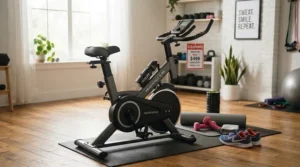
Cutting through the marketing copy: magnetic resistance quality and flywheel weight matter enormously, because they directly determine ride smoothness and how the bike behaves during hard efforts — this is where Echelon’s mid-range and flagship models genuinely earn their price premium. Seat and handlebar adjustability matters just as much in a shared household, since a bike that only fits one rider comfortably loses half its value in a multi-person home. What matters far less than the marketing suggests: touchscreen size beyond a certain point. Once you’re past roughly 15 inches, the practical difference between a 22-inch and 24-inch display shrinks considerably for most riders, and a tablet propped in a device holder delivers nearly the same experience for a fraction of the cost. LED lighting effects and cosmetic color options are genuinely nice touches but shouldn’t move the needle on a purchase decision the way core mechanical specs should.
Echelon Bikes for Beginners vs Serious Riders
A true beginner — someone who isn’t sure cycling will stick — is almost always better served starting with the Echelon Connect Sport 2 or Echelon Connect EX-30-RCX. Both keep the financial risk low while still delivering the core Echelon Fit app experience, and neither locks you into a four-figure purchase before you know your own habits. Serious riders, particularly anyone coming from an actual spin studio background or training with power and cadence data, will likely find the lighter-flywheel budget models frustrating fairly quickly; the Echelon Connect EX-3 and Echelon Connect EX-5 are the more honest starting point, since their heavier flywheels and SPD-compatible pedals were clearly built with that rider in mind. For anyone training multiple times a week and treating the bike as a genuine gym replacement rather than an occasional convenience, the Echelon Connect EX-5s-22 or Echelon Connect EX-8s justify their higher price through hardware that’s built to withstand daily, hard use over years rather than months.
✨ Don’t Miss These Exclusive Deals!
🔍 Take your home cycling setup to the next level with these carefully selected Echelon models. Click on any highlighted bike to check current pricing and availability. These picks will help you build the consistent, sweat-earned results your future self will thank you for!
Seasonal Sales Events: When Echelon Bike Deals Actually Drop
If timing matters more to you than any single spec, this is the section to bookmark. Home fitness equipment, Echelon included, tends to follow a predictable seasonal sales events calendar rather than dropping prices at random. The heaviest promotional pricing typically clusters around three windows: the Black Friday through Cyber Monday stretch in late November, when nearly every model in the lineup sees its steepest markdowns of the year; the first weeks of January, when “New Year, new habits” campaigns push aggressive bundle pricing on entry and mid-tier bikes; and Memorial Day through early summer, when retailers clear inventory ahead of new-model refreshes. A secondary window worth watching is Amazon’s mid-summer Prime Day event, which has increasingly included fitness equipment in its promotional pricing pushes.
Outside these windows, “sales” are more often modest markdowns of $50 to $150 rather than the deeper 20-40% cuts seen during the major events — useful context if you’re comparing a mid-year “limited time” offer against what the calendar actually tends to deliver. The FTC’s online shopping guidance is a genuinely useful gut-check here: shop around across sellers, compare prices, and keep a record of your purchase before you commit — advice that applies just as well to a $900 exercise bike as it does to holiday gifts.
Echelon Bike Sale vs Everyday Price: Is a Discount Echelon Bike Worth It?
| Scenario | Typical Price Behavior | Best For |
|---|---|---|
| Everyday retail price | Full list price, no markdown | Buyers who need the bike immediately |
| Minor markdown ($50–$150 off) | Common outside major sales windows | Opportunistic buyers not in a rush |
| Major seasonal sale (20–40% off) | Black Friday, New Year, Memorial Day | Patient buyers with flexible timing |
| Open-box or refurbished listing | Deepest discount, limited stock/warranty | Budget-first buyers comfortable with trade-offs |
Reading across this table, the honest takeaway is that an echelon bike sale during one of the three major windows is almost always worth waiting for if your schedule allows it — the discount tends to be several multiples deeper than the routine markdowns you’ll find in an average month. Where it gets more nuanced is open-box and refurbished listings: they can represent genuine smart bike discounts, but the shortened warranty window and unknown usage history mean they suit a specific kind of budget-conscious buyer rather than everyone. If you need the bike now for a specific goal — a doctor-recommended cardio routine, a New Year’s resolution you don’t want to delay — paying closer to everyday price for the model that actually fits your space and rider profile beats waiting months for a discount on the wrong bike.
💬 Compare prices across retailers before you commit — a few minutes of research now can save real money later.😊
Long-Term Cost & Maintenance: What an Echelon Bike Really Costs
The sticker price is only the opening bid. Factor in the Echelon Fit subscription — roughly $39.99 monthly, or a discounted $33.33 a month when paid annually — and a $900 bike becomes closer to a $1,400 first-year commitment once membership is included. Warranty coverage adds another wrinkle: standard coverage across most models runs one year on parts and labor, though Echelon’s Premier membership tier extends that to five years on select bikes, effectively making an ongoing subscription part of the protection plan rather than a separate luxury. Extended warranty add-ons are also available a la carte, typically running up to $150 depending on the model and coverage length.
Maintenance costs stay relatively low if you stay ahead of them: routine flywheel cleaning, occasional pedal and bolt tightening, and periodic resistance-knob calibration cover most of what an Echelon bike needs over its lifespan. Compared against a $150-a-month boutique cycling studio membership, even the flagship Echelon Connect EX-8s at the top of the price range pays for itself in under two years of consistent use — a genuinely favorable long-term cost story once you run the actual numbers instead of comparing sticker prices in isolation. Harvard Health’s guidance on exercise heart-rate zones notes that focusing on how a workout feels is often just as effective as chasing a specific heart-rate zone, a useful reminder that you don’t need the most expensive bike in the lineup to get genuine cardiovascular benefit from consistent use.

Frequently Asked Questions
❓ When do the best echelon bike deals typically happen?
❓ Does Echelon offer an echelon bike coupon code?
❓ Is buying a discount echelon bike from a third-party seller safe?
❓ Do smart bike discounts usually include the membership app?
❓ What's the cheapest Echelon bike currently on the market?
Conclusion
Chasing echelon bike deals doesn’t have to mean gambling on a mystery discount code or waiting indefinitely for a sale that might not materialize. The seven bikes in Echelon’s current Connect lineup cover a genuinely wide range of needs — from the space-saving Echelon Connect Sport 2 to the flagship Echelon Connect EX-8s — and the smartest purchase decision starts with matching your space, rider profile, and workout style to the right model before you ever start comparing prices.
Once you know which bike actually fits your life, timing becomes the real lever: shopping during one of the three major seasonal windows, comparing at least two retailers, and factoring the ongoing membership cost into your real budget will get you closer to genuine value than any single coupon code ever could. Whichever model you land on, the research here should leave you shopping with a clearer head and a much better sense of what you’re actually paying for.
Recommended for You
- Echelon Bike Subscription Cost: 7 Plans, Ranked Honestly (2026)
- Echelon EX5 Review 2026: Is This Budget Smart Bike a Steal?
- Echelon vs Peloton 2026: 7 Best Smart Bikes Compared Honestly
Disclaimer: This article contains affiliate links. As an Amazon Associate, I earn from qualifying purchases. If you purchase products through these links, we may earn a small commission at no additional cost to you.
✨ Found this helpful? Share it with your friends! 💬🤗
