
In This Article
✨Was this helpful? Spread the word! 🚀
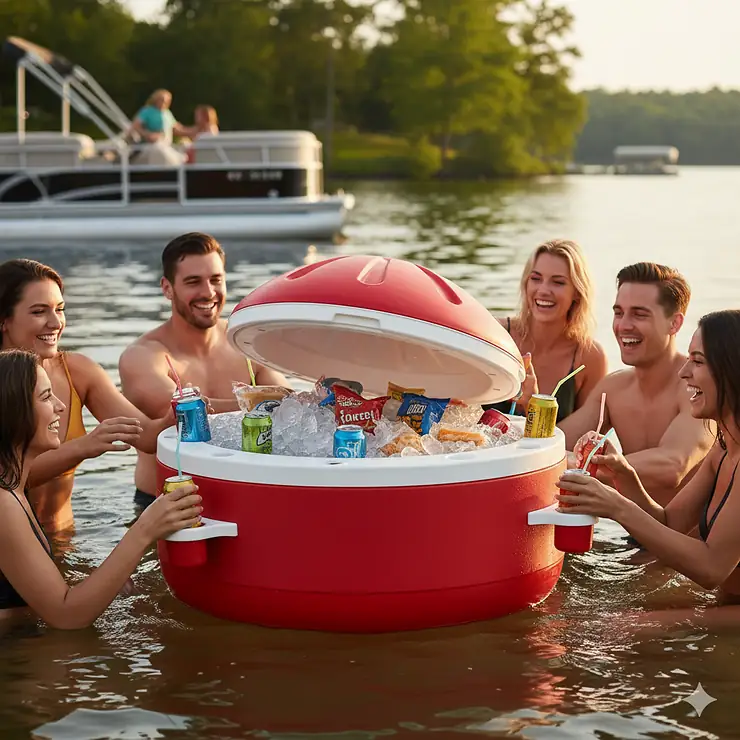
Picture this: you’re drifting lazily on a sun-drenched lake, the gentle waves rocking you into pure relaxation. The only thing that could make this moment better? An ice-cold beverage within arm’s reach. That’s exactly where a floating cooler comes into play, transforming ordinary water outings into extraordinary experiences.
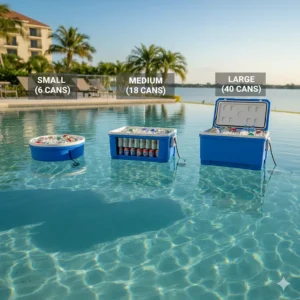
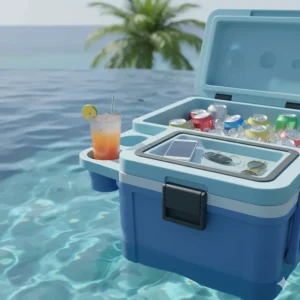
A floating cooler is essentially a specialized cooler designed to stay afloat while keeping your drinks and snacks perfectly chilled. Unlike traditional coolers that sit awkwardly on shore or take up valuable boat space, these innovative vessels follow you wherever the current takes you. Whether you’re kayaking down a river, lounging in your pool, or anchored at your favorite sandbar, having cold refreshments literally floating beside you is nothing short of magical.
The market has exploded with options in recent years, ranging from simple inflatable designs to sophisticated hard-shell models with multi-day ice retention. According to outdoor recreation statistics, water-based activities have seen a 30% surge in participation since 2020, driving demand for smart accessories like the floating cooler. Some models, particularly the cuddy cooler variants, even double as dry storage vessels for phones and valuables.
What makes these coolers truly special is their versatility. They’re not just for lazy pool days – serious anglers use them to keep bait fresh, families rely on them for all-day river floats, and party-goers transform them into floating refreshment stations. The best part? You never have to leave the water to grab another drink, which means more time enjoying what you love and less time dealing with logistics.
In this comprehensive guide, I’ll walk you through everything you need to know about choosing the perfect floating cooler for your adventures. We’ll explore top-rated models, compare features, and help you find the ideal match for your budget and activities.
Quick Comparison: Top Floating Cooler Models at a Glance 📊
| Product | Type | Capacity | Price Range | Ice Retention | Best For |
|---|---|---|---|---|---|
| GoSports Cuddy 40 QT | Hard Shell | 30 cans + ice | $249 | 12-48 hours | Kayaking, Boating |
| INTEX Mega Chill II | Inflatable | 72 cans | $50-60 | 4-8 hours | Pools, Calm Lakes |
| RTIC Ultra-Tough Soft | Soft Cooler | 12-40 cans | $50-150 | 24-48 hours | Multi-purpose |
| Cooler Cruiser 32 QT | Hard Shell | 25 cans | $240 | Up to 60 hours | Extended Trips |
| Pittman Floating Ice Chest | Inflatable | 72 cans | $40-70 | 6-12 hours | River Floating |
| Ozark Trail Cooler Float | Float Base | Fits 24-48 qt | $25-40 | Varies | Budget Option |
| INTEX Mega Chill (24 can) | Inflatable | 24 cans | $25-30 | 4-6 hours | Casual Use |
💬 Just one click – help others make better buying decisions too!😊
🛒 Ready to Upgrade Your Water Adventures?
Don’t let warm drinks ruin your perfect day on the water! These floating coolers are game-changers for anyone who loves aquatic activities. Click any highlighted product above to check current deals and customer reviews on Amazon!
Top 7 Floating Cooler Products: Expert Analysis 🏆
1. GoSports Cuddy 40 QT Floating Cooler
The GoSports Cuddy 40 QT represents the premium tier of floating coolers, and honestly, it’s worth every penny. This hard-shell beauty features dual-wall Snow Bead insulation that keeps ice frozen for an impressive 12-48 hours depending on conditions. With its unsinkable Sure Float design and hydrodynamic Flow Tow profile, this cuddy cooler glides effortlessly behind kayaks or SUPs.
Key Specifications:
- Capacity: 40 quarts (holds 30 cans plus 20 lbs of ice)
- Weight: 24.7 lbs
- Material: High-density polypropylene (HDPE)
- Dimensions: Designed for optimal water balance
The Cuddy features four built-in cup holders and two large lids for easy access from either side. It comes complete with a 6-foot tow strap and two carabiners, making setup a breeze. Customers rave about its stability – unlike cheaper inflatable options, this Cuddy 40 QT won’t tip over when you’re reaching for a cold one.
Customer Feedback: Users consistently praise its durability and ice retention. One reviewer mentioned using it for ice fishing in winter, proving its year-round versatility.
✅ Pros:
- Exceptional ice retention (up to 48 hours)
- Unsinkable hard-shell construction
- Works on land and water
❌ Cons:
- Higher price point
- Heavier than inflatable options
Price Range: $249-$279
2. INTEX Mega Chill II Inflatable Floating Cooler
For pool parties and casual lake days, the INTEX Mega Chill II delivers unbeatable value. This 48″ x 38″ inflatable giant holds up to 72 cans with ice – enough to keep the whole crew happy. The removable ice chest makes cleaning simple, while six built-in cup holders keep drinks accessible.
Key Specifications:
- Capacity: 72 beverage cans
- Construction: 16-gauge vinyl
- Air chambers: 3 independent chambers
- Cup holders: 6 built-in holders
What sets this Mega Chill II apart is its compatibility with INTEX River Run series floats. You can literally connect your floating cooler to your lounge chair using the easy-connect system. Four heavy-duty handles make transportation straightforward, and the included repair patch means minor punctures won’t end your fun.
Customer Feedback: Buyers love the spacious design, though some note it’s best for calm water rather than river rapids.
✅ Pros:
- Massive 72-can capacity
- Affordable price point
- Connects to other INTEX floats
❌ Cons:
- Requires inflation/deflation
- Limited ice retention (4-8 hours)
Price Range: $50-$60
3. RTIC Ultra-Tough Soft Cooler
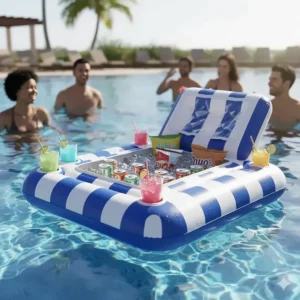
The RTIC Ultra-Tough Soft Cooler proves that soft-sided doesn’t mean weak. Available in 12, 20, 30, and 40-can sizes, this versatile floating cooler features up to 1.5 inches of closed-cell foam insulation. The heavy-duty nylon shell withstands rough treatment while the 100% leak-proof zipper prevents spills.
Key Specifications:
- Sizes: 12, 20, 30, or 40 cans
- Ice retention: Up to 2 days
- Features: Waterproof zipper, adjustable strap
- Construction: Puncture-resistant liner
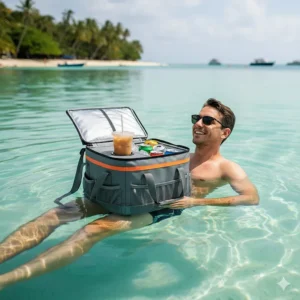
The genius of the RTIC Soft Cooler is its buoyancy – it actually floats even when fully loaded. The zippered pocket stores essentials like keys or phones, and the adjustable shoulder strap makes portaging easy. This is the cooler I’d grab for multi-day kayak camping trips where weight matters.
Customer Feedback: Users appreciate the lightweight design and impressive cold retention, especially for the price point.
✅ Pros:
- Lightweight and portable
- Excellent insulation for soft cooler
- Multiple size options
❌ Cons:
- Soft-sided (less rigid than hard coolers)
- Can be pricey for larger sizes
Price Range: $50-$150 (depending on size)
4. Cooler Cruiser 32 QT Floating Cooler
Talk about impressive engineering – the Cooler Cruiser 32 QT boasts up to 60 hours of ice retention thanks to innovative TEMPSTEADY insulation technology. This amphibious ice chest features 2-inch foam walls with complete coverage that eliminates thermal bridges entirely.
Key Specifications:
- Capacity: 32 quarts (25 cans)
- Ice retention: Up to 60 hours
- Material: Marine-grade HDPE
- Features: Hydrodynamic profile, unsinkable design
The Cooler Cruiser comes equipped with four built-in cup holders, dual T-latch sealing, and a revolutionary double-lid mechanism. You can open the small lid with one hand while treading water – brilliant design! The included 6-foot tow strap and carabiners make it perfect for towing behind paddleboards or kayaks.
Customer Feedback: Early adopters praise the extraordinary ice retention and stable floating characteristics.
✅ Pros:
- Exceptional 60-hour ice retention
- One-handed lid operation
- Marine-grade durability
❌ Cons:
- Premium pricing
- Heavier at 33 lbs
Price Range: $240-$260
5. Pittman Floating Ice Chest (72 Can)
The Pittman Floating Ice Chest offers serious capacity at a budget-friendly price. This large inflatable floating cooler accommodates 72 cans, making it perfect for group outings. The heavy-duty construction and vibrant design make it stand out on any waterway.
Key Specifications:
- Capacity: 72 cans
- Construction: Reinforced PVC
- Features: Grab handles, tow rope
- Size: Extra-large compartment
While not as insulated as hard-shell models, the Pittman Ice Chest excels at keeping drinks accessible during river floats or tubing trips. The attached grab rope allows easy towing, and multiple handles make loading/unloading simple. It’s particularly popular among college students and budget-conscious families.
Customer Feedback: Users mention it works great when towed behind kayaks, though ice retention is moderate (6-12 hours).
✅ Pros:
- Large 72-can capacity
- Budget-friendly pricing
- Lightweight and packable
❌ Cons:
- Shorter ice retention
- PVC construction less durable than HDPE
Price Range: $40-$70
6. Ozark Trail Cooler Float
The Ozark Trail Cooler Float takes a different approach – it’s an inflatable platform designed to hold your existing 24-48 quart hard cooler. This clever design means you can use your favorite YETI, Coleman, or other brand cooler on the water.
Key Specifications:
- Fits: 24-48 quart coolers
- Features: 2 cup holders, heavy-duty handles
- Includes: Repair patch, grab rope
- Inflated size: 39″ x 33″ x 9.8″
The Ozark Trail Float is brilliant in its simplicity. Your cooler sits securely in the designated space while the inflatable outer ring provides buoyancy. Two cup holders add convenience, and the attached grab rope makes towing effortless. It’s like giving your favorite cooler superpowers.
Customer Feedback: Reviewers love that it works with coolers they already own, though some report durability issues after multiple seasons.
✅ Pros:
- Works with existing coolers
- Very affordable
- Easy to inflate/deflate
❌ Cons:
- Requires separate cooler purchase
- Less durable than dedicated floating coolers
Price Range: $25-$40
7. INTEX Mega Chill 24 Can Cooler
Perfect for solo adventurers or couples, the INTEX Mega Chill 24 Can version offers compact convenience. This smaller sibling to the Mega Chill II maintains the same quality construction but in a more manageable size that won’t overwhelm smaller pools or boats.
Key Specifications:
- Capacity: 24 cans plus ice
- Features: 5 cup holders, removable ice chest
- Construction: Durable vinyl
- Connectivity: Compatible with River Run floats
The 24 Can Mega Chill includes two durable handles and easy-to-use connectors for linking to other INTEX products. The removable ice chest simplifies cleaning, while five built-in cup holders keep drinks secure. At this price point, it’s nearly impossible to beat for casual use.
Customer Feedback: Buyers appreciate the perfect size for 2-3 people and easy storage when deflated.
✅ Pros:
- Compact and manageable
- Ultra-affordable
- Easy storage
❌ Cons:
- Limited capacity for large groups
- Basic ice retention (4-6 hours)
Price Range: $25-$30
Understanding Floating Cooler Technology 🔬
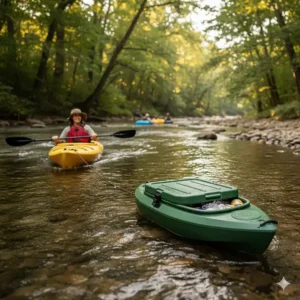
The science behind floating coolers is more fascinating than you might think. At their core, these devices must balance three critical factors: buoyancy, insulation, and durability. Let’s break down what makes them work.
The Physics of Floating
According to principles outlined by NOAA’s buoyancy education resources, an object floats when it displaces water equal to its weight. Floating coolers achieve this through strategic design – either air-filled chambers in inflatables or foam-injected walls in hard-shell models. The cuddy cooler design, for instance, uses precisely calculated weight distribution to maintain stability even when fully loaded.
Hard-shell floating coolers typically use closed-cell foam insulation between dual walls. This foam serves double duty: insulating your ice while providing buoyancy. Inflatable models rely on air chambers, which is why they’re lighter but generally less insulating. Some premium models incorporate both technologies for optimal performance.
Insulation Innovation
Modern floating coolers employ various insulation techniques. Traditional foam insulation works through air pockets that slow heat transfer. Advanced models like the Cooler Cruiser use “Snow Bead” or similar technologies – essentially microscopic foam beads that eliminate thermal bridges. This is why some coolers maintain ice for 60+ hours while others struggle past 8 hours.
The key metric is R-value (thermal resistance). Higher R-values mean better insulation. A quality floating cooler should have an R-value of at least 7, though premium models reach R-15 or higher. That’s comparable to your home’s wall insulation!
Material Science Matters
High-density polyethylene (HDPE) dominates hard-shell construction because it’s virtually indestructible, UV-resistant, and food-safe. It’s the same material used in kayaks and cutting boards. Inflatable coolers use vinyl or PVC, typically 12-16 gauge thickness. The heavier the gauge, the more puncture-resistant the material.
Recent innovations include rotomolded construction (where heated plastic is rotated in a mold) which creates seamless, incredibly strong coolers. These represent the top tier of floating cooler technology, with prices to match their performance.
Choosing the Right Floating Cooler for Your Needs 🤔
Assess Your Water Activities
Your choice should align with how you’ll actually use it. Pool parties? An inflatable floating cooler like the INTEX Mega Chill II makes perfect sense – easy to store, affordable, and fun. Planning multi-day kayak camping trips? You’ll want the GoSports Cuddy or Cooler Cruiser with their superior insulation and durability.
River tubing presents unique challenges. Fast-moving water with rocks demands puncture-resistant construction. Look for reinforced bottoms and thick-gauge vinyl if going inflatable. The cuddy cooler hard-shell design excels here because it can bounce off obstacles without damage.
Size and Capacity Considerations
Don’t just count can capacity – consider your actual needs. A 72-can cooler sounds amazing until you’re trying to tow it behind your kayak. Calculate roughly 10-12 cans per person for a full day, then add ice volume (usually 30-40% of total capacity). For a couple’s lake day, a 24-30 can cooler is typically perfect.
Remember that larger coolers require more ice, which adds weight and affects buoyancy. The sweet spot for most users is 30-40 quart capacity – enough for a group without being unwieldy. Solo paddlers or anglers might prefer compact 12-20 can models that won’t affect boat handling.
Budget vs. Features
Here’s the honest truth: you get what you pay for, but with smart shopping, you can find incredible value. Budget tier ($25-50) works fine for occasional pool use. Mid-range ($50-150) offers better materials and insulation for regular recreational use. Premium tier ($200+) delivers professional-grade performance for serious enthusiasts.
Consider cost-per-use rather than just sticker price. A $250 hard-shell cooler used 50 times per year for 5 years costs just $1 per use. A $30 inflatable replaced annually after 10 uses costs $3 per use. The expensive option might actually be more economical!
Inflatable vs Hard-Shell Floating Coolers ⚖️
| Feature | Inflatable | Hard-Shell |
|---|---|---|
| Portability | Excellent (deflates) | Poor (bulky) |
| Durability | Moderate | Excellent |
| Ice Retention | 4-12 hours | 12-60+ hours |
| Price Range | $25-$80 | $150-$300 |
| Best For | Casual use, storage-limited | Serious use, performance |
When Inflatable Makes Sense
Inflatable floating coolers shine in specific scenarios. If you’re flying to a vacation rental with a pool, deflating your cooler means it fits in your luggage. Apartment dwellers with limited storage love that these compress to nothing. They’re also ideal when you need multiple coolers for large gatherings – buy several without breaking the bank.
The technology has improved dramatically. Modern inflatables use welded seams rather than glued, and many include multiple air chambers so a single puncture doesn’t sink your whole cooler. Quick-inflation valves mean setup takes minutes, not half an hour of huffing and puffing.
Hard-Shell Advantages
Nothing beats hard-shell construction for serious water activities. According to American Canoe Association guidelines, equipment reliability matters immensely for safety and enjoyment. A hard-shell floating cooler won’t develop a slow leak mid-trip, won’t require re-inflation, and handles abuse that would destroy inflatables.
The cuddy cooler and similar hard-shell models also offer superior ice retention thanks to thicker insulation. That 48-hour rating isn’t marketing fluff – properly pre-chilled with quality ice, these coolers genuinely keep ice frozen for multiple days. For extended trips or hot climates, this makes them irreplaceable.
Maximizing Ice Retention in Your Floating Cooler ❄️
Pre-Chilling Secrets
Here’s a pro tip that most people miss: pre-chill everything. Your floating cooler, your drinks, even your ice packs – everything should start cold. Put your empty cooler in a walk-in freezer or fill it with ice overnight before your trip. This “primes” the insulation and can add 50% more ice retention time.
Block ice lasts significantly longer than cubed ice. The physics are simple: less surface area means slower melting. Many experienced users freeze water in milk jugs or special ice blocks. Some freeze their drinks solid, which serves double duty as both beverage and ice.
Strategic Packing Techniques
Layer your floating cooler strategically. Bottom layer: block ice or frozen gel packs. Middle layer: items you’ll need first (drinks, frequently accessed foods). Top layer: crushed ice that fills gaps. This minimizes air pockets which accelerate warming.
The drain plug debate: some say keep it closed to retain cold water (which is still cold), others advocate draining regularly. The truth? In a floating cooler, keep it closed. The surrounding water already acts as a heat sink, so the cold water inside helps maintain temperature.
Environmental Factors
Water temperature dramatically affects performance. A floating cooler in 85°F pool water loses ice faster than one in 65°F lake water. Color matters too – light-colored coolers reflect heat while dark ones absorb it. If you have a choice, always pick lighter colors for better thermal performance.
Direct sunlight is your enemy. When anchored, position your floating cooler in shade if possible. Some users attach small parasols or shade cloths. Even covering it with a light-colored towel between uses can extend ice life by hours.
Maintenance and Care Tips 🛠️
Cleaning Best Practices
Never underestimate the importance of proper cleaning. After each use, empty your floating cooler completely and rinse with fresh water. For hard-shell models, use a 50/50 white vinegar and water solution to sanitize – it’s natural, effective, and won’t damage materials. Inflatable models should be cleaned gently with mild soap.
The cuddy cooler and similar models often feature removable drain plugs that make cleaning easier. Always remove these plugs and let the cooler air dry completely before storage. Moisture trapped inside breeds mold and mildew, which not only smells horrible but can compromise materials over time.
Storage Solutions
Off-season storage determines longevity. For inflatables, clean thoroughly, ensure complete dryness, then deflate and roll loosely. Tight folding creates stress points that can crack over time. Store in a cool, dry place away from direct sunlight – UV rays degrade vinyl even when stored.
Hard-shell floating coolers should be stored with lids slightly ajar to allow air circulation. Extreme temperatures stress materials, so avoid attics (too hot) and unheated sheds in winter (too cold). A basement or climate-controlled garage is ideal. Some users store with a box of baking soda inside to absorb any residual odors.
Repair and Troubleshooting
Most inflatables include repair kits, and learning to use them saves money. Clean the damaged area thoroughly, apply adhesive to both patch and cooler, wait the recommended time (usually 30 seconds), then press firmly together. The repair is usually stronger than the original material.
For hard-shell models, minor scratches are cosmetic but deep gouges should be addressed. Marine-grade epoxy works wonders for structural repairs. Hinges and latches are common failure points – keep them lubricated with silicone spray and replace at first signs of weakness to prevent catastrophic failure.
Safety Considerations for Floating Coolers 🦺
Towing Safety
When towing a floating cooler behind a boat or kayak, length matters. According to U.S. Coast Guard recreational boating statistics, entanglement hazards cause numerous accidents annually. Keep tow ropes 6-10 feet long – short enough to control but long enough to prevent catching in propellers or paddles.
Bright-colored tow ropes increase visibility to other boaters. Some enthusiasts attach small flags or reflective tape to their floating coolers for additional visibility. Never tie a cooler to yourself or your vessel in a way that can’t be quickly released in emergencies. Quick-release carabiners are your friend here.
Weight Distribution
Overloading a floating cooler creates dangerous instability. The cuddy cooler and quality models list maximum weight capacities – respect these limits. Improper loading can flip coolers, dumping contents and potentially capsizing small vessels if tethered.
Distribute weight evenly across the cooler’s base. Heavy items go on the bottom center, lighter items around the edges. This keeps the center of gravity low and prevents tipping. When accessing items while floating, approach from the side rather than reaching over the top.
Weather Awareness
Sudden weather changes pose serious risks. High winds can turn your floating cooler into a sail, pulling unexpectedly or blowing away if untethered. Lightning storms demand immediate evacuation – coolers attract lightning in open water. Monitor forecasts and have a bailout plan.
Cold water presents hypothermia risks that many underestimate. Your floating cooler might seem like a fun accessory, but if it causes you to spend extended time in 70°F water, you’re at risk. According to CDC cold water safety guidelines, hypothermia can occur in water temperatures below 70°F with sufficient exposure.
Top Accessories to Enhance Your Floating Cooler Experience 🎯
Essential Add-Ons
A quality dry bag transforms your floating cooler setup from good to great. Store phones, wallets, and car keys in waterproof protection that clips directly to your cooler. I never leave shore without mine – water and electronics don’t mix, and one splash can ruin your day.
Cup holder inserts elevate the experience dramatically. Those built-in holders on most coolers work fine for cans, but they’re terrible for bottles or insulated tumblers. Aftermarket rubber inserts cost $10-15 and accommodate various sizes perfectly. Some even have LED lighting for evening use!
Organizational Tools
Mesh storage bags that clip to your floating cooler create pockets for snacks, sunscreen, and other small items. These cost almost nothing but add tremendous convenience. I particularly love the ones with clear panels – you can see contents without opening them.
Portable bottle openers that attach via carabiner are genius. Mount one to your cooler’s handle and you’ll never fumble with a warm bottle again. Some models include magnetic caps catchers to prevent littering. For $5, it’s one of the best investments you’ll make.
Advanced Upgrades
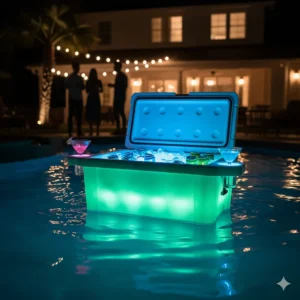
Solar-powered LED lights seem gimmicky until you experience twilight on the water with an illuminated floating cooler. They’re particularly brilliant for evening lake gatherings or pier fishing. Most attach with adhesive backing and run for hours on a full charge.
GPS trackers designed for water use cost around $30-50 and provide peace of mind. If your floating cooler gets loose in current or wind, you can track it via smartphone. This sounds paranoid until you’ve watched $200 worth of cooler and contents drift into the sunset on a windy day!
Environmental Impact and Eco-Friendly Choices 🌱
Sustainable Materials
The floating cooler industry is slowly embracing sustainability. Some manufacturers now use recycled plastics in construction, particularly for hard-shell models. The cuddy cooler brand and others are incorporating recycled ocean plastics – literally turning pollution into products.
Biodegradable insulation alternatives are emerging. Traditional foam insulation contains chemicals that persist for centuries. Newer options use plant-based materials that insulate nearly as well but break down naturally. These coolers typically cost 20-30% more, but many users feel the environmental benefit justifies the premium.
Responsible Usage Practices
Always practice Leave No Trace principles with your floating cooler. Secure all trash inside – wind and waves can scatter debris before you realize it. Many modern coolers include dedicated trash compartments; use them! Choose reusable containers over single-use plastics when possible.
Ice melt runoff contains chemicals from municipal water treatment. While generally harmless, large quantities can affect sensitive ecosystems. Some environmentally-conscious users make ice from filtered or distilled water, especially when using coolers in pristine wilderness areas.
Longevity Over Disposability
The most eco-friendly floating cooler is one that lasts for years. Investing in quality initially prevents the cycle of buying and disposing cheaper models annually. Proper maintenance extends life significantly – a well-cared-for hard-shell cooler can serve you for a decade or more.
When a cooler finally reaches end-of-life, recycle responsibly. Many municipalities accept HDPE plastics in curbside recycling. Vinyl and PVC are trickier but specialized recycling centers exist. Some manufacturers offer take-back programs – check before tossing your old cooler in a dumpster.
Floating Cooler Uses Beyond Beverages 🎣
Fishing Applications
Serious anglers discovered floating coolers years ago, but not for drinks – for bait and catch. A separate cooler for your fish keeps them fresh without contaminating your beverage cooler. The constant water contact maintains ideal temperatures for preserving catch quality.
Live bait benefits enormously from floating coolers. The water circulation around the cooler moderates temperature swings that kill bait in traditional containers. Some anglers drill aeration holes in dedicated bait floating coolers for even better performance. Just don’t use the same cooler for drinks afterward!
Emergency and Safety Uses
Few people consider this, but floating coolers make excellent emergency flotation devices. A 40-quart cooler displaces enough water to support 80-100 pounds of weight. In an emergency capsizing situation, clinging to your floating cooler could save your life while you wait for rescue.
First aid supplies stored in a floating cooler stay accessible and dry during water activities. Waterproof containers inside protect medications and bandages. Several emergency preparedness experts recommend keeping a dedicated floating cooler with safety supplies on boats, especially for multi-day trips.
Creative Alternative Uses
I’ve seen floating coolers repurposed brilliantly. One creative user fills theirs with ice and stands beverages in it during beach weddings – elegant floating refreshment stations. Another uses a cooler as a floating planter for water-loving plants in their pond. The possibilities extend far beyond the manufacturer’s intended purpose.
Pool games get an upgrade with floating coolers as bases. Floating basketball hoops mount to them, creating stable platforms. Some party-goers use them as floating serving stations for watermelon, grapes, and other refreshments at pool parties. The cuddy cooler design works particularly well for these applications due to its stability.
Comparing Benefits: Floating Cooler vs Traditional Alternatives
| Aspect | Floating Cooler | Shore Cooler | Boat Cooler |
|---|---|---|---|
| Accessibility | Excellent (always nearby) | Poor (must leave water) | Good (in boat) |
| Space Efficiency | Excellent (doesn’t use deck) | N/A | Poor (takes deck space) |
| Ice Retention | Good (6-60 hours) | Excellent (24-72 hours) | Good (12-48 hours) |
| Portability | Excellent (tows easily) | Moderate | Poor (stuck in boat) |
| Cost | $25-$300 | $20-$200 | $50-$400 |
| Versatility | High (land/water) | Medium (land only) | Low (boat only) |
Why Choose Floating Over Traditional?
The convenience factor cannot be overstated. Traditional shore coolers require you to swim, paddle, or walk back every time you want a drink. On a lazy river float that takes 4 hours, you might want refreshments 8-10 times. Swimming back to shore repeatedly ruins the experience and exhausts you.
Space efficiency matters tremendously in small boats or kayaks. A floating cooler towed behind frees up valuable deck space for fishing gear, camping equipment, or passengers. The cuddy cooler and similar models essentially give you extra storage that doesn’t count against your vessel’s capacity.
Frequently Asked Questions ❓
❓ How long does ice last in a floating cooler?
❓ Can you tow a floating cooler behind a kayak safely?
❓ Are inflatable floating coolers worth buying?
❓ What size floating cooler do I need for a family of four?
❓ Do floating coolers work in saltwater environments?
Conclusion: Making Your Final Decision 🎯
Choosing the perfect floating cooler boils down to understanding your specific needs and matching them to the right product. We’ve explored everything from budget-friendly inflatables to premium hard-shell models, each excelling in different scenarios. The key is honest self-assessment: how will you actually use this cooler?
For occasional pool parties and casual lake days, inflatable models like the INTEX Mega Chill II deliver incredible value without requiring significant investment. These entry-level options prove that you don’t need to spend hundreds to enjoy the floating cooler experience. They’re perfect for testing the waters before committing to a premium model.
Serious water enthusiasts, kayakers, and frequent boaters should consider the investment in hard-shell models. The GoSports Cuddy or Cooler Cruiser represent long-term value with superior durability and ice retention that can genuinely last for 48-60 hours. When you calculate cost-per-use over years of ownership, these premium options often prove more economical than replacing cheaper models annually.
The secondary keyword cuddy cooler has revolutionized how we think about water accessories. These amphibious vessels seamlessly transition from land to water, offering unmatched versatility. Whether you’re anchoring at a sandbar, towing behind a SUP, or using it terrestrially at your kid’s soccer game, a quality floating cooler enhances every outdoor adventure.
Remember, the best floating cooler is the one that gets used. Don’t overthink it – start with something that fits your immediate budget and needs. You can always upgrade later once you understand exactly what features matter most to you. The important thing is getting out on the water and creating those perfect moments with perfectly cold refreshments within arm’s reach.
🎉 Don’t Wait – Grab Your Floating Cooler Today!
Summer waits for no one! Click on any of the highlighted products above to check current Amazon prices and customer reviews. These floating coolers transform ordinary water days into extraordinary adventures. Your perfect cooler is just a click away – dive in and make this season unforgettable! 🏖️
Recommended for You 📚
- Swimming Pool Chiller: 7 Best Units Cool Pools Fast
- 7 Best Pool Skimmer Baskets For Inground Pools: Ultimate 2025 Buying Guide
- 7 Best Bar Stools Pool Options To Transform Your Backyard in 2025
Disclaimer: This article contains affiliate links. If you purchase products through these links, we may earn a small commission at no additional cost to you.
✨ Found this helpful? Share it with your friends! 💬🤗
