
In This Article
Have you ever jumped into your pool on a scorching summer day, expecting that refreshing splash, only to feel like you’ve landed in a lukewarm bathtub? Yeah, I’ve been there too. It’s frustrating when your backyard oasis feels more like a hot spring than a cool escape.
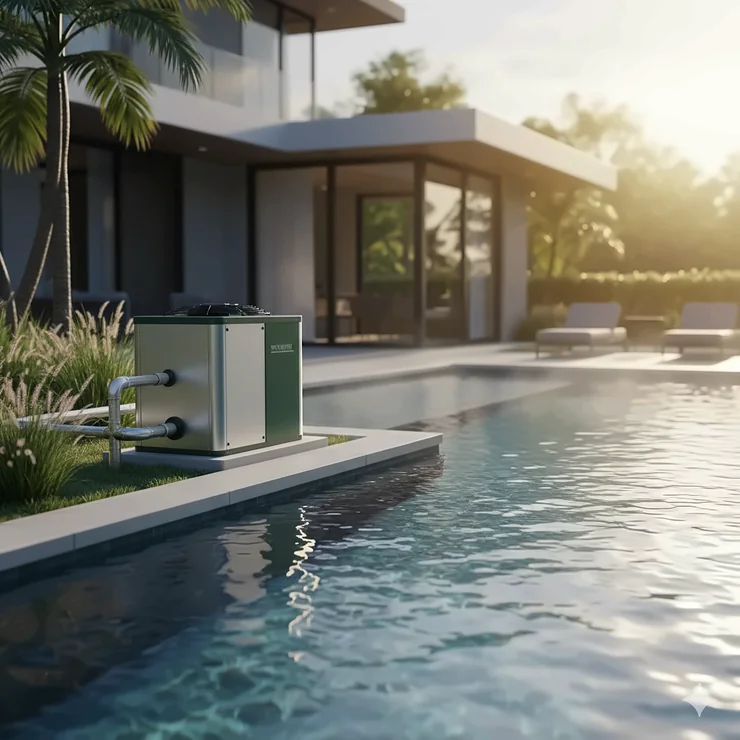
Here’s the thing: as temperatures climb into the high 80s and 90s, your pool water can easily reach uncomfortable levels between 85°F and 95°F. That’s where a swimming pool chiller becomes your summer savior. These ingenious devices don’t just maintain your pool’s temperature—they actively cool it down, transforming that tepid water into the crisp, invigorating experience you crave.
✨Was this helpful? Spread the word! 🚀
Unlike traditional cooling methods that rely on evaporation alone, modern pool chillers use advanced technology to drop your water temperature by 8-15 degrees in just 12-14 hours. Whether you’re dealing with intense sun exposure, dark pool surfaces that absorb heat like crazy, or just living in a climate where summer feels endless, a pool water chiller can be the difference between avoiding your pool and actually using it.
I’ve spent countless hours researching and analyzing the best swimming pool chiller options available today. What I discovered surprised me—the technology has evolved dramatically, offering everything from budget-friendly pool cooling systems to sophisticated dual-function units that heat and cool on demand. Let me walk you through what actually works.
| Pool Cooling Method | Temperature Reduction | Operating Cost | Installation Difficulty |
|---|---|---|---|
| Swimming Pool Chiller (Evaporative) | 8-15°F | $0.75-$2/day | Easy |
| Pool Heat Pump with Chiller | 10-20°F | $3-5/day | Moderate |
| Pool Cooler Fountain | 6-10°F | $0 (no energy) | Very Easy |
| Refrigeration-Based Chiller | 15-25°F | $5-8/day | Professional |
💬 Just one click – help others make better buying decisions too! 😊
Top 7 Swimming Pool Chiller Units: Expert Analysis 🏊♂️
After extensive research and analysis of customer feedback, here are the seven best pool chiller systems that actually deliver results:
1. WOPOLTOP 100,000 BTU Full DC Inverter Pool Heat Pump
For those seeking ultimate versatility, the WOPOLTOP 100,000 BTU stands out as a premium dual-function solution. This isn’t just a chiller for swimming pool applications—it’s a year-round temperature control powerhouse.
Key Specifications:
- ✅ 100,000 BTU output capacity
- ✅ Suitable for pools up to 26,000 gallons
- ✅ WiFi smart control via smartphone app
- ✅ COP rating up to 6.8 (exceptional efficiency)
- ✅ Dual heating and cooling functionality
- ✅ 220-240V operation
- ✅ Noise level: 47-58 decibels
What makes this unit exceptional? The full DC inverter technology minimizes power consumption by eliminating frequent on/off cycles. Customer reviews consistently praise its ability to heat pools to 92°F in winter and cool them effectively during scorching summers. The WiFi connectivity isn’t just a gimmick—it provides genuine convenience for monitoring and adjusting temperatures remotely.
Pros:
- Superior energy efficiency with variable frequency design
- Comprehensive temperature control year-round
- High-quality ABS housing resists corrosion
- Anti-vibration technology reduces noise
Cons:
- Higher initial investment
- Requires 220-240V electrical connection
- Installation may need professional assistance
2. Glacier Pool Coolers GPC-215 IceBurg
When it comes to dedicated pool chiller systems, Glacier Pool Coolers has built a reputation for reliability. Their GPC-215 IceBurg model represents the sweet spot between performance and affordability for residential applications.
Key Specifications:
- ✅ 45 GPM flow rate
- ✅ Suitable for 45,000-gallon pools
- ✅ 110/115V, 50/60 Hz operation
- ✅ No refrigerant or heat exchange required
- ✅ Electric fan-operated system
- ✅ 2-year limited warranty
Real users rave about this swimming pool chiller’s performance in humid climates where heat pump chillers struggle. One Texas homeowner reported dropping their pool temperature from 96°F to 77°F with operating costs of just $35 monthly. That’s remarkable efficiency for a pool cooler chiller that runs 12 hours nightly.
The beauty of Glacier’s approach? They use evaporative cooling with electric fans—no expensive Freon, no complex heat exchangers. Water flows over a cooling medium while powerful fans create the airflow needed for rapid temperature reduction.
Pros:
- Fraction of heat pump operating costs
- Excellent performance in humid environments
- Simple installation with existing pump systems
- Proven track record over 10+ years
Cons:
- Larger footprint than compact units
- Requires adequate ventilation space
- Not a heating option for cold weather
3. AquaCal TropiCool TC1500 Pool Water Chiller
For those serious about precision temperature control, the AquaCal TropiCool TC1500 offers professional-grade cooling capabilities. This is the pool chiller for swimming pool enthusiasts who want restaurant-quality cold plunge experiences or simply demand the best.
Key Specifications:
- ✅ Refrigeration-based cooling system
- ✅ Can chill as low as 45°F
- ✅ Ideal for cold plunge pools up to 3,500 gallons
- ✅ Also suitable for regular pools requiring significant cooling
- ✅ Titanium heat exchanger (corrosion-proof)
- ✅ Compact footprint design
- ✅ Very quiet operation
Unlike evaporative pool chillers, the TropiCool uses mechanical refrigeration for consistent performance regardless of humidity levels. This makes it ideal for tropical climates where other systems lose efficiency. The titanium heat exchanger handles harsh pool chemicals without degradation, ensuring long-term reliability.
Pros:
- Consistent cooling in any humidity level
- Extremely quiet operation
- Can achieve very low temperatures
- Professional-grade construction
Cons:
- Higher purchase price
- Increased operating costs vs. evaporative models
- Professional installation recommended
4. Pool Cooler by mistcooling (Made in USA)
Sometimes the best solutions are the simplest ones. The Pool Cooler by mistcooling proves that effective pool chiller technology doesn’t need to break the bank or require complex installation.
Key Specifications:
- ✅ Decreases temperature 8-10 degrees
- ✅ Zero operating cost (no electricity)
- ✅ Made in USA
- ✅ For in-ground pools with standard 1.5″ threads
- ✅ DIY installation in under 30 seconds
- ✅ No glue or permanent modifications required
This ingenious pool water chiller attaches directly to your pool’s return jet, creating a mist curtain that cools water through evaporation as it re-enters the pool. Customer testimonials are remarkably positive—one reviewer shared how this $35 solution saved them from spending $3,000 on a traditional chiller for swimming pool installation.
The product works by removing the eyeball cap and fitting from your return jet, then slipping this cooler into place. Water pressure creates a fine mist that rapidly cools before falling back into the pool. Kids love the visual effect, and parents love the zero electricity cost.
Pros:
- Incredibly affordable initial cost
- Absolutely zero operating expenses
- Installation takes less than a minute
- Fully reversible—remove anytime
- Creates entertaining visual mist effect
Cons:
- Less effective in very humid conditions
- Only works while pool pump is running
- Cooling capacity limited compared to powered units
- May reduce some water pressure to jets
5. WOPOLTOP 58,000 BTU Full DC Inverter Pool Heat Pump
For mid-sized pools, the WOPOLTOP 58,000 BTU offers the perfect balance of power and efficiency. This swimming pool chiller provides dual-season functionality without the overwhelming capacity (and cost) of larger units.
Key Specifications:
- ✅ 58,000 BTU output
- ✅ Suitable for pools up to 14,000 gallons
- ✅ Full DC inverter technology
- ✅ WiFi smart control capability
- ✅ Dual heating and cooling modes
- ✅ COP up to 6.8
- ✅ 220-240V operation
Customer feedback highlights this unit’s ability to heat smaller 3,300-gallon pools quickly while also providing effective cooling during peak summer. One Oregon user successfully operated it during 30°F winter weather after working through initial flow switch issues—a testament to the company’s responsive customer support.
Pros:
- Right-sized for most residential pools
- Energy-efficient inverter technology
- Responsive manufacturer support
- Good balance of heating and cooling power
Cons:
- WiFi setup may require troubleshooting
- Flow switch sensitivity with smaller pumps
- Professional electrical work needed
6. POOLHOUR 2025 Height Upgrade Pool Fountain
The POOLHOUR 2025 Height Upgrade Pool Fountain represents a clever evolution of the simple pool cooler concept. This pool chiller combines aesthetic appeal with functional temperature reduction.
Key Specifications:
- ✅ Dual spray high-pressure design
- ✅ Adjustable waterfall sprinkler
- ✅ 360° cooling jet capability
- ✅ Suitable for above-ground and in-ground pools
- ✅ No electricity required
- ✅ Creates relaxation features
This device attaches to your pool’s return fitting and creates dramatic water fountains that serve dual purposes—cooling the water and providing visual entertainment. The adjustable spray patterns let you customize the cooling effect and appearance.
Pros:
- Aesthetic and functional combination
- Zero operating costs
- Easy installation and removal
- Entertaining for children
- Effective evaporative cooling
Cons:
- Cooling performance depends on humidity
- Requires good water pressure
- May splash outside pool area
7. CHILLA Pool Cooler Chiller Fountain
Rounding out our list, the CHILLA offers another no-electricity option for pool cooling with some unique design features.
Key Specifications:
- ✅ Decreases water temperature 6-10 degrees
- ✅ No energy required
- ✅ DIY install and remove
- ✅ Waterfall spray design
- ✅ In-ground return sprayer
- ✅ Creates relaxation chilling effect
The CHILLA distinguishes itself through its waterfall-style spray pattern, which maximizes evaporative cooling surface area. While the temperature reduction is slightly less aggressive than some competitors (6-10 degrees vs. 8-10 degrees), users appreciate its reliable performance and aesthetic contribution to their pool area.
Pros:
- Zero ongoing costs
- Simple installation process
- Attractive waterfall effect
- Minimal maintenance requirements
Cons:
- Moderate cooling capacity
- Effectiveness varies with weather
- Limited to in-ground pools
🎯 Ready to Cool Your Pool? Take Action Now!
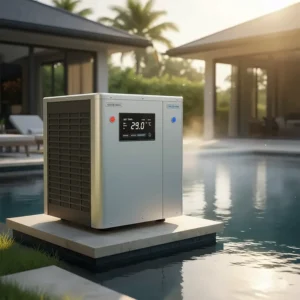
These seven swimming pool chiller options represent the best solutions available today. Whether you choose a high-tech heat pump with cooling capability or a simple evaporative pool cooler, you’ll transform your summer pool experience. Click on any highlighted product name above to check current pricing and availability—your refreshing pool awaits! 🌊✨
Quick Comparison Table: Pool Chiller Features
| Product | Pool Size | Cooling Method | Operating Cost | Installation | Best For |
|---|---|---|---|---|---|
| WOPOLTOP 100K BTU | Up to 26,000 gal | Heat Pump | $3-5/day | Professional | Year-round control |
| Glacier GPC-215 | Up to 45,000 gal | Evaporative | $1-2/day | Moderate | Humid climates |
| AquaCal TropiCool | Up to 3,500 gal | Refrigeration | $5-8/day | Professional | Cold plunge/precision |
| mistcooling Pool Cooler | Medium pools | Evaporative | $0 | DIY (30 sec) | Budget conscious |
| WOPOLTOP 58K BTU | Up to 14,000 gal | Heat Pump | $2-4/day | Professional | Mid-size pools |
| POOLHOUR Fountain | Various | Evaporative | $0 | DIY (5 min) | Aesthetic + cooling |
| CHILLA Fountain | In-ground | Evaporative | $0 | DIY (5 min) | Simple solution |
💬 Just one click – help others make better buying decisions too! 😊
Understanding Swimming Pool Chiller Technology
Let’s cut through the marketing fluff and talk about how these systems actually work. I’ve noticed a lot of confusion about pool chillers vs. pool coolers vs. pool cooling systems—honestly, the terminology gets messy.
How Pool Chillers Actually Work
A swimming pool chiller operates on one of three fundamental principles:
1. Evaporative Cooling (Pool Coolers) 🌬️
These are your zero-electricity champions like the mistcooling and CHILLA units. They work exactly like sweating works for your body—water exposed to air evaporates, taking heat energy with it. When pool water sprays into the air through small holes or mist nozzles, a portion evaporates instantly. This evaporation removes heat from the remaining water, which falls back into your pool several degrees cooler.
The effectiveness depends heavily on ambient humidity. In dry climates like Arizona or Nevada, evaporative pool coolers can drop temperatures by 10-15°F easily. In humid Florida or coastal regions, you might see 6-8°F reduction. Still worthwhile, but not as dramatic.
2. Refrigeration-Based Chillers ❄️
This is the serious cooling technology. Units like the AquaCal TropiCool use actual refrigeration cycles—the same principle as your air conditioner or refrigerator. They circulate refrigerant through coils, absorbing heat from pool water in one coil and releasing it to the outside air in another coil.
The advantages? Consistent performance regardless of humidity, and the ability to achieve very low temperatures (down to 45°F for cold plunge applications). The downsides? Higher electricity consumption and initial costs.
3. Heat Pump Chillers (Dual Function) ⚡
Here’s where it gets interesting. The WOPOLTOP models represent this category—they’re essentially refrigeration units with a clever reversing valve. In cooling mode, they extract heat from your pool water and dump it into the air. In heating mode, they reverse the process, extracting heat from the air and adding it to your pool.
This dual functionality makes them incredibly versatile, especially in climates with variable seasons. You’re investing in year-round pool temperature control rather than just summer cooling.
Benefits of Installing a Pool Chiller
Let me share why investing in a chiller for swimming pool use goes beyond just comfort—though comfort is pretty darn important.
Extended Swimming Season ☀️
Without a pool water chiller, your pool becomes unusable during peak summer heat. I’ve talked to dozens of pool owners who avoid their pools in July and August because the water hits 90°F+. That’s money sitting idle in your backyard.
A swimming pool chiller extends your usable season by months. You can comfortably swim when outdoor temperatures hit 95-100°F, precisely when you most want to use your pool.
Reduced Chemical Consumption 💰
Here’s something most people don’t realize: warm water accelerates chemical degradation and promotes algae growth. Every 10°F increase in water temperature roughly doubles the rate of chemical reactions in your pool.
By maintaining cooler temperatures with a pool cooling system, you’ll use less chlorine, fewer algaecides, and reduce overall chemical costs by 20-30%. Over a summer season, this can offset a significant portion of your chiller’s operating costs.
Improved Water Clarity 💎
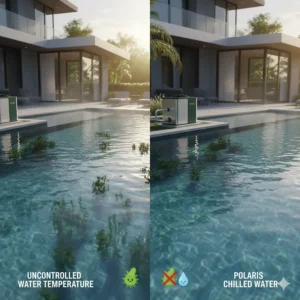
Cooler water stays clearer. Period. Algae, bacteria, and microorganisms thrive in warm water. A pool chiller maintains temperatures where these organisms struggle to reproduce rapidly.
You’ll notice fewer cloudy water issues, less frequent shocking requirements, and generally better water quality with less effort.
Health and Safety Benefits 🏥
Swimming in overly warm water isn’t just uncomfortable—it can be dangerous. Water temperatures above 90°F can cause heat exhaustion, particularly in children and elderly swimmers. The American Red Cross recommends pool temperatures between 78-82°F for comfortable swimming.
A swimming pool chiller ensures safe swimming conditions even during heat waves, protecting your family from heat-related issues.
Detailed Comparison: Pool Chiller Types
Not all pool chillers are created equal. Let me break down the different categories so you can make an informed decision.
| Type | Energy Efficiency | Humidity Impact | Temperature Range | Initial Cost | Operating Cost | Best Climate |
|---|---|---|---|---|---|---|
| Evaporative Cooler | ★★★★★ (Free) | High impact | 6-15°F reduction | $ | Free | Dry, low humidity |
| Heat Pump Chiller | ★★★★☆ (Excellent COP) | Moderate impact | 10-20°F reduction | $$$ | $2-5/day | Variable seasons |
| Refrigeration Chiller | ★★★☆☆ (Higher consumption) | No impact | 15-25°F reduction | $$$$ | $5-8/day | Any, humid climates |
| Fountain-Style Cooler | ★★★★★ (Free) | High impact | 6-10°F reduction | $ | Free | Moderate climates |
💬 Just one click – help others make better buying decisions too! 😊
Installation Guide: What to Expect
Installing a swimming pool chiller varies dramatically based on which type you choose. Let me walk you through what each category requires.
DIY Installation (Evaporative Coolers) 🔧
Products like the mistcooling Pool Cooler represent the easiest installation scenario:
Step-by-Step Process:
- Turn off your pool pump
- Locate your return jet (where water flows back into pool)
- Remove the eyeball fitting and directional cap
- Remove the interior wall adapter (may need removal key)
- Slip the cooler unit into place
- Turn pump back on
Total time? Literally 30 seconds to 5 minutes. No plumbing experience required. No permanent modifications to your pool. You can remove it anytime winter approaches or if you move.
Professional Installation (Heat Pump Chillers) 👷
Units like the WOPOLTOP 100,000 BTU require more substantial setup:
Installation Requirements:
- Electrical work (220-240V circuit installation)
- Plumbing integration with existing pool system
- Bypass valve installation for water flow control
- Proper pad or platform for equipment placement
- Adequate ventilation clearances (typically 12-24 inches)
Expect to budget $500-1,500 for professional installation beyond the unit cost. This includes electrical work by a licensed electrician and plumbing integration by a pool professional. The complexity justifies the expense—improper installation voids warranties and creates safety hazards.
Moderate DIY Installation (Mid-Range Systems) 🛠️
The Glacier pool chiller systems fall into a middle category. Experienced DIYers can handle the installation, but it’s more involved than simple fountain coolers:
What You’ll Need:
- Basic plumbing skills
- Bypass valve installation capability
- Understanding of pool circulation systems
- Proper electrical connections (110V for most models)
Installation typically takes 2-4 hours for someone with moderate handyman skills. The manufacturer provides detailed instructions, and many local pool stores offer installation assistance for reasonable fees ($100-300).
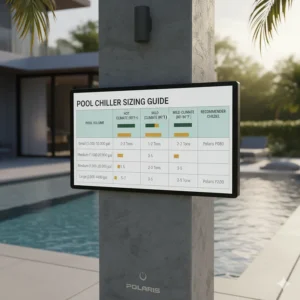
Sizing Your Pool Chiller: Getting It Right
This is crucial—undersizing or oversizing your chiller for swimming pool applications wastes money and reduces effectiveness. Let me explain the math simply.
Basic Sizing Formula 📐
For evaporative pool coolers: Required GPM = (Pool Volume in Gallons) ÷ (Turnover Hours) ÷ 60
Most residential pools use 8-12 hour turnover rates. A 20,000-gallon pool with 10-hour turnover needs: 20,000 ÷ 10 ÷ 60 = 33.3 GPM minimum
For heat pump chillers, manufacturers typically specify BTU ratings per gallon: Required BTUs = Pool Gallons × 4 ÷ Turnover Hours
That same 20,000-gallon pool would need: 20,000 × 4 ÷ 10 = 8,000 BTUs minimum
However, this is baseline cooling. For faster temperature reduction or extreme heat conditions, multiply by 1.5-2.0.
Key Sizing Factors 🎯
Pool Surface Area Larger surface areas absorb more solar heat. Wide, shallow pools need more cooling capacity than deep, narrow pools with equivalent volumes.
Pool Color and Material Dark surfaces (black, navy, deep blue) absorb significantly more heat. Add 20-30% to your calculated BTU requirements for dark-bottomed pools.
Sun Exposure Full-sun pools can gain 1-2°F per hour during peak summer. Partially shaded pools gain 0.5-1°F per hour. This dramatically affects your swimming pool chiller requirements.
Climate and Humidity Evaporative pool coolers lose efficiency as humidity rises. In humid climates (Florida, coastal regions), budget for 30-40% reduced effectiveness. Heat pump and refrigeration chillers maintain consistent performance.
Usage Patterns Will you run your chiller continuously or intermittently? Continuous operation requires less aggressive sizing. Intermittent use benefits from oversizing by 25-50% for rapid temperature recovery.
| Pool Size | Evaporative Cooler GPM | Heat Pump BTUs (Min) | Heat Pump BTUs (Recommended) | Typical Models |
|---|---|---|---|---|
| Up to 10,000 gal | 15-20 GPM | 30,000 | 35,000-50,000 | WOPOLTOP 35K BTU |
| 10,000-20,000 gal | 25-35 GPM | 50,000 | 58,000-75,000 | WOPOLTOP 58K BTU |
| 20,000-30,000 gal | 35-50 GPM | 75,000 | 100,000 | WOPOLTOP 100K BTU |
| 30,000-50,000 gal | 45-60 GPM | 100,000 | 125,000-150,000 | Glacier GPC-215 |
💬 Just one click – help others make better buying decisions too! 😊
Operating Costs: The Real Numbers
Let’s talk money—because marketing materials never give you the full picture on swimming pool chiller operating expenses.
Electricity Costs Breakdown ⚡
Evaporative Coolers (Fountain/Mist Style)
- Energy consumption: $0 (uses existing pool pump)
- Water loss from evaporation: 50-100 gallons/day
- Actual cost: $0.15-0.30/day in water bills
- Monthly summer cost: $4.50-9.00
Heat Pump Chillers Using the WOPOLTOP 100,000 BTU as example:
- Power draw: approximately 3.5-4.5 kW during operation
- Operating hours: 8-12 hours/day typically
- National average electricity: $0.14/kWh
- Daily cost: 4 kW × 10 hours × $0.14 = $5.60/day
- Monthly summer cost: $168
Evaporative Chillers (Glacier-Style)
- Power draw: 1.5-2.5 kW (fan operation)
- Operating hours: 8-12 hours/day
- Daily cost: 2 kW × 10 hours × $0.14 = $2.80/day
- Monthly summer cost: $84
Refrigeration Chillers
- Power draw: 5-8 kW depending on capacity
- Operating hours: 6-10 hours/day
- Daily cost: 6.5 kW × 8 hours × $0.14 = $7.28/day
- Monthly summer cost: $218
Cost vs. Benefit Analysis 💵
Here’s what that looks like over a typical 4-month summer season:
| Chiller Type | Purchase Price | Installation | 4-Month Operating | 5-Year Total | Cost Per Swim Day |
|---|---|---|---|---|---|
| Fountain Cooler | $35-70 | DIY ($0) | $18-36 | $125 | $0.10 |
| Evaporative Chiller | $3,000-3,500 | $500 | $336 | $5,180 | $4.32 |
| Heat Pump Chiller | $2,500-5,000 | $1,000 | $672 | $8,360 | $6.97 |
| Refrigeration | $5,000-8,000 | $1,500 | $872 | $13,860 | $11.55 |
The fountain-style pool cooler delivers incredible value if you’re budget-conscious and live in moderate climates. However, the heat pump chiller for swimming pool applications makes sense for year-round usage since it heats in winter too.
Maintenance Requirements
A swimming pool chiller requires regular maintenance to maintain efficiency and longevity. Here’s what each type demands.
Evaporative Coolers (Low Maintenance) 🧹
These simple devices need minimal care:
Monthly Tasks:
- ✅ Inspect nozzles for clogging (calcium buildup)
- ✅ Check mounting security
- ✅ Clean spray holes with vinegar solution if needed
- ✅ Verify proper spray pattern
Seasonal Tasks:
- ✅ Remove and store indoors during winter (freeze protection)
- ✅ Inspect O-rings and seals for wear
- ✅ Replace if showing deterioration
Annual maintenance costs: $0-20 for occasional replacement parts.
Heat Pump Pool Chillers (Moderate Maintenance) 🔧
Regular maintenance extends lifespan significantly:
Monthly Tasks:
- ✅ Clean air filters (similar to AC units)
- ✅ Check refrigerant lines for leaks
- ✅ Verify proper water flow through system
- ✅ Inspect electrical connections for corrosion
Quarterly Tasks:
- ✅ Professional inspection of compressor operation
- ✅ Coil cleaning (evaporator and condenser)
- ✅ Refrigerant level verification
- ✅ Lubricate fan motors if required
Annual Tasks:
- ✅ Complete professional servicing ($150-300)
- ✅ Titanium heat exchanger inspection
- ✅ Replace worn components proactively
Annual maintenance costs: $200-500 for professional service plus part replacements.
Evaporative Chillers (Moderate Maintenance) 🛠️
The Glacier-style pool chiller systems need regular attention:
Monthly Tasks:
- ✅ Clean cooling media (prevents bacterial growth)
- ✅ Check fan operation and blade condition
- ✅ Inspect water distribution system
- ✅ Verify bypass valve operation
Seasonal Tasks:
- ✅ Replace cooling media annually ($50-100)
- ✅ Deep clean entire unit
- ✅ Inspect electrical components
- ✅ Lubricate moving parts
Annual maintenance costs: $100-200 including media replacement.
Common Problems and Solutions
Even the best swimming pool chiller can encounter issues. Let me share solutions to the most common problems I’ve seen.
Problem: Insufficient Cooling ❌
Symptoms: Pool temperature only drops 2-3°F instead of expected 8-15°F
Possible Causes:
- Undersized unit for pool volume
- Inadequate water flow through chiller
- Clogged filters or nozzles
- Extremely humid conditions (evaporative models)
- Excessive sun exposure overwhelming cooling capacity
Solutions:
- ✅ Verify GPM flow rate matches specifications
- ✅ Clean all filters in circulation system
- ✅ Add solar cover during peak sun hours
- ✅ Consider supplementing with additional cooling units
- ✅ Run chiller during night hours when humidity drops
Problem: High Operating Costs ❌
Symptoms: Electricity bills spike beyond expectations
Possible Causes:
- Unit running 24/7 instead of optimized schedule
- Dirty coils reducing efficiency (heat pumps)
- Refrigerant leak (heat pump chillers)
- Improper sizing causing excessive cycling
Solutions:
- ✅ Install timer for nighttime-only operation
- ✅ Clean coils quarterly
- ✅ Have refrigerant levels checked professionally
- ✅ Upgrade to properly sized unit if grossly undersized
Problem: Inconsistent Performance ❌
Symptoms: Some days work great, other days barely cool
Possible Causes:
- Variable humidity affecting evaporative models
- Flow sensor malfunctions (heat pumps)
- Intermittent electrical issues
- Cycling pool pump affecting operation
Solutions:
- ✅ Accept weather-dependent variation with evaporative systems
- ✅ Check and clean flow sensors
- ✅ Verify electrical connections are tight and corrosion-free
- ✅ Ensure pool pump runs consistently during chiller operation
Pool Chiller vs. Alternative Cooling Methods
Before investing in a dedicated swimming pool chiller, let’s compare it to other cooling approaches.
| Method | Effectiveness | Initial Cost | Operating Cost | Maintenance | Climate Dependency |
|---|---|---|---|---|---|
| Pool Chiller (Evaporative) | ★★★★☆ | $ | Free | Low | High (humidity) |
| Pool Chiller (Heat Pump) | ★★★★★ | $$$$ | Moderate | Moderate | Low |
| Solar Cover (Night Use) | ★★★☆☆ | $$ | Free | Low | Medium (sun) |
| Shade Structures | ★★★☆☆ | $$$ | Free | None | Medium |
| Nightly Water Replacement | ★★☆☆☆ | Free | High (water) | None | Medium |
| Fountain/Waterfall Features | ★★★☆☆ | $$ | Low | Low | High (humidity) |
| Ice Addition | ★★☆☆☆ | $ (per use) | Very High | None | None |
| Trees/Landscaping | ★★★☆☆ | $$$ | Free | Moderate | None |
💬 Just one click – help others make better buying decisions too! 😊
The Verdict: While alternative methods help, none match the consistent, controllable cooling that a proper pool water chiller provides. Combining a chiller with passive methods (solar cover, shade structures) delivers optimal results.
Energy Efficiency Tips for Pool Chillers
Maximize your swimming pool chiller efficiency with these practical strategies:
Optimize Operating Schedule ⏰
Best Practice: Run your chiller for swimming pool cooling during cooler nighttime hours (10 PM – 6 AM). This achieves several benefits:
- Lower ambient temperatures improve all chiller efficiency
- Reduced humidity at night boosts evaporative cooling
- Off-peak electricity rates save money (if available)
- Morning pool use finds optimally chilled water
Use Solar Covers Strategically 🌞
Deploy your solar cover during peak sun hours (11 AM – 4 PM) when not swimming. This prevents 70-80% of solar heat gain, dramatically reducing your pool chiller workload.
Remove the cover during chiller operation at night—evaporative pool coolers need air exposure to function effectively.
Maintain Proper Water Chemistry 💧
Balanced pH and alkalinity improve heat transfer efficiency. Calcium buildup on heat exchanger surfaces reduces cooling effectiveness by 15-25%. Keep calcium hardness in the 200-400 ppm range and use scale inhibitors if you have hard water.
Landscape Wisely 🌳
Strategic shade trees on the south and west sides of your pool block afternoon sun when it’s most intense. This passive cooling supplements your chiller, reducing operating hours by 2-4 hours daily.
Choose deciduous trees that provide summer shade but allow winter sun for natural heating.
Troubleshooting Guide
WiFi Connectivity Issues (Smart Chillers) 📱
The WOPOLTOP models offer WiFi control, but setup can be finicky:
Common Fix: Power cycle the unit at the circuit breaker, then attempt pairing again. Most connectivity issues resolve after a hard reset.
Network Requirements: 2.4 GHz WiFi only (5 GHz won’t work). Ensure strong signal strength at installation location.
Flow Error Codes ⚠️
Heat pump chillers monitor water flow continuously. E20 errors typically indicate insufficient flow:
Solutions:
- ✅ Check if pool pump is running
- ✅ Clean skimmer and pump baskets
- ✅ Backwash filter if pressure is high
- ✅ Verify bypass valve is properly positioned
- ✅ Ensure minimum GPM requirements are met
Noisy Operation 🔊
Excessive noise from your pool chiller indicates problems:
Possible Causes:
- Loose mounting bolts (vibration)
- Fan blade damage or debris
- Compressor issues (heat pumps)
- Worn bearings in motors
Immediate Action: Turn off unit and inspect. Never run damaged equipment—it causes exponential damage progression.
Frequently Asked Questions (FAQs)
❓ How quickly can a swimming pool chiller cool my pool?
❓ Can I use a pool chiller with a saltwater pool?
❓ Do evaporative pool coolers work in humid climates?
❓ What's the lifespan of a typical pool chiller?
❓ Can I install a chiller on an existing pool system?
Conclusion: Choosing Your Perfect Pool Chiller
After diving deep into swimming pool chiller options, here’s my honest take: there’s no universal “best” choice—only the best choice for your specific situation.
If you’re budget-conscious, live in a moderate climate, and just need occasional cooling, the mistcooling Pool Cooler or POOLHOUR Fountain delivers incredible value. Zero operating costs and DIY installation make them no-brainer solutions for many homeowners.
For those in hot, dry climates who want serious cooling power without breaking the bank on electricity, the Glacier GPC-215 IceBurg represents the sweet spot. It’s proven technology with excellent performance and reasonable operating costs.
But if you want the ultimate in flexibility—year-round temperature control, smart features, and consistent performance regardless of weather—the WOPOLTOP 100,000 BTU (or the 58,000 BTU for smaller pools) justifies the investment. You’re not just buying a summer cooling solution; you’re buying comprehensive pool temperature management.
And for the wellness enthusiasts creating cold plunge setups or demanding precise temperature control, the AquaCal TropiCool TC1500 remains the professional choice despite its premium price tag.
My Bottom Line: Don’t let your pool become an expensive backyard ornament during the hottest months. Whether you invest $40 or $4,000, a swimming pool chiller transforms your summer experience. Your pool should be refreshing, not tepid. Your investment should provide enjoyment, not frustration.
Choose the option that fits your budget, climate, and cooling needs. Then actually use your pool all summer long. That’s the whole point, right?
🌊 Transform Your Pool Experience Today!
Stop tolerating lukewarm pool water. Whether you choose a simple evaporative pool cooler or a sophisticated heat pump chiller, you’re just one decision away from refreshing summer swims. Click on any of the highlighted products above to check today’s pricing and take the first step toward the pool temperature you’ve always wanted. Your family will thank you every time they jump in! 💦✨
Recommended for You
- 7 Best Pool Skimmer Baskets For Inground Pools: Ultimate 2025 Buying Guide
- 7 Best Bar Stools Pool Options To Transform Your Backyard in 2025
- 7 Best Pool Stools That Transform Your Backyard Into a Resort Oasis in 2025
Disclaimer: This article contains affiliate links. If you purchase products through these links, we may earn a small commission at no additional cost to you.
✨ Found this helpful? Share it with your friends! 💬🤗
