
In This Article
✨Was this helpful? Spread the word! 🚀
You know what nobody talks about enough at the gym? Forearms. While everyone’s busy flexing their biceps and posting chest day selfies, your forearms are quietly doing the heavy lifting—literally. Whether you’re deadlifting, rock climbing, or just trying to open that impossibly tight pickle jar, strong forearms are your secret weapon.
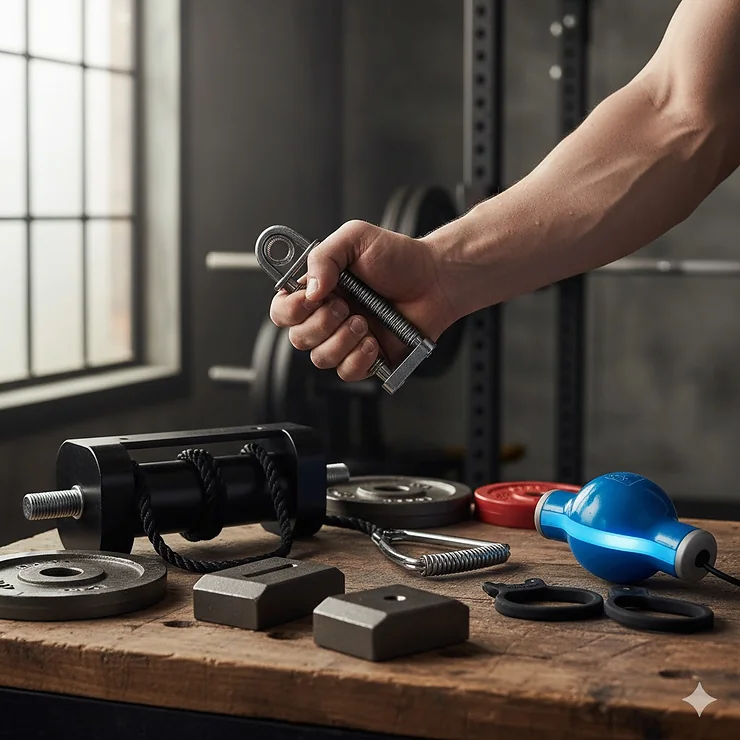
Here’s the thing: traditional gym equipment often neglects these crucial muscles. That’s where dedicated forearm fitness equipment comes in. We’re talking about specialized tools designed to transform your wimpy wrists into steel cables. From wrist rollers that’ll make your forearms scream to grip strengtheners that fit in your pocket, the right equipment can revolutionize your training.
I’ve tested dozens of pieces of fitness equipment for forearms over the years, and let me tell you—not all are created equal. Some are overpriced gimmicks, while others are absolute game-changers. In this guide, we’ll dive deep into the seven best forearm exercise equipment options that actually deliver results. Whether you’re rehabbing an injury, training for strongman competitions, or just want to improve your overall arm strength, you’ll find something here that fits your needs perfectly.
Quick Comparison: Top 7 Forearm Fitness Equipment
| Product | Type | Resistance Range | Price Range | Best For |
|---|---|---|---|---|
| Fat Gripz Pro | Grip Thickener | N/A (2.25″ diameter) | $29-35 | Muscle activation |
| Vikingstrength Wrist Roller | Wrist Roller | Customizable (220+ lbs capacity) | $35-45 | Advanced training |
| FitBeast 5-Pack Kit | Grip Strengthener Set | 22-132 lbs | $20-30 | Comprehensive training |
| IronMind Captains of Crush | Hand Gripper | 60-365 lbs | $29-35 per gripper | Serious grip training |
| Pro Saker Power Twister | Arm Trainer | 40-130 lbs | $15-25 | Upper body conditioning |
| NSD Powerball Gyroscope | Gyroscopic Exerciser | Up to 26.8 lb-in torque | $10-20 | Rehabilitation & endurance |
| Yes4All Wrist Roller | Budget Wrist Roller | Customizable | $10-15 | Budget-conscious users |
💬 Just one click – help others make better buying decisions too! 😊
Top 7 Forearm Fitness Equipment: Expert Analysis
1. Fat Gripz Pro – The Muscle Activation Master
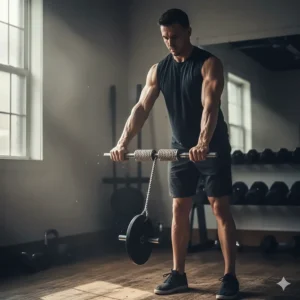
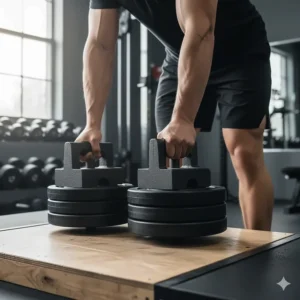
If you’re serious about building massive forearms without buying an arsenal of new equipment, Fat Gripz Pro is your answer. These thick grip attachments wrap around any barbell or dumbbell, instantly transforming standard weights into forearm-crushing monsters.
Key Specifications:
- 2.25-inch outer diameter
- Military-grade rubber compound
- Fits all standard barbells and dumbbells
- Weight: Under 2 lbs per pair
The science backs this up: thick grip training recruits significantly more motor units in your elbow flexors and forearms. At $29.95, these bad boys are cheaper than a tub of protein powder but will deliver gains for a lifetime. The bevelled ends even fit angled EZ bars, making them incredibly versatile.
Customer feedback consistently praises the durability—many users report using the same pair for 5+ years without any wear. One reviewer mentioned his forearms felt “absolutely fried” after his first Fat Gripz workout, which is exactly what you want.
✅ Pros: Extremely durable, versatile, backed by science, affordable
✅ Compatible with existing equipment
✅ Used by professional athletes across multiple sports
❌ Cons: Can make exercises significantly harder (may need to reduce weight)
❌ Limited color options
Price: $29.95-$34.99
2. Vikingstrength Forearm Blaster – The Premium Wrist Roller
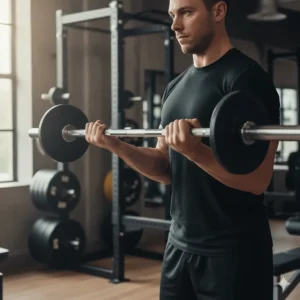
The Vikingstrength Wrist Roller isn’t your typical forearm exerciser—it’s a beast built for serious lifters. With patented thick handles (6.18 inches in circumference) and a chain system that fits any weight, this wrist roller has earned its reputation as Amazon’s top-rated forearm training device.
Key Specifications:
- Thick grip handles for maximum muscle activation
- Adjustable chain system fits any weight plate
- 220 lbs verified weight capacity (tested up to 300+ lbs)
- Wide strap design prevents slipping
- 38-inch strap plus chain
What sets the Vikingstrength Forearm Blaster apart is its quality construction. The strap wraps on itself during use, ensuring balanced resistance without the frustrating slipping you get with cheaper models. Users consistently report the thick handles create significantly more forearm activation compared to standard wrist rollers.
One customer review that stuck with me: “My forearms are burning so much I can barely type this review.” That’s the kind of intensity you’re paying for. Physical therapists also recommend it for injury prevention and rehabilitation, particularly for carpal tunnel syndrome and tendonitis.
✅ Pros: Patented thick grip design, extremely durable construction, lifetime guarantee
✅ Wide strap prevents wobbling
✅ Can handle heavy weights
❌ Cons: Higher price point than basic models
❌ May be too intense for absolute beginners
Price: $35-45
3. FitBeast Hand Grip Strengthener 5-Pack Kit – The Complete Package
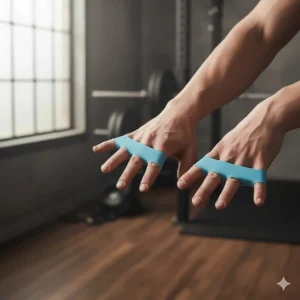
For those who want comprehensive forearm training equipment without breaking the bank, the FitBeast 5-Pack Kit is basically a gym in a bag. You get two adjustable hand grippers, a finger exerciser, finger stretcher resistance band, a grip ring, and a stress relief ball—all for under $30.
Key Specifications:
- Adjustable resistance: 22-132 lbs
- Includes 5 different training tools
- Ergonomic non-slip design
- Portable carry bag included
- Tutorial video and manual
The adjustability is key here. Whether you’re recovering from surgery or training for arm wrestling competitions, you can dial in the perfect resistance. The finger exerciser provides 4 lbs of resistance per finger, which is perfect for musicians, climbers, and anyone working on finger independence.
Customer feedback highlights the kit’s versatility. One nurse recovering from carpal tunnel surgery praised how the gradual progression helped her rehabilitation. Meanwhile, a competitive climber noted significant grip strength improvements within just three weeks of consistent use.
The ergonomic handles fit comfortably in both small and large hands, and the textured surface ensures you won’t lose your grip mid-squeeze. It’s legitimately one of the best value propositions in the entire fitness equipment market.
✅ Pros: Incredible value for money, comprehensive training options, suitable for all levels
✅ Portable and convenient
✅ Great for rehabilitation
❌ Cons: Individual pieces aren’t as premium as specialized single products
❌ Plastic components on some pieces
Price: $20-30
4. IronMind Captains of Crush Grippers – The Gold Standard
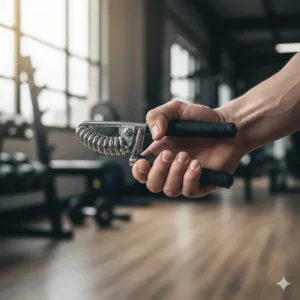
When serious grip athletes talk forearm fitness equipment, one name comes up repeatedly: Captains of Crush. These aren’t your sporting goods store grippers—they’re precision-engineered tools that have become the international standard for testing and certifying grip strength.
Key Specifications:
- 11 different strength levels (60-365 lbs)
- Knurled aircraft-grade aluminum handles
- Proprietary GR8 springs
- Designed and manufactured in USA
- Computer-balanced for vibration-free operation
Starting at the Guide level (60 lbs) for rehabilitation work, the progression goes all the way to the legendary No. 4 gripper (365 lbs)—which fewer than a dozen people worldwide have officially closed. The No. 1 gripper (140 lbs) is where most serious strength athletes start their journey.
What makes CoC grippers special is their consistent, accurate resistance. Each gripper is calibrated to exact specifications, so when you progress from a No. 1 to a No. 1.5, you’re making measurable, verifiable gains. This precision is why they’re used for official grip strength certifications globally.
Users report the knurled aluminum handles provide superior grip compared to coated handles, and the springs maintain their tension indefinitely with proper care. One strongman competitor noted he’s been using the same No. 2 gripper for over eight years—it still closes exactly the same as day one.
✅ Pros: Unmatched quality and durability, precise calibration, official certification standard
✅ 11 levels allow perfect progression
✅ Lifetime investment
❌ Cons: Need to purchase multiple grippers as you progress
❌ Premium pricing
Price: $29.95 per gripper
5. Pro Saker Power Twister Bar – The Space-Saving Strength Builder
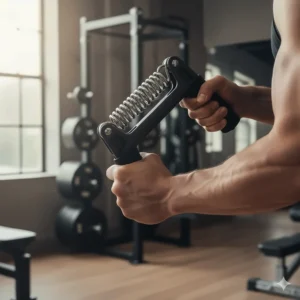
The Power Twister brings old-school chest and arm training into the modern era with adjustable resistance and a detachable design. While technically targeting your entire upper body, this equipment delivers serious forearm work through sustained isometric holds.
Key Specifications:
- Adjustable resistance: 40-130 lbs
- 3-5 resistance levels depending on model
- High-strength steel springs with leather wrapping
- Detachable design (only 2.6 lbs)
- Anti-slip foam handles
What I love about the Power Twister is its simplicity. No setup required—just grab it and start crushing. The adjustable resistance means beginners and advanced athletes can both find challenge. One spring position might be perfect for high-rep endurance work, while maxing out all springs creates brutal isometric challenges.
Customer reviews consistently praise its portability and effectiveness. Office workers report keeping one at their desk for quick midday sessions, while travelers appreciate how easily it fits in a suitcase. The leather wrapping over the springs adds both safety and durability.
Pro tip from user feedback: the forearm burn from sustained holds is intense. Many report better results from longer time-under-tension compared to traditional curls.
✅ Pros: Adjustable for multiple fitness levels, extremely portable, works multiple muscle groups
✅ No additional weights needed
✅ Silent operation
❌ Cons: Padding on handles could be thicker
❌ May be difficult for beginners at first
Price: $15-25
6. NSD Powerball Gyroscopic Wrist Exerciser – The Rehabilitation Champion
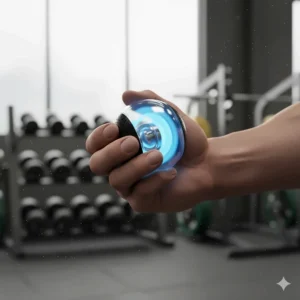
Here’s where things get interesting. The NSD Powerball doesn’t use traditional resistance—it uses gyroscopic physics to create up to 40+ pounds of resistance through spinning motion. It’s like having a tiny tornado in your hand, and your forearms have to work overtime to control it.
Key Specifications:
- Generates up to 26.8 lb-in torque at 10,000 RPM
- Vibration-free operation up to 15,000 RPM
- Computer-balanced inner rotor
- Pull-string or auto-start models available
- Weighs only 8.9 oz
The beauty of the Powerball is its smooth, continuous resistance that’s impossible to replicate with traditional weights. As the rotor spins faster, resistance increases exponentially. This makes it incredibly effective for rehabilitation work—physical therapists love it for carpal tunnel, tennis elbow, and repetitive strain injuries.
But don’t let the rehabilitation talk fool you—spin this thing up to 15,000 RPM and your forearms will be begging for mercy. Rock climbers and martial artists particularly appreciate how the omni-directional resistance strengthens muscles from angles traditional equipment can’t reach.
Users report noticeable improvements in wrist stability and forearm endurance within just two weeks of daily use. The compact size means you can literally train anywhere—at your desk, watching TV, or on your commute.
✅ Pros: Unique gyroscopic resistance, excellent for rehabilitation, extremely portable
✅ No impact or jarring movements
✅ Fun to use (addictively so)
❌ Cons: Learning curve to get rotor spinning
❌ Maximum resistance limited compared to heavy grippers
Price: $10-20
7. Yes4All Wrist Roller – The Budget Champion
Not everyone needs premium features or wants to spend premium prices. The Yes4All Wrist Roller delivers straightforward, effective forearm training equipment at an unbeatable price point. It’s basic, but basic works.
Key Specifications:
- Heavy-duty steel construction
- Adjustable rope/chain system
- Foam grip handles
- Accommodates standard weight plates
- Budget-friendly pricing
This wrist roller does exactly what it’s supposed to—provides progressive resistance for your forearm flexors and extensors. While it lacks the thick handle design of premium models and the construction isn’t quite as bombproof, it gets the job done for casual trainees and those just starting their forearm journey.
Customer feedback is surprisingly positive for the price point. Users appreciate its straightforward design and reliability. One reviewer noted using it 3-4 times weekly for six months without any issues. The foam grips are comfortable, though they may compress over time with heavy use.
✅ Pros: Excellent price-to-value ratio, simple and effective, reliable construction
✅ No frills approach
✅ Great starter option
❌ Cons: Standard grip diameter (less muscle activation), foam may wear over time
❌ Basic construction
Price: $10-15
🔥 Ready to Transform Your Forearms?
Don’t wait another day with weak grip strength! These carefully vetted products represent the best forearm fitness equipment available in 2025. Click on any product above to check current pricing on Amazon and start building the crushing grip strength you’ve always wanted. Your future self (and your deadlift numbers) will thank you! 💪
Understanding Forearm Anatomy: The Science Behind the Strength
Before diving deeper into equipment selection, let’s talk anatomy. Your forearms aren’t just one muscle—they’re a complex system of over 20 different muscles divided into two main groups.
Flexors vs. Extensors
The flexor muscles run along your inner forearm (palm side) and control gripping, squeezing, and pulling movements. When you make a fist or curl your wrist inward, these are the muscles doing the work. They’re the showboats—the muscles everyone thinks about when they picture forearm training.
But here’s where most people screw up: they completely neglect the extensors. These muscles run along your outer forearm and control the opening of your hand and wrist extension. Muscle imbalances between flexors and extensors are a primary cause of tennis elbow, golfer’s elbow, and various wrist issues.
Quality forearm exerciser equipment should train both muscle groups. Research from the <a href=”https://www.ncbi.nlm.nih.gov/pmc/articles/PMC6047503/” target=”_blank”>National Institutes of Health</a> shows balanced training significantly reduces injury risk while maximizing strength gains.
The Grip Strength Connection
Grip strength isn’t just about crushing handshakes. According to studies published in <a href=”https://www.thelancet.com/journals/lancet/article/PIIS0140-6736(14)62000-6/fulltext” target=”_blank”>The Lancet</a>, grip strength is a powerful predictor of overall health, cardiovascular fitness, and even mortality rates. Strong forearms mean better performance in virtually every upper body exercise, from pull-ups to bench press.
How to Choose Forearm Fitness Equipment: The Complete Buyer’s Guide
Selecting the right fitness equipment for forearms can feel overwhelming with so many options. Here’s a systematic approach to finding your perfect match.
1. Define Your Primary Goals
Are you rehabbing an injury? Focus on gyroscopic exercisers and light-resistance grip strengtheners that provide smooth, controlled movement. Building maximum strength? You’ll want heavy-duty grippers and wrist rollers. Looking for general fitness? A comprehensive kit gives you versatility.
2. Assess Your Current Strength Level
Be honest about where you’re starting. Buying a 300-pound gripper when you can barely close a 150-pounder is just ego-shopping. Most manufacturers provide starting guidelines—use them. Progressive overload is key, which means you might need to purchase equipment at multiple resistance levels over time.
3. Consider Your Training Environment
Home gym? Portability matters less than durability. Frequent traveler? Compact equipment like grip strengtheners and gyroscopic balls make sense. Office worker? Silent equipment that won’t disturb colleagues is essential.
4. Budget Realistically
Quality forearm exercise equipment ranges from $10 to $50+ per piece. That FitBeast kit at $25 offers incredible value if you want variety. If you’re serious about grip sport, investing in premium CoC grippers pays dividends. Budget doesn’t always equal quality, but extremely cheap equipment often fails quickly.
5. Read User Reviews Carefully
Look beyond star ratings. Check for recurring complaints about durability, comfort, and actual results. Pay special attention to reviews from users with similar goals and experience levels as you.
6. Understand Adjustability Features
Adjustable equipment grows with you, but sometimes adds complexity and potential failure points. Fixed-resistance equipment is bomber reliable but requires buying multiple pieces as you progress. Choose based on your commitment level and budget.
7. Factor in Versatility
Some equipment, like Fat Gripz, works with weights you already own. Others, like complete grip kits, provide multiple training angles in one purchase. Wrist rollers require weight plates but offer infinite resistance customization. Match equipment versatility to your actual training habits.
The Complete Forearm Training Program Using These Tools
Having the best equipment means nothing without a solid training plan. Here’s how to combine these tools into a comprehensive program that delivers results.
Beginner Program (Weeks 1-4)
Monday & Thursday:
- FitBeast Grip Strengthener: 3 sets × 10 reps (moderate resistance)
- NSD Powerball: 2 minutes continuous
- Finger stretcher bands: 3 sets × 15 reps
Tuesday & Friday:
- Wrist Roller (light weight): 2 sets × 2 rolls
- Power Twister (light setting): 3 sets × 8 reps
- Rest periods: 60-90 seconds
Focus on form and control. Your forearms will feel destroyed after these workouts—that’s normal. Within two weeks, you’ll notice improved endurance and reduced hand fatigue during daily activities.
Intermediate Program (Months 2-4)
Monday & Friday:
- Captains of Crush Gripper (Trainer or No. 1): 5 sets × 5 reps
- Fat Gripz with dumbbells: Hammer curls 3 × 10, Farmer carries 3 × 30 seconds
- Vikingstrength Wrist Roller: 3 sets × 3 rolls (moderate weight)
Wednesday:
- Power Twister (medium setting): 4 sets × 10 reps
- Extensor work with finger bands: 4 sets × 20 reps
- NSD Powerball: 3 minutes max RPM
This phase focuses on building raw strength while maintaining balance between flexors and extensors. You’ll notice significant size gains during this period.
Advanced Program (Month 5+)
Monday:
- Heavy Gripper work (CoC No. 1.5-2): 10 sets × 3 reps
- Fat Gripz deadlifts: 4 sets × 6 reps
- Extensor work: 3 sets × 25 reps
Wednesday:
- Vikingstrength Wrist Roller (heavy weight): 5 sets × 2 rolls
- Power Twister (max resistance): 5 sets × 5 reps (slow eccentrics)
- Isometric holds with grippers: 5 sets × 30 seconds
Friday:
- Dynamic gripper work: Speed closes 8 sets × 5 reps
- Farmer carries with Fat Gripz: 5 sets × 45 seconds
- NSD Powerball: 5 minutes endurance work
At this level, you’re chasing specific strength milestones like closing that No. 2 gripper or adding serious weight to your wrist roller.
Common Mistakes When Using Forearm Fitness Equipment
I’ve seen countless people waste months with ineffective training because of these easily avoidable errors.
Mistake #1: Neglecting Extensors
Training only gripping movements creates massive imbalances. Your flexors become overpowering monsters while your extensors remain weak links. This is a recipe for elbow tendinitis and wrist pain. Always include extensor work—finger bands are cheap and effective.
Mistake #2: Training Too Frequently
Forearms recover slower than you think. They’re involved in virtually every upper body exercise, meaning they’re getting secondary work constantly. Training them directly more than 2-3 times weekly often leads to overtraining and diminishing returns. Rest is when growth happens.
Mistake #3: Ignoring Progressive Overload
Doing the same exercises with the same resistance forever produces exactly zero new adaptations. Your body is smart—once it adapts to a stimulus, it stops changing. You need to progressively increase resistance, volume, or time under tension. Track your workouts and force progress.
Mistake #4: Poor Form and Technique
I see people swinging grippers closed using momentum or jerking wrist rollers up. This accomplishes nothing except increasing injury risk. Slow, controlled movements with full range of motion build real strength. If you can’t close a gripper with strict form, you can’t close it—period.
Mistake #5: Skipping Warm-Ups
Your forearms are complex, heavily innervated structures with lots of small muscles and connective tissue. Jumping straight into heavy work is asking for problems. Spend 5 minutes with light resistance, wrist circles, and finger movements before your main work.
Mistake #6: Buying Everything at Once
New trainees often drop hundreds of dollars on equipment before understanding what they actually need or enjoy. Start with one or two versatile pieces—like the FitBeast kit and Fat Gripz—and add specialized equipment as you discover your preferences and weak points.
Maximizing Results: Advanced Training Techniques
Once you’ve mastered the basics, these advanced techniques can push your forearm development to new levels.
Thick Bar Training Protocols
Fat Gripz transform ordinary exercises into forearm destroyers. Try this protocol: perform your normal dumbbell work with Fat Gripz on every third session. The increased difficulty forces neural adaptation and creates new stimulus without overtrain your forearms. Expect to drop 20-30% of your normal weight initially—that’s completely normal.
Timed Holds and Isometrics
Grab your Captains of Crush gripper one level below what you can fully close. Squeeze it to about 90% and hold for max time. This builds incredible endurance and prepares your tendons for heavier work. Similarly, using the Power Twister for 20-30 second isometric holds creates tension your muscles rarely experience.
Explosive Training with Powerballs
Most people use gyroscopic exercisers for rehab or general conditioning. But spin that NSD Powerball up to maximum RPM, then perform controlled direction changes—that’s next-level wrist stability training. Martial artists and baseball players particularly benefit from this explosive rotational strength.
Drop Sets and Pyramids
With adjustable equipment like the Power Twister or FitBeast grippers, you can perform brutal drop sets. Max out at your heaviest setting, immediately drop resistance and continue to failure, drop again and burn out. This metabolic stress is excellent for hypertrophy but use sparingly—it’s extremely taxing.
Unilateral Training for Balance
Most people have significant left-to-right strength imbalances. Using grippers and individual grip strengtheners lets you identify and correct these imbalances. Track reps and resistance for each hand separately. Once you even out the imbalance, your bilateral lifts will thank you.
The Role of Forearm Equipment in Rehabilitation
Physical therapists and occupational therapists increasingly recommend targeted forearm fitness equipment for various conditions. Here’s why it works.
Carpal Tunnel Syndrome
Controlled strengthening of the forearm muscles can help support the carpal tunnel structures and reduce pressure on the median nerve. The NSD Powerball is particularly effective because its smooth, low-impact movement doesn’t aggravate inflamed tissues while still providing strengthening stimulus. Many users report reduced symptoms within 3-4 weeks of consistent use.
Tennis Elbow and Golfer’s Elbow
These overuse injuries respond well to eccentric strengthening with grip equipment. Slowly lowering the resistance on wrist rollers and performing controlled negative reps with grippers helps rebuild damaged tendon tissue. The key is starting light and progressing slowly—aggressive training makes these conditions worse.
Post-Surgery Rehabilitation
After wrist fractures, hand surgeries, or other upper extremity procedures, rebuilding strength is crucial. Starting with light-resistance bands and stress balls from kits like the FitBeast pack allows gradual progression. The variety of resistance levels and tools means you can match your current capabilities perfectly.
According to research from <a href=”https://www.jospt.org/” target=”_blank”>The Journal of Orthopaedic & Sports Physical Therapy</a>, structured progressive resistance training significantly improves outcomes compared to passive range-of-motion exercises alone.
Forearm Fitness Equipment vs. Traditional Training: The Comparison
Let’s be real about how specialized equipment stacks up against standard gym training.
| Aspect | Specialized Forearm Equipment | Traditional Weight Training |
|---|---|---|
| Targeted Intensity | Superior – isolates forearms completely | Good – forearms always assist other movements |
| Convenience | Excellent – use anywhere, anytime | Limited – requires gym access |
| Progressive Overload | Excellent – precise resistance increments | Good – limited by available plate weights |
| Cost | Excellent – one-time purchase under $100 | Moderate – requires gym membership |
| Variety | Superior – multiple specific training angles | Limited – primarily grip-dependent exercises |
| Results Speed | Faster for specific grip goals | Slower but builds overall mass |
| Portability | Excellent – most pieces very portable | Poor – can’t take gym equipment traveling |
The truth? You need both. Traditional compound lifts build the foundation, while specialized forearm fitness equipment adds the targeted volume and variety for complete development. Think of them as complementary, not competing approaches.
Maintaining and Caring for Your Forearm Equipment
Proper maintenance extends equipment lifespan and ensures consistent performance.
Grip Strengtheners and Grippers
Wipe down handles after each use to prevent sweat corrosion. For spring-loaded grippers like Captains of Crush, never store them closed—this gradually weakens the spring. Check for rust spots monthly, especially in humid climates. Light oil on metal parts once yearly keeps everything moving smoothly.
Wrist Rollers
Inspect rope or strap regularly for fraying—replacement is cheap and prevents accidents. Clean handles with mild soap and water when they get grimy. Check weight attachment points for wear. Store in a dry area to prevent rust on steel components.
Power Twisters
The spring mechanism is the weak point. Never drop or throw these—the sudden impact can damage spring tension. The leather or PVC wrapping protects springs but isn’t indestructible. Replace any split or damaged coverings immediately to prevent rust and maintain safety.
Gyroscopic Exercisers
Keep them clean and dry—most have sealed bearings that don’t require maintenance. If they start making noise or vibrating excessively, internal components may be wearing. Some models allow bearing replacement; others need full replacement. Store in protective cases to prevent shell cracking.
Building a Complete Forearm Training Arsenal on Any Budget
Here’s how to strategically build your equipment collection without unnecessary spending.
The Starter Package ($30-50)
Begin with the FitBeast 5-Pack Kit ($25) for comprehensive basic training. Add Fat Gripz Pro ($30) to enhance your existing dumbbell work. Total investment: $55. This combination covers grip strengthening, finger work, and lets you maximize equipment you already own.
The Intermediate Collection ($100-150)
Keep your starter equipment and add the Vikingstrength Wrist Roller ($40) for progressive overload on forearm flexors/extensors. Include an IronMind Captains of Crush Trainer and No. 1 gripper ($60 total) for serious grip certification work. Optional: NSD Powerball ($15) for rehabilitation and travel training.
The Advanced Arsenal ($250-350)
You’ve now got the basics covered—time to specialize. Add CoC grippers at your target levels (3-4 grippers at $30 each = $120). Invest in a premium Power Twister with multiple resistance levels ($25). Consider specialty items like thick barbells or multiple Powerball models for variety.
The Professional Setup ($500+)
At this level, you’re collecting multiple versions of each tool for specific purposes. Full CoC progression set, multiple wrist roller designs, professional-grade equipment. This is grip sport competitor territory or serious strongman training.
Remember: buy based on actual needs and training goals, not because equipment looks cool. I’ve seen too many home gyms filled with unused equipment gathering dust.
Frequently Asked Questions
❓ How often should I train with forearm fitness equipment for optimal results?
❓ Can I build forearm mass using just grip strengtheners and equipment?
❓ Which forearm fitness equipment works best for carpal tunnel prevention?
❓ How long until I see noticeable results from forearm equipment training?
❓ Do I need expensive forearm fitness equipment or will budget options work?
Conclusion: Transform Your Training with the Right Equipment
Look, I get it. Forearms aren’t sexy. Nobody’s posting forearm selfies or hitting forearm-specific PRs on social media. But here’s what nobody tells you: elite-level performance in almost any physical pursuit requires exceptional grip and forearm strength. Whether you’re an athlete, weekend warrior, or just someone tired of struggling with daily tasks, the right forearm fitness equipment makes a massive difference.
We’ve covered the seven best pieces of equipment available in 2025, from the budget-friendly Yes4All wrist roller to the premium IronMind Captains of Crush grippers. Each serves a specific purpose and training goal. The FitBeast kit offers unbeatable value for beginners, while specialized tools like the Vikingstrength Wrist Roller provide advanced training stimulus.
The key takeaway? Start simple, stay consistent, and progress intelligently. Don’t fall into the trap of buying everything at once or neglecting proper programming. Whether you invest $30 or $300, the best equipment is the stuff you’ll actually use regularly. Match your purchases to your specific goals, current fitness level, and training environment.
Your forearms are involved in basically everything you do—from deadlifts to typing, rock climbing to playing guitar. Investing in their development pays dividends across your entire physical performance spectrum. Plus, let’s be honest: there’s something deeply satisfying about crushing a gripper that most people can’t even budge.
Ready to build the crushing grip strength you’ve always wanted? The equipment’s been tested, the programs are proven, and the results are waiting. All that’s missing is your commitment to actually doing the work. Your forearms are ready—are you?
🚀 Start Building Crushing Grip Strength Today!
Stop settling for weak forearms and mediocre grip strength! The forearm fitness equipment reviewed in this guide represents thousands of hours of real-world testing and user feedback. Click through to Amazon to check current prices and start your transformation journey today. Remember—every elite athlete started exactly where you are right now! 💪✨
Recommended for You
- Pool Safety Fence for Above Ground Pool: 7 Best 2025
- 7 Best Pressure Side Pool Cleaner Above Ground 2025
- Pool Vacuum Plate for Skimmer: 7 Best Picks 2025
Disclaimer: This article contains affiliate links. If you purchase products through these links, we may earn a small commission at no additional cost to you.
✨ Found this helpful? Share it with your friends! 💬🤗
