
In This Article
A front drive elliptical is a cross trainer with its flywheel and resistance system mounted ahead of the pedals, near the console. That layout usually shortens the machine, adds a gentle stair-climbing feel, and makes the unit easier to tuck into apartments, spare bedrooms, and basement corners.
Picture the typical home gym. It’s a corner of the spare room, a ceiling that isn’t exactly cathedral height, and a floor plan drawn by someone who never imagined a six-foot machine. That is exactly where a front drive elliptical machine starts to make sense. Cardio that’s easy on the joints doesn’t have to eat the whole room. Harvard Health describes ellipticals as a low-impact way to work the heart and muscles that places less stress on the knees, hips, and ankles than running does.
The catch? Front drive elliptical reviews online often contradict each other. Some writers call the motion flat and gliding. Others call it steep and stair-like. Some say the stride is short, while others praise it as long. Part of that noise comes from real differences in machine geometry, and part comes from recycled, copy-pasted roundups.
So this guide does the sorting. You’ll get seven real machines, spread across budget, mid-range, and premium tiers. Each has its specs translated into what they mean for your living room, plus the themes that show up in genuine aggregated reviews. No invented testing, no fake customer quotes. Prices appear only as ranges, because they move constantly, so always check the current price on the listing.
Quick Comparison: 7 Front Drive Elliptical Machine Picks at a Glance
Before the deep dive, here’s the cheat sheet. Skim it, find the row that sounds like your situation, then jump to that machine’s full analysis below.
| Model | Stride Length | Price Range | Best For |
|---|---|---|---|
| Schwinn 411 | 18 in | $500-$600 range | Tight apartments and first-time buyers |
| Niceday CT11S | 15.5 in (original); some variants list 18 in | Roughly $600 or a bit under; varies by variant | Quiet operation in small rooms |
| YOSUDA Foldable Elliptical | 15 in | Budget tier; check current price | Studio living where the machine must disappear |
| Schwinn 430 | 20 in | Mid-range; check current price | Taller users on a mid-range budget |
| Sole E25 | 20 in | $900-$1,100 range | Durability and long warranty |
| Sole E35 | 20 in | $1,600-$1,800 range | Touchscreen and heavier flywheel |
| NordicTrack AirGlide 14i | 17.8-18.5 in, auto-adjusting | $1,600-$1,800 range | Incline and decline training with guided workouts |
Look at the pattern in this table. The budget machines trade stride length for a smaller footprint, while the Sole E25 and Schwinn 430 reclaim a full 20-inch stride without premium pricing. If you’re taller than about six feet, that stride column deserves more of your attention than any other number here.
At the top end, the Sole E35 and NordicTrack AirGlide 14i land in a similar price range but chase different priorities. The Sole E35 leans on a heavier flywheel and a simple touchscreen, while the NordicTrack AirGlide 14i adds a motorized incline and decline plus iFIT-guided programming that carries ongoing subscription costs.
💬 Just one click — help others make better buying decisions too!😊
Top 7 Front Drive Elliptical Reviews: Expert Analysis
Every machine below gets the same treatment. You’ll find the standout feature, what the key specs mean in practice, an honest read on who it suits, aggregated review themes, and a value verdict.
1. Schwinn 411 — smallest footprint for the money
The Schwinn 411 is built around a single idea: give apartment dwellers a legitimate elliptical motion without surrendering half a bedroom. At roughly 54 inches long and 24 inches wide, it’s more than a foot shorter than its siblings in the same lineup. Under that compact shell sit 16 magnetic resistance levels, an 18-inch stride, and a 300-pound user limit. That stride sits right at the industry standard, so most average-height adults won’t feel cramped. Taller users will notice the more walk-like motion of 20-inch machines. Schwinn’s own spec sheet asks for ceiling clearance of your height plus about 17 inches, which is worth measuring before you celebrate.
This is the pick for renters and first-time buyers whose real enemy is square footage. It’s less compelling if you crave built-in programs, because the console keeps things minimal. Independent testers at Garage Gym Reviews scored it modestly. They praised the compact size and easy assembly, while noting that the lowest resistance level can feel strong and that there are no preset workouts.
An NBC Select roundup cited a 4.2-star Amazon average from 1,800-plus reviews at publication, though star averages drift over time.
Pros:
- ✅ Compact footprint suits small rooms
- ✅ 16 magnetic resistance levels
- ✅ Straightforward assembly reported by testers
Cons:
- ❌ Lowest resistance can feel too heavy
- ❌ No pre-programmed workouts
Price range: around $500-$600. It’s strong value if floor space is your bottleneck.
2. Niceday CT11S — quiet compact trainer built for Amazon shoppers
The Niceday CT11S has earned its reputation as the quiet, shrink-wrapped option, and it’s sold largely through Amazon. The original CT11 pairs a 15.5-inch stride with a 16-pound flywheel, a 400-pound user limit, and a footprint near 48 by 24.4 inches. In plain English, that means it parks easily and welcomes heavier users, but the shorter stride is the price of admission.
A tester quoted by Garage Gym Reviews noted that the industry norm runs 18 to 20 inches. She doubted taller users would feel comfortable, even though the brand says the machine fits people up to 6 feet 2 inches. Some listings in the CT11S family advertise an 18-inch stride and a trimmer 39.6-inch depth, so confirm the exact variant before you order.
Reviewer themes are consistent: a smooth, near-silent stride for the money, and a machine that arrives roughly 90 percent pre-assembled. One roundup counted more than 1,000 five-star Amazon reviews, while other coverage flags the light flywheel and frequent stock-outs.
Pros:
- ✅ Quiet, smooth magnetic operation
- ✅ 400-pound user capacity
- ✅ Arrives mostly pre-assembled
Cons:
- ❌ Shorter stride on the original version
- ❌ Light 16-pound flywheel for the price
Price range: around $600 for the original CT11, with variants differing. Check current price. It’s a solid value for shorter users in small spaces.
3. YOSUDA Foldable Elliptical — folds away between workouts
The YOSUDA Foldable Elliptical solves a problem most buyers don’t admit to until the box arrives. Where does a 100-pound machine live when it isn’t in use? Its listing shows a 15-inch stride and 16 magnetic resistance levels, with claims of a folded footprint near 2 square feet and operation under 25 decibels. Treat those last two as listing claims rather than measurements.
A 15-inch stride suits users up to roughly 5 foot 9, according to one buying guide, which makes this a better fit for compact frames than tall runners. The foldable concept earns its keep in studio apartments, where the machine must vanish so the room can double as an office or bedroom.
In honesty terms, independent testing coverage for this model is thin. Roundups group it under small-space picks, but I couldn’t verify a deep review pool from trusted testers. Before buying, scan the most recent verified reviews for notes on assembly, wobble, and pedal play, because fold hinges are where budget machines tend to show their compromises.
Pros:
- ✅ Folds for storage between sessions
- ✅ 16 magnetic resistance levels
- ✅ Light, compact design for tight rooms
Cons:
- ❌ Short 15-inch stride
- ❌ Limited independent testing coverage
Price range: budget tier, so check the current price. It’s worth it only if folding genuinely matters to your floor plan.
4. Schwinn 430 — 20-inch stride without premium pricing
The Schwinn 430 is the mid-tier sibling that fixes the Schwinn 411‘s biggest compromise. You get a 20-inch stride, a 20-pound flywheel, 20 resistance levels, six manual incline settings, and a machine weight around 168 pounds. Stride is the headline here. Testers at Garage Gym Reviews pointed out that taller users feel a more walking-like motion at 20 inches than at 18, and the 430 delivers a longer stride than most machines in its price range.
The 20-pound flywheel matters in a quieter, subtler way. More rotating mass smooths out the dead spots at the top and bottom of each stride, so the pedals feel less choppy at low speeds. The trade is size. It runs well over a foot longer than the Schwinn 411, so measure twice.
One buying guide flagged the built-in fan as too weak to cool you on a hot day, so budget for a small standalone fan. If you’re tall, shopping between $500 and $1,000, and have a bit more room, this is the logical step up.
Pros:
- ✅ Long 20-inch stride for taller users
- ✅ Six manual incline levels
- ✅ 20-pound flywheel for steadier momentum
Cons:
- ❌ Fan reportedly too weak to matter
- ❌ Longer footprint than the Schwinn 411
Price range: mid-range, so check the current price. It’s good value when stride length is your priority.
5. Sole E25 — lifetime frame warranty on a budget
The Sole E25 is the machine people recommend when the question is “what won’t fall apart?” It pairs a front drive layout with a 20-pound flywheel, a 20-inch stride, 20 resistance levels, a heavy-duty steel frame, and a 350-pound user capacity. Garage Gym Reviews lists a lifetime frame warranty, three years on electronics and parts, and one year on labor, though warranty terms shift between model years, so confirm on the listing.
Here’s why that matters: with a front drive elliptical machine, the frame and flywheel are the parts you can’t cheaply replace. A lifetime frame guarantee takes the scariest repair bill off the table. The 20-inch fixed stride suits most adults, but it can’t shorten for smaller users, so petite buyers should try before committing.
Reviewer themes center on build quality and a smooth, joint-friendly stride. Complaints cluster around assembly, which testers called difficult with unclear instructions, and the machine’s heft at over 212 pounds. Plan on a helper and a free afternoon.
Pros:
- ✅ Lifetime frame warranty
- ✅ Sturdy steel frame and 350-pound capacity
- ✅ Quiet, smooth 20-pound flywheel stride
Cons:
- ❌ Assembly described as difficult
- ❌ Heavy, with a non-adjustable stride
Price range: around $900-$1,100. It’s excellent long-term value for households that plan to keep it a decade.
6. Sole E35 — touchscreen and heavier flywheel step-up
The Sole E35 takes the Sole E25‘s sturdy bones and layers on a 10.1-inch touchscreen, a 25-pound flywheel, and electronically controlled magnetic resistance. The stride stays at 20 inches, with a 350-pound user limit and a machine weight near 211 pounds. Why does a five-pound flywheel bump matter? Because it’s the difference between a stride that feels merely smooth and one that feels planted, especially during interval work when you’re pushing hard through each cycle.
Sole presents this model as its top home elliptical, and Treadmill Review Guru’s 2026 awards named it best elliptical for home use. Sole’s own comparison chart also shows that only the pricier E95 class offers an adjustable stride, so the Sole E35‘s fixed 20 inches won’t bend to smaller users.
Review themes echo the Sole E25: robust build quality and a quiet, steady feel, with assembly and weight as the practical gripes. If you value a bigger display and a heavier, calmer feel but don’t want a subscription-driven machine, this is the middle path.
Pros:
- ✅ 25-pound flywheel for a planted stride
- ✅ 10.1-inch touchscreen console
- ✅ 350-pound user capacity
Cons:
- ❌ Fixed 20-inch stride
- ❌ Heavy machine; plan delivery help
Price range: around $1,600-$1,800. It’s fair value if you’ll use the console and heavier flywheel daily.
7. NordicTrack AirGlide 14i — motorized incline and decline
The NordicTrack AirGlide 14i is the front drive elliptical for people who want the machine to do some of the thinking. Its 14-inch touchscreen connects to iFIT, which can adjust resistance and incline automatically during trainer-led sessions. Meanwhile the motorized incline runs from a 5 percent decline up to 15 percent. Specs back the ambition: a 32-pound flywheel (the heaviest here), an auto-adjusting stride of roughly 17.8 to 18.5 inches, a 300-pound user limit, and a footprint of about 69 by 25 inches.
Decline training is the sleeper feature. It shifts load toward different muscles than a pure climb, giving you variety a fixed machine can’t match. The warranty runs 10 years on the frame, two on parts, and one on labor. Garage Gym Reviews scored it in the mid-4s out of 5, praising the cushioned pedals, quiet drive, and iFIT control.
The drawbacks are the price, the monthly iFIT fee, and a trial that requires a credit card. One retailer listing I found carried a small review pool of roughly two dozen ratings, so lean on tester analysis over star averages here.
Pros:
- ✅ Heavy 32-pound flywheel for a smooth stride
- ✅ Incline and decline range plus automatic trainer control
- ✅ Large, cushioned pedals and quiet drive
Cons:
- ❌ iFIT requires an ongoing membership
- ❌ Highest price and 300-pound capacity limit
Price range: around $1,600-$1,800. It’s worth it for people who’ll actually use guided workouts and incline variety.
Specs Side by Side
| Model | Flywheel | Max User Weight | Size / Footprint | Warranty (as reported) |
|---|---|---|---|---|
| Schwinn 411 | Not confirmed | 300 lb | 53.8 x 24 in | 10-yr frame, 2-yr parts |
| Niceday CT11S | 16 lb (original) | 400 lb | About 48 x 24.4 in; ~39.6 in deep on some variants | 1-yr, lifetime support |
| YOSUDA Foldable Elliptical | Not confirmed | Confirm on listing | Folds to a small footprint (listing claim) | Confirm on listing |
| Schwinn 430 | 20 lb | Confirm on listing | Over a foot longer than the Schwinn 411 | Confirm on listing |
| Sole E25 | 20 lb | 350 lb | Confirm on listing | Lifetime frame, 3-yr parts, 1-yr labor |
| Sole E35 | 25 lb | 350 lb | About 211 lb machine | Lifetime frame; confirm parts term |
| NordicTrack AirGlide 14i | 32 lb | 300 lb | 69 x 25 x 71 in | 10-yr frame, 2-yr parts, 1-yr labor |
Read down the flywheel column and a clear ladder appears, from 16 pounds on the Niceday CT11S up to 32 on the NordicTrack AirGlide 14i. Heavier flywheels cost more to ship and carry, but they usually buy you a calmer, steadier stride. The Sole E25 is the sweet spot for warranty value, while the Niceday CT11S and Schwinn 411 are your capacity-per-square-foot champions. Where the table says “confirm on listing,” specs weren’t verifiable in the sources reviewed, so check the current product page.
✨ Ready to Pick Your Stride?
🔍 Take your home cardio to the next level with these carefully selected machines. Click on any highlighted product name to check current pricing and availability, and match the stride length to your height before you commit!
Setup and First 30 Days: A Practical Guide
Most buyer’s remorse happens in week two, not week one. A good setup avoids it. Start with placement. Put a rubber mat under the machine to protect floors and dampen vibration, and keep enough clearance for the arms and pedals to swing. Front drive machines often have a small resting footprint but a larger motion envelope, so mark the full sweep with painter’s tape before assembly. Check ceiling height too. The Schwinn 411‘s published guidance of your height plus about 17 inches is a handy rule of thumb for any model.
During assembly, snug bolts finger-tight first, then tighten everything in sequence so the frame doesn’t twist. Recheck every bolt after your first week, because early vibration loosens hardware. Level the feet until the machine stops rocking.
For the first week, keep things gentle. Garage Gym Reviews suggests starting under a resistance level of five with low incline, and Harvard-affiliated physical therapist Corey Goldman recommends beginners begin with a steady tempo at zero or low incline. Aim for 15 to 20 minutes, three days a week, then add a day and five minutes weekly. By week four you can reach 30 minutes, five days a week, and still dial resistance up gradually.
Common first-month mistakes include gripping the handles too hard, leaning on the console, and cranking resistance before the movement feels natural. Wipe down rails and pedals weekly, and keep a small towel on the handlebars. Sweat and dust are the usual suspects behind early squeaks.
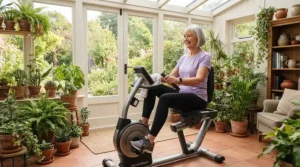
Real-World Scenarios: Which Front Drive Elliptical Machine Fits Your Life?
Specs make more sense when they meet a floor plan. Here are three buyer profiles, each matched to a machine with reasoning.
Scenario 1: The studio renter. You live in a 450-square-foot apartment, you have a firm cap near $600, and you’ll work out four mornings a week before work. Floor space is the whole game. The Schwinn 411 gives you a legitimate 18-inch stride in the shortest footprint here. If you’d rather hide the machine entirely, the YOSUDA Foldable Elliptical earns a look, though its 15-inch stride suits shorter users. Add a mat and a small fan, and you’re set.
Scenario 2: The tall runner easing back in. You’re 6 foot 2, you’ve been sidelined from running, and you want low-impact cardio three or four times a week. Stride length rules everything. The Schwinn 430 or Sole E25 delivers a 20-inch stride, so your hips and knees move through a more natural arc instead of a cramped loop. If you’re returning from an injury, check with a clinician before choosing your intensity or incline.
Scenario 3: The family of three. Two adults and a teenager share a spare room, with mixed heights, daily use, and a $1,700 ceiling. Here the Sole E35‘s heavier flywheel and straightforward console hold up to constant use. If your household genuinely wants guided classes and varied terrain, the NordicTrack AirGlide 14i adds incline, decline, and iFIT programming, with the subscription factored into your yearly cost.
Problem → Solution Guide for Front Drive Elliptical Owners
Even great machines run into everyday annoyances. These are the common ones and what usually fixes them.
Problem 1: Squeaks and creaks. Loose hardware is the usual culprit. Tighten the bolts, wipe the pedal tracks, and confirm the machine isn’t rocking on uneven floor. A mat helps with vibration transfer.
Problem 2: The stride feels cramped. This is a geometry problem, not a conditioning one. The Niceday CT11S in its 15.5-inch form and the YOSUDA Foldable Elliptical run short, so taller users often feel it. The fix is stepping up to a 20-inch machine like the Schwinn 430 or Sole E25.
Problem 3: The machine shifts while you work. Adjust the leveling feet and check the floor. Heavier frames like the Sole E35 resist movement better, but even they need a flat base.
Problem 4: Quads burn before cardio does. Front drive layouts tend to emphasize the quads, and Garage Gym Reviews notes the stride can feel less natural than a rear drive. Lower the incline, stand taller, and alternate forward and reverse pedaling for balance.
Problem 5: Boredom kills consistency. If silent resistance bores you, structure beats willpower. Pair intervals with a playlist, or choose the NordicTrack AirGlide 14i if guided programming will keep you coming back.
Buyer’s Decision Framework: If This, Choose That
Strip away the specs and decide by situation.
- If your space is under about 60 inches long, choose a Schwinn 411 or Niceday CT11S because their footprints are the smallest and quietest here.
- If you must hide the machine daily, choose the YOSUDA Foldable Elliptical because folding is its whole purpose.
- If you’re over six feet tall, choose the Schwinn 430, Sole E25, or Sole E35 because 20-inch strides prevent cramped loops.
- If you want a warranty that outlasts the machine, choose the Sole E25 because a lifetime frame warranty covers the costliest part.
- If you crave guided workouts and terrain variety, choose the NordicTrack AirGlide 14i, and budget for iFIT.
When two machines tie, pick the one with the longer warranty and the stride that suits your height. Those two factors predict satisfaction better than console features.
How to Choose a Front Drive Elliptical: 7 Steps
Buying a front drive elliptical machine comes down to a repeatable checklist. Run it in order and most shortlists collapse to one or two machines. Garage Gym Reviews’ elliptical buying guide offers a useful starting point on drive types and key specs.
- Measure the motion envelope, not just the footprint. Front drive machines often have a small resting footprint but a bigger swing, because pedals and arms extend past the base while you move. Tape the full sweep on the floor first.
- Match stride to height. A 15-inch stride suits users up to about 5 foot 9, 18 inches fits most adults, and 20 inches is the safe zone for tall users.
- Check flywheel weight. Garage Gym Reviews treats 16 to 20 pounds as the industry range. Heavier flywheels usually feel smoother, but they add shipping weight.
- Decide on incline. Manual incline, like the Schwinn 430‘s six levels, is fine for most people. Motorized incline, as on the NordicTrack AirGlide 14i, adds convenience and cost.
- Verify capacity and frame warranty. Don’t skip the user weight limit. The Niceday CT11S supports more than the NordicTrack AirGlide 14i.
- Count ongoing costs. Subscriptions like iFIT change the real price over years.
- Plan delivery and assembly. Machines near 200 pounds need a helper and a clear path.
Front Drive Elliptical vs Traditional Elliptical Design
The phrase “traditional elliptical design” usually means a rear drive layout, with the flywheel behind the user. Both styles are low-impact. They differ in feel, footprint, and temperament, and the table below summarizes the differences most sources agree on.
| Aspect | Front Drive Elliptical | Traditional Elliptical Design (Rear Drive) |
|---|---|---|
| Feel | More stair-climbing, steeper path | Flatter, walking or jogging feel |
| Footprint | Often shorter at rest; arms swing wide | Often longer; pedals rarely extend behind the flywheel |
| Incline | Often more incline options | Usually shallower incline range |
| Cost | Often less expensive | Often pricier |
| Best For | Budget shoppers, small spaces, quad-focused work | Smooth gliding, longer strides |
Sources disagree on stride flatness. NordicTrack’s own guidance describes front drive as less flat, while some retailers describe it as flatter. That’s why trusting a specific machine’s geometry beats trusting a category label. The Sole E25 and Schwinn 430 show how a front drive elliptical can deliver a 20-inch stride, which erases one traditional objection.
In practice, the traditional elliptical design wins for people who want a long, gliding motion and have the room. A front drive elliptical wins when budget, incline variety, and floor space matter most. Neither is wrong. Garage Gym Reviews even suggests alternating between styles at a gym to find your preference.
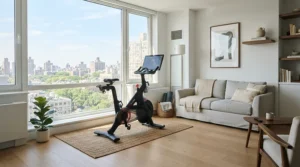
Compact Front Drive Elliptical and Space-Efficient Ellipticals That Actually Fit
“Compact” gets thrown around loosely, so let’s define it. A compact front drive elliptical typically measures well under 70 inches long and 30 inches wide, according to one 2026 roundup. Among our picks, the Schwinn 411 and Niceday CT11S fit that definition comfortably. The YOSUDA Foldable Elliptical goes further with its fold-away design.
Real space-efficient ellipticals share three traits. They keep their resting footprint small. They add transport wheels so you can roll them aside. And they pair a respectable stride with compact frames. Medical News Today’s compact elliptical guide also points out that your stride should match your height, with enough step-up height and ceiling space between you and the ceiling.
The sneaky part is ceiling clearance. Pedals raise your body by several inches, so a seemingly tall room can still bump your head. Use the Schwinn 411‘s guidance of your height plus about 17 inches as a quick sanity check.
Remember the trade-offs too. Shorter overall length usually means shorter strides, which is why the Niceday CT11S and YOSUDA Foldable Elliptical feel snug for taller users. If you want compact and a longer stride, the Schwinn 430 and Sole E25 are better compromises, though they need more floor.
Upright Stride Position: What to Expect in Real-World Performance
The upright stride position is what separates a good elliptical session from a back-aching one. Harvard Health’s advice is simple: keep your body upright and your feet flat on the pedals to engage your core and prevent low-back strain. Front drive layouts nudge you the other way. Garage Gym Reviews notes that your body may shift slightly forward during use, and that the motion typically engages the quads more heavily.
So the trick is fighting that lean. Stack your shoulders over your hips, keep a soft grip on the handles, and let your legs do the work. If you catch yourself hanging on the console, reduce resistance until your upright stride position returns.
Performance varies with incline. BarBend notes that front drive designs often offer more incline options, which can add challenge, but that constantly hiking the incline may take a toll on your joints. Moderate settings and variety are the safer approach.
What about effort? Harvard Health estimates, as cited by Garage Gym Reviews, put a 30-minute session around 270 to 378 calories depending on body weight. Your result depends on resistance, incline, and effort rather than the machine’s label.
In real-world terms, expect a quieter, lower-impact workout than running, with a noticeable quad and glute emphasis on higher incline. The Sole E35 and NordicTrack AirGlide 14i feel planted thanks to heavier flywheels, while lighter machines like the Niceday CT11S reward smoother, steadier pacing.
Features That Actually Matter (And Those That Don’t)
Marketing pages shout about numbers. Here’s what’s worth your attention.
Matters: stride length versus your height, flywheel weight, frame warranty, user weight capacity, and transport wheels if you’ll move the machine. These shape comfort and durability for years. Garage Gym Reviews’ testing priorities (overall weight, capacity, and flywheel weight) echo this list.
Mostly doesn’t: the number of resistance levels past about 16, fancy workout counts, and wireless gadgets. A Schwinn 411 with 16 levels offers plenty of range for most people, and the Sole E25‘s 20 levels sit comfortably in the same practical territory. Beyond that, extra levels offer finer steps that few users notice.
Depends on you: touchscreens. The Sole E35‘s 10.1-inch display is handy for tracking, but it won’t make the stride feel better. Conversely, the NordicTrack AirGlide 14i‘s screen is central to its guided-workout appeal, which is valuable only if you’ll subscribe and actually use it.
A useful test is asking whether a feature changes the physical motion, the durability, or your consistency. If it changes none of those, it’s probably garnish. If it changes your motivation, it can earn its price, but you should count the ongoing cost honestly.
Long-Term Cost & Maintenance: The Real Price of Ownership
A sticker range is only the first number. The real cost includes warranty strength, subscriptions, and maintenance.
| Tier | Models | Typical Range | Value Take |
|---|---|---|---|
| Budget | Schwinn 411, Niceday CT11S, YOSUDA Foldable Elliptical | Roughly $500-$650; check current price | Best for small spaces; shorter strides common |
| Mid-range | Schwinn 430, Sole E25 | Roughly $900-$1,100 for the Sole E25; check the Schwinn 430 | Best stride-per-dollar and warranty value |
| Premium | Sole E35, NordicTrack AirGlide 14i | Around $1,600-$1,800 | Best for heavier flywheels and tech |
Do a quick cost-per-use check. If you spend around $1,000 and work out four times a week for three years, that’s about 624 sessions, or roughly $1.60 per session. Spread across a decade, a durable frame makes that number shrink fast, which is why the Sole E25‘s lifetime frame warranty carries real weight.
For the NordicTrack AirGlide 14i, add the monthly iFIT membership to your yearly math. Reviewers note the trial requires a credit card, so set a calendar reminder before it converts.
Maintenance is modest. Tighten bolts monthly, wipe rails and pedals weekly, keep the machine on a mat, and avoid dragging it across floors by the handles. Treat delivery and assembly as part of the cost too, especially for 200-pound machines.

FAQ
❓ Are front drive elliptical machines louder than rear drive models?
❓ How much space does a front drive elliptical machine need?
❓ What stride length should I pick on a front drive elliptical?
❓ Is a front drive elliptical good for sore knees?
❓ Can I use the NordicTrack AirGlide 14i without an iFIT membership?
Conclusion
Choosing a front drive elliptical comes down to honest priorities. If square footage is the constraint, the Schwinn 411 and Niceday CT11S deliver real elliptical motion in small packages. The YOSUDA Foldable Elliptical adds a fold-away trick for studios, and the Schwinn 430 restores a 20-inch stride for taller users. The Sole E25 wins on warranty durability, the Sole E35 adds a heavier flywheel and touchscreen, and the NordicTrack AirGlide 14i layers on incline, decline, and guided programming.
Whatever you pick, remember that the best machine is the one you’ll use. The CDC’s adult activity guidance recommends at least 150 minutes of moderate-intensity activity a week, which works out to 30 minutes, five days a week. A reliable, comfortable front drive elliptical machine makes that target far easier to hit.
Measure your space, match stride to your height, and check current prices before you buy. Then keep your upright stride position, start gently, and build from there.
Recommended for You
- Bike Mat For Carpet: 7 Proven Picks That Stop Dents (2026)
- Noise Reduction Bike Mat: 7 Best Picks For Quiet Rides In 2026
- Heavy Duty Bike Mat: 7 Best Picks For 2026
Disclaimer: This article contains affiliate links. As an Amazon Associate, I earn from qualifying purchases. If you purchase products through these links, we may earn a small commission at no additional cost to you.
✨ Found this helpful? Share it with your friends! 💬🤗
