
In This Article
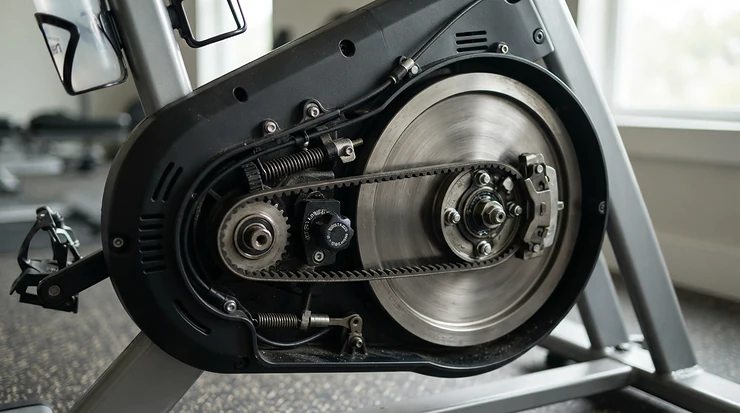
A front drive vs rear drive elliptical comparison comes down to one component: the flywheel. On a front drive elliptical, it sits ahead of you, under the console. On a rear drive elliptical, it sits behind you, near the rear base. That single placement reshapes stride mechanics, motion path, footprint, incline range, and price.
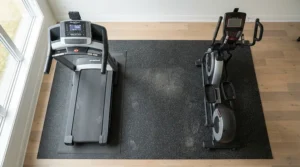
Here’s the part most shoppers miss. The flywheel’s location isn’t a trivia question; it decides how the machine feels on the 400th stride of the month. According to Wikipedia’s overview of elliptical trainers, the rear drive layout is the oldest design, front drive came next, and center drive arrived most recently. Three generations, three different personalities.
So which drive is better elliptical buyers should chase in 2026? Honest answer: it depends on your height, your floor space, and whether you want to feel like you’re striding down a flat boulevard or marching up a hill. This guide breaks down the elliptical drive type comparison with real specs, aggregated reviewer sentiment, and seven real machines, so you can stop guessing.
One caveat up front: I haven’t personally used any of these machines. Everything below comes from manufacturer specs and published reviews, and I’ll flag where sources disagree.
Front Drive vs Rear Drive Elliptical at a Glance: Quick Comparison
Before the deep dive, here’s the whole field on one screen. Prices are ranges at the time of research and will move, so check current pricing before you buy.
| Product | Drive | Stride | Flywheel | Price Range | Best For |
|---|---|---|---|---|---|
| SOLE E25 | Front | 20″ fixed | 20 lb | ~$900–$1,100 | Incline-hungry value shoppers |
| Schwinn 430 | Front | 20″ | 20 lb | Mid-range (check current price) | Taller users on a budget |
| NordicTrack Commercial 14.9 | Front | ~17.5–18.7″ auto-adjust | 32 lb | ~$2,000 | Tech-forward, iFIT fans |
| SOLE E98 | Front | 20″ | 32 lb (maker spec) | ~$2,100–$2,300 | Heavy daily use, larger users |
| Niceday CT11S | Rear | 15.5″–20″ by variant | 16–18 lb | Around $600 | Small spaces, quiet workouts |
| Sunny Health & Fitness SF-E3912 | Rear | 15.5″ | ~13–15 lb | Under $600 | Beginners, tight budgets |
| ProForm Hybrid Trainer XT | Rear | 15″ | ~13 lb | Around $600 | Elliptical-plus-recumbent-bike combo |
Read the table top to bottom and a pattern jumps out: the front drive machines carry longer strides and heavier flywheels, while the rear drive machines cluster at the budget end. The SOLE E98 and NordicTrack Commercial 14.9 are the heavyweights here. The Sunny Health & Fitness SF-E3912 and ProForm Hybrid Trainer XT are the featherweights, and the short strides on both are the trade-off for their lower prices.
Budget shoppers should note that rear drive models in this set run 15–16 inches of stride unless you step up to a longer-stride Niceday CT11S variant. If you’re over about six feet, that single number can matter more than every other row in the table.
💬 Just one click — help others make better buying decisions too!😊
Top 7 Front Drive vs Rear Drive Elliptical Picks: Expert Analysis
Four front drive machines, three rear drive machines, and a spread from budget to premium. Each entry opens with a standout trait, then translates specs into what they mean on the pedals.
1. SOLE E25 — budget front drive with 20 incline levels
The SOLE E25 earns its spot with a power incline that climbs through 20 levels without you stepping off. On a front drive elliptical, incline is the main event, and this is the cheapest way to get a lot of it.
The specs: a 20-lb flywheel, 20 resistance levels, and a fixed 20-inch stride on a frame roughly 70 inches long. That 20-inch path is the industry sweet spot for average heights, but it doesn’t adjust. BarBend notes that anyone well over six feet may find it short. Reviewers also point to a slight inward slope in the pedal placement as a quiet joint-friendly detail.
Based on the spec comparison, this is the pick for someone who wants stair-climb-style glute and quad work and doesn’t care about touchscreens. The incline range dwarfs what most rear drive models offer.
Published reviews consistently praise the smooth, quiet drive and the sturdy frame. The most common gripe is the fixed stride.
Pros:
- ✅ Twenty power incline levels for hill-style workouts
- ✅ Quiet magnetic resistance with 20 levels
- ✅ Solid frame at an entry-level price
Cons:
- ❌ Stride length can’t be adjusted
- ❌ Roughly 70-inch length needs real floor space
Price range: roughly $900–$1,100 at the time of research. For incline-focused training, the value is strong.

2. Schwinn 430 — longest stride in its price class
Stride length is where the Schwinn 430 pulls ahead of its budget peers. Many ellipticals at this level top out around 15–18 inches; this one reaches 20.
It’s a front drive machine with a 20-lb perimeter-weighted flywheel, 20 levels of magnetic resistance, and a manual incline with six positions (up to about 10 degrees). Manual means you step off to change it. That’s a real limitation for interval training, but it also means fewer motors to fail. At roughly 169 pounds with a 300-lb user capacity and transport wheels, it’s manageable to move.
Here’s what the spec sheet won’t tell you: that 20-inch path suits average-to-tall users who feel cramped on 15-inch machines. Garage Gym Reviews flags the longer stride as the model’s main advantage over cheaper Schwinn siblings.
Reviewer sentiment is mixed on noise. Some buyers call it a great space-saver with a high weight tolerance, while at least one retailer reviewer called its noise a dealbreaker. Treat that as a reason to check the return window.
Pros:
- ✅ Twenty-inch stride beats most budget rivals
- ✅ Twenty resistance levels plus six incline positions
- ✅ No subscription needed for built-in workouts
Cons:
- ❌ Manual incline requires stepping off the machine
- ❌ Some buyers report noise at higher speeds
Price range: mid-tier at the time of research (check current price). For taller buyers shopping on a budget, the value verdict is positive.
3. NordicTrack Commercial 14.9 — iFIT-driven incline up to 20%
The NordicTrack Commercial 14.9 is the machine for people who want the elliptical to coach them. With a 14-inch touchscreen and iFIT integration, trainers can adjust your incline and resistance in real time.
Underneath the screen: a front drive system, a 32-lb flywheel, 26 resistance levels, power incline up to 20%, and an auto-adjusting stride of roughly 17.5–18.7 inches. The heavy flywheel matters because inertia smooths out the dead spots at the top and bottom of each stroke. The auto-adjusting stride also means your path changes with intensity rather than staying fixed.
Where does it fit? Based on the spec comparison, it’s for fitness enthusiasts who will actually use guided classes. If you won’t, you’re paying for a screen.
Published reviews praise the smoothness and the incline range. The recurring complaints: demanding assembly, a large and heavy frame (about 210 lb), a noisy incline motor, and the need for an iFIT subscription to unlock the good stuff.
Pros:
- ✅ Thirty-two-pound flywheel for a very smooth stride
- ✅ Power incline up to 20%
- ✅ Twenty-six levels of silent magnetic resistance
Cons:
- ❌ Large footprint and heavy to move
- ❌ iFIT subscription needed for full experience
Price range: roughly $2,000 at the time of research. The value depends entirely on whether you’ll use the guided programming.
4. SOLE E98 — light commercial build with a 400-lb capacity
If durability is your obsession, the SOLE E98 is the tank in this lineup. Sole designed it for light commercial use, and the manufacturer lists a lifetime frame and flywheel warranty.
Specs: front drive, 20-inch stride, power incline, a 13.3-inch touchscreen, and a 400-lb user capacity. Flywheel weight is where sources disagree. Sole and Garage Gym Reviews list 32 lb, while one retailer listing shows 20 lb, so verify before ordering. Length is another discrepancy, from about 70 to 82 inches depending on the source.
What this means in practice: a 400-lb capacity and a heavy frame make the SOLE E98 one of the few options here that suits larger users without wobble. Reviewers’ main caution is size. Garage Gym Reviews calls the footprint hefty, and one owner reported a loose incline pivot bolt after assembly, a small fix but worth checking.
Pros:
- ✅ Four-hundred-pound capacity for bigger users
- ✅ Light commercial build with lifetime frame warranty
- ✅ Power incline and large touchscreen
Cons:
- ❌ Fixed stride and a very large footprint
- ❌ Touchscreen prefers climate-controlled storage
Price range: roughly $2,100–$2,300 at the time of research. It’s expensive, but the value is sound if you need durability.
5. Niceday CT11S — compact rear drive with quiet magnetic resistance
The Niceday CT11S is the poster child for budget rear drive ellipticals, and its 39–42-inch depth keeps it friendly to apartments.
Classification note: Garage Gym Reviews and BarBend treat it as a rear drive elliptical, though a few retailer listings label similar Niceday models as front drive. Confirm the flywheel location on the exact variant you’re buying.
Specs vary by variant: stride lengths from roughly 15.5 to 20 inches, 16 resistance levels, a 16–18 lb flywheel, and a 400-lb capacity (some listings claim 500). At about 106 pounds and 21 inches wide, it’s easy to move.
The practical read: pick the longer-stride variant if you’re over 5’11”. Garage Gym Reviews flagged the classic 15.5-inch stride as short for the category and the 16-lb flywheel as light for the price.
Retail reviewers frequently report quick assembly (around an hour), a stable feel, and good knee-rehab use. One buyer warned that a listing title implied adjustable stride when the model they received was fixed.
Pros:
- ✅ Compact footprint suits apartments
- ✅ Quiet magnetic drive with 16 levels
- ✅ High capacity for the price
Cons:
- ❌ Classic variant has a short stride
- ❌ Listings vary, so confirm the exact variant
Price range: around $600 at the time of research. For small spaces, it’s strong value.
6. Sunny Health & Fitness SF-E3912 — beginner-friendly rear drive under $600
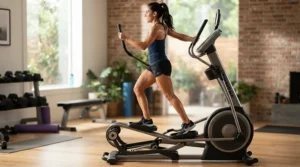
The Sunny Health & Fitness SF-E3912 is the no-frills starter: a rear drive layout, belt-drive mechanism, 16 magnetic resistance levels, and 24 built-in workouts.
Numbers worth knowing: a 15.5-inch stride, a 330-lb capacity, and a flywheel of roughly 13–15 pounds (Garage Gym Reviews lists 13; the manufacturer lists about 15.4). At roughly 105 pounds, it’s easy to relocate.
What those numbers mean: the short stride feels natural for shorter users and tends to feel cramped for taller ones. A light flywheel can feel less planted at high cadence. For a beginner doing steady-state cardio, though, neither is a dealbreaker.
Garage Gym Reviews calls it smooth, stable, and beginner-friendly. The criticisms are consistent: unclear assembly instructions, a warranty below the industry standard, and that short stride.
Pros:
- ✅ Smooth, stable feel for the price
- ✅ Twenty-four built-in workouts
- ✅ Lightweight and easy to move
Cons:
- ❌ Fifteen-and-a-half-inch stride is short
- ❌ Warranty is below the industry standard
Price range: under $600 at the time of research. For beginners, it’s solid, budget-friendly value.
7. ProForm Hybrid Trainer XT — elliptical plus recumbent bike in one frame
Two machines for the floor space of one: that’s the ProForm Hybrid Trainer XT. Adjust the pedals and console, and the elliptical becomes a recumbent bike.
It uses a rear flywheel, a 15-inch elliptical stride, 16 resistance levels, and a 350-lb capacity. U.S. reviewers list the flywheel at about 13 lb (UK retailer listings show lighter metric specs, so check your market). Garage Gym Reviews and Your Workout Book both flag the short stride as the main limit for taller users.
The analytical take: this is a smart play if you’d otherwise buy two machines. If you only want an elliptical, the stride compromises aren’t worth it.
Your Workout Book describes the console as basic but the assembly as straightforward despite the machine’s complexity, and calls it the best of its hybrid category.
Pros:
- ✅ Two workouts from one footprint
- ✅ Sixteen resistance levels
- ✅ Straightforward assembly for a hybrid
Cons:
- ❌ Fifteen-inch stride limits taller users
- ❌ Light flywheel and basic console
Price range: around $600 at the time of research. For hybrid use, the value is good.
✨ Don’t Miss These Exclusive Deals!
🔍 Take your front drive vs rear drive elliptical search to the next level with these carefully selected machines. Click on any highlighted item to check current pricing and availability. These picks will help you build a low-impact cardio routine your whole household will actually stick with!
Elliptical Drive Type Comparison: Specs, Sentiment, and Best For
Time to line the seven machines up on the specs that change daily use. This elliptical drive type comparison pairs hard numbers with the sentiment that recurs in published reviews.
| Product | Drive | Incline | Resistance | Capacity | Reviewer Sentiment | Best For |
|---|---|---|---|---|---|---|
| SOLE E25 | Front | 20 power levels | 20 | 350 lb | Smooth, quiet; stride fixed | Incline training |
| Schwinn 430 | Front | 6 manual (to ~10°) | 20 | 300 lb | Good stride for price; some noise reports | Taller budget buyers |
| NordicTrack Commercial 14.9 | Front | 0–20% power | 26 | 350 lb | Smooth; heavy and pricey | Guided iFIT workouts |
| SOLE E98 | Front | Power | EMS | 400 lb | Durable; very large | Heavy daily use |
| Niceday CT11S | Rear | None listed | 16 | ~400 lb | Quiet, stable; variant confusion | Small spaces |
| Sunny Health & Fitness SF-E3912 | Rear | None listed | 16 | 330 lb | Beginner-friendly; short stride | First-time buyers |
| ProForm Hybrid Trainer XT | Rear | None listed | 16 | 350 lb | Versatile; short stride | Space-savers wanting a bike |
Looking at the table, the SOLE E25 delivers the most incline per dollar, but if stride length is your priority, the Schwinn 430 justifies a look. Budget buyers should note that the Sunny Health & Fitness SF-E3912 and ProForm Hybrid Trainer XT sacrifice stride length for their lower price points. The pattern is clear: incline and heavier flywheels live on the front drive side, while the rear drive machines here compete on price and compactness.

Which Drive Is Better Elliptical Shoppers Should Pick? A Decision Framework
There’s no universal winner, only a winner for you. Work through these “if/then” rules, and you’ll land on a layout in about a minute.
- If you’re over 6 feet, choose a long, fixed stride of 20 inches or more, because short paths force your gait to shrink. The Schwinn 430 or SOLE E25 fit better than the Sunny Health & Fitness SF-E3912.
- If you want steep, hill-style training, choose a front drive elliptical, because incline range is its signature. The NordicTrack Commercial 14.9 reaches 20%.
- If you want a flatter, walking-like feel, choose a rear drive elliptical, because the flywheel placement tends to produce a more level path.
- If floor space is tight, check both stored and in-use length. A Niceday CT11S is compact, and a ProForm Hybrid Trainer XT replaces two machines.
- If multiple users share it, prioritize capacity. The SOLE E98 supports 400 lb.
- If budget is the limit, rear drive models in this set start under $600.
A rough priority order: stride length first, space second, incline third, and tech last. Most buyers do it in reverse and regret it.
Stride Mechanics Differences: How the Flywheel Changes Your Gait
Stride mechanics differences between the two layouts show up in posture, joint angles, and which muscles do the work. Front drive machines place the flywheel ahead of you, which can shift your body slightly forward and, according to Garage Gym Reviews, tends to load the quads and glutes more heavily. Rear drive machines are often described as feeling closer to walking or running on level ground.
Why does that matter? Because muscle recruitment follows geometry. A 2022 study of well-trained runners found that muscular effort on an elliptical dropped substantially compared with treadmill running, which is part of why ellipticals are used in running-injury rehab. The study didn’t compare drive types, so treat drive-specific claims as reviewer consensus, not settled science.
On the front vs rear elliptical question, expect these tendencies:
- Front drive: more forward-leaning, stair-climb feel, more incline potential.
- Rear drive: more upright, walk-like, often better for reverse striding according to Your Workout Book.
Stride length matters even more than layout. A 20-inch path on a rear drive machine will feel better to a tall user than a 15-inch path on any front drive machine.
Motion Path Variations: Flat Ellipse, Stair-Climb Tilt, and Everything Between
Motion path variations are where the front vs rear elliptical debate turns tactile. A rear drive elliptical generally traces a flatter, longer ellipse. A front drive elliptical tends to tilt the path upward, which NordicTrack describes as less flat than rear drive designs. Center drive machines blend the two.
Think of it like terrain. Rear drive is a boardwalk; front drive is a gently rising trail; incline settings turn that trail into a hillside. The rear drive models here have little or no incline, while the SOLE E25, SOLE E98, and NordicTrack Commercial 14.9 convert the path into a climb.
Does the path affect your joints? Harvard Health notes that ellipticals in general are low-impact on the knees, hips, and ankles, and advises keeping your body upright with feet flat to protect the lower back. That advice applies to both layouts. If a path makes you lean hard or lift your heels, it isn’t the right path for you.
Footprint Size Comparison: Storage Length vs In-Use Space
A footprint size comparison is trickier than “front drive is smaller.” NordicTrack explains that front drive machines are usually compact when stored but can need more room in motion because the pedals and arms swing past the base. Rear drive machines tend to have a longer base, though some fold away.
The numbers in this guide show the nuance. The SOLE E25 runs about 70 inches long, and the SOLE E98 is reported at 70–82 inches. The Niceday CT11S is only about 39–42 inches deep, and the ProForm Hybrid Trainer XT is about 71 inches long per UK specs.
Measure three things before buying: the footprint, the ceiling clearance (taller users on incline can graze low ceilings), and a clear walking lane around the machine. Compact rear drive models win on tight floors, but the best compact front drive machines can still beat them for stride length.
How to Choose a Front Drive vs Rear Drive Elliptical
Use these seven steps and you’ll avoid most regrets.
- Measure your space first. Include in-use length, not just the stored footprint.
- Match stride to height. Under 5’9″ can live with 15–18 inches. Taller users should aim for 20 inches or more.
- Decide on incline. Want hills? Front drive. Want a level glide? Rear drive.
- Check the flywheel. Heavier flywheels (around 20–32 lb) usually smooth out the stroke.
- Verify weight capacity. Add a margin above your body weight, especially for shared machines.
- Check the warranty. The Sunny Health & Fitness SF-E3912‘s warranty is below industry standard.
- Confirm the drive type. Some listings mislabel models, as seen with the Niceday CT11S.
If you’re still stuck on the front drive vs rear drive elliptical question, step 3 usually breaks the tie.
Common Mistakes When Buying a Front Drive vs Rear Drive Elliptical
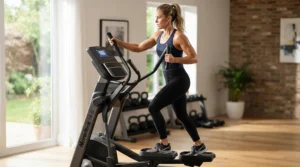
Mistake one: buying on price alone. A cheaper rear drive machine with a 15-inch stride can feel miserable at 6’2″, wasting every dollar saved.
Mistake two: trusting the headline spec. Weight capacity, stride length, and even drive type vary by listing. The Niceday CT11S shows how confusing a single product family can get.
Mistake three: ignoring assembly. The NordicTrack Commercial 14.9 is reported as difficult to build, and the Sunny Health & Fitness SF-E3912 has been criticized for unclear instructions.
Mistake four: paying for screens you won’t use. Subscriptions matter; the NordicTrack Commercial 14.9 needs iFIT for its best features, while the Schwinn 430 works without a subscription.
Mistake five: forgetting the ceiling. Incline plus pedal height eats headroom in basements.
Mistake six: assuming drive type sets reliability. One manufacturer’s guide argues reliability depends more on wear parts and maintenance than on front versus rear layout.
Front vs Rear Elliptical vs Treadmill: Benefits vs Traditional Alternatives
Is an elliptical even the right tool? This table compares both layouts against the traditional alternative.
| Factor | Front Drive | Rear Drive | Treadmill |
|---|---|---|---|
| Joint impact | Low | Low | Higher |
| Incline potential | High | Lower | Varies |
| Feel | Stair-climb tilt | Walk-like glide | Natural ground contact |
| Footprint | Compact stored, wider in motion | Longer base, some fold | Large |
| Best For | SOLE E25 (incline) | Niceday CT11S (small spaces) | Running training |
Looking at the table, a front drive machine suits anyone who wants steep, low-impact work, while a rear drive elliptical wins on level-glide comfort and price. Treadmills remain better for running-specific training because they preserve ground contact. Research suggests muscle activation differs by device, so many people benefit from using both.
Long-Term Cost & Maintenance: What Each Layout Really Costs
Sticker price is only the opening bid. Total cost of ownership includes subscriptions, repairs, and replacement parts.
| Product | Price Range | Value Tier | Maintenance Note | Best For |
|---|---|---|---|---|
| Sunny Health & Fitness SF-E3912 | Under $600 | Entry | Short warranty | Beginners |
| ProForm Hybrid Trainer XT | ~$600 | Entry | Complex 2-in-1 mechanism | Hybrid use |
| Niceday CT11S | ~$600 | Entry | Confirm variant and warranty | Small spaces |
| SOLE E25 | ~$900–$1,100 | Mid | Fixed stride, solid frame | Incline value |
| Schwinn 430 | Mid-range | Mid | Manual incline = fewer parts | Taller users |
| NordicTrack Commercial 14.9 | ~$2,000 | Premium | Subscription cost | Guided training |
| SOLE E98 | ~$2,100–$2,300 | Premium | Lifetime frame warranty | Heavy use |
The analysis: premium models cost two to four times more than entry-level ones, but a lifetime frame warranty and heavy flywheel spread that cost across more years. The NordicTrack Commercial 14.9 has an ongoing subscription on top. Rear drive designs commonly use longer rails and rollers that need periodic attention, according to one maintenance guide, so budget a little time for cleaning and inspection either way.
Practical Usage Guide: Setup, First 30 Days, and Maintenance
A machine only pays off if you use it, so here’s how to start well.
Setup. Level the stabilizers (the Sunny Health & Fitness SF-E3912 instructions specifically call for adjusting them). Plan an hour or more for assembly, longer for the NordicTrack Commercial 14.9.
First week. Keep resistance low and incline low. Garage Gym Reviews suggests starting under resistance level five. Keep your body upright, feet flat, and core engaged, as Harvard-affiliated experts advise.
Weeks two to four. Add variety. Research shows that elliptical training can generate greater quadriceps activity than walking or cycling, so mix steady sessions with intervals and, on front drive machines, incline changes.
Maintenance schedule:
- Weekly: wipe down rails and pedals.
- Monthly: check bolts, which matters on any machine (one SOLE E98 owner traced a problem to incline pivot bolts).
- Quarterly: inspect rollers and stabilizers on rear drive designs.
Common first-month mistakes: cranking resistance too high, leaning on the handles, and skipping warm-ups.
Real-World Scenarios: Matching Front Drive vs Rear Drive Elliptical to Real Buyers
Scenario one: the apartment renter. She has a 40-inch gap beside the couch, a $600 budget, and downstairs neighbors. The Niceday CT11S fits the space, runs quietly, and keeps costs low. If she’s tall, she should choose the longer-stride variant.
Scenario two: the 6’3″ home gym builder. He has a basement, a $2,000+ budget, and wants steep climbs. A front drive machine with a 20-inch stride fits: the SOLE E98 for durability, or the NordicTrack Commercial 14.9 if he wants guided classes.
Scenario three: the returning exerciser. Recovering from a running injury, he wants low-impact cardio on a modest budget. The Schwinn 430 offers a 20-inch stride and no subscription. For tighter spaces, the ProForm Hybrid Trainer XT adds a recumbent option.
Scenario four: the incline lover. She’s chasing glutes and has about $1,000. The SOLE E25‘s 20 incline levels make it the clear choice.
FAQ
❓ Is a front drive or rear drive elliptical better for sensitive knees?
❓ Do front drive ellipticals really take up less space?
❓ Can you pedal backward on a rear drive elliptical?
❓ What stride length do tall users need on an elliptical?
❓ Which lasts longer, front drive or rear drive?
Conclusion
The front drive vs rear drive elliptical debate isn’t a contest with a single champion; it’s a matchmaking exercise. Front drive machines like the SOLE E25, Schwinn 430, NordicTrack Commercial 14.9, and SOLE E98 deliver longer strides, heavier flywheels, and serious incline. Rear drive machines like the Niceday CT11S, Sunny Health & Fitness SF-E3912, and ProForm Hybrid Trainer XT bring lower prices and flatter, walk-like glides, but with shorter strides.
Quick recap on the secondary questions: stride mechanics differences favor front drive for incline-heavy work and rear drive for level gliding; motion path variations split the same way; and the footprint size comparison depends on whether you measure stored or in-use length. Garage Gym Reviews also notes that many higher-end makers have stopped producing rear drive models, which shapes what’s available at the premium end.
So pick by stride first, space second, incline third. Do that, and the right machine usually picks itself.
✨ Don’t Miss These Exclusive Deals!
🔍 Take your front drive vs rear drive elliptical decision to the next level with these carefully selected machines. Click on any highlighted item to check current pricing and availability. These picks will help you create authentic, sustainable workouts your family
will love!
Recommended for You
- Front Drive Elliptical: 7 Best Picks For 2026
- Bike Mat For Carpet: 7 Proven Picks That Stop Dents (2026)
- Noise Reduction Bike Mat: 7 Best Picks For Quiet Rides In 2026
Disclaimer: This article contains affiliate links. As an Amazon Associate, I earn from qualifying purchases. If you purchase products through these links, we may earn a small commission at no additional cost to you.
✨ Found this helpful? Share it with your friends! 💬🤗
