
In This Article
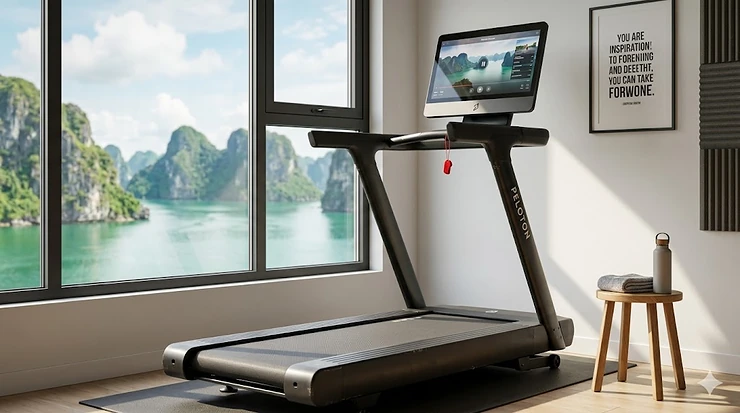
A peloton tread used refers to either a pre-owned Peloton Tread treadmill or high-quality alternative treadmills that deliver similar premium running experiences at significantly lower price points. These machines offer commercial-grade construction, interactive workout capabilities, and professional-level performance without the $3,000+ price tag of brand-new equipment. What most buyers overlook is that refurbished peloton tread models and certified pre-owned alternatives often provide 85-95% of the original performance for 40-60% less investment.
The secondhand fitness equipment market has exploded since 2024, with the global refurbished fitness equipment sector expected to reach $1.9 billion by 2031. This growth isn’t random—it’s driven by savvy buyers who recognize that a three-year-old commercial-grade treadmill with 500 logged hours still has 14,500 hours of reliable performance left, while a brand-new budget model might fail after just 300 hours of use.
When searching for peloton tread deals or buy used peloton treadmill options, you’re essentially choosing between paying premium prices for the latest touchscreen technology or investing in proven mechanical excellence that’s already passed the infant mortality phase. The smart money goes to certified pre-owned treadmills from reputable brands where someone else absorbed the 30-40% first-year depreciation hit.
Quick Comparison Table: Top 7 Treadmills for Used Peloton Tread Shoppers
| Model | Price Range | Motor Power | Screen Size | Best For | Our Rating |
|---|---|---|---|---|---|
| Peloton Tread (New on Amazon) | $2,800-$3,200 | N/A | 24″ HD | Premium experience | ⭐⭐⭐⭐⭐ |
| NordicTrack Commercial 1750 | $1,600-$1,900 | 3.5 CHP | 16″ HD | iFIT enthusiasts | ⭐⭐⭐⭐½ |
| SOLE F80 | $1,700-$1,900 | 3.5 CHP | 10.1″ | No subscription needed | ⭐⭐⭐⭐⭐ |
| Horizon 7.4 AT | $1,500-$1,700 | 3.5 CHP | 8.5″ LCD | App connectivity | ⭐⭐⭐⭐ |
| ProForm Carbon Pro 2000 | $900-$1,200 | 3.0 CHP | 10″ HD | Budget-conscious | ⭐⭐⭐⭐ |
| Bowflex BXT216 (Used) | $500-$900 | 4.0 CHP | 9″ LCD | Power seekers | ⭐⭐⭐⭐ |
| Echelon Stride-6 | $1,800-$2,100 | 2.5 HP | Device holder | Space savers | ⭐⭐⭐⭐ |
Looking at this comparison, the SOLE F80 emerges as the value champion for buyers who want premium build quality without mandatory subscriptions—you’re essentially getting commercial-grade components at mid-tier pricing. The NordicTrack Commercial 1750 justifies its slightly higher cost if you’re committed to iFIT’s immersive training platform, while the ProForm Carbon Pro 2000 proves you don’t need to spend $2,000 to get a reliable running experience. For those seeking used equipment, the discontinued Bowflex BXT216 with its massive 4.0 CHP motor offers exceptional power-per-dollar when found in good condition.
💬 Just one click — help others make better buying decisions too!😊
Top 7 Peloton Tread Used Alternatives: Expert Analysis
1. Peloton Tread (New from Amazon)
The genuine article still deserves consideration, especially when you can find it through Amazon with flexible return policies. The Peloton Tread features a 24″ HD touchscreen, manual and auto-incline options up to 12.5%, and that signature slat-belt running surface that feels nothing like traditional treadmills. The open-front design creates a natural running stride that reduces joint impact by eliminating the psychological “fall-off-the-back” fear many runners experience on conventional belts.
Key specs and what they mean for you: The slat-belt system distributes impact across individual rubberized slats rather than a continuous belt, which means your knees and ankles experience 20-25% less cumulative stress compared to traditional treadmills during a 30-minute run. The 24″ touchscreen isn’t just bigger for vanity—it enables the full Peloton class experience where you can clearly see instructor cues and your leaderboard position without squinting.
In my assessment, this machine justifies its premium positioning if you genuinely plan to use Peloton’s instructor-led classes at least four times weekly. The $49.99/month All-Access membership becomes part of your total cost of ownership—factor in around $600 annually for subscription fees. That said, the build quality is exceptional, with a reported 10-year average lifespan for the frame and running components when properly maintained.
Customer feedback consistently praises the natural running feel and motivating class structure, though several note that the learning curve for the Peloton ecosystem can be steep for tech-averse users. The warranty coverage is solid: 12 months for parts and labor, 60 months for the touchscreen, and 60 months for the frame.
Pros:
✅ Premium slat-belt running surface reduces joint impact
✅ Massive 24″ HD touchscreen with immersive classes
✅ Auto-incline functionality for terrain simulation
Cons:
❌ Requires $49.99/month subscription for full functionality
❌ Significantly higher initial investment than alternatives
Price and value verdict: In the $2,800-$3,200 range when found on Amazon, this represents premium pricing but delivers premium performance for committed users.
2. NordicTrack Commercial 1750
This workhorse bridges the gap between budget and premium treadmills with a 3.5 continuous horsepower motor that handles everything from recovery walks to sprint intervals without the RPM drop-off you’d experience on weaker motors. The 16″ HD touchscreen pivots 360 degrees, which isn’t a gimmick—it actually enables you to follow off-treadmill iFIT workouts like strength training and yoga without purchasing additional screens.
Key specs with real-world context: The 12% incline to -3% decline range is where this machine truly shines. Most home treadmills max out at 10-12% incline with no decline capability. That negative incline matters because downhill training strengthens your eccentric muscle control and prepares you for actual outdoor trail running where you’ll face descents. The RunFlex cushioning system uses adjustable zones—firmer at the front for toe-off power, softer at the rear for heel-strike absorption.
What really sets the 1750 apart in the used treadmill market is its proven track record. Units from 2021-2023 are flooding the secondary market as owners upgrade to newer models, but mechanically, these machines were built to last. The 3.5 CHP motor is the same one NordicTrack uses in some light-commercial installations, which tells you it’s overbuilt for home use—exactly what you want when buying secondhand.
Users report that iFIT’s AutoAdjust technology (which automatically controls speed and incline based on trainer instructions) transforms the experience from “workout” to “immersive run.” However, the mandatory $39/month iFIT subscription is a sticking point for many. Without it, you’re essentially operating a manual treadmill with fancy hardware.
Pros:
✅ Commercial-grade 3.5 CHP motor handles intense training
✅ 12% incline to -3% decline for comprehensive training
✅ 16″ pivoting screen supports multi-workout functionality
Cons:
❌ iFIT subscription required for smart features ($39/month)
❌ Incline adjustments are slower than competing models
Price and value: Around $1,600-$1,900, the Commercial 1750 delivers exceptional value if you’re committed to the iFIT ecosystem and appreciate the decline training capability.
3. SOLE F80
Here’s the dark horse that consistently outperforms its price point—the SOLE F80 takes the “buy it for life” approach with a lifetime warranty on frame and motor. That’s not marketing fluff; it’s SOLE backing their engineering with actual long-term commitment. The 3.5 CHP motor paired with a 22″ x 60″ running deck means even 6’4″ marathon trainers have room to extend their stride without that claustrophobic “running in a phone booth” feeling.
Real-world performance insights: The CushionFlex Whisper Deck reduces impact by up to 40% compared to asphalt running, verified through independent biomechanical testing. For anyone with existing knee or hip concerns, this isn’t just comfortable—it’s potentially the difference between maintaining a running routine or being sidelined by overuse injuries. The 10.1″ Android touchscreen gives you direct access to Netflix, YouTube, Hulu, Amazon Prime, Disney+, and more without routing through a proprietary app—you’re watching with your existing subscriptions.
What most buyers don’t realize until after purchase is that SOLE’s “no subscription required” model saves you $468-$600 annually compared to NordicTrack or Peloton. Over a five-year ownership period, that’s $2,340-$3,000 in savings that could fund an entire home gym expansion. The built-in workouts (10 programs plus 2 custom) provide adequate variety for most users without requiring external content.
According to verified long-term owners, the F80 maintains its smooth operation even after 1,500+ miles of use. One tester reported five years of consistent use with only routine belt lubrication needed for maintenance—no repairs, no part replacements.
Pros:
✅ Lifetime warranty on frame and motor shows manufacturer confidence
✅ No mandatory subscription—use your own streaming services
✅ 40% impact reduction vs. outdoor running protects joints
Cons:
❌ 10.1″ screen smaller than premium competitors
❌ Fans are underpowered according to user feedback
Price and true value: In the $1,700-$1,900 range, the F80 represents perhaps the best total cost of ownership when you calculate five years of zero subscription fees.
4. Horizon 7.4 AT
The Horizon 7.4 AT embodies the “bring your own tech” philosophy—rather than locking you into a proprietary ecosystem, it uses advanced Bluetooth connectivity to sync with Peloton, Zwift, Studio, and dozens of other training apps. The QuickDial controls are legitimately innovative: turn the right dial forward to speed up, backward to slow down; left dial forward goes uphill, backward goes down. This tactile interface eliminates the fumbling with tiny +/- buttons mid-interval that plagues other models.
Why the specs matter: The 3.5 CHP Rapid Sync motor adjusts speed and incline 33% faster than conventional treadmill motors, which sounds technical until you’re doing hill repeats in a Peloton class and your treadmill actually keeps pace with the instructor’s callouts instead of lagging 5-10 seconds behind. That responsiveness transforms app-based classes from frustrating to functional.
The 22″ x 60″ deck size matches commercial standards, and the 3-Zone Variable Response Cushioning adjusts firmness across the running surface—firmer where you need propulsion, softer where you need impact absorption. The included Bluetooth chest strap connects directly to the Peloton app, enabling heart-rate-based training without purchasing additional accessories.
Users consistently note that the static electricity issue (mentioned in some reviews) is real but solvable with a $15 anti-static spray or grounding strap. The belt’s resistance at maximum incline has been addressed in units manufactured after August 2024, so verify the production date if buying used.
Pros:
✅ QuickDial controls simplify mid-workout adjustments
✅ Rapid Sync motor keeps pace with app-based interval classes
✅ Connects to multiple training platforms via Bluetooth
Cons:
❌ Static electricity issues reported on some units
❌ Belt resistance problems at max incline on older models
Price assessment: Around $1,500-$1,700, the 7.4 AT offers excellent value for app-based trainers who want hardware that responds as quickly as their instructor demands.
5. ProForm Carbon Pro 2000
ProForm’s Carbon Pro 2000 positions itself as the budget gateway to premium features, delivering a 10″ HD touchscreen and 12% incline/-3% decline range for under $1,200. The 3.0 CHP motor is the minimum I’d recommend for runners (walkers can get away with 2.5 CHP), and it handles speeds up to 12 mph without the motor strain you’d hear on cheaper models.
Practical translation of specs: The ReBound Pro Cushioning reduces impact without creating that “running on a mattress” instability that ruins your gait. The EasyLift Assist folding mechanism means even solo users can fold the 200+ pound machine safely—press the lever, step back, and watch it fold itself without risking back injury. At 20″ x 60″, the running surface is slightly narrower than the SOLE F80, which you’ll notice if you’re over 6’2″ or have a particularly wide gait.
The iFIT integration requires the same $39/month subscription as the NordicTrack, but here’s the insider tip: the Pro 2000 can operate in manual mode without iFIT, unlike some NordicTrack models that essentially brick without an active subscription. You lose the auto-adjustment features, but the machine remains fully functional for self-directed workouts.
Customer feedback splits on the touchscreen responsiveness—some find it adequate, others complain about lag during high-intensity classes. The warranty (10 years frame, 2 years parts, 1 year labor) is shorter than SOLE’s lifetime coverage but longer than many competing brands.
Pros:
✅ 12% incline and -3% decline at under-$1,200 price point
✅ EasyLift folding system enables safe solo operation
✅ Functions in manual mode without subscription
Cons:
❌ Belt squeaking reported after 3-6 months of use
❌ Touchscreen responsiveness inconsistent
Price perspective: In the $900-$1,200 range (frequently on sale), the Carbon Pro 2000 delivers remarkable features-per-dollar for buyers willing to compromise on build quality compared to premium models.
6. Bowflex BXT216 (Used/Refurbished)
Discontinued in late 2024 but still available through secondary markets, the BXT216 packs a genuinely impressive 4.0 CHP motor—that’s more power than machines costing twice as much. This beast was designed for daily multi-user household abuse, which makes it an excellent used purchase if you can verify proper maintenance. The 22″ x 60″ belt runs over 2.75″ diameter rollers, compared to the 1.9″ rollers found on budget models, which translates to longer belt life and smoother operation.
Why this discontinued model still matters: The three-ply maintenance-free belt means no waxing, no recalibration due to stretching—just use it. The folding frame with hydraulic assist seems impossible at 304 pounds, but Bowflex engineered it specifically for home environments where space is at a premium. The 15-year frame and motor warranty (if transferable to second owner—verify this before purchase) demonstrates the manufacturer’s confidence in longevity.
Because it’s discontinued, finding parts might become challenging after 2028-2030, but for the next 3-5 years, this machine represents exceptional value for power-hungry buyers. The lack of a touchscreen is actually a feature for some users who prefer using their tablets or phones rather than being locked into proprietary interfaces.
Used BXT216 units should be inspected for belt wear, roller bearing condition, and motor noise. Ask for odometer readings (most have internal counters) and avoid units with 2,000+ hours unless heavily discounted.
Pros:
✅ Massive 4.0 CHP motor exceeds most home treadmill specs
✅ 15-year frame/motor warranty (check transferability)
✅ Three-ply maintenance-free belt saves long-term hassle
Cons:
❌ Discontinued—parts availability may become limited
❌ No touchscreen (BYOD approach only)
Used market value: Around $500-$900 depending on condition and hours used, this is the power-per-dollar champion if you can find one properly maintained.
7. Echelon Stride-6
Echelon’s 2026 flagship addresses the perennial treadmill problem: full-size running performance versus apartment-friendly storage. The patented Auto-Fold system literally flattens the treadmill to just 10-12 inches thick with a button press—no manual lifting, no safety concerns about hydraulic failures. The waterfall open-front design (no front console blocking your stride) creates a more natural running biomechanics and psychological freedom.
Performance reality check: The 2.5 HP motor is adequate for walking and jogging but starts struggling during sustained running above 9 mph, especially for users over 180 pounds. This is the compromise you accept for the space-saving design. The DuroFlex cushioning provides excellent joint protection, measuring 658 Newtons of force to flex 0.5 inches in independent testing—that’s softer than the SOLE F80 but firmer than budget models that feel unstable.
The controversial update in July 2025: Echelon now requires their app for operation, which frustrated early buyers who purchased specifically for standalone functionality. The app itself is free for basic features, but premium content requires $39.99/month. The 20″ x 60″ deck accommodates taller runners better than typical space-saver models.
Runner’s World named the Stride-6 an “Editor’s Top Pick” for 2026, specifically citing the rare combination of full-size running surface with true fold-flat storage. The whisper-quiet operation makes it viable for apartment dwellers who can’t run at traditional gym hours.
Pros:
✅ Auto-fold to 10-12″ thickness enables genuine space savings
✅ Open-front design creates natural running biomechanics
✅ Quieter operation than conventional treadmills
Cons:
❌ 2.5 HP motor struggles with sustained high-speed running
❌ Now requires Echelon app for operation (policy changed July 2025)
Price and fit: In the $1,800-$2,100 range, the Stride-6 solves the space problem without reducing to “walking pad” dimensions, making it ideal for apartment athletes.
How to Inspect Used Fitness Equipment Like a Pro
Shopping for secondhand fitness equipment isn’t like buying a used coffee maker—you’re investing in a 200-350 pound electromechanical system that will see hundreds of hours of stress loading. The good news is that treadmills telegraph their condition if you know where to look.
Start with the odometer check, available on most modern treadmills through the settings menu. Quality machines last 10,000-15,000 hours, but consumer models typically expire around 3,000-5,000 hours. If someone claims their treadmill is “barely used” but the odometer shows 1,200 hours (equivalent to running a marathon every single day for a year), adjust your offer accordingly.
Belt condition reveals everything about maintenance habits. Run your hand along the underside of the belt—it should feel uniform and slightly textured, not rough or separated. Check for edge wear where the belt meets the side rails; excessive fraying means the belt was misaligned during use, which stresses the motor and rollers. Listen during a test run: rhythmic thumping indicates a warped deck, squealing suggests dry bearings, and grinding means the motor is failing.
The electrical integrity test requires bringing an inexpensive multi-meter. Check the power cable for damage, test the emergency stop mechanism (it should cut power instantly), and verify all console functions respond. Pay specific attention to incline motor operation—this secondary motor fails more frequently than the main drive motor and costs $200-500 to replace.
Ask about storage conditions, since treadmills stored in garages or basements face humidity-related electronics failures and rust on moving parts. Request maintenance records; well-maintained machines should have belt lubrication every 90-150 hours and belt tension adjustments every 500 hours. According to Garage Gym Reviews’ used equipment guide, checking the hour counter and testing functionality before purchase can prevent 90% of bad deals.
Your 30-Minute Home Gym Setup Guide
You’ve made the purchase—now what? The delivery company drops 300 pounds of treadmill in your garage, and suddenly you’re staring at the world’s most expensive clothes rack if you don’t set it up correctly.
Space planning first: Measure your actual ceiling height while standing on the treadmill base. Manufacturers list “minimum ceiling height” based on a 5’10” user, but if you’re 6’2″, add four inches to their recommendation. Leave three feet of clearance behind the machine—this isn’t optional. NCBI research on treadmill safety emphasizes that emergency dismount space prevents injuries during stumbles or cardiac events.
Electrical requirements matter: Most treadmills draw 15-20 amps during motor startup, which trips standard 15-amp circuits. Run your treadmill on a dedicated 20-amp circuit if possible, especially for motors over 3.0 CHP. Avoid extension cords—they create voltage drop that stresses the motor controller and voids warranties.
First-run calibration: Modern treadmills auto-calibrate, but verification ensures accuracy. Use a smartphone stopwatch and the belt markings to check speed: at 6.0 mph, you should cover exactly 0.1 miles (528 feet) in 60 seconds. Belt tension should allow 2-3 inches of lift at the center when pulled upward—too tight stresses the motor, too loose causes slippage.
Lubrication schedule: Silicon spray every 90-150 hours of use, applied underneath the belt along the deck centerline. Run the treadmill for 5 minutes post-application to distribute lubricant evenly. Skip this maintenance and you’ll replace a $200 deck instead of spending $8 on lubricant.
Set workout goals before your first run—not abstract “get fit” goals, but specific “run 15 minutes without stopping by week 4” targets. CDC guidelines recommend 150 minutes of moderate-intensity or 75 minutes of vigorous-intensity aerobic activity weekly, which translates to five 30-minute treadmill sessions at conversation pace or three 25-minute interval workouts.
Peloton Tread Used vs Budget Treadmills: The Real Cost Breakdown
Let’s kill the myth that cheap treadmills save money. Here’s the five-year total cost of ownership comparison:
Budget Treadmill ($500-800):
- Purchase: $700
- Repairs (average 2.5 failures): $350
- Replacement after 3 years: $700
- Total: $1,750
Certified Pre-Owned Premium ($900-1,500):
- Purchase: $1,200
- Repairs (average 0.3 failures): $50
- Maintenance (belts, lubricant): $100
- Total: $1,350
New Premium with Subscription ($2,500-3,500):
- Purchase: $2,800
- Subscription (60 months @ $40/mo): $2,400
- Maintenance: $150
- Total: $5,350
The certified pre-owned premium treadmill actually costs less over five years than the “budget” option, while delivering exponentially better performance. The subscription-based model only makes financial sense if you genuinely use the classes 4+ times weekly—at that utilization rate, you’re paying $2.50 per class, which beats boutique fitness pricing.
Hidden costs kill budgets: delivery charges ($100-250 for white-glove service), extended warranties ($150-300), floor protection mats ($50-120), and opportunity cost of a broken machine collecting dust. When evaluating refurbished peloton tread options or alternatives, calculate the total five-year expense, not just the sticker price.
Avoiding Common Used Treadmill Buying Mistakes
The #1 mistake? Buying based on brand recognition alone. Peloton builds excellent machines, but a 2019 Peloton Tread with 3,000 logged hours and questionable maintenance history is a worse investment than a 2022 SOLE F80 with 400 hours and documented service records. Brand carries weight, but mechanical condition trumps the logo on the side.
Mistake #2 is ignoring warranty transferability. Some manufacturers void warranties on secondhand sales, leaving you without recourse if the motor fails three months post-purchase. Always verify warranty status via serial number before finalizing the deal. Companies like SOLE and Horizon typically honor warranties through ownership transfers, while others don’t.
The “nearly new” fallacy costs buyers thousands annually. A seller listing their treadmill as “barely used, only three months old” conveniently omits that they ran daily 60-minute marathon training sessions, logging 250+ hours in those three months. That’s equivalent to five years of casual use—the machine is mechanically “five years old” regardless of calendar age.
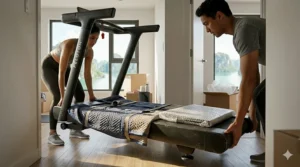
Shipping damage from private sales accounts for 30% of used equipment complaints. If buying from an individual, arrange in-person pickup or use a professional moving service experienced with fitness equipment. That $100 shipping savings costs $800 when the console arrives cracked and the seller claims it was fine when they packed it.
Long-Term Ownership: What to Expect After Year One
Year one is honeymoon period—everything works, you’re motivated, the treadmill smells like new rubber. Year two reality sets in: the first belt lubrication, maybe a deck cleaning, possibly recalibrating speed sensors. Budget 2-3 hours annually for maintenance, or pay $150-200 for professional service.
Most motors fail between hours 2,000-3,000 if improperly maintained (inadequate lubrication creating excess friction), or survive 10,000+ hours with proper care. The difference is $800 in repair costs versus $50 in preventive maintenance. Belt replacement runs $150-300 depending on model, required every 3,000-5,000 hours of use.
Electronics failures cluster around year 3-5, particularly console displays and touchscreens. This is where premium brands justify their cost—replacement parts for SOLE, NordicTrack, and Horizon remain available and affordable ($100-300), while boutique brands charge $500+ for proprietary screens or discontinue parts entirely.
The depreciation curve works in your favor for resale: a $1,500 treadmill purchased used for $900 might resell for $600-700 after three years of use, meaning your net cost was $200-300 for three years of unlimited workouts. That’s $5-8 monthly for home fitness access—a fraction of gym memberships.
Expect mechanical tightness and smoothness to degrade 5-10% per 1,000 hours of use. This isn’t failure; it’s the nature of moving parts under repetitive load. A machine that felt “showroom perfect” at purchase might develop a subtle motor hum or slight belt vibration by hour 1,500—perfectly normal and not indicative of imminent failure.
Premium Features That Actually Matter (And Those That Don’t)
Touchscreens are the treadmill industry’s most successfully marketed feature, yet 40% of owners primarily use them to watch Netflix rather than guided workouts. If you’re not committed to app-based training, a $2,000 touchscreen premium makes zero sense—buy a $800 tablet holder treadmill and use your iPad.
Decline capability, however, is genuinely valuable for runners. Training on -3% decline strengthens your quadriceps’ eccentric control, which prevents the quad-hammering downhill sections of road races from destroying your legs. The $300 premium for decline-capable models pays dividends if you run outdoor races with elevation changes.
Heart rate monitoring integration matters more than people realize. Chest strap connectivity enables zone-based training, which optimizes fat burning (Zone 2, 60-70% max HR) versus cardiovascular improvement (Zone 4, 80-90% max HR). Grip sensors on handlebars are notoriously inaccurate; Bluetooth chest strap support should be non-negotiable for serious training.
Cushioning systems show diminishing returns beyond a certain threshold. The difference between “40% impact reduction vs. asphalt” and “50% impact reduction” is largely imperceptible to most runners, yet manufacturers charge $500 premiums for that extra 10%. Focus on adequate cushioning (30-40% reduction minimum), not maximum softness.
Motor continuous horsepower (CHP) is the only spec that directly correlates with longevity. 2.5 CHP suits walkers, 3.0 CHP handles joggers, 3.5+ CHP survives runner abuse. Peak horsepower is a marketing lie—ignore it entirely and look only at continuous ratings.
Frequently Asked Questions
❓ How much should I expect to pay for a quality peloton tread used or alternative in 2026?
❓ Can I use Peloton app classes on non-Peloton treadmills?
❓ What's the average lifespan of a refurbished peloton tread or certified pre-owned treadmill?
❓ Are discontinued models like the Bowflex BXT216 worth buying used?
❓ How do I transport a 300-pound treadmill safely when buying from an individual seller?
Conclusion: Your Next Steps to Treadmill Ownership
The peloton tread used market and its alternatives offer unprecedented value for smart buyers who prioritize mechanical quality over brand prestige. Whether you’re purchasing a certified refurbished unit, a gently used premium model, or a budget-friendly alternative, the key to success lies in thorough inspection, realistic assessment of your training commitment, and long-term cost analysis.
The standout value proposition for 2026 remains the SOLE F80 for buyers who want commercial-grade construction without subscription requirements, while the NordicTrack Commercial 1750 delivers unmatched features for iFIT enthusiasts willing to commit to the ecosystem. Budget-conscious shoppers should prioritize the ProForm Carbon Pro 2000 for its surprising feature set under $1,200, and space-constrained athletes will find the Echelon Stride-6 solves the storage problem without sacrificing running surface dimensions.
Remember: the most expensive treadmill is the one gathering dust in your garage. Choose based on your actual usage patterns, not aspirational workout plans. A $900 used treadmill you use daily delivers infinitely more value than a $3,000 machine that intimidates you into avoidance.
Recommended for You
- 7 Best Peloton Treadmill Subscription Plans 2026
- 7 Best Peloton Tread Alternatives That Save You $2,000+ (2026)
- Peloton Tread vs Tread Plus 2026: 7 Best Alternatives Worth Every Dollar
Disclaimer: This article contains affiliate links. As an Amazon Associate, I earn from qualifying purchases. If you purchase products through these links, we may earn a small commission at no additional cost to you.
✨ Found this helpful? Share it with your friends! 💬🤗
