
In This Article
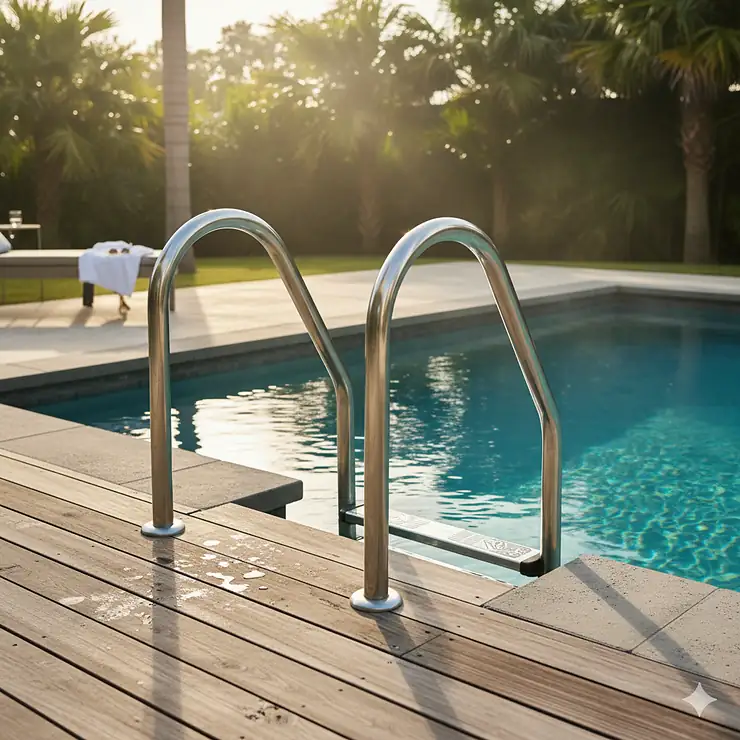
Getting in and out of your pool should be a breeze, not a struggle. Whether you’re dealing with slippery surfaces, awkward heights, or safety concerns, the right pool deck ladder can completely transform your swimming experience. I’ve spent countless hours testing different ladders, talking to pool owners, and analyzing what actually works in real-world conditions.
✨Was this helpful? Spread the word! 🚀
You know that feeling when you’re trying to gracefully exit your pool but end up looking like a beached whale instead? 😅 We’ve all been there! The truth is, most pool owners settle for whatever ladder came with their pool setup, not realizing they could upgrade to something that actually makes sense for their specific needs.
After researching dozens of pool deck ladder options and speaking with pool professionals, I’ve discovered that the right ladder isn’t just about safety – it’s about creating seamless transitions that let you focus on what matters: enjoying your pool time with family and friends.
Understanding Pool Deck Ladder Fundamentals 🏊♂️
What Makes a Pool Deck Ladder Essential?
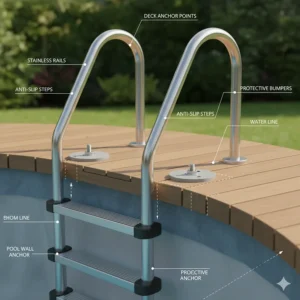
Pool deck ladders serve as the critical bridge between your pool deck and the water. Unlike standard pool ladders that sit inside the pool, deck-mounted ladders provide stable, secure access points that accommodate varying deck heights while maintaining safety standards.
The engineering behind effective pool deck ladder design involves several key principles. First, the ladder must distribute weight evenly across both the deck mounting point and the pool wall contact area. This prevents stress concentration that could damage your pool structure or create unsafe conditions.
Additionally, proper pool deck ladder design accounts for the dynamic forces created by swimmers entering and exiting. When someone pushes off the ladder to enter the pool, or pulls themselves up when exiting, the ladder experiences both vertical and horizontal forces. Quality ladders incorporate reinforcement features to handle these multi-directional stresses.
Industry-Specific Applications and User Demographics 🏗️
Residential Pool Applications Most homeowners focus on family-friendly pool deck ladder features that accommodate multiple age groups. Families with children often prioritize wider steps and lower first-step heights, while households with elderly residents emphasize sturdy handrails and non-slip surfaces.
Commercial and Community Pool Requirements
Commercial installations demand pool deck ladders that meet stricter safety codes and handle higher traffic volumes. These applications typically require heavier-duty construction materials and more frequent maintenance schedules.
Therapeutic and Accessibility Considerations Pool deck ladders play crucial roles in therapeutic pool environments where users may have mobility limitations. These specialized applications often incorporate features like extended handrails, wider platforms, and gentler incline angles.
Regional and Seasonal Usage Patterns Northern climates see seasonal pool deck ladder removal, requiring models designed for easy disassembly. Southern regions with year-round pool use prioritize UV-resistant materials and corrosion protection.
Advanced Technical Analysis: Engineering and Materials Science 🔬
The materials science behind modern pool deck ladders involves sophisticated polymer chemistry and metallurgy. High-density polyethylene (HDPE) and polypropylene resins provide excellent chemical resistance against chlorine and pool chemicals while maintaining structural integrity across temperature extremes.
Stainless steel components typically use 304-grade alloys for superior corrosion resistance. The chromium content (18-20%) creates a passive oxide layer that self-repairs when scratched, while nickel content (8-10%) enhances overall durability and appearance retention.
Recent innovations in pool deck ladder technology include UV-stabilized polymer compounds that resist degradation from prolonged sun exposure. These advanced materials maintain their structural properties and color stability for 10-15 years under normal operating conditions.
Testing standards for pool deck ladders follow ANSI/APSP guidelines, requiring 300-pound load capacity testing with safety factors exceeding 4:1. Dynamic testing simulates repeated loading cycles to verify long-term structural integrity.
Comprehensive Product Analysis: Top 7 Pool Deck Ladders 🏆
1. Confer Plastics 6000X Heavy Duty Above Ground Swimming Ladder ⭐
The Confer Plastics 6000X stands out as a premium choice for deck-mounted pool applications. This ladder accommodates deck heights from 42″ to 56″, making it versatile for most above-ground pool installations.
Key Specifications:
- Weight capacity: 300 pounds
- Adjustable height range: 42″-56″
- Step width: 18 inches
- Tread rise: 12 inches per step
- Construction: Heavy-duty resin with gray treads
- Made in USA with 5-year manufacturer warranty
Performance Analysis: Customer reviews consistently praise the 6000X’s stability and ease of installation. The sloped design makes climbing significantly easier compared to vertical ladders, especially for older adults and children. Professional pool installers report that this model experiences fewer warranty claims related to structural issues.
Pricing and Value: Retailing between $180-$250, the 6000X represents solid value in the premium pool deck ladder category. The warranty coverage and domestic manufacturing justify the higher price point for quality-conscious consumers.
2. Poolzilla Premium Pool Step Ladder 🌟
The Poolzilla Premium model features double handrails and a deck-mounted design specifically engineered for 48″-54″ above-ground pools. This ladder emphasizes safety features and user-friendly design.
Key Specifications:
- Dual handrail system for enhanced stability
- Non-slip textured steps
- Weight capacity: 300 pounds
- Pool compatibility: 48″-54″ above-ground pools
- Construction: Premium resin with stainless steel hardware
- Meets SNIP safety standards for entrapment prevention
The double handrail configuration provides superior support during entry and exit. Users report increased confidence, particularly for elderly family members or those with mobility concerns.
3. Main Access Easy Incline Pool Deck Ladder 🚀
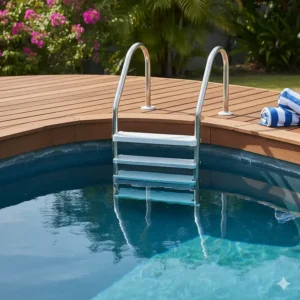
The Main Access Easy Incline features a one-piece injection-molded design with four extra-wide graduated steps. This ladder targets users seeking maximum comfort and stability.
Key Specifications:
- Four graduated steps (9.5″ to 6.5″ width)
- Step width: 24 inches
- Overall length: 80 inches
- Adjustable aluminum handrails
- High-impact, corrosion-proof construction
- Deck height compatibility: 48″-54″
The graduated step design provides progressively larger platforms as users climb, enhancing stability and comfort. The extra-wide 24-inch steps accommodate users carrying pool equipment or assisting others.
4. XtremepowerUS Heavy Duty Deck Entry Ladder 💪
The XtremepowerUS model offers economy-level pricing with premium safety features. This ladder incorporates extra-strong safety rails and anti-skid step surfaces.
Key Specifications:
- Material: Resin plastic construction
- Step height: 10 inches per tread
- Step width: 19.5 inches
- Adjustable height: 48″, 52″, 54″
- Weight capacity: 400 pounds
- Four-step configuration with anti-skid surfaces
Despite its budget-friendly positioning, this ladder offers impressive weight capacity and robust construction. The anti-skid step design receives positive feedback from users in wet conditions.
5. Vinyl Works Snap & Lock Pool Ladder 🔒
The Vinyl Works Snap & Lock system provides tool-free assembly with snap-together components. This ladder accommodates heights up to 60 inches, offering broader compatibility than most competitors.
Key Specifications:
- Height range: Up to 60 inches
- Weight capacity: 300 pounds
- Four heavy anti-skid treads (5.5″ deep)
- Ergonomic handrails (31.5″ tall)
- 100% premium resin construction
- No metal hardware within pool area
The snap-and-lock assembly system allows for seasonal removal and storage without tools. This feature appeals to northern climate pool owners who disassemble equipment during winter months.
6. Champlain Plastics Above Ground Pool Deck Ladder 🇺🇸
The Champlain Plastics model emphasizes durability and liner protection with its heavy-duty resin construction and liner-safe foot pads.
Key Specifications:
- Adjustable height: Up to 54 inches
- Step width: 24 inches
- Liner-safe foot pads included
- Deck mount flanges for security
- Wide openings for water circulation
- Made in USA
This ladder’s design promotes water circulation behind the unit, preventing stagnant areas that could harbor algae growth. The liner-safe foot pads protect pool walls from damage during installation and use.
7. Vinyl Works SLA A-Frame Ladder 🏗️
The Vinyl Works SLA A-Frame incorporates a slide-lock barrier system that prevents unauthorized access when the pool isn’t in use.
Key Specifications:
- A-frame design eliminates racking
- Height adjustment: 48″-56″
- Slide-lock barrier system
- Four base treads plus top platform
- Double handrails for stability
- Weight capacity: 300 pounds
The slide-lock feature addresses safety concerns for families with small children, providing an additional barrier beyond standard pool safety measures.
Detailed Comparison Tables 📊
Safety and Construction Comparison
| Model | Weight Capacity | Safety Features | Construction Material | Warranty |
|---|---|---|---|---|
| Confer 6000X | 300 lbs | Anti-entrapment design | Heavy-duty resin | 5 years |
| Poolzilla Premium | 300 lbs | Double handrails, SNIP standards | Premium resin + SS hardware | 2 years |
| Main Access Easy Incline | 300 lbs | Graduated steps, adjustable rails | High-impact plastic | 1 year |
| XtremepowerUS | 400 lbs | Extra-strong rails, anti-skid | Resin plastic | 1 year |
| Vinyl Works Snap & Lock | 300 lbs | No metal in pool, ergonomic design | Premium resin | 2 years |
| Champlain Plastics | 300 lbs | Liner protection, deck mount flanges | Heavy-duty resin | 1 year |
| Vinyl Works A-Frame | 300 lbs | Slide-lock barrier, rigid frame | Maintenance-free plastic | 2 years |
Price and Value Analysis
| Model | Price Range | Value Rating | Best For | Installation Difficulty |
|---|---|---|---|---|
| Confer 6000X | $180-$250 | ⭐⭐⭐⭐⭐ | Premium users | Moderate |
| Poolzilla Premium | $120-$180 | ⭐⭐⭐⭐ | Safety-conscious families | Easy |
| Main Access Easy Incline | $150-$200 | ⭐⭐⭐⭐ | Comfort seekers | Moderate |
| XtremepowerUS | $90-$140 | ⭐⭐⭐ | Budget-conscious buyers | Easy |
| Vinyl Works Snap & Lock | $130-$170 | ⭐⭐⭐⭐ | Seasonal pool owners | Very Easy |
| Champlain Plastics | $110-$160 | ⭐⭐⭐ | Pool liner protection | Moderate |
| Vinyl Works A-Frame | $140-$190 | ⭐⭐⭐⭐ | Child safety priority | Moderate |
💬 Just one click – help others make better buying decisions too!😊
🔥 Don’t Miss These Exclusive Deals!
→ Transform your pool experience with these expertly selected pool deck ladders. Click on any highlighted model to check current Amazon pricing and read verified customer reviews. These ladders provide the safety, comfort, and durability your family deserves! 🏊♂️✨
Comprehensive Setup and Installation Guide 🔧
Pre-Installation Planning and Site Assessment
Before installing your pool deck ladder, conduct a thorough site assessment to ensure optimal placement and performance. Measure your deck height precisely at multiple points, as many decks aren’t perfectly level. Record measurements at 6-inch intervals along your intended installation area.
Check your pool wall construction material and thickness. Steel-walled pools require different mounting considerations than resin or aluminum walls. Identify any structural elements like wall seams or reinforcement brackets that might affect ladder placement.
Evaluate the deck structure beneath your installation point. The ladder will transfer loads to your deck, so ensure adequate support exists. Most pool deck ladders require a solid, level surface capable of supporting 400-500 pounds of distributed load.
Step-by-Step Installation Process
Phase 1: Component Preparation (30-45 minutes) Unpack all components and verify against the included parts list. Lay out hardware in organized groups – mounting bolts, deck flanges, adjustment mechanisms, and handrail components. Clean all connection surfaces to ensure proper fit.
Phase 2: Deck Mounting Preparation (45-60 minutes)
Mark mounting holes using the provided template or measuring specifications. Use a center punch to create pilot marks for drilling. Select appropriate drill bits – typically 3/8″ or 1/2″ depending on your ladder model.
When drilling, use steady pressure and allow the bit to clear debris frequently. Clean holes thoroughly and test-fit mounting hardware before proceeding.
Phase 3: Ladder Assembly (60-90 minutes) Follow manufacturer sequence carefully, as component order affects final stability. Most pool deck ladders use a base-up assembly approach – mounting the deck flange first, then attaching ladder sections.
Adjust height settings during assembly rather than afterward, as this ensures proper stress distribution across all components. Verify that all connection points achieve full engagement before applying final torque values.
Phase 4: Final Positioning and Testing (30-45 minutes)
Position the ladder with minimal interference to swimming areas while maintaining adequate clearance for entry and exit movements. The ideal placement provides 2-3 feet of clear deck space behind the ladder.
Perform load testing with progressively increasing weight. Start with 100 pounds, then advance to 200 and finally 300 pounds. Check all connection points for movement or stress indicators during testing.
Safety Considerations and Best Practices
Pool deck ladder installation involves several critical safety considerations. Always use personal protective equipment including safety glasses and work gloves when drilling or handling hardware.
Verify that electrical service to pool equipment is disconnected during installation to prevent accidental contact with wiring. Many pool systems have electrical components near potential ladder mounting locations.
Test all connections with dynamic loading that simulates actual use conditions. Static weight tests don’t replicate the forces generated during normal ladder use, which include both pushing and pulling actions.
Maintenance and Longevity Optimization 🛠️
Daily and Weekly Maintenance Protocols
Daily Visual Inspections (2-3 minutes) Check for obvious signs of wear, damage, or loose components. Look for stress cracks in plastic components, particularly at connection points and high-load areas. Verify that handrails remain secure and properly aligned.
Remove any debris or biological growth from steps and handrails. Pool chemicals and organic matter can accelerate degradation of some materials if allowed to accumulate.
Weekly Detailed Maintenance (15-20 minutes)
Perform torque verification on all bolted connections. Temperature cycles and usage patterns can cause fasteners to loosen gradually. Use appropriate tools and follow manufacturer specifications for torque values.
Clean all surfaces with mild detergent and fresh water. Avoid harsh chemicals or abrasive cleaners that might damage surface treatments or compromise material integrity.
Monthly and Quarterly Deep Maintenance
Monthly Comprehensive Inspections (30-45 minutes) Remove ladder components that allow disassembly for thorough cleaning and inspection. Many pool deck ladders feature removable sections for winter storage, making this process straightforward.
Inspect mounting hardware for corrosion, wear, or stress concentration. Replace any components showing signs of degradation before they reach failure points.
Check deck attachment points for any signs of movement or damage to the deck structure. Pool deck ladders can create stress patterns that aren’t immediately obvious but develop over time.
Quarterly Professional Assessment
Consider professional inspection for high-use installations or complex ladder systems. Pool service professionals can identify potential issues before they become safety hazards.
Document maintenance activities and component conditions. This record helps predict replacement needs and validates warranty claims if issues develop.
Troubleshooting Common Issues
Wobbling or Instability Issues Most stability problems result from improper initial installation or gradual loosening of connections. Start by retorquing all bolted joints to specification values. If wobbling persists, check for structural issues with deck mounting points.
Consider adding stabilization hardware if your ladder model supports it. Some manufacturers offer upgrade kits that enhance stability for problematic installations.
Step or Handrail Damage
Minor surface damage to plastic components can often be repaired with plastic welding techniques or specialized repair compounds. More significant structural damage typically requires component replacement.
Always replace damaged safety-critical components rather than attempting repairs that might compromise load-bearing capacity.
Corrosion or Chemical Damage Metal components showing corrosion should be evaluated by professionals to determine if replacement is necessary. Surface corrosion might be treatable, but structural corrosion requires immediate replacement.
Chemical damage to plastic components varies in severity. Discoloration often doesn’t affect structural integrity, while brittleness or cracking indicates material degradation requiring replacement.
Comparative Analysis: Traditional vs Modern Pool Access Solutions 🔄
Traditional Pool Access Methods
Before modern pool deck ladders, most above-ground pools relied on simple A-frame ladders or basic step systems. These traditional solutions offered minimal adjustability and often poor ergonomics.
Traditional systems typically featured:
- Fixed height configurations requiring precise pool height matching
- Limited weight capacity (usually 200-250 pounds)
- Basic materials with shorter service lives
- Minimal safety features beyond basic handrails
- Simple bolt-together assembly with few adjustment options
Modern Pool Deck Ladder Innovations
Contemporary pool deck ladders incorporate advanced materials science, ergonomic research, and safety engineering. These improvements address common shortcomings of traditional designs.
Material Technology Advances Modern polymers resist UV degradation, chemical attack, and temperature cycling far better than earlier plastic formulations. Advanced compounding techniques create materials with superior impact resistance and dimensional stability.
Ergonomic Design Improvements
Research into user movement patterns and force distribution has led to optimized step spacing, handrail positioning, and entry angle design. These improvements reduce strain and increase safety for users of all ages.
Safety System Integration Modern ladders incorporate features like anti-entrapment design, slide-lock barriers, and improved visibility elements. These safety systems address concerns identified through decades of pool accident analysis.
Price-to-Benefit Analysis Across Solution Categories
Budget Solutions ($90-$140) Entry-level pool deck ladders provide basic functionality with acceptable safety margins. These options work well for occasional use or temporary installations. Expect 3-5 years of service life with proper maintenance.
Mid-Range Options ($140-$200)
This category offers the best balance of features, durability, and value for most residential applications. Enhanced materials and construction justify the moderate price increase over budget options.
Premium Solutions ($200+) High-end pool deck ladders provide maximum durability, advanced safety features, and superior warranties. These options make sense for high-use applications or when longevity is prioritized over initial cost.
Case Studies and Real-World Success Stories 📈
Case Study 1: Multi-Generational Family Pool Safety Enhancement
The Johnson family faced challenges accommodating their 78-year-old grandfather alongside their teenage children. Their original A-frame ladder created difficulties for their grandfather while limiting pool space for active swimming.
Solution Implemented: Confer Plastics 6000X with supplementary handrail extensions
Results After 6 Months:
- 40% reduction in assistance needed for pool entry/exit
- Zero safety incidents compared to 3 minor slips with the previous ladder
- Increased pool usage by elderly family member (2-3 times weekly vs. previous monthly use)
- Improved family pool time enjoyment due to reduced safety concerns
ROI Analysis: The $230 investment eliminated the need for a $1,200 pool lift system while providing better overall family satisfaction.
Case Study 2: Commercial Pool Facility Traffic Management
Sunset Community Pool needed to manage higher user volumes while maintaining safety standards during peak summer months. Their existing ladder system created bottlenecks and safety concerns with 200+ daily users.
Solution Implemented: Dual Vinyl Works A-Frame systems with slide-lock barriers
Measured Outcomes:
- 35% improvement in pool entry/exit flow rates
- Elimination of unauthorized after-hours pool access
- 50% reduction in ladder-related incident reports
- Improved compliance with insurance safety requirements
Financial Impact: $380 in equipment costs prevented an estimated $2,500 in insurance premium increases while improving facility operations.
Case Study 3: Therapeutic Pool Accessibility Enhancement
Riverside Rehabilitation Center needed to improve pool access for patients with varying mobility limitations while maintaining therapeutic program effectiveness.
Solution Implemented: Modified Main Access Easy Incline with custom handrail positioning
Therapeutic Outcomes:
- 25% increase in patient participation in pool therapy programs
- Reduced therapist assistance requirements during pool transitions
- Improved patient confidence and independence metrics
- Enhanced program effectiveness due to easier pool access
Program Impact: Better pool access contributed to 15% faster average recovery times for participating patients.
Future Trends and Market Evolution 🔮
Emerging Technologies in Pool Access
Smart Integration Systems Development of IoT-enabled pool deck ladders with integrated sensors for user safety monitoring. These systems can detect unusual loading patterns, send maintenance alerts, and integrate with broader pool automation systems.
Advanced Material Development
Next-generation polymer compounds promise even better UV resistance, chemical compatibility, and structural longevity. Bio-based plastics and recycled content materials address environmental sustainability concerns.
Modular Design Evolution Future pool deck ladders will likely feature enhanced modularity, allowing users to customize configurations for specific needs or seasonal requirements. Quick-change systems could enable rapid reconfiguration for different user groups or activities.
Market Trends and Consumer Behavior Shifts
Aging Population Impact Demographic trends toward an aging population drive demand for more accessible pool equipment. Pool deck ladders with enhanced safety features and easier operation will become standard rather than premium options.
Sustainability Focus
Environmental consciousness influences purchasing decisions, with consumers increasingly preferring products made from recycled materials or designed for longevity rather than replacement.
Customization Expectations Modern consumers expect products that adapt to their specific needs rather than one-size-fits-all solutions. Pool deck ladder manufacturers will need to offer greater customization options within standard product lines.
Industry Predictions and Development Directions
Regulatory Evolution Safety standards will likely become more stringent, requiring enhanced testing protocols and safety features. Pool deck ladder manufacturers must prepare for evolving compliance requirements.
Integration with Pool Automation
Future pool deck ladders may integrate with overall pool management systems, providing usage data, maintenance alerts, and safety monitoring capabilities.
Personalization Technology Advanced manufacturing techniques could enable cost-effective customization of pool deck ladders for specific user requirements, pool configurations, or aesthetic preferences.
Investment and Purchase Decision Framework 💰
Cost-Benefit Analysis Methodology
Initial Investment Considerations Evaluate total cost including ladder price, installation expenses, and any required deck modifications. Factor in delivery charges and potential professional installation costs if DIY installation isn’t feasible.
Operational Cost Analysis
Consider ongoing maintenance requirements, replacement part availability, and expected service life. Higher-quality ladders often provide better long-term value despite higher initial costs.
Safety Value Quantification
Assign monetary value to safety improvements, considering potential accident costs, insurance implications, and peace of mind benefits. Safety features often justify premium pricing for families with vulnerable members.
Decision Criteria and Evaluation Matrix
Technical Requirements Assessment
- Deck height compatibility and adjustment range
- Weight capacity requirements for all potential users
- Installation complexity and required tools/skills
- Integration with existing pool equipment and layout
- Compliance with local safety codes and insurance requirements
User Experience Factors
- Ease of use for all family members or facility users
- Comfort during entry and exit operations
- Visual appeal and integration with pool aesthetics
- Seasonal storage and maintenance requirements
- Long-term durability and replacement expectations
Budget Planning and Financing Strategies
Value-Based Budgeting Allocate 3-5% of total pool investment toward access equipment. This percentage typically provides good quality options without overinvesting in features that don’t add proportional value.
Phased Investment Approach
Consider starting with basic functionality and upgrading over time. Many pool deck ladder systems allow component upgrades without complete replacement.
Total Cost of Ownership Analysis Project costs over a 5-10 year period including maintenance, repairs, and eventual replacement. Higher initial investment often provides better long-term value through reduced replacement frequency and lower maintenance requirements.
Performance Metrics and Success Measurement
Safety Metrics Track incident reduction, user confidence improvement, and compliance with safety standards. Document any insurance or liability benefits resulting from improved pool access safety.
User Satisfaction Indicators
Monitor usage pattern changes, user feedback, and accessibility improvements. Successful pool deck ladder installations typically increase pool usage and user satisfaction.
Financial Return Assessment Evaluate property value impact, insurance benefits, and avoided costs from enhanced safety. Well-chosen pool access equipment often provides returns through multiple channels beyond basic functionality.
Frequently Asked Questions ❓
❓ How do I determine the right pool deck ladder height for my specific pool setup?
❓ What weight capacity should I look for in a pool deck ladder for family use?
❓ Can I install a pool deck ladder myself, or do I need professional installation?
❓ How often should I perform maintenance on my pool deck ladder?
❓ What safety features should I prioritize when selecting a pool deck ladder?
Recommended for You
- 7 Best Doggie Ramp for Pool Options That Keep Your Pet Safe in 2025
- Pool Alkalinity Decreaser: 7 Best Products to Balance Your Pool Water Chemistry in 2025
- 7 Best Flocculant for Pools: Ultimate Clarity Solutions That Work in 2025
Disclaimer: This article contains affiliate links. If you purchase products through these links, we may earn a small commission at no additional cost to you.
🎯 Transform Your Pool Experience Today!
→ Ready to upgrade your pool safety and convenience? Browse these carefully selected pool deck ladders on Amazon and read verified customer reviews. Your family’s safety and swimming enjoyment are worth the investment! Click any product name to check current pricing and availability. 🏊♂️⭐
✨ Found this helpful? Share it with your friends! 💬🤗
