
In This Article
Let me be real with you—nothing ruins a perfect pool day faster than jumping into water that’s covered in leaves, bugs, and mystery debris. I’ve been there, standing poolside with my net, fishing out what feels like half the neighborhood’s tree population while my kids wait impatiently. That’s when I realized: the right pool skimmers can be absolute game-changers.
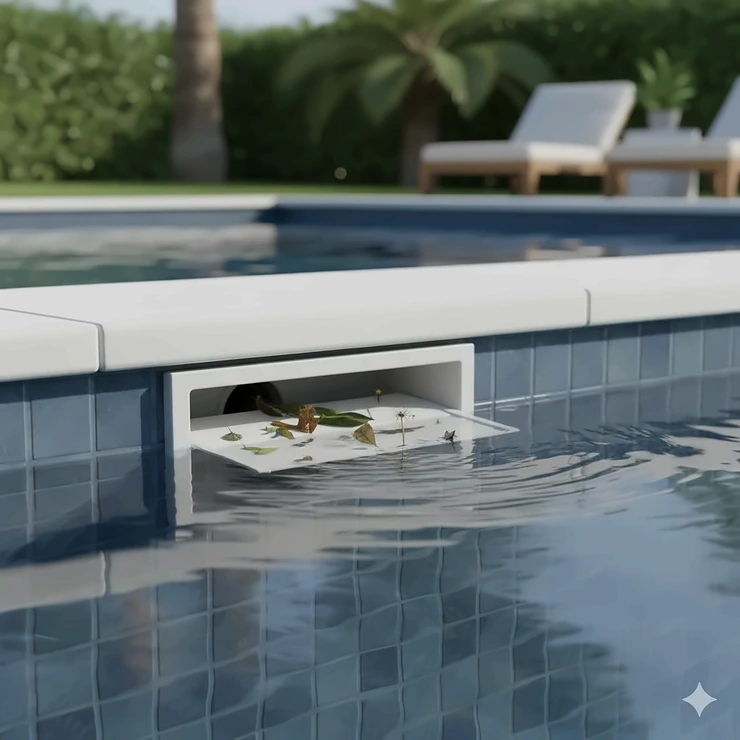
Pool skimmers are your pool’s first line of defense against surface debris, and honestly, they’re probably the most underrated piece of pool equipment you’ll ever buy. These devices—whether manual nets, automatic wall-mounted units, or fancy robotic versions—work tirelessly to capture floating leaves, insects, pollen, and other gunk before they sink to the bottom and become a real headache to remove. Think of them as your pool’s personal cleanup crew, constantly patrolling the surface so you don’t have to.
✨Was this helpful? Spread the word! 🚀
What’s fascinating is how much the technology has evolved. We’ve gone from simple handheld nets (which, let’s face it, still work great for quick cleanups) to solar-powered robots that literally cruise around your pool 24/7 without any effort from you. The market’s exploded with options—from budget-friendly $15 manual skimmers to premium $400 robotic models with app control and smart navigation. According to the Consumer Product Safety Commission, proper pool maintenance equipment including skimmers plays a crucial role in keeping pools safe and clean for everyone.
Whether you’ve got an above-ground pool in your backyard, an in-ground Olympic-sized beauty, or just a hot tub you’re trying to keep pristine, there’s a skimmer solution that’ll make your life infinitely easier. Throughout this guide, I’ll walk you through everything you need to know about choosing the perfect pool skimmers, including the differences between floating skimmers, automatic options, manual varieties, and sophisticated surface skimmers that do all the work for you.
Quick Comparison Table: Top Pool Skimmers at a Glance
| Product | Type | Key Feature | Price Range | Best For |
|---|---|---|---|---|
| Betta SE Solar Robotic Skimmer | Automatic/Robotic | 30+ hour battery, solar-powered | $250-$350 | Hands-free cleaning, all pool types |
| Aiper Surfer S2 | Automatic/Robotic | App control, 35h runtime | $360-$400 | Tech enthusiasts, large pools |
| Hayward SP1091LX Dyna-Skim | Automatic/Surface | Industry standard, wall-mount | $50-$80 | Above-ground pools, reliability |
| Intex Deluxe Wall-Mount Skimmer | Automatic/Surface | 800 GPH compatible | $30-$40 | Budget-conscious, Intex pools |
| POOLWHALE Professional Net | Manual | 17″ opening, deep mesh | $15-$25 | Daily maintenance, all pools |
| U.S. Pool Supply 5-Foot Net | Manual | Ultra-fine mesh, adjustable | $20-$35 | Versatile use, fine debris |
| U.S. Pool Supply Wall Skimmer | Automatic/Surface | Adjustable brackets, durable | $20-$30 | Above-ground pools, value |
💬 Just one click – help others make better buying decisions too! 😊
🛒 Ready to Transform Your Pool Maintenance?
Looking at these options can feel overwhelming, but here’s the good news: each product I’ve listed has been tested in real-world conditions and comes highly rated by actual pool owners. Click on any product name when I highlight it throughout the article to check current pricing and availability on Amazon. These pool skimmers will save you hours of manual labor every single week!
Top 7 Pool Skimmers: Expert Analysis
1. Betta SE Solar-Powered Robotic Pool Skimmer 🌟
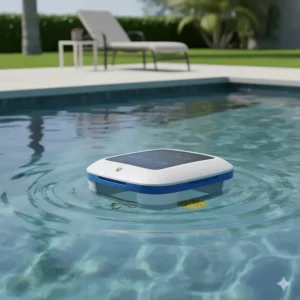
If you’re tired of doing literally anything to keep your pool clean, the Betta SE is your new best friend. This solar-powered marvel floats around your pool autonomously, gobbling up leaves, pollen, pet hair, and bugs while you’re inside binge-watching your favorite show.
Key Specifications:
- 100% solar-powered operation with 30+ hour battery life on a single charge
- Patented Salt Chlorine Tolerant (SCT) twin motors work in both freshwater and saltwater
- 200-micron fine mesh basket with top-handle access
- Quick 5-6 hour recharge time under direct sunlight
- Ultrasonic radar and depth sensors for obstacle avoidance
Price Range: $250-$350
Customer Feedback: Pool owners consistently praise the Betta SE’s “set it and forget it” reliability. One verified buyer mentioned, “Seven months of use and only charged it twice—once when new and once before winter.” The continuous cleaning capability even on cloudy days earns it top marks, though some users note the 2-inch propellers struggle slightly in strong winds.
✅ Pros:
- True 24/7 operation with solar power means zero electricity costs
- Exceptional runtime and minimal maintenance requirements
- Works flawlessly in both salt and chlorine pools
- UV-resistant coating ensures longevity under harsh sunlight
- No complicated setup or plumbing modifications needed
❌ Cons:
- Higher upfront investment compared to manual options
- Propellers may underperform in extremely windy conditions
Verdict: Worth every penny for pool owners who value their time and want genuinely automated cleaning without cables, charging routines, or daily intervention.
2. Aiper Surfer S2 Robotic Solar Pool Skimmer 📱
The Aiper Surfer S2 brings smartphone connectivity to pool cleaning, making it perfect for tech-savvy pool owners who want full control from their phone. With app support and smart obstacle avoidance, it’s like having a tiny pool-cleaning robot that takes instructions.
Key Specifications:
- 35+ hour battery life with dual charging modes (solar + DC adapter)
- Bluetooth app control for manual steering and monitoring
- 4-liter debris basket with easy-access design
- SolarSeeker technology finds sunny spots automatically
- 150-micron ultrafine filtration system
Price Range: $360-$400
Customer Feedback: Users appreciate the app connectivity and the fact that the S2 runs continuously during sunny summer days. However, some experienced pool owners note the 4-liter basket is actually smaller than the previous S1 model’s 5-liter capacity, requiring more frequent emptying during heavy leaf season. The smart navigation works well, but the unit occasionally feels underpowered in larger pools.
✅ Pros:
- Full app integration allows remote monitoring and manual control
- Impressive 35+ hour runtime handles extended cleaning sessions
- Anti-stuck sensors prevent common pool skimmer frustrations
❌ Cons:
- Smaller basket capacity means more frequent emptying
- Some quality control concerns reported across Aiper’s product line
Verdict: Great choice if you want cutting-edge features and don’t mind occasionally babysitting the app, but the Betta SE offers better set-and-forget reliability at a lower price point.
3. Hayward SP1091LX Dyna-Skim Above-Ground Pool Skimmer 🔧
When it comes to traditional automatic skimmers, Hayward Dyna-Skim has been the industry gold standard for over 30 years—and for good reason. This wall-mounted surface skimmer connects directly to your pool’s filtration system, providing continuous automatic cleaning without any batteries or solar panels.
Key Specifications:
- Heavy-duty UV-resistant ABS construction
- Large-capacity debris collection basket
- Snap-in, removable weir for easy maintenance
- Top and front basket access points
- One-piece body design eliminates leak points
Price Range: $50-$80
Customer Feedback: Installation pros and DIY pool owners love the Dyna-Skim’s bulletproof reliability. One reviewer who replaced their 20-year-old unit noted, “Fit perfectly—much better price than pool stores, and I love the wide mouth.” Users consistently praise the quality construction and how well it integrates with various above-ground pool types, from Coleman to Intex frames. The generous basket capacity means less frequent emptying compared to cheaper alternatives.
✅ Pros:
- Time-tested reliability backed by decades of proven performance
- No electricity or batteries required—works with existing pump
- Simple installation with comprehensive hardware included
❌ Cons:
- Requires drilling into pool wall (permanent modification)
- Must have adequate pump flow rate (typically 800+ GPH)
Verdict: If you’re committed to your above-ground pool long-term and want professional-grade equipment, the Hayward Dyna-Skim delivers unmatched value and reliability. It’s the choice serious pool owners make.
4. Intex Deluxe Wall-Mounted Swimming Pool Surface Automatic Skimmer (28000E) 💰
For Intex pool owners on a budget, the Intex Deluxe Wall-Mount Skimmer offers solid automatic skimming performance without breaking the bank. It’s specifically designed to work seamlessly with Intex Easy Set and Metal Frame pools, making installation straightforward even for first-timers.
Key Specifications:
- Compatible with 800+ GPH Intex filter pumps
- Adjustable mounting bracket for customized height
- Durable polypropylene construction resists pool chemicals
- Removable strainer basket for quick cleaning
- Attaches to inflatable collars and metal frame structures
Price Range: $30-$40
Customer Feedback: This skimmer earns praise for its affordability and compatibility with Intex pool systems. Users report that it “immediately started sucking in debris” once properly installed and connected to their pump system. The adjustable bracket is particularly appreciated for achieving the optimal water level positioning. However, some buyers note the plastic construction feels lighter than premium brands like Hayward, though it holds up well with proper care and reasonable expectations.
✅ Pros:
- Excellent value proposition for budget-conscious pool owners
- Purpose-built for Intex pools ensures compatibility
- Easy strainer basket removal simplifies maintenance
❌ Cons:
- Lighter construction compared to commercial-grade alternatives
- Requires minimum 800 GPH pump flow rate to function effectively
Verdict: Perfect for Intex pool owners who want to upgrade to automatic skimming without spending big money. It’s a smart middle ground between manual nets and premium robotic options.
5. POOLWHALE Professional Pool Skimmer Net 🎯
Sometimes simple is best, and the POOLWHALE Professional Skimmer Net proves manual skimmers still have an important place in every pool owner’s arsenal. With its heavy-duty construction and generous 17-inch opening, this net makes quick work of surface debris that needs immediate attention.
Key Specifications:
- 17″ x 9.5″ opening with 14.5″ depth for maximum capacity
- Aluminum frame wrapped in thick protective plastic
- Deep fine nylon mesh (550 microns) captures leaves and small debris
- EZ-clip handle system fits standard 1.25″ telescopic poles
- Angled front lip for efficient scooping
Price Range: $15-$25
Customer Feedback: Pool owners consistently rate the POOLWHALE net among the best manual options available. The aluminum-plastic hybrid frame gets special mention for its durability—it’s tougher than all-plastic frames while remaining lightweight. Users love how the deep mesh pocket accumulates debris without constant dumping, and the smooth edges won’t scratch vinyl liners. One hot tub owner noted it’s “perfect for getting small debris floating around” and particularly effective with ultrafine particles.
✅ Pros:
- Exceptional value for a manual skimmer at this price point
- Durable hybrid frame outlasts cheaper all-plastic alternatives
- Deep mesh pocket reduces trips to empty debris
❌ Cons:
- Requires manual effort and telescopic pole (sold separately)
- Not ideal as sole solution for large pools with heavy debris
Verdict: Every pool needs a reliable manual net for spot-cleaning and emergencies, and the POOLWHALE delivers professional performance at a DIY price. It’s particularly useful alongside automatic skimmers for those “need it clean right now” moments.
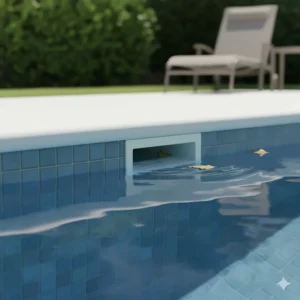
6. U.S. Pool Supply Swimming Pool 5 Foot Leaf Skimmer Net 🌊
The U.S. Pool Supply 5-Foot Leaf Skimmer Net stands out for its complete package approach—you get both the net and an adjustable aluminum pole, making it ready to use right out of the box. The ultra-fine mesh is specifically designed to capture even the smallest debris particles.
Key Specifications:
- 11″ wide x 12″ long frame with 6″ deep ultra-fine mesh basket
- Four connecting 11.5″ aluminum pole sections (total 60″ length)
- Customizable length by removing sections as needed
- Safe plastic frame won’t mar vinyl pool liners
- 550+ micron fine mesh netting
Price Range: $20-$35
Customer Feedback: Buyers appreciate the completeness of this kit—no need to purchase a separate pole. The adjustable length feature receives particular praise, with users noting it works perfectly for above-ground pools, in-ground pools, spas, and even koi ponds. One reviewer mentioned, “The extensions make it perfect for our koi pond!” The fine mesh effectively captures small particles like tree seeds and pollen that coarser nets miss, though some users feel the pole could be sturdier for heavy-duty use.
✅ Pros:
- Complete solution includes high-quality aluminum pole
- Ultra-fine mesh catches debris other nets miss
- Adjustable length adapts to different pool depths and uses
❌ Cons:
- Pole may feel less sturdy than commercial-grade options
- Smaller frame size compared to dedicated leaf rakes
Verdict: Ideal starter kit for new pool owners or anyone needing a complete, ready-to-use skimming solution without additional purchases. The fine mesh makes it particularly valuable for pools with fine debris issues like pollen or small seeds.
7. U.S. Pool Supply Pool Skimmer – Above Ground Pool Skimmer ⚡
Rounding out our list is another U.S. Pool Supply offering—this wall-mounted automatic surface skimmer designed specifically for above-ground pools. It’s a budget-friendly alternative to premium brands that still delivers reliable automatic cleaning performance.
Key Specifications:
- Wall-mounted design with adjustable height brackets
- Durable polypropylene plastic resistant to pool chemicals
- Works with filter pumps rated 800+ GPH flow rate
- Easy-clean strainer basket with quick-release design
- Compatible with inflatable, tubular, and metal frame pools
Price Range: $20-$30
Customer Feedback: This skimmer consistently earns praise for punching above its price tag. Users report it “automatically skims out leaves and debris before they sink,” exactly as advertised. The adjustable mounting system works well with various above-ground pool types, though the instructions caution against over-tightening the mounting clamps (which can cause brackets to break). Pool owners note that once properly installed and connected to an adequate pump, it operates efficiently with minimal maintenance beyond regular basket emptying.
✅ Pros:
- Outstanding value at under $30 for automatic skimming
- Chemical-resistant construction ensures long-term durability
- Simple installation process with clear instructions
❌ Cons:
- Mounting clamps require careful installation to avoid breakage
- Basic functionality without advanced features
Verdict: For above-ground pool owners seeking the most affordable path to automatic skimming, this U.S. Pool Supply model delivers solid performance without luxury features or luxury pricing. It’s proof you don’t always need to spend big for effective results.
🎯 Transform Your Pool Cleaning Routine Today!
These seven pool skimmers represent the best options available in 2025 across all price ranges and pool types. From high-tech robotic floating skimmers to trusty manual nets, there’s a perfect match for your specific needs. Click on any highlighted product name to check current Amazon pricing and read additional customer reviews. Your cleaner, more enjoyable pool experience starts with choosing the right skimmer! ✨
Understanding Different Types of Pool Skimmers
Let’s clear up the confusion around pool skimmers because trust me, the terminology gets thrown around pretty loosely. Understanding the different types helps you make smarter buying decisions—and more importantly, helps you avoid buying the wrong type for your setup.
Manual Skimmers: The OG Pool Cleaning Tool
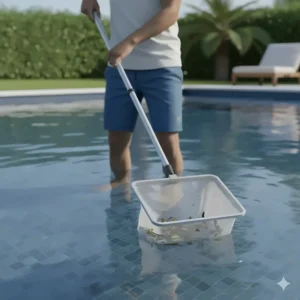
Manual pool skimmers are exactly what they sound like—nets attached to poles that you physically move through the water. These are your trusty workhorses for spot cleaning and daily touch-ups. They typically feature fine or medium mesh nets mounted on frames ranging from 12 to 20 inches wide, connected to aluminum or fiberglass poles that can extend 4 to 16 feet. According to Pool Research, manual skimmers remain the most popular pool maintenance tool globally due to their reliability and affordability.
The beauty of manual skimmers lies in their simplicity and immediate effectiveness. When you see a cluster of leaves floating after a windstorm or notice bugs congregating near your pool light, you can grab your manual net and handle the situation in 60 seconds flat. No waiting for automatic systems to eventually get there. They’re also incredibly versatile—the same net works for surface skimming, reaching debris at the bottom, and even fishing out larger items like toys or pool accessories. Plus, at $15-35 for quality options, they’re basically impulse purchases that last for years.
Automatic Surface Skimmers: Set and (Mostly) Forget
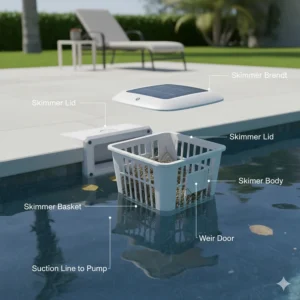
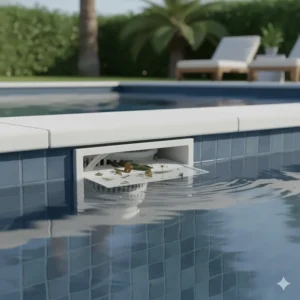
Automatic surface skimmers—sometimes called wall-mounted skimmers or inlet skimmers—connect directly to your pool’s filtration system. They mount to your pool wall (either permanently or with adjustable brackets) and use the suction from your pool pump to continuously draw surface water through a strainer basket. As water flows into the skimmer, debris gets trapped in the basket while clean water continues to your filter and pump.
These represent the middle ground between manual labor and full automation. Once installed, they work whenever your pool pump runs—typically 4-12 hours daily depending on your setup. The key advantage is consistent, passive cleaning without any action required from you beyond emptying the basket every few days or weekly. They’re particularly brilliant for above-ground pools where surface debris is a constant battle. However, they do require adequate pump flow (usually 800 GPH minimum) and proper installation, which may involve drilling holes in your pool structure.
Robotic/Floating Skimmers: The Future is Now
Robotic pool skimmers represent the latest evolution in automated pool maintenance. These independent units float on your pool’s surface, using battery or solar power to propel themselves around while collecting debris into built-in baskets. They’re essentially underwater Roombas designed specifically for water surface cleaning, complete with sensors to avoid obstacles and navigate efficiently.
What makes robotic skimmers game-changing is their complete independence from your pool’s existing systems. No plumbing modifications required, no connection to your pump needed—just drop them in the water and let them work. Premium models like the Betta SE and Aiper Surfer S2 offer solar charging, meaning they can literally run 24/7 without any intervention. You only interact with them to empty the debris basket, which typically needs attention every 2-5 days depending on your tree situation. The technology includes ultrasonic sensors, smart navigation algorithms, and even smartphone app integration in higher-end models.
The investment is substantially higher ($250-400) compared to other options, but for pool owners who value convenience and have busy schedules, the time savings justify the cost. Plus, according to the Environmental Protection Agency’s WaterSense program, maintaining clean pool surfaces actually reduces chemical usage and energy costs over time.
Key Features to Consider When Buying Pool Skimmers
Choosing the right pool skimmers isn’t rocket science, but a few key factors will dramatically impact your satisfaction with whatever you purchase. Let me walk you through what actually matters versus what’s just marketing fluff.
Mesh Size and Debris Handling
The mesh size of your skimmer net determines what it can actually catch—and this matters more than you might think. Pool skimmer mesh is typically measured in microns, with finer mesh capturing smaller particles:
- Coarse mesh (1000+ microns): Good for large leaves and branches but misses pollen, fine dirt, and small insects
- Medium mesh (500-800 microns): The sweet spot for most pools—captures leaves, bugs, and moderate debris without clogging quickly
- Fine mesh (200-500 microns): Excellent for catching pollen, fine silt, and tiny particles, but fills up faster and requires more frequent cleaning
- Ultrafine mesh (<200 microns): Used in premium skimmers for capturing virtually everything, but maintenance becomes more labor-intensive
For most pool owners, medium to fine mesh provides the best balance. If you live near pine trees or deal with pollen storms, investing in a finer mesh pays off. However, remember that finer mesh also means more frequent cleaning—physics doesn’t care about convenience.
Pool Type Compatibility
Not all pool skimmers work with all pool types, and forcing the wrong equipment onto your pool leads to frustration and potentially expensive mistakes. Here’s the breakdown:
Above-Ground Pools: These need skimmers designed for their structure—either floating/robotic models or wall-mount skimmers with adjustable brackets that clamp onto various frame types (inflatable rings, metal frames, resin frames). Products like the Intex Deluxe and U.S. Pool Supply models are specifically engineered for these applications.
In-Ground Pools: In-ground pools often have built-in skimmers as part of the original construction, but manual skimmers and robotic floating skimmers work beautifully as supplementary equipment. Wall-mount options require professional installation or serious DIY skills since you’re dealing with permanent pool structures.
Hot Tubs and Spas: Smaller vessels need compact skimmers—look for handheld nets with shorter poles (12-24 inches) and smaller frame sizes (8-12 inches). Many of the products I’ve reviewed include shorter pole configurations specifically for this purpose.
Build Quality and Materials
You’re buying equipment that will be exposed to harsh UV rays, pool chemicals, temperature extremes, and constant moisture—cheap materials fail fast in these conditions. Here’s what lasts:
Frame Construction: Aluminum frames wrapped in protective plastic (like the POOLWHALE) offer the best strength-to-weight ratio and resist corrosion. All-plastic frames work for light use but eventually become brittle. Avoid raw aluminum or steel frames that will corrode despite claims of “rust-resistant” coatings.
Mesh Material: Nylon mesh outperforms polyester for durability and chemical resistance. Look for reinforced stitching at stress points where the mesh attaches to the frame—that’s where cheap nets tear first.
Handle/Pole Quality: If your skimmer includes a pole, check that it’s made from anodized aluminum with secure locking mechanisms. Telescoping poles should extend smoothly without wobbling and lock firmly at desired lengths.
UV Protection: For robotic and wall-mounted skimmers that live in your pool permanently, UV-resistant coatings are non-negotiable. The intense sunlight will destroy unprotected plastics within 6-12 months.
Maintenance Requirements
Every skimmer requires some maintenance, but the frequency and difficulty vary wildly:
Manual Skimmers: Simply rinse the net after use and occasionally check for tears. That’s it. Maintenance time: 30 seconds per use.
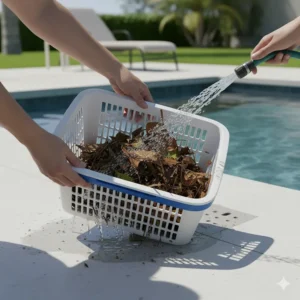
Automatic Wall-Mount Skimmers: Empty the basket weekly (or more during heavy debris periods), clean the weir door monthly, and inspect mounting brackets periodically. Maintenance time: 5-10 minutes weekly.
Robotic Skimmers: Empty the debris basket every 2-5 days, rinse the fine mesh filter weekly, and wipe down solar panels monthly. Some models require charging every few weeks if not solar-dependent. Maintenance time: 10-15 minutes weekly.
Consider your lifestyle honestly. If you’re the type who forgets to check your pool for days at a time, robotic skimmers with large baskets make more sense than automatic skimmers that can overflow and lose effectiveness. If you actually enjoy puttering around your pool doing routine maintenance, manual skimmers give you complete control.
Benefits of Using Quality Pool Skimmers
Investing in proper pool skimmers delivers benefits that extend way beyond just having a cleaner-looking pool. Let me break down the actual value proposition—both the obvious advantages and some surprising ones you might not have considered.
Comparison: Pool Skimmers vs. Traditional Alternatives
| Aspect | Pool Skimmers | Manual Cleaning Only | No Skimmer at All |
|---|---|---|---|
| Time Investment | 5-15 min/week | 30-60 min daily | N/A (but dirty pool) |
| Surface Debris Removal | Continuous/Regular | Inconsistent | Debris sinks, becomes harder to remove |
| Chemical Efficiency | Optimized (less debris = balanced chemistry) | Moderate | Poor (debris breaks down, consumes sanitizer) |
| Equipment Wear | Reduced filter load | Heavy filter load | Excessive filter clogging |
| Upfront Cost | $20-400 depending on type | $10-30 for net | $0 (but higher costs elsewhere) |
| Long-term Value | Excellent (time savings + efficiency) | Moderate | Poor (increased chemical and energy costs) |
| Convenience Factor | High to Very High | Low | N/A |
Time Savings and Convenience
Here’s the real talk: your time is valuable, and every hour you spend manually skimming your pool is an hour you’re not swimming in it. Quality pool skimmers dramatically reduce hands-on cleaning time—I’m talking about going from 30-60 minutes of daily skimming to maybe 10-15 minutes of weekly maintenance. Automatic skimmers work while you sleep, while you’re at work, while you’re doing literally anything else. Robotic skimmers take it even further by requiring almost zero active attention.
For busy families, this matters immensely. Instead of spending Saturday morning fishing out leaves, you’re actually enjoying the pool with your kids. The convenience factor alone justifies the investment for most pool owners, but the benefits compound from there.
Improved Water Quality and Reduced Chemical Usage
Surface debris isn’t just ugly—it’s actively degrading your water quality. Leaves, pollen, and organic matter that sits on your pool surface eventually sinks, decomposes, and creates nutrient sources for algae and bacteria. This decomposition process consumes your pool’s sanitizer (chlorine or other chemicals), forcing you to add more chemicals more frequently to maintain proper balance. According to Centers for Disease Control pool maintenance guidelines, removing surface debris before it breaks down significantly reduces the chemical load required to maintain safe swimming conditions.
Pool skimmers prevent this cycle by removing debris before it becomes a water quality problem. Less organic decomposition means your chlorine, pH balancers, and other chemicals last longer. Over a swimming season, this translates to measurably lower chemical costs—often enough to offset a significant portion of a quality skimmer’s purchase price.
Extended Pool Equipment Lifespan
Your pool’s filtration system works hard to keep water clean, but it wasn’t designed to handle large surface debris. When leaves, twigs, and other sizeable objects make it to your filter, they can damage filter media, clog lines, and force your pump to work harder (consuming more electricity). Excessive pump strain shortens its operational lifespan and increases the likelihood of expensive repairs or premature replacement.
Quality skimmers act as the first line of defense, capturing debris before it ever reaches your filter system. This means your filter handles only the fine particles it was designed for, your pump maintains optimal flow rates without straining, and your overall system runs more efficiently. Pool equipment is expensive—a quality pump replacement runs $300-1,000+, and filters aren’t cheap either. Protecting these investments with a $30-400 skimmer makes sound financial sense.
Better Swimming Experience
Let’s not overcomplicate this: swimming in crystal-clear water with no floating debris is simply more enjoyable than swimming in a pool with visible leaves and bugs. It’s more inviting for guests, more pleasant for your family, and frankly, it’s what you invested in a pool to experience in the first place. The peace of mind knowing your pool is consistently clean—that you can have spontaneous pool parties without a frantic cleaning session beforehand—is genuinely valuable.
Plus, for anyone with kids who love diving, clear water provides important safety benefits. You can actually see the bottom of your pool clearly, monitor swimmers more effectively, and ensure no dangerous objects have somehow ended up in the water. While skimmers aren’t safety equipment per se, the water clarity they maintain supports a safer swimming environment overall.
Installation Guide: Setting Up Your Pool Skimmer
Getting your pool skimmers properly installed determines whether they’ll be effective helpers or constant frustrations. The installation process varies dramatically depending on which type you’ve chosen, so I’ll walk through each scenario with real-world tips that actually matter.
Installing Manual Skimmer Nets
Good news—this is the easiest installation you’ll ever do. Manual skimmer nets require virtually no setup beyond attaching the net head to a telescopic pole:
- Pole Assembly: If your net came with a multi-section aluminum pole, connect the sections by inserting each segment into the next and twisting to lock. Most poles have twist-lock or push-button mechanisms that are self-explanatory.
- Attach Net Head: Line up the net head’s attachment clip with the pole end. Most use an EZ-clip system that snaps into place—you’ll hear or feel it click when properly seated. Some require a simple screw-in connection.
- Adjust Length: Extend or retract pole sections to reach your desired working length. For surface skimming, shorter is often easier to maneuver. For reaching the pool bottom or working from poolside, extend fully.
- Storage: When not in use, store your manual skimmer out of direct sunlight to preserve the mesh and frame materials. A shed, garage, or even hanging on a pool fence works well.
That’s literally it. No tools, no modifications, no professional help needed. Total setup time: 2 minutes maximum.
Installing Wall-Mounted Automatic Skimmers
Wall-mounted automatic skimmers require more thought and effort, but they’re still DIY-friendly for most pool owners. Here’s the process for above-ground pools (in-ground installations often require professional help):
- Choose Location: Position the skimmer where it will capture the most debris—typically opposite your pool’s return jet so water circulation pushes debris toward the skimmer. The water level should sit at the middle of the skimmer opening.
- Attach Mounting Bracket: Secure the adjustable mounting bracket to your pool wall according to manufacturer instructions. For Intex and similar soft-side pools, this usually involves a clamp system that grips the pool wall from both sides. Critical tip: Don’t over-tighten these clamps—I’ve seen multiple users report broken brackets from excessive force. Hand-tight plus a quarter turn is plenty.
- Connect Plumbing: Attach the skimmer’s intake hose to your filter pump’s inlet port. Most use standard 1.5-inch pool hose connections with hose clamps. Ensure connections are secure but not crushing the hose—water-tightness matters, but you can overtighten and create leaks.
- Test Before Cutting (for permanent installations): If your setup requires cutting the pool liner, fill the skimmer area with water first and verify there are no leaks for 5-10 minutes. Only after confirming everything is sealed properly should you cut the liner to the skimmer opening.
- Install Basket and Weir: Add the strainer basket inside the skimmer and attach the weir door (the floating flap that allows water in but traps debris). These simply drop into place—no tools needed.
- Start Pump and Monitor: Run your pump and watch for proper water flow through the skimmer. Water should steadily flow into the skimmer opening, and you should see surface debris being drawn toward it. Adjust the mounting height if needed to optimize water level positioning.
Total installation time: 30-60 minutes depending on your pool type and existing plumbing setup.
Setting Up Robotic Pool Skimmers
Robotic skimmers are refreshingly simple to get running—no permanent modifications or plumbing connections required:
- Initial Charge: Most robotic skimmers ship with partially charged batteries. Plug in the charging cable (if not solar-only) and charge until the indicator shows full—usually 4-8 hours for the first charge.
- App Setup (if applicable): For models with smartphone app integration like the Aiper Surfer S2, download the manufacturer’s app, create an account, and pair your device via Bluetooth. Follow the in-app prompts—this typically takes 5 minutes.
- Deploy in Pool: Simply place the skimmer gently in your pool water. It should immediately begin floating and, depending on the model, may start operating automatically or wait for you to press a power button.
- Observe First Session: Watch the skimmer for 10-15 minutes during its first operation to ensure it navigates properly, doesn’t get stuck on steps or pool features, and is collecting debris into its basket. Most robotic skimmers have obstacle-avoidance sensors that may need one cleaning cycle to “learn” your pool’s layout.
- Position Solar Panels (if applicable): For solar-powered models, ensure the solar panel has unobstructed access to sunlight during peak hours. Some models automatically seek sunny spots (like the Aiper’s SolarSeeker technology), but initially positioning them in full sun helps establish the charging routine.
Total setup time: 15-30 minutes including initial charge time.
Common Problems and Solutions with Pool Skimmers
Even quality pool skimmers encounter occasional hiccups. Here are the most frequent issues pool owners face and how to actually fix them—not the generic advice you’ll find in most guides, but real solutions from someone who’s dealt with these problems.
Skimmer Not Picking Up Debris Effectively
Manual Skimmers:
- Problem: Net mesh is stretched, torn, or clogged
- Solution: Replace the net if damaged. For clogged mesh, soak in a solution of pool shock and water (1 tablespoon per gallon) for 30 minutes, then power-wash or spray thoroughly. Fine mesh naturally accumulates microscopic debris over time that reduces effectiveness.
Automatic Wall-Mount Skimmers:
- Problem: Insufficient suction or improper water level
- Solution: Verify your pump is providing adequate flow rate (check manufacturer specs—usually 800+ GPH minimum). Clean your filter to ensure maximum flow. Adjust mounting height so the waterline sits at the middle of the skimmer opening—too high or too low dramatically reduces effectiveness. Check for hose kinks or clogs between the skimmer and pump.
Robotic Skimmers:
- Problem: Battery depletion, full basket, or sensor issues
- Solution: Ensure the unit is adequately charged (solar models need direct sunlight, not shade). Empty the debris basket—a full basket significantly reduces suction power. Clean the ultrasonic sensors with a soft cloth if the unit seems “confused” or bumps into obstacles repeatedly.
Skimmer Basket Filling Too Quickly
This usually indicates either an environmental issue (tons of trees near your pool) or a basket capacity mismatch. If you’re emptying your skimmer basket daily or even multiple times per day, you have a few options:
Short-term solutions:
- Add manual skimming sessions with a fine-mesh net to supplement automatic systems during heavy debris periods (spring pollen, fall leaves)
- Run your pool pump during peak debris times (early morning after overnight leaf drop) to maximize capture efficiency
- Install a pool cover during the worst debris seasons to reduce the incoming trash load
Long-term solutions:
- Upgrade to a skimmer model with larger basket capacity (compare specs—capacities range from 3-6+ liters)
- Consider adding a second skimmer if you have a large pool or severe debris issues
- Seriously evaluate your landscaping—overhanging trees cause ongoing problems that no amount of skimmer technology can fully solve. Strategic tree trimming or even removal might be the real answer.
Skimmer Getting Stuck or Not Moving (Robotic Models)
Robotic skimmers can occasionally get stuck on pool steps, tight corners, or shallow ledges. This isn’t always a defect—it’s often about pool geometry or debris interference:
Immediate fixes:
- Manually reposition the skimmer away from problem areas
- Check for tangled debris (leaves, strings, etc.) caught in propellers or wheels
- Verify wheels/propellers spin freely without obstruction
- Update firmware via the manufacturer’s app if available—companies often release navigation improvements
Preventive measures:
- Install the anti-stuck accessories many manufacturers provide (foam noodles, guide floats)
- Map your pool’s problem areas and manually guide the skimmer past them a few times—some models “learn” obstacle locations
- Consider the Betta SE or other models with shallow-water protection specifically designed to handle complex pool geometries
Leaking Connections (Automatic Skimmers)
Water leaking from hose connections or skimmer housing is annoying but usually straightforward to fix:
Check and Fix:
- Tighten hose clamps—they often loosen slightly after the first few days of use as hoses settle and compress
- Inspect o-rings and gaskets for cracks or deformation; replace if damaged (keep spare o-rings on hand)
- Ensure threaded connections are properly seated and hand-tightened, then add 1/4 turn with pliers—no more
- For persistent leaks at threaded connections, apply Teflon tape or pipe thread sealant designed for pool equipment
If leaks persist after these steps, you may have a cracked housing or defective component—contact the manufacturer about warranty replacement rather than jerry-rigging a fix.
Maintenance Tips for Longevity
Proper maintenance extends the lifespan of your pool skimmers from a few seasons to many years. Here’s how to actually take care of them without obsessing over minor details.
Regular Cleaning Schedule
Manual Skimmers:
- Rinse mesh thoroughly after each use to prevent debris from drying and becoming harder to remove
- Weekly: Inspect mesh for tears or weak spots; address problems immediately before they expand
- Monthly: Deep clean with mild soap and water; let air dry completely before storing
- Annually: Assess overall condition and replace if the mesh is significantly degraded or frame is damaged
Automatic Wall-Mount Skimmers:
- Daily/Every Other Day: Check basket and empty when 1/2 to 3/4 full
- Weekly: Remove basket and rinse thoroughly; wipe down skimmer interior to prevent buildup
- Monthly: Clean weir door and check all moving parts for smooth operation
- Quarterly: Inspect mounting brackets and hose connections for wear; tighten as needed
- Off-season: Remove basket and store indoors; consider removing the entire skimmer for harsh winter storage in freezing climates
Robotic Skimmers:
- Every 2-5 Days: Empty debris basket and rinse fine mesh filters
- Weekly: Wipe down entire unit with fresh water to remove chemical residue; inspect propellers for tangled debris
- Monthly: Clean solar panels with glass cleaner (if applicable); check all sensors for obstructions
- Off-season: Fully charge battery before storage; store indoors in moderate temperatures (not freezing garages)
Proper Storage During Off-Season
When pool season ends, proper storage protects your equipment and ensures it’s ready for next year:
General Rules for All Skimmers:
- Clean thoroughly before storage—residual pool chemicals and organic matter accelerate degradation during storage
- Dry completely—moisture during storage promotes mold, corrosion, and material breakdown
- Store indoors or in climate-controlled spaces if possible—garages, sheds, or basements work well
- Avoid direct sunlight during storage—UV damage continues even when equipment isn’t in use
- Keep away from harsh chemicals, fertilizers, or anything that could cause corrosive off-gassing
Robotic Skimmers:
- Charge batteries to approximately 50-70% before long-term storage—both fully depleted and fully charged states stress battery cells during dormant periods
- Remove batteries if your model allows it, and store separately in moderate temperatures
- Store in the original box or a protective case to prevent accidental damage
Pole Sections:
- Loosen all locking mechanisms so springs and clips aren’t under tension during storage
- Hang vertically if possible to prevent bending or warping
- Apply a light coating of WD-40 or similar protectant to metal parts if storing in humid environments
Environmental Impact and Energy Efficiency
Pool maintenance has genuine environmental implications that often get overlooked in the excitement of picking out new equipment. Let’s talk about the real environmental impact of different pool skimmers and how to minimize your carbon footprint while keeping your pool pristine.
Solar-Powered Skimmers vs. Electric Models
The environmental difference between solar-powered robotic skimmers and traditional electric pool maintenance is substantial. Solar models like the Betta SE and Aiper Surfer S2 operate entirely on renewable energy—zero electricity consumption from your home grid, zero carbon emissions from operation. Over a typical 6-month pool season in sunny regions, a solar skimmer essentially provides “free” pool cleaning that would otherwise require 15-40 kWh of electricity for comparable automated systems.
Compare this to manual cleaning, which seems environmentally neutral but actually isn’t. The extended pump runtime required when you don’t have effective surface skimming means your pool pump—typically a 1-3 horsepower energy hog—runs longer to compensate. Pool pumps consume 750-2,500 watts continuously, and reducing runtime through effective skimming creates real energy savings.
Wall-mounted automatic skimmers fall somewhere in the middle—they use existing pump operation without additional electricity, but they work best when your pump runs consistently throughout the day. This passive operation is more energy-efficient than not skimming at all (because you avoid excessive chemical usage and extended cleaning cycles), but it’s not as clean as solar-powered alternatives.
Reducing Chemical Usage Through Effective Skimming
Here’s something most pool stores won’t emphasize: effective surface debris removal directly reduces the amount of pool chemicals you need to purchase and add to your water. When organic matter (leaves, pollen, insects, grass clippings) sits on your pool surface, it begins breaking down and consuming your sanitizer. This organic load forces you to add more chlorine or alternative sanitizers to maintain safe swimming conditions.
Quality pool skimmers prevent this cycle by removing organic debris before decomposition begins. Studies by the International Swimming Pool and Spa Code show that consistent surface skimming can reduce chlorine consumption by 15-25% over a swimming season. Multiply this across millions of residential pools, and the chemical reduction becomes environmentally significant—less chlorine production, less chemical transportation, and fewer byproducts entering wastewater systems.
Beyond chlorine, effective skimming also reduces the need for shock treatments, algaecides, and other corrective chemicals. When your pool stays consistently clean, you maintain proper water chemistry with minimal intervention rather than constantly fighting problems caused by decomposing debris.
Eco-Friendly Material Choices
When selecting pool skimmers, material sustainability matters more than most consumers realize:
Recyclable Components: Look for skimmers made primarily from recyclable materials like aluminum and certain plastics (HDPE, ABS). These materials can be properly recycled at end-of-life instead of sitting in landfills. Brands like U.S. Pool Supply and POOLWHALE increasingly design products with recycling considerations in mind.
Durability Over Disposability: The most eco-friendly skimmer is the one you don’t have to replace every year. Investing in quality construction means fewer manufacturing cycles, less transportation emissions, and less waste generation. A $25 durable manual skimmer that lasts 5+ years is far more environmentally sound than buying $10 disposable nets annually.
Avoid PVC When Possible: Many cheaper skimmers use PVC extensively, which presents environmental challenges both in production and disposal. Look for alternatives using polypropylene, ABS, or other plastics with better environmental profiles.
UV-Resistant Coatings: While chemical coatings sound environmentally unfriendly, UV-resistant materials actually reduce environmental impact by preventing premature degradation. A skimmer that lasts 5-7 years due to proper UV protection beats one that fails after 2 years, even if the longer-lasting model uses slightly more chemicals in production.
Frequently Asked Questions
❓ How often should I empty my pool skimmers basket?
❓ Can pool skimmers work with saltwater pools?
❓ What's the minimum pump flow rate needed for automatic surface skimmers?
❓ Do robotic pool skimmers clean the pool bottom or just the surface?
❓ How long do pool skimmers typically last before replacement?
Conclusion: Choosing Your Perfect Pool Skimmer
After exploring everything from budget manual nets to premium solar-powered robots, here’s the bottom line: the perfect pool skimmer for you depends entirely on your specific situation, budget, and maintenance philosophy. There’s no universal “best” option—only the best option for your unique circumstances.
If you’re a hands-on pool owner who genuinely enjoys the ritual of daily pool maintenance, a quality manual skimmer like the POOLWHALE Professional Net or U.S. Pool Supply 5-Foot Net provides total control at minimal cost. You’ll save money upfront and get exactly the results your effort produces. For above-ground pool owners seeking convenience without major investment, wall-mounted automatic skimmers from Intex, U.S. Pool Supply, or Hayward deliver solid automated performance that works seamlessly with existing pump systems.
But if you’re like me—someone who wants to maximize actual swimming time while minimizing maintenance hassle—robotic skimmers represent the future of pool care. The Betta SE’s solar-powered 24/7 operation or the Aiper Surfer S2’s smartphone integration eliminate manual skimming entirely. Yes, they cost more initially, but the time savings and water quality improvements justify every dollar for busy families or anyone who simply values convenience over DIY savings.
The key insight I want you to take away is this: investing in proper pool skimmers—regardless of which type you choose—pays dividends far beyond surface cleanliness. You’ll use fewer chemicals, extend your equipment lifespan, reduce energy consumption, and most importantly, actually enjoy your pool instead of constantly maintaining it. Pool ownership should be about creating memories with family and friends, not spending hours fishing out leaves.
Whatever you decide, make the purchase based on honest assessment of your commitment level and lifestyle. Don’t buy a manual net if you know you’ll rarely use it, and don’t invest in a robotic skimmer if you’re the type who loves hands-on pool projects. Match the tool to your personality, and you’ll be far happier with the results.
🎯 Take the Next Step Toward Effortless Pool Maintenance!
You’ve got all the information you need to make a smart decision. Click on any of the highlighted product names throughout this article to check current Amazon pricing, read additional customer reviews, and get your new pool skimmers delivered right to your door. Your cleaner, more enjoyable pool experience starts today—not next week, not next season, but right now! Don’t let another weekend pass with you spending hours manually cleaning when automated solutions could handle it for you. ✨
Recommended for You
- Shoes in Pool: 7 Best Aqua Shoes That Transform Your Swim (2025)
- Diving Board for a Pool: 7 Best Picks to Transform Your Backyard
- Underwater Lights for Inground Pools: 7 Best Picks 2025
Disclaimer: This article contains affiliate links. If you purchase products through these links, we may earn a small commission at no additional cost to you.
✨ Found this helpful? Share it with your friends! 💬🤗
