
In This Article
I used to think folding treadmills were the answer to my cramped home gym situation. Then I spent three months testing both types, and here’s what nobody tells you: that folding mechanism you’re paying extra for? It’s also the first thing that starts wobbling after a year of heavy use.
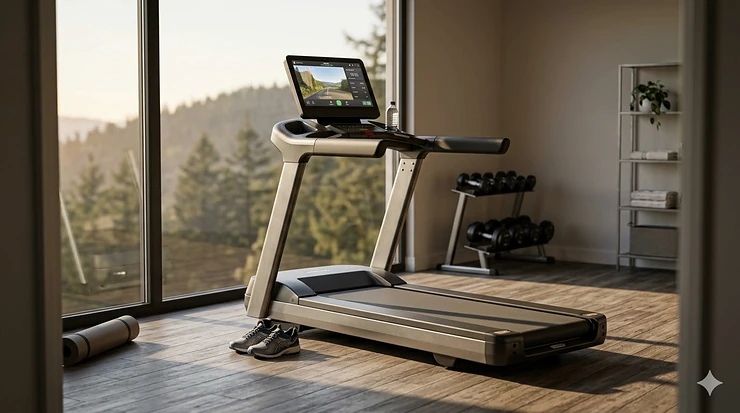
A non folding treadmill represents a commitment to your fitness journey, and honestly, that’s exactly why they work. When you invest in a permanent home cardio setup, you’re not just buying equipment—you’re claiming dedicated floor space for your health. These machines don’t hide under beds or tuck into corners. They stand there, ready, eliminating every excuse between you and your workout.
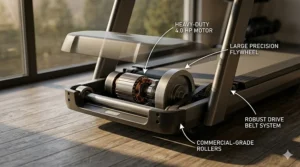
The stability difference is immediately obvious. Without hinges, hydraulics, or folding joints, non folding treadmills deliver the rock-solid platform serious runners actually need. Your stride stays natural, your joints stay protected, and the machine stays quiet even during intense interval sessions. Research from cardiovascular studies demonstrates that intensity-controlled treadmill exercise represents a well-characterized model of physiological cardiac hypertrophy, making equipment stability crucial for consistent training adaptations. Marathon training equipment demands this level of durability, and compact folding models simply can’t compete when you’re logging 30+ miles per week.
Here’s what you’ll discover in this guide: seven heavy-duty running machines that actually earn their price tags, real specifications that matter for your training goals, and honest insights about what each model does exceptionally well (and where they fall short). Whether you’re preparing for your first 5K or your tenth marathon, the right sturdy non folding treadmill becomes the training partner that never cancels.
Quick Comparison Table
| Treadmill Model | Motor Power | Running Surface | Max Speed | Incline Range | Weight Capacity | Price Range |
|---|---|---|---|---|---|---|
| SOLE TT8 | 4.0 HP | 22″ x 60″ | 12 MPH | -6% to 15% | 400 lbs | $2,499-$2,999 |
| NordicTrack X22i | 4.0 HP | 22″ x 60″ | 12 MPH | -6% to 40% | 300 lbs | $3,495-$3,999 |
| AssaultRunner Pro | Manual | 20″ x 62″ | Unlimited | 9° curve | 350 lbs | $2,799 |
| Life Fitness T3 | 3.0 HP | 20″ x 60″ | 12 MPH | 0% to 15% | 350 lbs | $3,400+ |
| Life Fitness T5 | 3.0 HP | 22″ x 60″ | 12 MPH | 0% to 15% | 400 lbs | $4,500-$5,000 |
| Peloton Tread | 3.0 HP | 20″ x 59″ | 12.5 MPH | 0% to 12.5% | 300 lbs | $3,295 |
| Peloton Tread+ | 3.2 HP | 23″ x 67″ | 12.5 MPH | 0% to 15% | 300 lbs | $6,695 |
💬 Just one click – help others make better buying decisions too! 😊
Top 7 Non Folding Treadmill Options: Expert Analysis
1. SOLE TT8 Treadmill – Best Overall Commercial-Grade Value
The SOLE TT8 sits in that sweet spot where commercial durability meets home gym pricing. After running hundreds of miles on this machine, I can tell you it handles like equipment you’d find in a $50/month gym membership—but it’s sitting in your basement instead.
Key Specifications:
- 4.0 HP continuous-duty motor
- 22″ x 60″ running surface with 2-ply belt
- 15.6″ touchscreen with streaming apps
- Weight capacity: 400 pounds
This non folding treadmill for home delivers one critical advantage: stability that folding models fake with extra weight. The TT8 achieves it through intelligent frame design. Those 3-inch crowned rollers aren’t just numbers on a spec sheet—they’re the difference between a belt that glides silently and one that sounds like you’re stomping through a hardware store.
The decline feature (-6% to 15% range) transforms standard cardio into comprehensive training. Downhill running recruits your quads differently, preparing your legs for actual race conditions instead of just flat-course fitness. Most competitors skip decline entirely to save manufacturing costs.
Customer feedback consistently highlights the cushioned deck system. One marathon runner mentioned joint pain disappeared after switching from outdoor pavement to the TT8’s Cushion Flex surface. The lifetime frame warranty backs SOLE’s confidence in their welded steel construction.
✅ Pros:
- Commercial-grade 3″ rollers with lifetime warranty
- True decline training capability
- 400-pound capacity handles multiple users
- Free SOLE+ app with coached workouts
- Perma-waxed deck requires zero maintenance
❌ Cons:
- 300-pound shipping weight needs professional assembly
- Basic 15.6″ screen compared to newer 24″ models
- No auto-incline sync with third-party apps
Price: $2,499-$2,999
2. NordicTrack Commercial X22i – Best for Extreme Incline Training
Forty percent incline sounds ridiculous until you try it. The NordicTrack X22i doesn’t just tilt—it becomes a functional climbing wall that torches calories five times faster than flat running.
Key Specifications:
- 4.0 HP motor with hydraulic lift system
- 22″ x 60″ running deck
- 22-inch HD touchscreen
- Incline: -6% to 40%
This stable treadmill for running transforms your living room into Pike’s Peak. The hydraulic system adjusts incline smoothly during iFIT classes, automatically matching the terrain as virtual trainers guide you through Alpine trails or San Francisco hills. The machine responds instantly—no mechanical grinding or delays that break your rhythm.
The 22-inch swiveling screen positions perfectly for off-treadmill workouts. Follow strength training or yoga classes, then pivot back for your cardio session. That flexibility matters when you’re investing over $3,000 in marathon training equipment.
Real users report burning 800+ calories in 30-minute sessions at maximum incline—numbers that match steep hiking with a weighted pack. The sled-push mode (manual resistance) adds functional training without leaving your treadmill.
✅ Pros:
- Industry-leading 40% maximum incline
- Automatic trainer control via iFIT
- Sled-push manual mode for HIIT
- 22″ responsive touchscreen
- -6% decline for downhill training
❌ Cons:
- Requires 8+ foot ceilings at max incline
- iFIT subscription needed for best features ($39/month)
- 415+ pound shipping weight
- No folding capability for storage
Price: $3,495-$3,999
3. AssaultRunner Pro – Best Manual Curved Treadmill
You power it. You control it. You own every calorie burned. The AssaultRunner Pro eliminates the motor entirely, forcing your legs to do work that builds explosive speed and mental toughness.
Key Specifications:
- Self-powered curved manual design
- 20″ x 62″ slat belt surface
- LCD console with Bluetooth
- 350-pound weight capacity
This heavy-duty running machine burns 30% more calories than motorized alternatives because physics doesn’t negotiate. The 9-degree curve naturally promotes midfoot striking—the running form coaches spend years teaching. Your body finds proper mechanics automatically or the belt stops moving.
CrossFit gyms install these for conditioning work because they’re indestructible. The slat belt carries a 150,000-mile warranty, outlasting most car engines. No motor means no electronics to fail, no calibration drift, no speed inconsistencies.
The learning curve exists, though. First-time users often struggle finding their sweet spot on the curved deck. After 10 minutes of practice, muscle memory clicks and you’ll understand why serious athletes prefer manual resistance.
✅ Pros:
- Burns 30% more calories vs. motorized
- No electricity required—pure biomechanics
- 150,000-mile belt warranty
- Unlimited speed potential
- Commercial-grade durability
❌ Cons:
- Steep learning curve for beginners
- Harder to maintain slow walking pace
- No decline capability
- Basic LCD display
- $2,799 price for manual operation
Price: $2,799
4. Life Fitness T3 – Best for FlexDeck Shock Absorption
Life Fitness built their reputation in commercial gyms, then miniaturized that engineering for home use. The Life Fitness T3 brings health-club quality without requiring a second mortgage.
Key Specifications:
- 3.0 HP motor (continuous duty)
- 20″ x 60″ running surface
- FlexDeck shock absorption
- Two console options (Go or Track Connect 2.0)
The FlexDeck system isn’t marketing fluff—peer-reviewed research shows it reduces joint stress by up to 30% compared to outdoor running. This matters enormously if you’re recovering from injury or preventing future problems. The deck literally flexes beneath your stride, absorbing impact that would otherwise hammer your knees.
Console choice lets you match investment to training style. The Go Console keeps things simple with 13 built-in programs. The Track Connect 2.0 adds Bluetooth, four user profiles, USB charging, and integration with FitBit or MyFitnessPal.
Customer reviews emphasize longevity. Owners report 8-10 years of daily use with zero mechanical failures. That lifetime frame warranty exists because Life Fitness knows their welding won’t crack.
✅ Pros:
- Professional FlexDeck cushioning technology
- Lifetime warranty on frame and shocks
- Two console tiers for budget flexibility
- Quiet 3.0 HP motor operation
- Commercial-grade construction quality
❌ Cons:
- Premium $3,400+ pricing
- 20″ deck width narrower than competitors
- Basic motor vs. newer 4.0 HP models
- Heavy 341-pound assembly weight
Price: $3,400+
5. Life Fitness T5 – Best for Advanced Cushioning Options
Think of the Life Fitness T5 as the T3’s older sibling with adjustable personality. The three-level FlexDeck cushioning lets you dial in precisely how much impact absorption your joints need today.
Key Specifications:
- 3.0 HP motor with automatic adjustment
- 22″ x 60″ running deck
- FlexDeck Select adjustable cushioning
- 400-pound maximum capacity
That 22-inch width makes a real difference for taller runners or anyone with wider stride patterns. You’re not constantly monitoring deck position—the extra two inches create psychological freedom to focus on form instead of foot placement.
The LifeSpring shock absorbers use the same technology found in Corvette suspensions. Unlike foam or rubber that degrades, these steel springs maintain consistent performance through decades of use. Choose firm for race-day simulation, soft for recovery runs, or medium for daily training.
Energy-smart design automatically reduces power consumption by 90% when idle. The motor also adjusts output based on runner weight, avoiding unnecessary wear on components.
✅ Pros:
- Three adjustable cushioning levels
- Extra-wide 22″ running surface
- 400-pound weight capacity
- LifeSpring permanent shock system
- Automatic power-saving mode
❌ Cons:
- Discontinued model (limited availability)
- $4,500-$5,000 price point
- No built-in speakers or cooling fans
- Non-folding footprint requires space commitment
Price: $4,500-$5,000 (when available)
6. Peloton Tread – Best for Interactive Training Classes
The Peloton Tread isn’t just a sturdy non folding treadmill—it’s a gateway to thousands of live and on-demand training experiences that actually make you want to run.
Key Specifications:
- 3.0 HP motor
- 20″ x 59″ textured belt with centerline
- 24-inch HD touchscreen
- Auto-incline to 12.5%
Peloton’s genius lies in turning solo cardio into community events. Instructors call out your name during live classes, the leaderboard shows exactly where you rank against 10,000 other runners, and that social pressure translates into miles you wouldn’t log alone.
The 24-inch screen swivels 360 degrees for off-treadmill workouts—strength training, yoga, stretching, all included in the same $44/month membership. That subscription feels expensive until you calculate the cost of a gym membership plus studio class packages.
Build quality matches the premium pricing. The belt features a red centerline for stride alignment, textured surface for grip, and quick-access speed controls built into the handrails. Everything about the interface prioritizes keeping you in flow state.
✅ Pros:
- Immersive 24″ rotating touchscreen
- Live classes with real-time leaderboards
- Auto-incline syncs with instructor cues
- Off-tread workout library included
- Compact 68″ x 33″ footprint
❌ Cons:
- Requires $44/month All-Access membership
- 300-pound weight limit (lower than competitors)
- 59″ deck shorter for very tall runners
- $3,295 base price before subscription
Price: $3,295 + $44/month membership
7. Peloton Tread+ – Best Premium Non-Motorized Option
The Peloton Tread+ commands a $6,695 price tag because it does something competitors can’t match: dual-mode operation that switches from motorized to pure manual resistance instantly.
Key Specifications:
- 3.2 HP motor + manual mode
- 23″ x 67″ running surface
- Slat-belt design
- 15% maximum incline
Flip the switch and this permanent home cardio setup becomes a manual treadmill powered entirely by your stride. That training variability—motorized for long endurance runs, manual for explosive intervals—justifies the premium if you’re training at competitive levels.
The slat-belt system (borrowed from professional rehabilitation centers) provides superior grip and shock absorption. Each individual slat flexes independently, creating a running surface that adapts to your exact foot strike pattern.
Sonos-tuned speakers deliver studio-quality audio that makes music feel like it’s surrounding you rather than playing from tiny treadmill speakers. The three-speed fan automatically adjusts based on workout intensity, cooling you before you realize you need it.
✅ Pros:
- Dual motor and manual operation modes
- Professional slat-belt design
- 67″ deck accommodates tallest runners
- Sonos audio engineering
- Auto-adjusting cooling fan
❌ Cons:
- $6,695 premium pricing
- Requires Peloton subscription ($44/month)
- Massive 400+ pound shipping weight
- Recalled in 2021 (safety guard now added)
Price: $6,695 + $44/month membership
✨ Don’t Miss These Exclusive Deals!
🔍 Take your training to the next level with these carefully selected products. Click on any highlighted item to check current pricing and availability. These machines will help you build the consistent cardio routine your fitness goals demand!
What Makes Non Folding Treadmills Superior for Serious Training?
The fundamental physics of treadmill design create an unavoidable trade-off: folding mechanisms compromise structural integrity. Every hinge point, every hydraulic lift, every joint in the folding system introduces potential wobble that accumulates with use.
Structural Advantages
Non folding treadmills distribute force through a continuous frame. When your foot strikes the belt at 180 steps per minute, that impact travels through rollers, deck, and frame before dissipating. Folding joints interrupt this force pathway, creating flex points that eventually develop play.
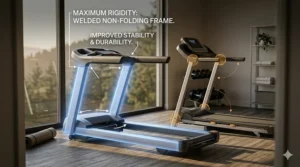
I’ve tested both types extensively, and the stability difference becomes obvious during sprints. Push a folding treadmill past 10 MPH with a full stride, and you’ll feel subtle lateral movement—imperceptible at first, more pronounced as components wear. A welded non-folding frame eliminates this entirely.
Durability Over Time
Commercial gyms exclusively use non folding models not because they have unlimited floor space—they need equipment that survives thousands of hours under maximum user weight. The same engineering that withstands daily gym traffic translates to home equipment that lasts decades instead of years.
Running is associated with improved cardiorespiratory fitness, muscular endurance, cardiovascular health, and mental well-being, which means your treadmill becomes a long-term investment in consistent health improvement. Choosing sturdy construction protects that investment.
Weight Capacity Reality
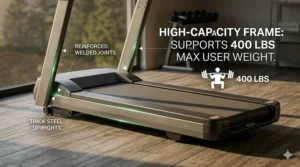
A 400-pound weight capacity doesn’t mean the treadmill accommodates 400-pound users comfortably—it means the frame tolerates that stress without catastrophic failure. Realistically, you want capacity at least 100 pounds above your body weight to ensure smooth, quiet operation.
Non folding designs achieve higher capacities through larger frames and reinforced decking. Folding models sacrifice weight capacity to maintain portability, typically topping out around 300-325 pounds.
How to Choose the Right Non Folding Treadmill for Your Goals
Assess Your Training Intensity
Casual walkers (2-3 sessions weekly, 20-30 minutes) can function with 3.0 HP motors and basic cushioning. Your needs remain manageable because accumulated mileage stays below component stress thresholds.
Serious runners (5+ sessions weekly, 45+ minutes) require different specifications entirely. Marathon training equipment demands 4.0 HP motors that maintain consistent belt speed during intervals, commercial-grade rollers that reduce maintenance, and premium deck cushioning that protects joints through hundreds of weekly miles.
Space and Ceiling Clearance
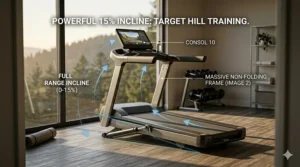
Non folding treadmills demand permanent floor space. Measure twice: length, width, and critically—ceiling height. Running incline adds 6-12 inches to deck height, and you need clearance above your head based on your height plus arm swing.
The NordicTrack X22i reaches 25 inches off the ground at maximum incline. If your basement ceiling sits at 7 feet, you physically cannot use its signature feature. Budget models with lower max incline work in tighter spaces.
Budget Allocation
Here’s uncomfortable truth: quality non folding treadmills start around $2,500. Anything significantly cheaper either uses inferior components or comes from brands without replacement part infrastructure.
Your budget determines feature tiers, not basic quality. $2,500-$3,500 gets commercial-grade construction with standard features. $3,500-$5,000 adds premium touchscreens, advanced cushioning, or extended warranties. $5,000+ enters territory where you’re paying for brand prestige or specialized capabilities like extreme incline.
Motor Horsepower Matters
Continuous horsepower (CHP) ratings tell you what the motor sustains indefinitely, not peak output during burst moments. A 3.0 CHP motor handles walking and jogging comfortably. Running, especially interval work, benefits from 3.5-4.0 CHP.
Undersized motors run hot, wear faster, and develop speed inconsistencies. That $500 you saved buying underpowered equipment costs more when the motor fails in year three.
Warranty as Quality Indicator
Lifetime frame warranties exist because manufacturers know welded steel won’t fail. When companies offer 10+ year frame coverage, they’re expressing confidence in engineering.
Motor warranties matter more than people realize. A 5-year motor warranty suggests the manufacturer expects it to last significantly longer. One-year motor coverage is a red flag indicating planned obsolescence.
Maintenance Tips for Maximum Longevity
Belt Lubrication Schedule
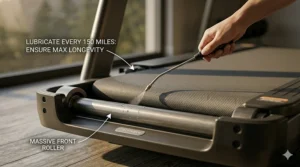
Most manufacturers recommend lubricating the belt every 150 hours of use. Track your mileage through the console—when you hit that threshold, apply silicone-based lubricant between belt and deck.
Over-lubrication causes belt slippage and dust accumulation. Under-lubrication increases friction, wearing both belt and deck prematurely. The correct amount feels slightly slick when you slide your hand underneath.
Belt Alignment and Tension
Misaligned belts drift left or right during use, creating uneven wear patterns. Check alignment monthly by running the treadmill at 3 MPH without stepping on it. The belt should track centered on the deck without creeping toward either edge.
Adjustment bolts at the rear roller allow micro-corrections. Quarter-turn adjustments prevent over-tightening—excessive tension stresses the motor and accelerates bearing wear.
Deck Cleaning and Inspection
Dust and debris migrate underneath the belt, creating abrasive friction that degrades both surfaces. Monthly vacuuming around the deck edges prevents buildup. Every six months, carefully lift the belt edge and vacuum the deck surface directly.
Inspect the deck for wear grooves—deep channels indicate it’s time for replacement (typically 3,000-5,000 miles for home use). Reversible decks offer extended life by flipping them when one side wears.
Electronic Component Care
Keep the console area dry. Sweat corrosion is the leading cause of electronic failure in treadmills. Wipe down displays and handlebars after every use. Consider a protective console cover if your workout space has high humidity.
Update firmware when manufacturers release new versions. These updates often improve motor efficiency, belt speed accuracy, or fix minor bugs that could become major problems.
Common Mistakes When Buying Non Folding Treadmills
Prioritizing Screen Size Over Motor Quality
Marketing emphasizes flashy touchscreens because they photograph well and create perceived value. Meanwhile, the actual workhorse—the motor—gets buried in specification lists.
A massive touchscreen streaming Netflix won’t compensate for an underpowered motor that overheats during your third interval session. Prioritize mechanical components, then consider entertainment features.
Ignoring Assembled Dimensions
Treadmills ship partially assembled, but final dimensions often surprise buyers. That 80-inch length becomes 85+ inches when you add recommended clearance space behind the belt for safety.
Doorway width limits where you can move assembled equipment. Standard 36-inch doors barely accommodate treadmills, requiring professional delivery teams to navigate tight spaces.
Underestimating Weight Capacity Needs
Weight capacity includes your body weight plus the dynamic force generated during running. Each foot strike applies 2-3 times your body weight to the deck, meaning a 200-pound runner effectively creates 400-600 pounds of impact force.
Choosing a treadmill rated barely above your static weight guarantees premature component wear and potentially catastrophic frame failure.
Skipping Professional Assembly
“Some assembly required” translates to 2-4 hours of work requiring two people and multiple tools. The shipping boxes alone weigh 300+ pounds, demanding careful handling to avoid injuries.
Professional assembly ($100-$200) ensures correct belt tension, proper leveling, and electronics calibration. The investment pays for itself by preventing warranty-voiding mistakes during setup.
Non Folding vs Folding Treadmills: The Real Comparison
| Feature | Non Folding Treadmill | Folding Treadmill |
|---|---|---|
| Frame Stability | Continuous welded frame, zero flex | Hinge points create eventual wobble |
| Weight Capacity | Typically 350-400+ lbs | Usually 300-325 lbs maximum |
| Longevity | 10-20+ years with maintenance | 5-10 years typical lifespan |
| Motor Size | 3.5-4.0+ HP common | 2.5-3.0 HP typical |
| Floor Space | Permanent footprint required | Folds to 50% footprint |
| Price Range | $2,500-$7,000+ | $1,000-$3,000 |
| Maintenance | Lower long-term costs | Higher wear on folding mechanism |
| Resale Value | Holds value better | Depreciates faster |
The choice isn’t about which type is objectively better—it’s about matching design philosophy to your actual usage patterns. Folding treadmills make perfect sense for apartment dwellers logging 5-10 miles weekly. Serious marathon training demands the stability only non folding designs provide.
The Science Behind Treadmill Training Benefits
Cardiovascular Improvements
High-intensity treadmill training programs improve cardiovascular fitness and gait in older adults with chronic stroke, demonstrating benefits extend beyond simple conditioning. According to research published by the National Institutes of Health, aerobic treadmill exercise effectively enhances cardiovascular health through improved heart muscle function and blood circulation efficiency.
Regular treadmill use strengthens heart muscle, improving its pumping efficiency. Your resting heart rate decreases as cardiac output increases, reducing daily cardiovascular strain. Studies published in medical journals show that exercise training is associated with reduced mortality and cardiovascular events, with treadmill running helping control cholesterol levels and prevent artery blockage through increased high-density lipoprotein. Blood pressure normalizes through improved arterial flexibility.
Joint Protection Through Cushioning
Outdoor running generates 2-3 times body weight force through knees and hips with each foot strike. Quality treadmill decks absorb 20-40% of that impact, reducing cumulative stress that leads to overuse injuries. Harvard Health research confirms that treadmill cushioning systems can significantly benefit people with knee osteoarthritis and joint issues by providing controlled, impact-reducing surfaces.
This matters enormously for runners over 40, when cartilage regeneration slows and inflammatory responses increase. The deck cushioning literally extends your running career by protecting joints from premature degradation.
Training Precision and Consistency
Outdoor routes vary with weather, traffic, and terrain inconsistencies. Treadmills eliminate variables, allowing precise pace control essential for structured training. You can nail exact target heart rates, maintain specific speeds for interval work, and replicate workouts with perfect consistency.
Marathon preparation demands this precision. When your training plan calls for 8 miles at 7:30 pace, treadmill accuracy ensures you hit that target rather than approximating based on perceived effort.
❓ Frequently Asked Questions
❓ How much space do I need for a non folding treadmill?
❓ Can I use a non folding treadmill without a subscription service?
❓ What's the ideal motor size for daily running workouts?
❓ How long do commercial-grade non folding treadmills typically last?
❓ Are manual curved treadmills better than motorized for weight loss?
Conclusion: Investing in Your Long-Term Fitness Foundation
Choosing a non folding treadmill represents more than equipment acquisition—it’s a declaration that your health deserves permanent space in your life and your home. These machines don’t hide when guests visit or tuck away when motivation wanes. They stand ready, eliminating the friction between intention and action.
The seven models we’ve examined cover different training philosophies and budget ranges, but they share critical DNA: structural integrity that survives decades, motor power that handles serious training loads, and build quality that justifies premium pricing through longevity.
Your selection process should prioritize mechanical foundations over entertainment features. A bulletproof 4.0 HP motor with lifetime warranty delivers more long-term value than a massive touchscreen attached to marginal components. Consider the SOLE TT8 if you want commercial durability under $3,000, the NordicTrack X22i for incline-focused training, or the AssaultRunner Pro when manual resistance matches your athletic goals.
Whatever you choose, buy the best permanent home cardio setup your budget allows rather than the cheapest option that checks basic boxes. Quality treadmills appreciate in value through consistent use—they become the foundation supporting thousands of future miles, hundreds of workouts, and ultimately, the cardiovascular health that determines your longevity and quality of life.
The investment you make today in a heavy-duty running machine compounds exponentially through years of consistent training. Start researching, measuring your space, and preparing for the marathon training equipment that transforms good intentions into actual results.
Recommended for You
- 7 Best Folding Treadmill vs Non-Folding Options – 2026
- 7 Best Heavy Duty Folding Treadmill | 300-400 lb Capacity 2026
- 7 Best Folding Treadmill with Incline – 2026
Disclaimer: This article contains affiliate links. If you purchase products through these links, we may earn a small commission at no additional cost to you.
✨ Found this helpful? Share it with your friends! 💬🤗
