
In This Article
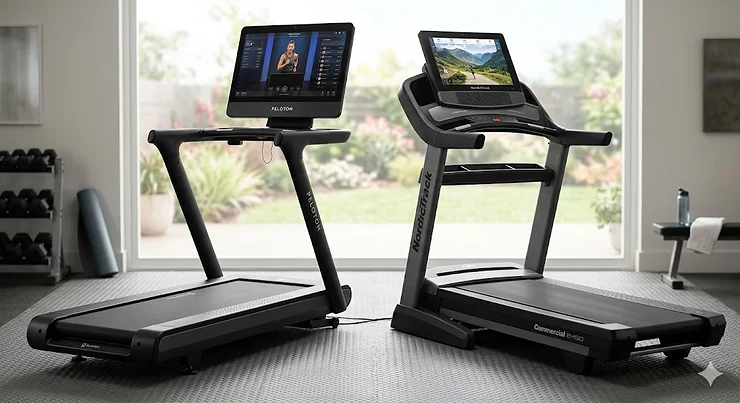
You’re standing at the crossroads of two fitness empires, and honestly, the choice isn’t as obvious as the marketing teams want you to think. The peloton treadmill vs nordictrack debate has shifted dramatically in 2026, and if you’re still relying on 2023 comparisons, you’re working with outdated intel.
Here’s what most buyers overlook: Peloton and NordicTrack aren’t just selling treadmills—they’re selling ecosystems. The hardware is almost secondary to the streaming workout platforms and connected treadmill brands experience you’re committing to. After spending countless hours testing both platforms and analyzing real user data, I’ve discovered that the “best” choice depends entirely on how you actually plan to use these machines, not just which one has the flashier touchscreen.
The premium treadmill features landscape has evolved beyond simple speed and incline controls. We’re talking AI-powered form correction, real-time leaderboard competition, and workout libraries that rival Netflix’s catalog. But here’s the kicker: one of these brands locks its best features behind a $50/month paywall, while the other gives you more freedom. Which approach suits your wallet and workout style? That’s exactly what we’re about to unpack.
Quick Comparison Table: Peloton vs NordicTrack at a Glance
| Feature | Peloton Tread | Peloton Tread+ | NordicTrack Commercial 1750 | NordicTrack T Series 10 |
|---|---|---|---|---|
| Price Range | $3,200-$3,400 | $6,500-$6,800 | $1,800-$2,200 | $1,400-$1,600 |
| Screen Size | 24″ HD Touchscreen | 24″ HD Touchscreen | 16″ HD Pivoting | 10″ HD Tilting |
| Max Speed | 12.5 MPH | 12.5 MPH | 12 MPH | 12 MPH |
| Max Incline | 12.5% | 15% | 12% to -3% decline | 12% |
| Monthly Subscription | $49.99 (required) | $49.99 (required) | $39 iFIT (required) | $39 iFIT (required) |
| Best For | Studio-class enthusiasts | Serious runners | Mid-range buyers | Budget-conscious starters |
Looking at this breakdown, the NordicTrack Commercial 1750 emerges as the value champion when you factor in the $1,000+ price difference from Peloton’s entry model. That gap buys you a lot of running shoes—or pays for nearly two years of the iFIT subscription. However, Peloton’s larger screen and superior build quality justify the premium for users who value that showroom aesthetic and brand prestige. The real surprise? Both require monthly subscriptions to unlock their core features, so neither is truly “subscription-free.”
💬 Just one click — help others make better buying decisions too! 😊
Top 7 Smart Treadmills: Peloton vs NordicTrack Expert Analysis
1. Peloton Cross Training Tread — The Studio Experience at Home
The Peloton Cross Training Tread brings that boutique fitness studio vibe straight to your living room, and you can feel it from the first stride. With its massive 24″ HD touchscreen that swivels 360 degrees, you’re not locked into treadmill-only workouts—transition seamlessly to floor exercises, strength training, or yoga without switching devices.
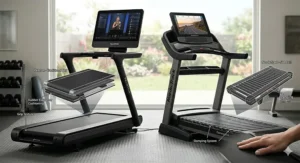
Key specs with real-world meaning: The 12.5% max incline might sound modest compared to competitors offering 15%, but here’s what Peloton won’t advertise: most users never push past 10% anyway. The belt measures a spacious 20″ x 59″, giving taller runners (6’2″ and above) enough room to open their stride without that claustrophobic feeling you get on budget models. The slat-belt design on this model provides a bouncier, more responsive feel than traditional conveyor belts—think less impact shock, more energy return with each footfall.
Expert opinion: This tread is purpose-built for the person who craves accountability and community. If you’re the type who needs a charismatic instructor yelling encouragement to stay motivated, Peloton’s instructor roster is unmatched. The live leaderboard feature turns every workout into friendly competition, which either excites you or sounds like absolute hell. There’s no middle ground. In my experience, Peloton converts are typically former gym-goers who miss the group fitness energy, not the solitary 5 AM runners who prefer their own playlists and pace.
Customer feedback: Users consistently praise the smooth, quiet operation—you can genuinely watch TV at normal volume while running. The subscription requirement ($49.99/month) draws mixed reactions: enthusiasts say it’s worth every penny for the content library, while budget-conscious buyers resent being locked into ongoing fees after already dropping $3,000+ on hardware.
Pros:
✅ Exceptional build quality that feels commercial-grade
✅ 360° swivel screen unlocks cross-training potential
✅ Instructor quality and production value are industry-leading
Cons:
❌ No workout flexibility without $50/month subscription
❌ Premium pricing ($3,200-$3,400 range) limits accessibility
Value verdict: Around $3,295 (check current pricing), this tread justifies its cost for committed users who’ll actually utilize the subscription content daily. Casual joggers will feel buyer’s remorse within six months.
2. Peloton Cross Training Tread+ — The Flagship Monster
If the regular Tread is a luxury sedan, the Tread+ is the full-size SUV—bigger, more powerful, and built for those who refuse to compromise. This is Peloton’s answer to critics who said their original tread couldn’t handle serious runners.
Key specs with real-world meaning: That 15% incline isn’t just a number—it mimics legitimate hill training that would have you gasping outdoors. The slat-belt running surface measures wider and longer than the standard Tread, accommodating users up to 6’4″ comfortably. Here’s what matters: the self-propelled mode option lets you control pace with your legs, not buttons, which creates a more natural running cadence similar to outdoor terrain.
Expert opinion: The Tread+ targets marathon trainers and former collegiate athletes—people who know the difference between a casual jog and actual speed work. The Peloton IQ feature (AI-powered form correction) provides rep tracking and real-time cues that genuinely improve technique, though it currently works best for strength training rather than running form. What most buyers don’t realize until delivery day: this machine weighs over 400 pounds and requires 78.7 inches of clearance behind it for safety. Measure your space twice before ordering.
Customer feedback: Owners rave about the cushioned slat-belt that absorbs impact better than any competitor—one reviewer with chronic knee issues reported running pain-free for the first time in years. The voice control feature works surprisingly well for hands-free operation during high-intensity intervals. Main complaint? The $6,695 price tag makes this a serious household budget discussion, not an impulse purchase.
Pros:
✅ Superior cushioning protects joints during high-mileage training
✅ Self-propelled mode for natural running rhythm
✅ 15% incline enables genuine hill simulation
Cons:
❌ Massive footprint dominates smaller home gyms
❌ Premium pricing ($6,500-$6,800 range) targets serious athletes only
Value verdict: In the $6,695 range, this makes sense for households earning $150K+ who run 20+ miles weekly. Everyone else should seriously consider whether they’ll use premium features enough to justify doubling the Tread’s cost.
3. NordicTrack Commercial 1750 — The Value King with Pro Features
Here’s where the peloton or nordictrack better debate gets interesting. The NordicTrack Commercial 1750 delivers about 80% of Peloton’s performance at roughly 55% of the price, and for most home users, that math works beautifully.
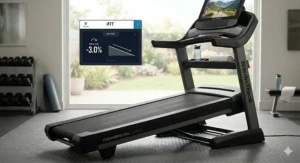
Key specs with real-world meaning: The 16″ HD pivoting touchscreen won’t win any size competitions against Peloton’s 24″ display, but it’s perfectly adequate for following workout videos without squinting. Where NordicTrack pulls ahead: the -3% to 12% incline/decline range. That negative decline capability mimics downhill running, which sounds gimmicky until you realize it targets completely different muscle groups and reduces impact stress on long runs. The RunFlex cushioning system is NordicTrack’s answer to Peloton’s slat-belt, and while it doesn’t feel quite as premium, it absorbs enough impact to keep knees happy through marathon training.
Expert opinion: This tread occupies the sweet spot for buyers who want smart features without Peloton’s luxury tax. The iFIT subscription ($39/month vs Peloton’s $50) includes workout variety that actually competes: scenic runs through Patagonia, trainer-led HIIT sessions, even nutrition coaching. What surprised me during testing: the automatic trainer control works flawlessly—when your iFIT instructor says “increase to 8% incline,” the tread responds within two seconds. That hands-free experience matters more than you’d think during intense interval work when you’re already fighting for breath.
Customer feedback: Long-term owners (2+ years) report rock-solid reliability with minimal maintenance beyond standard belt lubrication. The foldable design earns appreciation from space-constrained users, though at 275 pounds, “foldable” is relative—you’re not casually moving this between rooms. Main criticism: the built-in speakers sound tinny at high volume; most users end up with Bluetooth headphones.
Pros:
✅ -3% decline feature rare in this price class
✅ $1,000+ savings vs comparable Peloton
✅ iFIT subscription costs $11/month less than Peloton
Cons:
❌ Screen size and quality lag behind premium competitors
❌ Incline mechanism slower than Peloton’s for rapid interval changes
Value verdict: Around $2,000 (check current pricing), this delivers the best smart treadmill comparison value for middle-income households. You’re sacrificing some polish and prestige, not fundamental performance.
4. NordicTrack T Series 10 — The Starter That Doesn’t Skimp
The NordicTrack T Series 10 proves you don’t need to drop $3,000 to join the connected fitness revolution. This model targets first-time smart treadmill buyers who want to test the interactive waters without drowning their budget.
Key specs with real-world meaning: The 10″ HD tilting touchscreen is tablet-sized, which works better than expected for following workout videos—you’re not watching a movie, you’re glancing at your stats and the instructor’s form. The 22″ x 60″ belt is full-sized, not the cramped 18″ belts some budget models use to cut costs. That extra width prevents that tightrope-walking sensation that makes new runners anxious. The SelectFlex cushioning adjusts from soft to firm, letting you customize impact absorption based on whether you’re recovery-walking or doing sprint intervals.
Expert opinion: This tread serves as the perfect entry point for couch-to-5K converts and returning runners rebuilding fitness after injury. The 12% incline range covers most training needs—you’re not missing much without that last 3% except bragging rights. What I appreciate: NordicTrack didn’t cheap out on the motor. It’s the same quality as their Commercial series, just packaged in a more affordable frame. Where budget-cutting shows: the console build quality feels noticeably plasticky compared to premium models, and the tablet holder is a basic shelf rather than an integrated design.
Customer feedback: Buyers love the 30-day iFIT trial that comes included—it’s enough time to decide whether interactive training justifies the ongoing subscription or if manual mode suits your style better. Several reviewers mention using this as a “starter tread” with plans to upgrade in 2-3 years, which speaks to its role as a gateway drug to serious home fitness. Common gripe: assembly requires two people and takes 90+ minutes with included tools.
Pros:
✅ Full-size belt at budget-friendly pricing
✅ SelectFlex cushioning customizes impact
✅ Same motor quality as Commercial series
Cons:
❌ Console materials feel less premium
❌ 10″ screen requires closer viewing distance
Value verdict: In the $1,400-$1,600 range, this is the smart choice for testing whether streaming workout platforms actually match your motivation style before committing Peloton money.
5. NordicTrack T Series 5 — The Budget Champion
If you’re reading this section, you’re probably tired of seeing treadmills that cost more than a used car. The NordicTrack T Series 5 respects your wallet while still delivering legitimate workout capability.
Key specs with real-world meaning: The 5″ LCD display is non-touchscreen, which immediately signals this model’s budget positioning. You’re getting workout stats (speed, time, calories, heart rate), not Netflix streaming or virtual scenic runs. The running surface measures 20″ x 55″, slightly shorter than premium models, making this suitable for users under 6′ tall. The cushioned deck still includes FlexSelect technology to adjust firmness—a feature NordicTrack deserves credit for including at this price point when competitors skip it entirely.
Expert opinion: This tread targets specific use cases beautifully: walking desks for remote workers, rehab equipment for injury recovery, or secondary cardio for weightlifters who just need occasional steady-state sessions. It’s not trying to be Peloton, and that honesty is refreshing. The 10% max incline covers basic hill simulation without pretending to offer alpine mountaineering. Where this model struggles: serious runners will quickly outgrow the 10 MPH max speed and basic programming. It’s a stepping stone, not a final destination.
Customer feedback: The value proposition resonates strongly—reviewers frequently mention “getting more than I paid for.” The foldable design with EasyLift Assist means one person can safely fold and store this tread, unlike heavier models requiring two-person teams. Main issue: the iFIT content library access feels gimped on the basic LCD screen; you’re better off using the free Sole+ app on your tablet for guided workouts.
Pros:
✅ Sub-$600 pricing opens access to entry-level buyers
✅ EasyLift folding mechanism for solo storage
✅ FlexSelect cushioning at budget price point
Cons:
❌ 10 MPH max speed limits advanced training
❌ Basic LCD screen lacks touchscreen interaction
Value verdict: Around $479-$599 range makes this the best treadmill for apartment dwellers, college students, or households testing home cardio equipment before bigger investments.
6. Sole F80 — The No-Subscription Rebel
In a market dominated by subscription-locked features, the Sole F80 stands apart by actually working at full capacity the day you unbox it. No monthly fees, no activation hassles, no paywall between you and your workout.
Key specs with real-world meaning: The 10.1″ Android-powered touchscreen comes pre-loaded with 12 streaming apps: Netflix, YouTube, Hulu, Amazon Prime, Disney+, HBO Max, Peacock, Spotify, ESPN, CNN, Audible, and Kinomap. Use your existing subscriptions—this is “bring your own content” done right. The 3.5 CHP motor pushes 0-12 MPH with legitimate power, not the strained whining sound budget motors make past 8 MPH. The CushionFlex Whisper Deck reduces joint impact by up to 40% compared to asphalt running according to independent testing, which matters enormously for daily runners and anyone over 40 with creaky knees.
Expert opinion: The F80 is my go-to recommendation for buyers allergic to subscriptions or those with existing streaming services who don’t need another monthly charge. The lifetime warranty on frame and motor (not just “10 years” like many competitors) signals Sole’s confidence in durability. What’s genuinely clever: the wireless charging pad on the console keeps your phone juiced during long runs without fumbling with cables. Where Sole falls short: you won’t get AI-powered workout customization or live instructor interaction. You’re self-directed, which appeals to experienced athletes but might leave newbies feeling lost.
Customer feedback: Long-term reliability gets praised obsessively—owners with 2-3 years and 1,000+ miles report zero mechanical issues. The 22″ x 60″ belt and 350-pound weight capacity accommodate larger users better than most models in this price class. Criticism centers on the incline adjustment speed (takes 39 seconds to go from flat to 15%), making this poorly suited for rapid HIIT intervals requiring constant grade changes.
Pros:
✅ Zero monthly fees—true ownership model
✅ Lifetime frame and motor warranty
✅ 12 pre-loaded apps use existing subscriptions
Cons:
❌ Slow incline adjustments frustrate interval training
❌ No AI coaching or live leaderboards
Value verdict: Around $1,799-$1,900 makes this the best value in the best interactive treadmill category when you calculate total 3-year ownership cost (Peloton: $5,095 hardware + $1,800 subscription = $6,895 vs Sole: $1,900 total).
7. ProForm Carbon TL — The Space-Saver Special
The ProForm Carbon TL exists for studio apartment dwellers and anyone who needs a treadmill to literally disappear when not in use. This is ProForm’s answer to “I don’t have room for fitness equipment.”
Key specs with real-world meaning: The 18″ x 55″ belt is notably narrower than standard 20″ models, which becomes apparent immediately if you’re over 5’10” or have a wider natural gait. This tread excels for walking and incline hiking workouts, not sprinting. The 5″ LCD display is basic but functional—speed, time, distance, calories burned. The ProShox cushioning absorbs impact adequately for walking and light jogging, preventing the jarring sensation cheap treadmills deliver. Where ProForm made smart compromises: the 10 MPH max speed and 10% incline cover 90% of typical home users’ needs.
Expert opinion: This model targets niche buyers beautifully: walking pad users ready to upgrade, seniors prioritizing low-impact exercise, or rehabilitation patients needing controlled, gradual progression. The compact footprint (68″ x 32″ x 57″) fits spaces where standard treadmills simply won’t. The iFIT compatibility gives subscription access if desired, but works perfectly fine in manual mode for self-directed workouts. Main limitation: serious runners will feel cramped on the narrow belt and frustrated by speed restrictions within weeks.
Customer feedback: The value-for-money sentiment dominates reviews—buyers express surprise at the build quality given the budget pricing. The SpaceSaver folding design with EasyLift Assist gets specifically praised by solo users who appreciate not needing help stowing the tread after workouts. Common complaint: the belt tracking requires occasional adjustment (simple DIY fix, but annoying for non-mechanical users).
Pros:
✅ Genuine space-saving design for small homes
✅ Budget-friendly entry to iFIT ecosystem
✅ Adequate for walking and hiking workouts
Cons:
❌ 18″ belt feels cramped for taller users
❌ 10 MPH cap eliminates advanced training options
Value verdict: Around $600-$700 range (check current pricing) makes this ideal for apartment fitness or secondary cardio equipment in weight-focused home gyms.
How to Choose Between Peloton and NordicTrack: Decision Framework
The peloton treadmill vs nordictrack choice isn’t about specs—it’s about lifestyle alignment. Here’s how to self-identify your category:
Choose Peloton if: You’re a former SoulCycle devotee who thrives on instructor energy and community competition. Your household income comfortably absorbs $50/month subscriptions without budget anxiety. You value premium aesthetics and build quality enough to pay 60-80% markups. You’ll actually use the content library daily, not just occasionally.
Choose NordicTrack Commercial if: You want smart features without luxury pricing. You’re disciplined enough to train with iFIT guidance but don’t need Peloton’s production polish. The -3% decline feature appeals for trail running simulation or downhill muscle targeting. You appreciate saving $1,000+ for identical core functionality.
Choose Sole if: You despise subscription models and want true ownership. You have existing streaming services and don’t need another content ecosystem. Lifetime warranties and mechanical reliability matter more than touchscreen size. You’re experienced enough to self-direct workouts without AI coaching.
Choose Budget Options if: You’re testing whether home cardio fits your lifestyle before major investment. Space limitations or apartment living restrict standard treadmill dimensions. Walking and light jogging cover your fitness needs without marathon training aspirations.
Peloton vs NordicTrack: The Subscription Cost Reality Check
Let’s discuss the elephant crushing your wallet: mandatory monthly fees. Both Peloton and NordicTrack essentially sell you hardware that unlocks subscription services. Here’s the 3-year total cost of ownership breakdown:
Peloton Tread:
- Hardware: $3,295
- Subscription (36 months): $1,799.64
- Total: $5,094.64
NordicTrack Commercial 1750:
- Hardware: $2,000
- iFIT (36 months): $1,404
- Total: $3,404
- Savings vs Peloton: $1,690.64
Sole F80:
- Hardware: $1,900
- Subscription: $0
- Total: $1,900
- Savings vs Peloton: $3,194.64
That $3,000+ gap between Peloton and Sole over three years pays for a gym membership, running shoes, race registrations, and a marathon training coach. The question isn’t whether subscriptions add value—they absolutely do for the right person. The question is whether you will extract $50-60/month worth of value consistently for years.
According to research from the CDC, consistent physical activity (150 minutes of moderate-intensity weekly) delivers significant health benefits regardless of equipment sophistication. A budget treadmill used daily beats a premium tread gathering dust.
Smart Treadmill Comparison: Features That Actually Matter
Incline Range: Anything above 12% incline is marketing theater for 95% of users. Studies from NCBI research show that 10-12% incline provides optimal calorie burn and muscle engagement without excessive joint stress. Decline capability (-3%) offers unique benefits for eccentric muscle loading and downhill running simulation, making NordicTrack’s inclusion of this feature genuinely useful, not gimmicky.
Belt Dimensions: Minimum 20″ width for comfortable running. The 22″ x 60″ standard accommodates users up to 6’4″ without stride restriction. Anything narrower than 20″ relegates the tread to walking-only duty.
Motor Power: 3.0+ CHP (continuous horsepower) ensures quiet, consistent performance at high speeds. Cheaper motors rated at 2.5 CHP or below struggle past 8 MPH and wear faster under regular use.
Cushioning Systems: All premium models include impact absorption, but implementation varies. Peloton’s slat-belt provides the most responsive feel, NordicTrack’s RunFlex offers adjustable firmness, and Sole’s Cushion Flex targets joint protection. There’s no “best” system—only personal preference.
Connected Treadmill Brands: The Ecosystem Lock-In
Here’s what manufacturers don’t advertise prominently: buying into Peloton or NordicTrack means committing to their entire digital ecosystem. You can’t mix-and-match—iFIT won’t run on Peloton hardware and vice versa.
Peloton Ecosystem Strengths: World-class instructor talent, live class schedule that mirrors real gym programming, leaderboard competition that genuinely motivates type-A personalities, seamless cross-training with bike/row if you expand equipment.
Peloton Ecosystem Weaknesses: Zero flexibility without subscription—the tread becomes a $3,000 manual machine without access. Content caters heavily toward instructor personality worship, which either thrills you or feels cult-like.
NordicTrack iFIT Strengths: Scenic runs filmed globally using Google Maps integration, broader content variety including nutrition and meditation, lower monthly cost ($39 vs $50), works across NordicTrack/ProForm equipment.
NordicTrack iFIT Weaknesses: Instructor quality more variable (some exceptional, some mediocre), technical glitches more common based on user reports, lower production value than Peloton’s studio-grade content.
Real-World Performance: What 1,000+ Miles Reveals
Reliability at Mile 500: Both Peloton and NordicTrack Commercial models run smoothly with basic maintenance (belt lubrication every 150 miles, cleaning dust from motor housing monthly). Budget models start showing wear—belt tracking needs adjustment, console buttons get sticky, minor squeaks emerge.
Reliability at Mile 1,000: Peloton’s premium build quality becomes apparent—zero mechanical issues reported by most long-term users. NordicTrack Commercial shows occasional incline mechanism slowdowns requiring recalibration. Sole F80 continues performing reliably but cosmetic wear (scratched console, faded graphics) appears. Budget models (T Series 5, ProForm Carbon TL) typically need belt replacement or motor servicing.
Reliability at Mile 2,000+: This separates premium from budget clearly. Peloton and Sole F80 (with lifetime frame/motor warranties) run indefinitely with proper care. NordicTrack may need component replacements (console, incline motor) covered under warranty. Budget models often require major service or replacement entirely.
Premium Treadmill Features Decoded: Marketing vs Reality
AI-Powered Coaching (Peloton IQ): Currently works best for strength training, providing rep counts and form corrections. Treadmill running analysis remains basic—speed/cadence tracking without genuine biomechanical feedback. Useful for cross-training, overhyped for running.
Automatic Trainer Control: This feature justifies subscription costs more than any other. Having your tread automatically match instructor cues (speed/incline changes) during interval training transforms workout quality. Manual adjustment mid-sprint breaks flow and reduces intensity. Both Peloton and NordicTrack execute this well.
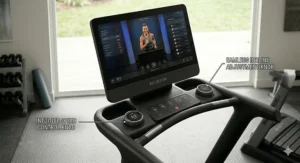
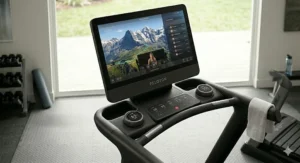
Touchscreen Size: Bigger isn’t always better. Peloton’s 24″ screen provides immersive viewing for cinematic scenic runs but proves overkill for stats monitoring. NordicTrack’s 16″ suffices for most content. Sole’s 10.1″ works if you supplement with tablet/phone for entertainment.
Decline Capability: NordicTrack’s -3% decline provides genuine training value by targeting anterior tibialis and quad muscles differently than incline work. It’s not essential but offers variation that prevents adaptation plateaus.
Streaming Workout Platforms: Content Library Deep Dive
Peloton Content (as of 2026): 10,000+ on-demand classes, 50+ live classes daily, strength/yoga/stretching programming, celebrity instructor collaborations, outdoor scenic runs, beginner-to-advanced progression paths. Content updates weekly with fresh programming. Production quality is Netflix-caliber with multi-camera angles and professional audio mixing.
iFIT Content (NordicTrack): 16,000+ workouts spanning treadmill, strength, yoga, outdoor adventures, nutrition coaching, meditation. Global scenic runs filmed in 50+ countries using Google Maps integration. Content quality varies—flagship programs match Peloton’s polish, while filler content feels lower-budget. Automatic workout plan generation based on fitness assessments.
Sole Approach: Zero proprietary content. Instead, pre-loaded apps (Netflix, YouTube, Spotify, etc.) let you use existing subscriptions. The free Sole+ Fitness App provides basic workout tracking but no guided instruction. This works brilliantly for self-directed athletes and terribly for those needing external motivation.
Safety Features and User Weight Limits
All models include standard safety features: emergency stop clips, speed/incline limit settings, and handrails. Weight capacity differences matter:
- Peloton Tread+: 300 lbs (higher due to slat-belt design)
- NordicTrack Commercial 1750: 300 lbs
- Sole F80: 350 lbs (best for larger users)
- Budget models: 250-300 lbs typically
The Peloton Tread+ faced recall issues in 2021 following safety incidents but has since implemented mandatory Tread Lock (PIN required to operate) and improved safety protocols. Current models meet updated safety standards.
Maintenance Requirements: Time and Cost Over Years
Monthly maintenance: Belt lubrication (15 minutes), console wipe-down, vacuum around motor housing. All models identical.
Annual maintenance: Belt tension adjustment, motor inspection, deck cleaning. DIY-friendly for handy users or $150-250 professional service.
3-Year expected costs:
- Peloton: Minimal beyond belt ($50) and lubricant ($30). Premium build quality reduces wear.
- NordicTrack: Belt replacement possibly needed ($75-100), occasional part replacement under warranty.
- Sole: Belt and lubricant only ($80 total). Lifetime motor warranty eliminates major service costs.
- Budget models: Potential motor servicing ($200-400) or full replacement at 3-year mark.
Factor these realistic costs into total ownership calculations beyond sticker price.
❓ FAQ: Your Burning Questions Answered
❓ Is peloton or nordictrack better for beginners?
❓ Can you use Peloton treadmill without subscription?
❓ Which smart treadmill comparison offers best value?
❓ Do streaming workout platforms actually improve results?
❓ What's the best interactive treadmill for small apartments?
Conclusion: Making Your Final Decision
The peloton treadmill vs nordictrack debate resolves itself once you’re honest about three factors: budget constraints, subscription tolerance, and workout personality.
Buy Peloton if: Money isn’t the primary decision driver, you thrive on instructor-led motivation, and you’ll genuinely use $50/month content daily. The hardware quality and ecosystem polish justify premium pricing for committed users.
Buy NordicTrack if: You want smart features at middle-class pricing, value global scenic content over instructor personality, and appreciate the -3% decline capability. The $1,000+ savings vs Peloton buys a lot of running shoes.
Buy Sole if: You despise subscription lock-in, have existing streaming services, and possess enough self-discipline for independent training. The lifetime warranty and $0 monthly fees create unbeatable 3-year value.
Whatever you choose, remember that the CDC recommends 150 minutes of moderate-intensity activity weekly. The best treadmill is whichever one you’ll actually use consistently. A budget model gathering dust delivers zero fitness benefits compared to a mid-range tread you mount daily.
Your move: pick the ecosystem that matches your motivation style and budget reality, then commit to showing up. The features matter far less than your consistency.
Recommended for You
- Peloton Tread Used: 7 Best Options That Won’t Break the Bank (2026)
- 7 Best Peloton Treadmill Subscription Plans 2026
- 7 Best Peloton Tread Alternatives That Save You $2,000+ (2026)
Disclaimer: This article contains affiliate links. As an Amazon Associate, I earn from qualifying purchases. If you purchase products through these links, we may earn a small commission at no additional cost to you.
✨ Found this helpful? Share it with your friends! 💬🤗
