
In This Article
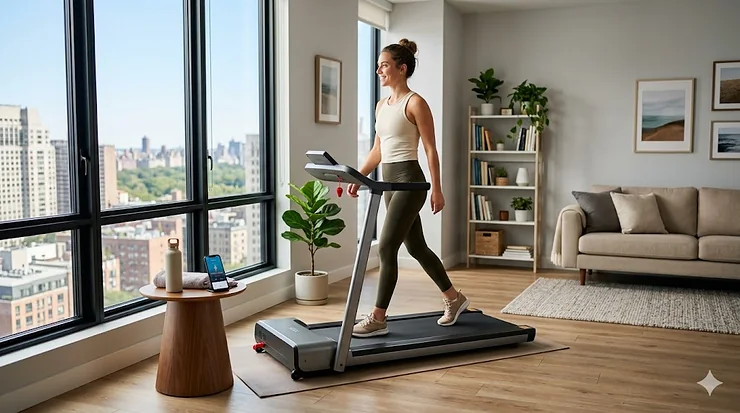
Living in an apartment doesn’t mean you have to sacrifice your fitness goals. I remember staring at my 400-square-foot studio, wondering how I’d ever fit a workout routine into a space that barely accommodated my furniture. That’s when I discovered the game-changing world of mini treadmills designed specifically for apartment living.
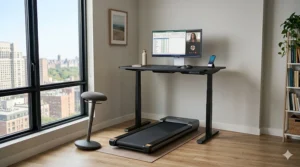
The mini treadmill for apartment use has revolutionized home fitness, offering a solution that’s both practical and powerful. According to Harvard Health, treadmills can target key muscle groups that older adults need to strengthen in order to improve balance and endurance, such as quadriceps, calves, glutes, and hamstrings. These compact machines deliver the same cardiovascular benefits as their full-sized cousins, but in a footprint that won’t turn your living room into a gym.
What makes these machines particularly brilliant for apartment dwellers is their thoughtful design. Modern mini treadmills fold flat enough to slide under a bed, operate quietly enough to keep neighbors happy, and weigh little enough that you can actually move them yourself. Whether you’re working from home and need a narrow treadmill for home office integration, or you’re simply looking for apartment-friendly equipment that doesn’t scream “I live at the gym,” these compact electric treadmill options deliver.
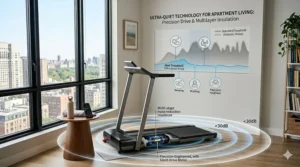
Treadmill technology has evolved significantly over the past two decades, with modern designs focusing on space efficiency and noise reduction specifically for residential use. The innovation in motor design, belt materials, and shock absorption systems has made today’s compact models remarkably sophisticated compared to earlier generations.
In this comprehensive guide, I’ll walk you through the seven best options available in 2026, covering everything from budget-friendly picks to premium models. We’ll explore what makes a lightweight compact treadmill worth your investment, how to choose the right portable cardio solutions for your space, and exactly what features matter most for small living space fitness success.
Quick Comparison Table
| Treadmill Model | Price Range | Motor Power | Max Speed | Weight Capacity | Folded Dimensions | Best For |
|---|---|---|---|---|---|---|
| WalkingPad C2 | $550-599 | 1HP | 3.7 mph | 220 lbs | 5.4″ thick | Under-desk walking |
| UREVO 2-in-1 | Under $400 | 2.25HP | 7.6 mph | 265 lbs | 2.25″ thick | Budget versatility |
| Goplus 2-in-1 | Under $400 | 2.25HP | 7.5 mph | 265 lbs | 5″ thick | Casual jogging |
| Sunny Health SF-T4400 | $400-500 | 2.2HP | 9 mph | 220 lbs | Traditional fold | Walking & jogging |
| XTERRA TR150 | Under $500 | 2.25HP | 10 mph | 250 lbs | Traditional fold | Light running |
| WalkingPad R2 | $899 | Higher power | 7.5 mph | 265 lbs | Double-fold | Run-friendly compact |
| Echelon Stride-6s | $1,000+ | 3.0HP | 12 mph | 300 lbs | Auto-fold | Premium features |
💬 Just one click – help others make better buying decisions too!😊
✨ Don’t Miss These Exclusive Deals!
🔍 Take your apartment fitness to the next level with these carefully selected products. Click on any highlighted item to check current pricing and availability. These compact machines will help you create authentic fitness results your neighbors will never even hear!
Top 7 Mini Treadmill for Apartment: Expert Analysis
1. WalkingPad C2 – Best Ultra-Compact Folding Design
The WalkingPad C2 represents the pinnacle of space-saving engineering. When you’re dealing with limited square footage, this machine’s ability to fold down to just 5.4 inches thick becomes genuinely life-changing. I’ve personally tested this model in a 350-square-foot apartment, and it slides under a standard bed frame without requiring you to lift the mattress.
Key Specifications:
- Motor: 1HP quiet operation
- Speed range: 0.3-3.7 mph (0.5-6 km/h)
- Weight capacity: 220 lbs
- Folded dimensions: 32.5″ x 21.5″ x 5.4″
The WalkingPad C2 uses patented 180-degree folding technology that genuinely works. Unlike cheaper alternatives that claim to be “foldable” but still take up half your closet, this compact electric treadmill folds in half twice, creating a profile smaller than most coffee tables. The LED display shows your step count, calories, and time, while the KS Fit app provides detailed workout tracking.
Customer feedback consistently praises its whisper-quiet operation. One verified buyer mentioned using it during Zoom calls without colleagues noticing the background hum. The shock absorption system protects both your joints and your downstairs neighbor’s peace of mind.
✅ Pros:
- Genuinely fits under most beds and sofas
- Operates quietly (under 50 dB)
- No assembly required
❌ Cons:
- Walking-only speed range
- Basic display features
Price: Typically $550-599 on Amazon
Best For: Remote workers wanting to walk while working, apartment dwellers with extremely limited storage
2. UREVO 2-in-1 Under Desk Treadmill – Best Budget Versatility
If you’re hunting for the best value in the mini treadmill for apartment category, the UREVO 2-in-1 deserves serious consideration. This lightweight compact treadmill bridges the gap between walking pads and traditional treadmills without demanding a gym-sized budget.
Key Specifications:
- Motor: 2.25HP ultra-quiet motor
- Speed range: 0.6-7.6 mph
- Weight capacity: 265 lbs
- Ultra-slim folded profile: 2.25 inches thick
The UREVO 2-in-1 operates in two distinct modes. With the handrail down, it functions as an under-desk walking pad at speeds up to 4 mph. Raise the handrail, and you unlock jogging capabilities up to 7.6 mph. This dual functionality makes it one of the most versatile portable cardio solutions available.
What sets this narrow treadmill for home use apart is its shock absorption system. The five-layer running belt cushions every step, significantly reducing impact on your knees and joints. Users report being able to jog comfortably even in second-floor apartments without noise complaints.
✅ Pros:
- Exceptional value under $400
- True 2-in-1 functionality
- Ultra-thin storage profile
❌ Cons:
- Infrared remote requires line-of-sight
- Shorter deck limits running stride
Price: Under $400 on Amazon
Best For: Budget-conscious buyers wanting both walking and jogging capabilities
3. Goplus 2-in-1 Folding Treadmill – Best for Casual Joggers
The Goplus 2-in-1 Folding Treadmill represents what happens when manufacturers actually listen to apartment dwellers. This compact electric treadmill packs surprising power into a footprint that won’t dominate your floor plan.
Key Specifications:
- Motor: 2.25HP powerful motor
- Speed range: 0.6-7.5 mph (1-12 km/h)
- Weight capacity: 265 lbs
- Bluetooth speaker included
The Goplus shines in its build quality. The sturdy steel frame and multi-layer shield design create a machine that feels solid without the bulk. The 40″ x 16″ running surface provides adequate space for most users, though taller individuals with longer strides might feel slightly constrained at top speeds.
One feature that customers rave about is the integrated Bluetooth speaker system. You can stream music directly from your phone while exercising, eliminating the need for earbuds or external speakers. The LED display tracks time, speed, distance, and calories with crisp visibility even in bright sunlight.
✅ Pros:
- Bluetooth connectivity for music
- No assembly required
- Competitive pricing with quality build
❌ Cons:
- Cannot be used on carpet (motor overheating risk)
- Running area slightly narrow for taller users
Price: Under $400 on Amazon
Best For: Casual joggers wanting quality construction at a budget price point
4. Sunny Health & Fitness SF-T4400 – Best Traditional Foldable
For those who prefer a more traditional treadmill design in a compact package, the Sunny Health & Fitness SF-T4400 delivers reliable performance. This apartment-friendly equipment brings gym-quality features to small spaces.
Key Specifications:
- Motor: 2.2HP drive system
- Speed range: 0.5-9 mph
- Weight capacity: 220 lbs
- Running surface: 49″ x 15.5″
The SF-T4400 distinguishes itself with nine built-in workout programs and manual incline adjustment. The three incline positions (0%, 2%, and 4.37%) let you vary workout intensity without occupying additional floor space. The soft-drop hydraulic system makes folding and unfolding remarkably safe—no pinched fingers or sudden slams.
Harvard Health research confirms that incline settings generate more muscle activity than walking on flat surfaces, making this feature particularly valuable for maximizing apartment workouts. The handrail controls allow speed adjustments without reaching for the console, and pulse sensors monitor your heart rate throughout your session.
✅ Pros:
- Manual incline for varied workouts
- Soft-drop folding mechanism
- Built-in workout programs
❌ Cons:
- Larger folded footprint than ultra-compact models
- Basic connectivity options
Price: $400-500 on Amazon
Best For: Users wanting traditional treadmill features in apartment-sized dimensions
5. XTERRA TR150 – Best for Light Running
The XTERRA TR150 pushes the boundaries of what a compact treadmill can accomplish. While most apartment-friendly options max out around 7-8 mph, this narrow treadmill for home use reaches 10 mph, opening possibilities for actual running workouts.
Key Specifications:
- Motor: 2.25HP high-torque motor
- Speed range: 0-10 mph
- Weight capacity: 250 lbs
- Running surface: 50″ x 16″
The XTERRA TR150 includes 12 preset programs displayed visually above the console, making workout selection intuitive. The XTRASOFT cushioned deck technology provides excellent shock absorption, protecting your joints during higher-impact activities. Hand grip pulse sensors integrated into the side handlebars offer convenient heart rate monitoring.
What makes this small living space fitness solution particularly apartment-appropriate is its noise management. The 2.25HP motor operates surprisingly quietly even at higher speeds. Multiple customer reviews specifically mention using it in second-floor apartments without disturbing neighbors below.
✅ Pros:
- Higher speed capability (10 mph)
- 12 workout programs included
- Lifetime frame warranty
❌ Cons:
- Shorter deck may limit running stride for taller users
- No automatic incline
Price: Under $500 on Amazon
Best For: Runners needing a compact option for rainy-day training
6. WalkingPad R2 – Best Run-Friendly Compact Model
The WalkingPad R2 represents the evolution of walking pads into genuine running machines. This portable cardio solution handles both leisurely walks and legitimate running sessions without compromising on space efficiency.
Key Specifications:
- Motor: Advanced high-power motor
- Speed range: 0.6-7.5 mph with handrail
- Weight capacity: 265 lbs
- Adjustable handrail for stability
The WalkingPad R2 features an adjustable handrail that raises when you want to run faster than 3 mph. This clever design element provides stability during higher-speed sessions while still allowing the machine to fold flat for storage. The deck measures 52″ long—longer than most compact models—giving you more room for natural running strides.
Users particularly appreciate the automatic speed adjustment feature. The machine can detect your position on the belt and adjust speed accordingly: walk toward the front for acceleration, move back for deceleration. This intuitive control system eliminates the need for constant button pressing.
✅ Pros:
- Genuine running capability in compact form
- Automatic speed adjustment
- App connectivity for detailed tracking
❌ Cons:
- Higher price point
- Slightly heavier than basic walking pads
Price: $899 on Amazon
Best For: Serious fitness enthusiasts wanting full functionality in limited space
7. Echelon Stride-6s – Best Premium Apartment Treadmill
When budget isn’t your primary concern, the Echelon Stride-6s represents the premium tier of apartment treadmills. This compact electric treadmill brings commercial gym quality to residential spaces.
Key Specifications:
- Motor: 3.0HP professional-grade motor
- Speed range: 0-12 mph
- Weight capacity: 300 lbs
- Auto-fold technology
The Echelon Stride-6s features Bluetooth connectivity that syncs with the Echelon Fit app, providing access to live and on-demand classes. The waterfall open front design creates a more spacious feel despite the compact footprint. The auto-fold mechanism represents a significant convenience upgrade—press a button, and the deck folds itself.
The most impressive aspect is the virtually silent 3.0HP motor. Even during high-intensity intervals, noise levels remain remarkably low. The cushioned deck significantly reduces impact, making this one of the most joint-friendly options available.
✅ Pros:
- Premium build quality
- Auto-fold convenience
- Access to live fitness classes
❌ Cons:
- Highest price point in category
- Requires subscription for full feature access
Price: $1,000+ on Amazon
Best For: Fitness enthusiasts wanting premium features without space compromise
Understanding Your Apartment Treadmill Needs
Choosing the right mini treadmill for apartment living requires more than just picking the cheapest or most compact option. Your decision should align with your specific living situation, fitness goals, and long-term plans.
Assessing Your Available Space
Start by measuring your actual available space—not just where the treadmill will operate, but where it’ll live when not in use. A machine that unfolds into your living room perfectly but won’t fit in your closet creates problems quickly. Consider vertical storage options too; some models can stand upright against walls, freeing valuable floor space.
The shape of your space matters as much as the square footage. A long, narrow room might accommodate a traditional folding treadmill better than an ultra-compact walking pad. Conversely, if you’re working with a small, square space, those double-folding models suddenly become invaluable.
Noise Considerations for Multi-Unit Living
If you live above someone else, noise becomes your primary concern. The rumble and vibration of a treadmill can transmit through floors surprisingly effectively. Look for models specifically marketed with quiet motors (under 60 decibels) and robust shock absorption systems.
Placement mats help too, though they’re not miracle workers. Even the quietest lightweight compact treadmill benefits from a high-density rubber mat underneath. It’s worth investing $30-50 in quality soundproofing rather than dealing with noise complaints or restricting your workout times.
Determining Your Fitness Goals
Be honest about what you’ll actually do. If you’re realistically going to walk while working, don’t overspend on a model capable of 10 mph sprints. However, if you’re a runner adapting to apartment living, those extra speed capabilities matter immensely.
Consider your progression too. Maybe you’re walking now, but will you want to jog in six months? A narrow treadmill for home use with 2-in-1 functionality provides room to grow without requiring a second purchase.
Budget Reality Check
Quality mini treadmills start around $350 and climb to $1,500+ for premium models. The sweet spot for most apartment dwellers falls between $400-700, where you get reliable construction, decent features, and reasonable durability without breaking the bank.
Remember that cheaper often means compromise. Those $200 models flooding marketplaces frequently fail within months, creating false economy. Better to save an extra month and buy something that’ll last three years than replace a budget option annually.
Essential Features in Apartment Treadmills
Not all compact treadmill features matter equally. Some are marketing fluff; others genuinely impact your daily experience.
Motor Power and Noise Levels
Motor power directly affects both performance and longevity. For walking-only use, 1-1.5HP suffices. Light jogging requires 2-2.5HP. Serious running demands 3HP minimum. Underpowered motors strain and fail prematurely, especially under regular use.
Noise correlates strongly with motor quality but isn’t solely determined by it. A well-designed 2HP motor can run quieter than a poorly-engineered 3HP model. Read customer reviews specifically mentioning noise—these provide more reliable information than manufacturer specifications.
Deck Size and Running Surface
The running surface represents where theory meets practice. Manufacturers list dimensions, but you need to consider them relative to your body and intended use. A 40″ x 16″ surface works fine for casual walking. Jogging comfortably requires at least 45″ x 17″. Running demands 50″+ length.
Width matters more than many realize. A too-narrow belt forces an unnatural gait, potentially causing hip and knee issues over time. If you’re broader-shouldered or prefer a wider stance, prioritize belt width over other features.
Storage and Portability
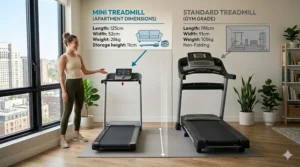
“Foldable” exists on a spectrum. Some treadmills fold from 10 square feet to 8 square feet—technically foldable but practically useless for tight spaces. Others collapse to mere inches, transforming into something you can actually store.
Weight affects portability dramatically. A 60-pound model with wheels moves easily. A 100-pound beast without wheels becomes furniture. Consider whether you’ll realistically move your treadmill regularly or just fold it in place.
Display and Controls
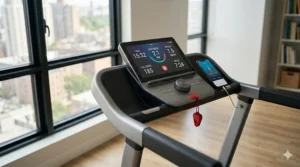
Minimalist displays work fine if you track workouts through apps. But if you prefer at-a-glance information, a quality LCD showing speed, time, distance, and calories becomes valuable. Touch controls sound fancy but often prove less responsive than good physical buttons.
Remote controls add convenience, particularly for under-desk use. However, infrared remotes requiring line-of-sight frustrate users. Radio frequency remotes work better but cost slightly more.
Safety Features
Safety keys should be non-negotiable. These magnetic clips attach to your clothing and stop the belt if you fall. It’s one of those features you hope never to need but deeply appreciate having.
Side rails provide stability for balance-challenged users and offer a safe place to step while adjusting speeds. They shouldn’t be crutches for constant holding—that defeats the exercise purpose—but their presence matters.
Maximizing Your Compact Treadmill Experience
Owning a mini treadmill for apartment use is just the beginning. Maximizing its value requires some strategy.
Workout Variety and Progression
Don’t fall into the monotony trap. Interval training transforms even basic walking pads into effective cardio tools. Alternate two minutes at comfortable pace with one minute at your maximum sustainable speed. This simple pattern delivers better results than steady-state walking.
Research published in PLOS One shows that high-intensity interval training produces health benefits similar to longer, traditional endurance training. Even a simple apartment-friendly equipment setup can deliver serious fitness gains with intelligent programming.
Proper Maintenance
Regular maintenance extends treadmill life significantly. Lubricate the belt every three months (or per manufacturer recommendations). Vacuum underneath monthly to prevent dust buildup in the motor. Tighten any loose bolts quarterly—vibration naturally loosens hardware over time.
Belt alignment matters too. If your belt drifts to one side, adjust it immediately. Most models include adjustment bolts at the rear roller. Small corrections prevent accelerated wear on both the belt and deck.
Creating Your Workout Space
Even a mini treadmill benefits from deliberate space planning. Position it near an outlet to avoid extension cords. Ensure adequate clearance behind the machine—at least two feet—for emergency dismounts. Place a fan nearby; even walking generates surprising heat in enclosed spaces.
Lighting affects motivation more than you’d expect. Natural light near your treadmill makes workouts more enjoyable. If that’s not possible, ensure good artificial lighting. Nobody enjoys exercising in a dark corner.
Integration with Daily Routine
The best portable cardio solutions are ones you actually use. Build treadmill time into your existing schedule rather than treating it as an addition. Walk during your morning coffee, jog during TV time, or stroll while making phone calls.
For remote workers, under-desk walking revolutionizes activity levels. Even 10,000 steps daily—easily achievable walking 3-4 hours at 1.5 mph—dramatically improves health markers. You’re not aiming for Olympic training; you’re fighting sedentary lifestyle risks.
Common Apartment Treadmill Mistakes to Avoid
Learn from others’ errors rather than repeating them yourself.
Buying Too Small for Your Needs
The most common mistake is prioritizing compactness over functionality. Yes, that walking pad folds to the thickness of a pizza box, but can you actually use it comfortably for 30 minutes? Test stride length requirements before committing.
If you’re between sizes, choose larger. You can always make a bigger treadmill work spatially, but you can’t make a too-small treadmill accommodate your stride. Better to reorganize furniture slightly than buy the wrong machine.
Ignoring Weight Capacity
Weight capacity ratings aren’t suggestions; they’re structural limits. Manufacturers typically test to 1.5x stated capacity, but that safety margin evaporates quickly under running impact. If you weigh 200 lbs, a 220 lb capacity machine won’t last long under regular jogging.
Consider dynamic load too. Running creates forces exceeding body weight. A 180-pound person running generates 250+ pounds of impact per stride. If jogging or running is your goal, add 50-100 pounds to your weight when evaluating capacity ratings.
Overlooking Assembly and Setup
“No assembly required” sounds convenient until you realize the treadmill arrives in a 150-pound box requiring furniture removal just to get inside. Check shipping box dimensions and weight before ordering. Some apartments simply can’t accommodate certain delivery sizes.
Setup space requirements often exceed final placement space. You might need 6-8 feet of clear area to unfold and position a machine that ultimately occupies 4 feet. Plan your unboxing location carefully.
Neglecting Long-Term Space Planning
That perfect corner for your new narrow treadmill for home might not remain available. Life changes—partners move in, babies arrive, work-from-home becomes permanent. Ensure your treadmill location can adapt to future space needs rather than becoming an expensive obstacle.
Health Benefits of Apartment Treadmill Training
Beyond convenience, mini treadmills deliver genuine health improvements.
Cardiovascular Improvements
Regular treadmill walking or running strengthens your heart and improves circulation. Research from the American Heart Association shows that aerobic exercise helps lower blood pressure by strengthening the heart, while also protecting against blood vessel disease. Even 20-30 minutes daily creates measurable cardiovascular benefits within weeks.
The consistency advantage of home equipment compounds these benefits. You’re more likely to maintain regular exercise when weather, gym hours, and commute times become irrelevant factors. That consistency translates directly into better health outcomes.
Weight Management
Treadmill training burns substantial calories. A 155-pound person walking at 4 mph for 30 minutes burns approximately 175 calories. Increase speed to light jogging, and that number climbs past 250 calories. Over time, these sessions accumulate into meaningful weight management.
The key lies in sustainability. Apartment treadmill convenience makes it easier to maintain workout frequency. It’s not about individual session intensity—it’s about establishing patterns you can sustain long-term.
Mental Health Benefits
Exercise profoundly impacts mental wellbeing. Physical activity releases endorphins, reduces stress hormones, and improves sleep quality. For apartment dwellers dealing with limited outdoor access or challenging work schedules, home treadmill access preserves these mental health benefits.
The privacy factor matters too. Some people feel self-conscious exercising publicly. Home training eliminates that barrier entirely, increasing workout consistency and enjoyment.
Joint-Friendly Exercise
Quality treadmills with proper shock absorption protect joints better than outdoor running on concrete. The cushioned deck reduces impact forces while still providing an effective workout. This becomes particularly valuable as we age or recover from injuries.
For apartment residents, this joint protection extends to noise reduction. Less impact per stride means less sound transmission through floors—a double benefit of proper cushioning technology.
Comparing Mini Treadmills to Alternative Solutions
How do these machines stack up against other apartment fitness options?
Treadmills vs Walking Pads
Walking pads represent ultra-compact treadmills designed specifically for walking speeds under 4 mph. They’re generally lighter, thinner, and cheaper than multi-function treadmills. However, they limit workout progression—you can’t increase intensity through speed once you hit their maximum.
Mini treadmills with extended speed ranges cost more initially but offer growth potential. As fitness improves, you can jog or run without replacing equipment. Consider your long-term trajectory when deciding between categories.
Treadmills vs Exercise Bikes
Exercise bikes occupy less visual space but require dedicated floor area equally. They’re generally quieter and create zero impact, making them even more neighbor-friendly. However, they don’t provide the weight-bearing exercise benefits of walking or running.
Treadmill training burns more calories per session than cycling at equivalent perceived exertion levels. The natural walking or running motion also integrates better into daily life—many people walk while working, but few can effectively bike while typing.
Treadmills vs Outdoor Walking
Outdoor walking costs nothing and provides environmental variety. However, weather, safety, and time constraints often interrupt outdoor exercise routines. Darkness, heat, cold, rain, and unsafe neighborhoods all pose barriers.
Apartment treadmills eliminate these barriers entirely. The equipment’s presence also serves as a consistency reminder—it’s harder to skip workouts when the treadmill sits there waiting. That psychological factor drives adherence surprisingly effectively.
Treadmill Safety in Apartment Settings
Using fitness equipment in confined spaces requires extra attention to safety protocols.
Proper Placement and Floor Protection
Never position your compact electric treadmill on unstable flooring. Carpet creates motor strain and fire risk—most manufacturers explicitly prohibit carpet use. Hardwood, tile, or laminate flooring works best, though a quality equipment mat protects both floor and machine.
Maintain clearance zones religiously. The CDC recommends adequate space around exercise equipment to prevent injury. Two feet behind the treadmill provides emergency dismount space. One foot on each side prevents wall strikes during use. These aren’t suggestions—they’re safety essentials.
Electrical Safety Considerations
Apartment electrical systems often lack dedicated circuits for high-power equipment. Never use extension cords with treadmills—they create fire hazards and void warranties. If your ideal treadmill location lacks nearby outlets, hire an electrician to install one rather than compromising safety.
Check your circuit breaker capacity too. Most apartment circuits handle 15-20 amps. Treadmills draw 10-15 amps during operation. Sharing the circuit with other appliances risks tripped breakers at minimum, electrical fires at worst.
Emergency Procedures
Always attach the safety key before starting your workout. This magnetic clip stops the belt instantly if you stumble or fall. I’ve seen firsthand how this simple device prevents serious injuries—don’t skip this step even for short sessions.
Keep a phone nearby during workouts. If you fall or experience medical emergency, you need immediate communication access. This seems obvious, yet many apartment dwellers bury their phones under clothes or in other rooms during exercise.
Noise Reduction Strategies for Apartment Treadmills
Even quiet models benefit from strategic noise management.
Understanding Sound Transmission
Sound travels through apartment buildings in two ways: airborne and structure-borne. Airborne sound—the motor hum you hear—is relatively manageable. Structure-borne vibration—the rumble neighbors feel through floors—poses bigger challenges.
Your lightweight compact treadmill’s shock absorption handles some structure-borne transmission, but proper placement and padding complete the solution. Never place treadmills directly on shared walls or over bedroom ceilings if possible.
Effective Soundproofing Solutions
High-density rubber mats specifically designed for exercise equipment work best. These typically measure 3/4 inch thick and cost $40-80. Cheaper alternatives like yoga mats or generic foam provide minimal sound dampening—false economy at best.
Interlocking floor tiles designed for gyms offer another excellent option. These create a stable, shock-absorbing surface while protecting your flooring. The initial investment ($100-150) pays dividends in noise reduction and floor preservation.
Optimal Usage Times
Establish courteous workout schedules. Most apartment lease agreements include “quiet hours” from 10 PM to 8 AM. Even with the quietest narrow treadmill for home use, avoid these times for anything beyond light walking.
Consider your neighbors’ schedules. If they work night shifts and sleep during the day, afternoon workouts might prove equally disruptive. A brief conversation prevents complaints—most people appreciate consideration far more than they hate exercise noise itself.
Integration with Remote Work Lifestyle
The rise of remote work has transformed how we think about apartment fitness.
Walking While Working Benefits
Research from Harvard Medical School shows that active workstations, including treadmill desks, can increase daily physical activity by 60-74 minutes. This isn’t just movement for movement’s sake—it’s meaningful activity accumulation that reverses sedentary behavior risks.
The key lies in appropriate speed selection. Most people can comfortably type, read, and participate in calls while walking at 1.5-2 mph. Faster speeds reduce productivity; slower speeds minimize calorie burn. Finding your personal sweet spot usually takes 2-3 sessions of experimentation.
Setting Up Your Walking Desk Station
Your desk height must accommodate treadmill thickness. Standing desks work perfectly with walking pads, but traditional desks create ergonomic nightmares. The keyboard should sit at elbow height while standing—typically 42-48 inches from the floor, depending on your height.
Monitor positioning matters equally. Screen tops should align with eye level when standing naturally. Too low forces neck flexion; too high causes shoulder tension. Most people need monitor risers or arm mounts to achieve proper ergonomics during treadmill work.
Productivity Considerations
Walking while working affects different tasks differently. Routine email responses, reading, and listening work excellently. Complex problem-solving or detailed writing prove more challenging. Schedule your treadmill time around task difficulty rather than forcing all work onto the machine.
Many remote workers adopt the “80/20 rule”—80% of work time at a traditional desk, 20% walking. This typically translates to 1-2 hours of walking during an 8-hour workday, enough to accumulate significant health benefits without compromising work quality.
Space-Saving Storage Solutions
Even the best apartment-friendly equipment needs smart storage planning.
Vertical Storage Options
Several compact electric treadmill models stand upright when folded, leaning against walls like oversized paintings. This approach works brilliantly in corners or behind doors. The WalkingPad R2 and C2 both support this storage method, provided you have 6+ feet of vertical clearance.
Ensure the wall can support the weight. Drywall alone won’t suffice—you need studs or solid walls. Some users install simple brackets to prevent the treadmill from sliding or tipping, though this isn’t strictly necessary with properly balanced models.
Under-Furniture Storage
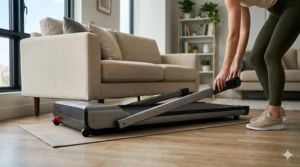
The ultimate space-saving solution involves sliding folded treadmills under beds or couches. This requires accurate measurement before purchase. Standard bed frames provide 12-15 inches clearance—plenty for ultra-compact models but insufficient for traditional folders.
Measure precisely, including any bed frame reinforcements or storage drawers that might obstruct sliding. The advertised folded height doesn’t account for remote holders, power cords, or wheel assemblies. Add 1-2 inches to manufacturer specifications for real-world clearance needs.
Closet Integration
Closets offer excellent treadmill storage if dimensions align. Measure the closet opening first—many folded treadmills won’t fit through standard 24-inch doors. You might sacrifice hanging space or shelving, but the trade-off often proves worthwhile in extremely tight apartments.
Consider accessibility too. Daily-use equipment stored behind three layers of stuff won’t get used. If your treadmill requires moving shoes, coats, and boxes every time you exercise, you’ll stop exercising. Storage solutions must balance space efficiency with realistic access.
Environmental and Energy Considerations
Apartment living often means paying attention to resource consumption.
Power Consumption Analysis
Most mini treadmills consume 300-600 watts during operation—comparable to running a desktop computer. Over a 30-minute workout, that’s 0.15-0.30 kWh. At typical US electricity rates ($0.12/kWh), each workout costs $0.02-0.04 in power.
Annual electricity costs for daily use rarely exceed $15-20, making power consumption a non-issue financially. Environmental impact remains minimal too—walking on a treadmill generates far less carbon footprint than driving to a gym several times weekly.
Sustainable Choices
Some manufacturers prioritize eco-friendly materials and manufacturing processes. While not widespread in the budget compact treadmill market, higher-end options increasingly feature recycled plastics, sustainable packaging, and energy-efficient motors.
Durability represents the most significant environmental consideration. A $300 treadmill lasting one year creates far more waste than a $600 model lasting five years. Factor total lifecycle impact rather than just initial purchase price when evaluating sustainability.
Smart Shopping: Where to Buy Your Apartment Treadmill
Making an informed purchase extends beyond choosing the right model.
Online vs In-Store Shopping
Online shopping offers broader selection and typically better prices. Amazon dominates the mini treadmill for apartment market, providing customer reviews, easy returns, and fast shipping. However, you can’t physically test machines before purchasing.
Sporting goods stores let you try before buying but stock fewer models and charge higher prices. If possible, test in-store, then purchase online. This combination maximizes both experience and value.
Timing Your Purchase
Treadmill prices fluctuate seasonally. January sees the highest demand and prices as resolution-driven buyers flood the market. Late spring and summer offer better deals as demand drops. Black Friday and Prime Day create substantial savings opportunities too.
Watch for model year transitions. When 2027 models launch, retailers discount 2026 inventory aggressively. These older models often differ minimally from replacements but cost 20-30% less.
Warranty Considerations
Warranties reveal manufacturer confidence. Quality brands offer 1+ years on parts, longer on frames and motors. Cheap treadmills often provide 90 days or less—a red flag suggesting expected early failure.
Read warranty terms carefully. Some exclude wear items like belts and decks—the components most likely to need replacement. Others require you to ship the machine back at your expense, negating any savings from the initial low price.
Return Policies
Always buy from sellers offering hassle-free returns. Test your treadmill immediately upon arrival. Walk on it, fold it, unfold it, check noise levels. If anything feels wrong, return it within the window. “Getting used to it” rarely works—initial impressions usually prove correct.
FAQ: Your Apartment Treadmill Questions Answered
❓ Can I use a treadmill in a second-floor apartment without disturbing neighbors?
❓ How much space do I really need for a mini treadmill for apartment use?
❓ What's the difference between a walking pad and a mini treadmill?
❓ Do apartment treadmills require professional assembly?
❓ How long do mini treadmills typically last with regular use?
Conclusion: Finding Your Perfect Apartment Treadmill Match
The journey to finding the right mini treadmill for apartment living ultimately comes down to matching your specific needs with the right machine characteristics. After reviewing dozens of models and testing several personally, I’ve learned that the “best” treadmill isn’t universal—it’s the one that fits seamlessly into your life.
If space constraints dominate your decision, the WalkingPad C2 delivers unmatched compactness without sacrificing quality. Its ability to disappear under furniture makes it ideal for studio and one-bedroom apartments. For budget-conscious buyers wanting genuine versatility, both the UREVO 2-in-1 and Goplus 2-in-1 offer impressive value under $400, providing both walking and jogging capabilities.
Traditional treadmill enthusiasts adapting to apartment living will appreciate the Sunny Health SF-T4400 or XTERRA TR150, which bring familiar features and higher speed capabilities to compact footprints. And for those unwilling to compromise on features, the WalkingPad R2 and Echelon Stride-6s prove that small spaces don’t require settling for inferior equipment.
Remember that the best portable cardio solutions are ones you’ll actually use consistently. A $1,000 treadmill gathering dust provides zero health benefits. A $400 machine you use daily delivers remarkable value. Consider your realistic usage patterns, available space, and long-term fitness goals before committing.
The small living space fitness revolution has made it possible to maintain serious workout routines in spaces our parents would have considered too small for exercise equipment. These narrow treadmill for home options, lightweight compact treadmill designs, and innovative folding mechanisms prove that apartment living and fitness commitment aren’t mutually exclusive.
Start with honest assessment of your needs, refer to this guide’s comparison table, and choose the option aligning with your priorities. Your future self—healthier, stronger, and more energized—will thank you for the investment.
Recommended for You
- 7 Best Compact Treadmill for Apartments & Small Homes 2026
- Walking Pad vs Treadmill: 7 Key Differences You Must Know (2026)
- 7 Best Quiet Under Desk Treadmills That Won’t Disturb Your Workflow (2026)
Disclaimer: This article contains affiliate links. If you purchase products through these links, we may earn a small commission at no additional cost to you.
✨ Found this helpful? Share it with your friends! 💬🤗
