
In This Article
Let’s be honest — half the treadmills marketed as “commercial grade” wouldn’t survive three months in an actual commercial gym. They shake like a blender full of rocks, their motors overheat by week two, and the deck warps faster than cheap plywood in a rainstorm. If you’ve been burned before, you’re not being picky. You’re being smart.
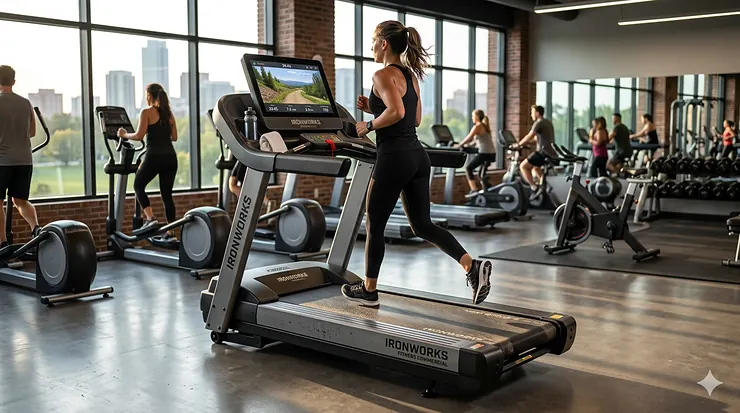
A genuine heavy duty commercial treadmill is a fundamentally different machine from the $600 folding units filling suburban basements. The motor is bigger — not bigger the way a sports car’s engine is bigger, but bigger the way a diesel truck’s engine is: built for continuous, grinding, all-day torque. The frame is welded steel, not press-fit aluminum. The deck absorbs 50,000+ steps per day without delaminating. And the rollers — those humble, often-ignored cylinders — are 2.5″ to 3″ in diameter, which sounds like a small number until you realize most home treadmill rollers barely crack 1.75″ and wear out in a year of serious use.
So what exactly qualifies as a heavy duty commercial treadmill? Broadly speaking, it’s a machine designed for multi-user, high-frequency environments: gyms, hotels, rehab clinics, police training facilities, corporate wellness centers. According to the American College of Sports Medicine (ACSM), adults should aim for 150–300 minutes of moderate-intensity cardio per week — and in a shared facility, your treadmill might clock 10–12 hours of active use daily. That’s the standard these machines are engineered to meet.
In this guide, we cut through the noise and focus on 7 machines — real products, currently available on Amazon — that actually deliver on the heavy-duty promise. We’ll cover who each one is built for, what the specs mean in practice, and which one deserves your investment.
Quick Comparison Table: Heavy Duty Commercial Treadmills at a Glance
| Model | Motor (CHP) | Weight Capacity | Deck Size | Key Feature | Price Range | Best For |
|---|---|---|---|---|---|---|
| Sole TT8 | 4.0 CHP | 400 lbs | 22″ x 60″ | Reversible deck, decline | $2,400–$2,800 | Light commercial & serious home use |
| NordicTrack X22i | 4.25 CHP | 300 lbs | 22″ x 60″ | +40% incline / -6% decline | $2,700–$3,200 | Hill training, iFIT users |
| NordicTrack Commercial 1750 | 3.5 CHP | 400 lbs | 22″ x 60″ | iFIT, Quiet Drive | $1,800–$2,200 | Connected runners, families |
| AssaultRunner Pro | N/A (self-powered) | 350 lbs | 17″ x 62″ (slat) | Zero electricity, curved | $2,500–$3,000 | CrossFit, athletic training |
| Precor TRM 885 | 3.6 CHP | 400 lbs | 22″ x 60″ | True commercial build | $3,500–$5,000 | Professional gym environments |
| Life Fitness T5 | 3.0 CHP | 400 lbs | 20″ x 60″ | FlexDeck cushioning | $3,000–$4,000 | Corporate wellness, rehab |
| Horizon 7.8 AT | 4.0 CHP | 375 lbs | 22″ x 60″ | Lifetime warranty | $1,600–$2,000 | Budget-conscious buyers |
Reading the table above: The NordicTrack X22i wins on raw motor power and incline range but has the lowest weight capacity of the group — a critical detail buried in most reviews. The Sole TT8 punches above its price class with a 400 lb capacity and reversible deck. And if budget is your top concern without completely sacrificing build quality, the Horizon 7.8 AT’s lifetime frame and motor warranty is genuinely impressive at that price point.
💬 Just one click — help others make better buying decisions too! 😊
Top 7 Heavy Duty Commercial Treadmills: Expert Analysis
1. Sole TT8 Light Commercial Treadmill — Best Overall Value
The Sole TT8 is what happens when a brand decides to stop playing it safe. This isn’t Sole’s entry-level machine with a fancier badge — it’s a ground-up, non-folding light commercial build that’s found its way into Hilton hotel fitness rooms for a reason.
Key specs, interpreted: The 4.0 CHP continuous-duty motor is paired with a 10 lb commercial-grade flywheel. That flywheel is the sleeper detail most buyers overlook — it’s what gives the TT8 the smooth, virtually vibration-free belt motion that feels nothing like the shuddering you get on lesser machines. The 22″ x 60″ running surface (one of the widest in its price range) accommodates tall runners with long strides comfortably, and the perma-waxed, reversible 2-ply belt essentially doubles the deck’s usable lifespan. When it wears on one side, you flip it. Simple. The 400 lb weight capacity is supported by 3″ crowned rollers — at that diameter, belt tension stays consistent and roller wear is dramatically reduced compared to the 1.9″–2.5″ rollers on home-grade machines.
Who is this for? The TT8 is the sweet spot for serious home gym athletes, physical therapy clinics, small studios, or corporate wellness rooms with moderate daily traffic. If you’re running 40–60 minutes daily and have one or two other users sharing the machine, this is your pick. It’s also a natural choice if you’re a heavier athlete (250 lbs and above) who’s been frustrated by treadmills that feel wobbly under your stride.
Buyers consistently describe it as “sturdy, quiet, and smooth” — three adjectives that don’t show up together by accident. The main drawback: speed changes aren’t instantaneous (a deliberate motor-protection feature), and at 36″ x 82″ with no fold, it demands a permanent corner of your space.
✅ 4.0 CHP motor with commercial flywheel
✅ Reversible 2-ply deck doubles usable lifespan
✅ 400 lb capacity with 3″ rollers
❌ Non-folding — needs dedicated permanent space
❌ Speed adjustment is slightly slower than competitors
Price range: $2,400–$2,800 range. Exceptional value for the build quality delivered.
2. NordicTrack Commercial X22i Incline Trainer — Best for Incline & iFIT Training
If the Sole TT8 is the diesel workhorse, the NordicTrack X22i is the performance SUV. It costs more, it does more, and it’s absolutely spectacular if the things it does extra are things you actually need.
Key specs, interpreted: The 4.25 CHP motor is the strongest in this roundup, but that’s not the headline. The headline is the +40% incline and -6% decline range. To put that in perspective: most “incline treadmills” top out at 15%. The X22i reaches a 40° slope that simulates hiking Pikes Peak. At that incline, your calorie burn skyrockets — research from the Journal of Strength and Conditioning Research confirms that incline walking at steep grades can match running calorie expenditure while dramatically reducing joint stress. The 22″ HD touchscreen and iFIT integration give you access to trainer-led runs across global routes, automatically adjusting incline in real time as you run through the Swiss Alps or the Appalachian Trail.
Who is this for? Runners and walkers who want maximum training variety at home. Elite endurance athletes who use incline work for race prep. Anyone who finds flat-belt treadmill workouts boring and needs the engagement of iFIT to stay consistent. Just know this: iFIT requires a separate subscription (around $180/year), and the X22i’s 300 lb weight capacity is notably lower than most machines in this tier.
Users rave about the display quality and the sheer number of workout options. The most common criticism is weight and size — this machine weighs 356 lbs and needs serious floor clearance.
✅ Industry-leading 40% incline range
✅ 4.25 CHP motor handles any workout intensity
✅ 22″ HD touchscreen with iFIT integration
❌ 300 lb weight capacity — lower than competitors at this price
❌ iFIT subscription required for full feature access
Price range: $2,700–$3,200 range. Worth every dollar if incline training is central to your regimen.
3. NordicTrack Commercial 1750 Treadmill — Best for Connected Families
The NordicTrack Commercial 1750 is the machine that turns a treadmill purchase into a fitness ecosystem decision — and for the right household, that’s exactly what you want.
Key specs, interpreted: The 3.5 CHP motor is rated as Constant Horsepower (CHP), which means it maintains full power output regardless of whether you’re walking at 2 mph or sprinting at 12 mph. Cheaper motors throttle under load; the 1750 doesn’t. The recently updated 400 lb weight capacity is a meaningful upgrade over previous models, and the Quiet Drive Inline Technology reduces operating noise to near-silent levels — a huge deal if you’re running early morning or in a shared living space. The 14″ HD touchscreen comes with iFIT integration and a SpaceSaver folding frame that uses hydraulic assist for one-touch collapse.
Who is this for? Families. Connected runners. Anyone who wants gym-quality programming (interactive coaches, scenic routes, automatic incline adjustments) paired with a machine that multiple users of different fitness levels can comfortably share. The 1750 isn’t quite as bombproof as the Sole TT8 for pure commercial volume, but for home gym use with 2–4 users daily, it’s arguably the best all-around choice under $2,200.
Customers praise its rock-solid stability and zero shaking after extended daily use. The recurring criticism: iFIT lock-in. The machine is designed around iFIT connectivity, and while you can use it without a subscription, you’re leaving half the functionality dormant.
✅ 400 lb capacity with Quiet Drive motor technology
✅ SpaceSaver folding design for smaller spaces
✅ Outstanding iFIT workout library
❌ iFIT subscription adds ongoing cost
❌ At 311.5 lbs, it’s heavy to reposition
Price range: $1,800–$2,200 range. Best value in the NordicTrack Commercial lineup.
4. AssaultRunner Pro Manual Curved Treadmill — Best for Athletic & CrossFit Training
The AssaultRunner Pro looks like someone took a regular treadmill, bent it, removed the motor, and somehow made it harder and better simultaneously. That’s not far from the truth.
Key specs, interpreted: Unlike every other machine on this list, the AssaultRunner Pro is completely self-powered. The athlete drives the belt — the faster you push, the faster it goes. There’s no motor to burn out, no electricity required, and maintenance is essentially non-existent. The curved slat belt (made of individual, cushioned polymer slats rather than a flat rubber belt) produces a running motion biomechanically closer to natural outdoor running. Independent research published through ACE Fitness has shown that curved manual treadmills can increase calorie burn by 30% or more compared to motorized treadmills at equivalent perceived effort — because you’re providing 100% of the locomotion.
Who is this for? CrossFit athletes. HIIT-focused trainers. Police and military personnel doing functional fitness. Anyone who wants a machine that will genuinely push them harder without touching a screen. If you’re opening a small training studio or a personal training facility, one AssaultRunner Pro in the corner will get used more intensively than three conventional treadmills.
Users who’ve committed to the AssaultRunner Pro describe it as humbling at first and transformative over time. The honest downside: it demands real effort from the first step. Casual walkers who want Netflix distraction will hate it. Elite athletes will love it.
✅ Zero electricity — train anywhere, including outdoors
✅ Self-paced — effort directly drives intensity
✅ Commercial-grade steel frame, virtually maintenance-free
❌ Steep learning curve — takes 2–3 weeks to adapt stride
❌ No motor means no programmed speed targets
Price range: $2,500–$3,000 range. Exceptional return on investment for serious training environments.
5. Precor TRM 885 Commercial Treadmill — Best True Commercial Grade Machine
If you’ve spent time in a high-end gym, you’ve probably run on a Precor and not realized it. That’s intentional. Precor doesn’t need to announce itself — it just quietly builds machines that last 15 years under daily commercial abuse.
Key specs, interpreted: The Precor TRM 885’s 3.6 CHP motor is matched with a 22″ x 60″ running surface, -2% decline to +15% incline range, and the brand’s renowned Ground Effects Impact Control System — an active cushioning technology that adjusts deck flex across five zones to mimic outdoor running surfaces. This isn’t just “cushioned” in the marketing-speak sense; the GFX system genuinely reduces joint stress in a measurable way, which is why you see the TRM 885 in physical therapy clinics and cardiac rehab centers rather than just commercial gyms. The P82 console delivers structured workout programming, Bluetooth heart rate monitoring, and third-party app integration. The self-powered internal cooling system manages motor temperature without requiring additional ventilation clearance — a practical advantage in smaller spaces.
Who is this for? Gym owners. Rehab facilities. Anyone building a serious home gym who intends to use it daily for 10+ years and wants zero compromises. The TRM 885 is the benchmark that other machines on this list are measured against. It is not the choice for someone who just wants a solid home treadmill — for that, the Sole TT8 or NordicTrack 1750 delivers better value at half the price.
Users who have invested in the TRM 885 consistently cite longevity as the primary justification — and it holds up. The steel frame warranty is lifetime; even high-wear components are rated for commercial use cycles.
✅ True commercial-grade build with lifetime frame warranty
✅ GFX cushioning system — clinically relevant joint protection
✅ Built for 8–12 hours daily use without degradation
❌ Premium price range limits access
❌ Less interactive tech compared to iFIT competitors
Price range: $3,500–$5,000 range. The long-term cost per year of ownership is exceptional.
6. Life Fitness T5 Treadmill — Best for Corporate Wellness & Rehab Environments
Life Fitness doesn’t chase trends. While every other brand is busy adding 22″ touchscreens and AI coaching overlays, Life Fitness keeps building machines the way a Swiss watchmaker builds watches: precisely, durably, and with deep respect for the fundamentals.
Key specs, interpreted: The T5’s 3.0 CHP motor is modest by the standards of this list, but it’s paired with Life Fitness’s FlexDeck cushioning system — a dual-layer elastomer system that, according to independent testing cited by ACE Fitness, reduces impact by up to 30% compared to outdoor running. For populations managing knee issues, recovering from injuries, or simply logging high daily mileage, that’s not a luxury — it’s a medical-grade consideration. The 20″ x 60″ running surface is slightly narrower than the 22″ standard but still accommodates virtually all stride widths. The optional Track console (or the more advanced Track+ with touchscreen) provides clean, distraction-minimal displays preferred by physical therapists and corporate wellness directors who want users focused on heart rate zones, not viral workout videos.
Who is this for? Corporate wellness facilities, hotel gyms, physical therapy offices, and serious home users who prioritize joint health over flashy technology. The T5 is the choice for the marathon runner who needs their treadmill to function as precision running infrastructure — not an entertainment center. It’s also ideal for healthcare facilities where reliability and low maintenance downtime are non-negotiable operational requirements.
Owners report the T5 becoming the most-used machine in multi-treadmill facilities — testimony to how its running feel outlasts first impressions.
✅ FlexDeck impact reduction — clinically proven joint protection
✅ Institutional reliability — minimal downtime in high-traffic settings
✅ Modular console options suit different facility needs
❌ 3.0 CHP motor is modest versus competitors at this price
❌ Less integrated entertainment tech for home users
Price range: $3,000–$4,000 range. Built for longevity over flash.
7. Horizon Fitness 7.8 AT Treadmill — Best Budget Commercial-Grade Option
Don’t let “budget” fool you here. The Horizon 7.8 AT costs less than competitors while packing a warranty that would embarrass machines costing twice as much. Lifetime coverage on the frame and motor. Full stop.
Key specs, interpreted: The 4.0 CHP motor matches the Sole TT8 on paper and holds up in practice — users running 60+ minutes at elevated incline report zero throttling or overheating. The 22″ x 60″ deck and 375 lb weight capacity cover nearly all users. What most buyers don’t immediately notice: the 7.8 AT’s three-zone variable cushioning system, which provides firmer response under the heel (for stability) and softer cushioning mid-foot (for comfort). That progressive cushioning design is more sophisticated than the simple “cushioned deck” found on cheaper machines and makes a tangible difference in long-run joint comfort.
The 7.8 AT also features Bluetooth connectivity with the Horizon app and third-party app compatibility (Zwift, Peloton app, etc.) — so you’re not locked into a proprietary ecosystem with an annual subscription fee. Pair it with whatever fitness platform you already use.
Who is this for? Budget-conscious buyers who refuse to sacrifice build quality. Home gym owners who want commercial-adjacent performance without the $3,000+ commitment. People who’ve been burned by cheaper treadmills and are making a serious upgrade without going all the way to Precor territory. If your budget caps around $1,600–$2,000 and you want a machine that’ll still be running strong in 2031, this is it.
The most common buyer feedback: surprised by how solid and quiet it is for the price. The only recurring complaint: the console display is functional but less visually impressive than NordicTrack or Sole’s newer touchscreens.
✅ Lifetime frame and motor warranty — best-in-class at this price
✅ 4.0 CHP motor with no throttling under load
✅ App-agnostic connectivity — no subscription required
❌ Console display feels dated compared to premium competitors
❌ Slightly lower weight capacity (375 lbs vs. 400 lbs on top competitors)
Price range: $1,600–$2,000 range. The most warranty-per-dollar on this list.
Who Should Buy What: Real-World Scenarios That Match You to the Right Machine
Choosing a heavy duty commercial treadmill isn’t just about specs — it’s about matching the machine to the life you actually live. Here are four buyer profiles drawn from real-world use cases.
The Serious Home Athlete (Solo, Daily Use, 250–330 lbs)
You run 45–60 minutes every morning before work, maybe add an evening walk. You’ve blown up two home treadmills in three years and you’re done with that. Go with the Sole TT8. The 400 lb capacity, 3″ rollers, and reversible commercial deck are built for exactly this: one serious user, daily high-intensity use, multi-year durability expectations. The non-folding footprint is a small price to pay for a machine that won’t need replacing in 18 months.
The Multi-User Home Gym (Family of 3–4, Mixed Fitness Levels)
Mom does brisk walks. Dad does 5K training. The teenager occasionally sprints and then complains. You need a machine that does everything without requiring a PhD to operate. The NordicTrack Commercial 1750 handles the spectrum beautifully — quiet enough for early-morning walks, powerful enough for sustained running, and versatile enough that iFIT’s library keeps every family member engaged. The folding SpaceSaver design is genuinely useful in a shared space.
The Elite Trainer or CrossFit Facility Owner
You’re building a training environment where effort is the point — not entertainment. You want machines that force athletes to work, hold up under daily hammering, and don’t require an IT degree to maintain. The AssaultRunner Pro is your answer. Put two in the corner of your facility and watch what happens to athletic output. The zero-electricity, self-powered design means maintenance conversations never happen.
The Corporate Wellness Manager or Hotel Fitness Director
You need machines that work every day, survive multiple users per hour, require minimal staff intervention, and don’t become a liability. The Precor TRM 885 or Life Fitness T5 — both are found in exactly these environments globally for good reason. The Precor wins if maximum console sophistication matters; the Life Fitness wins if joint protection and low-maintenance reliability are the priority. Either choice will still be operational when you’ve rotated through three other facility upgrades.
How to Choose a Heavy Duty Commercial Treadmill: 7 Criteria That Actually Matter
There’s a lot of noise in commercial treadmill marketing. Here’s the framework for filtering it.
1. 🔧 Motor Rating: CHP vs. Peak HP — Know the Difference
Always look for Continuous Horsepower (CHP), not peak HP. A motor rated “4.0 HP peak” might sustain only 2.0–2.5 CHP under real load. Every machine on our list is rated in CHP. For heavy commercial use, target 3.5 CHP minimum; for multi-user facilities with users above 250 lbs, 4.0 CHP or above.
2. ⚖️ Weight Capacity — Buy at Least 20% Above Your Maximum User Weight
A 300 lb person on a 300 lb capacity machine is operating at 100% structural load — which degrades components rapidly. Industry best practice, backed by guidance from the CDC’s physical activity program, recommends choosing a machine rated at least 20–30% above maximum expected user weight for long-term durability.
3. 🎯 Roller Diameter — The Most Overlooked Spec
Rollers under 2″ wear quickly and create uneven belt tension. Commercial machines use 2.5″–3″ rollers. This directly affects belt life, motor load, and the smoothness of the running surface. The Sole TT8’s 3″ crowned rollers are genuinely commercial-grade; most home machines use 1.9″–2.5″.
4. 🏗️ Frame Construction — Welded Steel vs. Press-Fit
Welded steel frames resist lateral flex under heavy use. Press-fit frames (common in cheaper machines) develop micro-movement at joints over time, leading to that characteristic shaking and creaking. All seven machines in this guide use welded steel frames.
5. 🛡️ Warranty — Read the Fine Print
A lifetime frame warranty means nothing if the motor warranty is 1 year. The Horizon 7.8 AT’s lifetime frame and motor warranty is exceptional. The Sole TT8’s commercial warranty (lifetime frame, 5 years motor and deck) sets the standard for light commercial use.
6. 📐 Deck Size — 20″ x 55″ Minimum; 22″ x 60″ Preferred
For runners above 5’10” or with a natural long stride, a 55″ belt length creates anxiety — one misplaced step and you’re on the frame. A 22″ x 60″ deck is the commercial standard for a reason: it accommodates essentially all adult body types running at full speed without restriction.
7. 💡 Cushioning System — More Layers ≠ Always Better
Marketing loves cushioning claims. What matters is how the cushioning is engineered. Single-layer foam compresses permanently over time. Zone-based elastomer systems (Life Fitness FlexDeck, Horizon’s three-zone system) maintain their properties for years. According to Wikipedia’s overview of treadmill mechanics, deck flex and surface compliance directly affect ground reaction forces — the key variable in long-term joint health for regular runners.
Commercial Treadmill vs. Home Treadmill: What You’re Actually Paying For
| Feature | Home Treadmill | Heavy Duty Commercial Treadmill |
|---|---|---|
| Motor Duty Cycle | 20–40 min continuous | 8–12 hrs continuous |
| Frame Material | Press-fit aluminum | Welded commercial steel |
| Roller Diameter | 1.75″–2.25″ | 2.5″–3.0″ |
| Belt Ply | 1-ply (standard) | 2-ply (commercial) |
| Weight Capacity | 250–300 lbs typical | 350–400+ lbs |
| Warranty (Motor) | 1–5 years | 5 years to lifetime |
| Expected Lifespan | 3–7 years (home use) | 10–20 years (commercial use) |
| Best For | 1–2 light users/week | Daily, multi-user, high-intensity |
What this table tells you: A home treadmill’s 20–40 minute continuous duty cycle means the motor is designed to rest between sessions. In a commercial environment, it never rests. The commercial machines on our list are built with duty cycles that match actual gym conditions. The price premium isn’t markup — it’s engineering margin.
✨ Don’t Miss These Exclusive Deals!
🔍 Take your fitness journey to the next level with these carefully selected commercial treadmills. Click on any highlighted product name to check current pricing and availability on Amazon. These machines will help you build a serious, professional-grade training environment that performs day after day.
Common Mistakes When Buying a Heavy Duty Commercial Treadmill
Even experienced buyers make these errors. Avoid them.
Mistake #1: Choosing Based on Motor HP (Peak) Instead of CHP A 6.0 HP motor sounds impressive — until you realize it’s a peak rating that the motor hits for approximately 0.3 seconds during acceleration. The machine sustains maybe 2.5 CHP under real running load. Always filter by CHP when comparing machines.
Mistake #2: Underestimating Space Requirements A 22″ x 60″ deck machine typically needs a 7′ x 14′ floor space allocation (per NordicTrack’s own clearance recommendations). Many buyers measure the machine footprint, forget the 3′ safety clearance behind the belt, and end up with a $3,000 machine they can’t safely use.
Mistake #3: Ignoring the Roller Diameter This spec barely makes it onto most spec sheets, yet it’s the single strongest predictor of long-term belt and motor health. Ask about it. If a seller can’t tell you the roller diameter, that’s a red flag.
Mistake #4: Buying Commercial for Occasional Home Use If you walk 20 minutes three times a week and weigh 160 lbs, you do not need a Precor TRM 885. A solid home treadmill will serve you perfectly well for a fraction of the cost. Commercial machines earn their price premium through heavy, sustained use — occasional users rarely recoup the investment.
Mistake #5: Overlooking the iFIT/Subscription Lock-In NordicTrack machines are outstanding. They’re also architected around iFIT. The touchscreen consoles are designed to push you toward a subscription, and some features are genuinely restricted without one. If you hate recurring fees, the Sole TT8, Horizon 7.8 AT, or AssaultRunner Pro are subscription-free machines that deliver full functionality the day they arrive.
Long-Term Cost & Maintenance: The Real Math Behind Your Investment
The purchase price is the beginning of the conversation, not the end. Here’s how to think about total cost of ownership.
Annual Maintenance Costs (Estimated):
- Belt lubrication: $0–$30/year (some commercial belts are pre-waxed, like the Sole TT8’s perma-waxed reversible deck)
- Belt replacement: Every 3–5 years on commercial models ($100–$300); every 1–2 years on home models
- Roller replacement: Rarely needed on commercial machines with 3″ rollers; frequently needed on 1.9″ home rollers
- Motor repair: Essentially zero on machines with lifetime motor warranties (Horizon 7.8 AT, Sole TT8 residential)
The 10-Year Math: A $600 home treadmill replaced every 3 years costs $2,000 over a decade, plus $300–$600 in repairs — a total of $2,300–$2,600. A $2,500 Sole TT8 maintained properly lasts 10+ years with minimal service costs, particularly with its reversible deck extending belt life. The commercial machine often wins on 10-year total cost.
For gym owners, the math is even clearer. A machine that needs replacement every 3 years generates downtime, disposal costs, new equipment installation fees, and user frustration. The Precor TRM 885 or Life Fitness T5 running for 15 years eliminates all of that.
Maintenance Schedule Basics:
- Every 3 months: Check belt tension and alignment; wipe down frame and console
- Every 6 months: Lubricate deck (if not pre-waxed); inspect roller brackets for micro-movement
- Annually: Professional inspection of motor brushes (if DC motor); belt wear check
- Every 3–5 years: Belt replacement (sooner for high-volume commercial use)
FAQ: Heavy Duty Commercial Treadmills
❓ What is the best heavy duty commercial treadmill for home gyms?
❓ How much does a heavy duty commercial treadmill cost?
❓ What weight capacity should a commercial treadmill have?
❓ How long do heavy duty commercial treadmills last?
❓ Is an industrial treadmill worth it for home use?
Conclusion: The Right Machine Doesn’t Just Last — It Performs
Here’s the bottom line: a heavy duty commercial treadmill isn’t a purchase you agonize over every few years. Done right, it’s a decision you make once, and then you simply run on it — for a decade or more — without thinking about it again.
The Sole TT8 remains our top overall recommendation for the widest range of buyers: it’s genuinely commercial in build, reasonably priced, subscription-free, and built to accommodate nearly every serious home or light commercial use case. If your budget reaches further and incline training is central to your program, the NordicTrack X22i’s 40% incline range is a legitimate game-changer. And if you’re equipping a professional environment and money is secondary to longevity, the Precor TRM 885 is the machine the industry benchmarks itself against.
Whatever you choose, remember: buy for the user you actually are — not the user you intend to become next January. If you run hard, daily, and seriously, invest accordingly. The machines on this list will reward that investment.
✨ Don’t Miss These Exclusive Deals!
🔍 Ready to upgrade your training? Click any product name in this guide to check current pricing, availability, and customer reviews on Amazon. Your next personal best starts with the right machine under your feet.
Recommended for You
- 7 Best Commercial Treadmill Brands in 2026
- 7 Best Commercial Grade Treadmill for Home 2026
- 7 Best Treadmill with Tablet Holder in 2026
Disclaimer: This article contains affiliate links. As an Amazon Associate, I earn from qualifying purchases. If you purchase products through these links, we may earn a small commission at no additional cost to you.
✨ Found this helpful? Share it with your friends! 💬🤗
