
In This Article
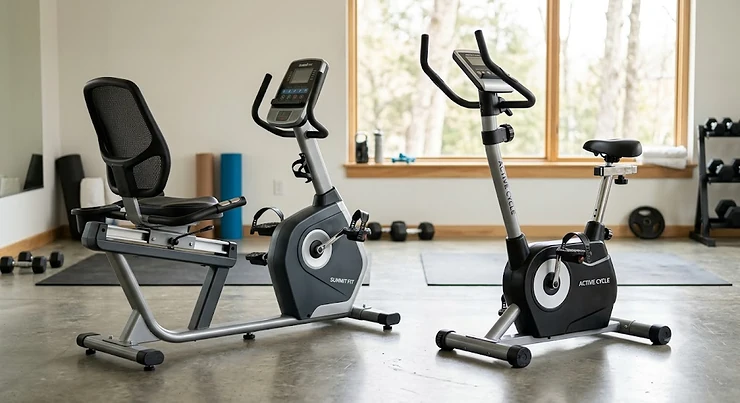
Somewhere in every gym, there’s a quiet standoff happening between two rows of cardio equipment. On one side: the recumbent bikes, low-slung and chair-like, occupied by people reading their phones and looking suspiciously relaxed. On the other: the upright bikes, more compact, more familiar, more “real bike”-feeling — and usually attracting a slightly more sweat-drenched crowd. If you’re shopping for a home cardio machine, the recumbent bike vs upright question is probably the first fork in the road you’ll hit, and it’s a more consequential decision than it looks.
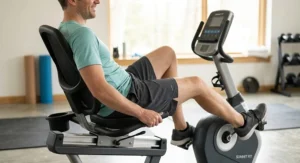
A recumbent bike positions you in a reclined seat with a supportive backrest and your legs extending forward, while an upright bike keeps you in a more traditional, vertical cycling posture with your legs beneath you. Both deliver genuine cardiovascular benefit — the CDC recommends adults get 150 minutes of moderate-intensity aerobic activity a week, and cycling on either style of bike counts toward that goal — but the experience of earning those minutes is wildly different depending on which seat you’re in. This guide breaks the recumbent bike vs upright decision down using seven real, currently available models, honest spec interpretation, and the kind of practical detail that a product listing simply won’t give you.
We’ll walk through comfort, intensity, back support, and long-term value, and by the end you’ll know not just which type of bike wins on paper, but which one you’ll actually want to sit on five days a week. Affiliate disclosure: this article contains Amazon affiliate links, and we may earn a commission from qualifying purchases at no extra cost to you.
Quick Comparison: Recumbent Bike vs Upright at a Glance
Before we dig into individual models, here’s the short version of the recumbent bike vs upright debate, boiled down to the factors that actually change your workout experience.
| Factor | Recumbent Bike | Upright Bike |
|---|---|---|
| Seating position | Reclined, chair-like, legs extended forward | Vertical, legs beneath torso, similar to a road bike |
| Back support | Full backrest, often with lumbar contouring | Minimal to none; core does the stabilizing |
| Core & upper-body engagement | Low | Moderate to high |
| Best for | Rehab, seniors, long sessions, bad backs | Calorie burn, HIIT intervals, bike-fit riders |
| Typical footprint | Larger (longer wheelbase) | Smaller, easier to tuck in a corner |
| Entry price range | Around $200-$500 for home models | Around $150-$700 for home models |
The pattern that jumps out immediately: recumbent bikes trade footprint and intensity ceiling for comfort and joint protection, while upright bikes trade some comfort for a smaller frame and a workout that recruits more of your body. Neither is objectively “better” — the right answer depends heavily on your back health, your goals, and honestly, how likely you are to actually get on the bike if it isn’t comfortable. A $2,000 recumbent bike gathering dust in a spare room delivers zero cardiovascular benefit; a $200 upright bike you ride four times a week delivers plenty.
💬 Already leaning one way? Scroll down to see our full breakdown of all seven models — the right pick might surprise you.
Top 7 Recumbent and Upright Exercise Bikes: Expert Analysis
We researched real, currently sold models across budget, mid-range, and premium tiers, covering both bike types so this recumbent bike vs upright comparison stays balanced rather than tilted toward one style. Every price mentioned is a range at the time of research; check current pricing before buying, since fitness equipment pricing shifts constantly with sales and inventory.
1. Yosuda Folding Exercise Bike — most space-saving recumbent option
The standout here is right in the name: this is one of the few recumbent bikes that folds flat for storage, which matters enormously if you live somewhere without a dedicated workout room. The Yosuda Folding Exercise Bike sells for less than $240 on Amazon and, despite its compact frame, supports riders up to 330 pounds, which is a genuinely strong capacity-to-footprint ratio for the price bracket.
What most buyers overlook about this model is its versatility — you can adjust it between fully-recumbent, semi-recumbent, and upright cycling positions, which effectively lets one machine settle the recumbent bike vs upright argument for your household by simply becoming both. That’s a rare feature at this price, since most budget bikes commit hard to one posture. Based on the spec comparison against other sub-$300 recumbents, the adjustability here is the real differentiator, not the resistance system, which is fairly standard magnetic tension.
Reviewers consistently note that assembly is straightforward and the fold mechanism genuinely works as advertised, though the display console is basic — don’t expect Bluetooth syncing or app integration at this tier. This is the bike for apartment dwellers, renters, or anyone who wants low-impact cardio without committing a permanent corner of a room to it.
Pros:
- ✅ Folds flat, ideal for small apartments
- ✅ Switches between recumbent and upright positions
- ✅ Supports up to 330 lbs at a compact size
Cons:
- ❌ Basic console with no app connectivity
- ❌ Resistance range is limited for advanced riders
Priced under $250, the Yosuda is one of the best value entry points into recumbent cycling, especially if space is your primary constraint rather than workout intensity.
2. Marcy Upright Exercise Bike ME-708 — most affordable true upright
If the recumbent bike vs upright choice for you really comes down to price, the ME-708 answers with the cheapest legitimate entry point on this list. At around $100, it lets you work out at home instead of paying for a gym membership just to wait for an open bike, and the frame quality punches above that price tag.
The ME-708 uses smooth magnetic resistance with eight preset manual levels, plus a basic computer display for speed, distance, time, and calories. Here’s what to weigh: eight resistance levels sounds thin next to a $1,500 bike’s 24 or 30, but for a beginner or someone doing steady-state cardio rather than structured intervals, the practical difference is smaller than the spec sheet suggests. The height-adjustable seat, foam grips, and counterbalanced pedals with adjustable straps keep the ride comfortable enough for 30-45 minute sessions.
Reviewers consistently describe this as a “good starter bike” rather than a long-term serious trainer — a common theme in aggregated feedback is that taller or heavier riders (above roughly 5’9″ or 200 lbs) find the frame and seat less accommodating over time. It’s an honest budget pick, not a hidden gem pretending to be more than it is.
Pros:
- ✅ Lowest price point on this list by far
- ✅ Magnetic resistance stays quiet and smooth
- ✅ Adjustable seat fits a range of heights
Cons:
- ❌ Only 8 resistance levels, thin for advanced training
- ❌ Less supportive for taller or heavier riders
At roughly $100-$150, this is a low-risk way to test whether an upright riding position works for your body before investing more.
3. Sunny Health & Fitness SF-RB4850 Smart Recumbent Bike — best mid-range app connectivity
The SF-RB4850 earns its spot by nailing the mid-tier sweet spot: real resistance automation without commercial pricing. It offers 16 levels of programmable electro-magnetic resistance and Bluetooth connectivity through the free SunnyFit app, which is a meaningful step up from manual-knob competitors in the recumbent bike vs upright mid-range bracket.
Priced under $400, it’s a sturdy, well-made machine, and the practical upshot of that electro-magnetic system is faster, more precise resistance changes than the mechanical brakes found on cheaper recumbents — you feel a crisper jump between levels instead of a vague, mushy shift. The console tracks time, speed, RPM, distance, calories, pulse, and wattage, giving data-minded users more to work with than most bikes at this price.
What most buyers overlook: the mesh backrest and step-through frame matter more day-to-day than the app does. The wide seat and breathable mesh back support make the step-through design easy to mount and dismount, which is a genuine quality-of-life upgrade for anyone with limited mobility or knee sensitivity. Aggregated review sentiment consistently praises the build quality for the price, with occasional notes that the console backlighting could be brighter in dim rooms.
Pros:
- ✅ 16-level automated electro-magnetic resistance
- ✅ Free SunnyFit app with workout tracking
- ✅ Step-through frame with mesh backrest comfort
Cons:
- ❌ Console screen isn’t backlit well in dim rooms
- ❌ No touchscreen or streaming classes included
In the $350-$480 range, this is a strong middle-ground recumbent pick for anyone who wants data tracking without paying commercial-gym prices.
4. Schwinn 170 Upright Bike — best mid-range upright for structured training
The Schwinn 170 is the bike most people picture when they imagine a “real” upright exercise bike, and the spec sheet backs that reputation up. It runs a high-speed, high-inertia perimeter-weighted flywheel with 25 levels of eddy-current magnetic resistance, a meaningful jump in granularity over entry-level models like the Marcy ME-708 above.
That perimeter-weighted flywheel design distributes weight along the flywheel’s edge to maximize momentum, and here’s what that means in practice: pedal strokes feel smoother and less “choppy” at low cadence than cheaper flywheels typically deliver, though it’s still not as buttery as heavier commercial units. With 29 preset programs, including nine heart rate programs, plus Bluetooth connectivity to apps like MyFitnessPal and Google Fit, it rewards riders who want structure rather than just steady spinning.
Based on the spec comparison, the resistance and program depth here make it genuinely suited to interval training — something budget recumbents typically can’t match. Reviewers who tested it for months describe it as the best-selling upright bike on Amazon, and aggregated sentiment consistently highlights the Bluetooth chest strap compatibility and adjustable seat as standout comfort features for an upright frame.
Pros:
- ✅ 25 resistance levels for real interval training
- ✅ 29 programs including heart-rate-based workouts
- ✅ Bluetooth syncs to popular fitness apps
Cons:
- ❌ Seat is firmer than recumbent alternatives
- ❌ No touchscreen; dual LCD only
Typically priced in the $300-$650 range depending on sales, the Schwinn 170 delivers commercial-adjacent training features without the commercial-adjacent price tag.
5. NordicTrack Commercial VU29 Upright Bike — best premium upright for entertainment-driven workouts
If your recumbent bike vs upright decision hinges on staying motivated through a screen, the VU29 is built specifically for that. It pairs a 14-inch smart touchscreen with 24 resistance levels, turning what could be a monotonous upright grind into an on-demand, trainer-led experience.
The 19-pound flywheel and 24 levels of magnetic resistance suit users who don’t need extreme intensity, and reviewers consistently note this isn’t a bike for serious power-focused training — the lighter flywheel means less flywheel-driven momentum than commercial spin bikes. What the spec sheet won’t tell you, but reviewers note, is that the iFit-powered streaming and auto-resistance adjustment genuinely change how long people stay on the bike, since the trainer controls incline-style resistance shifts for you mid-workout. It weighs 115 pounds and accommodates riders up to 325 pounds, with a padded, height-adjustable seat.
One notable caution from aggregated reviews: this upright bike might not be the ideal fit for people managing lower back pain, since the fixed handlebars and upright posture don’t offer the lumbar support a recumbent frame provides — worth remembering as you weigh recumbent bike vs upright for a bad back specifically.
Pros:
- ✅ 14-inch HD touchscreen with iFit streaming
- ✅ Auto-adjusting resistance during guided workouts
- ✅ Sturdy 325 lb weight capacity
Cons:
- ❌ Requires iFit subscription for full library access
- ❌ Not ideal for existing lower back pain
Around $1,299 at the time of research (often bundled with a trial iFit membership), this is the pick for households that want a Peloton-style experience in an upright frame.
6. 3G Cardio Elite RB Recumbent Bike — best premium recumbent for comfort and rehab-style use
At the top of the recumbent side of this recumbent bike vs upright roundup sits the Elite RB, a bike literally engineered around the word “comfortable.” It’s been called “the most comfortable recumbent bike ever built” by reviewers, and the engineering choices back that claim up in ways cheaper bikes can’t replicate.
Its compact frame includes a 3-way adjustable mesh back seat rest, and its unique Q-factor pedal spacing narrows the gap between pedals by placing the flywheel under the seat rather than under the pedals — a design choice most competitors don’t bother with. What that means in practice: less hip strain during long sessions, especially for narrower-hipped riders who find standard recumbent pedal spacing awkward. One extended tester noted the pedal stroke feels smooth and “connected,” with no dead spot at the top or bottom, more like a commercial rehab bike than a typical big-box recumbent.
The frame supports users up to 350 pounds, and reviewers report the seat and backrest combination comfortably fits riders from about 5 feet to 6’5″. Aggregated sentiment consistently praises the build quality and quiet belt drive, with the main criticism being that the console feels dated compared to touchscreen competitors — this bike prioritizes mechanical feel over entertainment tech.
Pros:
- ✅ Q-factor pedal spacing reduces hip strain
- ✅ 3-way adjustable mesh backrest for real support
- ✅ Fits riders from roughly 5’0″ to 6’5″
Cons:
- ❌ Console lacks touchscreen or streaming features
- ❌ Higher price than most home recumbents
With an MSRP around $1,999, this is a premium investment, but for anyone prioritizing genuine back support and rehab-grade comfort over entertainment features, it’s a defensible one.
7. Matrix R50 Recumbent Bike — best commercial-grade recumbent for long-term durability
Closing out the list is the closest thing to a gym-quality recumbent bike you can put in a home, and it settles the recumbent bike vs upright comfort question about as decisively as a spec sheet can. Its Dual Form Frame improves rider stability over single-post recumbent designs and offers a low step-through height plus a step-assist platform, addressing a mobility pain point that budget recumbents largely ignore.
The Comfort Arc seat is ergonomically molded, with an oversized, reclining seatback and a contoured mesh design for ventilation — a genuine upgrade over the flat vinyl backrests found on entry-level bikes. Its Exact Force Induction Brake system offers instant, smooth, precise resistance changes with no moving parts, which in practice means near-silent, near-instant resistance shifts rather than the slight lag typical of older magnetic systems. The R50 offers 30 resistance levels total, a meaningful jump over most home recumbents, and supports users up to 350 pounds.
Here’s what to weigh: this is the only bike on our list built primarily for commercial durability, meaning it’s designed to survive years of heavy daily use rather than a few sessions a week. The frame is designed for longer workouts, offering smooth resistance transitions and enhanced seat comfort for users who want performance without added strain.
Pros:
- ✅ Commercial-grade Dual Form Frame durability
- ✅ 30 resistance levels via near-silent induction brake
- ✅ Step-through design with assist platform
Cons:
- ❌ Premium pricing well above home-tier bikes
- ❌ Larger footprint than compact recumbent models
Pricing spans roughly $2,099 to $4,099 depending on console, positioning the R50 as an investment for serious, long-term riders rather than a casual home purchase.
Practical Usage Guide: Your First 30 Days on a New Bike
Whichever side of the recumbent bike vs upright split you land on, the first month determines whether the bike becomes a habit or a coat rack. Start with seat position before you touch resistance — on a recumbent, your knee should have a slight bend at full pedal extension, not a locked-out leg, and on an upright, your hip shouldn’t rock side to side at the bottom of the stroke. Both signal the seat is misadjusted.
For the first week, resist the urge to crank resistance to prove something. Ride at a conversational pace for 15-20 minutes to let your joints and saddle tolerance adapt; recumbent riders especially tend to overestimate comfort and overdo session length early, only to discover mild lower-back fatigue from a seatback angle set too far back. A common mistake in the first 30 days is skipping the console calibration step, which throws off calorie and distance tracking for the life of the machine unless reset.
By week two, introduce interval structure — 1 minute harder, 2 minutes easy, repeated 6-8 times — since both bike types handle intervals well once your base comfort is established. Maintenance-wise, wipe down the frame and seat rails weekly to prevent sweat corrosion, and check pedal strap bolts monthly; loose pedals are the single most common mechanical complaint across budget models in this category. By day 30, most riders on either bike type have found their “default” resistance zone — the level where you can sustain 20-30 minutes without white-knuckling the handlebars.
Real-World Scenario: Which Bike Fits Your Life?
Consider Maria, 58, managing mild degenerative disc disease and looking for cardio that won’t aggravate her back. For her, the recumbent bike vs upright decision isn’t really a debate — a recumbent bike like the 3G Cardio Elite RB or the budget-friendly Yosuda Folding Exercise Bike removes spinal loading almost entirely, letting her hit her 150 weekly minutes without flare-ups.
Now picture Devon, 29, training for a half-marathon and using indoor cycling purely for cross-training on rest days. Devon needs a bike that recruits the core and stabilizer muscles closer to how running does, so the Schwinn 170 or NordicTrack Commercial VU29 upright bikes are the better fit — the upright posture keeps hip flexors and glutes engaged in a way a fully reclined seat doesn’t.
Finally, think about a household of four sharing one machine in a 200-square-foot bonus room, where footprint and versatility both matter more than any single feature. The Yosuda Folding Exercise Bike‘s adjustable positioning and fold-flat storage solve two problems — space and differing preferences — with one purchase, even if it can’t match the premium bikes on raw resistance ceiling.
Problem → Solution: Common Frustrations, Solved
Problem: “My lower back hurts after 15 minutes on an upright bike.” This usually signals either a seat set too low (forcing excessive forward lean) or genuinely needing the back support a recumbent frame provides. Try raising the seat first; if pain persists, models like the Sunny SF-RB4850 or Matrix R50 solve this structurally rather than through adjustment.
Problem: “The bike is too boring to stick with.” Boredom kills consistency faster than any physical limitation. Bikes with built-in screens, like the NordicTrack Commercial VU29, or app connectivity, like the Sunny SF-RB4850, directly address this by turning workouts into guided or gamified sessions rather than silent pedaling.
Problem: “I don’t have room for a bike.” The Yosuda Folding Exercise Bike folds flat specifically for this scenario, while compact uprights like the Marcy ME-708 simply take up less floor space to begin with.
Problem: “Resistance feels inconsistent or clunky.” This is almost always a flywheel or brake-type issue. Induction-brake systems like the one on the Matrix R50, or heavier flywheels like the Schwinn 170’s perimeter-weighted design, solve this at the hardware level rather than something you can fix through settings.
Problem: “I plateaued and stopped seeing results.” Static resistance routines cause this on any bike type. Structured interval programs — built into the Schwinn 170‘s 29 presets or the 3G Cardio Elite RB‘s heart-rate programs — reintroduce the variability your cardiovascular system needs to keep adapting.
How to Choose Between a Recumbent Bike and an Upright Bike
Making the recumbent bike vs upright call methodically, rather than emotionally, saves you from an expensive mistake. Work through these criteria in order:
- Assess your back and joint history first. If you have chronic lower back pain, disc issues, or are recovering from hip or knee surgery, the reclined position and backrest support of a recumbent bike are functionally protective, not just comfortable.
- Define your primary goal. Weight loss and general cardio work well on either bike, but structured HIIT and cycling-specific training carry over better from an upright riding position.
- Measure your available space honestly. Recumbent bikes generally have a longer wheelbase; if you’re working with a small room, an upright or a folding recumbent narrows your options fast.
- Consider who else will use it. Multiple household members with different comfort needs often push the decision toward an adjustable or folding model rather than a single-purpose premium bike.
- Set a real budget band, not just a target price. Decide whether you’re shopping the $150-$400 entry tier, the $400-$800 mid tier, or the $1,200+ premium tier before you start comparing individual specs — otherwise feature creep will blow past your budget.
- Test resistance range against your fitness level. Sedentary beginners rarely max out an 8-16 level system; competitive or advanced riders should lean toward 24+ levels for meaningful progression room.
- Weigh entertainment features against your actual habits. If you already use a tablet propped nearby, a built-in touchscreen may be an expensive redundancy rather than a necessity.
Seating Position Comparison: Why Your Spine Cares
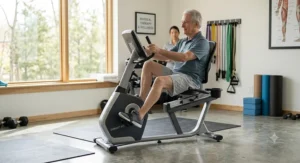
The seating position comparison at the heart of recumbent bike vs upright isn’t cosmetic — it changes the biomechanics of the entire workout. Recumbent bikes place the rider in a reclined position with back support, with a seat typically larger and more chair-like than a standard bike seat. That reclined angle distributes body weight across the seat and backrest rather than concentrating it on a narrow saddle, which is precisely why longer sessions feel more sustainable on a recumbent frame.
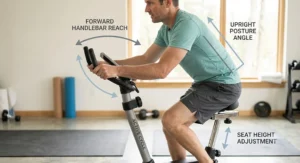
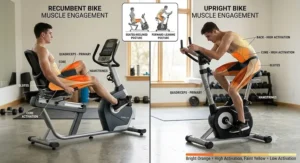
Upright bikes, by contrast, keep the spine in a more neutral-to-forward posture similar to outdoor cycling. This activates stabilizing core muscles that a recumbent seat effectively neutralizes — neither approach is “wrong,” but they’re training different things. The backrest on a recumbent bike provides continuous support, preventing the forward-flexed posture that loads the lower back discs and can aggravate conditions like disc herniation or spinal stenosis, which explains why physical therapists so often steer rehab patients toward the reclined option specifically.
👉 Ready to find your seat? Compare specs side-by-side below.
| Model | Type | Resistance Levels | Price Range | Best For |
|---|---|---|---|---|
| Yosuda Folding Exercise Bike | Recumbent (adjustable) | Basic magnetic | Under $250 | Small spaces |
| Marcy ME-708 | Upright | 8 manual | $100-$150 | Tight budgets |
| Sunny SF-RB4850 | Recumbent | 16 electro-magnetic | $350-$480 | App-based tracking |
| Schwinn 170 | Upright | 25 magnetic | $300-$650 | Structured training |
| NordicTrack VU29 | Upright | 24 magnetic | Around $1,299 | Streaming workouts |
| 3G Cardio Elite RB | Recumbent | 16 magnetic | Around $1,999 | Rehab-grade comfort |
| Matrix R50 | Recumbent | 30 induction | $2,099-$4,099 | Commercial durability |
Looking at the table above, the recumbent bike vs upright split cuts less along price than you’d expect — you can get a genuinely comfortable recumbent for under $250 with the Yosuda, or a genuinely capable upright for barely more than that with the Schwinn 170. Where the models really diverge is resistance granularity and support features, both of which climb sharply once you cross into the $1,200+ tier regardless of bike type.
Comfort vs Intensity: The Real Trade-Off
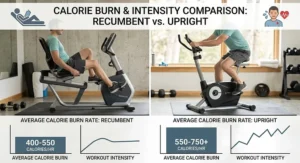
Every comfort vs intensity conversation around recumbent bike vs upright eventually collapses into a simplified myth: that comfort means an easy workout. That’s not accurate. The idea that comfort lowers exercise intensity on a recumbent bike is a mistake — riders can crank resistance up as high as they want and really isolate the quadriceps, calves, and to some extent the hamstrings. The reclined position changes which muscles do the work; it doesn’t cap how hard those muscles work.
What genuinely differs is total-body engagement. An upright bike recruits your core, lower back stabilizers, and to a lesser degree your upper body for balance, adding a layer of caloric and muscular demand a recumbent seat removes by design. For pure leg-isolation strength work — useful in rehab settings or for cyclists specifically training quad power — that’s actually an advantage of the recumbent position, not a limitation.
The practical trade-off shows up in session length more than session difficulty. Because a recumbent bike removes core fatigue and lower-back loading from the equation, riders tend to sustain higher-resistance intervals for longer before quitting — not because the workout is easier, but because the supporting structures aren’t the limiting factor. On an upright bike, core and lower-back fatigue often end a session before your legs are actually spent. Neither pattern is better across the board; it depends whether you want a workout that isolates the legs or one that challenges stability alongside cardio output.
✨ Don’t Miss These Exclusive Deals!
🔍 Whichever side of the comfort vs intensity debate you land on, these seven models cover every budget and fitness level. Click through to check current pricing and availability, and start building a cardio habit that actually sticks. These bikes will help you build the consistent, joint-friendly fitness routine your future self will thank you for!
Back Support Differences That Actually Matter
Back support differences are arguably the single most consequential variable in the recumbent bike vs upright comparison, and they’re worth examining beyond the obvious “one has a backrest, one doesn’t.” Because you’re seated while cycling, you avoid the effect of gravity compressing your joints the way standing exercise does — a shared benefit across both bike types compared to running or standing cardio equipment, according to Cleveland Clinic.
Where they diverge is spinal loading during the pedal stroke itself. Recumbent stationary bikes have a larger, chair-like seat that’s easier on the lower back and hips because riders sit back into the frame in a more reclined position, though notably, that reclined position may require more range of motion at the hip than upright bikes do — a nuance that matters if hip mobility, not back pain, is your limiting factor. This is why “recumbent or upright better” doesn’t have a single universal answer; it depends on which joint is actually the problem.
A 2021 review published in Clinical Rehabilitation found that exercising on stationary bikes lessened pain and improved function in people with knee osteoarthritis, a benefit that applies to both bike types, though the reduced hip-flexion demand of an upright frame can be preferable for certain hip conditions. According to the Arthritis Foundation, riding regularly builds muscles in the core and legs that better support the joints and relieve pressure over time — read their full breakdown of stationary biking benefits for condition-specific guidance before choosing a bike type around a diagnosed joint issue.
Recumbent or Upright Better for Specific Goals?
Whether recumbent or upright is better really only makes sense as a question once you attach it to a specific goal, because the two bikes optimize for different outcomes.
For weight loss: Both work, since calorie burn tracks more with resistance and duration than seating position — but upright bikes tend to edge ahead slightly because the added core and stabilizer engagement burns marginally more energy per minute at matched perceived effort.
For rehab and injury recovery: Recumbent wins clearly. Recumbent bikes are frequently prescribed as part of formal physical therapy protocols following knee replacement, hip replacement, or lumbar procedures, precisely because the seated, supported position minimizes stress on healing tissue while still allowing meaningful cardiovascular work.
For seniors or anyone with balance concerns: Recumbent again, largely because of the lower step-through height and reduced fall risk — models like the Matrix R50 and Sunny SF-RB4850 are specifically designed with easy-mount frames for this reason.
For serious cyclists cross-training in the off-season: Upright, without much debate — the riding position, weight distribution, and core demand transfer far more directly to outdoor cycling performance than a reclined seat can replicate.
For general, sustainable, everyday cardio with no specific complication: This is genuinely a toss-up, and the honest answer is that the “better” bike is whichever one you’ll actually use consistently. A comfortable bike ridden four times a week beats an “optimal” bike ridden once.
Which Exercise Bike Is Best for Weight Loss, Rehab, and Beginners
Breaking down which exercise bike is best by audience avoids the trap of a single universal recommendation. Beginners with no injury history generally do well starting on a recumbent bike simply because the learning curve is gentler — there’s less balance to manage and no risk of an awkward dismount, which reduces the psychological friction of starting a new habit. The Yosuda Folding Exercise Bike and Marcy ME-708 both serve this beginner audience well at minimal financial risk.
For weight-loss-focused users specifically chasing calorie burn, an upright bike with a strong program library, like the Schwinn 170, tends to keep intensity higher through structured intervals, which matters more for fat loss than steady, low-effort pedaling regardless of bike type.
For rehab patients working under a physical therapist’s guidance, a recumbent bike with adjustable, precise resistance — the 3G Cardio Elite RB and its 3-way adjustable backrest, or the Matrix R50‘s induction brake system — offers the fine-grained control that clinical protocols often require, since therapy plans frequently specify exact resistance and duration targets that need to be hit reliably session after session.
Bike Type Comparison: Long-Term Cost & Maintenance
A full bike type comparison has to look past the sticker price, because total cost of ownership diverges more than the upfront number suggests. Budget bikes like the Marcy ME-708 or Yosuda Folding Exercise Bike carry minimal maintenance costs — magnetic resistance systems have no belts or brake pads to replace — but their shorter component lifespans and thinner warranties (often 1-2 years on parts) mean a higher chance of needing full replacement within 5 years of regular use.
Mid-tier bikes like the Sunny SF-RB4850 and Schwinn 170 land in a sweet spot: their electro-magnetic and Bluetooth-connected systems have proven durable in aggregated long-term reviews, and replacement parts (pedals, seat cushions) are widely available and inexpensive.
Premium models justify their price primarily through warranty depth and frame durability rather than daily-use costs. The NordicTrack Commercial VU29 carries a 10-year frame warranty, 2 years on parts, and 1 year on labor — a meaningfully longer commitment than budget competitors. The 3G Cardio Elite RB’s in-home warranty covers the frame for life, with parts covered for 7 years and labor for 1 year, which for a $2,000 purchase functions almost like an insurance policy against the exact failure points that kill cheaper bikes. Run a simple cost-per-year calculation: a $250 bike lasting 3 years costs roughly $83/year, while a $2,000 bike genuinely lasting 15 years under a lifetime frame warranty costs about $133/year — a smaller gap than the upfront prices suggest, and one that tilts further in the premium bike’s favor with each additional year of use. The American Heart Association notes that consistent activity, spread throughout the week, is what actually drives the cardiovascular benefit — see their physical activity recommendations for the full guidance — which is really the underlying argument for buying a bike durable enough that it outlives your motivation dips.
Common Mistakes When Buying an Exercise Bike
Even armed with a full recumbent bike vs upright breakdown, buyers repeatedly make the same handful of errors. The most common: buying based on resistance level count alone, without checking flywheel or brake type — a bike with 8 well-engineered levels can feel more consistent than a cheap 20-level system with mushy, poorly differentiated steps.
The second mistake is ignoring weight capacity margins. Buying a bike rated exactly at your body weight, rather than comfortably above it, shortens component lifespan considerably; aim for a bike rated at least 50-75 pounds above your actual weight for long-term durability.
A third frequent misstep is underestimating footprint, particularly with recumbent bikes, which run noticeably longer than upright models due to the extended leg position — measure your space against the assembled dimensions, not just the box dimensions, before ordering.
Finally, many buyers skip checking return policies on large fitness equipment, only to discover that “no restocking fee” doesn’t apply to items over a certain weight, or that return shipping on a 100+ pound bike costs more than expected if the fit turns out wrong.
What to Expect: Real-World Performance
Specs only tell part of the story, so here’s what actually changes once you’re riding rather than reading a listing. On budget recumbent bikes, expect a noticeably softer resistance ceiling — even at the top setting, riders with above-average fitness may find the hardest level insufficiently challenging within a few months. Premium recumbents like the 3G Cardio Elite RB and Matrix R50 solve this with deeper resistance ranges and heavier effective loads.
On upright bikes, expect saddle discomfort in the first several sessions regardless of price point — this is largely a universal adaptation period rather than a product flaw, and it typically resolves within two to three weeks as sit bones adjust. Riders switching from a recumbent to an upright bike, or vice versa, often report an adjustment period of roughly one to two weeks before the new position feels natural rather than novel.
Noise levels vary more than most buyers expect. Belt-driven and induction-brake systems — found on the 3G Cardio Elite RB and Matrix R50 — run notably quieter than older mechanical friction-brake designs, which matters significantly if you’re riding early morning or late evening in a shared living space.
Safety, Adjustability & Long-Term Fit Considerations
Proper fit prevents the majority of exercise-bike-related discomfort and injury, on either bike type. On an upright bike, seat height should place a slight bend in the knee at full pedal extension — a locked-out leg strains the knee joint over repeated rotations. On a recumbent bike, the seat should slide close enough that the leg reaches near-full extension without hip rocking, since an overly bent knee at extension reduces workout efficiency and can aggravate knee tracking issues over time.
Aerobic activity at a moderate or vigorous intensity counts toward CDC guidelines regardless of bike type, so from a pure health-compliance standpoint, either option satisfies the same weekly target — fit and consistency matter more than which side of the recumbent bike vs upright divide you land on. Anyone managing a diagnosed cardiovascular or joint condition should still consult a healthcare provider before starting a new resistance-based cardio routine, particularly when selecting resistance progression for rehab purposes.
FAQ
❓ Is a recumbent bike or an upright bike better for beginners?
❓ Do recumbent bikes burn fewer calories than upright bikes?
❓ Can a recumbent bike help with lower back pain?
❓ What's the average price difference between recumbent and upright bikes?
❓ How long should I ride a recumbent or upright bike each session?
Conclusion
The recumbent bike vs upright decision ultimately isn’t about which machine is objectively superior — it’s about matching a seating position to your body, your goals, and your space. If back pain, joint issues, or long comfortable sessions are your priority, a recumbent bike like the Yosuda Folding Exercise Bike or 3G Cardio Elite RB removes friction that would otherwise cut workouts short. If core engagement, structured intervals, or a smaller footprint matter more, an upright bike like the Schwinn 170 or Marcy ME-708 delivers a workout that carries over more directly to real-world cycling and standing fitness.
Across all seven models we covered — budget to premium, recumbent and upright alike — the throughline is the same: the “best” exercise bike is the one whose comfort, resistance range, and support features match your actual body and habits closely enough that you keep showing up. Specs matter, but consistency is what actually produces results, week over week, regardless of which side of the recumbent bike vs upright line you land on.
✨ Ready to make your pick? Revisit the comparison table above, weigh your back health and space honestly, and choose the bike you’ll actually want to ride tomorrow.
Recommended for You
- 7 Best Recumbent Exercise Bikes for Seniors in 2026
- 7 Best Air Bike Workouts Machines for HIIT in 2026
- Schwinn Airdyne Bike: 7 Best Models Compared for 2026
Disclaimer: This article contains affiliate links. As an Amazon Associate, I earn from qualifying purchases. If you purchase products through these links, we may earn a small commission at no additional cost to you.
✨ Found this helpful? Share it with your friends! 💬🤗
