
In This Article
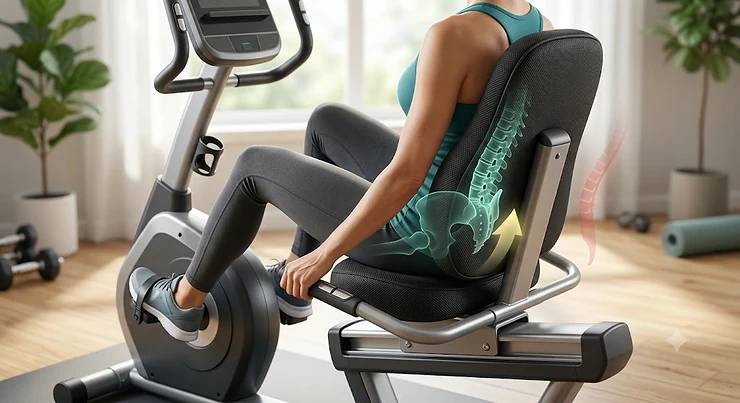
Your knees ache after a run. Your lower back complains twenty minutes into a spin class. And yet you still want the heart-pounding payoff of a good cardio session. That tension — wanting the results without the wear and tear — is exactly why recumbent bike benefits keep coming up in conversations between physical therapists, cardiac rehab nurses, and regular people who just want to move without pain. In plain terms, a recumbent bike is a stationary cycling machine with a reclined seat, backrest, and pedals positioned out in front of you rather than beneath you, which shifts your body weight onto a wide, chair-like seat instead of a narrow saddle. According to the Centers for Disease Control and Prevention, adults need roughly 150 minutes of moderate aerobic activity weekly, and the machine you choose to hit that number matters just as much as hitting it at all.
This guide digs into why recumbent bike advantages have made this machine a fixture in cardiac rehab clinics and a favorite among people managing knee or hip pain, not just a “seniors only” gadget collecting dust in a spare room. We’ll walk through seven real, currently available models spanning budget to premium, compare them honestly using actual specs and aggregated review sentiment, and give you the practical framework to decide which one — if any — deserves space in your home. Whether you’re chasing better cardiovascular numbers, recovering from surgery, or simply tired of a sore tailbone, there’s a reasonable path forward here.
Quick Comparison Table
| Model | Best For | Resistance Levels | Weight Capacity | Price Range |
|---|---|---|---|---|
| Marcy ME-709 | Tightest budget | 8 magnetic | 300 lbs | Under $250 |
| Sunny Health & Fitness SF-RB4602 | Heavy-duty on a budget | 8 magnetic | 350 lbs | $250-$350 range |
| Yosuda RC-PRO | Whisper-quiet comfort | 16 magnetic | 350 lbs | $250-$300 range |
| Schwinn 230 | App-connected mid-range | 16 magnetic | 300 lbs | Around $500 |
| Horizon 5.0R | Micro-adjustable resistance | 100 electronic | 350 lbs | $650-$750 range |
| Sole LCR | Commercial-grade durability | 40 magnetic | 350 lbs | $1,600-$1,900 range |
| NordicTrack Commercial R35 | Streaming and immersive workouts | 26 magnetic | 350 lbs | $1,700-$1,900 range |
Looking at the spread above, the jump from the Marcy ME-709 to the Sunny Health & Fitness SF-RB4602 costs you almost nothing extra but buys a sturdier frame and higher weight rating, which is a trade most buyers should make without hesitation. The middle of the pack — the Yosuda RC-PRO, Schwinn 230, and Horizon 5.0R — is where resistance granularity and connectivity start to separate the machines, with the 5.0R’s 100-level system standing out as genuinely unusual at its price. At the top, the Sole LCR and NordicTrack Commercial R35 aren’t really competing on comfort anymore since every bike here is comfortable; they’re competing on how long the machine survives daily use and how engaging the screen experience feels three months in.
💬 One click could help someone else find the right bike for their knees, too.
Top 7 Recumbent Bikes: Expert Analysis
1. Marcy ME-709 — lightest entry price for pain-free cardio
The standout here is simple: this is one of the cheapest ways to get onto a real recumbent frame without compromising on the basics that actually matter for comfort. The Marcy ME-709 runs on 8 levels of magnetic resistance adjusted through a manual knob, weighs around 53-66 pounds depending on the source, and holds users up to 300 pounds. In practice, that resistance range means light-to-moderate cardio rather than a lung-burning interval session — this bike is built for consistency, not intensity, and buyers should set expectations accordingly.
Its step-through frame and padded seat make daily mounting easy, which matters more than people expect once the “getting on the bike” step becomes the actual barrier to exercising. Reviewers overwhelmingly position the Marcy ME-709 as a starter bike for people newer to fitness, older adults, or anyone doing lower-body rehab, and aggregated feedback across retailer sites frequently praises its simplicity while flagging the bare-bones LCD display and lack of Bluetooth as limitations for anyone wanting data tracking.
What most buyers overlook about this model is that its low weight and small footprint make it one of the easiest bikes on this list to store in a closet or under a bed between sessions, which matters enormously in small apartments.
Pros:
- ✅ One of the lowest entry prices on this list
- ✅ Step-through frame simplifies mounting for limited mobility
- ✅ Compact footprint fits small apartments easily
Cons:
- ❌ Only 8 resistance levels caps workout intensity
- ❌ No Bluetooth or app connectivity for tracking
At under $250, the Marcy ME-709 delivers solid value for anyone whose main goal is consistent, low-impact movement rather than data-rich training.
2. Sunny Health & Fitness SF-RB4602 — highest weight capacity for the price
The Sunny Health & Fitness SF-RB4602 stands out for pairing a 350-pound weight capacity with a price point barely above true budget bikes, which is a combination that’s harder to find than you’d think. Built around a one-piece steel chassis, it uses 8 levels of magnetic resistance via a turn-dial knob and a quiet belt-drive system, meaning the mechanical feel is smooth even though the resistance ceiling stays modest.
Based on the spec comparison with the Marcy above, the extra weight rating here isn’t just a number — a heavier-duty frame tends to translate into less frame flex and a more stable pedal stroke for larger riders, which is exactly the demographic this bike targets. Aggregated reviewer sentiment consistently highlights the wide cushioned seat and step-through access as major comfort wins, while some buyers note the console’s data set (time, speed, distance, calories, pulse) is functional but far from flashy.
This is a bike built for cardio training, recovery training, and stamina building rather than high-intensity interval work, and honest marketing from Sunny reflects that positioning rather than overselling it.
Pros:
- ✅ 350-pound weight capacity beats most bikes at this price
- ✅ Durable one-piece steel chassis construction
- ✅ Quiet belt-drive resistance system
Cons:
- ❌ Only 8 resistance levels limits high-intensity training
- ❌ Basic console lacks Bluetooth or app syncing
In the $250-$350 range, the Sunny Health & Fitness SF-RB4602 is arguably the best value pick for heavier riders who don’t want to pay commercial-grade prices for peace of mind.
3. Yosuda RC-PRO — quietest ride for shared living spaces
What sets the Yosuda RC-PRO apart is its patented magnetic resistance system, which reviewers and the manufacturer alike describe as operating around 15 decibels — quiet enough to use while someone else sleeps in the next room. With 16 levels of resistance and a 350-pound weight capacity, this bike splits the difference between the entry-level Marcy and Sunny models and the more feature-rich mid-range bikes further down this list.
Here’s what to weigh: doubling the resistance levels compared to the two bikes above doesn’t necessarily mean doubling the maximum resistance, but it does mean finer control over incremental progress, which matters for anyone rehabbing an injury and needing small, controlled increases in load. The high-density padded backrest and seat cushion consistently earn praise in aggregated review sentiment, with one independent tester specifically calling the seat and backrest “A+” compared to a traditional upright bike.
Reviewers note the seat adjustment handle removes the common annoyance of having to dismount just to reposition the bike for a different rider, which is a small feature that pays off constantly in multi-person households.
Pros:
- ✅ Near-silent 15-decibel magnetic resistance system
- ✅ 16 resistance levels for finer progression control
- ✅ Tool-free seat adjustment for multiple users
Cons:
- ❌ Console lacks advanced app or streaming integration
- ❌ Assembly reportedly takes longer than budget rivals
At around $250-$300, the Yosuda RC-PRO earns its spot as the pick for anyone prioritizing quiet operation and comfort above flashy tech features.
4. Schwinn 230 — best balance of tech and simplicity
The Schwinn 230 leans into connectivity without overcomplicating things: Bluetooth pairs with a heart rate strap and select fitness apps, while 16 levels of magnetic resistance run through a 13-pound perimeter-weighted flywheel for a smoother pedal feel than its price tag suggests. The bike supports up to 300 pounds and includes 13 built-in workout programs ranging from beginner-friendly to genuinely challenging.
What most buyers overlook about the 230 is that its Bluetooth only syncs heart rate data — it does not stream workouts or classes through the console, a distinction that matters if you’re expecting a NordicTrack-style experience at a fraction of the price. Reviewers consistently note the vented, horizontally adjustable seat as a comfort highlight, while several flag the amount of plastic in the console housing as a potential long-term durability concern if handled roughly.
Based on the spec comparison with the pricier Horizon 5.0R, the Schwinn 230 trades away roughly 84 resistance levels and a heavier flywheel for a savings of a few hundred dollars — a reasonable trade for casual riders who don’t need commercial-grade smoothness.
Pros:
- ✅ Bluetooth heart rate strap connectivity included
- ✅ 13 built-in programs across intensity levels
- ✅ Ventilated, horizontally adjustable seat design
Cons:
- ❌ No app streaming despite Bluetooth capability
- ❌ Console housing uses noticeable amount of plastic
Around $500, the Schwinn 230 is a sensible mid-range pick for riders who want structured programs without paying premium-tier prices.
5. Horizon 5.0R — most granular resistance control available
The Horizon 5.0R is built around one standout number: 100 levels of electronically controlled resistance, delivered at the touch of a button rather than a manual dial. Paired with a 15.4-pound aluminum flywheel and a 350-pound weight capacity, this bike is engineered for riders who want precise, incremental control over workout intensity — useful for both progressive training and cautious rehab progressions.
The spec sheet won’t tell you this, but user reports suggest the extra-large seat with full lumbar support is a genuine standout even among bikes specifically marketed for comfort, likely because the seat rides on a premium aluminum rail rather than a basic plastic track. Reviewers frequently compare the 5.0R favorably against the pricier Schwinn 290, noting that Horizon’s flywheel and resistance system punch above the bike’s price class. Bluetooth FTMS connectivity lets riders pair with apps like Zwift, though the bike itself doesn’t include a built-in touchscreen.
Aggregated sentiment does flag that the console, while functional, isn’t as visually polished as NordicTrack’s touchscreen offerings — a fair trade-off given the price gap between the two.
Pros:
- ✅ 100 resistance levels for precise intensity control
- ✅ Extra-large seat with genuine lumbar support
- ✅ Bluetooth FTMS pairs with third-party training apps
Cons:
- ❌ No built-in touchscreen despite app compatibility
- ❌ Console design feels basic next to premium rivals
In the $650-$750 range, the Horizon 5.0R offers the best resistance precision-to-price ratio on this entire list.
6. Sole LCR — closest to commercial-gym durability at home
The Sole LCR earns its premium price through sheer build quality: a 30-31 pound flywheel, 40 levels of magnetic resistance, and an assembled weight near 145-152 pounds that signals serious commercial-grade construction rather than residential-grade plastic. It supports up to 350 pounds and comes with a lifetime frame warranty alongside multi-year parts and labor coverage — a warranty structure that reflects genuine manufacturer confidence.
On paper this means the LCR’s heavier flywheel should deliver noticeably stronger resistance at its top five or so levels compared to lighter-flywheel competitors, and reviewer consensus backs this up, with several independent testers calling it the smoothest pedal stroke in its class. The 10.1-inch touchscreen supports the Sole+ app, wireless device charging, and Bluetooth speakers, though aggregated feedback notes the backrest isn’t adjustable and the built-in program library is comparatively basic next to iFit-powered competitors.
Reviewers consistently position this bike for apartment complexes, physical therapy clinics, and home users who want light-commercial durability without a full commercial price tag.
Pros:
- ✅ Heavy 30-31 lb flywheel for exceptionally smooth resistance
- ✅ Lifetime frame warranty reflects serious build confidence
- ✅ 40 resistance levels support long-term progression
Cons:
- ❌ Backrest angle is fixed, not adjustable
- ❌ Built-in program library trails iFit-style competitors
In the $1,600-$1,900 range, the Sole LCR is the pick for anyone who wants their home bike to feel and last like commercial gym equipment.
7. NordicTrack Commercial R35 — most immersive streaming experience
The NordicTrack Commercial R35 is built around its 14-inch HD touchscreen, the largest console on this list by a wide margin, paired with 26 levels of silent magnetic resistance and a 350-pound weight capacity. Because iFit content adjusts the bike’s resistance automatically to match on-screen terrain, the workout experience shifts from “exercise” to something closer to an interactive video game with a genuine cardio payload behind it.
Reviewers consistently praise the sheer scale of the iFit content library — tens of thousands of on-demand sessions filmed in real-world locations — as the main reason to choose this bike over quieter competitors like the Sole LCR. What most buyers overlook, though, is that iFit is a paid subscription running roughly $39 a month after any included trial period, meaning the bike’s real cost extends well beyond the sticker price if you plan to use its core feature long-term. Aggregated sentiment also flags that the machine is heavy and genuinely difficult to move or assemble solo, and a few testers wish the on/off switch existed rather than requiring the unit to be unplugged after each session.
Availability on NordicTrack’s recumbent lineup shifts periodically as the company updates its Commercial series, so confirm current stock and specs before buying.
Pros:
- ✅ Large 14-inch HD touchscreen with automatic resistance
- ✅ Massive iFit library of real-world filmed rides
- ✅ 26 resistance levels stay whisper-quiet throughout
Cons:
- ❌ Full experience requires an ongoing iFit subscription
- ❌ Heavy unit is difficult to move or assemble alone
At around $1,700-$1,900, the NordicTrack Commercial R35 is the pick for anyone who wants their cardio to feel like entertainment rather than a chore.
✨ Don’t Miss These Exclusive Deals!
🔍 Take your recumbent bike search to the next level with these carefully selected models. Click on any highlighted pick to check current pricing and availability. These machines can help you build a comfortable, joint-friendly cardio habit your body will actually thank you for!
Why Choose a Recumbent Bike? 7 Expert Criteria for Choosing Right
Why choose a recumbent bike over an upright model or treadmill? The honest answer is that the right choice depends on your joints, your goals, and your patience for assembly and upkeep. Here’s how to evaluate any model on your shortlist:
- Weight capacity headroom. Pick a bike rated at least 50 pounds above your current weight to protect the frame and bearings long-term.
- Flywheel weight. Heavier flywheels (15+ pounds) generally produce smoother pedal strokes and stronger top-end resistance.
- Seat adjustability. Look for tool-free sliding rails, since multi-person households need quick, repeatable seat changes.
- Resistance type and range. Magnetic systems run quieter than friction-based ones, and more levels mean finer control over intensity progression.
- Console and connectivity needs. Decide honestly whether you’ll use Bluetooth, streaming apps, or a touchscreen, since unused tech is wasted cost.
- Warranty structure. A longer frame warranty typically signals more manufacturer confidence in long-term durability.
- Footprint and storage. Measure your intended space, including clearance for mounting and dismounting comfortably.
Recumbent bike advantages become obvious once you’ve used one for injury recovery or chronic joint pain: the reclined seating distributes body weight over a much larger surface, easing pressure on the tailbone, lower back, and hip joints that a narrow upright saddle concentrates in one small area.
Recumbent Bike Advantages You’ll Feel in Week One
Getting genuine value out of any recumbent bike starts with setup, not just the ride itself. Position the seat so your knee maintains a slight bend at the pedal’s furthest point — a locked-out knee at full extension is a common mistake that strains the joint rather than protecting it. Most bikes in this guide use a sliding rail and lever system, so this adjustment takes seconds once you know your ideal distance.
During the first 30 days, resist the urge to max out resistance immediately. Start at a level where you can sustain a steady cadence for 20-30 minutes, since building consistency matters more early on than intensity. A simple maintenance routine — wiping down the seat and console after sweaty sessions, checking pedal strap tightness monthly, and lubricating the seat rail every few months — will meaningfully extend any of these machines’ working life.
One optimization trick many owners miss: alternating resistance every 3-5 minutes within a single session (a basic form of interval training) meaningfully increases calorie burn compared to a flat, unchanging pace, without adding joint stress. Pair this with a properly positioned fan, since recumbent bikes generate less natural airflow than upright cycling due to the reclined position.
Cardiovascular Health Equipment: What to Expect from Real-World Performance
Spec sheets talk about resistance levels and flywheel weights, but what actually happens to your body on a recumbent bike is the part that matters. Because the reclined position places your torso closer to horizontal, your cardiovascular system doesn’t have to work as hard against gravity to circulate blood, which is precisely why recumbent bikes remain a go-to tool in cardiac rehabilitation settings. That doesn’t mean the workout is weaker — it means you can often sustain a target heart rate zone longer and more comfortably than on an upright bike.
Reviewers and researchers alike note that recumbent cycling still delivers genuine aerobic conditioning; the position changes comfort and joint loading, not the fundamental physiology of a raised, sustained heart rate. The Arthritis Foundation points out that the continuous, joint-friendly motion of cycling helps produce synovial fluid that eases stiffness, which is a mechanical benefit distinct from the cardiovascular one but often experienced simultaneously by riders with arthritis.
Expect noticeably less upper-body and core engagement compared to an elliptical or rowing machine, since a recumbent bike is primarily a lower-body tool — plan separate strength sessions if a full-body training effect matters to you.
Comfort-Focused Exercise: Real-World Scenarios for Every Body Type
Consider Maria, a 34-year-old desk worker with chronic lower back pain from years of sitting poorly. For her, a mid-range pick like the Schwinn 230 or Yosuda RC-PRO makes sense: enough resistance range to build real fitness, without the price tag of commercial-grade features she doesn’t need for 30-minute weekday sessions.
Consider Frank, 71, six weeks post-knee-replacement and cleared by his physical therapist for light cardio. His priority is a wide seat, gentle low-end resistance, and effortless mounting — criteria the Marcy ME-709 or Sunny Health & Fitness SF-RB4602 satisfy without unnecessary complexity or cost.
Consider Devon, a 42-year-old training for a triathlon who wants a joint-friendly cross-training day between runs. He needs genuine top-end resistance and data tracking to justify the investment, making the Horizon 5.0R or Sole LCR a better long-term fit despite the higher upfront cost.
Matching the bike to the rider, rather than simply buying the most expensive option available, is consistently the difference between a machine that gets used daily and one that becomes an expensive coat rack.
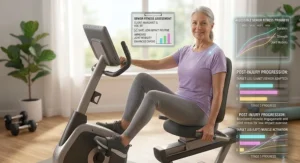
Recumbent Bike vs Upright Bike vs Treadmill: Which Wins for Your Goals
A recumbent bike, an upright bike, and a treadmill all deliver legitimate cardiovascular benefits, but they load your body very differently. A treadmill is weight-bearing, meaning your joints absorb impact with every step — valuable for bone density but often painful for arthritic knees or hips. An upright bike is non-weight-bearing like a recumbent, but concentrates pressure on a narrow saddle and requires more core and upper-body stabilization to stay balanced.
| Feature | Recumbent Bike | Upright Bike | Treadmill |
|---|---|---|---|
| Joint impact | Lowest | Low | Highest |
| Back support | Full backrest | Minimal | None |
| Core engagement | Lower | Moderate | Higher |
| Best For | Rehab, comfort seekers | Space-limited riders | Bone density, runners |
The takeaway from this comparison is straightforward: if joint pain, back support, or recovery from injury is your primary concern, the recumbent bike’s structural design directly addresses those issues in ways the other two machines simply cannot replicate. Runners training for bone density or race performance, however, will still need some weight-bearing activity in their weekly mix regardless of how comfortable the recumbent option feels.
Rehab and Recovery Cardio: Recumbent Bike Benefits for Seniors and Rehab Users
Rehab and recovery cardio is arguably where recumbent bikes shine brightest, and it’s not just marketing language — a completed clinical trial registered on ClinicalTrials.gov specifically compared recumbent and upright bike exercise for effects on knee joint cartilage and lower-extremity muscles, underscoring that researchers take the recumbent position seriously as a distinct clinical intervention rather than a lesser substitute.
For seniors, the wide seat, low step-through height, and full back support address three of the most common barriers to consistent exercise: fear of falling, joint pain, and general discomfort during longer sessions. Mayo Clinic specifically lists stationary or recumbent bicycling among the low-impact exercises recommended for people managing arthritis in the hips, knees, or ankles, which reflects a broader medical consensus rather than a single opinion.
Reviewers frequently describe returning to a recumbent bike after knee surgery or hip replacement as a turning point in their recovery timeline, since it lets them rebuild cardiovascular capacity and leg strength well before higher-impact activities are medically cleared. This is honest reporting of aggregated experience rather than a guarantee, and anyone in active rehab should confirm resistance levels and duration with their physical therapist before starting.
Common Mistakes When Buying a Recumbent Bike
The most frequent buying mistake is ignoring weight capacity headroom — purchasing a bike rated exactly at your current weight rather than leaving margin for stability and long-term durability. A close second is underestimating floor space, since recumbent bikes are noticeably longer than upright bikes due to their reclined seating and extended pedal position.
Buyers also commonly overpay for streaming features they rarely use; if you already have a preferred fitness app or simply enjoy watching TV while pedaling, a premium touchscreen console like NordicTrack’s may be redundant cost. On the flip side, some buyers underinvest in resistance range, purchasing an 8-level bike when their fitness goals genuinely require the finer control found in 40 or 100-level systems.
Finally, skipping the manufacturer’s weight and dimension specs in favor of marketing photos alone is a mistake — always cross-reference exact measurements against your available space and body size before ordering.
Features That Actually Matter (And Those That Don’t)
Flywheel weight, resistance level count, and seat adjustability consistently separate a genuinely comfortable, durable bike from a disappointing one — these are the specs worth prioritizing regardless of budget. Weight capacity headroom matters just as much, since frames rated too close to your body weight tend to show flex and wear faster.
Features that matter far less than marketing suggests include built-in speaker systems, since most riders simply use their own headphones or phone speaker, and elaborate preset workout program counts, since most riders default to two or three favorites regardless of how many are technically available. Touchscreen size matters primarily if you’re committing to a paid content subscription; without one, a smaller display showing your core metrics does the same practical job.
Long-Term Cost & Maintenance
The true cost of a recumbent bike extends beyond its price range. Budget bikes like the Marcy ME-709 and Sunny Health & Fitness SF-RB4602 carry minimal ongoing costs — occasional bolt tightening and pedal strap replacement — but shorter warranties mean parts failures land on the owner sooner. Premium bikes like the Sole LCR offset a higher upfront price with lifetime frame warranties and multi-year parts coverage, effectively lowering the total cost of ownership if you plan to keep the bike for a decade or more.
The NordicTrack Commercial R35 carries a hidden recurring cost worth calculating honestly: an iFit subscription running roughly $39 monthly adds up to several hundred dollars annually, meaning its five-year cost of ownership can exceed the Sole LCR‘s despite a similar upfront price. Buyers who won’t use streaming content are better served putting that subscription budget toward the Horizon 5.0R instead, which delivers comparable resistance sophistication without a recurring fee.
FAQ
❓ Are recumbent bikes actually good for cardio?
❓ Can a recumbent bike help with weight loss?
❓ Is a recumbent bike good for bad knees?
❓ How long should I ride a recumbent bike each day?
❓ Do recumbent bikes work your abs?
Conclusion
Recumbent bike benefits ultimately come down to a simple trade that makes sense for a huge range of people: slightly less upper-body engagement in exchange for dramatically less joint stress, better back support, and a seat you can actually sit in for 30 straight minutes without wincing. Whether you land on the budget-friendly Marcy ME-709, the feature-rich Horizon 5.0R, or the immersive NordicTrack Commercial R35, the right choice depends less on which bike is “best” in the abstract and more on matching the machine to your body, your budget, and your actual exercise habits. Health benefits recumbent training offers — better cardiovascular endurance, gentler rehab progress, sustainable weight management — only materialize with consistent use, so prioritize the bike you’ll actually want to sit on every week over the one with the flashiest spec sheet.
✨ Ready to find your comfort-focused cardio match? Check current pricing on today’s picks and start pedaling toward a stronger heart! 🚴
Recommended for You
- Recumbent Bike for Bad Knees: 7 Pain-Free Picks for 2026
- 7 Best Magnetic Recumbent Bikes in 2026: Quiet & Proven Picks
- Recumbent Bike With Arm Exercisers: 7 Best Picks for 2026
Disclaimer: This article contains affiliate links. As an Amazon Associate, I earn from qualifying purchases. If you purchase products through these links, we may earn a small commission at no additional cost to you.
✨ Found this helpful? Share it with your friends! 💬🤗
