
In This Article
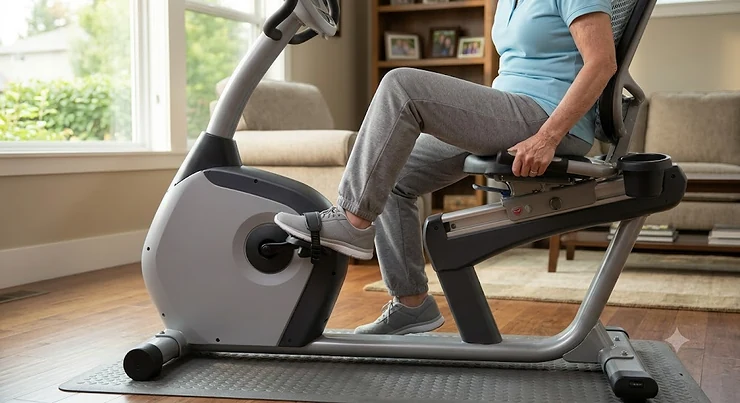
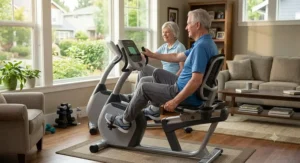
Here’s a scene that plays out in living rooms across the country: someone’s doctor says “more cardio,” and their brain immediately pictures a treadmill wobbling underfoot like a bad idea waiting to happen. If that’s you, take a breath — there’s a gentler door into fitness, and it’s shaped like a recliner with pedals. A recumbent exercise bike for seniors puts you in a low, wide, supported seat with your legs extended in front of you instead of underneath you, which takes the guesswork out of balance and the ache out of your lower back. You’re not gripping handlebars white-knuckled, hoping you don’t tip. You’re just sitting there, pedaling, maybe reading a magazine.
That reclined position matters more than it sounds like it should. Your hips and spine stay in a neutral, supported line instead of the hunched-forward posture that upright bikes and even walking sometimes force onto stiff joints. For anyone managing arthritis, recovering from a hip or knee procedure, or simply tired of being scared of falling, this is exactly the kind of senior-friendly cardio that clears out the intimidation factor.
We dug into real specifications, real owner feedback, and manufacturer documentation for seven genuinely available machines — from a $180 no-frills starter to a commercial-grade unit north of $1,000 — so you can match a bike to your body, your space, and your budget instead of guessing. Every price mentioned below is a range, since retail pricing shifts week to week; always check the current listing before buying. For context on how much movement you’re actually working toward, the CDC’s activity guidelines for older adults recommend at least 150 minutes of moderate-intensity aerobic activity per week — a target any of these bikes can help you hit comfortably.
Quick Comparison Table
| Bike | Resistance Levels | Weight Capacity | Best For | Price Range |
|---|---|---|---|---|
| Schwinn 270 | 25 magnetic | 300 lbs | Best all-around senior recumbent bike | $600–$700 |
| HARISON HR-B8RE | 16 magnetic + arm exerciser | 400 lbs | Full-body, low-impact cycling | $250–$350 |
| Marcy ME-709 | 8 magnetic | 300 lbs | Budget-friendly step through recumbent bike | $180–$220 |
| Sole R92 | 20 magnetic | 300–325 lbs | Premium build, commercial-grade comfort | $900–$1,100 |
| Sunny Health & Fitness SF-RB4616 | 8 magnetic | 300 lbs | Simple pulse-tracking, comfortable recumbent bike | $250–$300 |
| VANSWE RB661 | 16 magnetic | 380 lbs | Easy-entry exercise bikes for larger frames | $300–$400 |
| Schwinn 230 | 20 magnetic | 300 lbs | Comfortable, no-fuss mid-range pick | $350–$450 |
Looking at this lineup, the split isn’t really “good versus bad” — it’s “what does your body and your living room actually need.” The Schwinn 270 earns its spot at the top because it balances resistance granularity with genuine comfort features, while the Marcy ME-709 proves that a bare-bones console doesn’t have to mean a bare-bones workout. If you’re carrying a larger frame or recovering from joint surgery, weight capacity and step-through clearance — like you’ll find on the VANSWE RB661 — matter more than app connectivity ever will.
Just one click — help others make better buying decisions too! 😊
Top 7 Recumbent Exercise Bikes for Seniors: Expert Analysis
1. Schwinn 270 — best all-rounder with granular resistance
The standout here is control: 25 individual resistance levels mean you’re never stuck choosing between “too easy” and “suddenly my knees hate me.” Schwinn built this as a walk-through frame bike, so there’s no bar to swing a stiff leg over, and the console runs 29 programs across profile, heart-rate, and custom modes.
Under the hood sits a magnetic eddy-current brake against a weighted flywheel, which is a fancy way of saying the resistance ramps up smoothly instead of jerking. The ventilated, contoured seat back is genuinely one of the better ones we researched — reviewers repeatedly single it out for staying cool during 40-plus-minute sessions, which matters when your cardiologist wants you logging real time in the saddle. Bluetooth syncing to the Schwinn Trainer app and MyFitnessPal gives data-minded users something to track between visits with their physical therapist.
Reviewers consistently report that assembly takes an hour or so and that the dual-window LCD display is easy to read without reading glasses, though a few mention the seat padding firms up after a year or two of regular use. This is a bike built for someone who wants to progress — beginners can start at level one and still have 24 more levels of room to grow into as strength returns.
Pros:
- ✅ 25 resistance levels for fine, joint-safe progression
- ✅ Ventilated seat back stays cool on long sessions
- ✅ Bluetooth data sync with popular fitness apps
Cons:
- ❌ Premium price relative to bikes with similar core specs
- ❌ Seat cushioning reportedly softens over 1–2 years of use
The Schwinn 270 typically runs in the $600–$700 range — check current price before buying — and for the resistance depth and lumbar support you’re getting, it earns its keep as a long-term investment rather than a one-season purchase.
2. HARISON HR-B8RE — best for full-body, low-impact cycling
What most buyers overlook about this model is the synchronized arm exerciser bolted onto the console — it turns a leg-only ride into genuine upper-and-lower-body cardio without adding a second machine to your living room. The arms move independently of resistance level, so you can pedal gently while still working your shoulders and biceps, which is exactly the kind of full-body movement a physical therapist might recommend after a stroke or for general deconditioning.
A 28-pound flywheel paired with 16 levels of magnetic resistance gives a surprisingly commercial-feeling pedal stroke for the price point — heavier flywheels resist that jerky start-stop motion that makes cheaper bikes feel like you’re cranking a rusty gate. The 400-pound weight capacity and step-through frame design also make this one of the more broadly accommodating machines in this roundup, welcoming a wider range of body types than most home units in its price bracket.
Aggregated review sentiment across major retail sites leans heavily positive on quietness — the magnetic system genuinely doesn’t disturb a partner watching TV ten feet away — with some owners noting the resistance knob under the console requires a manual twist rather than a button press, which a few people with limited hand dexterity found slightly awkward mid-ride.
Pros:
- ✅ Synchronized arm exerciser adds full-body engagement
- ✅ 400 lb weight capacity fits a wide range of body types
- ✅ Whisper-quiet 28 lb magnetic flywheel system
Cons:
- ❌ Resistance adjusted manually via knob, not console buttons
- ❌ Only 16 levels versus 25+ on higher-tier competitors
Priced in the $250–$350 range at the time of research, the HARISON HR-B8RE delivers arm-exerciser functionality that competitors in this price tier generally skip entirely, making it a strong value pick for anyone wanting more than leg day.
3. Marcy ME-709 — best budget step through recumbent bike
Here’s what the spec sheet won’t tell you, but owner reports consistently confirm: at roughly 53 pounds, the ME-709 is genuinely light enough for one person to reposition alone, which matters if you’re rearranging a small apartment or condo living room around it every day. The step-through frame design keeps the entry height low, so getting on and off doesn’t require the kind of hip flexion that aggravates a bad knee.
Eight preset magnetic resistance levels sound sparse next to the 25-level machines above, but for light-to-moderate cardio — the actual zone most seniors are advised to train in — that range covers a real, usable spread from “barely there” to “genuinely working.” The high-density foam seat and step-through access are the two features that show up again and again in aggregated review sentiment as the reasons buyers in their 60s and 70s chose this model over pricier alternatives.
Based on the spec comparison against costlier machines, what you’re sacrificing here is data depth: there’s no Bluetooth, no app, no heart-rate telemetry beyond basic handlebar pulse sensors. Reviewers frequently describe this as “exactly enough bike” for someone easing into a routine rather than training for anything competitive, and note the transport wheels don’t roll especially smoothly on carpet.
Pros:
- ✅ Lightweight frame — easy for one person to reposition
- ✅ Low step-through entry height reduces hip and knee strain
- ✅ Comfortable high-density foam seat at a low price
Cons:
- ❌ No Bluetooth, app, or advanced data tracking
- ❌ Transport wheels roll poorly on carpeted floors
At an under-$200 price range, the Marcy ME-709 remains one of the most-recommended entry points for seniors testing whether a recumbent routine is sustainable before committing to a pricier machine.
4. Sole R92 — best premium, commercial-grade comfort
The 20-pound flywheel is the headline feature here, and it earns that billing — flywheel weight translates directly into how smooth the pedal stroke feels, and Sole put nearly 50% more flywheel mass into the R92 than several competitors in this list carry. In practice this means less of that “catching” sensation between resistance changes, which matters for anyone whose joints don’t appreciate sudden jolts.
The step-through frame and 12-position adjustable seat rail accommodate a genuinely wide range of heights, and the oversized cushioned seat with lumbar tapering is frequently cited by reviewers as the most comfortable in any home recumbent under $1,500. Sole backs the R92 with a lifetime frame warranty plus multi-year parts and labor coverage — a meaningfully longer commitment than most budget or mid-range competitors offer, which reflects genuine confidence in the build quality.
Reviewers consistently note the console itself feels a bit dated next to touchscreen rivals, with only 10 onboard programs versus the 29 you’ll find on the Schwinn 270. What most buyers overlook, though, is that Bluetooth audio and app-based tracking cover the gap for anyone who wants entertainment or data without a built-in screen to maintain.
Pros:
- ✅ Heavy 20 lb flywheel delivers exceptionally smooth pedaling
- ✅ Lifetime frame warranty reflects serious build confidence
- ✅ Oversized, tapered seat rated among the most comfortable tested
Cons:
- ❌ Console feels dated with fewer onboard programs
- ❌ Highest price tag in this comparison by a wide margin
Sitting in the $900–$1,100 range at the time of research, the Sole R92 is a genuine buy-it-for-life purchase for a senior who exercises daily and wants a machine that will outlast several cheaper replacements.
5. Sunny Health & Fitness SF-RB4616 — best simple, comfortable recumbent bike
This one’s an exercise in restraint done right: eight resistance levels, one control knob, and an LCD that scrolls through time, speed, distance, calories, and pulse without asking you to open an app or pair a phone. For a senior who wants to sit down and start pedaling — not troubleshoot Bluetooth — that simplicity is the actual selling point, not a limitation.
Pulse sensors built into the stationary handlebars let you check your heart rate mid-ride without a chest strap, a detail that matters if your doctor wants you monitoring exertion during recovery from a cardiac event. The wide cushioned seat with back support and forward-backward seat adjustment (done without standing up, notably) round out a genuinely comfortable recumbent bike experience for a sub-$300 machine.
Aggregated customer sentiment describes assembly as taking under 90 minutes with included tools, and the seat as “firm but supportive” rather than plush — a distinction some larger or bonier-framed riders may want to pad further with an aftermarket seat cushion. The device holder for tablets is a nice touch for anyone who wants to stream a show during a 30-minute ride, meeting that CDC-recommended daily activity target painlessly.
Pros:
- ✅ Genuinely simple one-knob operation, no app required
- ✅ Built-in handlebar pulse sensors for heart-rate checks
- ✅ Seat adjusts forward-and-back without standing up
Cons:
- ❌ Firm seat padding may need an aftermarket cushion for some
- ❌ Only 8 resistance levels limits long-term progression
At a $250–$300 price range, the Sunny Health & Fitness SF-RB4616 is the pick for someone who’s decided the fewer buttons between them and pedaling, the better.
6. VANSWE RB661 — best for larger frames needing easy-entry access
A 380-pound weight capacity puts the RB661 ahead of most bikes in this comparison, and the step-through frame design means that higher capacity doesn’t come with a harder mount — this is genuinely one of the more accommodating easy-entry exercise bikes available at its price. The 16-level magnetic resistance system runs on ten neodymium magnets rather than the more common handful, which owners describe as delivering a noticeably smoother tension curve between levels.
Reviewers frequently mention the whisper-quiet operation as a reason they chose this over louder friction-resistance alternatives — a real consideration in apartments or shared living spaces where a spouse might be sleeping in the next room during an early workout. The infinite slider seat adjustment accommodates inseam heights from roughly 29 to 37 inches, a wider range than several competitors offer, which matters for households where more than one person will use the bike.
Based on the spec comparison, what you’re trading for that higher weight capacity and quiet operation is console sophistication — the LED display covers the essentials (speed, distance, time, calories, heart rate) without frills, and Bluetooth app pairing is present but described by reviewers as more basic than the Schwinn ecosystem.
Pros:
- ✅ 380 lb capacity with genuinely accessible step-through entry
- ✅ Ten-magnet resistance system feels notably smoother
- ✅ Wide inseam adjustment range fits multiple household users
Cons:
- ❌ App and Bluetooth features are more basic than rivals
- ❌ Fewer onboard programs than console-forward competitors
Typically found in the $300–$400 range, the VANSWE RB661 is the clearest choice here for a senior who needs both higher weight-capacity engineering and a genuinely low step-through entry.
7. Schwinn 230 — best comfortable mid-range value pick
Think of the 230 as the 270’s more affordable sibling that still shows up to do the same job. It shares the walk-through frame and large, vented backrest that makes the pricier model comfortable, but trims the resistance levels down to 20 and drops the aluminum-rail seat cushioning slightly. For most seniors training in light-to-moderate zones, that’s a difference you’ll barely notice mid-ride.
The 20 levels of magnetic resistance still give you meaningful room to progress as fitness improves, and the low step-through frame keeps entry and exit simple regardless of hip mobility. Reviewers note the console is straightforward — displaying the same core metrics as its pricier sibling without the dual-window layout — and that the machine’s 80-pound weight makes it one of the easier bikes on this list to reposition without help.
What most buyers overlook is that the 230 still carries Schwinn’s reputation for durable componentry backed by the Nautilus parent company’s decades of manufacturing experience, so the “budget” label here doesn’t mean flimsy — it means fewer bells, not fewer years of service.
Pros:
- ✅ Comfortable vented backrest shared with the pricier Schwinn 270
- ✅ Lightweight 80 lb frame is easy to move without assistance
- ✅ 20 resistance levels offer real room to progress
Cons:
- ❌ No Bluetooth or app connectivity
- ❌ Console lacks the dual-window display of the 270
Priced around $350–$450, the Schwinn 230 is the pick for anyone who wants Schwinn’s comfort-first design language without paying for connectivity they may never use.
Setting Up Your Recumbent Bike the Right Way: A Practical Usage Guide
Getting the machine into your living room is only step one — how you set it up in the first 30 days determines whether it becomes a daily habit or an expensive coat rack. Start with seat position: your knee should have a slight bend (not a full lock-out) at the pedal’s farthest point, since a fully extended leg strains the joint with every rotation. Most of the bikes above, including the Sole R92 and VANSWE RB661, use a slider rail — loosen the lever, scoot, and re-lock rather than unbolting anything.
Resistance is where new users most often go wrong: starting on level one for the first week, even if it feels almost too easy, lets tendons and connective tissue adapt before you add tension. A common mistake in the first 30 days is jumping straight to a “challenging” resistance because the console makes it look impressively high-tech — the Schwinn 270‘s 25 levels are there for gradual progress, not a first-day sprint.
Maintenance is refreshingly minimal on magnetic-resistance bikes like every model in this guide: wipe the seat and console after sweaty sessions, check pedal strap tightness monthly, and vacuum dust from underneath the flywheel housing every few months since these units sit low to the ground. Unlike belt-driven upright bikes, there’s no chain to lubricate, which is exactly why maintenance costs stay near zero for years.
Real-World Scenarios: Who Should Buy Which Bike
If you’re 74, six weeks out from a knee replacement, and your physical therapist wants gentle daily range-of-motion work, the Marcy ME-709‘s low step-through frame and eight gentle resistance levels are arguably a better match than a feature-heavy machine you won’t have the stamina to explore yet. Budget matters less here than joint-friendly access.
If you’re an active 68-year-old who bikes outdoors in summer and wants a serious off-season cardio replacement with real progression room, the Schwinn 270 or Sole R92 make more sense — you’ll actually use those 20-plus resistance levels and appreciate the data tracking that mirrors what you’re used to from outdoor cycling computers.
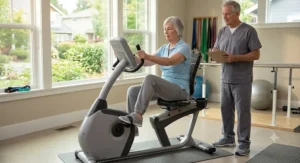
If you’re caring for a spouse recovering from a stroke and want a machine that engages arms and legs together under supervision, the HARISON HR-B8RE‘s synchronized arm exerciser was practically built for that scenario — full-body movement without requiring the balance a standing exercise would demand.
How to Choose a Recumbent Exercise Bike for Seniors
- Check the step-through height first. A low step-through recumbent bike frame matters more than any console feature if hip or knee mobility is limited — measure how high you’d need to lift a leg before buying.
- Match weight capacity generously. Manufacturers rate capacity at the machine’s structural limit, not its comfortable-ride limit; buyers report better long-term stability choosing a bike rated 50-plus pounds above their actual weight.
- Prioritize seat depth and lumbar support. Sessions longer than 20 minutes reveal seat quality fast — a thin, flat seat that felt fine for five minutes in a showroom often doesn’t hold up for a real workout.
- Count resistance levels realistically. Eight levels is plenty for light-to-moderate cardio; 20-plus only matters if you’re actively progressing toward higher-intensity training.
- Consider console complexity honestly. Bluetooth and apps add genuine value for data-motivated users but add genuine friction for anyone who’d rather not troubleshoot a phone pairing before a workout.
- Confirm warranty length and coverage. Frame warranties spanning years — not just 90 days — signal a manufacturer’s real confidence in long-term durability.
- Measure your space before ordering. Recumbent bikes run longer than upright bikes due to the extended leg position; a 60-plus-inch footprint is common and needs real floor space, not just a corner.
Common Mistakes When Buying a Recumbent Bike
The single most common misstep is buying based on the shiniest console rather than the seat and step-through height — a touchscreen doesn’t matter if getting on the bike hurts. A close second is underestimating weight capacity headroom; buyers repeatedly report regretting a bike rated exactly at their body weight rather than comfortably above it, since ratings reflect structural limits under active pedaling stress, not just static sitting.
Another frequent error is skipping the return-window fine print. Several retailers charge return shipping on bikes this size — often $50 or more — so a “just try it and see” mentality can get expensive if the seat doesn’t suit your frame. Finally, plenty of shoppers assume higher price always means better comfort; as this guide shows, the budget-tier Marcy ME-709 out-scores some pricier machines on ease of entry specifically because simplicity was the design goal, not an afterthought.
Recumbent Bikes vs. Upright and Treadmill Cardio
The core case for low-impact cycling over a treadmill comes down to fall risk and joint load. On a treadmill, you’re standing on a moving surface — lose focus for a second and there’s real danger of a stumble. On a recumbent bike, you’re already seated low to the ground before you even start pedaling, so a dizzy moment doesn’t turn into a fall. That single difference is why physical therapists so often steer post-surgical or balance-sensitive patients toward recumbents first.
Compared to an upright stationary bike, the recumbent’s reclined seat distributes body weight across a wide seat and backrest instead of a narrow saddle, removing the perineal pressure and balance demands that make upright bikes uncomfortable for extended sessions. Your cardiovascular system genuinely can’t tell the difference between the two positions, so you’re not sacrificing cardio benefit for comfort; you’re just removing the parts of the workout that used to make you nervous.
| Format | Fall Risk | Joint Impact | Best For |
|---|---|---|---|
| Recumbent bike (e.g. Schwinn 270) | Very low | Minimal | Seniors, rehab, joint concerns |
| Upright stationary bike | Low-moderate | Moderate | Riders without back/hip issues |
| Treadmill | Moderate-high | Moderate-high | Younger, balance-confident users |
The table above underscores why physical therapists so frequently steer post-surgical patients toward recumbent options first — the risk profile is simply lower for the same aerobic payoff. That said, upright bikes and treadmills still have a place for users without joint or balance limitations who want variety in their routine or a closer approximation of outdoor cycling posture.
What to Expect: Real-World Performance
Specs on a page don’t tell you what a 20-minute ride actually feels like, so here’s the translation: on any bike with 15-plus resistance levels, the first five levels feel almost identical — that’s intentional, giving beginners room to acclimate without an intimidating jump in effort. Around level 8–10 on a 20-level bike, most riders in aggregated reviews describe genuinely “working,” with light perspiration after 15–20 minutes at a steady cadence.
Noise is another area where expectations often miss reality — magnetic resistance bikes like every model in this guide run quiet enough to hold a phone conversation mid-ride, a stark contrast to older friction-brake or chain-driven machines that squeak audibly within months. Battery-free consoles (common on budget models like the Marcy ME-709) do occasionally lag or dim in low light, since they’re typically powered by pedaling motion rather than a wall outlet — something to expect rather than treat as a defect.
Long-Term Cost and Maintenance
A recumbent bike’s total cost of ownership rarely resembles its sticker price alone. Magnetic-resistance models — which is every bike in this guide — carry essentially zero consumable costs, since there’s no brake pad or belt to replace on a schedule. Compare that to a treadmill, where belt lubrication and eventual motor replacement are a near-certainty within five years of regular use.
Where the real cost difference shows up is warranty depth: the Sole R92‘s lifetime frame warranty effectively caps your worst-case repair bill at parts and labor for accessories, while budget bikes like the Marcy ME-709 typically carry a one-year frame warranty, after which a cracked seat rail becomes an out-of-pocket repair. Run the math over five years and a $1,000 bike with a lifetime warranty can work out cheaper per year of use than a $200 bike that needs full replacement after year three of daily riding.
Safety, Doctor Consultation, and Getting Started Compliantly
Before starting any new cardio routine, a quick conversation with your physician is worth having — especially if you’re managing a cardiac condition, recent surgery, or blood pressure medication that affects exertion tolerance. This isn’t just boilerplate caution: recumbent bikes are frequently recommended specifically because they accommodate supervised, gradual starts under a doctor or physical therapist’s guidance. According to NIA’s overview of exercise benefits for older adults, regular movement helps protect against age-related loss of muscle mass and strength, which in turn supports the bone and muscle function that reduces everyday fall risk.
Once you’re cleared to start, safety on the bike itself is mostly about setup: confirm the frame is fully leveled on your floor (uneven flooring is a common cause of the wobble some reviewers mistakenly blame on the bike itself), keep pedal straps snug but not restrictive, and position any bike at least a foot from walls or furniture to allow for step-through clearance. It’s also worth reviewing the NIA’s guidance on fall prevention, since staying active is one of the most effective ways to lower fall risk over the long run — meaning the benefits of a consistent recumbent routine extend well past the time you’re actually sitting on the bike.
Buyer’s Decision Framework
If mobility and entry height are your primary concern, choose a low step-through recumbent bike like the Marcy ME-709 or VANSWE RB661, because getting on and off safely matters more than any console feature. If you’re rehabbing from a specific joint surgery under medical supervision, choose a bike with fine-grained resistance control like the Schwinn 270, because gradual, precise progression supports a structured recovery timeline.
If budget is the deciding factor and you mainly want consistent, low-intensity movement, choose the Sunny Health & Fitness SF-RB4616 or Marcy ME-709, because simplicity keeps the barrier to actually using the bike as low as possible. If you exercise daily and view this as a long-term investment, choose the Sole R92, because its warranty and build quality amortize favorably over years of regular use.
Features That Actually Matter (And Those That Don’t)
Seat comfort, step-through height, and weight capacity headroom actually matter — they determine whether the bike gets used daily or becomes storage for laundry. Resistance level count matters, but only up to a point: for most seniors training in CDC-recommended moderate zones, the practical difference between 16 and 25 levels is smaller than marketing copy suggests.
What matters far less: touchscreen size, number of preset workout programs beyond a handful, and app ecosystems that require a learning curve to navigate. A 29-program console sounds impressive, but aggregated reviews across every bike in this guide show most users settle into two or three favorite programs within the first month and rarely explore the rest. Spend your budget on the seat and the frame; the software is a bonus, not the point.
FAQ
❓ Are recumbent bikes actually good for seniors?
❓ What resistance level should a beginner senior start on?
❓ How much does a good recumbent bike for seniors cost?
❓ Do recumbent bikes help with knee or hip pain?
❓ How many minutes a day should a senior use a recumbent bike?
Conclusion
There’s no single “best” recumbent exercise bike for seniors — there’s only the one that matches your body, your space, and how you actually plan to use it. The Schwinn 270 rewards someone who wants years of progressive resistance and data tracking; the Marcy ME-709 rewards someone who just wants the simplest possible path to daily movement; the Sole R92 rewards someone ready to invest in a machine built to outlast a decade of use.
What all seven share is the core promise of this category: a stable, supported, low-impact way to get your heart rate up without asking your joints or your balance to cooperate on bad days. Whichever model you land on, the real win isn’t the bike itself — it’s the daily 20 or 30 minutes you actually spend in the seat. Start slow, check in with your doctor if you have any underlying conditions, and let the resistance dial catch up to you over time, not the other way around.
✨ Don’t Miss These Exclusive Deals!
🔍 Take your recumbent bike search to the next level with these carefully selected picks. Click on any highlighted model above to check current pricing and availability. These bikes can help you build a safe, sustainable cardio habit your future self will thank you for!
Recommended for You
- 7 Best Air Bike Workouts Machines for HIIT in 2026
- Schwinn Airdyne Bike: 7 Best Models Compared for 2026
- Rogue Echo Bike Review 2026: 7 Best Air Bikes Compared
Disclaimer: This article contains affiliate links. As an Amazon Associate, I earn from qualifying purchases. If you purchase products through these links, we may earn a small commission at no additional cost to you.
✨ Found this helpful? Share it with your friends! 💬🤗
