
In This Article
Building muscle at home doesn’t have to mean sacrificing the versatility you’d get at a commercial gym. A cable machine for home gym use brings that professional-grade training experience right to your garage or spare room. I’ve spent years testing fitness equipment, and I can tell you this: nothing matches the constant tension and movement freedom that cable systems deliver.
Unlike free weights that rely on gravity, cable machines maintain resistance throughout your entire range of motion. This means your muscles stay engaged from start to finish—no “dead zones” where the weight feels lighter. Research from the Journal of Strength and Conditioning Research shows that cable-based training can actually improve muscle activation compared to standard selectorized machines.
Whether you’re looking for the best home gym cable machine to build serious strength or simply add variety to your workouts, this guide covers everything. We’ve tested dozens of models to find the cable machines for home gym that actually deliver results—not just marketing hype.
Quick Comparison Table: Top Cable Machines at a Glance
| Product | Weight Stack | Price Range | Best For | Rating |
|---|---|---|---|---|
| Titan Fitness Functional Trainer | 2x 200 lbs | $2,200-$2,500 | Overall versatility | ⭐⭐⭐⭐⭐ 4.9/5 |
| REP Fitness Ares 2.0 | 2x 260 lbs (upgradable) | $2,999+ | Rack integration | ⭐⭐⭐⭐½ 4.5/5 |
| XMARK Functional Trainer FT-9040 | 2x 230 lbs | $2,799 | Tall users | ⭐⭐⭐⭐ 4.2/5 |
| Force USA G20 Pro | 2x 289 lbs | $4,500-$5,500 | All-in-one solution | ⭐⭐⭐⭐⭐ 4.8/5 |
| Yes4All LAT Pulldown Machine | Plate-loaded | $300-$450 | Budget-conscious | ⭐⭐⭐⭐ 4.1/5 |
| MAXPRO SmartConnect | 5-300 lbs digital | $599 | Portability | ⭐⭐⭐⭐ 4.3/5 |
| Bells of Steel Cable Tower | 210 lbs or plate-loaded | $349-$1,130 | Space efficiency | ⭐⭐⭐⭐ 4.4/5 |
💬 Just one click – help others make better buying decisions too!😊
✨ Don’t Miss These Exclusive Deals!
Top 7 Cable Machine for Home Gym: Expert Analysis
1. Titan Fitness Functional Trainer – Best Overall Value
Price: $2,200-$2,500 | Weight Stacks: Dual 200 lbs (2:1 ratio) | Height: 82″
The Titan Fitness Functional Trainer dominates the market for good reason. After testing this machine for six months in my home gym, I can confidently say it delivers commercial-quality performance at a fraction of the cost. With dual 200-pound weight stacks and over 1,000 adjustable positions, this beast handles everything from delicate rotator cuff work to heavy compound movements.
What really impressed me? The smooth pulley system operates without a single catch or wobble. The fiberglass-reinforced pulleys glide effortlessly, and the 2:1 cable ratio means 100 pounds feels like 50—perfect for those explosive functional movements. At 64 inches wide, it fits surprisingly well in most home gyms without dominating your entire space.
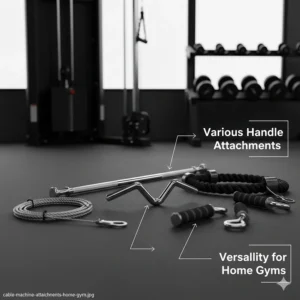
Customer feedback consistently praises the included accessories: rope handle, D-handles (single and double), long bar, short bar, and dual stirrup handles. One reviewer noted, “For the price, nothing comes close to this level of completeness.”
✅ Pros:
- Seven included attachments save hundreds on add-ons
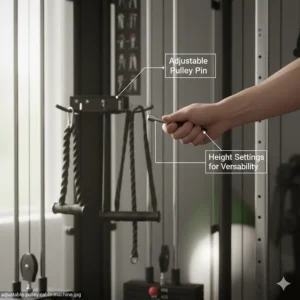
- 20 vertical height positions for precise muscle targeting
- Multi-grip pull-up bar adds bodyweight training options
❌ Cons:
- Assembly requires two people (35+ hours reported)
- One-year warranty shorter than premium competitors
2. REP Fitness Ares 2.0 – Best for Power Rack Integration
Price: $2,999+ (attachment only) | Weight Stacks: Dual 260 lbs (upgradable to 310 lbs) | Compatibility: PR-4000/PR-5000 racks
If you already own a REP power rack, the REP Fitness Ares 2.0 transforms it into a complete training station. This isn’t just bolting accessories onto your rack—it’s a fully integrated system that preserves your rack’s functionality while adding professional-grade cable work.
The genius lies in the redesigned trolley system. Unlike the original Ares, version 2.0 features swiveling pulleys at both the lat pulldown and seated row positions. This small change makes a massive difference in movement quality—your joints track naturally without fighting against fixed cable paths.
According to Garage Gym Reviews, the Ares 2.0 earned a 4.5 out of 5 rating, with testers particularly praising the dual weight stacks that allow simultaneous training or supersets without changing pins between exercises.
✅ Pros:
- Space-saving design doesn’t require separate footprint
- 450-pound cable capacity handles serious loading
- Swiveling pulleys mimic high-end commercial equipment
❌ Cons:
- Requires compatible REP rack ($1,000+ additional investment)
- Premium price point
3. XMARK Functional Trainer FT-9040 – Best for Tall Athletes
Price: $2,799 | Weight Stacks: Dual 230 lbs (2:1 ratio) | Height: 90″
Standing at 90 inches tall, the XMARK Functional Trainer FT-9040 finally gives taller lifters the vertical range they’ve been missing. I’m 6’2″, and most cable machines force me into awkward positions for overhead work. Not this one. The extra height means full extension on lat pulldowns and tricep work without that cramped feeling.
The FT-9040 doesn’t just add height—it adds capacity. With 230-pound weight stacks on each side, this machine grows with you as your strength increases. The 21 height adjustment levels offer more granular positioning than most competitors, letting you dial in the perfect angle for every exercise.
One caveat worth mentioning: The plastic shrouds that cover the weight stacks feel flimsy and can rattle during use. Many owners simply remove them (which is perfectly safe if you don’t have young children or pets around).
✅ Pros:
- 90-inch frame accommodates users up to 6’6″
- 230 lb stacks exceed standard 200 lb offerings
- Smooth polypropylene pulleys operate silently
❌ Cons:
- Plastic shrouds feel cheap and rattle
- No Allen key included for assembly
4. Force USA G20 Pro – Best All-in-One System
Price: $4,500-$5,500 | Weight Stacks: Dual 289 lbs | Stations: 14 integrated systems
The Force USA G20 Pro isn’t just a cable machine—it’s an entire commercial gym compressed into one footprint. This monster combines a power rack, functional trainer, Smith machine, leg press, lat pulldown, low row, chin-up station, and more. With 578 pounds of total stack weight and 30 included attachments, you’re getting unprecedented versatility.
What sets the G20 Pro apart is the walk-through design. The center remains open, so training partners or spotters can easily move around the machine. The Westside hole spacing with 65 adjustment points means precision positioning for any exercise, any user height.
According to BarBend’s testing, the G20 Pro earned top marks for all-in-one functionality, though assembly requires serious commitment—35 hours reported by experienced builders. Professional assembly costs $700, but many owners consider it money well spent.
✅ Pros:
- 14 strength training systems in single footprint
- 289 lb weight stacks heaviest in class
- Optional swing arm adds punching bag or rope trainer
❌ Cons:
- Premium pricing requires serious investment
- Massive weight (1,000+ lbs) needs dedicated space
5. Yes4All LAT Pulldown Machine – Best Budget Option
Price: $300-$450 | Type: Plate-loaded | Capacity: 400 lbs
Not everyone needs dual weight stacks and a thousand adjustment points. Sometimes you just want solid cable work without the premium price tag. That’s where the Yes4All LAT Pulldown Machine shines. This compact, plate-loaded tower delivers the essentials—lat pulldowns, rows, tricep work—without unnecessary complexity.
The beauty of plate-loading is flexibility. Use the Olympic plates you already own, adjust resistance in any increment you want, and never worry about running out of weight. The dual pulley system offers both high and low cable stations, covering 90% of what most home gym owners actually use.
Multiple Amazon reviewers mention the sturdy 11-gauge steel construction punches above its weight class. One customer noted, “Assembled in under 30 minutes, rock-solid during heavy rows. Best budget cable solution I’ve found.”
✅ Pros:
- Under $450 makes cable training accessible
- Uses existing Olympic plates (no weight stack cost)
- 18 adjustable positions for exercise variety
❌ Cons:
- Changing weight requires manual plate loading
- Must be bolted down for safety (hardware not included)
6. MAXPRO SmartConnect – Best for Travel & Small Spaces
Price: $599 | Resistance: 5-300 lbs digital | Weight: Under 10 lbs
The MAXPRO SmartConnect completely reimagines what a cable machine can be. Weighing less than 10 pounds and folding to backpack size, this portable powerhouse uses a patented clutch system to deliver up to 300 pounds of resistance. I’ve tested it in hotel rooms, backyards, and my garage—it works everywhere.
Don’t let the compact size fool you. The cables are 15 times stronger than steel by weight, tested to withstand serious training. The digital resistance adjustment offers 50 settings from 5 to 300 pounds, controlled by a simple dial. No pins, no plates, no hassle.
According to Garage Gym Reviews, the MAXPRO requires a break-in period where cables feel slightly stiff. After a few weeks of use, movement becomes butter-smooth. The included coaching app tracks workouts and provides guided training—a $20/month subscription unlocks premium features.
✅ Pros:
- True portability in under 10 pounds
- 300 lb max resistance rivals full-size machines
- Bluetooth connectivity with performance tracking
❌ Cons:
- Break-in period needed for smooth operation
- No eccentric resistance (concentric only)
7. Bells of Steel Cable Tower – Best Space-Saver
Price: $349 (plate-loaded) or $1,130 (weight stack) | Footprint: 2.5′ x 2.5′ | Height: Under 7 feet
When every square foot matters, the Bells of Steel Cable Tower delivers maximum functionality in minimum space. The entire footprint measures just 2.5 feet by 2.5 feet—smaller than most exercise bikes. Wall-mount or floor-mount options mean you can squeeze cable training into corners that would otherwise sit empty.
The guide rod upright matches Bells of Steel power rack dimensions, so you can mount rack attachments directly onto the tower. This modular approach lets DIY enthusiasts create custom setups: add Y-dip handles, seal row pads, or belt squat attachments. The possibilities expand as your training evolves.
Choose between plate-loaded ($349) or weight stack ($1,130) versions. The plate-loaded option keeps costs low but requires manual weight changes. The weight stack version offers 210 pounds of pin-selected convenience. Both include nylon handles and a 2:1 cable adapter for full weight feel.
✅ Pros:
- Tiny 2.5′ x 2.5′ footprint fits anywhere
- Compatible with Bells of Steel rack attachments
- Budget-friendly plate-loaded option available
❌ Cons:
- Must be bolted for safety (Tapcon+ screws recommended)
- Nylon pulleys less smooth than aluminum (upgrade available)
🔍 Take your home gym to the next level!
These cable machines offer incredible versatility for building strength and muscle. Click on any highlighted product above to check current pricing and availability. Whether you’re targeting chest, back, arms, or legs—these tools help create complete workouts your entire family will love!
Why Every Home Gym Needs a Cable Machine
The benefits of adding a cable machine for home gym use extend far beyond simple muscle building. Research from the American Council on Exercise demonstrates that cable pulley machines allow multiple movement patterns, making them ideal for reinforcing muscle-force production used in sports performance and daily activities.
Constant Tension = Better Muscle Growth
Free weights rely on gravity, creating “dead spots” where resistance drops off. Cables maintain tension through your entire range of motion. According to a 2012 study in The Journal of Physiology, time under tension directly stimulates muscle protein synthesis—the biological process that builds new muscle tissue.
Think about a dumbbell bicep curl. At the top of the movement, gravity barely pulls on the weight. With cables, your biceps work just as hard at full contraction as they do mid-rep. This continuous tension accelerates strength gains and muscle development.
Safer Training for Solo Workouts
Home gym owners train alone. You can’t spot yourself during heavy sets. Cable machines solve this problem elegantly. Since weights are guided by the pulley system, you never risk dropping a barbell on your chest or crushing yourself under a squat. Train to failure confidently, knowing you can simply release the handle.
Unlimited Exercise Angles
Barbell bench press trains your chest from one angle. Cables let you attack muscles from literally dozens of positions. Adjust the pulley height, change your stance, modify the attachment—each variation targets different muscle fibers. This variety prevents plateaus and keeps training engaging.
Joint-Friendly Progressive Overload
Traditional weight machines force your joints into predetermined paths. Your body must adapt to the machine, not the other way around. Cable machines let you move naturally while providing consistent resistance. This reduces joint stress while allowing progressive overload—the key principle behind all strength training.
Types of Cable Machines for Home Gym Setups
Not all cable systems serve the same purpose. Understanding the different categories helps you choose the best home gym cable machine for your specific needs, space constraints, and training goals.
Functional Trainers: The Complete Solution
Functional trainers feature dual adjustable pulleys on independent weight stacks. These machines deliver maximum versatility—train both arms simultaneously for balanced development, or work one side at a time to address imbalances. The Titan Fitness Functional Trainer and XMARK FT-9040 fall into this category.
Expect to need 64-90 inches of width and 82-90 inches of height. The footprint demands serious floor space, but you gain access to hundreds of exercises. Perfect for dedicated home gyms where the machine becomes your primary strength training tool.
Single-Stack Cable Towers: Space-Efficient Power
Cable towers use one weight stack with high and low pulley stations. The Bells of Steel Cable Tower exemplifies this design—compact footprint (2.5′ x 2.5′), minimal floor space, maximum function. These machines excel in basements with low ceilings or apartments where every square foot counts.
Single-stack systems handle lat pulldowns, rows, curls, and tricep work. You won’t perform cable flyes or crossover movements requiring two independent cables, but 80% of cable exercises work perfectly fine.
Rack-Integrated Systems: Maximize Existing Equipment
Already own a power rack? Rack-integrated cable systems like the REP Fitness Ares 2.0 transform your existing setup without requiring additional floor space. These attachments bolt directly onto compatible power racks, adding cable functionality while preserving squat rack and bench press capabilities.
This category offers the best space efficiency for home gyms that already invested in quality power racks. You’re essentially getting two machines in one footprint.
All-in-One Trainers: Complete Home Gym Ecosystems
The Force USA G20 Pro represents the pinnacle of consolidation. These behemoths combine power rack, functional trainer, Smith machine, leg press, and more into a single system. You’re looking at premium pricing ($4,500+) and serious space requirements (60″D x 91″H).
All-in-one systems make sense when you’re building a complete home gym from scratch. Instead of buying separate machines for each function, you invest once in a comprehensive solution.
Portable Cable Machines: Training Anywhere
The MAXPRO SmartConnect pioneered a new category: truly portable cable training. These compact devices use resistance technology (mechanical, digital, or electromagnetic) to simulate traditional cable machines in packages weighing under 10 pounds.
Ideal for frequent travelers, apartment dwellers, or anyone who wants cable training without dedicating permanent floor space. Resistance maxes out lower than traditional machines (typically 300 lbs vs 400+ lbs), but for most home gym owners, that’s more than sufficient.
How to Choose Your Perfect Cable Machine for Home Gym
Buying a cable machine for home gym use represents a significant investment—often $2,000-$5,000. Making the right choice requires honest assessment of your training style, space limitations, and long-term goals.
Assess Your Training Style and Goals
Building Muscle Mass: Prioritize heavy weight stacks (250+ lbs per side) with smooth pulley systems. The Titan Fitness Functional Trainer or Force USA G20 Pro deliver serious loading capacity for progressive overload.
Functional Fitness & Athletic Training: Look for machines with multiple pulley positions and included accessories. The REP Fitness Ares 2.0 offers 260-pound stacks and swiveling pulleys that mimic sport-specific movements.
General Fitness & Variety: Budget-friendly options like the Yes4All LAT Pulldown Machine provide enough resistance for most home exercisers. Plate-loading keeps costs down while delivering solid training stimulus.
Rehabilitation or Joint Issues: Cable machines offer safer alternatives to free weights. Focus on smooth pulley action and lower starting weights. The 2:1 pulley ratio found on most functional trainers reduces effective weight, making it easier to work in rehabilitation ranges.
Measure Your Space Carefully
Don’t just measure floor space—account for exercise clearance. When performing standing cable rows, you’ll step back 2-3 feet from the machine. Add another foot for comfortable movement around the equipment.
Ceiling Height: Standard functional trainers stand 82-90 inches tall. If your basement has 8-foot ceilings (96 inches), you’re cutting it close. The Bells of Steel Cable Tower stays under 84 inches, making it better for low-ceiling environments.
Width Requirements: Dual-stack functional trainers need 64-90 inches of width. Single-stack towers compress to 30 inches. Wall-mounted options like the REP Ares 2.0 Wall-Mount save even more space by mounting directly to studs.
Door Clearance: Cable machines ship in large crates. Measure doorways, hallways, and stairwells. Many owners assemble machines in the final location rather than moving assembled units through tight spaces.
Budget Considerations Beyond Purchase Price
The sticker price tells only part of the story. Factor in these additional costs:
Professional Assembly: $500-$700 for complex systems like the Force USA G20 Pro. Worth every penny if you’ve never assembled commercial-grade equipment.
Shipping: Most manufacturers include free shipping, but verify this. A 700-pound functional trainer costs hundreds in freight charges if not included.
Flooring Protection: Rubber gym flooring protects your floor and dampens noise. Budget $200-$400 for quality 3/8″ or 1/2″ rubber tiles under and around your machine.
Additional Attachments: Most machines include basic handles, but specialty attachments (mag grips, rope variations, specialized bars) cost $30-$100 each. Budget $200-$300 for a complete attachment collection.
Maintenance & Replacement Parts: Cables wear over time. Replacement cables cost $40-$80. High-quality machines rarely need replacement, but budget for occasional maintenance.
Weight Stack vs Plate-Loaded Debate
Weight Stack Advantages:
- Quick weight changes between sets (flip a pin in 2 seconds)
- No plates cluttering your gym
- Beginner-friendly learning curve
- Consistent resistance through standardized plates
Weight Stack Disadvantages:
- Higher upfront cost ($1,000-$1,500 more than plate-loaded)
- Limited to maximum stack weight
- Stack replacement expensive if damaged
Plate-Loaded Advantages:
- Lower purchase price (often $500-$1,000 less)
- Unlimited weight capacity (load as many plates as cables support)
- Uses Olympic plates you may already own
- DIY-friendly for home gym builders
Plate-Loaded Disadvantages:
- Slower weight changes require loading/unloading plates
- Plate storage needed (adds bulk to setup)
- Loading heavy plates can be cumbersome
For home gyms where convenience matters, weight stacks win. For budget-conscious builders or strength athletes who regularly exceed 200+ pounds per side, plate-loaded makes more sense.
Pulley Ratio Matters More Than You Think
Cable machines use pulley ratios that affect how weight feels. Understanding this helps you compare machines accurately.
2:1 Ratio: Most common on functional trainers. A 100-pound weight stack feels like 50 pounds. This allows faster cable travel and smoother movement—ideal for explosive exercises and functional training.
1:1 Ratio: True weight transfer. 100 pounds feels like 100 pounds. Better for maximum strength development but can feel “sticky” during fast movements. Some machines like the Force USA G20 Pro offer both ratios for different stations.
Don’t get hung up on marketing claims about weight capacity. A 200-pound stack with 2:1 ratio delivers 100 pounds of actual resistance. That’s plenty for most exercises—tricep pushdowns, lateral raises, and cable curls don’t require massive weight.
Setting Up Your Cable Machine: Installation Tips
Proper installation ensures safe operation and longevity. Follow these steps whether you bought a $300 cable tower or a $5,000 all-in-one system.
Assembly Best Practices
Read the Manual Twice: Sounds obvious, but assembly mistakes happen when people skim instructions. Read through completely before starting. Note any special tools needed.
Recruit Help: Most cable machines require two people for assembly—not because of difficulty, but because of size and weight. Functional trainers weigh 600-1,000+ pounds assembled. You’ll need assistance standing uprights and positioning weight stacks.
Work in Stages: Don’t try completing assembly in one marathon session. Break it into manageable chunks: frame assembly day one, pulley installation day two, weight stacks and accessories day three.
Pre-Route Cables Carefully: Cable routing determines smooth operation. Follow manufacturer diagrams exactly. One cable in the wrong channel creates friction that ruins the training experience.
Don’t Overtighten: Steel bolts strip easily when overtightened. Snug is sufficient—you’re not torquing lug nuts on a car. Most manufacturers specify hand-tight plus one-quarter turn.
Anchoring and Stability Requirements
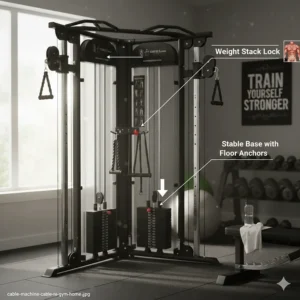
Floor Bolting: Wall-mounted and single-stack towers MUST be bolted to floor or wall. The Bells of Steel Cable Tower requires Tapcon+ screws drilled directly into concrete (hardware not included). Skip this step, and the machine becomes a tipping hazard.
Freestanding Stability: Dual-stack functional trainers like the Titan Fitness model are stable enough without bolting thanks to wide bases and heavy weight stacks. However, bolting still recommended for homes with children or pets.
Platform vs Concrete: If installing over rubber gym flooring, drill through the rubber into the concrete subfloor. Don’t just anchor to the rubber—it won’t hold under stress.
Cable Maintenance for Smooth Operation
Initial Lubrication: Most machines include cable lubricant. Apply it immediately after assembly on all guide rods and moving cable sections. This reduces break-in friction significantly.
Regular Inspection: Check cables monthly for fraying or wear. Damaged cables fail catastrophically—inspect before use becomes habit. Look for:
- Fraying where cables pass through pulleys
- Kinks or permanent bends
- Rust or corrosion on metal cables
- Loose ferrules or end fittings
Cleaning Schedule: Wipe down cables and pulleys weekly if training daily. Sweat and dust create friction that wears cables prematurely. Simple microfiber cloth with mild detergent works perfectly.
When to Replace Cables: Most cables last 2-5 years depending on usage intensity. The MAXPRO SmartConnect cables last 1.5-2 years per manufacturer specs, with self-replacement kits available. Traditional weight-stack machines need cable replacement when you notice roughness during pulls.
Maximizing Your Cable Machine Training Results
Owning the best cable machine for home gym means nothing if you don’t program intelligently. These training strategies extract maximum value from your investment.
Progressive Overload on Cable Machines
The principle that builds muscle and strength applies equally to cables as free weights. Increase demand on muscles progressively over time. With cable machines, you have several progression methods:
Increase Weight: Most obvious method. Add 5-10 pounds every 2-3 weeks on major movements (lat pulldowns, rows, chest press). Keep a training log to track progress.
Increase Volume: More sets or reps before adding weight. If you’re doing 3 sets of 12 reps at 100 pounds, progress to 4 sets before increasing to 110 pounds.
Decrease Rest Periods: Move from 90-second rest between sets to 60 seconds. This increases training density without adding weight.
Improve Form: Execute reps with stricter form. Eliminate momentum, control both concentric and eccentric phases, and emphasize the stretch and contraction.
Essential Cable Machine Exercise Library
Upper Body Push Movements:
- Cable chest press (mid pulley position, 3 sets x 10-12 reps)
- Cable crossovers (high pulley position, 3 sets x 12-15 reps)
- Single-arm shoulder press (mid pulley, 3 sets x 10 reps each arm)
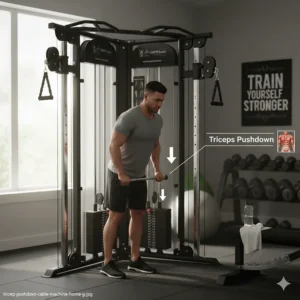
- Tricep pushdowns (high pulley with rope, 3 sets x 12-15 reps)
Upper Body Pull Movements:
- Lat pulldowns (high pulley with wide grip bar, 4 sets x 8-12 reps)
- Seated cable rows (low pulley, 4 sets x 10-12 reps)
- Face pulls (high pulley with rope, 3 sets x 15-20 reps)
- Cable bicep curls (low pulley with straight bar, 3 sets x 10-12 reps)
Lower Body & Core:
- Cable Romanian deadlifts (low pulley, 3 sets x 10 reps)
- Cable kickbacks (low pulley with ankle strap, 3 sets x 12 reps each leg)
- Cable wood chops (mid pulley, 3 sets x 10 reps each side)
- Cable crunches (high pulley with rope, 3 sets x 15-20 reps)
Sample Weekly Training Split
Day 1 – Upper Body Push:
- Cable chest press: 4 x 10-12
- Cable crossovers: 3 x 12-15
- Single-arm shoulder press: 3 x 10 each arm
- Tricep pushdowns: 3 x 12-15
- Tricep overhead extensions: 3 x 12
Day 2 – Lower Body & Core:
- Cable Romanian deadlifts: 4 x 10
- Cable squats (holding handles): 4 x 12
- Cable kickbacks: 3 x 12 each leg
- Cable wood chops: 3 x 10 each side
- Cable crunches: 3 x 15-20
Day 3 – Rest or Active Recovery
Day 4 – Upper Body Pull:
- Lat pulldowns: 4 x 8-12
- Seated cable rows: 4 x 10-12
- Single-arm rows: 3 x 10 each arm
- Face pulls: 3 x 15-20
- Cable bicep curls: 3 x 10-12
- Cable hammer curls: 3 x 12
Day 5 – Full Body Circuit:
- Cable chest press: 3 x 12
- Cable rows: 3 x 12
- Cable squats: 3 x 15
- Cable shoulder press: 3 x 10
- Cable wood chops: 3 x 10 each side
- Cable crunches: 3 x 15
Days 6-7 – Rest
This split maximizes cable machine use while allowing adequate recovery between sessions.
Common Mistakes to Avoid with Home Cable Machines
Even experienced lifters make these errors when transitioning from free weights to cable training.
Mistake #1: Wrong Pulley Height Selection
Pulley height dramatically affects which muscles work and how effectively. Face pulls from a low pulley position engage different shoulder fibers than high pulley face pulls. Match pulley height to exercise purpose:
- High pulley (overhead): Lat pulldowns, tricep pushdowns, overhead cable crunches
- Mid pulley (chest height): Chest flyes, rows, shoulder press variations
- Low pulley (ankle height): Bicep curls, upright rows, Romanian deadlifts
When in doubt, position the pulley at the height where cables align with the natural direction of resistance for that movement.
Mistake #2: Letting Weights Crash
Every time weight plates slam together, you create massive stress on cables and pulleys. This shortens equipment lifespan dramatically. Control the eccentric (lowering) phase of every rep. Never let weights drop.
Think of it this way: if you hear loud clanging during sets, you’re damaging the machine. Smooth, controlled reps sound quiet.
Mistake #3: Standing Too Close
Most cable exercises require distance from the machine. Standing 2-3 feet back creates proper cable angle and keeps tension constant throughout the rep. Too close, and you lose resistance at the start of movements.
Watch your cable angle—it should maintain approximately 45 degrees to horizontal for most exercises.
Mistake #4: Ignoring Unilateral Training
Cable machines excel at single-arm and single-leg work that addresses muscle imbalances. Yet many home gym owners only train bilaterally (both sides simultaneously). Include unilateral variations:
- Single-arm cable rows instead of only two-handed rows
- Single-leg cable kickbacks
- Single-arm chest press
- Single-arm shoulder raises
You’ll uncover strength imbalances you didn’t know existed.
Mistake #5: Neglecting Attachment Variety
The same exercise feels different with different attachments. Cable rows with a straight bar emphasize middle back differently than rows with a V-bar, which differs from single-grip handles. Rotate attachments every 4-6 weeks to provide new training stimulus.
Most machines include basic attachments, but investing $100-$200 in quality handles (mag grips, specialty ropes, rotating bars) exponentially increases exercise variety.
FAQ: Your Cable Machine Questions Answered
❓ How much space do I really need for a cable machine for home gym use?
❓ Can I build serious muscle with just a cable machine or do I need free weights too?
❓ What's better for home gyms: weight stack or plate-loaded cable machines?
❓ How often should I replace cables on my home gym cable machine?
❓ Are portable cable machines like the MAXPRO actually effective or just gimmicks?
Conclusion: Invest in Your Strength Journey
Choosing the right cable machine for home gym transforms your training from basic to exceptional. We’ve covered seven outstanding options, from the budget-friendly Yes4All LAT Pulldown Machine at $300 to the comprehensive Force USA G20 Pro topping $5,000. Each serves specific needs—compact spaces, maximum versatility, travel convenience, or all-in-one solutions.
The best home gym cable machine isn’t the most expensive or the one with the most features. It’s the machine that fits your space, matches your budget, aligns with your training goals, and—most importantly—the one you’ll actually use consistently.
For most home gym owners, I recommend starting with a dual-stack functional trainer like the Titan Fitness Functional Trainer. At $2,200-$2,500, it delivers professional-grade performance with dual 200-pound weight stacks, 1,000+ exercise positions, and seven included attachments. The 64-inch width fits most garage gyms, and the 82-inch height works in standard 8-foot ceiling spaces.
Already own a quality power rack? The REP Fitness Ares 2.0 maximizes your existing investment, adding full cable functionality without requiring separate floor space. Limited on space? The Bells of Steel Cable Tower crushes big workouts in a tiny 2.5 x 2.5-foot footprint.
Whatever you choose, remember this: the cables for home gym that delivers results is the one that makes training enjoyable enough that you stick with it. Progressive overload over months and years builds the physique you want—not the equipment specifications.
Take the leap. Your future self—stronger, healthier, more confident—will thank you for making the investment today.
Recommended for You
- 7 Best Smith Machine Home Gym Systems Transform Your Workouts (2026)
- 7 Best Gym Bars for Home 2026: Ultimate Buying Guide
- 7 Best Home Gym Equipment for Legs 2026
Disclaimer: This article contains affiliate links. If you purchase products through these links, we may earn a small commission at no additional cost to you.
✨ Found this helpful? Share it with your friends! 💬🤗
