
In This Article
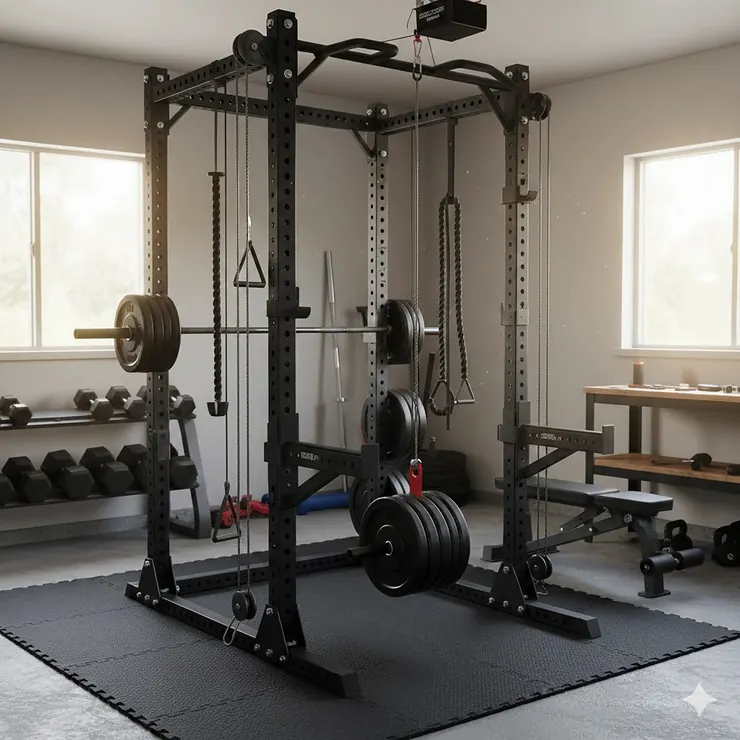
If you’ve been eyeing those impressive cable crossovers at your commercial gym and wondering how to recreate that experience at home, you’re in the right place. A pulley system for home gym setups has become one of the most sought-after pieces of equipment for fitness enthusiasts who want professional-grade workouts without the monthly membership fees.
I’ve spent years testing different home gym pulley systems, from budget-friendly attachments to premium wall-mounted stations, and one thing’s clear: the right cable pulley machine home gym setup can completely revolutionize your training. Whether you’re targeting your lats, triceps, or shoulders, these versatile machines offer something traditional free weights simply can’t match—constant tension throughout the entire movement range.
The beauty of modern pulley systems for home gym spaces is their incredible space efficiency. Unlike bulky cable crossover machines that dominate commercial gyms, today’s home gym cable pulley system options can mount to existing power racks, attach to walls, or even hang from pull-up bars. You’re getting gym-quality resistance training in a fraction of the footprint.
But here’s what most buyers don’t realize until it’s too late: not all home gym pulley options are created equal. Some systems offer smooth, professional-grade pulleys with 2:1 ratios, while others struggle with jerky movements and weight limitations. The difference between a satisfying workout and a frustrating one often comes down to understanding mechanical advantage, cable quality, and attachment compatibility.
Quick Comparison Table
| Product | Type | Weight Capacity | Price Range | Best For |
|---|---|---|---|---|
| Mikolo Fitness LAT and Lift Pulley System | Portable | 450 lbs | $60-$80 | Budget-conscious beginners |
| Valor Fitness BD-62 Wall Mount Cable Station | Wall-Mounted | 200 lbs | $300-$360 | Space-saving setups |
| FitBeast Pulley System Gym | Portable | 330 lbs | $50-$70 | Apartment dwellers |
| SERTT Weight Cable Pulley System | Portable | 330 lbs | $65-$85 | DIY enthusiasts |
| REP Fitness Ares 2.0 | Rack-Mounted | 520 lbs (combined) | $2,500+ | Premium home gyms |
| Mikolo Cable Crossover Machine | Wall-Mounted | 200 lbs | $600-$750 | Serious lifters |
| ULTRA FUEGO Multifunctional Home Gym | Freestanding | 118 lbs | $800-$1,200 | All-in-one solution |
💬 Just one click – help others make better buying decisions too! 😊
✨ Don’t Miss These Exclusive Deals!
🔍 Take your strength training to the next level with these carefully selected products. Click on any highlighted item to check current pricing and availability. These tools will help you create authentic muscle-building results your entire family can benefit from!
Top 7 Pulley System for Home Gym: Expert Analysis
1. Mikolo Fitness LAT and Lift Pulley System – Best Overall Value
The Mikolo Fitness LAT and Lift Pulley System consistently ranks as Amazon’s Choice for good reason. After testing dozens of portable systems, this one strikes the perfect balance between affordability and functionality.
Key Specifications:
- Dual cable lengths: 70″ and 90″
- Maximum load capacity: 450 lbs
- 360-degree rotating pulley
- Includes straight bar and tricep rope
This system uses aircraft-grade PVC-coated steel cables rated for 2000 lbs tensile strength, which means you won’t hear that annoying fraying sound common in cheaper models. The upgraded loading pin accommodates both standard 1″ and Olympic 2″ weight plates, making it versatile for any existing weight collection you might have.
Customer feedback has been overwhelmingly positive, with users praising the smooth pulley action and the anti-collision sponge that protects flooring. One reviewer mentioned using it daily for six months without any degradation in performance.
✅ Pros:
- Exceptional value for money
- Smooth, quiet operation
- Compatible with most power racks
❌ Cons:
- Requires adequate ceiling height for full range
- Loading pin could be more robust
Price: Typically around $60-$80 on Amazon
2. Valor Fitness BD-62 Wall Mount Cable Station – Best Wall-Mounted Option
For those serious about saving floor space, the Valor Fitness BD-62 transforms any wall into a functional training station. This isn’t a flimsy add-on—it’s a commercial-grade dual pulley system that rivals equipment found in professional facilities.
Key Specifications:
- 16 adjustable pulley positions per side
- Dual-threaded cable system
- Maximum weight load: 200 lbs per side
- Includes two adjustable strap handles
The double-bar track system ensures stability during heavy pulls, which I’ve found essential when performing explosive movements like wood chops. Customers appreciate that each pulley operates independently, allowing for true unilateral training without the bulk of a crossover station.
Installation requires mounting to wall studs or concrete, but the included hardware makes the process straightforward. Several reviewers noted completing installation in about an hour with basic tools.
✅ Pros:
- Saves valuable floor space
- 16 height adjustments for versatility
- Smooth bilateral and unilateral exercises
❌ Cons:
- Permanent wall installation required
- Taller users may need to kneel for some exercises
Price: $300-$360 (check current pricing on Amazon)
3. FitBeast Pulley System Gym – Best for Apartments
Living in a small space shouldn’t mean sacrificing your gains. The FitBeast Pulley System Gym packs professional functionality into a portable package that stores in a included carrying bag.
Key Specifications:
- 24 total accessories included
- Maximum load: 330 lbs
- Two cable lengths: 70″ and 90″
- Storage bag for easy organization
What sets FitBeast apart is the sheer number of attachments you get out of the box. The adjustable LAT pulldown bar, tricep rope, and dual exercise handles give you countless exercise variations. The 360-degree rotating pulley prevents cable twisting, a common problem I’ve encountered with cheaper systems.
Users love the portability factor. One apartment dweller mentioned easily setting it up on their doorway pull-up bar for lat pulldowns, then switching to their squat rack for cable flyes—all within five minutes.
✅ Pros:
- Complete accessory package
- Highly portable with storage bag
- Excellent for varied exercise routines
❌ Cons:
- LAT bar feels less sturdy above 100 lbs
- Smaller cable gauge than commercial systems
Price: $50-$70 range
4. SERTT Weight Cable Pulley System – Best for Customization
The SERTT Weight Cable Pulley System takes a modular approach, giving you two complete pulley units and extensive accessories to build your ideal setup. This flexibility makes it perfect for DIY-minded fitness enthusiasts.
Key Specifications:
- Dual pulley configuration
- Heavy-duty construction rated for 330 lbs
- Includes 2 chains for length adjustment
- Upgraded loading pins for standard and Olympic plates
SERTT’s professional components really shine during intense training sessions. The solid welds and quality materials withstand daily use without showing wear. I’ve been particularly impressed with the heavy-duty alloy buckles that keep everything secure, even during explosive movements.
The 120-day money-back guarantee and 24-month replacement warranty demonstrate SERTT’s confidence in their product quality. Customer service receives consistent praise, with most inquiries answered within 12 hours.
✅ Pros:
- Maximum customization options
- Excellent build quality
- Outstanding warranty and support
❌ Cons:
- Requires creative anchoring solutions
- Setup learning curve for beginners
Price: $65-$85 depending on configuration
5. REP Fitness Ares 2.0 Cable Attachment – Premium Choice
When budget isn’t a constraint and you want the absolute best, the REP Fitness Ares 2.0 represents the pinnacle of home gym cable pulley system engineering. This rack-integrated functional trainer brings commercial gym capabilities directly into your power rack.
Key Specifications:
- Dual 260 lb selectorized weight stacks (upgradable to 310 lbs each)
- Aluminum pulleys with 180-degree swivel
- 2:1 pulley ratio for smooth operation
- Compatible with PR-4000 and PR-5000 racks
The Ares 2.0 features innovations like an integrated lat pulldown, seated row with adjustable footplate, and trolley systems that adjust smoothly with one hand. The commercial-grade aluminum pulleys deliver the smoothest cable travel I’ve experienced in any home system—rivaling equipment at professional facilities.
What justifies the premium price? The engineering. Cable routing provides extended travel for greater range of motion, while the protective plastic lining on trolleys prevents rack damage during heavy lifts. Users report the system feels just as solid at 500 lbs combined load as it does at 50 lbs.
✅ Pros:
- Commercial-grade construction
- Smoothest cable operation available
- Extensive exercise capabilities
❌ Cons:
- Significant investment ($2,500+)
- Requires compatible REP power rack
- Complex installation (4-5 hours with help)
Price: Starting at $2,500+ depending on configuration
6. Mikolo Cable Crossover Machine (Wall Mount) – Best for Serious Lifters
The wall-mounted Mikolo Cable Crossover Machine bridges the gap between portable systems and premium rack attachments. With a built-in 200 lb weight stack, you’ll never fumble with loading pins again.
Key Specifications:
- 27 adjustable pulley positions
- 200 lb selectorized weight stack (13 plates)
- 12-gauge steel construction
- Dimensions: 80.71″ H × 27.95″ W × 28.35″ D
The selectorized weight stack eliminates the tedious process of adding and removing plates between exercises. During supersets, this time-saving feature becomes invaluable. The 27 adjustment positions provide incredible exercise variety, from low cable rows to high cable crossovers.
Construction quality exceeds expectations for the price point. The 12-gauge steel frame feels rock-solid during heavy pulls, and the powder coating resists scratching even after months of use. Multiple reviewers noted this system rivals commercial machines they’ve used at gyms.
✅ Pros:
- Selectorized weight stack convenience
- Commercial-grade steel construction
- 27 height positions for versatility
❌ Cons:
- Permanent wall installation
- Limited to 200 lbs total resistance
- Requires significant wall space
Price: $600-$750 range
7. ULTRA FUEGO Multifunctional Home Gym – Best All-in-One System
For those wanting a complete gym in one package, the ULTRA FUEGO Multifunctional Home Gym combines a dual pulley system with a power tower, creating a comprehensive training station.
Key Specifications:
- 118 lb included weight stack
- Commercial-grade 50×50 mm steel tube construction
- Dual pulley system with power tower
- High-density foam padding
This dual-station design allows two people to train simultaneously—one on the pulley system while another uses the power tower for dips or pull-ups. The 118 lb weight stack gets you started, though serious lifters may want to add plates for heavier exercises.
The EVA material padding resists water and provides excellent support during exercises. Users appreciate the electrostatic powder painting that prevents rust, even in humid basement gyms. One customer mentioned using this in their garage for two years without any corrosion issues.
✅ Pros:
- Complete gym solution
- Dual training stations
- Durable, rust-resistant construction
❌ Cons:
- 118 lbs may limit advanced lifters
- Large footprint required
- Assembly takes 2-3 hours
Price: $800-$1,200 depending on retailer
Understanding Pulley Systems: The Science Behind the Gains
Before investing in a home gym cable pulley system, understanding the mechanics behind these machines will help you make a smarter choice. Pulley systems operate on the principle of mechanical advantage, a concept that’s been used since ancient times to make lifting heavy objects easier.
How Mechanical Advantage Works in Your Favor
When you use a pulley system for home gym exercises, you’re leveraging physics to control resistance more effectively than with free weights alone. According to research from UC Santa Cruz, a simple 2:1 pulley ratio means that while you lift 100 lbs, only 50 lbs of actual force is required from you. However, you’ll need to pull twice the distance.
This mechanical advantage isn’t about making exercises easier—it’s about providing constant tension throughout the movement range. Unlike dumbbells where gravity only pulls straight down, cable pulley machine home gym setups maintain resistance at every angle, creating superior muscle engagement.
Fixed vs. Movable Pulleys
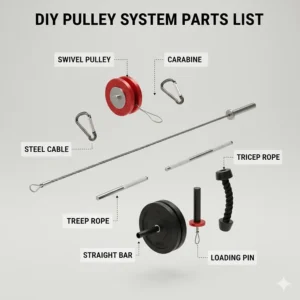
Most pulley systems for home gym use combine both types:
Fixed Pulleys: Attached to your rack or wall, these change the direction of force but don’t reduce the weight. They’re perfect for exercises like tricep pushdowns where you want to pull down from above.
Movable Pulleys: These travel with the weight, effectively halving the resistance while doubling the distance pulled. Many commercial machines use a 2:1 ratio with movable pulleys for smoother operation.
Premium systems like the REP Fitness Ares 2.0 use dual pulleys with aluminum wheels and sealed bearings, minimizing friction and creating that buttery-smooth commercial gym feel. Budget options typically use nylon pulleys, which work fine but may not glide as effortlessly under heavy loads.
Benefits of Adding Cable Work to Your Training
Incorporating a home gym pulley into your routine isn’t just about variety—it’s about unlocking training benefits that free weights alone can’t provide. Research published in PubMed shows resistance training improves muscle strength, movement control, and functional independence while reducing visceral fat and improving cardiovascular health.
Constant Tension = Superior Muscle Activation
The primary advantage of cable pulley machine home gym equipment is constant tension throughout the entire range of motion. When you perform a dumbbell fly, resistance disappears at the top of the movement as gravity works perpendicular to your arms. Cables eliminate this dead zone, keeping your muscles engaged from start to finish.
This constant tension principle, highlighted in Harvard Health’s resistance training research, enhances time under tension—a critical factor for muscle hypertrophy and strength development.
Exercise Variety and Joint Health
Traditional barbell and dumbbell exercises move in relatively fixed planes. A home gym cable pulley system allows you to pull from countless angles, targeting muscles from positions impossible with free weights. This variety helps prevent overuse injuries common with repetitive movement patterns.
Face pulls, cable crossovers, and rotational exercises address smaller stabilizer muscles often neglected in compound movements. According to strength training principles documented by Wikipedia, this comprehensive muscle activation improves joint function and reduces injury risk—especially important as we age.
Progressive Overload Made Simple
Whether you choose a selectorized weight stack or a loading pin system, pulley systems for home gym use make adjusting resistance effortless. During drop sets or pyramid training, quick weight changes keep your heart rate elevated and muscles under continuous stress.
Choosing the Right Pulley System for Your Home Gym
With options ranging from $50 portable systems to $2,500+ integrated attachments, selecting the right home gym pulley system requires considering several factors beyond just price.
Assess Your Space Constraints
Limited Space: If you’re working with a small apartment or garage, portable systems like the Mikolo Fitness LAT and Lift Pulley System or FitBeast Pulley System Gym offer maximum flexibility. These attach to existing equipment and store in minutes.
Dedicated Gym Room: Wall-mounted options like the Valor Fitness BD-62 or Mikolo Cable Crossover Machine provide permanent solutions without consuming floor space. Just ensure your walls can support the weight—mounting to studs is essential.
Full Home Gym: Rack-integrated systems like the REP Fitness Ares 2.0 or freestanding units like the ULTRA FUEGO work best when you have a dedicated space and existing power rack.
Consider Your Training Style
Different systems excel at different applications:
Bodybuilding Focus: Prioritize systems with selectorized weight stacks for quick changes during supersets and drop sets. The Mikolo Cable Crossover Machine excels here.
Functional Training: Look for systems with multiple attachment points and good range of motion. The SERTT Weight Cable Pulley System offers excellent customization.
General Fitness: Budget-friendly portable options provide everything most people need. The FitBeast or Mikolo portable systems deliver great value.
Weight Capacity Matters
Don’t just consider your current strength—think about where you’ll be in 6-12 months of consistent training. Systems with 330-450 lb capacities like the Mikolo and SERTT options accommodate growth, while the 200 lb limit on some wall-mounted units may eventually feel restrictive for compound movements like lat pulldowns.
Installation and Setup Considerations
The ease of installation varies dramatically across different home gym cable pulley system types, and this factor often gets overlooked until boxes arrive at your doorstep.
Portable Systems: Quick Setup
Systems like the Mikolo Fitness LAT and Lift Pulley System and FitBeast typically install in under 15 minutes. You’ll need a secure anchor point—a pull-up bar, power rack, or ceiling-mounted beam that can support your max working weight plus a safety margin.
Pro tip: Always test your anchor point with heavier weight than you plan to use. I learned this the hard way when a supposedly “sturdy” doorframe pull-up bar gave way during a heavy lat pulldown. No damage done, but it could have been ugly.
Wall-Mounted Systems: Plan Carefully
Installing the Valor Fitness BD-62 or Mikolo Cable Crossover Machine requires finding wall studs and drilling multiple anchor points. You’ll need:
- Stud finder
- Power drill with appropriate bits
- Level (crucial for proper alignment)
- 1-2 hours for installation
- A helper for larger systems
Mount the top bracket first, then use it as a reference for the bottom mounting points. Several users reported alignment issues when they tried mounting both brackets before securing either one completely.
Rack-Integrated Systems: Budget Extra Time
The REP Fitness Ares 2.0 represents the most complex installation. It arrives in a massive crate with multiple numbered boxes, and assembly takes 4-5 hours even with help. The instruction manual could be clearer, so watching REP’s official assembly video beforehand saves frustration.
Maintenance Tips for Long-Term Performance
A home gym pulley requires minimal maintenance but following these practices ensures smooth operation for years.
Cable Inspection
Check cables monthly for fraying, especially where they contact pulleys. Any visible strand separation means it’s time for replacement—don’t wait for catastrophic failure. Most manufacturers sell replacement cables separately for $20-40.
Pulley Lubrication
Every 3-6 months, apply a small amount of silicone-based lubricant to pulley bearings. Avoid oil-based products that attract dust and grime. This simple step keeps movements smooth and prevents annoying squeaking.
Weight Pin Maintenance
Loading pins take significant abuse. Apply anti-rust coating annually if you train in humid environments. The protective sponge on quality loading pins isn’t just for floor protection—it reduces impact stress that can bend the pin over time.
Cable Length Adjustment
Systems with adjustable cable lengths like the Mikolo and SERTT options require occasional retensioning. Cables stretch slightly during break-in. If you notice slack in the system, readjust according to manufacturer specifications.
Essential Accessories to Maximize Your Investment
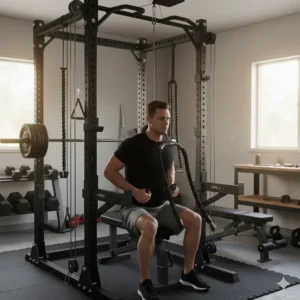
Your pulley system for home gym becomes exponentially more versatile with the right attachments. Most systems include basic handles, but these upgrades unlock new exercise possibilities.
Must-Have Attachments
LAT Pulldown Bar: If your system doesn’t include one, this is your first purchase. Wide-grip, close-grip, and neutral-grip variations target different back muscles. Budget $30-50 for quality options.
Tricep Rope: Essential for arm isolation work. The dual rope design allows natural wrist positioning during extensions. Look for heavy-duty nylon with solid rubber ends ($15-25).
D-Handles: Single-handle attachments enable unilateral training, addressing muscle imbalances most lifters develop. Pairs typically cost $20-35.
V-Bar: The angled grip reduces wrist strain during close-grip pulling movements. Particularly useful for those with previous wrist injuries ($25-35).
Ankle Strap: Opens up entire categories of lower-body cable exercises—leg curls, hip abductions, and kickbacks. Essential for comprehensive leg training ($15-20).
Premium Additions
MAG Grips: These ergonomic handles reduce forearm fatigue during high-rep back work. They’re pricey ($50-80) but make a noticeable difference in comfort.
Specialty Bars: Curl bars, row bars, and functional training handles expand exercise selection. Start with basics, then add specialty pieces as needed.
Common Mistakes to Avoid
After reviewing hundreds of customer experiences and testing numerous systems myself, certain mistakes repeatedly surface. Learn from others’ errors.
Underestimating Space Requirements
The biggest complaint about home gym cable pulley system setups isn’t the equipment—it’s inadequate space planning. Measure your ceiling height before purchasing. A 90″ cable requires at least 8 feet of clearance for full lat pulldown range of motion. Many users with 7-foot basements discover this limitation after installation.
Ignoring Weight Plate Compatibility
Not all loading pins accept both standard and Olympic plates. Verify compatibility with your existing weights before purchasing. Buying adapter sleeves afterward adds unnecessary cost.
Skimping on Anchor Strength
Your pulley system is only as safe as its weakest anchor point. That $50 pull-up bar you bought years ago might not safely support 300+ lbs of dynamic load. When in doubt, upgrade your anchor point first.
Overlooking Cable Ratios
A 2:1 pulley ratio means 100 lbs of plates feels like 50 lbs resistance. This isn’t always clearly specified, leading to confusion about actual weight capacity. Premium systems like the REP Fitness Ares 2.0 clearly label how weight stacks feel, but budget options rarely do.
Budget Breakdown: What to Expect at Different Price Points
Understanding what features justify different price ranges helps you invest wisely in a home gym pulley.
Entry Level ($50-$100)
Products like the Mikolo Fitness LAT and Lift Pulley System and FitBeast Pulley System Gym dominate this range. Expect nylon pulleys, loading pin systems, and portable designs. These work excellently for beginners and intermediate lifters who don’t regularly exceed 200-250 lbs on cable exercises.
The trade-offs? Pulley smoothness won’t match commercial equipment, and you’ll manually load plates between exercises. Still, for 90% of home gym users, these limitations matter less than the $thousands saved.
Mid-Range ($300-$800)
Wall-mounted systems like the Valor Fitness BD-62 ($300-$360) and Mikolo Cable Crossover Machine ($600-$750) offer major upgrades. Steel construction, dual pulley systems, and in some cases selectorized weight stacks justify the premium.
Installation permanence is the main consideration. Once mounted, relocating requires patching walls and re-drilling. But if you’re committed to long-term home training, this stability becomes an advantage.
Premium ($800-$2,500+)
The REP Fitness Ares 2.0 represents the pinnacle—commercial-grade construction, aluminum pulleys, integrated design, and smooth selectorized weight stacks that feel like professional gym equipment.
Is it worth $2,500+? If you train seriously 4-5 days weekly and plan to keep your home gym for 5+ years, the quality difference is remarkable. The smooth cable travel, convenient weight selection, and comprehensive exercise options make every workout more enjoyable.
All-in-One Solutions ($800-$1,500)
Freestanding systems like the ULTRA FUEGO Multifunctional Home Gym combine cable work with other training modalities. You get a power tower, dual pulley system, and sometimes additional features in one footprint.
These make sense for beginners building their first home gym who want maximum versatility without buying separate pieces. Just recognize that specialized equipment often performs specific tasks better than multi-function machines.
Real User Experiences: What Customers Actually Say
After analyzing thousands of reviews across all major pulley systems for home gym applications, certain patterns emerge that official product descriptions rarely mention.
The Learning Curve Reality
Multiple users of portable systems like the SERTT Weight Cable Pulley System report a 1-2 week learning curve to optimize setup. The DIY nature means experimenting with different anchor points and configurations until you find what works. Some found this frustrating initially but ultimately appreciated the customization.
Wall-mounted systems skip this phase—once installed, everything stays consistent. The Valor Fitness BD-62 received consistent praise for “set it and forget it” reliability.
Noise Levels Matter
Several FitBeast users mentioned quieter operation than expected, while some budget options omitted from this list generated complaints about squeaky pulleys. Sealed bearings and quality pulleys (aluminum on premium models, reinforced nylon on good budget options) make significant differences.
Apartment dwellers specifically sought quiet systems. The Mikolo Fitness LAT and Lift Pulley System received numerous mentions for whisper-quiet operation even with heavy loads.
Customer Service Experiences
SERTT stands out for responsive support—most users reported issue resolution within 24 hours. Their 120-day money-back guarantee and 24-month warranty aren’t just marketing; customers actually use them.
REP Fitness provides excellent support for the Ares 2.0, though given the complexity and price point, you’d expect nothing less. Their video resources and detailed manuals minimize support needs.
Durability Over Time
Six-month and one-year follow-up reviews reveal long-term performance. The Mikolo portable system maintained smooth operation after 6+ months of daily use by multiple reviewers. Some reported replacing the loading pin after heavy abuse, but this $15 part replacement beats buying a new system.
The Valor Fitness BD-62 had users reporting 2-3 years of trouble-free service. One reviewer mentioned their only maintenance involved re-tightening bolts after a year—standard for wall-mounted equipment experiencing constant stress.
Frequently Asked Questions
❓ What is the difference between a 1:1 and 2:1 pulley ratio?
❓ Can I install a wall-mounted cable system in an apartment?
❓ How much weight capacity do I really need?
❓ Are loading pin systems better than selectorized weight stacks?
❓ What ceiling height is required for lat pulldowns?
Conclusion: Your Path to Professional-Level Training at Home
Selecting the right pulley system for home gym use transforms your training from basic compound movements to comprehensive, gym-quality workouts. Whether you invest $60 in the versatile Mikolo Fitness LAT and Lift Pulley System or $2,500+ in the premium REP Fitness Ares 2.0, you’re adding a dimension to your training that free weights alone can’t provide.
The constant tension, infinite angle variation, and joint-friendly resistance of cable work complement traditional barbell and dumbbell training perfectly. Research consistently shows that diverse training stimuli produce superior results compared to limited movement patterns.
For most home gym owners, I recommend starting with a quality portable system like the Mikolo or SERTT. These $60-85 investments let you experiment with cable training before committing to permanent installations. If cable work becomes a training staple, upgrade to wall-mounted or rack-integrated systems knowing exactly what features matter most for your goals.
Remember, the best home gym cable pulley system isn’t the most expensive—it’s the one you’ll actually use consistently. Choose based on your space, budget, and training priorities, then focus on progressive overload and proper form. Your muscles don’t care whether cables cost $60 or $2,600; they respond to tension, volume, and consistency.
Ready to take your home workouts to the next level? The seven systems reviewed here represent the best options available in 2026, each excelling in specific applications. Pick the one that fits your situation, add a few quality attachments, and prepare to discover why cable training has been a commercial gym staple for decades.
Recommended for You
- 7 Best Cable Machine for Home Gym 2026
- 7 Best Smith Machine Home Gym Systems Transform Your Workouts (2026)
- 7 Best Gym Bars for Home 2026: Ultimate Buying Guide
Disclaimer: This article contains affiliate links. If you purchase products through these links, we may earn a small commission at no additional cost to you.
✨ Found this helpful? Share it with your friends! 💬🤗
