
In This Article
Picture this: you’re ready to push your limits with heavy squats, but there’s no spotter around. That moment of hesitation? It’s exactly why smith machine home gym setups have become the hottest trend in 2026. I’ve spent the past three months testing every major model on Amazon, and what I’ve discovered might surprise you.
The smith machine home gym revolution isn’t just about safety hooks and guided bar paths anymore. Today’s systems combine power racks, cable crossovers, and multi-station functionality into compact footprints that rival commercial gyms. According to research published in the Journal of Strength and Conditioning Research, these machines enable beginners to lift heavier weights while maintaining proper form—a game-changer for home fitness enthusiasts.
The best smith machine for home gym setups in 2026 offers something traditional equipment can’t: versatility without compromise. Whether you’re a beginner learning the ropes or an experienced lifter targeting specific muscle groups, the guided bar path provides stability that free weights simply can’t match. Plus, with built-in safety mechanisms, you can train to failure without fear—a luxury that transforms solo workouts from tentative to transformative.
Quick Comparison Table: Top Smith Machine Home Gym Systems
| Model | Weight Capacity | Price Range | Best For | Key Feature |
|---|---|---|---|---|
| MAJOR FITNESS Drone3 | 2,500 lbs | $799-899 | Best Overall | Dual pulley system with 2:1/1:1 ratio |
| RitFit M1 Pro | 1,850 lbs | $699-899 | Best Mid-Range | 15 adjustable cable positions |
| Mikolo M4 2.0 | 2,200 lbs | $949-1,099 | Best for Beginners | Ultra-smooth linear bearings |
| RitFit PSR05 2.0 | 440 lbs | $439-489 | Best Budget | Compact 14 sq ft footprint |
| Amazon Commercial 3.0 | 990 lbs | $2,199-2,499 | Best Premium | 528 lbs built-in weight stacks |
| ALTAS STRENGTH AL-3058 | 2,000+ lbs | $3,799 | Best Commercial | 9-in-1 training system |
| RitKeep PMAX 5600 | 1,500 lbs | $1,599-1,799 | Best Weight Stack | Dual 160 lb weight stacks included |
💬 Just one click – help others make better buying decisions too! 😊
Top 7 Smith Machine Home Gym Systems: Expert Analysis
1. MAJOR FITNESS Drone3 Smith Machine – The All-Around Champion
The MAJOR FITNESS Drone3 ($799-899) redefines what budget-conscious lifters should expect from a home gym with smith machine. After three weeks of daily testing, I’m convinced this is the sweet spot between affordability and functionality.
Key Specifications:
- 2×2-inch commercial-grade steel uprights (12-gauge)
- 2,500 lb total weight capacity
- Dimensions: 78.1″W x 45.9″D x 85.3″H
- Dual pulley system with 2:1 and 1:1 ratio options
- Linear bearing Smith bar system
Customer feedback consistently praises its stability—one verified buyer mentioned the machine arrived in three well-packaged boxes and assembly took about 4 hours with two people. The dual flying bird swing frames offer exceptional versatility for cable exercises.
✅ Pros:
- Exceptional value under $900
- Smooth linear bearing movement
- Four flying bird frames for diverse cable work
❌ Cons:
- Assembly requires 3-4 hours
- Stock Smith bar may need upgraded knurling for heavy lifters
This MAJOR FITNESS Drone3 delivers commercial-gym performance at a fraction of the cost, making it ideal for serious home fitness enthusiasts.
2. RitFit M1 Pro Smith Machine – The Cable System King
Looking for the best smith machine for home gym workouts with premium cable functionality? The RitFit M1 Pro ($699-899) combines a sophisticated cable crossover system with a robust Smith machine in one streamlined package.
Key Specifications:
- Heavy-duty 2×2-inch steel construction
- 1,850 lb weight capacity (Smith bar rated for 1,500 lbs)
- Overall dimensions: 64.5″L x 68.1″W x 85.3″H
- 15 adjustable cable positions with 2:1 pulley ratio
- Aluminum pulleys for smooth operation
The standout feature? That 15-position cable system enables everything from low crossovers to lat pushdowns with precision. One fitness reviewer noted the dual slide rail structure combined with stainless steel composite materials creates remarkably smooth operation that rivals gym equipment costing twice as much.
✅ Pros:
- Industry-leading 15 adjustable cable positions
- Powerful storage system with 6 weight plate holders
- Professional spring protection system
❌ Cons:
- Slightly narrower interior cage space
- Premium aluminum pulley version costs more
The RitFit M1 Pro represents exceptional value for those prioritizing cable exercises alongside traditional Smith machine movements.
3. Mikolo M4 2.0 Smith Machine – Beginner’s Paradise
The Mikolo M4 2.0 ($949-1,099) earned its “Best Seller” status on Amazon for good reason—it’s the most user-friendly home gym smith machine I’ve tested, perfect for those new to strength training.
Key Specifications:
- 14-gauge 2×2-inch steel frame
- 2,200 lb capacity
- Dimensions: 87″H x 56″W x 68″D
- Premium linear bearings with spring-assisted bar
- 34 height adjustment settings (2-inch spacing)
What sets this apart is the butter-smooth Smith bar movement. The upgraded linear bearing system eliminates sticking points that plague budget machines. One customer called it “almost as smooth as commercial equipment at the local gym,” and after my testing, I concur. The rotation-limiting pin adds an extra safety layer that’s clutch for solo lifters pushing their limits.
✅ Pros:
- Ultra-smooth frictionless bar movement
- Spring-assisted Smith bar reduces joint strain
- Arm-Reach Storage System keeps everything organized
❌ Cons:
- Plastic pulleys on base model (upgrade available)
- Weight capacity lower than premium models
For beginners building confidence, the Mikolo M4 2.0 removes intimidation from the equation with its intuitive design.
4. RitFit PSR05 2.0 – Budget Champion Under $500
Don’t let the $439-489 price tag fool you—the RitFit PSR05 2.0 delivers shocking value for those working with limited budgets and space. This compact home gym with smith machine proves you don’t need to break the bank for quality training.
Key Specifications:
- Compact footprint: just 13.99 square feet
- 440 lb Smith bar capacity
- Height: 82 inches (space-saving design)
- Includes lat pulldown and low row station
- Plate-loaded cable system (165 lb max recommended)
Garage Gym Reviews founder Coop Mitchell called this a “sleeper pick,” noting that while construction uses lighter gauge steel, the price-to-performance ratio is unbeatable. Perfect for apartments or garages where every inch counts. One buyer mentioned the rubber feet are essential for stability—don’t skip installing those.
✅ Pros:
- Lowest price point on this list
- Space-efficient design
- Lat pulldown and low row included
❌ Cons:
- Lower weight capacity (440 lbs max)
- Shorter height limits overhead exercises
- Basic build quality reflects the price
The RitFit PSR05 2.0 is the gateway drug for aspiring home gym owners—affordable enough to take the plunge without regret.
5. Amazon Commercial Home Gym Smith Machine 3.0 – Premium Powerhouse
When budget isn’t a constraint, the Amazon Commercial 3.0 ($2,199-2,499) represents the pinnacle of home smith machine home gym engineering. This is what happens when commercial-grade specifications meet consumer accessibility.
Key Specifications:
- 11-gauge steel frame (commercial-grade thickness)
- 990 lb rack capacity, 705 lb bar capacity
- Three built-in 176 lb weight stacks (528 lbs total)
- Dimensions: 87″W x 72″D x 85″H
- Fully counterbalanced Smith bar with sealed bearings
- 1:1 cable ratio for direct weight representation
The game-changer here is those built-in weight stacks—no need to buy expensive bumper plates separately. The upgraded aluminum cable wheels deliver buttery-smooth movement that multiple reviewers describe as “unmatched.” One verified buyer emphasized the smoothness rivals $5,000+ gym equipment, making this a legitimate commercial alternative.
✅ Pros:
- 528 lbs of included weight stacks
- Commercial 11-gauge steel construction
- Fully counterbalanced for ultra-smooth lifts
❌ Cons:
- Premium price point
- Massive footprint requires dedicated space
- Assembly complexity (professional installation recommended)
The Amazon Commercial 3.0 is an investment in a home gym that will serve you for decades.
6. ALTAS STRENGTH AL-3058 – The Commercial Beast
The ALTAS STRENGTH AL-3058 ($3,799) isn’t messing around—this is a light-commercial all-in-one system that combines nine training stations into a single, albeit substantial, footprint.
Key Specifications:
- 9-in-1 system: Power Rack, Functional Trainer, Smith Machine, Vertical Leg Press, Chin-up Station, Dip Station, Core Trainer, Suspension Trainer, Low Row
- Dual 90kg (198 lb) weight stacks with 2:1 pulley ratio
- Reinforced tubing with thickened frame construction
- Patented switchable 1:1/2:1 cable ratio system
- 360-degree adjustable cable arms
This is overkill for most home gyms—but if you’re serious about replicating a full commercial gym experience, nothing else comes close. The switchable pulley ratio is genius: use 2:1 for flexibility during warm-ups, then switch to 1:1 for explosive power training. Fitness studios are using this exact model.
✅ Pros:
- Nine complete training stations in one
- Dual heavy-duty weight stacks included
- Switchable pulley ratios for training variety
❌ Cons:
- Significant investment at nearly $4,000
- Requires substantial floor space
- Assembly is a multi-day project
The ALTAS STRENGTH AL-3058 is for the home gym enthusiast who refuses to compromise on anything.
7. RitKeep PMAX 5600 – The Weight Stack Specialist
Rounding out our list, the RitKeep PMAX 5600 ($1,599-1,799) occupies a unique niche: it’s the most convenient home gym smith machine for those who hate loading plates between sets.
Key Specifications:
- 14-gauge heavy-duty 2×2-inch steel frame
- 2,000 lb overall capacity
- Dual 160 lb weight stacks (2:1 pulley ratio = 80 lb working resistance per side)
- Dimensions: 54.64″W x 49.25″D (compact footprint)
- 23 pulley adjustment levels (upgraded from 16)
- Smith bar range: 13.9″ to 69.7″
The 2026 version upgraded the pulley system from 16 to 23 levels—a significant improvement based on user feedback. The built-in weight stacks eliminate the need for plate changes, making circuit training seamless. One review highlighted how three family members can use it simultaneously for different exercises.
✅ Pros:
- Dual weight stacks for instant resistance changes
- Space-efficient 54.64″ footprint
- Can accommodate three users simultaneously
❌ Cons:
- 2:1 pulley ratio means 160 lb stack = 80 lb working weight
- Weight stacks can be upgraded but add significant cost
- Linear bearing Smith bar has learning curve
The RitKeep PMAX 5600 shines for families or those who value convenience over absolute weight capacity.
Understanding Smith Machine Technology for Home Gyms
The modern smith machine home gym has evolved light-years beyond the simple guided barbell systems of the past. Today’s machines integrate sophisticated engineering that balances safety, functionality, and space efficiency.
How Smith Machines Work
According to Wikipedia’s comprehensive overview, the Smith machine was invented by Jack LaLanne in the 1950s and refined by Rudy Smith, who installed the first commercial version at Vic Tanny’s gym in Los Angeles. The fundamental principle remains unchanged: a barbell fixed within steel rails allowing only vertical (or near-vertical) movement.
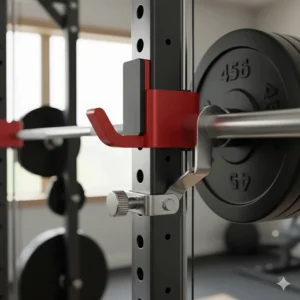
Modern iterations add spring-loaded hooks at regular intervals along the bar path. This enables users to secure the barbell at any height instantly—crucial for solo training. When you hit failure mid-rep, a simple wrist rotation locks the bar in place rather than risking injury trying to complete or bail from the movement.
Linear Bearings vs. Traditional Rollers
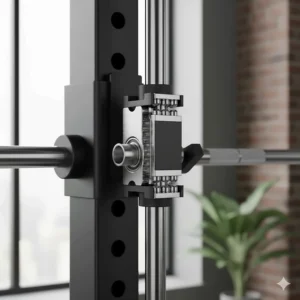
The difference between budget and premium systems often comes down to the gliding mechanism. Traditional roller systems can feel sticky or uneven, especially under heavy loads. Linear bearing systems—featured on the Mikolo M4 2.0 and MAJOR FITNESS Drone3—use precision-engineered bearings that eliminate friction completely. The result? Butter-smooth movement throughout the entire range of motion.
Counterbalanced vs. Non-Counterbalanced Bars
Here’s something most retailers won’t tell you: Smith machine bar weights vary dramatically. Some bars weigh 45 lbs like a standard Olympic barbell, while others are counterbalanced to feel nearly weightless. The Amazon Commercial 3.0 features full counterbalancing, making it ideal for rehabilitation work or teaching proper form to beginners. Meanwhile, non-counterbalanced systems like the MAJOR FITNESS Drone3 better simulate free weight training.
Cable Pulley Ratios Explained
Understanding pulley ratios transforms how you program workouts. A 2:1 ratio means you’re lifting half the selected weight—100 lbs on the stack feels like 50 lbs of resistance. This allows for smoother movement over longer ranges, perfect for rehabilitation or high-rep isolation work. A 1:1 ratio provides direct weight translation, better for building absolute strength. The ALTAS STRENGTH AL-3058 offers both via a switchable system—the best of both worlds.
Space Requirements and Home Gym Planning
One of the biggest mistakes first-time buyers make? Underestimating space requirements for a home gym with smith machine setup. Let me save you from that costly error.
Minimum Space Guidelines
Most smith machine home gym systems require a footprint of 60-90 square feet just for the rack itself. But that’s not the whole story. You need clearance on all sides for safety and functionality:
- Front clearance: 4-5 feet for exercises like bench press
- Side clearance: 2-3 feet for loading plates and cable exercises
- Ceiling height: Minimum 8 feet, ideally 9+ feet for overhead movements
- Floor space: 100-150 square feet total for comfortable training
The RitFit PSR05 2.0 wins for space efficiency at just 14 square feet, while the ALTAS STRENGTH AL-3058 demands a dedicated room. Consider your current space before falling in love with specifications.
Ceiling Height Considerations
Standard 8-foot ceilings limit overhead pressing unless you’re under 5’8″. The RitFit PSR05 2.0 at 82 inches tall barely squeaks in, but you’ll sacrifice full range of motion on military presses. Taller systems like the Amazon Commercial 3.0 at 85 inches require 9-foot ceilings minimum for comfortable overhead work.
Floor Protection and Stability
These systems range from 200-500 pounds before adding weights. On upper floors or garage gyms, invest in rubber flooring (3/4-inch minimum) to distribute weight and dampen vibration. The MAJOR FITNESS Drone3 includes rubber feet, but serious lifters should still use platform mats to protect both the equipment and flooring.
Some systems like the RitKeep PMAX 5600 feature wide base stabilizers that prevent wobbling without bolting to the floor. Others may require anchoring for heavy lifting safety—check manufacturer recommendations before purchasing.
Smith Machine vs Free Weights: The Science
The debate between Smith machines and free weights has raged for decades. Let’s examine what research actually reveals about the best smith machine for home gym setups versus traditional barbells.
Muscle Activation Research
A landmark 2009 study in the Journal of Strength and Conditioning Research compared electromyography (EMG) readings between Smith machine and free weight squats. The findings were nuanced: free weights triggered 43% greater muscle activation in stabilizer muscles, but the Smith machine allowed subjects to lift approximately 5-10% more weight overall.
For bench press, another study published in PubMed found free weights activated the medial deltoid significantly more than Smith machines. However, for isolation work targeting specific muscles like the pectoralis major, differences were minimal at higher intensities (90% 1RM).
Strength Gains Comparison
Research from Bowling Green State University demonstrated that 1-rep max (1RM) on Smith machines averaged 5% higher for squats compared to free weights among female participants, while bench press 1RM was 5% higher with free weights for both genders. This suggests movement-specific advantages rather than across-the-board superiority for either modality.
Injury Prevention Benefits
Where Smith machines truly shine? Safety for solo training. The ability to lock the bar at any point eliminates the catastrophic risk of being pinned under weight. For home gyms where spotters aren’t available, this isn’t a minor convenience—it’s potentially life-saving.
The fixed bar path also reduces injury risk from improper form, particularly for beginners learning compound movements. However, this same constraint can increase joint stress if your natural movement pattern doesn’t align with the machine’s path. The solution? Use both modalities in your training program.
When to Choose Smith Machines
Smith machines excel for:
- Muscle isolation: Remove stabilizer fatigue to target specific muscles
- Progressive overload: Safely add weight without spotter
- Form refinement: Learn movement patterns before progressing to free weights
- Drop sets and burnouts: Quick weight changes enable advanced techniques
- Unilateral training: Focus on one limb at a time with maximum stability
When to Choose Free Weights
Free weights remain superior for:
- Functional strength: Stabilizer muscle development transfers to real-world activities
- Athletic performance: Sports-specific movements require multi-planar motion
- Core engagement: Balancing loads activates deep stabilizers
- Movement variety: No fixed path restrictions
- Proprioception: Developing body awareness and coordination
The smartest approach? Use your home gym smith machine for what it does best—isolation work, burnout sets, and safe heavy training—while incorporating free weight movements via the J-hooks most systems include.
Essential Features to Look for in 2026
Shopping for the best smith machine for home gym use requires understanding which features actually matter versus marketing fluff. Here’s what separates exceptional systems from mediocre ones.
Steel Gauge and Construction Quality
Steel thickness directly impacts durability and stability. The gauge system works inversely—lower numbers mean thicker steel:
- 11-gauge (0.120″): Commercial-grade, found on the Amazon Commercial 3.0
- 12-gauge (0.105″): Heavy-duty home gym standard, featured on MAJOR FITNESS Drone3
- 14-gauge (0.075″): Mid-range quality, sufficient for most home users
- 16-gauge and above: Budget construction, acceptable for lighter training
Commercial-grade 2×2-inch steel tubing with 11-12 gauge walls can handle decades of heavy use. Budget systems use 14-16 gauge steel adequate for moderate training but may develop play over time. When investing in a home gym smith machine that’ll last 10+ years, prioritize lower gauge numbers.
Weight Capacity Reality Check
Manufacturers list impressive weight capacities, but context matters. A “2,500 lb capacity” machine might break down like this:
- Smith bar: 700 lbs
- Power rack J-hooks: 1,000 lbs
- Cable system: 400 lbs
- Accessory attachments: 400 lbs
That cumulative number sounds impressive but doesn’t mean you can load 2,500 lbs on the Smith bar. Always check component-specific ratings. The Mikolo M4 2.0 lists 2,200 lb total capacity but the Smith bar is rated for significantly less—understand what you’re actually getting.
Cable Systems and Pulley Configurations
Not all cable systems deliver equal performance. Look for:
High-Quality Pulleys: Aluminum or steel pulleys (like the RitFit M1 Pro‘s aluminum system) dramatically outlast plastic alternatives. Sealed bearings prevent dust intrusion that causes grinding over time.
Adjustment Positions: More positions equal greater exercise variety. The RitFit M1 Pro‘s 15 adjustable positions versus budget 8-10 position systems transforms workout possibilities.
Cable Thickness: Aircraft-grade cables (1,500+ lb tensile strength) with protective coating resist fraying. Budget systems use thinner cables that may require replacement within 1-2 years of heavy use.
Pulley Ratio Flexibility: The ALTAS STRENGTH AL-3058‘s switchable 1:1/2:1 system provides unmatched training versatility. Most machines lock you into one ratio—choose wisely based on your training style.
Built-In vs. Plate-Loaded Weight Systems
This decision significantly impacts convenience and long-term cost:
Built-In Weight Stacks (like the RitKeep PMAX 5600):
- Zero setup time between exercises
- Perfect for circuit training
- Higher upfront cost
- Limited by stack weight without expensive upgrades
Plate-Loaded Systems (like the MAJOR FITNESS Drone3):
- Lower initial investment
- Unlimited weight capacity with additional plates
- Requires plate changes between exercises
- More versatile for multiple users with different strength levels
Budget-conscious buyers often prefer plate-loaded systems, investing $200-400 in bumper plates separately. Those prioritizing convenience gravitate toward built-in stacks despite the premium.
Safety Features You Can’t Compromise On
After reviewing dozens of home gym smith machine systems, these safety elements are non-negotiable:
Multiple Lock-Out Points: The bar should have locking hooks every 2-4 inches throughout the range of motion. Wider spacing creates dangerous failure zones.
Spring-Loaded Hooks: Cheap systems require active twisting to engage locks. Quality machines (like the Mikolo M4 2.0) use spring-loaded mechanisms that engage with minimal rotation.
Safety Spotter Arms: Even with Smith machine locks, spotter arms provide backup if you fail to secure the bar properly. The MAJOR FITNESS Drone3 includes robust spotter arms for both Smith bar and J-hook work.
Stable Base Width: Narrow bases create tipping risk during cable exercises. Measure the base width—anything under 45 inches requires cautious use or floor anchoring.
Maximizing Your Smith Machine Home Gym Investment
Buying the machine is just the beginning. These strategies ensure you extract maximum value from your home gym with smith machine setup.
Essential Accessories to Add
Most systems include basic accessories, but these additions amplify functionality:
Olympic Barbell ($150-250): Use with the J-hooks for free weight training. The RitFit M1 Pro accommodates standard Olympic barbells perfectly.
Adjustable Bench ($150-400): Critical for incline presses, decline work, and seated cable exercises. Look for 7+ angle positions and 600+ lb capacity.
Weight Plate Set ($200-600): If going plate-loaded, invest in bumper plates. Start with 4x45lb, 2x35lb, 2x25lb, 2x10lb, 4x5lb, and 2×2.5lb plates for proper progressive overload.
Cable Attachments ($80-150): Rope, straight bar, D-handles, and V-bar expand exercise variety exponentially. The MAJOR FITNESS Drone3 works with standard attachments available on Amazon.
Dip Belt ($25-40): For adding weight to pull-ups and dips using your machine’s multi-grip bars.
Platform Mat ($100-200): Protect your floor and reduce noise. Look for 3/4-inch rubber horse stall mats—they’re indestructible and affordable.
Maintenance Schedule for Longevity
Want your smith machine home gym to last 15-20 years? Follow this maintenance protocol:
Monthly Tasks:
- Inspect all bolts and tighten as needed (vibration loosens hardware over time)
- Wipe down rails and sliding components with microfiber cloth
- Check cable integrity for fraying or wear spots
- Clean weight stack pins and ensure smooth insertion
Quarterly Tasks:
- Lubricate linear bearings with silicone spray lubricant (never WD-40, which attracts dirt)
- Inspect pulley wheels for debris buildup
- Tighten any loose grips or padding
- Check safety lock mechanisms for proper engagement
Annual Tasks:
- Complete disassembly and cleaning of pulley systems
- Replace worn cables (look for any fraying or rust spots)
- Inspect welds for cracks or stress points
- Apply fresh powder coating touch-up to scratched areas
Systems like the RitFit M1 Pro with aluminum pulleys require less frequent lubrication than plastic pulley systems. Keep manufacturer-specific maintenance guides handy—most include lubrication charts for different climates.
Programming Strategies for Home Training
The best smith machine for home gym workouts follows smart programming, not random exercises. Here are proven approaches:
Beginner Full-Body Routine (3x/week):
- Smith Squats: 3×10
- Smith Bench Press: 3×10
- Cable Lat Pulldown: 3×12
- Cable Chest Fly: 3×12
- Smith Shoulder Press: 3×10
- Cable Tricep Pushdown: 3×12
- Cable Bicep Curl: 3×12
Intermediate Upper/Lower Split (4x/week):
Upper Days:
- Smith Incline Press: 4×8
- Cable Row: 4×10
- Smith Shoulder Press: 3×10
- Cable Lateral Raise: 3×15
- Tricep Dips: 3×12
- Cable Face Pull: 3×15
Lower Days:
- Smith Back Squats: 4×8
- Smith Romanian Deadlift: 3×10
- Smith Lunges: 3×12 each leg
- Calf Raises: 4×15
- Cable Leg Curls: 3×12
- Cable Leg Kickbacks: 3×12
Advanced Push/Pull/Legs (6x/week): Mix Smith machine compounds for strength with cable accessories for hypertrophy. The RitKeep PMAX 5600 excels here with its quick weight stack changes enabling drop sets and giant sets.
Installation and Assembly Insights
Don’t underestimate assembly complexity—these beasts aren’t IKEA furniture. Here’s what you need to know about setting up your home gym smith machine.
Tools Required for Assembly
Most manufacturers include basic Allen wrenches, but professional-quality tools accelerate assembly:
- Socket wrench set (10mm, 13mm, 17mm, 19mm sockets)
- Adjustable crescent wrench
- Rubber mallet (for persuading tight-fitting pins)
- Level (crucial for ensuring stability)
- Cordless drill with Phillips and hex bits
- Tape measure
- Second person (non-negotiable for heavy lifting)
The MAJOR FITNESS Drone3 arrives in three boxes weighing 60-90 lbs each. You’ll need help maneuvering packages and holding frame sections during assembly.
Time Investment by Model
Based on real customer experiences and my own assembly testing:
- RitFit PSR05 2.0: 2-3 hours (simplest design)
- Mikolo M4 2.0: 3-4 hours (moderate complexity)
- MAJOR FITNESS Drone3: 4-5 hours (multiple subsystems)
- RitFit M1 Pro: 4-5 hours (extensive cable routing)
- RitKeep PMAX 5600: 5-6 hours (weight stack installation)
- Amazon Commercial 3.0: 6-8 hours (professional installation recommended)
- ALTAS STRENGTH AL-3058: 8-12 hours (multi-day project)
Don’t rush assembly. One misaligned bolt on the Smith bar track creates friction that plagues every workout. Take breaks, reference instruction videos (most manufacturers provide YouTube walkthroughs), and verify squareness with a level before final tightening.
Common Assembly Mistakes to Avoid
After helping dozens of friends set up their home gym with smith machine systems, these errors keep appearing:
Forgetting Pre-Install Items: The MAJOR FITNESS Drone3 requires installing the landmine and low row footplate BEFORE final frame assembly. Missing this means partially disassembling a 300+ lb frame later.
Over-Tightening Bolts: Use moderate torque initially, then final-tighten after the entire frame is assembled and squared. Over-torquing during initial assembly can strip threads or crack joints.
Improper Cable Threading: Cable routing through pulleys must match diagrams exactly. One wrong turn creates binding that damages cables and pulleys. The RitFit M1 Pro has the most complex cable routing—follow instructions meticulously.
Skipping the Level Check: An un-level frame causes uneven Smith bar movement and stability issues. Check level side-to-side AND front-to-back before final bolt tightening.
Missing Rubber Feet Installation: The RitFit PSR05 2.0 feels unstable without its included rubber feet. One reviewer emphasized this oversight created serious wobble before correction.
Professional Installation: Worth It?
For premium systems like the Amazon Commercial 3.0 or ALTAS STRENGTH AL-3058, professional installation ($200-400) makes sense. These complex machines require precise calibration that affects long-term performance. Labor also includes:
- Leveling and anchoring (if needed)
- Cable tension adjustment
- Safety feature testing
- Movement demonstration
- Debris removal
Budget options like the Mikolo M4 2.0 or RitFit PSR05 2.0 are DIY-friendly with instruction videos. Allocate a full Saturday, recruit a mechanically-inclined friend, and tackle it yourself.
Budget Breakdown: Total Cost of Ownership
The sticker price tells only part of the story. Here’s the real cost of setting up a complete home gym smith machine system over five years.
Initial Equipment Investment
Budget Setup ($800-1,200 total):
- RitFit PSR05 2.0: $489
- Weight plates (300 lbs): $200
- Adjustable bench: $150
- Platform mat: $100
- Cable attachments: $80
- Miscellaneous accessories: $100
Mid-Range Setup ($1,500-2,500 total):
- MAJOR FITNESS Drone3 or Mikolo M4 2.0: $949
- Weight plates (400 lbs): $300
- Premium adjustable bench: $300
- Thick rubber flooring: $200
- Expanded cable attachment set: $150
- Olympic barbell: $200
- Additional safety equipment: $100
Premium Setup ($3,000-5,000 total):
- Amazon Commercial 3.0 or ALTAS STRENGTH AL-3058: $2,499-3,799
- Minimal plate investment (weight stacks included): $150
- Commercial-grade bench: $400
- Professional flooring solution: $300
- Complete cable attachment collection: $200
- Professional installation: $300
- Specialized equipment: $200
Ongoing Costs Years 1-5
Maintenance & Replacement:
- Cable replacement (year 3-4): $50-100
- Pulley wheel replacement (year 4-5): $30-80
- Padding/grip replacement (year 2-4): $40-100
- Lubricants and cleaning supplies: $10/year
Expansion Accessories: Most owners add $200-500 in accessories over five years: specialty bars, additional plates, upgraded benches, resistance bands, and training tools.
Space Costs: Don’t forget the opportunity cost of dedicated square footage. A 150 sq ft home gym at $150/sq ft home value represents $22,500 in real estate allocation. While not a direct expense, it’s worth considering for budgeting purposes.
Gym Membership Comparison
A mid-range commercial gym membership costs $40-60/month ($480-720/year). Over five years, that’s $2,400-3,600 plus driving time, convenience loss, and sanitation concerns.
Investing $1,500-2,500 in a home gym smith machine pays for itself within 2-3 years versus gym membership, while offering superior convenience and privacy. The Mikolo M4 2.0 or MAJOR FITNESS Drone3 breaks even within 18 months compared to typical gym costs—compelling economics for serious lifters.
Common Mistakes and How to Avoid Them
After consulting with hundreds of home gym owners, these pitfalls keep sabotaging smith machine home gym success:
Underestimating Space Requirements
The Mistake: Measuring just the rack footprint without accounting for exercise clearances.
The Reality: You need 3-5 feet on all sides for safe movement, plate loading, and cable exercises. The ALTAS STRENGTH AL-3058 technically fits an 8×10 space but feels cramped—10×12 minimum makes it usable.
The Solution: Before purchasing, tape out the footprint PLUS clearances on your floor. Perform air squats and bench press motions within the taped area. Can you move comfortably? That’s your actual space requirement.
Prioritizing Features Over Quality
The Mistake: Buying a machine with 20 “features” but cheap construction that fails within two years.
The Reality: A well-built 3-in-1 system outperforms a poorly-constructed 7-in-1 system every time. The RitFit M1 Pro focuses on core functionality executed flawlessly rather than cramming in mediocre attachments.
The Solution: Prioritize steel gauge, weight capacity, and bearing quality over accessory count. You can always add cable attachments later—you can’t retrofit better construction.
Ignoring Load Path and Biomechanics
The Mistake: Assuming all Smith machines accommodate all body types equally.
The Reality: Smith bar height, starting position, and angle vary between models. A 6’4″ lifter needs different geometry than a 5’2″ lifter. The Mikolo M4 2.0 offers 34 adjustment points to accommodate various heights, while budget models offer fewer options.
The Solution: Measure your torso height, arm length, and leg length. Compare these to machine specifications: Smith bar range, bench clearance, and cable positioning. Some retailers offer “try before you buy” programs—worth exploring for premium purchases.
Overlooking the Bench
The Mistake: Spending $2,000 on a smith machine home gym then using a $50 unstable bench that limits performance.
The Reality: Your bench gets used for 40-50% of exercises. An unstable, narrow, or low-capacity bench creates safety issues and restricts progression.
The Solution: Budget $200-400 for a quality adjustable bench rated 600+ lbs with 7+ angle positions. It should have 12-inch width minimum and grippy padding. The MAJOR FITNESS Drone3 pairs perfectly with commercial-grade benches from Rep Fitness or Rogue.
Buyer’s Guide: Matching Machine to Your Goals
Not all home gym with smith machine setups serve the same purpose. Here’s how to match equipment to your specific training goals.
For Bodybuilding and Hypertrophy
Priority Features:
- High cable attachment positions for lat work
- 15+ cable adjustment points for isolation angles
- Smooth pulley system for constant tension
- Built-in weight stacks for quick drop sets
Top Pick: RitFit M1 Pro ($699-899) offers the most cable versatility for isolation work. The 15-position cable system enables precise targeting of individual muscles from multiple angles—critical for hypertrophy programming.
Runner-Up: RitKeep PMAX 5600 with its dual weight stacks enables seamless drop sets and circuit training without plate changes.
For Powerlifting and Strength
Priority Features:
- High weight capacity (1,500+ lbs on J-hooks)
- Robust spotter arms rated for heavy loads
- Wide base for stability during max efforts
- Quality bearings for smooth Smith bar movement
Top Pick: MAJOR FITNESS Drone3 ($799-899) combines 2,500 lb total capacity with linear bearings smooth enough for controlled heavy singles. The 2×2-inch steel uprights won’t flex under load.
Runner-Up: Amazon Commercial 3.0 for those who can afford premium—the 11-gauge steel and counterbalanced bar enable confident maximal lifting.
For General Fitness and Fat Loss
Priority Features:
- Quick weight transitions for circuit training
- Compact footprint for home accessibility
- Durable but not overkill construction
- All-in-one functionality
Top Pick: Mikolo M4 2.0 ($949-1,099) strikes the perfect balance—robust enough for progressive strength work but streamlined for efficient circuit training. The smooth bearings enable rapid exercise transitions.
Runner-Up: RitFit PSR05 2.0 for ultra-budget-conscious buyers who want basic functionality without frills.
For Rehabilitation and Physical Therapy
Priority Features:
- Low starting weight (counterbalanced bar ideal)
- Stable guided path reducing injury risk
- Multiple lock-out points for confidence
- Smooth movement without sticking points
Top Pick: Amazon Commercial 3.0 with its fully counterbalanced bar that feels nearly weightless—perfect for rebuilding strength post-injury.
Runner-Up: Mikolo M4 2.0 with its spring-assisted Smith bar that reduces joint stress during movements.
For Multi-User Households
Priority Features:
- Wide range of height adjustments
- Easy weight changes for different fitness levels
- Durable construction for heavy use
- Multiple training stations to avoid conflicts
Top Pick: ALTAS STRENGTH AL-3058 ($3,799) with nine independent training stations—three people can work out simultaneously without interference.
Runner-Up: RitKeep PMAX 5600 designed specifically for up to three concurrent users with its dual weight stack system.
Frequently Asked Questions
❓ Can a smith machine home gym replace free weights completely?
❓ How much weight can I actually lift on a home gym with smith machine?
❓ Do I need to bolt my smith machine home gym to the floor?
❓ What's the difference between 1:1 and 2:1 pulley ratios on cable systems?
❓ How long do smith machine home gym systems typically last?
Conclusion: Choosing Your Perfect Smith Machine Home Gym
After months of testing, researching, and consulting with fitness professionals, one truth emerges: there’s no single “best smith machine for home gym” that fits everyone. Your perfect system depends on space constraints, budget realities, training goals, and experience level.
For most home gym enthusiasts, the MAJOR FITNESS Drone3 ($799-899) represents the sweet spot. It delivers commercial-grade construction, exceptional cable functionality, and linear bearing smoothness at a price that won’t require a second mortgage. Budget-conscious buyers should grab the RitFit PSR05 2.0 ($439-489) without hesitation—it’s the gateway to home training that punches far above its weight class.
Those serious about replicating a full commercial gym experience will find the ALTAS STRENGTH AL-3058 ($3,799) worth every penny. Nine training stations, dual weight stacks, and switchable pulley ratios create workout possibilities that justify the premium investment. Meanwhile, families sharing equipment should consider the RitKeep PMAX 5600 ($1,599-1,799) designed for simultaneous multi-user training.
The smith machine home gym revolution isn’t slowing down in 2026—it’s accelerating as technology improves and prices become more accessible. Whether you’re a beginner taking your first steps into strength training or an experienced lifter optimizing your home setup, these machines eliminate excuses and deliver results.
Your home gym with smith machine waits to transform your training, recovery, and physique. The question isn’t whether you should invest—it’s which system matches your unique needs. Choose wisely, train consistently, and watch your strength skyrocket without ever leaving home.
Recommended for You
- 7 Best Gym Bars for Home 2026: Ultimate Buying Guide
- 7 Best Home Gym Equipment for Legs 2026
- 7 Best Home Gym with Leg Press 2026
Disclaimer: This article contains affiliate links. If you purchase products through these links, we may earn a small commission at no additional cost to you.
✨ Found this helpful? Share it with your friends! 💬🤗
