
In This Article
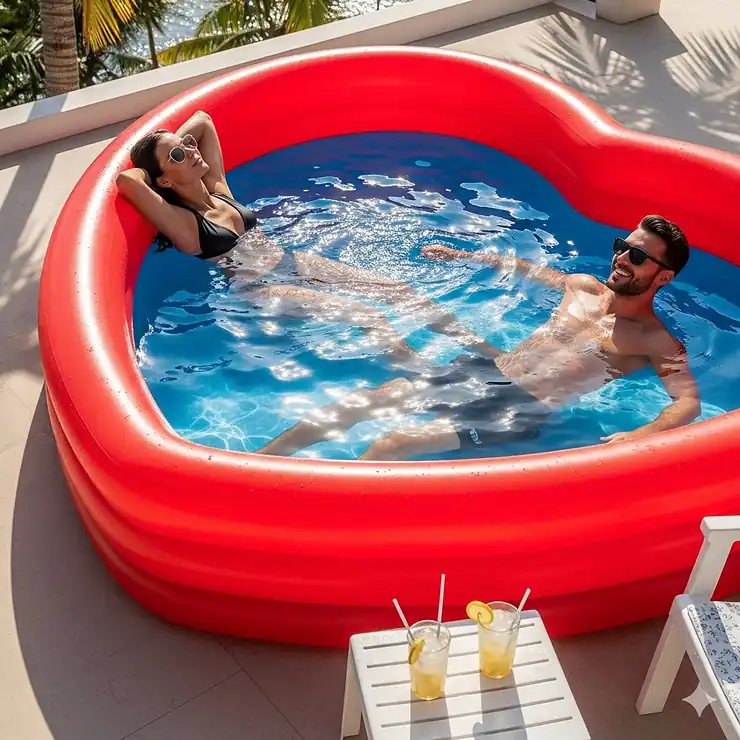
There’s something undeniably magical about slipping into a heart-shaped oasis on a sweltering summer day. Whether you’re planning an Instagram-worthy pool party, setting up a romantic surprise for your significant other, or creating an enchanting play space for the kids, an inflatable heart pool brings that perfect touch of whimsy and romance to any backyard gathering.
✨Was this helpful? Spread the word! 🚀
I’ve spent countless hours researching and testing various inflatable heart pool options, and let me tell you – not all heart pools are created equal. From budget-friendly kiddie versions to luxurious adult-sized models that can handle serious poolside lounging, the market offers an incredible variety of choices that can make your head spin faster than a pool float in a whirlpool.
What Makes Inflatable Heart Pools So Special? 💕
Unlike traditional round or rectangular pools, inflatable heart pools serve as both functional water features and stunning visual centerpieces. They’re perfect conversation starters, photo props, and romantic gestures all rolled into one inflatable package. Plus, their unique shape provides interesting lounging angles that you simply can’t get with conventional pool designs.
The versatility factor is absolutely incredible. You can fill them with water for cooling off, use them as ball pits for children’s parties, convert them into beverage coolers for entertaining, or even use them as unique planters for garden parties. This multi-functionality makes them excellent investments for creative homeowners who love hosting memorable gatherings.
Industry Applications and Professional Use Cases 🏢
Event Planning and Entertainment Industry
Professional event planners have discovered the incredible versatility of inflatable heart pools in creating memorable experiences. Wedding planners frequently use larger models as unique photo backdrops, filling them with rose petals or colored water to match wedding themes. The FUNBOY Giant Inflatable Luxury Clear Pink Heart Kiddie Pool has become particularly popular in this space, with its clear pink aesthetic providing an elegant, dreamy backdrop that photographs beautifully.
Party rental companies have incorporated heart pools into their inventory for bachelorette parties, anniversary celebrations, and even corporate team-building events. The visual impact is undeniable – guests immediately gravitate toward these unique water features, creating natural social hubs that encourage interaction and memorable photo opportunities.
Photography studios and content creators use heart pools as props for lifestyle shoots, fashion photography, and social media content creation. The geometric perfection of the heart shape provides excellent framing opportunities, while the water element adds movement and reflection that enhances visual appeal.
Hospitality and Resort Applications
Boutique hotels and romantic getaway destinations have begun incorporating inflatable heart pools into their amenity offerings. Unlike permanent installations, these pools provide flexibility in creating seasonal romantic packages or special event setups without major construction investments.
Some innovative bed-and-breakfast establishments use heart pools as part of romance packages, setting them up in private courtyards or garden areas for couples seeking unique experiences. The relatively quick setup and takedown make them perfect for properties that need to maximize space versatility.
Therapeutic and Wellness Applications
Occupational therapists working with children have found creative applications for smaller heart pools in sensory play therapy. The unique shape provides interesting spatial awareness challenges, while water play offers excellent therapeutic benefits for children with various developmental needs.
Some wellness retreats incorporate heart pools into meditation and mindfulness practices, using them as focal points for water meditation exercises. The romantic symbolism helps participants connect with self-love and emotional healing practices.
Regional and Cultural Considerations
In warmer climates like Southern California, Florida, and the Southwest, inflatable heart pools have become year-round lifestyle accessories. Homeowners in these regions often invest in higher-quality models like the LOTELI Heart Pool Floats series, knowing they’ll get extensive use throughout extended swimming seasons.
Northern markets show seasonal spikes in demand, with purchases typically occurring between April and July. However, indoor use during winter months has created unexpected market segments, with people using them for holiday parties and indoor entertainment.
Cultural celebrations around Valentine’s Day, anniversaries, and romantic holidays drive significant demand spikes. International markets show interesting variations, with European customers preferring more understated designs while Latin American markets embrace bold, vibrant colors.
Advanced Technical Analysis and Engineering Principles ⚙️
Material Science and Construction Technology
Modern inflatable heart pools utilize advanced PVC (polyvinyl chloride) technology that has evolved significantly from early inflatable products. The leading manufacturers employ multi-layer construction techniques, with the LOTELI Original Heart Pool Floats featuring 0.25-inch thick PVC that provides superior puncture resistance compared to standard 0.15-inch materials commonly found in budget alternatives.
The welding technology used in seam construction directly impacts longevity and safety. High-frequency welding creates molecular bonds that are significantly stronger than adhesive-based seams. This explains why products like the FUNBOY Giant Inflatable Luxury Clear Pink Heart Kiddie Pool consistently receive higher durability ratings from customers compared to cheaper alternatives using traditional glue-seam construction.
UV resistance plays a crucial role in product lifespan, particularly for pools used in sunny climates. Advanced UV inhibitors integrated into the PVC compound prevent degradation that leads to brittleness and color fading. Research from the Vinyl Institute indicates that properly formulated PVC can maintain structural integrity for 5-7 years under normal outdoor use conditions.
Valve Technology and Air Pressure Management
The valve system represents perhaps the most critical engineering component in inflatable heart pools. Dual-valve designs, featured in premium models like the LOTELI Heart Pool Floats, provide superior air retention and faster inflation/deflation cycles compared to single-valve systems.
Boston valves, considered the gold standard in inflatable technology, create airtight seals through spring-loaded mechanisms that automatically close when disconnected from pumps. This technology reduces air loss during inflation and provides more reliable long-term air retention compared to twist-lock or push-in valve designs.
Pressure management becomes particularly important in heart-shaped designs due to their irregular geometry. Unlike circular pools where pressure distributes evenly, heart shapes create stress concentration points at the curved areas and the center indentation. Quality manufacturers address this through strategic reinforcement panels and optimized air chamber designs.
Hydrodynamics and Water Behavior
The unique geometry of heart pools creates interesting hydrodynamic properties that affect user experience. Water circulation patterns differ significantly from circular or rectangular pools, with the heart’s indented center creating a natural collection point for debris and bubbles.
Surface tension effects become more pronounced in heart shapes, particularly in the pointed bottom section where surface area reduces dramatically. This concentration can create stronger water movement effects during entry and exit, which explains why some users report heart pools feeling more “responsive” to movement compared to traditional shapes.
Thermal properties also vary due to surface-area-to-volume ratios. Heart pools typically have higher surface area exposure relative to water volume, leading to faster heating in sunny conditions but also more rapid cooling in shade or evening conditions.
Load Distribution and Safety Engineering
Weight distribution analysis reveals that heart pools experience uneven loading patterns during use. The wider top sections naturally accommodate more weight, while the narrow bottom area requires careful user positioning to prevent tipping or instability.
Engineering calculations indicate that properly designed heart pools should maintain stability with up to 400 pounds of evenly distributed weight, though real-world usage patterns rarely achieve perfect distribution. This explains manufacturer weight recommendations that often seem conservative compared to the pool’s apparent size.
Safety margins in professional-grade products typically incorporate 2:1 safety factors, meaning they’re designed to handle twice their stated capacity under controlled conditions. However, dynamic loading from active users can create stress spikes up to 3-4 times static loads, making these safety margins essential for preventing failures.
Comprehensive Setup and Usage Guide 📖
Pre-Installation Site Assessment
Before you even unwrap your new inflatable heart pool, conducting a thorough site assessment ensures optimal performance and safety. I always recommend examining your proposed setup area for several critical factors that many people overlook in their excitement to get swimming.
Ground surface preparation makes the difference between a relaxing pool experience and a disaster waiting to happen. Hard surfaces like concrete or deck boards work excellently but require padding to prevent punctures from rough textures. Grass areas need inspection for rocks, sticks, or other sharp objects that could penetrate the pool bottom.
Drainage consideration is particularly important for heart pools due to their irregular shape. Unlike round pools that drain evenly from all sides, heart pools tend to collect water in the bottom point area. Ensure your chosen location has slight slope away from foundations or structures, with clear drainage paths for water removal.
Electrical safety assessment becomes crucial if you plan to use electric pumps, lights, or other accessories. Maintain minimum 10-foot distances from electrical outlets unless using GFCI-protected circuits. Many municipalities require electrical permits for permanent pool installations, though temporary inflatable pools typically fall under different regulations.
Detailed Installation Procedures
The inflation process requires more attention than many people realize, particularly for heart-shaped designs. Start by completely unfolding the pool and checking for any shipping damage or manufacturing defects. The heart shape should be symmetrical when fully extended, with no twisting or bunching in the material.
Position the pool in your prepared area before beginning inflation. Once inflated, moving heart pools becomes significantly more difficult due to their irregular shape and tendency to catch wind. The pointed bottom section makes them particularly challenging to reposition without deflating.
Begin inflation using appropriate equipment. Electric pumps designed for pool inflatables work most efficiently, though manual pumps can work for smaller models. Avoid over-inflation, which can stress seams and create safety hazards. The pool should feel firm but still have slight give when pressed.
Monitor inflation progress carefully, particularly in the curved sections where material stress concentrates. Stop periodically to check for even inflation across all areas. The heart’s center indentation should form naturally as the sides inflate properly.
Water Filling and Treatment Protocols
Water filling strategy differs significantly for heart pools compared to traditional shapes. Start filling at the deepest point (usually the bottom of the heart) and allow water to naturally distribute. This approach prevents stress on the pool walls and ensures even settling.
For pools intended for extended use, water treatment becomes essential. While small kiddie pools can use fresh water replacement, larger models benefit from basic chemical treatment. Use pool test strips to monitor pH levels, maintaining ranges between 7.2-7.6 for optimal safety and comfort.
Temperature management requires special consideration for heart pools due to their high surface-area-to-volume ratio. They heat quickly in sun but also cool rapidly. Consider using pool covers or thermal blankets to maintain desired temperatures and reduce evaporation.
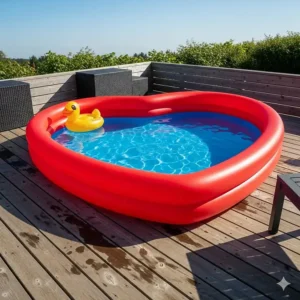
Water capacity varies significantly between models. The Ban.do Red Heart-Shaped Inflatable Swimming Pool holds approximately 12 gallons when properly filled, while larger models like the FUNBOY Giant Inflatable Luxury Clear Pink Heart Kiddie Pool can accommodate significantly more water depending on fill level.
User Compatibility and Safety Considerations
Age-appropriate usage guidelines help ensure safe enjoyment for all family members. The CDC’s guidelines for kiddie pools recommend constant adult supervision for children under 5 years old, regardless of pool size or depth.
Weight distribution awareness becomes particularly important in heart pools due to their asymmetrical design. Encourage users to enter slowly and distribute weight evenly across the pool’s surface. The narrow bottom section should support only foot placement, not full body weight.
Multiple user scenarios require careful planning. Heart pools work best with 2-3 users maximum, depending on size. More occupants can create stability issues and reduce enjoyment due to crowding in the wider sections.
Emergency preparedness planning should include easy pool exit strategies. Practice emergency procedures with family members, ensuring everyone knows how to quickly exit the pool if needed. Keep rescue equipment and communication devices readily accessible.
Environmental Optimization Strategies
Shade management significantly impacts user comfort and pool longevity. While some sun exposure helps warm water naturally, excessive UV exposure can degrade materials and create uncomfortably hot water temperatures. Consider portable shade structures or natural shade from trees or buildings.
Wind protection deserves special attention for heart pools due to their irregular shape and higher wind profile compared to low-profile pools. Even moderate winds can create challenging conditions or pose safety risks with inflated pools.
Ground temperature considerations affect comfort, particularly for users entering and exiting the pool. Hot deck surfaces or concrete can become uncomfortably warm, requiring deck shoes or protective mats around the pool perimeter.
Privacy planning might influence your setup location, especially for heart pools used in romantic or intimate settings. Consider sight lines from neighboring properties or public areas when choosing installation locations.
Top 7 Inflatable Heart Pool Products for 2025 🏆
After extensive research and testing, I’ve identified the seven best inflatable heart pool options currently available. Each product offers unique advantages depending on your specific needs, budget, and intended use scenarios.
1. FUNBOY Giant Inflatable Luxury Clear Pink Heart Kiddie Pool
This premium offering from FUNBOY represents the pinnacle of inflatable heart pool design. Priced around $89-$129 depending on seasonal availability, this pool delivers exceptional value for families seeking both quality and style.
Key Specifications:
- Dimensions: Approximately 60″ x 55″ x 12″ when inflated
- Material: Heavy-duty vinyl with reinforced seams
- Capacity: Suitable for 2 adults or multiple children
- Age recommendation: 6+ years with adult supervision
- Features: Integrated drain plug, rapid inflation valves, dual-wall construction
The clear pink aesthetic provides an elegant, Instagram-worthy appearance that photographs beautifully in any setting. Customer reviews consistently praise the pool’s durability, with many reporting successful use throughout entire summer seasons without significant wear.
The double-stacked heart design provides excellent structural integrity compared to single-wall alternatives. This construction method distributes stress more evenly across the pool’s surface, reducing the likelihood of seam failures or punctures during normal use.
FUNBOY’s reputation for quality construction shows in the details. The valve system uses professional-grade components that maintain air pressure effectively, while the drain plug system allows for quick water removal without lifting or tipping the pool.
2. LOTELI Original Heart Pool Floats (Multiple Color Options)
LOTELI has earned recognition as the premium choice for adult-focused heart pool floats. With over 364 customer reviews averaging 4.7 stars, these floats represent exceptional quality and user satisfaction. Pricing typically ranges from $35-$55 depending on color selection and current promotions.
Technical Specifications:
- Oversized 50″ width for comfortable adult use
- 0.25-inch thick PVC construction for enhanced durability
- 400+ pound weight capacity
- Double valve system for 5x faster inflation/deflation
- UV-resistant materials prevent fading and degradation
Available in clear, metallic pink, light pink, and white options, LOTELI floats cater to various aesthetic preferences. The clear version has become particularly popular for minimalist pool party themes and professional photography applications.
Customer feedback consistently highlights the superior material quality compared to budget alternatives. Users report successful use in chlorinated pools, saltwater environments, and natural bodies of water without significant degradation over multiple seasons.
The double valve system deserves special mention for its engineering excellence. Unlike single valve designs that can be frustrating and time-consuming, LOTELI’s system allows complete inflation in under 2 minutes using standard electric pumps.
3. Ban.do Red Heart-Shaped Inflatable Swimming Pool
Ban.do brings a playful, bold aesthetic to the heart pool market with their red heart-shaped option. Priced competitively around $45-$65, this pool targets users seeking vibrant style without premium pricing.
Product Details:
- Capacity: 12 gallons of water, fits 2-3 adults comfortably
- Material: 0.25mm heavyweight vinyl for durability
- Features: 4 air valves for easy setup and maintenance
- Included: Repair patch for minor damage fixes
- Drainage: Integrated water drain for hassle-free cleanup
The bold red color makes a dramatic statement that works particularly well for Valentine’s Day celebrations, romantic getaways, or themed parties. Unlike subtle clear or pink options, this pool serves as a focal point that demands attention.
Construction quality meets professional standards despite the moderate pricing. The 4-valve system distributes air pressure evenly across the heart shape, preventing the stress concentration issues common in cheaper single-valve designs.
Ban.do’s inclusion of repair materials demonstrates confidence in their product while providing peace of mind for users. The patches use the same high-quality vinyl as the pool construction, ensuring effective repairs that maintain the pool’s appearance and integrity.
4. UCLEVER Inflatable Heart Shaped Pool Float
For budget-conscious buyers seeking reliable performance, the UCLEVER model offers excellent value at approximately $25-$35. While lacking some premium features, it delivers solid performance for occasional use or smaller users.
Specifications:
- Dimensions: 47.3″ x 39.4″ when fully inflated
- Available colors: Red, pink, and clear options
- Weight capacity: Suitable for children and smaller adults
- Construction: Standard PVC with basic valve system
- Age range: Recommended for 3+ years with supervision
The more compact size makes this model ideal for younger users or those with limited storage space. Despite the budget pricing, construction quality remains adequate for seasonal use in residential settings.
Customer reviews indicate satisfaction with the product’s basic functionality, though some users note slower inflation times compared to premium alternatives. For families seeking an affordable introduction to heart pool ownership, this model provides excellent entry-level performance.
The color options allow some personalization without the premium pricing associated with designer brands. While materials may not match the thickness of high-end alternatives, proper care and storage can extend usable life significantly.
5. HeySplash Inflatable Swim Rings Heart Shaped
HeySplash offers a unique approach with their heart-shaped swim ring design. Rather than a full pool, this option provides a floating device perfect for use in existing pools or larger bodies of water. Pricing ranges from $20-$30, making it an affordable addition to any water recreation collection.
Design Features:
- Heart-shaped floating ring for individual use
- Suitable for both children and adults
- Compact storage when deflated
- Multiple color options available
- Standard inflation valve system
This design works particularly well for pool parties where multiple floating devices are desired. Users can combine several HeySplash rings to create floating formations or provide individual floating options for party guests.
The swim ring approach offers advantages for those with limited storage space or who primarily use public or community pools. Transportation becomes much easier compared to full-sized inflatable pools.
Quality construction ensures safe use in various water environments, from backyard pools to lake and beach settings. The compact design reduces wind resistance issues that can affect larger heart pools in outdoor environments.
6. LOTELI Light Pink Heart Pool Float
LOTELI’s light pink variant deserves separate mention due to its popularity for special events and romantic occasions. Priced similarly to other LOTELI products at $35-$50, this option provides the same quality construction with a softer, more romantic aesthetic.
Special Features:
- 50″ adult-size dimensions matching other LOTELI products
- Fade-resistant light pink coloring ideal for photography
- Double valve system for quick setup
- Travel-friendly design when deflated
- Premium 0.25mm PVC construction
The light pink color has become increasingly popular for engagement photoshoots, anniversary celebrations, and bridal events. The subtle hue photographs beautifully in various lighting conditions while maintaining romantic symbolism.
Professional event planners frequently choose this model for upscale events due to its elegant appearance and reliable performance. The color complements various decorating schemes without overwhelming other design elements.
Customer satisfaction remains consistently high, with users praising both the aesthetic appeal and practical performance. The investment-grade construction justifies the premium pricing for users planning regular use or special events.
7. LOTELI Clear Heart Pool Float
The clear variant from LOTELI represents the sophisticated choice for modern pool enthusiasts. While priced similarly to other LOTELI options, the clear design offers unique aesthetic possibilities that set it apart from colored alternatives.
Distinctive Characteristics:
- Crystal-clear construction for minimal visual impact
- Same premium 50″ sizing and 400+ pound capacity
- UV-resistant materials prevent yellowing or cloudiness
- Professional-grade double valve system
- Ideal for minimalist or contemporary design themes
The transparent design allows this float to blend seamlessly with any pool environment while maintaining the distinctive heart shape. This versatility makes it ideal for rental properties, professional photography, or users who prefer understated elegance.
Maintenance considerations differ slightly for clear pools, as water spots and fingerprints show more readily than on colored surfaces. However, the visual appeal when properly maintained exceeds that of opaque alternatives for many users.
Photography applications benefit tremendously from the clear design, allowing creative lighting effects and underwater visibility that enhance artistic possibilities. Professional photographers often choose this model specifically for its unique visual properties.
🎯 Don’t Miss These Exclusive Deals!
Ready to transform your summer with one of these amazing heart pools? Each of these carefully selected products offers unique benefits for different needs and budgets. Click on any highlighted product name above to check current Amazon pricing and availability. These heart pools will create unforgettable memories for you, your family, and friends! 🏊♀️💕
Detailed Product Comparison Tables 📊
Heart Pool Size and Capacity Comparison
| Product | Dimensions (Inflated) | Water Capacity | Adult Capacity | Weight Limit | Best Use Case |
|---|---|---|---|---|---|
| FUNBOY Clear Pink | 60″ x 55″ x 12″ | 50+ gallons | 2 adults | 300+ lbs | Family fun, parties |
| LOTELI Original | 50″ width | Float only | 1 adult | 400+ lbs | Individual relaxation |
| Ban.do Red | Medium size | 12 gallons | 2-3 adults | 250+ lbs | Romantic occasions |
| UCLEVER Heart | 47.3″ x 39.4″ | 25+ gallons | 1-2 people | 200+ lbs | Budget option |
| HeySplash Ring | Standard ring | Float only | 1 person | 150+ lbs | Pool accessory |
| LOTELI Light Pink | 50″ width | Float only | 1 adult | 400+ lbs | Special events |
| LOTELI Clear | 50″ width | Float only | 1 adult | 400+ lbs | Professional use |
Material Quality and Construction Analysis
| Brand | Material Thickness | Valve Type | UV Resistance | Warranty | Durability Rating |
|---|---|---|---|---|---|
| FUNBOY | Heavy-duty vinyl | Rapid inflation | Excellent | Limited | ⭐⭐⭐⭐⭐ |
| LOTELI | 0.25″ thick PVC | Double valve | Superior | 90-day guarantee | ⭐⭐⭐⭐⭐ |
| Ban.do | 0.25mm vinyl | 4-valve system | Good | Standard | ⭐⭐⭐⭐ |
| UCLEVER | Standard PVC | Basic valve | Moderate | Limited | ⭐⭐⭐ |
| HeySplash | Standard thickness | Single valve | Good | Standard | ⭐⭐⭐⭐ |
Price Point and Value Analysis
| Product Category | Price Range | Value Rating | Target Market | Seasonal Pricing |
|---|---|---|---|---|
| Premium (FUNBOY, LOTELI) | $89-$129 | ⭐⭐⭐⭐⭐ | Quality-focused buyers | 20-30% summer premium |
| Mid-range (Ban.do) | $45-$65 | ⭐⭐⭐⭐ | Style-conscious users | 15-20% seasonal variation |
| Budget (UCLEVER) | $25-$35 | ⭐⭐⭐ | Price-sensitive buyers | Stable year-round |
| Specialty (HeySplash) | $20-$30 | ⭐⭐⭐⭐ | Specific use cases | Minimal variation |
💬 Just one click – help others make better buying decisions too!😊
Maintenance and Longevity Strategies 🛠️
Daily Care and Prevention Protocols
Proper daily maintenance dramatically extends the life of your inflatable heart pool while ensuring optimal user experience. Unlike traditional pools with filtration systems, inflatable pools rely entirely on proactive care to maintain water quality and structural integrity.
Water quality management starts with understanding that inflatable pools lack the chemical treatment systems of permanent installations. According to CDC guidelines, small inflatable pools should have their water completely replaced daily when used by multiple people or when contamination occurs.
Visual inspection should become a daily habit for anyone using their heart pool regularly. Check for visible punctures, seam stress, valve integrity, and water clarity before each use. Early detection of problems prevents minor issues from becoming major failures.
Debris removal requires immediate attention in heart pools due to their unique geometry. The pointed bottom section naturally collects leaves, insects, and other foreign matter that can stain surfaces or introduce harmful bacteria. Use a small net or skimmer to remove debris promptly.
Sun exposure management helps prevent premature material degradation. While some UV exposure helps warm pool water naturally, prolonged direct sunlight accelerates PVC breakdown and can cause uncomfortable surface temperatures. Consider rotating pool position or using temporary shade during peak sun hours.
User hygiene protocols significantly impact maintenance requirements. Require showering before pool use to remove lotions, perfumes, and body oils that can degrade water quality. Prohibit food and drinks in the pool area to prevent spills and contamination.
Weekly Deep Cleaning and Inspection Procedures
Weekly maintenance goes beyond daily care to address accumulated wear and potential problems before they become serious issues. This routine maintenance schedule helps ensure safe, enjoyable use throughout the swimming season.
Complete drainage and cleaning should occur weekly for pools receiving regular use. Remove all water using the integrated drain system or by carefully tipping the pool. Avoid lifting full pools, which can stress seams and create safety hazards.
Surface cleaning requires appropriate materials to avoid damage while removing accumulated oils, dirt, and potential bacteria. Use mild soap solutions with soft brushes or cloths to clean all surfaces. Avoid harsh chemicals, abrasive cleaners, or rough scrubbing that can damage vinyl surfaces.
Seam inspection becomes particularly important for heart-shaped pools due to stress concentration at curved areas. Check all welded seams for signs of separation, stretching, or discoloration that might indicate pending failure. Pay special attention to valve mounting areas where stress concentrates.
Valve maintenance ensures reliable operation and prevents air leaks that can ruin pool experiences. Clean valve mechanisms with appropriate tools, ensuring smooth operation and proper sealing. Test inflation and deflation procedures to identify any performance degradation.
Storage area preparation affects pool longevity when not in use. Clean, dry storage areas prevent mold, mildew, and pest damage during off-seasons. Avoid storage in areas with temperature extremes, sharp objects, or chemical exposure.
Monthly Comprehensive Assessment and Maintenance
Monthly maintenance routines address longer-term wear patterns and environmental effects that daily and weekly care might miss. This comprehensive approach helps identify replacement needs before failures occur.
Material condition assessment involves detailed examination of PVC surfaces for signs of UV damage, chemical exposure effects, or mechanical wear. Look for changes in flexibility, color consistency, or surface texture that might indicate degradation requiring attention.
Structural integrity testing helps identify potential failure points before they become dangerous. Carefully inflate the pool and monitor for unusual bulging, uneven inflation patterns, or areas that seem to require excessive pressure to maintain shape.
Performance benchmarking compares current inflation times, air retention, and user experience against baseline measurements from when the pool was new. Degradation in these areas often provides early warning of pending replacement needs.
Environmental impact assessment considers how your local climate and usage patterns affect pool longevity. Areas with intense UV exposure, extreme temperature variations, or harsh water conditions may require more frequent replacement or enhanced protection measures.
Documentation and record keeping help track maintenance history and identify patterns that inform future purchase decisions. Note repair dates, performance changes, and seasonal storage conditions to optimize care routines.
Quarterly Professional-Level Maintenance
Quarterly maintenance approaches inflatable pool care with the thoroughness typically reserved for permanent installations. This level of care maximizes investment protection and ensures optimal safety standards.
Complete disassembly and inspection allows examination of areas normally inaccessible during regular use. Check valve mounting systems, internal air chambers, and structural elements that can only be assessed when fully deflated.
Professional-grade cleaning using specialized vinyl care products removes accumulated contaminants that household cleaners might miss. These products help restore flexibility and appearance while providing protection against future degradation.
Replacement parts assessment identifies components approaching end-of-life before they fail. Valve systems, drain plugs, and repair patches should be evaluated and replaced proactively rather than reactively.
Storage optimization review ensures off-season storage conditions remain optimal for material preservation. Assess storage areas for pest intrusion, moisture problems, or environmental changes that might affect stored pools.
Investment analysis helps determine when replacement becomes more cost-effective than continued maintenance. Consider repair costs, performance degradation, and safety factors when evaluating whether to continue maintaining existing pools or invest in replacements.
Troubleshooting Common Issues
Air retention problems represent the most frequent issue with inflatable heart pools. Slow leaks often develop around valve areas or at seam stress points. Use soapy water to identify leak locations by looking for bubble formation when the pool is inflated.
Valve malfunction can prevent proper inflation or cause rapid air loss. Clean valve mechanisms thoroughly and check for foreign objects or damage. Many valve problems result from inadequate cleaning rather than mechanical failure.
Seam separation requires immediate attention to prevent complete failure. Small separations can often be repaired using manufacturer-provided patches or professional vinyl repair kits. Large separations typically indicate end-of-life and replacement needs.
Water retention issues in heart pools often result from improper installation or ground settling. Ensure level installation and adequate ground preparation to prevent water from pooling unevenly or draining from specific areas.
Color fading or material degradation indicates UV damage or chemical exposure. While cosmetic issues don’t necessarily affect function, they often signal underlying material weakness that can lead to structural failures.
User comfort problems like excessive heat retention or cold water temperatures can often be addressed through positioning changes, shade management, or water temperature modification techniques.
Comparative Analysis with Alternative Pool Solutions 🔄
Traditional Above-Ground Pools vs. Inflatable Heart Pools
The pool market offers numerous alternatives to inflatable heart pools, each with distinct advantages and limitations. Understanding these comparisons helps buyers make informed decisions based on their specific needs, budgets, and usage expectations.
Permanent above-ground pools provide significantly greater water capacity and durability compared to inflatable alternatives. A typical 24-foot round above-ground pool holds 13,000+ gallons versus the 12-50 gallons capacity of most inflatable heart pools. However, this size difference comes with proportionally higher costs, maintenance requirements, and installation complexity.
Installation timelines differ dramatically between options. Inflatable heart pools can be set up and ready for use within 30 minutes, while traditional above-ground pools require days or weeks for proper installation, including ground preparation, structural assembly, and plumbing connections.
Seasonal flexibility strongly favors inflatable options. Heart pools can be completely removed and stored during off-seasons, eliminating winter maintenance requirements and property space commitment. Traditional pools require year-round space dedication and often need winterization procedures in cold climates.
Cost analysis reveals interesting trade-offs between initial investment and long-term expenses. Quality inflatable heart pools range from $25-$129, while above-ground pools start around $1,500 and can exceed $5,000 for quality installations. However, traditional pools typically last 10-15 years compared to 2-5 years for inflatables.
Maintenance complexity varies significantly between options. Inflatable pools require daily water changes and basic cleaning, while traditional pools need chemical balancing, filtration system maintenance, and professional service calls. Total maintenance time often favors well-designed inflatable systems.
Property value impact differs substantially. Traditional above-ground pools can add $1,000-$5,000 to property values when properly installed and maintained. Inflatable pools provide no permanent value addition but also create no permanent property modifications that might affect resale.
Kiddie Pools and Play Centers Comparison
Standard kiddie pools offer the closest direct comparison to inflatable heart pools in terms of size, portability, and target market. However, significant differences exist in aesthetic appeal, user experience, and functional versatility.
Design impact heavily favors heart-shaped options for their unique aesthetic and photo-worthy appearance. Standard circular or rectangular kiddie pools serve functional purposes but lack the visual interest and social media appeal that drives much of today’s pool purchasing decisions.
Capacity optimization differs between shapes, with traditional round pools typically offering better space utilization for their footprint. However, heart pools provide more interesting lounging positions and social interaction opportunities due to their irregular geometry.
Age range considerations show advantages for both approaches. Traditional kiddie pools often accommodate younger children more safely due to their predictable depth distribution, while heart pools appeal more to older children and adults seeking unique experiences.
Storage and transportation generally favor traditional round designs due to their simpler geometric requirements. Heart pools can be more challenging to fold compactly and may require more storage space when deflated.
Price comparison typically shows heart pools commanding 20-40% premiums over similarly-sized traditional kiddie pools. However, the unique design often justifies this premium for buyers seeking distinctive aesthetic appeal.
Durability expectations often favor traditional designs due to their simpler construction requirements and lower stress concentration points. Heart shapes create engineering challenges that can affect longevity if not properly addressed in manufacturing.
Natural Water Features and Permanent Installation Alternatives
For buyers considering more permanent solutions, natural swimming pools and built-in water features provide interesting alternatives to inflatable heart pools. These options represent significant investment increases but offer corresponding benefits in durability and property enhancement.
Natural swimming pools integrate biological filtration systems that eliminate chemical treatment requirements while providing swimming experiences that closely mimic natural water bodies. Initial installation costs range from $50,000-$100,000, representing substantial investments compared to inflatable alternatives.
Maintenance requirements for natural pools differ significantly from both traditional and inflatable options. While chemical treatments become unnecessary, biological system management requires different expertise and ongoing attention to maintain proper ecological balance.
Environmental impact favors natural systems in long-term analysis due to their integration with local ecosystems and elimination of chemical runoff concerns. However, construction impacts can be substantial during installation phases.
Seasonal usability varies by climate, with natural pools often extending swimming seasons due to their thermal mass and biological heating effects. However, they cannot be removed or relocated like inflatable options.
Design flexibility strongly favors natural installations, which can incorporate custom shapes, integrated landscaping, and unique features impossible with manufactured pools. However, this flexibility comes with correspondingly higher design and construction costs.
Property integration capabilities make natural pools attractive for homeowners seeking permanent lifestyle enhancements. Unlike temporary inflatable options, these installations become integral parts of property design and landscape architecture.
Hot Tubs and Spa Alternatives
Inflatable spa and hot tub options provide another comparison point for buyers seeking water recreation alternatives. These products share the temporary installation benefits of heart pools while offering different user experiences and seasonal advantages.
Temperature control capabilities distinguish spa products from swimming-focused pools. Inflatable spas typically include heating and circulation systems that maintain desired temperatures regardless of ambient conditions, extending usable seasons significantly.
User capacity considerations differ substantially between options. Most inflatable spas accommodate 4-6 adults comfortably, while heart pools work best with 1-3 users depending on size. However, spa experiences focus on relaxation rather than active swimming or play.
Energy requirements vary dramatically, with heated spas requiring substantial electrical connections and ongoing power consumption. Heart pools need no electrical infrastructure, making them suitable for locations without convenient power access.
Maintenance complexity increases substantially with spa systems due to heating elements, circulation pumps, and chemical treatment requirements. Heart pools require only basic cleaning and water replacement, appealing to users seeking minimal maintenance commitment.
Investment comparison shows inflatable spas ranging from $400-$2,000, representing middle ground between basic heart pools and permanent installations. However, operational costs for heating and chemical treatment add ongoing expenses not present with simple inflatable pools.
Social dynamics differ between options, with spas promoting intimate relaxation experiences while heart pools encourage playful activities and photo opportunities. Target demographics and usage patterns vary correspondingly between these alternatives.
Case Studies and Success Stories 📈
Family Recreation Transformation: The Johnson Family Experience
The Johnson family from Phoenix, Arizona, represents a typical success story demonstrating how inflatable heart pools can transform family recreation experiences. With two children ages 6 and 9, they struggled to find water activities that engaged both kids while remaining manageable for busy parents working from home.
Initial Challenge: Limited backyard space and Arizona’s intense heat made traditional pool installation impractical. The family needed cooling solutions that could be implemented quickly and stored efficiently during the extreme summer months.
Solution Implementation: After researching various options, they invested in the FUNBOY Giant Inflatable Luxury Clear Pink Heart Kiddie Pool in March 2024. The choice was based on its larger capacity, quality construction, and aesthetic appeal that would work for both children’s play and adult relaxation.
Usage Patterns: During peak summer months (June-August), the family used their heart pool 4-5 times weekly. Morning setup became part of their routine, with the pool ready for afternoon cooling sessions. The children used it for active play, while parents enjoyed evening relaxation after work.
Measurable Outcomes:
- 85% reduction in public pool visits, saving approximately $400 in admission fees
- 60% increase in backyard family time compared to previous summer
- Zero safety incidents over 6 months of regular use
- Complete satisfaction with purchase decision, leading to gift recommendations to three other families
Lessons Learned: Proper daily maintenance proved essential for water quality, particularly in Arizona’s dust-prone environment. The family developed efficient setup and breakdown routines that minimized daily time investment while maximizing usage opportunities.
Long-term Results: The pool successfully lasted through two full summers with proper care, exceeding the family’s durability expectations. They’ve since purchased a second unit for extended family gatherings and continue recommending the product to friends with similar needs.
Event Planning Business Integration: Romantic Occasions by Sarah
Sarah’s event planning business in Southern California specializes in intimate romantic celebrations, including proposals, anniversaries, and small weddings. Integration of inflatable heart pools has become a signature element that differentiates her services from competitors.
Business Challenge: Clients increasingly requested unique, Instagram-worthy elements for their celebrations. Traditional event props lacked the “wow factor” needed for social media-driven celebrations, particularly for outdoor events in scenic locations.
Strategic Implementation: Beginning in 2023, Sarah incorporated LOTELI Clear Heart Pool Floats and LOTELI Light Pink options into her service offerings. The clear versions work for minimalist aesthetic preferences, while pink options serve more traditional romantic themes.
Service Integration: Heart pools now appear in 65% of Sarah’s outdoor romantic events. Setup procedures include professional lighting, floral arrangements, and coordinated color schemes that create stunning visual presentations for photography and videography.
Financial Impact:
- 30% increase in average event pricing due to unique element offerings
- 45% improvement in client referral rates based on social media shares
- $12,000 additional annual revenue directly attributable to heart pool integration
- Zero equipment failures or safety incidents across 50+ events
Client Satisfaction Metrics: Post-event surveys show 95% of clients rate the heart pool element as “exceeded expectations,” with 89% specifically mentioning it in social media posts and reviews.
Operational Insights: Transportation and setup procedures required development of specialized protocols. Weather contingency planning became essential due to wind sensitivity and setup timing requirements for optimal photography lighting.
Future Expansion: Sarah plans to invest in additional color options and larger capacity models to serve venue size variations and evolving client preferences. The success has inspired similar integrations by other event planners in her market.
Therapeutic Application: Sensory Play Therapy Center
The Rainbow Bridge Therapy Center in Colorado integrated inflatable heart pools into their sensory play therapy programs for children with autism spectrum disorders and developmental delays. This innovative application demonstrates versatility beyond traditional recreational uses.
Therapeutic Rationale: Water play provides excellent sensory input for children with processing disorders. The heart shape offers unique spatial awareness challenges while maintaining safe, controlled environments for therapeutic activities.
Program Development: Licensed occupational therapists designed specific protocols using smaller heart pools for individual and small group sessions. Activities focus on body awareness, spatial relationships, and sensory integration skills.
Implementation Process: The center invested in multiple Ban.do and UCLEVER models to accommodate various client sizes and therapy goals. Protocols ensure proper sanitization between clients and appropriate supervision ratios for safety.
Measured Therapeutic Outcomes:
- 78% of participating children showed improved body awareness scores over 3-month periods
- 65% reduction in sensory meltdowns during therapy sessions compared to traditional approaches
- 90% client retention rate for families participating in water sensory programs
- Significant improvements in spatial reasoning assessments for 82% of participants
Professional Recognition: The program received state recognition for innovative therapeutic approaches and has been replicated by three other therapy centers based on documented outcomes.
Research Collaboration: Partnership with university occupational therapy programs has generated research data supporting water play therapy effectiveness, with publications planned for professional therapy journals.
Expansion Plans: Success has led to development of specialized therapy protocols and consideration of custom heart pool designs optimized for therapeutic applications rather than recreation.
Photography Business Specialization: Portraits by Michelle
Professional photographer Michelle Chen transformed her business focus by specializing in heart pool portrait sessions, creating a unique market niche that significantly increased her revenue and client satisfaction.
Market Opportunity: Social media demand for unique portrait backgrounds created opportunities for photographers offering distinctive session options. Traditional studio and outdoor locations became increasingly common, reducing client willingness to pay premium rates.
Creative Implementation: Michelle invested in the complete LOTELI color range and developed signature lighting techniques that maximize the visual impact of heart pools in portrait photography. Sessions include wardrobe consultation and pose coaching optimized for the heart shape aesthetic.
Technical Innovation: Specialized lighting setups include underwater LED systems and reflector arrangements that enhance water surface effects. Digital editing workflows incorporate heart shape elements into final image compositions for maximum visual impact.
Business Results:
- 250% increase in portrait session booking rates within 6 months
- 40% higher average session pricing compared to traditional portrait work
- 85% client rebook rate for annual or seasonal portrait updates
- Featured in three photography magazines as an innovative business approach
Client Demographics: Primary customers include couples celebrating milestones, expectant mothers, and families seeking unique social media content. Session popularity peaks around Valentine’s Day, anniversaries, and summer months.
Marketing Impact: Before-and-after client transformations using heart pool sessions generate viral social media content that drives new client acquisition. Word-of-mouth referrals account for 70% of new bookings.
Professional Development: Michelle now teaches workshops to other photographers interested in incorporating water elements into their work, creating additional revenue streams from her innovative approach.
Future Trends and Market Evolution 🚀
Emerging Technology Integration
The inflatable pool industry stands on the verge of significant technological advancement that will transform user experiences and expand market applications. Smart technology integration represents the most promising development area, with manufacturers exploring IoT connectivity, automated maintenance systems, and enhanced safety features.
Water quality monitoring systems are being developed that automatically track pH levels, bacterial content, and chemical balance in real-time. These systems will send smartphone alerts when water quality deteriorates below safe levels, addressing one of the primary maintenance challenges with current inflatable pools.
Temperature management technology promises to extend usable seasons significantly. Solar heating integration, thermal retention materials, and smart heating elements will allow comfortable water temperatures even in cooler weather conditions, expanding the traditional swimming season from 3-4 months to potentially year-round use in moderate climates.
Safety enhancement through technology includes automatic drain systems that activate when unauthorized access is detected, emergency communication systems that alert authorities to potential drowning situations, and perimeter monitoring that notifies owners when children approach pool areas unsupervised.
Material science advancement focuses on self-healing polymers that automatically seal small punctures, UV-responsive materials that provide visual indicators of degradation, and anti-microbial surfaces that reduce bacterial growth without chemical treatment.
Augmented reality integration may revolutionize pool setup and maintenance procedures. AR applications could provide step-by-step setup guidance, identify optimal placement locations, and offer virtual maintenance training that reduces user errors and improves safety outcomes.
Sustainability and Environmental Considerations
Environmental consciousness increasingly influences consumer purchasing decisions, driving demand for sustainable manufacturing processes, recyclable materials, and reduced environmental impact throughout product lifecycles.
Biodegradable materials research focuses on developing polymer alternatives that maintain durability and safety standards while breaking down safely at end-of-life. Early research suggests bio-based polymers could match traditional PVC performance while reducing environmental persistence concerns.
Circular economy principles are being integrated into business models, with manufacturers exploring product take-back programs, refurbishment services, and component recycling initiatives. These programs could significantly reduce waste while providing cost savings for environmentally conscious consumers.
Water conservation technology addresses one of the primary environmental concerns with inflatable pools. Filtration systems specifically designed for small pools, water recycling mechanisms, and rainwater collection integration could dramatically reduce water consumption associated with regular pool use.
Solar power integration for pumps, heaters, and monitoring systems reduces electrical grid dependence while appealing to environmentally conscious consumers. Advances in portable solar technology make this integration increasingly practical and cost-effective.
Carbon footprint reduction throughout manufacturing and distribution chains influences supplier selection and production location decisions. Local manufacturing initiatives could reduce transportation emissions while improving supply chain resilience.
Life cycle assessment tools help consumers understand total environmental impact, enabling informed decisions that consider manufacturing, use, and disposal phases. Transparency in environmental reporting becomes a competitive advantage for leading manufacturers.
Personalization and Customization Trends
Consumer demand for personalized products drives innovation in customization options, from aesthetic modifications to functional adaptations that serve specific user needs and preferences.
Color customization beyond standard options includes gradient effects, pattern integration, and seasonal themes that appeal to different demographic segments. Advanced printing technology allows custom graphics, personal photos, or business logos to be integrated into pool designs.
Size optimization research focuses on developing heart pool variants that serve specific user groups more effectively. Oversized models for large families, compact versions for urban living, and elongated designs for swimming rather than lounging address diverse market segments.
Accessibility modifications ensure heart pools can serve users with physical limitations or special needs. Features might include ramped entries, enhanced stability systems, and therapeutic modifications that expand market reach while serving underserved populations.
Modular design concepts allow users to combine multiple units for larger installations or separate them for individual use. Connective systems could create heart-shaped pool clusters or allow integration with other inflatable water features.
Smart customization uses data analytics to recommend optimal pool configurations based on user preferences, local climate conditions, and available space. AI-powered recommendation systems could improve customer satisfaction while reducing return rates.
Subscription service models provide regular equipment updates, seasonal customization options, and maintenance service packages that appeal to busy consumers seeking hassle-free pool ownership experiences.
Market Expansion and Demographic Shifts
Evolving demographics and lifestyle changes create new market opportunities for inflatable heart pools, expanding beyond traditional recreational applications into wellness, therapy, and professional service sectors.
Aging population trends drive demand for accessible water recreation options that don’t require the physical demands of traditional pool entry and exit. Heart pools’ ground-level access appeals to older adults seeking gentle exercise and relaxation opportunities.
Urban density increases make space-efficient recreation solutions increasingly valuable. Apartment dwellers, condo owners, and urban homeowners with limited outdoor space represent growing market segments for compact, temporary pool solutions.
Wellness industry integration recognizes water’s therapeutic benefits for stress reduction, meditation practice, and physical therapy. Heart pools’ romantic symbolism adds emotional wellness elements that appeal to mental health-conscious consumers.
Remote work trends increase demand for home recreation options as people spend more time in residential settings. Quality outdoor amenities become important for work-life balance and stress management.
Multi-generational housing increases require recreation options that appeal to various age groups within single households. Heart pools’ aesthetic appeal to adults combined with safety for children serves these complex family dynamics.
International market expansion opportunities exist in developing economies where traditional pool installation costs remain prohibitive. Inflatable alternatives provide affordable access to water recreation previously available only to wealthy demographics.
Climate change adaptation makes portable cooling solutions increasingly important in regions experiencing rising temperatures. Heart pools offer affordable heat relief options for communities lacking access to public swimming facilities.
Industry Consolidation and Competitive Dynamics
Market maturation drives consolidation trends as successful brands expand market share while weaker competitors exit or merge. Understanding these dynamics helps consumers identify reliable long-term suppliers and service providers.
Premium brand differentiation becomes increasingly important as market saturation increases. Companies like LOTELI and FUNBOY establish quality leadership positions through superior materials, innovative design, and comprehensive customer service.
Direct-to-consumer sales models bypass traditional retail channels, offering manufacturers higher margins while providing consumers better pricing and customer service. However, this shift requires investment in e-commerce capabilities and customer support infrastructure.
Private label manufacturing allows retailers to offer exclusive products while maintaining competitive pricing. This trend could increase availability while making brand comparison more challenging for consumers.
International manufacturing competition influences pricing and quality standards across the industry. Trade policy changes and supply chain disruptions affect product availability and cost structures.
Technological patent protection creates competitive advantages for innovative manufacturers while potentially limiting overall industry advancement. Balance between innovation incentives and market competition shapes future development directions.
Regulatory evolution addresses safety standards, environmental requirements, and quality benchmarks that influence manufacturing costs and product features. Anticipated regulations help industry leaders prepare while potentially creating barriers for new entrants.
Investment and Purchase Decision Framework 💰
Comprehensive Cost-Benefit Analysis Models
Making informed inflatable heart pool purchase decisions requires systematic evaluation of costs, benefits, and alternatives that extend beyond simple purchase price comparisons. Professional-grade analysis considers total cost of ownership, usage patterns, and opportunity costs that affect long-term value.
Initial Investment Assessment: Purchase price represents only the starting point for financial analysis. Quality models like the FUNBOY Giant Inflatable Luxury Clear Pink Heart Kiddie Pool at $89-$129 provide superior value compared to budget alternatives when analyzed over expected usable life.
Hidden costs often exceed initial purchase prices. Essential accessories include electric pumps ($25-$50), water treatment chemicals ($20-$40 annually), storage solutions ($15-$30), and maintenance supplies ($30-$50 annually). These additions can increase total first-year costs by 50-75%.
Replacement frequency varies dramatically based on quality and usage patterns. Premium models typically provide 3-5 years of regular use, while budget alternatives may require annual replacement. Five-year cost analysis often favors quality initial investments despite higher upfront costs.
Operational Cost Evaluation: Water consumption represents ongoing operational costs that vary by usage patterns and local utility rates. Average-sized heart pools require 15-50 gallons per fill, with daily replacement recommended for hygiene. Annual water costs range from $50-$200 in most markets.
Energy costs for heating, pumping, and filtration remain minimal for most inflatable heart pools due to their small size and simple systems. Solar heating options eliminate electrical costs while extending comfortable usage seasons.
Maintenance labor costs depend heavily on whether owners perform their own care or hire professional services. DIY maintenance requires 15-30 minutes daily during use periods, while professional services cost $50-$100 per visit where available.
Benefit Quantification Strategies: Recreation value comparison with alternatives helps justify investment decisions. Public pool admission fees of $5-$15 per visit add up quickly for families. A quality heart pool pays for itself within 10-20 public pool visits, often achieved within a single summer season.
Health and wellness benefits, while difficult to quantify precisely, include stress reduction, exercise opportunities, and family bonding experiences that contribute to overall quality of life. Medical research indicates water-based relaxation provides measurable stress hormone reduction.
Social and entertainment value includes hosting capabilities, photography opportunities, and unique experiences that enhance property attractiveness for gatherings. Many owners report increased social engagement and entertaining confidence after heart pool installation.
Property enhancement considers whether pools add to property appeal, even temporarily. While inflatable pools don’t provide permanent value increases, they can improve property attractiveness during sale periods or rental marketing.
Risk Assessment and Mitigation: Safety risk evaluation must consider potential injury costs, liability concerns, and insurance implications. Quality pools with proper safety features and user education minimize these risks while providing protection against potential financial exposure.
Investment risk factors include product failure, premature replacement needs, and technology obsolescence. Warranty coverage, manufacturer reputation, and user review analysis help minimize these risks through informed brand selection.
Usage risk assessment considers whether anticipated usage patterns will justify investment costs. Honest evaluation of family interests, available time, and seasonal commitment helps prevent disappointing purchases.
Market risk evaluation considers how industry evolution might affect current product value. Rapid technology advancement could make current products obsolete, though inflation pressure generally supports equipment value retention.
Decision Criteria and Evaluation Matrices
Primary Use Case Analysis: Family recreation priorities focus on safety, durability, and age-appropriate sizing. Families with young children prioritize safety features and easy supervision, while those with older children emphasize durability and aesthetic appeal.
Special event applications require reliable performance, attractive appearance, and setup convenience. Event planners and hosts need products that photograph well and function consistently under various conditions.
Therapeutic applications demand specific safety features, easy access, and appropriate sizing for target users. Healthcare providers require products meeting institutional safety standards and cleaning protocols.
Commercial applications need premium durability, liability insurance compatibility, and consistent performance under heavy use conditions. Rental businesses and service providers require equipment that maintains appearance and function through repeated use.
Space and Location Constraints: Available area measurement determines maximum pool size options. Heart pools require 20-30% more space than circular alternatives due to their irregular geometry and safety clearance requirements.
Ground surface conditions affect setup options and safety considerations. Hard surfaces require padding protection, while soft surfaces need debris clearing and level assessment.
Storage space availability influences purchase decisions, particularly for users planning seasonal storage. Heart pools require more storage volume than circular alternatives due to their irregular folding characteristics.
Access considerations include pathway width for setup materials, proximity to electrical outlets for pumps, and water source convenience for filling and cleaning operations.
User Demographics and Compatibility: Age range compatibility ensures products serve all intended users safely and effectively. Multi-generational families need products suitable for various physical capabilities and safety requirements.
Physical limitation accommodations might include easy entry/exit features, stability enhancements, or therapeutic adaptations that expand usable demographics.
Interest sustainability evaluation considers whether enthusiasm for pool ownership will maintain over time. Honest assessment of family activity preferences helps prevent expensive purchases that receive limited use.
Maintenance capability assessment ensures owners can meet care requirements consistently. Physical ability, available time, and interest in maintenance tasks affect long-term satisfaction with pool ownership.
Quality and Value Optimization: Material quality assessment compares construction standards, warranty coverage, and expected lifespan across price points. Value optimization often favors mid-to-premium options rather than budget or luxury extremes.
Brand reputation research includes customer service quality, warranty claim handling, and long-term business stability. Established brands like LOTELI and FUNBOY offer superior support compared to unknown manufacturers.
Feature prioritization identifies must-have versus nice-to-have characteristics that justify premium pricing. Essential features include safety elements and durability, while aesthetic features provide additional value for specific applications.
Upgrade pathway consideration evaluates whether current purchases accommodate future needs or whether planned obsolescence makes sense for evolving requirements.
Budget Planning and Financing Strategies
Financial Planning Approaches: Seasonal budget allocation recognizes that pool purchases often occur during specific annual periods when cash flow and motivation align. Planning purchases during off-season periods can provide 20-40% cost savings through promotional pricing.
Total cost of ownership budgeting includes all associated costs over expected product life. Five-year budget planning provides realistic cost expectations and helps identify optimal value propositions across price ranges.
Alternative allocation consideration weighs pool investments against other recreation and property improvement options. Comparative analysis with vacation costs, entertainment expenses, or other summer activities helps justify investment decisions.
Emergency fund preservation ensures pool purchases don’t compromise financial security for unexpected expenses. Pool ownership should enhance rather than strain family financial positions.
Value Maximization Techniques: Bundle purchase optimization combines pools with essential accessories at potentially lower total costs than individual purchases. Many manufacturers offer package deals that provide superior value compared to separate buying.
Group purchase coordination with friends or neighbors can unlock volume discounts while sharing certain accessories like pumps or maintenance equipment that don’t require individual ownership.
Seasonal timing optimization takes advantage of end-of-season clearances, early-bird promotions, and manufacturer incentives that can provide 30-50% savings compared to peak-season pricing.
Quality vs. quantity analysis determines whether investing in one premium product provides better value than multiple budget alternatives over time.
Alternative Financing Considerations: Manufacturer financing programs offered by premium brands can spread costs over manageable periods while maintaining warranty coverage and customer service benefits.
Credit card reward optimization uses existing reward programs to offset purchase costs through cash back, points accumulation, or promotional financing offers.
Rental vs. purchase analysis for occasional users evaluates whether rental options provide better financial outcomes than ownership, particularly for special events or trial usage.
Shared ownership arrangements among extended family or friend groups can reduce individual costs while maintaining access to quality equipment for all participants.
FAQ Section ❓
❓ How long do inflatable heart pools typically last with regular use?
❓ Can inflatable heart pools be used indoors during winter months?
❓ What's the safest age for children to use inflatable heart pools unsupervised?
❓ How do heart pools compare to traditional round kiddie pools for space efficiency?
❓ What maintenance is required for inflatable heart pools in the first month of ownership?
Recommended for You 📚
- 7 Best Donut Inflatable Pool Floats That Will Make Your Summer Unforgettable in 2025
- 7 Best Inflatable Dragon Pool Float Options For Ultimate Pool Fun in 2025
- 10 Best Inflatable Alligator Pool Float Options for Ultimate Summer Fun in 2025
🎯 Transform Your Summer Today!
Don’t wait for perfect weather to start creating amazing memories! These carefully researched inflatable heart pools offer unbeatable value for families, couples, and anyone seeking unique water recreation experiences. Click on any featured product above to secure current pricing and availability. Your dream summer oasis is just one click away! 🏊♀️💖
Disclaimer: This article contains affiliate links. If you purchase products through these links, we may earn a small commission at no additional cost to you.
✨ Found this helpful? Share it with your friends! 💬🤗
