

In This Article
You know the moment. You’re floating on your back, admiring the sky, when your eye drifts to the tile and there it is: a crusty white stripe hugging the waterline like a bathtub ring with big ambitions. That stripe is why a good pool tile cleaner is worth more than another jug of chlorine. And the wrong pool tile cleaner? That’s how people end up with etched tile, a ruined Saturday, and a shoulder that complains for a week.
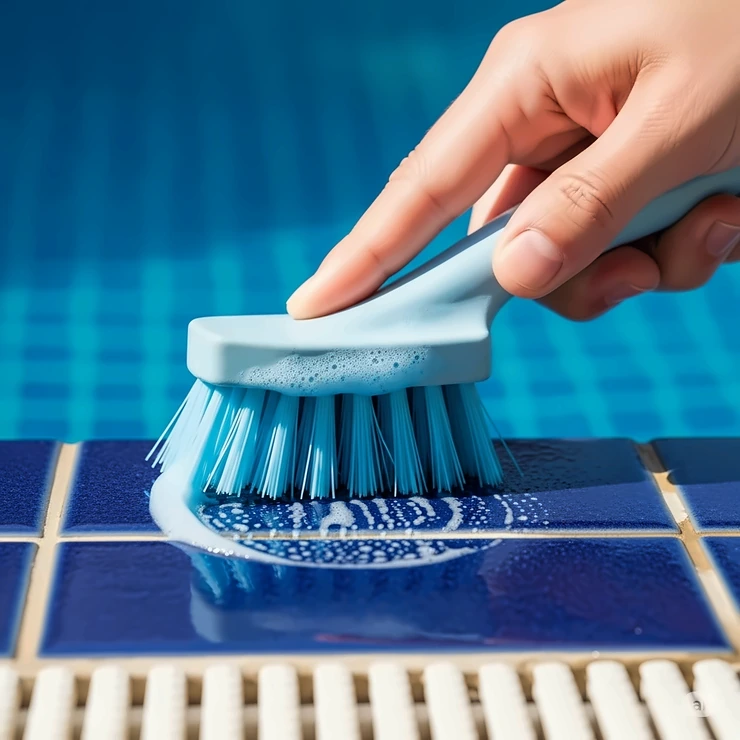
What Is a Pool Tile Cleaner?
A pool tile cleaner is a product or tool built to remove calcium scale, body oils, sunscreen residue, and mineral stains from the tile band at your pool’s waterline. It comes as a chemical descaler, an abrasive scrubber, or a power-brush attachment. The right choice depends on your tile material and how thick the buildup has become.
That white crust is mostly limescale, a hard, chalky deposit made largely of calcium carbonate. In a pool it forms at the waterline because water evaporates and leaves its minerals behind. Hot weather, hard fill water, and high pH all speed the process along. Sunscreen, oils, and pollen then cling to the rough surface, which is how a neglected waterline goes from white to gray to a shade best described as regret.
Here’s how this guide works. I compared seven real products using spec sheets, retailer listings, and the review themes that could actually be verified. None of it is hands-on testing, and I won’t pretend otherwise. What you get is honest analysis: what each spec means in practice, who each product suits, and where the reviews get messy. Prices appear as ranges because they move constantly, so check current price before you buy.
Quick Comparison: Pool Tile Cleaner Picks at a Glance
Seven picks, three styles: chemical descalers, hand tools, and power attachments. Start here, then dive into the full breakdowns below.
| Product | Type | Best For |
|---|---|---|
| EasyCare ScaleTec Plus | Non-acid liquid descaler | Preventing recurring scale in hard-water pools |
| Bio-Dex 300 Tile Cleaner | Acid-based concentrated gel | Thick calcium rings on ceramic tile |
| Jack’s Magic Power Blue Scale Off | Ready-to-use scale remover | Heavy buildup, with a patch test first |
| OceanCare Calcium Releaser | Mineral-acid-free spray | Glass and porcelain tile owners |
| Pool Patch 2-in-1 Flip Brush | Pole-mounted scour and bristle head | Scrubbing a full tile row from the deck |
| Purity Pool TSQC Tile Scrubber | Angled pad on a quick-connect head | Tight spots under cantilever decks |
| Drillbrush Pool Kit (4-Piece) | Drill-powered brush set | Steps, slides, and sturdy tile bands |
Looking at the comparison above, EasyCare ScaleTec Plus is the low-effort pick for owners who want to prevent scale rather than fight it. Bio-Dex 300 Tile Cleaner and Jack’s Magic Power Blue Scale Off are the heavier hitters for established crust. Glass-tile owners should look first at OceanCare Calcium Releaser, whose listing describes a mineral-acid-free formula. Chemicals loosen scale but rarely finish the job alone, so Pool Patch 2-in-1 Flip Brush, Purity Pool TSQC Tile Scrubber, or the Drillbrush Pool Kit is the other half of most winning combinations.
💬 Just one click — help others make better buying decisions too!😊
Top 7 Pool Tile Cleaner Options: Expert Analysis
Every entry below follows the same logic: what stands out, what the specs mean in real life, who should buy it, and what reviewers keep saying. Where review data is thin, I say so rather than invent anything.
1. EasyCare ScaleTec Plus — non-acid scale control you pour, not scrub
The standout idea here is hands-off chemistry. Instead of attacking scale with acid, this 64 oz descaler and stain remover works through the water, which makes it a different animal from a typical pool tile cleaner. According to the listing, it targets calcium buildup and iron stains without scrubbing or draining, with visible results in roughly two to four weeks. That timeline matters: it’s closer to a water-treatment product than a quick-fix swimming pool tile cleaner. It suits owners who would rather dose on a schedule than spend a Saturday on their knees.
Based on the spec comparison, it fits pools where scale is a recurring annoyance rather than a decade-old crust. Think hard fill water, a high-pH tendency, or a saltwater system. Because it’s non-acid, it also sidesteps the etching worries that haunt glass-tile owners.
Reviewer sentiment on retail listings skews positive. Several owners with hard-water scale report it cleared after a few applications, and some say a pool professional recommended it. The recurring complaint is that thick, dirty brown scale didn’t budge, which tracks with a slow-acting product.
Pros:
- ✅ Non-acid formula lowers etching worries
- ✅ No draining or heavy scrubbing required
- ✅ Doubles as maintenance for scale prevention
Cons:
- ❌ Results take weeks, not minutes
- ❌ Thick brown scale may need manual help
Price tier: mid-range, and the 64 oz bottle covers multiple doses, so check current price and compare cost per treatment. Value verdict: excellent for prevention, underwhelming for rescue missions.

2. Bio-Dex 300 Tile Cleaner — pro-grade gel for heavy calcium rings
The thick, concentrated texture is the hook. Gel clings to vertical tile instead of running into the pool, which is exactly what you want from a pool waterline tile cleaner. The 32 oz squirt bottle is built for direct application, followed by a short dwell time and a scrub. Retailer descriptions position it for non-porous surfaces, and one listing’s composition breakdown includes hydrochloric, phosphoric, and hydrofluoric acids.
That last detail is the real-world takeaway. This is an acid-based, fast-working formula, so expect speed on carbonate scale and expect to wear gloves and goggles. The hydrofluoric mention is a flag to read the label carefully before it goes anywhere near glass tile. Retailers also disagree on whether it suits natural stone. Trust the label over the marketing copy, and skip stone.
On reviews, verifiable data was thin. One retailer shows only a handful of ratings, too few to draw conclusions. Pool-service sources, however, consistently describe it as effective on calcium carbonate scale.
Pros:
- ✅ Fast-acting on heavy calcium buildup
- ✅ Gel clings to vertical tile surfaces
- ✅ Familiar name among pool-service pros
Cons:
- ❌ Acid-based, so full protective gear is essential
- ❌ Risky on glass or natural stone without testing
Price range: roughly the $30-$40 range for a quart at pool retailers, so check current price on Amazon. Value verdict: strong for stubborn ceramic-tile rings, wrong for delicate finishes.
3. Jack’s Magic Power Blue Scale Off — spray-and-wait remover with a bold claim
The bold claim: it removes 2-4 mils of calcium carbonate scale and efflorescence per application. A mil is a thousandth of an inch, so that describes thin layers per pass. Thick scale means repeat rounds, not one miracle spray. It comes ready to use in a 32 oz bottle, with a gallon option, so there’s no mixing math. That’s a genuine plus for first-timers.
Here’s what the spec sheet won’t tell you, but user reports suggest: results vary a lot by where the scale lives. Owners with dry-ish deposits report dramatic wins, including one reviewer fighting roughly 20 years of buildup. Others say it did little on constantly wet tile lines, and one reported the product etched their tile. Treat that last report as a reason to patch-test in a hidden spot rather than a reason to panic.
Pros:
- ✅ Ready to use, so no dilution guesswork
- ✅ Reviewers report success on old buildup
- ✅ Available in quart and gallon sizes
Cons:
- ❌ Mixed results on constantly wet waterline tile
- ❌ At least one etching complaint among reviews
Price tier: mid-range, with the gallon better for large pools. Check current price and per-ounce cost. Value verdict: good, provided you patch-test and plan on more than one pass.
4. OceanCare Calcium Releaser — mineral-acid-free spray for delicate tile
The standout is its target audience: people who are nervous about acid. The listing describes a mineral-acid-free formula that is safe on porcelain, ceramic, and glass tile, sold as a 32 oz trigger spray or a gallon rated to cover up to roughly 300 square feet. Those details mean you can spray, wait, and scrub with a soft pad instead of suiting up like a lab technician.
Analytically, this is the logical pick if your tile is glass mosaic or a premium porcelain. Calling it “safe” still isn’t permission to skip a test patch. The gallon is also the sensible size for larger tile bands.
Reviews split. Some owners call it a miracle spray, and one says it beat straight muriatic acid for them. Others say a pumice stone worked better, one reported a sprayer failing after first use, and another needed a scraper alongside the gallon sprayer on years-old scale.
Pros:
- ✅ Listing says safe on glass, porcelain, ceramic
- ✅ Spray format is quick to apply
- ✅ Gallon rated to cover a large tile band
Cons:
- ❌ Premium cost per ounce, according to reviewers
- ❌ Mixed results and occasional sprayer complaints
Price tier: premium. Check current price, and compare the quart against the gallon before buying. Value verdict: worth it for delicate tile, skippable for sturdy ceramic.
5. Pool Patch 2-in-1 Flip Brush — one head for scour and polish
Its standout feature is the flip design. One side carries a blue scouring pad for loosening scale, and the other has polyamide bristles for finishing. The 10-inch by 6-inch head covers a full row of tile in a single pass, and the pole mount lets you work from the deck instead of from the water.
In practice, that scouring pad holds cleaner against the tile, so a chemical dwells where it should. Roundups describe it as acid-safe and suitable for waterline scale on ceramic and glass, though glass owners should still test a small spot first. One known trade-off: the scouring pad wears faster than the bristle side, and replacement pads are sold separately.
I couldn’t verify a deep pool of customer reviews for this one, so treat the praise in roundups as editorial opinion rather than crowd consensus. The design logic is sound: pair it with a gentle descaler and you cut scrubbing time substantially.
Pros:
- ✅ Wide head covers tile rows quickly
- ✅ Two surfaces in one tool
- ✅ Reaches the waterline from the deck
Cons:
- ❌ Scour pad wears faster than the bristles
- ❌ Replacement pads cost extra
Price range: roughly the $40-$50 range at the time of research, so check current price. Value verdict: pricey for a brush, but fair if you scrub tile often.
6. Purity Pool TSQC Tile Scrubber — angled pad that slips under cantilever decks
The hook is geometry. An angled head reaches under cantilever deck edges and into tight corners where a standard brush simply can’t go. The pads measure about 3 by 4 inches and two inches thick, built from two glued layers. They are soap-dispensing, meaning they hold cleaner, and fine and coarse replacements are sold separately. The quick-connect head attaches to standard pool poles.
What does that mean for you? If your tile line tucks under a lip, this is the tool that saves your back. The thick pad also acts like a reservoir, so a liquid pool tile cleaner stays on the tile instead of dripping away. Choose the fine pad for glass-adjacent tile and the coarse pad only for sturdy ceramic.
Review data was limited. One roundup mentions the initial pad may wear quickly, which fits a consumable design. Plan on keeping spare pads.
Pros:
- ✅ Angled reach under cantilever deck edges
- ✅ Thick pad holds cleaner against tile
- ✅ Fine and coarse replacement pads available
Cons:
- ❌ Small pad is slow on long tile runs
- ❌ Pads wear and need replacing
Price range: roughly the high-$20s to $30 range at retailers, so check current price. Value verdict: great value for awkward layouts.
7. Drillbrush Pool Kit (4-Piece) — power scrubbing for people tired of elbow grease
The standout is speed. This kit pairs brush heads with a quarter-inch quick-change shank and steel shafts, so they chuck into most cordless drills (drill not included). The kit includes the Original multi-purpose corner brush, which suits rounded corners, steps, and sturdy tile bands. The brand claims it cuts scrubbing time by half or more versus hand scrubbing.
Here’s the honest caveat. A spinning brush plus cleaner plus a tile line equals splatter, so wear eye protection. Stiffer bristles can also scratch soft or glass surfaces, so start gently with the medium bristles and test a hidden spot first. This is a tool for sturdy tile and for the grimy extras, such as steps and slides.
Reviews skew favorable. One retail listing shows 4.7 stars from 23 ratings, with a reviewer noting the stiffer brush kept its shape under heavy pressure. Most feedback concerns general scrubbing, not pool tile specifically.
Pros:
- ✅ Cuts scrubbing time on large surfaces
- ✅ Budget-friendly kit with multiple heads
- ✅ Handles steps, slides, and deck areas too
Cons:
- ❌ Requires your own cordless drill
- ❌ Splatter and scratch risk on delicate tile
Price range: roughly under $30 at retailers, so check current price. Value verdict: superb for sturdy surfaces, a gamble for glass.
Here’s how the full lineup stacks up side by side:
| Product | Acid-Based? | Application | Price Tier | Best For |
|---|---|---|---|---|
| EasyCare ScaleTec Plus | No | Added to pool water | Mid-range | Prevention in hard-water pools |
| Bio-Dex 300 Tile Cleaner | Yes | Gel, scrub, rinse | Mid-range | Heavy ceramic-tile calcium |
| Jack’s Magic Power Blue Scale Off | Check label | Spray, dwell, scrub | Mid-range | Old, thick buildup |
| OceanCare Calcium Releaser | Mineral-acid-free per listing | Trigger spray | Premium | Glass and porcelain tile |
| Pool Patch 2-in-1 Flip Brush | Not applicable | Pole-mounted brush | Upper-mid | Fast row-by-row scrubbing |
| Purity Pool TSQC Tile Scrubber | Not applicable | Pole-mounted pad | Budget-mid | Tight spots under decks |
| Drillbrush Pool Kit (4-Piece) | Not applicable | Drill attachment | Budget | Steps, slides, sturdy tile |
The pattern is clear: you’re really choosing between chemistry and mechanics, and most pools need both. Bio-Dex 300 Tile Cleaner plus Purity Pool TSQC Tile Scrubber is the classic combination for ceramic tile, while OceanCare Calcium Releaser with Pool Patch 2-in-1 Flip Brush is the gentler route. EasyCare ScaleTec Plus works best alongside either, as the ongoing prevention layer.
How to Use a Pool Tile Cleaner Step by Step
Technique matters more than brand. One roundup puts it at roughly 80% technique and 20% product, and that matches how scale behaves: loosen it, lift it, rinse it, then stop it from coming back.
Step 1: Test the water first. Scale is a symptom of water chemistry, so check before you scrub. CDC guidance recommends a pH of 7.0 to 7.8 and at least 1 ppm of chlorine in pools. Also check calcium hardness, which is commonly targeted at roughly 200 to 400 ppm.
Step 2: Identify the deposit. Calcium carbonate is soft, flaky, and white, and it’s the easier kind to remove. Gritty, glass-hard deposits suggest calcium silicate, which often calls for a professional.
Step 3: Patch-test. Pick a hidden spot, apply, wait, rinse, and look for dulling.
Step 4: Work in small sections. Cover about three to four feet at a time so cleaner doesn’t dry on the tile. Acid-based products are generally applied at or above the waterline, so lower the water level if needed.
Step 5: Dwell, scrub, rinse. Typical dwell times run about 5 to 15 minutes, then scrub with a nylon pad or brush and rinse thoroughly.
Step 6: Retest the water and log it. Chemicals you just rinsed into the pool can nudge pH.
First-30-days mistakes: letting cleaner dry on the tile, skipping the rinse, and scrubbing harder instead of waiting longer.
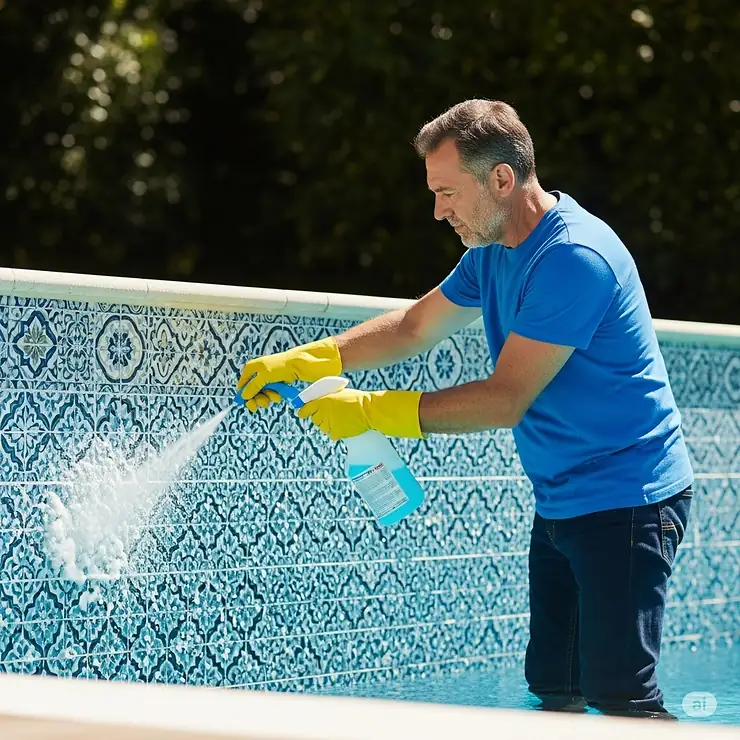
Problem → Solution: Fixing Common Pool Tile Headaches
Most pool tile frustrations fall into five buckets. Here’s what typically works, based on how these products are designed to be used.
Problem 1: The white crust returns within weeks. The cause is usually water balance, not a weak cleaner. Fix pH and calcium hardness, then consider EasyCare ScaleTec Plus as an ongoing preventive.
Problem 2: The ring is gray or brown and greasy, not chalky. That’s oils and sunscreen, not scale. Scrub gently with the fine pad on Purity Pool TSQC Tile Scrubber, and use a tile degreaser rather than a calcium remover.
Problem 3: The tile looks dull or cloudy after cleaning. Dullness can mean surface etching from acid or abrasion. Stop, rinse, and consult a tile professional before trying anything stronger.
Problem 4: You can’t reach tile under the deck lip. An angled head such as Purity Pool TSQC Tile Scrubber exists precisely for this. A standard brush just skates past.
Problem 5: The scale is glass-hard and won’t budge. Suspect silicate scale. Repeated rounds of Jack’s Magic Power Blue Scale Off won’t dissolve silicate, so a professional restoration is the smarter spend.
Real-World Scenarios: Which Pool Tile Cleaner Fits Your Pool?
Scenario A: The busy parent with a saltwater pool and light scale. The goal is low effort, and the frequency is weekly. Salt systems tend to promote scale at the waterline, so EasyCare ScaleTec Plus for prevention plus Purity Pool TSQC Tile Scrubber for quick touch-ups is the sensible, budget-friendly pairing.
Scenario B: The new homeowner with a decade-old crust on ceramic tile. This is a weekend project, probably two rounds. Bio-Dex 300 Tile Cleaner or Jack’s Magic Power Blue Scale Off, applied in small sections, with Pool Patch 2-in-1 Flip Brush for the scrubbing. Budget for protective gear and patience.
Scenario C: The glass-mosaic owner who refuses to gamble. OceanCare Calcium Releaser with a soft pad, after a hidden-spot test. Skip pumice and stiff bristles entirely.
Scenario D: The family with a slide, steps, and grimy deck edges. The Drillbrush Pool Kit (4-Piece) earns its place here for the sturdy, non-glass surfaces, while a gentler tool handles the tile itself.
✨ Don’t Miss These Exclusive Deals!
🔍 Take your pool tile cleaning to the next level with these carefully selected products. Click on any highlighted item to check current pricing and availability. These tools will help you create a sparkling waterline your family will love!
How to Choose a Pool Tile Cleaner
Choosing well comes down to seven checks, in this order.
- Identify the deposit. Chalky and flaky points to calcium carbonate, which most cleaners handle. Glass-hard points to silicate, which needs a professional.
- Match chemistry to tile material. Acid-based products suit sturdy ceramic. Glass, porcelain, and natural stone call for gentler or acid-free options, and stone should never meet acid.
- Decide how much effort you’ll give. Gradual products like EasyCare ScaleTec Plus trade speed for convenience, while gels trade effort for speed.
- Check tool compatibility. Most pole tools attach to a standard 1-1/4-inch telescoping pole, so confirm yours before buying.
- Compare cost per treatment, not sticker price. A gallon rated to cover about 300 square feet may beat several small bottles.
- Plan your safety gear. If a product needs gloves, goggles, and ventilation, budget for them.
- Read reviews for patterns. A single etching complaint is a prompt to patch-test. Ten identical complaints are a reason to walk away.
Features That Actually Matter in a Pool Tile Cleaner (And Those That Don’t)
Features worth your attention:
- Dwell-friendly texture. Gels and thick sprays stay put on vertical tile, so the chemistry works longer.
- Clear surface guidance. A label that names tile types and warns about stone is worth more than a flashy bottle.
- Replaceable pads. Scrubbers wear, so replacements keep a good tool useful.
- Pole compatibility. A tool you can’t attach to your pole is just clutter.
- A reliable sprayer. One reviewer reported a failure after first use, which matters when you’re spraying a gallon’s worth.
Features that matter less than marketing suggests:
- “Miracle” language. Every bottle promises one. The deposit type decides the outcome.
- Per-application mil claims. Useful as a rough scale, but they say nothing about your tile line.
- Fancy packaging. Pumice, pads, and chemistry all work or fail on the same physics regardless of the box.
The sneaky one is the dwell time printed on the bottle. Treat it as a starting point, because temperature, scale thickness, and tile porosity all shift it.
Pool Tile Cleaner vs Robotic Cleaners and DIY Fixes
Wall-climbing robotic cleaners are marketed heavily for tile pools, and some listings advertise waterline cleaning. They help with routine grime, but they aren’t built to dissolve hardened calcium. A dedicated pool tile cleaner and a robot are teammates, not rivals.
| Option | Strength | Weakness | Best For |
|---|---|---|---|
| Dedicated pool tile cleaner | Dissolves or loosens scale | Needs application and rinsing | Visible calcium lines |
| Robotic cleaner with waterline mode | Ongoing hands-off maintenance | Doesn’t remove hardened scale | Preventing grime buildup |
| Pumice stone | Cheap and fast on small areas | Wears quickly; unsuitable for glass | Spot-treating sturdy ceramic |
| Vinegar | Gentle and household-friendly | Weak on thick scale | Very light deposits |
| Muriatic acid | Powerful on carbonate scale | Hazardous; can etch or damage grout | Experienced users with full gear |
Looking at the table, a dedicated pool tile cleaner is the best middle path between weak household fixes and risky acid. Pumice is wallet-friendly, though reviewers say stones wear fast, with one estimating a stone covers around 40-50 feet of tile with effort. Robots shine for the daily grind, so pair one with a scale remover and you have both maintenance and restoration covered.
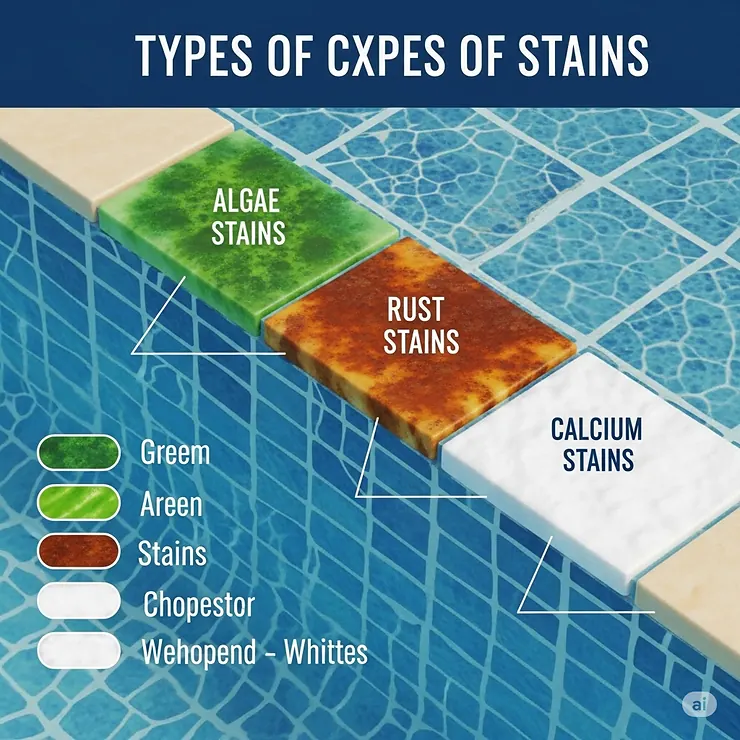
Common Mistakes When Buying a Pool Tile Cleaner
Mistake 1: Buying by brand buzz instead of deposit type. Oily rings and calcium crust need different products.
Mistake 2: Using acid on natural stone. Acid dissolves limestone and similar materials. If your coping or tile is natural stone, choose acid-free products or call a professional.
Mistake 3: Ignoring water chemistry. A cleaner without balanced water is a temporary fix. Scale returns because the water keeps depositing it.
Mistake 4: Putting pumice on glass tile. Abrasive stones scratch softer surfaces, and several reviewers also complain about stones crumbling quickly.
Mistake 5: Skipping the label. Safe handling starts with reading it. The Cleveland Clinic’s pool chemical safety tips are a useful refresher on using chemicals the right way to prevent irritation and illness.
Pool Tile Cleaner for Glass, Porcelain, Natural Stone, and Beginners
Glass and porcelain tile. Favor acid-free formulas like OceanCare Calcium Releaser, use a soft pad, and always patch-test. Skip stiff bristles and pumice.
Ceramic tile. The most forgiving category. Bio-Dex 300 Tile Cleaner and Jack’s Magic Power Blue Scale Off are reasonable candidates, with a scrubber like Pool Patch 2-in-1 Flip Brush doing the lifting.
Natural stone. Avoid acid-based cleaners entirely. This is where a professional is often the safest answer.
Beginners. Start with the gentlest combination: EasyCare ScaleTec Plus for prevention and Purity Pool TSQC Tile Scrubber for light, safe scrubbing. Add stronger chemistry only if needed.
Saltwater pool owners. Expect scale to be a repeat visitor, so build prevention into your routine rather than relying on periodic rescue cleanings.
Pool Tile Cleaner Safety Guide: Acids, Gear, and Water Balance
Scale removal can involve real chemistry, so treat it with respect. The CDC’s pool chemical safety guidance stresses training, labels, and proper handling, and the same common-sense principles apply at home.
- Wear gloves, safety goggles, and a mask where the label calls for it. Pros also add chemical-resistant aprons for acid work.
- Ventilate. Work outdoors with the wind at your back.
- Add acid to water, never water to acid. The reverse can react violently.
- Never mix chemicals. In particular, keep acid products away from chlorine products.
- Keep a hose and baking soda nearby. Baking soda neutralizes acid spills.
- Work in small sections and rinse thoroughly.
- Stop if you smell strong fumes or feel irritation, and move to fresh air.
Mind your equipment, too. Drill brushes throw splatter, so goggles apply there as well. If a product’s label and a blog disagree, the label wins.
Long-Term Cost & Maintenance: What a Pool Tile Cleaner Really Costs
The cheapest bottle isn’t always the cheapest outcome. Think in cost per treatment and cost per recurrence.
Chemicals. Quart-size acid gels are inexpensive per use but meant for occasional deep cleaning. Gradual products like EasyCare ScaleTec Plus cost more over time but reduce how often you need the heavy stuff. A gallon of OceanCare Calcium Releaser looks expensive until you divide by its rated coverage.
Tools. Purity Pool TSQC Tile Scrubber and Pool Patch 2-in-1 Flip Brush both rely on consumable pads, so budget for refills. The Drillbrush Pool Kit (4-Piece) is cheap if you already own a drill.
Prevention beats removal. Test calcium hardness about once a month, keep pH within the recommended range, and brush the waterline weekly. One reviewer noted a pool service quoted a four-figure bill for professional scale removal, which is a stark reminder that an hour of prevention saves a weekend of rescue.
Time. Weekly five-minute brushing usually costs less than one marathon cleaning session, and it protects tile finish.
Frequently Asked Questions
❓ What is the best pool tile cleaner for calcium buildup?
❓ Can I use vinegar as a pool tile cleaner?
❓ How often should I use a pool tile cleaner?
❓ Can I clean pool tile without draining the pool?
❓ Which pool tile cleaner is safe for glass tile?
Conclusion
A crusty waterline isn’t a character flaw; it’s chemistry doing its thing. The fix is matching the right pool tile cleaner to the right deposit and the right tile. Here’s the short version of everything above.
If you want to prevent scale, EasyCare ScaleTec Plus is the patient, non-acid pick. If you’re facing a thick ceramic-tile ring, Bio-Dex 300 Tile Cleaner and Jack’s Magic Power Blue Scale Off are the heavy hitters, as long as you patch-test and gear up. For glass or porcelain, OceanCare Calcium Releaser is the cautious choice. And for the mechanical half of the job, Pool Patch 2-in-1 Flip Brush, Purity Pool TSQC Tile Scrubber, and the Drillbrush Pool Kit (4-Piece) cover everything from tight corners to sturdy steps.
Remember the real secret: balanced water beats any bottle. Test regularly, brush weekly, and treat scale early, and you’ll spend far more time swimming than scrubbing.
Recommended for You
- Pool Leak Dye: 7 Best Picks That Actually Work in 2026
- Swimming Pool Leak Detection Kit: 7 Best Picks for 2026
- Pool Leak: 7 Best Proven Detection & Repair Products 2026
Disclaimer: This article contains affiliate links. As an Amazon Associate, I earn from qualifying purchases. If you purchase products through these links, we may earn a small commission at no additional cost to you.
✨ Found this helpful? Share it with your friends! 💬🤗
