

In This Article
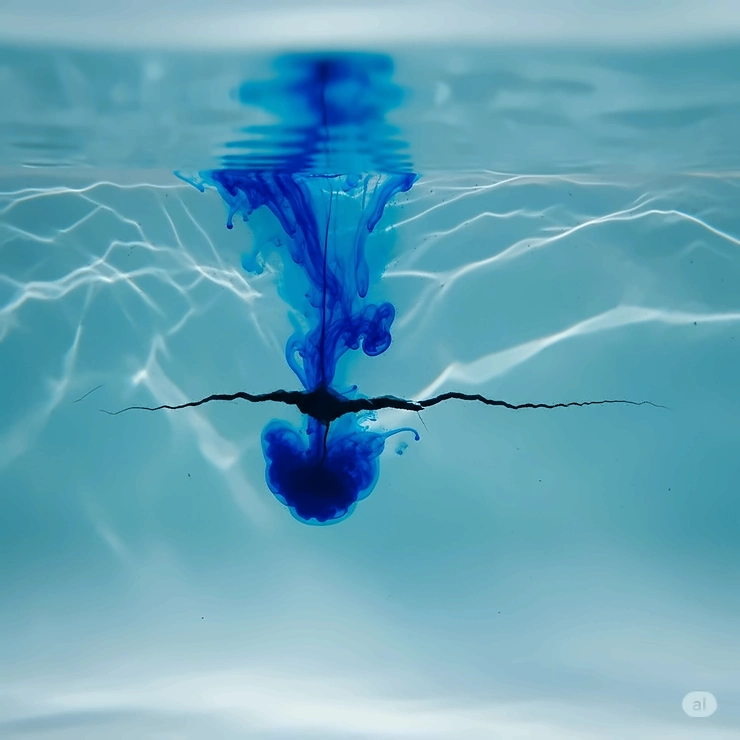
What is pool leak dye? Pool leak dye is a concentrated, water-tracing liquid that you release in still water, right beside a suspected crack, fitting, or seam. If water is escaping there, the dye gets pulled toward the opening in a visible, tightening stream. If it isn’t, the dye drifts and dilutes. It confirms where a leak is. It doesn’t scan the whole pool for you.
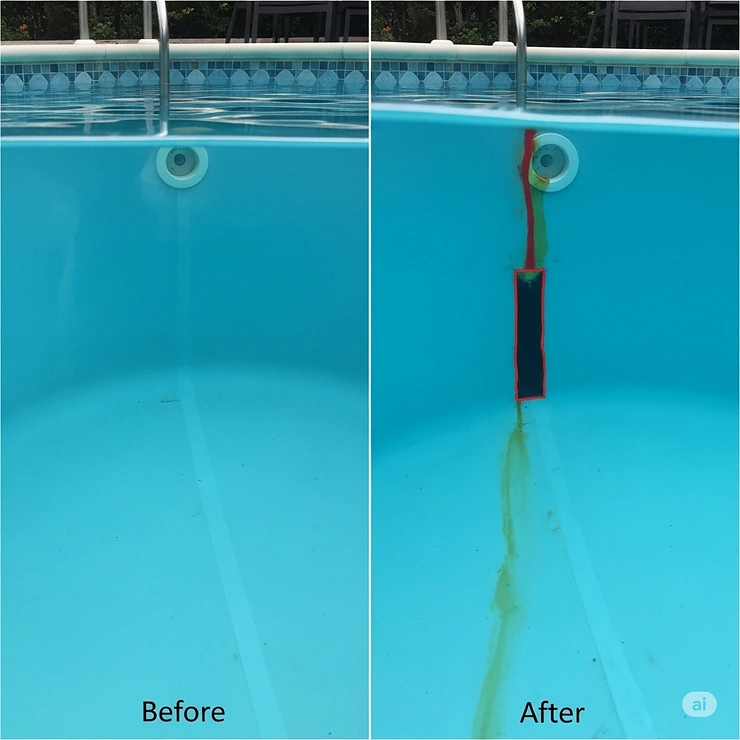
That distinction is the whole game. Your pool is dropping an inch a week, the water bill is climbing, and every shadow on the plaster looks like a crack. A bottle of pool leak dye turns that anxiety into a yes-or-no answer, one spot at a time. Done right, it costs about the price of a pizza. Pool pros charge several hundred dollars to do something similar, and reviewers on the products below mention figures between $260 and $400 for a visit.
Before you buy anything, though, confirm you actually have a leak. Pools lose water to evaporation all the time, and a hot, dry, breezy week can pull down roughly a quarter inch a day with nothing wrong. The standard first step is a bucket test, which Bob Vila’s pool leak guide walks through before it moves on to dye testing.
This guide covers seven real pool leak dye options, plus the decision rules, step-by-step technique, and mistakes that decide whether your bottle finds the leak or just makes a pretty blue cloud. Everything here is based on spec comparison and aggregated reviewer sentiment, not hands-on testing claims.
Pool Leak Dye at a Glance: Quick Comparison Table
Here’s the fast version. Prices are approximate ranges from the time of research and will move, so check current pricing before you buy.
| Product | Dye Type | Format | Approx. Price Range | Best For |
|---|---|---|---|---|
| Leakmaster 8 oz Blue Dye Kit with Reusable Syringe | Dark blue | Bottle + refillable syringe | ~$15–$25 | Light plaster, vinyl, and fiberglass pools |
| Leakmaster Fluorescent Yellow Dye Kit | Fluorescent yellow | Bottle + 6-inch syringe | ~$15–$25 | Darker liners and low-light checks |
| Escentile Pool Leak Detection Dye Kit | Fluorescent yellow (UV) | 8 oz bottle, 75+ tests claimed | ~$15–$25 | Maximum tests per bottle |
| Anderson Leakmaster Pre-Filled Dye Tester | Blue (fluorescent version also exists) | Single-use-style syringe | Under ~$10 each | Quick spot-checks on a budget |
| Anderson FD601 Fluorescent Leak Locating Dye | Fluorescent | 8 oz bottle | ~$15–$25 | Refilling syringes, mixed pool surfaces |
| Two-Applicator UV-Reactive Blue Dye Kit | UV-reactive blue | Bottle + 2 applicators | ~$15–$25 | Spas, hot tubs, and daylight visibility |
| Kingscote Bright Dyes 16 oz Leak Finder | Concentrated tracer dye | 16 oz bottle (gallon also sold) | ~$20s (16 oz), ~$100 (gallon) | Pros and repeat testers |
Look at the pattern: nearly every pool leak dye kit lands in the same $15–$25 band, so price rarely decides this. Dye color against your pool surface decides it, followed by syringe quality and how much dye you get. The Anderson Leakmaster Pre-Filled Dye Tester is cheapest per unit but also the first to run dry, while the Escentile kit stretches furthest per bottle on paper.
💬 Just one click — help others make better buying decisions too!😊
Top 7 Pool Leak Dye Options: Expert Analysis
Every kit below does the same basic job. What differs is the contrast, the dispensing tool, and how long the bottle lasts. Here’s what the spec sheets and reviewer chatter suggest about each.
1. Leakmaster 8 oz Blue Dye Kit with Reusable Syringe — best all-rounder for light pools
This is the one most pool owners meet first, and the review volume shows it. The kit pairs an 8 oz bottle of saturated blue dye with a reusable syringe and extension, and the listing promises over 40 refills. That number matters: it means you can test dozens of suspect spots without buying a second bottle.
The dye is formulated to stay together underwater instead of clouding out, which is why it works and food coloring often doesn’t. A tight stream is what lets you see the “pull” near a leak. The 6-inch extension tip also lets you place dye within about half an inch of a crack without stirring up currents with your hand.
Who is it for? Anyone with a light plaster, light vinyl, or white fiberglass pool. On dark liners, blue loses contrast, and one reviewer bluntly advises red or yellow instead.
Reviewers on the listing, which showed roughly 4.3 out of 5 stars across several thousand ratings at the time of research, repeatedly say it found leaks around steps, skimmers, and suction lines. A few complain the included bottle runs low if you don’t already know where to look.
Pros:
- ✅ Dense dye that holds a visible stream
- ✅ Refillable syringe, roughly 40 uses
- ✅ Huge review base and USA-made
Cons:
- ❌ Poor contrast on dark pool surfaces
- ❌ Won’t find leaks you haven’t narrowed down
Price range: roughly $15–$25. For a first-time buyer with a light pool, that’s the safest value verdict in this list.
2. Leakmaster Fluorescent Yellow Dye Kit — best contrast for darker liners
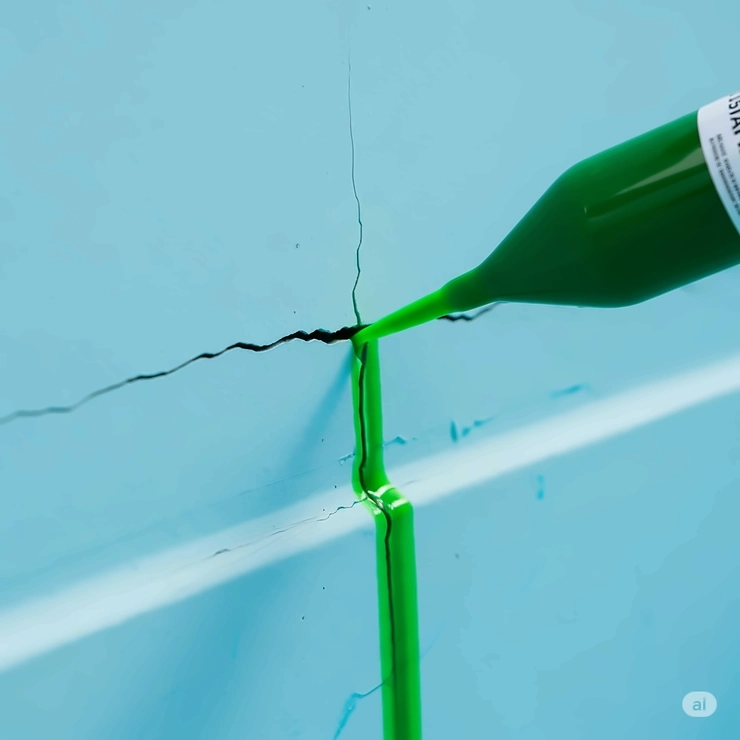
Same maker, different color, and the swap solves the biggest weakness of blue. Fluorescent yellow stands out against dark liners, pebble finishes, and shaded corners where deep blue simply disappears. The kit includes a 6-inch syringe needle for precise placement, which keeps the dye from being shoved around by your own hand.
On paper, this means fewer false negatives. When a dark blue stream vanishes against a navy liner, you can’t tell whether it got sucked into a crack or you just lost sight of it. Bright yellow removes that ambiguity.
Reviewers on the listing (around 4.4 stars at the time of research) describe it as easy to see underwater and easy for non-pros to use. One reported pinpointing a leak at a skimmer. Another said a pool tech missed a couple of small leaks that the dye later revealed. There’s a useful warning too: one buyer with a light, soft-sided above-ground pool wished they’d chosen blue, because yellow showed less contrast there.
So match the color to your surface. That single decision matters more than any other spec.
Pros:
- ✅ High visibility on dark finishes
- ✅ Precision 6-inch needle tip
- ✅ Easy enough for first-timers
Cons:
- ❌ Weaker contrast on very light pools
- ❌ Limited volume if your search is broad
Price range: about $15–$25. Excellent value if your pool is dark, a coin flip if it’s white.
3. Escentile Pool Leak Detection Dye Kit — most tests per bottle
The headline here is volume: an 8 oz bottle of UV-fluorescent yellow dye advertised for over 75 tests. If that claim holds in practice, it nearly doubles the per-bottle mileage of the 40-refill kits. For anyone planning to inch around a large pool shell, a spa, or a stubborn plumbing run, more tests per bottle means fewer interruptions.
The practical meaning is simple. Leak hunting is repetitive: test the skimmer, the return, the light, the steps, then test them again with the pump in a different state. A bigger “test budget” keeps you patient instead of rationing.
Reviewers describe the dye as very visible and the process as easy. One owner chasing a slow leak between a spa and a pool noted that dispensing from about 6 inches above the surface was the wrong technique, since the instructions call for a tip roughly half an inch from the suspect spot. That’s a user-technique lesson, not a product flaw, but it shows why dispensing discipline matters.
I couldn’t verify a large, consistent review pool beyond the high-4s average visible on listing mirrors, so treat the 75-test figure as the manufacturer’s claim.
Pros:
- ✅ High number of claimed tests
- ✅ Fluorescent yellow stands out in low light
- ✅ Works in pools, spas, and hot tubs
Cons:
- ❌ Claimed test count is unverified
- ❌ Dispensing tool is simpler than a long syringe
Price range: about $15–$25. A strong pick if you expect to test many spots.
4. Anderson Leakmaster Pre-Filled Dye Tester — cheapest way to start
Think of this as the single-serving option: a pre-filled syringe with concentrated dye and a six-inch plastic “needle” that places dye without creating unwanted currents. It’s sold individually for under about $10, and also in multi-packs. The syringes are refillable with Leakmaster dye from an 8 oz bottle, which makes the tester a good companion to the bottle options above.
Where it shines is the “I just want to check one thing” job: a visible crack, a loose fitting, a light niche you’re suspicious of. You skip the bottle-and-syringe setup and go straight to the test.
Where it falls short is volume. One reviewer put it plainly: it looks good at first, but if you don’t know where the leak is, the small amount isn’t enough, and buying food dye might have been just as easy. That’s a fair summary of the product’s role. It’s a confirmation tool, not an exploration tool.
Reviewers also say it works well in chlorine water, with a stream that holds together long enough to track flow and then dissipates cleanly.
Pros:
- ✅ Very low entry cost per tester
- ✅ Ready to use out of the package
- ✅ Refillable with Leakmaster bottle dye
Cons:
- ❌ Small dye volume runs out quickly
- ❌ Poor fit for broad searching
Price range: under roughly $10 each. Good value as a spot-check backup, weaker as your only tool.
5. Anderson FD601 Fluorescent Leak Locating Dye — flexible refill for mixed surfaces
The FD601 is an 8 oz bottle of fluorescent leak-locating dye that retailers position for plaster, vinyl, and painted pools, and as a refill for syringe-style testers. The listing language steers it toward light-colored pools, so confirm color fit before you buy.
Why it matters: this is the dye many pros keep topped up in their syringes. If you’ve already bought a pre-filled tester or a syringe with a long tip, a separate bottle like this lets you reload for dozens of tests.
The retailer description emphasizes a concentrated formula that holds together underwater, which is the single most important property in any pool leak dye. Cheap dyes bloom into a cloud. Good ones stay as a thread.
Reviewers across the Anderson and Leakmaster line say the stream is easy to follow when the pool is truly still. One reviewer described finding a leak after just a few minutes of snorkeling. Another noted a bottle ran out before the leak was located, which echoes the “know where to look” theme.
Honestly, FD601 isn’t dramatically different from the other 8 oz options. Its edge is its usefulness as a refill that keeps your syringe in rotation.
Pros:
- ✅ Concentrated dye that stays together
- ✅ Works on plaster, vinyl, painted finishes
- ✅ Refills compatible syringe testers
Cons:
- ❌ Bottle alone has no applicator
- ❌ Color suitability needs checking first
Price range: about $15–$25. A smart add-on rather than a standalone starter.
6. Two-Applicator UV-Reactive Blue Dye Kit — handy for spas and hot tubs
This kit is listed under a generic name, “Pool Leak Detection Dye Kit with 2 Precision Applicators,” so verify the brand on the page before ordering. The listing promises a vibrant, UV-reactive blue dye that glows under sunlight and UV light, meant for pools, spas, and hot tubs. It first appeared on the marketplace in early 2025, which makes it the newest option here.
Two applicators sound minor, but they’re useful: one stays clean for the next test while the other is in use, and a backup helps if a needle clogs. Spas and hot tubs also reward a gentle touch, since small volumes of water react more dramatically to disturbance.
At the time of research, the listing averaged about 4.3 stars across a few hundred ratings. That’s a smaller review base than the Leakmaster bottles, so treat the aggregate as encouraging rather than definitive.
What the spec sheet won’t tell you is whether the dye’s blue holds its shape as well as the Anderson formulas. The “UV-reactive” claim is attractive for daylight or blacklight inspection, but real-world visibility depends on your pool’s color and lighting.
Pros:
- ✅ Two applicators included
- ✅ UV-reactive for daylight or blacklight
- ✅ Designed for spas and hot tubs too
Cons:
- ❌ Smaller review base than top sellers
- ❌ Generic listing needs brand verification
Price range: roughly $15–$25. Reasonable if you own a spa or like having a spare tool.
7. Kingscote Bright Dyes 16 oz Leak Finder — bulk option for repeat testers
Kingscote’s Bright Dyes line is a concentrated tracer-dye brand sold through industrial and municipal suppliers. The 16 oz Leak Finder sells in the low $20s and a gallon runs around $100, according to supplier listings. Amazon availability varies, so check before you plan around it.
Who needs this? Someone testing multiple pools, maintaining a pool route, or tracing leaks regularly. For a typical homeowner it’s overkill. A 16 oz bottle is double the volume of the standard kits, and a gallon is enough for a small business.
The honest caveat: I couldn’t find enough verifiable pool-specific reviews to summarize sentiment, and supplier pages don’t spell out color behavior. Check the label for color, dilution guidance, and surface compatibility before using it in a vinyl or painted pool.
Bulk dye also means you’ll need your own applicator. A basic syringe with a long tip works, and refillable syringe testers like the Anderson Leakmaster Pre-Filled Dye Tester pair well with it.
Pros:
- ✅ Twice the standard bottle volume
- ✅ Gallon size available for heavy use
- ✅ Concentrated tracer-dye brand
Cons:
- ❌ No applicator included
- ❌ Little verifiable pool-specific review data
Price range: roughly $20s for 16 oz. Great value per ounce, poor value for a one-time user.
How to Choose Pool Leak Dye
Picking the right pool leak dye takes less thinking than picking a pool pump, but the same logic applies: match the tool to the job. Use these steps in order.
- Match the color to your surface. Blue contrasts against light plaster and vinyl. Fluorescent yellow (or red) reads better on dark liners and in shade. This is the biggest factor, because the best dye in the world is useless if you can’t see it.
- Check the applicator. A 6-inch needle lets you place dye next to a crack without creating currents. A squeeze bottle is fine for big gaps but sloppy for hairline cracks.
- Count the tests. Kits advertise 40 to 75+ uses. A wide search through skimmers, lights, returns, steps, and drains eats dye fast, so more is better.
- Confirm it’s concentrated. Real leak dye holds together as a stream. Reviewers who tried food coloring first often report it dissolved within minutes.
- Consider your pool type. Spas and hot tubs have small water volumes, so go gentle. Above-ground soft-sided pools show contrast differently than rigid shells.
- Pair it with a plan. Do a bucket test first, narrow suspects, then dye-test. Swim University’s pool leak detection guide lays out this exact sequence, including repeating the bucket test with the pump running.
- Budget for a repair, too. Reviewers mention pool epoxy putty and similar patches as the follow-up. Dye finds; it doesn’t fix.
How to Use Pool Leak Dye Step by Step
Technique matters more than brand. Here’s the routine that reviewers and pool guides keep describing.
Step 1: Confirm the leak first. Run a bucket test: fill a five-gallon bucket with pool water, set it on a pool step so the water levels match, mark both, and wait about 24 hours. If the pool dropped more than the bucket, you have a leak. Many guides also repeat the test with the pump running, since a bigger drop points to plumbing or equipment.
Step 2: Pick a calm day. Wind creates currents that mimic a leak pull. Turn off the pump, jets, and any water features, and ask swimmers to stay out.
Step 3: Start with the likely suspects. Check around skimmers, return fittings, lights, steps, visible cracks, and main drain areas. Don’t paint the pool like a mural. Dye testing is a surgical job.
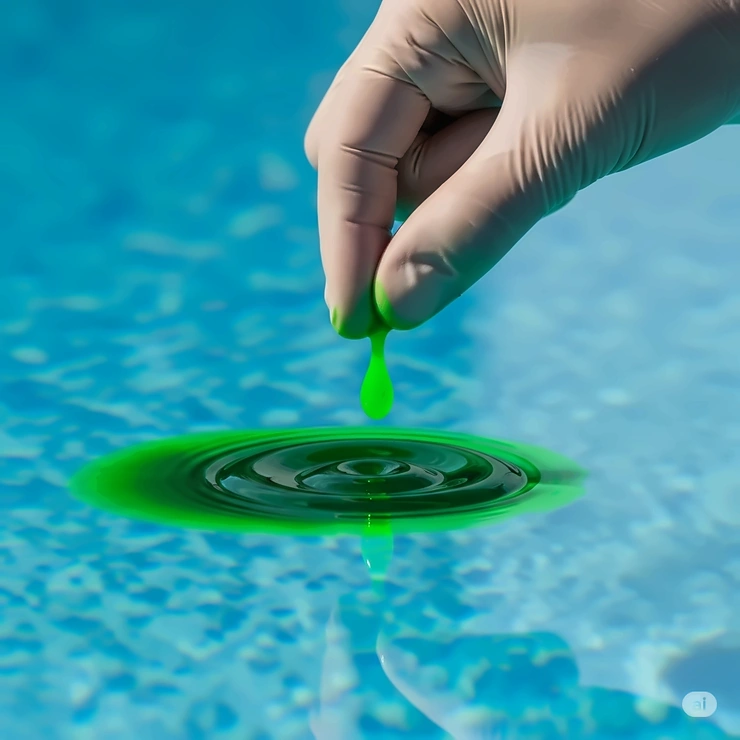
Step 4: Place the dye precisely. Hold the tip roughly half an inch from the suspected crack. Release a small amount, then keep still and watch.
Step 5: Read the stream. Dye pulled into a crack or fitting means water is escaping there. Dye that hangs or drifts away means no leak at that spot.
Step 6: Mark and repeat. Test several points. One review described finding a leak around a skimmer, and another traced trouble to an intake pipe rather than the shell, which saved them from hiring a pro to look inside the pool.
Step 7: Repair and re-test. Patch with the appropriate product, then repeat the bucket test to confirm the water loss has stopped.
Common Pool Leak Dye Problems and How to Fix Them
Every pool leak dye guide promises “easy.” Reality brings snags. Here are the five most common, with fixes.
The dye disappears with no pull. Either there’s no leak at that spot or the water wasn’t still enough. Wait a few minutes for the pool to settle, then repeat. If it still shows no pull, move on.
You can’t see the dye. Likely a color mismatch. Switch from blue to fluorescent yellow on dark surfaces, and add goggles and a snorkel to get close. The Leakmaster Fluorescent Yellow Dye Kit exists for exactly this.
The dye clouds instead of streaming. That’s a dispensing problem. Squeeze gently and hold the tip close, instead of releasing from above the surface the way one reviewer did.
You ran out of dye. Reviewers of small testers and even 8 oz bottles report this when they didn’t narrow suspects first. Use a bucket test and pump-on/pump-off comparison to shrink the search area before you open the bottle.
Dye shows nothing but the pool still drops. Then the leak is probably in buried plumbing or somewhere dye can’t reach. One guide describes this as the “nightmare scenario.” At that point, a pressure test or professional leak detection is worth the money. LeakTronics makes the same point from a pro’s perspective: dye confirms a suspect spot, but it can’t search a whole pool.
✨ Stop Guessing, Start Testing!
🔍 Take your pool leak dye search to the next level with the kits above. Click on any highlighted product to check current pricing and availability, and get the right color for your pool surface the first time!
Real-World Scenarios: Which Pool Leak Dye Fits You?
Specs are abstract. Here’s how the options map onto real buyers.
Scenario 1: The light-plaster homeowner losing an inch a week. A pool with white plaster and a steady slow leak is the textbook case for the Leakmaster 8 oz Blue Dye Kit with Reusable Syringe. Blue contrasts well, the 6-inch tip reaches skimmer throats and step seams, and 40 refills leave room for repeat tests. Budget about the price of a takeout dinner, plus a tube of pool putty.
Scenario 2: The dark-liner above-ground pool owner. On a navy or dark-gray liner, blue disappears. Reviewers of the blue kit even suggest red. The Leakmaster Fluorescent Yellow Dye Kit or the Escentile Pool Leak Detection Dye Kit make more sense, with the latter stretching further if you’re testing seams, fittings, and return jets.
Scenario 3: The spa or hot tub owner. Small water volumes make dye placement delicate, and the two-applicator Two-Applicator UV-Reactive Blue Dye Kit gives you a spare tool. Keep the dose tiny and the water still.
Scenario 4: The pool-route technician. Someone servicing many pools wants volume and refill flexibility. The Kingscote Bright Dyes 16 oz Leak Finder or the Anderson FD601 Fluorescent Leak Locating Dye, paired with the Anderson Leakmaster Pre-Filled Dye Tester syringes, keeps costs per test low.
The pattern: color first, volume second, extras last.
Pool Leak Dye vs Food Coloring vs Professional Leak Detection
People love the idea that food coloring is “the same thing.” It isn’t, quite. Reviewers who tried both say food coloring dissolved within minutes and didn’t track flow, while pool leak dye held together long enough to show a pull. Meanwhile, professional detection uses listening gear and pressure tests that dye can’t replicate.
| Method | Strengths | Weaknesses | Approx. Cost | Best For |
|---|---|---|---|---|
| Leakmaster 8 oz Blue Dye Kit with Reusable Syringe | Holds a visible stream, many tests | Needs a known suspect area | ~$15–$25 | Confirming leaks at visible spots |
| Food coloring | Cheap, already in the pantry | Dissolves quickly, harder to read | A few dollars | Very large, obvious cracks |
| Professional leak detection | Finds hidden plumbing leaks | Costly, scheduling needed | Often a few hundred dollars | Leaks dye can’t find |
The table tells the story: pool leak dye wins on cost and speed for visible problems, while pros win when the leak is buried. Food coloring isn’t useless, but it’s the weakest tracer of the three. If your bucket test confirms a leak and your dye tests all come back clean, budget for a pro, since inspections can start around $125 according to Bob Vila’s guide, and full leak detection often costs more.
Mistakes to Avoid When Buying and Using Pool Leak Dye
Most failures come from the same handful of errors, and they’re all avoidable.
Skipping the bucket test. Without it, you don’t know if you’re chasing a leak or ordinary evaporation. A well-known bucket-test failure is placing the bucket in sun while half the pool is shaded, which skews the comparison.
Dyeing randomly. One expert-style guide calls spraying dye around a pool “painting a mural.” Narrow your suspects first.
Testing with the pump running. Circulation creates currents that fake or hide a pull. Turn equipment off first, unless you’re deliberately testing plumbing behavior.
Choosing the wrong color. A blue dye in a dark pool is a recipe for frustration. Match the color to the surface.
Releasing dye from too far away. The instructions call for roughly half an inch from the suspect spot. Six inches above the water, as one reviewer tried, gives ambiguous results.
Expecting dye to find everything. It confirms; it doesn’t search. If you can’t find a leak with dye and the water keeps dropping, stop guessing and call a certified pro.
Buying too little dye. Small testers like the Anderson Leakmaster Pre-Filled Dye Tester are fine for spot checks, but if you’re hunting, buy a bottle.
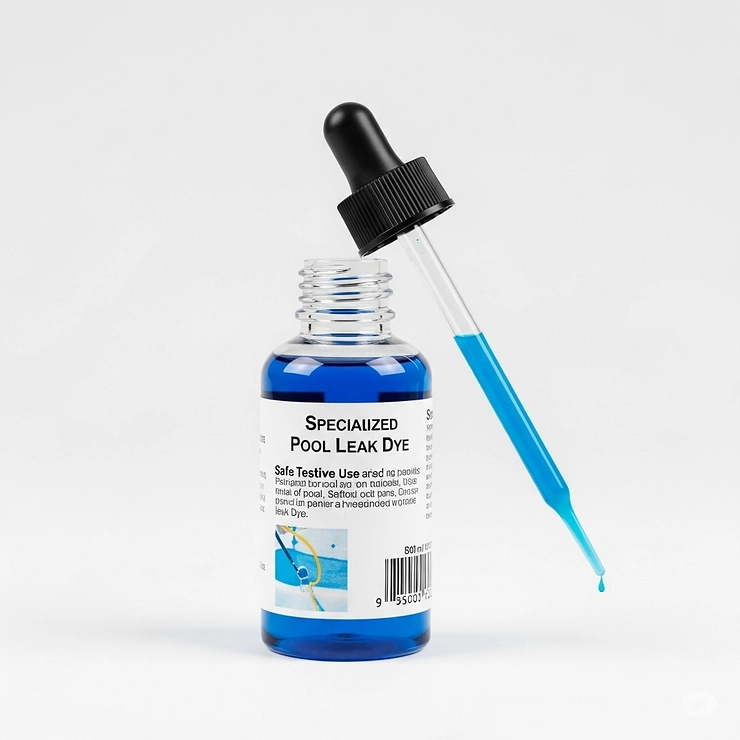
Pool Leak Dye Features That Actually Matter (And Those That Don’t)
Marketing copy loves adjectives. Here’s what’s worth caring about.
Matters: concentration and cohesion. The dye needs to stay together as a thread. Cheap dyes bloom into a cloud, and a cloud can’t show you a pull.
Matters: color contrast. Dark blue on light surfaces, fluorescent yellow on dark ones. Nothing else comes close.
Matters: applicator length. A 6-inch needle gives you control without disturbing the water.
Matters: refill count. Forty versus 75 tests is the difference between finishing the job and running out halfway.
Doesn’t matter much: “professional-grade” labels. Nearly every listing uses it. Look at the actual specs.
Doesn’t matter much: brand-name prestige. Anderson’s Leakmaster line is the common reference, but plenty of kits use similar dye.
Depends: UV-reactive claims. UV or blacklight visibility helps in low light, but plain daylight with the right color often works fine. The Two-Applicator UV-Reactive Blue Dye Kit and Escentile Pool Leak Detection Dye Kit both lean on this, so it’s a nice-to-have, not a must.
Depends: bulk size. A gallon of Kingscote Bright Dyes 16 oz Leak Finder-line dye saves money only if you’ll use it.
Pool Leak Dye for Different Pool Types
Not all pools behave alike, and the dye should adapt.
Vinyl liner pools. Liner seams, skimmer faceplates, and return fittings are classic trouble spots. Light liners suit blue. Darker liners suit yellow. Royal Swimming Pools’ blog lays out the bucket-test-first approach for vinyl.
Plaster and gunite pools. Hairline cracks, tile lines, and step edges are the usual suspects. Blue works well on white plaster. The Leakmaster 8 oz Blue Dye Kit with Reusable Syringe is a natural fit.
Fiberglass pools. Fittings, lights, and the shell-to-plumbing connections matter most. Use a precise needle and still water.
Above-ground pools. Soft-sided pools can show surprising contrast problems. One reviewer who tested a soft-sided pool wished they’d picked blue instead of yellow. Know your liner color before choosing.
Spas and hot tubs. Small volumes mean small doses. The Two-Applicator UV-Reactive Blue Dye Kit and the Leakmaster Fluorescent Yellow Dye Kit both list spa use, and the tight needles help.
Painted pools. Retailers describe the Anderson FD601 Fluorescent Leak Locating Dye as suitable for plaster, vinyl, and painted pools, but follow label guidance and test sparingly on any painted finish.
Long-Term Cost and Value of Pool Leak Dye
A bottle of pool leak dye costs about as much as a couple of pizzas. The leak it finds can cost far more if ignored. Angi’s pool leak guide notes the average pool liner replacement runs around $2,400, which is a good reminder of what chronic water loss can lead to, and you also pay for the water, chemicals, and heating you keep dumping.
| Option | Upfront Cost | Tests per Purchase | Value Verdict |
|---|---|---|---|
| Anderson Leakmaster Pre-Filled Dye Tester | Under ~$10 | A few | Best for one-time spot checks |
| Leakmaster 8 oz Blue Dye Kit with Reusable Syringe | ~$15–$25 | ~40 | Best balance for most homeowners |
| Escentile Pool Leak Detection Dye Kit | ~$15–$25 | 75+ claimed | Best test volume per dollar |
| Kingscote Bright Dyes 16 oz Leak Finder | ~$20s | Many, no applicator | Best for repeat or professional use |
On cost per test, the larger bottles win easily. But remember that a cheap tool you use once and set aside beats an expensive one you never open. For most homeowners, a single 8 oz kit lasts for several seasons of occasional checks. Add a tube of epoxy putty, and the whole kit still costs a fraction of the $260–$400 pro visits some reviewers mention. Read the full breakdown of costs in Angi’s guide to finding a pool leak.
When Pool Leak Dye Isn’t Enough: What to Expect
Dye is honest about its limits, and you should be too. Real-world performance depends on whether the leak is somewhere the dye can reach. Leaks in the pool shell, skimmers, lights, and fittings are fair game. Leaks buried under the deck in pressurized plumbing are not.
Reviewers tell both sides of the story. Many say the dye pinpointed a leak at a skimmer, a step, or an intake pipe. Others say it sounds easy but isn’t always conclusive, and one noted their leak was simply too small to find. A pool owner who already used a leak-detection company twice in four seasons concluded that finding small leaks is “an art” best served by ultrasound tools. That’s worth heeding.
A good rule of thumb: if you’ve confirmed a leak with the bucket test, dye-tested every accessible fitting and seam, and the pool still drops, it’s time for a pressure test or a professional. Repeating the bucket test with the pump on and off can tell you whether to suspect the shell or the plumbing. When you stop DIY-ing is a decision, not a failure.
Safety, Water Care, and What to Do After You Find the Leak
Pool leak dye is sold as non-toxic by at least one retailer, but that doesn’t mean it’s a swim aid. Keep swimmers out during testing, since movement ruins the test anyway, and follow the label for dose and cleanup. Use small amounts, especially in spas and in small volumes of water. If you have a pool with sensitive finishes, check the manufacturer’s guidance first.
Once you find the leak, the repair depends on where it is. Reviewers mention pool epoxy putty for small cracks, silicone for tightening fittings, and flex-style patches for liner problems. Complex repairs, like plumbing or structural cracks, are professional territory.
After patching, run another bucket test over 24 hours to confirm the water loss has stopped. Check chemistry too, since inconsistent chemical levels can be another hint of a pool leak, according to Bob Vila’s guide. Keep the dye in a cool, dry place and store the syringe clean so it works next season.
Finally, make a habit of checking suspect spots at the start of each season. Five minutes with a dye syringe beats a mystery water bill.
FAQ
❓ How long does pool leak dye stay visible in the water?
❓ Is pool leak dye safe to use in a pool with swimmers?
❓ Can I use pool leak dye with the pump running?
❓ How much pool leak dye do I need for a whole pool?
❓ What color pool leak dye should I buy for a dark liner?
Conclusion
Here’s the bottom line on pool leak dye: it’s a cheap, fast, remarkably honest tool, as long as you give it the right job. Confirm the leak with a bucket test, narrow the suspects, match the dye color to your pool, and dispense it half an inch from the spot you’re checking. If the dye gets pulled in, you’ve found your leak. If it drifts, move on.
For most homeowners, the Leakmaster 8 oz Blue Dye Kit with Reusable Syringe is the safest all-round pick for light pools, while the Leakmaster Fluorescent Yellow Dye Kit wins on dark surfaces. The Escentile Pool Leak Detection Dye Kit is the volume play, the Anderson Leakmaster Pre-Filled Dye Tester is the cheap backup, the Anderson FD601 Fluorescent Leak Locating Dye keeps your syringes full, the Two-Applicator UV-Reactive Blue Dye Kit suits spas, and the Kingscote Bright Dyes 16 oz Leak Finder is for heavy users.
And if the dye comes back empty while the water keeps dropping, don’t burn your summer guessing. Call a pro.
Recommended for You
- Swimming Pool Leak Detection Kit: 7 Best Picks for 2026
- Pool Leak: 7 Best Proven Detection & Repair Products 2026
- Salt Water Pumps for Swimming Pools: 7 Proven Picks for 2026
Disclaimer: This article contains affiliate links. As an Amazon Associate, I earn from qualifying purchases. If you purchase products through these links, we may earn a small commission at no additional cost to you.
✨ Found this helpful? Share it with your friends! 💬🤗
