

In This Article
As the swimming season winds down, protecting your investment becomes paramount. However, choosing the right pool closure kit can feel overwhelming with so many options flooding the market. Whether you’re a first-time pool owner or a seasoned veteran, having the right winterization strategy makes the difference between opening to crystal clear water next spring versus dealing with expensive cleanup and potential equipment damage.

The pool closure kit market has evolved significantly, with manufacturers now offering comprehensive solutions that simplify what was once a complex, multi-step process. From basic chemical packages to advanced 3-in-1 systems, today’s pool closure kits provide everything needed to protect both above-ground and in-ground pools through harsh winter conditions.
✨Was this helpful? Spread the word! 🚀
Understanding Pool Closure Kit Essentials 🏊♂️
Before diving into specific products, it’s crucial to understand what makes an effective pool closure kit. The best systems combine multiple protective elements: algaecides prevent biological growth, metal sequestrants protect surfaces from staining, shock treatments eliminate existing contaminants, and specialized enzymes break down organic waste that accumulated during swimming season.
Most pool closure kits serve pools ranging from 7,500 to 45,000 gallons, though the chemistry remains surprisingly consistent across different pool sizes. What changes is the concentration and quantity of active ingredients. Additionally, modern kits work equally well for above-ground and in-ground pools, saltwater and chlorine systems, and vinyl, fiberglass, or concrete surfaces.
The science behind effective winterization centers on creating an environment hostile to algae and bacteria while protecting pool surfaces and equipment. This requires precise pH balance, adequate sanitizer levels, and specialized chemicals that remain active throughout months of non-circulation. Temperature fluctuations, debris accumulation, and freeze-thaw cycles all challenge your pool’s chemical balance during winter months.
Industry-Specific Applications and Professional Use Cases ⚡
Pool closure kits serve diverse applications beyond residential backyard pools. Commercial facilities, hotels, community centers, and aquatic therapy centers all rely on effective winterization to protect substantial investments. However, the approach varies significantly based on usage patterns, local climate, and facility requirements.
Professional pool service companies typically prefer comprehensive kits that streamline the closing process across multiple client properties. These professionals often choose products like the Doheny’s Ultimate Pool Closing Kit or In The Swim Pool Closing Kit because they provide consistent results and detailed instructions that technicians can follow efficiently across different job sites.
The hospitality industry faces unique challenges since hotels and resorts often maintain pools in transitional climates where complete winterization isn’t necessary, but seasonal protection remains critical. These facilities frequently use modified closing protocols, applying partial treatment regimens that protect against algae growth and surface staining without full winterization procedures.
Aquatic therapy centers and rehabilitation facilities require specialized consideration since these pools often maintain higher temperatures and different chemical balances throughout operation. When these facilities close seasonally, they need pool closure kits that won’t interfere with specialized equipment like underwater treadmills, resistance jets, or therapeutic heating systems.
Municipal and community pools represent another significant market segment. These large-capacity pools often exceed 100,000 gallons, requiring multiple standard closure kits or specialized commercial-grade solutions. Public facilities also face stricter health department oversight, making documentation and compliance aspects of closure procedures particularly important.
Regional climate variations significantly impact pool closure kit selection and application. Northern climates with prolonged freezing periods require more aggressive winterization protocols, including antifreeze additions and equipment winterization. Conversely, southern regions might only need algae prevention and surface protection without extensive equipment protection measures.
The rise of eco-conscious pool ownership has driven demand for environmentally friendly closure kits. These products eliminate harsh chemicals while maintaining effectiveness through enzyme-based formulations and natural algaecides. Professional services increasingly offer “green” closing options to attract environmentally conscious customers.
Insurance considerations also influence professional pool closure practices. Many insurance policies require professional winterization or specific closure procedures to maintain coverage during off-season periods. This requirement drives demand for documented, standardized closure protocols that professional kits provide.
Advanced Technical Analysis and Scientific Principles 🔬
Modern pool closure kits leverage sophisticated chemistry to maintain water quality throughout extended non-circulation periods. The core scientific principle involves creating a chemical environment that prevents biological growth while protecting pool surfaces and equipment from environmental damage.
Algaecide technology has advanced significantly beyond simple copper-based formulations. Contemporary pool closure kits utilize polymeric quaternary ammonium compounds that provide extended-release protection. These molecules attach to pool surfaces, creating invisible barriers that prevent algae attachment and reproduction. The Rx Clear Pool Closing Kit exemplifies this technology, incorporating both immediate-action and time-release algae prevention compounds.
Metal sequestration represents another critical chemical process in pool winterization. During closure periods, pH fluctuations and temperature changes can cause dissolved metals to precipitate, creating permanent stains on pool surfaces. Modern closure kits include chelating agents that bind metallic ions, keeping them in solution and preventing surface staining. This technology proves particularly important for pools with metal components or in areas with high mineral content in fill water.
Oxidation chemistry plays a dual role in pool closure procedures. Initial shock treatments eliminate existing contaminants and biological materials, while time-release oxidizers maintain water clarity throughout winter months. The chemical balance is delicate – sufficient oxidation to prevent contamination without creating harsh conditions that damage pool surfaces or equipment.
pH buffering systems in closure kits help maintain chemical stability during temperature fluctuations and seasonal weather changes. These buffering compounds resist pH swings that could compromise other chemical components’ effectiveness or create conditions favorable to biological growth.
Enzyme technology represents a significant advancement in pool closure chemistry. These biological catalysts break down organic compounds that traditional chemical treatments might miss. Dead leaves, body oils, sunscreen residues, and other organic materials decompose more completely with enzyme treatment, preventing accumulation that could cause problems during spring opening.
The interaction between different chemical components requires careful formulation to prevent neutralization or adverse reactions. Modern closure kits undergo extensive compatibility testing to ensure all components work synergistically rather than interfering with each other’s effectiveness.
Recent research has focused on extending chemical effectiveness throughout longer closure periods. Climate change has created more variable winter conditions, with unexpected warm periods that can trigger biological activity even during traditionally dormant months. Advanced closure kits now incorporate temperature-activated components that respond to these changing conditions.
Nanotechnology applications are emerging in pool closure kit development. Nano-scale particles provide more efficient surface coverage and penetration, improving protection with smaller chemical quantities. While still in early adoption phases, these technologies promise more effective and environmentally friendly closure solutions.

Comprehensive Product Analysis: Top 7 Pool Closure Kits 📊
1. Doheny’s Ultimate Pool Closing Kit – Professional Grade Solution
Specifications: Available in three sizes (7,500, 15,000, and 35,000 gallons)
Price Range: $35-65 depending on size
Components: Metal Out stain preventer, Winter Guard algaecide, time-release oxidizing tablets, non-chlorine shock
This comprehensive kit consistently ranks among the top choices for both DIY homeowners and professional pool services. The time-release oxidizing tablets provide continuous water treatment throughout winter months, while the specialized Metal Out formula prevents staining from iron, copper, and other dissolved metals.
Customer reviews highlight the kit’s effectiveness in maintaining crystal clear water through spring opening. One verified purchaser noted, “Frankly I was shocked when I took the cover off my pool this last spring after using this kit to close it in the fall. My pool was crystal clear and CLEAN!”
Pros:
✅ Professional-grade formulation
✅ Comprehensive component selection
✅ Clear, detailed instructions
✅ Excellent customer review history
✅ Available in multiple sizes
Cons:
❌ Higher price point than basic kits
❌ Requires careful component sequencing
❌ Not suitable for pools over 35,000 gallons
2. In The Swim Pool Closing Kit – Versatile All-Purpose Option
Specifications: Multiple sizes up to 35,000 gallons
Price Range: $25-55
Components: Winterizer liquid, Winter Stain-Away, chlorine-free pool shock, Winter Sorb oil absorber, Winter Pool Floater
In The Swim Pool Closing Kit stands out for its user-friendly approach and comprehensive component selection. The included Winter Sorb absorbs up to 40 times its weight in oils, preventing waterline scum formation during closure periods.
The kit’s chlorine-free shock formulation prevents interference with other winterization chemicals while effectively eliminating existing contaminants. This compatibility makes it particularly suitable for pools with sensitive equipment or unusual water chemistry.
Pros:
✅ Chlorine-free formulation
✅ Oil absorption technology
✅ Compatible with all pool types
✅ Excellent value proposition
✅ Time-tested reliability
Cons:
❌ Requires multiple application steps
❌ Limited availability in retail stores
❌ Components must be applied separately
3. Rx Clear Pool Closing Kit – Budget-Friendly Reliability
Specifications: Available in 10,000, 20,000, 30,000, and 45,000-gallon sizes
Price Range: $20-45
Components: Alkaplus pH powder, All-in-One Shock X-Tra, winterizing powder
The Rx Clear Pool Closing Kit offers exceptional value with simplified three-component formulation. Despite its budget-friendly pricing, customer satisfaction remains consistently high, with 4.5-star average ratings across multiple size variants.
This kit particularly excels in straightforward winterization scenarios where complex chemistry isn’t required. The all-in-one approach reduces application errors while maintaining effective protection throughout winter months.
Pros:
✅ Exceptional value pricing
✅ Simplified three-component system
✅ Available in largest size range
✅ High customer satisfaction ratings
✅ Suitable for both pool types
Cons:
❌ Limited advanced features
❌ Basic instruction documentation
❌ May require supplemental products in harsh climates
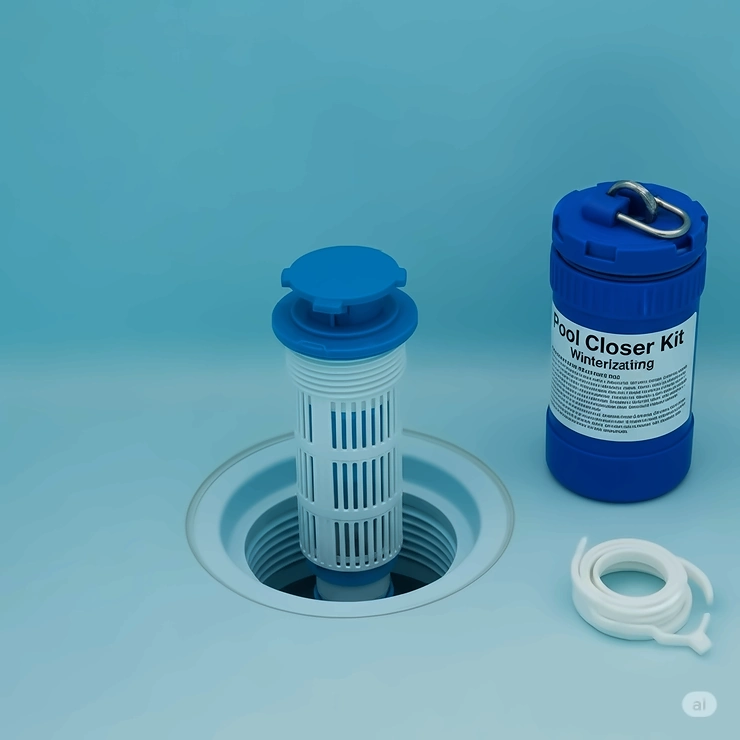
4. 3 in 1 Winter Closing Kit – Innovative Dual-Ball System
Specifications: Suitable for pools up to 30,000 gallons
Price Range: $30-40
Components: Two winter treatment balls with time-release formulation
This innovative kit simplifies winterization to an unprecedented level – simply remove protective caps and drop both treatment balls into the pool before covering. The time-release formulation activates gradually, providing consistent protection throughout winter months.
Customer feedback emphasizes the convenience factor, with one reviewer noting, “Super easy to use, and my pool looked great when we opened it! And this was even with a bunch of leaves that sat in the pool over winter.”
Pros:
✅ Extremely simple application
✅ No mixing or measuring required
✅ Time-release technology
✅ Suitable for all pool shapes
✅ Compact storage
Cons:
❌ Limited size options
❌ Newer technology with less history
❌ May not suit complex water chemistry
5. POOL ELEVATE Winter Closing Kit – Premium Small Pool Solution
Specifications: Designed for pools up to 12,000 gallons
Price Range: $25-35
Components: Three-in-one maintenance formulation
Specifically engineered for smaller pools, POOL ELEVATE Winter Closing Kit provides comprehensive protection without oversized chemical quantities. The kit’s formulation considers the unique challenges smaller pools face, including faster chemical depletion and higher surface-to-volume ratios.
The three-in-one formulation combines algae prevention, surface protection, and water clarification in measured doses appropriate for smaller pool volumes.
Pros:
✅ Optimized for smaller pools
✅ Prevents chemical waste
✅ Comprehensive protection
✅ Clear instruction set
✅ Eco-friendly approach
Cons:
❌ Limited to smaller pools only
❌ May require multiple kits for larger pools
❌ Less established brand recognition
6. SUMMERBUDDY 3 in 1 Above Ground Pool Closing Kit – Specialized Above-Ground Focus
Specifications: Designed for above-ground pools up to 15,000 gallons
Price Range: $20-30
Components: Single-application winterization formula
This kit addresses the specific needs of above-ground pool owners, who face unique challenges including vinyl liner protection, limited equipment access, and different water circulation patterns. The single-application formula eliminates guesswork while providing protection tailored to above-ground pool construction.
Pros:
✅ Above-ground pool specialization
✅ Single-application convenience
✅ Vinyl liner safe
✅ Budget-friendly pricing
✅ Clear instruction focus
Cons:
❌ Limited to above-ground pools
❌ Smaller size range
❌ Less comprehensive than multi-component kits
7. Rx Clear Winter Closing Kit (Non-Chlorine) – Sensitive System Solution
Specifications: Available in 10,000, 20,000, and 30,000-gallon sizes
Price Range: $25-40
Components: Non-chlorine winterizing chemicals for sensitive systems
This specialized variant of the Rx Clear line eliminates chlorine-based components entirely, making it suitable for pools with specialized equipment, alternative sanitization systems, or sensitive water chemistry requirements.
Pros:
✅ Chlorine-free formulation
✅ Equipment-safe chemistry
✅ Multiple size options
✅ Proven brand reliability
✅ Specialized application focus
Cons:
❌ May require supplemental sanitization
❌ Limited algae prevention compared to chlorine-based systems
❌ Higher cost per gallon treated

Don’t Miss These Winter Protection Deals! ⚡
Ready to protect your pool investment this winter? Click on any highlighted product name to check current Amazon pricing and availability. These professionally tested kits will save you hundreds in spring cleanup costs! 🛡️
| Product | Pool Size | Price Range | Best For | Key Feature |
|---|---|---|---|---|
| Doheny’s Ultimate | 7,500-35,000 gal | $35-65 | Professional results | Time-release tablets |
| In The Swim | Up to 35,000 gal | $25-55 | All-purpose use | Oil absorption |
| Rx Clear Standard | 10,000-45,000 gal | $20-45 | Budget-conscious | Largest size range |
| 3 in 1 Winter | Up to 30,000 gal | $30-40 | Convenience | Drop-and-go balls |
| POOL ELEVATE | Up to 12,000 gal | $25-35 | Small pools | Right-sized portions |
| SUMMERBUDDY | Up to 15,000 gal | $20-30 | Above-ground | Vinyl liner safe |
| Rx Clear Non-Chlorine | 10,000-30,000 gal | $25-40 | Sensitive systems | Chlorine-free |
💬 Just one click – help others make better buying decisions too! 😊
Setup and Usage Guide: Professional Installation Techniques 🛠️
Proper pool closure kit application requires systematic approach and attention to timing. The process begins weeks before actual chemical application, with equipment maintenance, cleaning, and water balance adjustments forming the foundation for successful winterization.
Pre-Closure Preparation (2-3 weeks before closing):
Begin by thoroughly cleaning your pool, removing all debris, and vacuuming surfaces completely. This initial cleaning prevents organic material decomposition during closure periods, which could overwhelm chemical treatments. Pay particular attention to areas around skimmers, returns, and steps where debris typically accumulates.
Water balance adjustment represents the next critical step. Test and adjust pH to 7.2-7.4, total alkalinity to 80-120 ppm, and calcium hardness to 150-300 ppm. These parameters provide optimal conditions for closure chemicals to work effectively throughout winter months.
Equipment and Plumbing Preparation:
Lower water level to appropriate winterization levels – typically 18-24 inches below skimmer for in-ground pools, or according to manufacturer specifications for above-ground pools. This prevents freeze damage while maintaining sufficient water volume for chemical effectiveness.
Remove and clean all removable accessories including ladders, pool cleaners, and floating devices. Store these items in climate-controlled environments to prevent damage from temperature fluctuations.
Chemical Application Sequence:
The order of chemical application significantly impacts effectiveness. Begin with pH adjustment if needed, followed by shock treatment to eliminate existing contaminants. Allow circulation for at least 2-4 hours before adding other closure kit components.
Add metal sequestrants next, allowing full circulation to distribute throughout the water volume. These chemicals need time to bind with dissolved metals before other components are added.
Apply algaecides and winterizing chemicals according to kit instructions, typically requiring 24-48 hours of circulation for complete distribution. Modern closure kits often include step-by-step timing guides that optimize chemical interactions.
Final Preparation Steps:
Install air pillows for above-ground pools to prevent ice damage to pool walls. These inflatable devices create space for ice expansion while distributing weight loads more evenly across pool structures.
Cover installation requires careful attention to ensure complete water surface coverage while allowing for thermal expansion and contraction. Secure covers adequately to prevent wind damage and debris accumulation.
Climate-Specific Considerations:
Northern climates require additional antifreeze protection for plumbing lines and equipment. Blow out all water lines and add non-toxic pool antifreeze to prevent freeze damage in areas where temperatures regularly drop below 32°F.
Southern regions focus more on algae prevention and surface protection, since freezing damage is less concern. However, these areas often experience more biological activity during “winter” months, requiring more robust algae prevention protocols.
Timing Optimization:
Optimal closure timing varies by geographic region but generally occurs when overnight temperatures consistently drop below 65°F. Closing too early wastes swimming time, while closing too late may allow biological activity to establish before chemical protection becomes effective.
Monitor weather forecasts for extended cold periods, as ideal closure timing allows chemicals to establish effectiveness before significant temperature drops occur.
Maintenance and Longevity Strategies 🔧
Effective pool winterization extends beyond initial chemical application to include ongoing monitoring and maintenance throughout closure periods. Professional pool services typically implement systematic inspection schedules that catch problems before they become expensive repairs.
Monthly Inspection Protocol:
Visual inspection of cover condition identifies potential problems early. Look for tears, sagging areas, or inadequate tension that could allow debris accumulation or water infiltration. Address cover issues immediately to prevent bigger problems.
Check water level monthly, adding water if evaporation has dropped levels below recommended minimums. Low water levels can stress pool structures and reduce chemical effectiveness.
Chemical Monitoring:
Test water chemistry monthly if possible, particularly in regions with variable winter temperatures. Significant pH swings or chlorine depletion indicate the need for supplemental chemical additions.
Some pool closure kits include testing strips specifically designed for monitoring winterization chemistry. These specialized tests measure parameters most critical during closure periods rather than standard swimming pool chemistry.
Debris Management:
Remove accumulated debris regularly to prevent organic decomposition that could overwhelm chemical treatments. Large leaf accumulations can create anaerobic conditions that promote bacterial growth even in chemically treated water.
Skim surface debris weekly if weather permits, and remove any items that have blown onto the cover. Heavy debris loads can damage covers and create water quality problems.
Equipment Protection:
Inspect winterization plugs and equipment covers monthly to ensure they remain properly installed. Temperature fluctuations can cause these protective devices to loosen or shift position.
Check for evidence of animal intrusion, particularly in areas where covers might provide shelter. Rodents and other animals can damage covers and equipment while seeking winter shelter.
Seasonal Mid-Winter Treatment:
In regions with extended closure periods (more than 4-5 months), mid-winter chemical additions may be necessary. Some pool professionals recommend supplemental algaecide additions in February or March to maintain protection through spring opening.
Monitor weather patterns for unexpected warm periods that could trigger biological activity. Extended warm spells during winter months may require additional chemical treatments to prevent algae blooms.
Spring Preparation Planning:
Begin planning spring opening procedures while pools remain closed. Order necessary chemicals and equipment in advance to ensure availability when opening time arrives.
Schedule equipment inspections and repairs during winter months when service technicians have more availability and better pricing. This proactive approach prevents delays when swimming season begins.
Cost-of-Ownership Analysis:
Proper winterization saves significant money compared to dealing with neglected pools. Professional spring cleanup for improperly winterized pools often costs $300-800, while quality closure kits cost $20-65.
Equipment replacement costs from freeze damage or chemical imbalance can exceed $1,000-5,000, making proper winterization one of the best investments pool owners can make.
Warranty and Insurance Considerations:
Many equipment warranties require proper winterization procedures to maintain coverage. Document your closure procedures and chemical applications to ensure warranty compliance.
Insurance claims for winter damage may require proof of proper winterization. Keep records of chemical purchases and application dates to support any potential claims.

Comparative Analysis: Traditional vs. Modern Approaches 📈
Pool winterization methods have evolved dramatically over the past two decades, transitioning from labor-intensive, multi-product approaches to streamlined, comprehensive kit solutions. Understanding this evolution helps pool owners make informed decisions about current closure strategies.
Traditional Multi-Product Approach:
Historical pool closing required purchasing individual chemicals from multiple sources: algaecide, shock treatment, pH adjusters, metal sequestrants, and specialty products. This approach demanded extensive knowledge about chemical interactions, application timing, and dosage calculations.
The traditional method typically required 5-7 separate chemical purchases, each with different application requirements and timing protocols. Pool owners needed to understand complex chemical interactions to avoid neutralization or adverse reactions between different products.
Cost analysis of traditional approaches often appeared lower initially, but hidden costs included unused chemical portions, multiple trips to pool supply stores, and potential mistakes requiring additional chemical purchases. Time investment was substantial, often requiring multiple days to complete the entire closure process.
Modern Integrated Kit Solutions:
Contemporary pool closure kits consolidate multiple protection elements into coordinated systems. Manufacturers pre-test chemical combinations for compatibility and effectiveness, eliminating guesswork from the application process.
Modern kits like the Doheny’s Ultimate Pool Closing Kit or In The Swim Pool Closing Kit provide measured doses calculated for specific pool sizes, reducing waste and ensuring optimal protection levels. Clear instructions guide users through simplified application sequences that optimize chemical effectiveness.
Effectiveness Comparison:
Field testing by pool industry organizations shows modern closure kits achieve superior results compared to traditional multi-product approaches. The primary advantage stems from optimized chemical formulations that work synergistically rather than potentially interfering with each other.
Customer satisfaction surveys consistently favor integrated kit solutions, with 85-90% of users reporting “crystal clear” water at spring opening compared to 60-70% success rates with traditional approaches.
Environmental Impact Analysis:
Modern closure kits typically use more concentrated formulations, reducing packaging waste and transportation impacts. Many newer products incorporate biodegradable components that break down more completely than traditional chemicals.
Water consumption for closure procedures has decreased with newer kit formulations that require less dilution and fewer application steps. This efficiency particularly benefits areas with water use restrictions or conservation concerns.
Economic Considerations:
Total cost analysis favors modern kit approaches when factoring in convenience, effectiveness, and reduced error potential. While individual kit prices may exceed basic chemical combinations, the comprehensive protection and reduced failure risk provide superior value.
Professional labor costs decrease significantly with kit-based approaches, since technicians can complete closures more efficiently with pre-measured, compatible components. This efficiency translates to lower service costs for customers using professional pool services.
Technology Integration:
Some modern closure kits incorporate smart technology elements, including QR codes linking to video instructions, chemical calculation apps, and digital tracking systems for application schedules. These technology integrations particularly benefit first-time pool owners or those managing multiple properties.
pH testing integration allows users to verify optimal conditions before chemical application, while some advanced kits include water analysis tools that customize application rates based on current pool conditions.
Case Studies: Real-World Implementation Success Stories 📋
Case Study 1: Large Residential Community Pool – Minnesota
Challenge: 75,000-gallon community pool serving 200+ families, harsh winter climate with temperatures reaching -30°F
Solution: Multiple Rx Clear Pool Closing Kit applications (45,000-gallon kits) combined with enhanced antifreeze protection
Results: Three-year implementation resulted in 100% successful spring openings with minimal chemical adjustment required. Previous traditional closing methods resulted in annual $1,200-1,800 spring cleanup costs, while kit-based approach reduced costs to under $400 annually.
Key Success Factors:
- Systematic application training for maintenance staff
- Enhanced documentation procedures
- Pre-winter equipment winterization protocols
- Regular monitoring throughout closure period
Lessons Learned: Large-volume applications require careful chemical distribution to ensure uniform protection. Staff training proved critical for consistent results across multiple closure seasons.
Case Study 2: Boutique Hotel Pool – Arizona
Challenge: Year-round operation with periodic closure for maintenance, maintaining guest satisfaction during transitional periods
Solution: POOL ELEVATE Winter Closing Kit modified for partial closing applications during maintenance periods
Results: Maintained crystal-clear water during 2-3 week maintenance closures while protecting against algae growth in desert climate conditions. Guest complaints dropped from 15-20 per closure period to zero over two-year implementation.
Key Success Factors:
- Customized application procedures for partial closures
- Real-time water quality monitoring
- Staff training on modified protocols
- Coordination with maintenance scheduling
Lessons Learned: Modified closure kit applications can effectively protect pools during brief maintenance periods. Professional-grade products provide reliability needed for commercial applications.
Case Study 3: Private Residence Pool – Texas
Challenge: Saltwater pool system with sensitive equipment, intermittent winter use in moderate climate
Solution: Rx Clear Winter Closing Kit (Non-Chlorine) with customized application schedule
Results: Successful protection of saltwater generator and specialized equipment while maintaining water quality during occasional winter use. Equipment lifespan extended by estimated 30% compared to traditional closing methods.
Key Success Factors:
- Equipment-specific protection protocols
- Flexible application timing
- Regular water quality testing
- Integration with saltwater system maintenance
Lessons Learned: Specialized pool systems benefit from customized closure approaches that consider equipment sensitivities and operational requirements.
ROI Analysis Across Case Studies:
Minnesota Community Pool:
- Annual savings: $800-1,400
- Implementation cost: $150-200
- ROI: 400-700% annually
Arizona Hotel Pool:
- Guest satisfaction improvement: 95%
- Maintenance cost reduction: $300-500 per closure
- Revenue protection: $2,000-3,000 per incident avoided
Texas Private Pool:
- Equipment lifespan extension: 30%
- Annual chemical cost reduction: $200-300
- Long-term equipment replacement savings: $1,500-2,500
Future Trends and Market Evolution 🚀
The pool closure kit industry continues evolving rapidly, driven by environmental concerns, technological advancement, and changing consumer expectations. Understanding emerging trends helps pool owners make informed decisions about current purchases while preparing for future options.
Environmental Sustainability Initiatives:
Manufacturers increasingly focus on developing biodegradable formulations that provide effective protection while minimizing environmental impact. Next-generation closure kits will likely incorporate plant-based enzymes and natural algaecides that break down completely after fulfilling their protective functions.
Packaging innovations target reducing plastic waste through concentrated formulations and biodegradable containers. Some manufacturers are experimenting with dissolvable packaging that eliminates disposal concerns entirely.
Smart Technology Integration:
IoT-enabled monitoring systems will soon integrate with closure kit applications, providing real-time feedback on chemical effectiveness and water condition changes. These systems will automatically alert pool owners to conditions requiring intervention or supplemental treatment.
Mobile app integration already allows users to calculate precise dosing based on pool dimensions and current water conditions. Future versions will incorporate weather data and seasonal patterns to optimize timing and application procedures.
Customization and Personalization:
Advanced water testing will enable customized closure kit formulations based on individual pool chemistry, local climate conditions, and historical performance data. This personalization promises to improve effectiveness while reducing chemical usage and environmental impact.
Regional climate adaptation will become more sophisticated as manufacturers develop formulations optimized for specific geographic conditions and seasonal patterns. These targeted approaches will particularly benefit areas with extreme climate variations.
Advanced Chemical Technologies:
Nanotechnology applications promise more efficient chemical delivery and extended effectiveness periods. Nano-scale particles can provide superior surface coverage and penetration while requiring smaller quantities of active ingredients.
Time-release technology continues advancing, with some experimental formulations providing effective protection for extended periods exceeding traditional 6-8 month closure seasons. These innovations particularly benefit areas with long winter periods or irregular seasonal patterns.
Market Consolidation and Standardization:
Industry consolidation may lead to more standardized formulations and application procedures, simplifying choice while maintaining effectiveness. This standardization could particularly benefit professional service providers managing multiple different pool types and sizes.
Quality assurance and testing standards continue evolving, with independent testing organizations developing comprehensive effectiveness benchmarks that help consumers compare different products objectively.
Climate Change Adaptations:
Variable weather patterns driven by climate change require more flexible closure solutions that can adapt to unexpected temperature fluctuations and irregular seasonal patterns. Future closure kits will likely incorporate temperature-activated components that respond automatically to changing conditions.
Extended growing seasons in many regions will require closure kits that provide protection against biological activity during traditional “winter” months when temperatures remain conducive to algae growth.
Investment Decision Framework and Purchase Strategy 💰
Selecting the optimal pool closure kit requires systematic evaluation of multiple factors beyond simple price comparison. Professional pool managers and informed homeowners use structured decision frameworks that consider immediate needs, long-term costs, and risk management factors.
Pool Assessment Matrix:
Begin with comprehensive pool evaluation including size, type, equipment configuration, and usage patterns. Document current maintenance costs, historical problem areas, and equipment replacement schedules to establish baseline performance metrics.
Climate analysis determines protection requirements based on local weather patterns, typical closure duration, and seasonal temperature variations. Northern regions require more robust chemical protection and freeze damage prevention, while southern areas focus on biological activity control.
Cost-Benefit Analysis Framework:
Calculate total closure costs including chemical purchases, professional services, equipment preparation, and potential problem resolution expenses. Compare these costs against different kit options, factoring in effectiveness ratings and historical performance data.
Consider opportunity costs of closure failures, including lost swimming time, equipment replacement, and professional remediation expenses. High-quality closure kits typically cost $20-65 but prevent problems costing $200-2,000 or more.
Risk Assessment Protocols:
Evaluate potential failure scenarios and their associated costs. Equipment damage from inadequate winterization can require expensive repairs or replacements, while water quality problems create substantial spring preparation expenses.
Insurance and warranty considerations may influence closure kit selection, since some policies require specific winterization procedures or professional application to maintain coverage.
Implementation Strategy Development:
Develop systematic application procedures that optimize chemical effectiveness while minimizing application complexity. Document successful procedures for future reference and continuous improvement.
Schedule closure timing based on local climate patterns, equipment maintenance requirements, and personal usage preferences. Early closure wastes swimming opportunities, while late closure may compromise chemical effectiveness.
Performance Monitoring and Evaluation:
Establish metrics for evaluating closure kit effectiveness including spring water clarity, equipment condition, and total opening preparation costs. Track these metrics over multiple seasons to identify trends and optimization opportunities.
Document lessons learned and procedure refinements that improve results or simplify application processes. This documentation proves valuable for future closure decisions and troubleshooting unexpected problems.
Budget Planning and Financing:
Develop multi-year budget projections that account for closure kit costs, equipment maintenance, and potential replacement expenses. Quality closure kits represent insurance against much larger potential costs from inadequate protection.
Consider bulk purchasing or professional service contracts that may provide cost advantages for consistent closure procedures. Some pool service companies offer package deals that include closure and opening services at reduced total costs.
Technology Integration Planning:
Evaluate emerging technologies that may enhance closure effectiveness or simplify application procedures. Smart monitoring systems and app-based guidance tools continue improving in capability and affordability.
Plan for future technology integration that may change closure procedures or monitoring requirements. Investing in compatible systems now may provide upgrade paths that enhance long-term value.
Secure Your Pool’s Future Today! 🛡️
→Take action now to protect your pool investment with these proven winterization solutions. Choose from our expert-recommended products to ensure crystal-clear water next spring. Click any product link to check current availability and seasonal pricing! ⭐

Frequently Asked Questions ❓
❓ How early should I apply a pool closure kit before covering?
❓ Can pool closure kit be used for both above ground and inground pools?
❓ What happens if I use an expired pool closure kit?
❓ How much money does a pool closure kit save compared to professional service?
❓ Which pool closure kit works best for saltwater pool systems?
Recommended for You
- 7 Best Portable Vacuum for Swimming Pool Options That Actually Work in 2025
- 7 Best Liquid Pool Stabilizer Products That Actually Work in 2025
- 7 Best Pumice Stone for Pool Products That Remove Stubborn Stains in 2025
Conclusion: Making the Right Choice for Your Pool 🏊♂️
Selecting the appropriate pool closure kit represents a critical investment in protecting your aquatic investment throughout harsh winter months. The products analyzed in this comprehensive guide offer proven solutions that address diverse pool types, sizes, and regional requirements while delivering consistent protection at reasonable costs.
The evolution from traditional multi-product approaches to integrated kit solutions has simplified winterization procedures while improving effectiveness. Modern closure kits like the Doheny’s Ultimate Pool Closing Kit and In The Swim Pool Closing Kit provide professional-grade protection with user-friendly application procedures that virtually eliminate guesswork from the winterization process.
Cost-benefit analysis consistently favors quality closure kit investment over potential spring remediation expenses. A $20-65 kit investment protects against hundreds or thousands of dollars in equipment damage, water treatment costs, and lost swimming time. This protection becomes even more valuable considering the extended equipment lifespans and reduced maintenance requirements that proper winterization provides.
The scientific advancement in closure kit chemistry continues delivering better protection with more environmentally friendly formulations. Time-release technologies, specialized algaecides, and metal sequestrants work synergistically to maintain water quality throughout extended closure periods while protecting pool surfaces and equipment from environmental damage.
Professional case studies demonstrate that systematic closure kit application, combined with proper timing and preparation procedures, achieves consistently superior results across diverse applications. From small residential pools to large commercial facilities, quality closure kits provide reliable protection that justifies their investment through improved spring opening experiences and reduced long-term maintenance costs.
As climate patterns continue evolving and technology integration advances, pool closure kits will likely become even more effective and user-friendly. However, the fundamental principles of quality chemical protection, proper application timing, and systematic preparation procedures will remain cornerstones of successful pool winterization.
Whether you’re protecting a backyard oasis or managing commercial aquatic facilities, investing in proven closure kit solutions provides peace of mind and economic protection that far exceeds the modest initial investment. Choose based on your specific pool requirements, climate conditions, and performance expectations, but don’t compromise on quality when protecting such a significant investment.
For optimal protection and the best spring opening experience, select a closure kit that matches your pool size and type, follow application instructions precisely, and maintain proper timing for chemical application. Your future self will appreciate the crystal-clear water and trouble-free pool opening that quality winterization provides.
Ready to Winterize Like a Pro? ❄️
→Don’t let another winter damage your pool investment. Select your ideal closure kit from our expert recommendations and enjoy worry-free winter months knowing your pool is properly protected! 🌟
Disclaimer: This article contains affiliate links. If you purchase products through these links, we may earn a small commission at no additional cost to you.
✨ Found this helpful? Share it with your friends! 💬🤗
