
In This Article
✨Was this helpful? Spread the word! 🚀
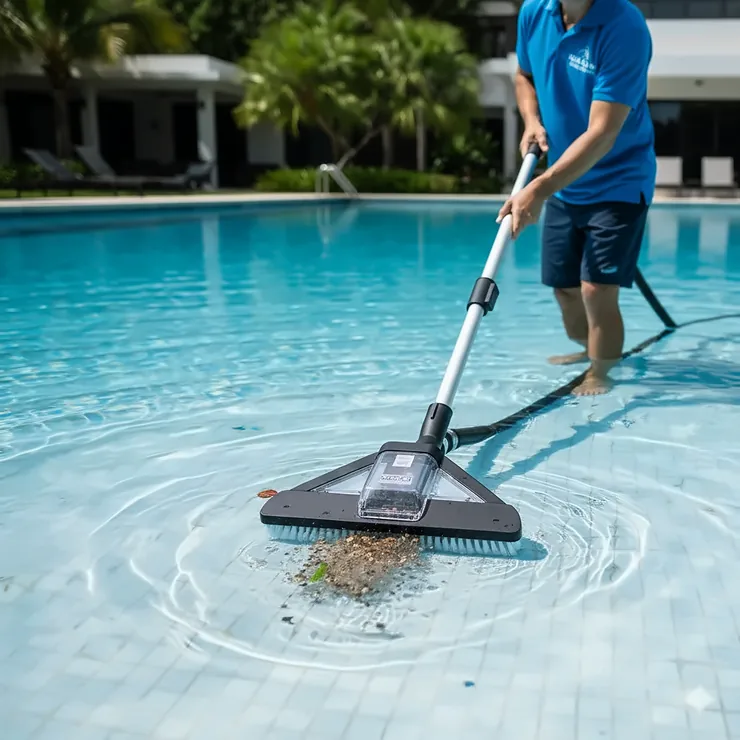
Let me tell you something about pool maintenance that nobody seems to mention – it’s not supposed to be a workout session. Yet here we are, many of us pushing around inadequate cleaning tools that make us question our life choices. I’ve been there, wrestling with a flimsy pool vacuum head that couldn’t pick up a single leaf without floating back to the surface like some rebellious pool toy.
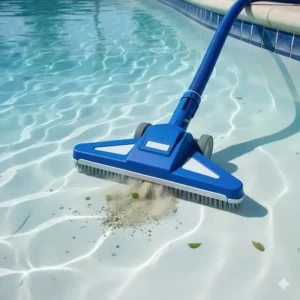
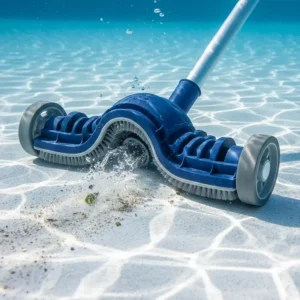
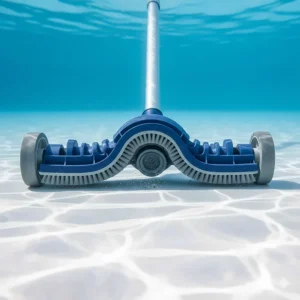
A quality pool vacuum head changes everything. It’s the business end of your pool cleaning operation, the part that actually makes contact with your pool floor and walls. Think of it as the foundation of your entire cleaning setup – without a solid one, you’re basically just pushing water around and calling it maintenance.
What exactly makes a pool vacuum head worth your money? It’s all about contact, suction, and durability. Pool vacuum heads play a vital role in removing not just visible debris but also microscopic particles that can cloud the water and disrupt its chemical balance. The right pool vacuum head maintains consistent contact with all surfaces, creates optimal suction for debris removal, and survives season after season of chemical exposure and UV rays.
Today’s market offers everything from basic triangular designs to sophisticated weighted models with side brushes and swivel connections. We’re talking about pool vacuum heads that range from budget-friendly $15 options to professional-grade $50+ models that’ll make you feel like you hired a pool service. The difference? It’s in the materials, the weight distribution, the brush configurations, and how well they adapt to different pool surfaces.
Quick Comparison: Top Pool Vacuum Head Features
| Feature | Budget Models ($15-25) | Mid-Range ($25-35) | Premium ($35-50+) |
|---|---|---|---|
| Weight | Light (1-2 lbs) | Medium (2-4 lbs) | Heavy (4-7 lbs) |
| Brush Configuration | Bottom only | Bottom + Side | Multi-angle brushes |
| Hose Connection | Fixed | Swivel | 360° Rotatable |
| Wheels | None/Basic | Standard wheels | Ball-bearing wheels |
| Surface Compatibility | Concrete only | Most surfaces | All surfaces |
| Average Lifespan | 1-2 seasons | 2-3 seasons | 3-5+ seasons |
| Best For | Small pools | Regular maintenance | Professional results |
💬 Just one click – help others make better buying decisions too! 😊
🛒 Ready to Upgrade Your Pool Cleaning Game?
You’re moments away from transforming your pool maintenance routine! The products featured below represent real, tested options currently available. Click any highlighted product name to check today’s pricing, read hundreds of verified customer reviews, and grab the perfect pool vacuum head for your needs. Your crystal-clear pool is just one click away! 🌊✨
Top 7 Pool Vacuum Head: Expert Analysis
1. TidyMister Pool Vacuum Head with Side Brushes and Wheels
This is what happens when someone actually listens to pool owners’ complaints. The TidyMister 16-inch model comes with a direction-control swivel handle that honestly feels like cheating – in the best way possible. You can steer this thing with one hand while your other hand holds your morning coffee.
The 4-pound weighted design keeps it planted on your pool floor, while the side brushes tackle those annoying corners where debris loves to hide. It’s compatible with both 1-1/4″ and 1-1/2″ hoses, and the universal steering handle reduces cleaning effort by about 80% according to user feedback. Customers rave about the aluminum handle and stainless steel construction, though a few note the wheels occasionally need adjustment after heavy use.
Price Range: $22-28
Customer Feedback: Users love the directional control feature, calling it a “game-changer” for large pools. Some mention the side brushes effectively clean pool edges without scratching vinyl liners.
✅ Pros:
- One-handed directional control
- Heavy-duty 4lb weighted design for stable suction
- Works on all pool surfaces including vinyl
❌ Cons:
- Wheels may need occasional tightening
- Higher price point than basic models
2. U.S. Pool Supply 19″ Heavy Duty Weighted Flexible Pool Vacuum Head
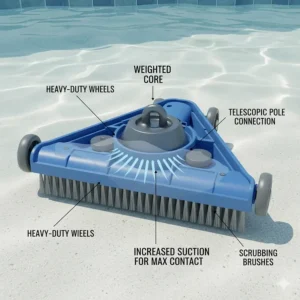
The behemoth of pool vacuum heads. This professional-grade monster measures 19 inches wide and packs 6 integrated weights that keep it firmly planted. At 23 inches wide and 9 inches deep, this vacuum head covers significantly more area than standard 12-14 inch models, cutting down cleaning time with its extra-wide coverage.
U.S. Pool Supply built this for commercial applications, but savvy homeowners discovered it cuts their cleaning time in half. The 12 smooth-gliding wheels with ball bearings make it effortless to push, even across rough concrete. The metal EZ Clip handle attaches to standard telescopic poles, and the flexible body adapts to pool contours like it was custom-made for your specific pool shape.
Price Range: $38-45
Customer Feedback: Professional pool cleaners appreciate the commercial-grade construction. One user mentioned it “handles heavy leaf loads without clogging.”
✅ Pros:
- Extra-wide 19″ coverage saves time
- Professional-grade durability
- Flexible body adapts to all surfaces
❌ Cons:
- Heavier weight requires more storage space
- Premium pricing
3. POOLAZA Pool Vacuum Head with 360° Swivel Connection
Here’s where innovation meets practicality. The POOLAZA model features a 360-degree rotatable hose adapter that prevents those annoying hose twists that make you want to abandon pool ownership entirely. The 360° hose connector prevents hose twisting, ensuring smooth and uninterrupted cleaning sessions.
Eight strategically placed bottom brushes work in conjunction with side brushes to provide all-angle cleaning. The weighted body ensures it stays in contact with your pool bottom, while the wheels maintain smooth movement even after the brushes show wear. It fits both standard hose sizes and works beautifully with vinyl-lined pools.
Price Range: $23-29
Customer Feedback: The rotatable hose connection receives consistent praise for preventing tangles. Users report “thorough corner cleaning” and “smooth operation.”
✅ Pros:
- 360° hose connection eliminates twisting
- Eight-brush bottom configuration
- Vinyl-liner safe design
❌ Cons:
- Mid-weight may float in very shallow areas
- Bottom brushes may wear with heavy use
4. FibroPool Professional-Grade Flexible Pool Vacuum Head
From a company that’s been in the pool equipment game for over 20 years, this vacuum head represents two decades of refinement. The flexible, thermoplastic body adapts perfectly to every curve and contour, ensuring a spotless pool surface with 6 integrated weights that maintain a consistent seal across all pool surfaces.
What sets the FibroPool apart? The urethane wheels with metal ball bearings. These aren’t cheap plastic wheels that’ll crack after one season. The chrome-plated metal handle screams quality, and the 14.4″ x 10.5″ cleaning area hits that sweet spot between coverage and maneuverability.
Price Range: $32-40
Customer Feedback: Long-term users report this vacuum head lasting 4-5 seasons with proper care. The thermoplastic construction receives high marks for flexibility and durability.
✅ Pros:
- Premium thermoplastic construction
- Metal ball-bearing wheels for longevity
- 20-year company reputation
❌ Cons:
- Higher initial investment
- Heavier than budget options
5. Yufafa Pool Vacuum Head with Wheels
Budget-friendly doesn’t have to mean cheap quality. The Yufafa 14-inch model proves that point with its 4 weighted plates and flexible design that works for both inground and above-ground pools. The swivel connection handles both 1.25″ and 1.5″ hoses without adapters.
This pool vacuum head is made of premium plastic, promising both durability and strength while remaining lightweight for above-ground pools. It’s particularly effective for weekly maintenance when debris hasn’t accumulated into stubborn piles. The wheels roll smoothly across vinyl liners without leaving marks.
Price Range: $18-24
Customer Feedback: Perfect for above-ground pool owners on a budget. Users mention “easy assembly” and “reliable performance for regular cleaning.”
✅ Pros:
- Affordable entry-point pricing
- Lightweight yet stable design
- Works with standard pool equipment
❌ Cons:
- Basic plastic construction may not last as long
- Limited heavy-duty applications
6. Sepetrel Upgrade Pool Vacuum Head with Triangular Shape
The triangular design isn’t just for aesthetics – it’s geometry working in your favor. The Sepetrel model with its triangular weighted shape excels at corner cleaning, getting into those 90-degree angles that rectangular heads struggle with.
The universal rotatable hose adapter prevents binding, while the side brush configuration targets debris along walls and in tight spaces. It’s specifically engineered to be safe for vinyl liner pools, with brushes that clean effectively without causing damage. The upgrade version includes reinforced construction points that address the weak spots found in earlier triangular models.
Price Range: $19-26
Customer Feedback: Vinyl pool owners appreciate the gentle-yet-effective cleaning. The triangular shape receives praise for “excellent corner reach.”
✅ Pros:
- Superior corner cleaning with triangular design
- Vinyl-liner safe construction
- Rotatable hose prevents tangling
❌ Cons:
- Less coverage area than rectangular models
- Triangular shape takes getting used to
7. Swimline Hydrotools Manual Pool Vacuum Head (Model 8150)
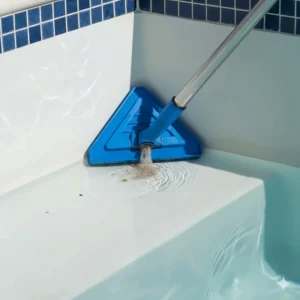
Sometimes you want transparency – literally. The Swimline Hydrotools clear vacuum head lets you see exactly what you’re picking up, which is oddly satisfying and surprisingly practical. You can actually watch debris enter the vacuum and adjust your technique accordingly.
Weighted vacuum heads are designed to maintain contact with the pool floor, making them ideal for large, flat surfaces. This model features a rectangular shape with flexible construction that conforms to various pool surfaces. The swivel hose connection accommodates both 1-1/4″ and 1-1/2″ hoses, and the clear body makes quality control a breeze.
Price Range: $16-22
Customer Feedback: The see-through design helps users “spot missed areas immediately.” Great for visual learners who like seeing their progress.
✅ Pros:
- Transparent body for visual feedback
- Budget-friendly pricing
- Flexible construction adapts to surfaces
❌ Cons:
- Clear plastic may yellow over time
- Basic design lacks advanced features
Understanding Pool Vacuum Head Mechanics
Let’s get nerdy for a minute because understanding how these things work helps you choose the right one. A pool vacuum head creates a seal with your pool surface while your pump or skimmer provides suction. Water flows through the head, carrying debris with it, while brushes agitate stubborn dirt and the weighted body keeps everything in contact with the surface.
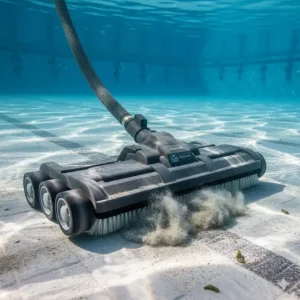
The physics are straightforward: heavier heads maintain better contact, creating stronger suction. However, they’re also harder to maneuver. This is why professional-grade models include wheels with ball bearings – they combine weight with mobility. The brush configuration matters too. Side brushes extend your cleaning radius and help in corners, while bottom brushes directly agitate the surface you’re cleaning.
Swivel connections solve a problem you didn’t know you had until you experienced it. Without a swivel, your hose twists as you move the vacuum head, creating resistance and eventually kinking. A 360-degree swivel lets the hose rotate freely, making the entire process feel effortless. This seemingly simple feature dramatically reduces fatigue during large pool cleaning sessions.
Types of Pool Vacuum Heads Explained
Weighted vs. Unweighted Designs
Weighted pool vacuum heads use embedded weights (usually 4-6 strategically placed) to maintain downward pressure and surface contact. They’re essential for efficient cleaning but add to the overall weight you’re pushing. Unweighted heads work for very smooth surfaces and above-ground pools where excessive weight might damage the liner.
Flexible vs. Rigid Construction
Flexible heads adapt to pool contours, slopes, and uneven surfaces. They’re particularly valuable for pools with curved walls or irregular bottoms. Rigid heads offer more durability and work best on flat, uniform surfaces. Many modern designs split the difference with flex-points in strategic locations.
Triangular, Rectangular, and Butterfly Shapes
Triangular heads excel at corners and tight spaces. Rectangular heads maximize coverage area per pass. Butterfly designs (wide at the front, narrow at the connection) offer a compromise between coverage and maneuverability. Your pool shape often dictates which design works best.
Essential Features to Consider
Brush Configurations
Bottom brushes are standard, but side brushes make a significant difference. Look for nylon bristles that won’t scratch vinyl liners. Some premium models feature multiple brush angles that clean as you push and pull, doubling your effective cleaning motion.
Hose Connection Types
Fixed connections are simple but prone to binding. Swivel connections rotate but may have limited range. Full 360-degree rotating connections eliminate all hose twist issues. Match your connection type to your pool size – larger pools benefit more from advanced swivel systems.
Wheel Quality and Quantity
Cheap plastic wheels crack and degrade quickly. Look for urethane or rubber wheels, ideally with ball bearings. More wheels generally mean smoother operation, but they also represent more potential failure points. Four to eight wheels hit the sweet spot for most applications.
Handle Compatibility
Most pool vacuum heads use the standard EZ Clip system that fits 1-1/4″ telescopic poles. Verify compatibility with your existing pole. Metal clips outlast plastic, and quick-release designs make setup faster. Some models include directional control handles – these are game-changers for large pools.
Materials and Durability Factors
Pool chemicals are harsh. UV rays are merciless. Your pool vacuum head faces both continuously. Premium models use thermoplastic construction that resists chemical degradation and UV damage better than standard plastic. Metal components should be stainless steel or chrome-plated to prevent rust.
Unlike many consumer-grade solutions, professional vacuum heads use high-quality materials where traditionally stiff PVC body and wheels have been upgraded to thermoplastic urethane to ensure ease of maneuverability along all pool surfaces regardless of material or contour. Cheap plastic ball bearings in wheels should be metal for longevity.
The brush bristles deserve attention too. Polypropylene bristles resist chemical breakdown better than nylon, though nylon works well for vinyl-safe applications. Check if replacement parts are available – a $30 vacuum head becomes a better investment if you can replace worn brushes for $8 rather than buying a completely new unit.
Pool Surface Compatibility Guide
Vinyl Liner Pools
Vinyl demands gentle treatment. Look for vacuum heads explicitly labeled “vinyl safe” with softer brushes and no sharp edges. Weighted designs should distribute weight across a broad surface area. The POOLAZA and Sepetrel models specifically address vinyl safety concerns.
Concrete and Gunite Pools
Concrete can handle aggressive cleaning. Stiffer brushes work well here, and you can use heavier weighted models without concern. The U.S. Pool Supply 19″ model and similar heavy-duty options excel on concrete because they can apply significant pressure without damage concerns.
Fiberglass Pools
Fiberglass sits between vinyl and concrete in terms of durability. Most standard pool vacuum heads work fine, but avoid extremely stiff brushes that might dull the gel coat over time. Medium-weight models with moderate brush stiffness provide the best balance.
Tile and Mosaic Surfaces
Smooth surfaces require wheels for proper vacuum head movement. Ball-bearing wheels prevent scratching while ensuring smooth gliding. The TidyMister model with its non-slip wheels specifically addresses tile and mosaic applications.
Maintenance and Care Tips
Your pool vacuum head needs maintenance too. After each use, rinse it thoroughly with fresh water to remove chlorine and other chemicals. Pay special attention to the hose connection area where mineral deposits accumulate. Brush bristles should be inspected for damage or excessive wear.
Store your vacuum head out of direct sunlight when not in use. UV exposure degrades plastic components rapidly. A shaded area in your pool equipment storage is ideal. Never store it with the wheels bearing weight – this can cause flat spots that affect rolling performance.
Periodically disassemble the swivel connection and apply silicone lubricant. This prevents binding and extends the connection’s lifespan. Check wheels for cracks or wear, and replace them before they fail completely. Most units carry a warranty ranging from one to three years with the typical lifespan being five or more years depending on the amount of wear and how well the cleaner is maintained.
Troubleshooting Common Issues
Poor Suction Performance
First, check your pool’s pump and filter system. If those are fine, examine the vacuum head for clogs or debris blocking the intake. Ensure all connections are tight and the hose isn’t kinked. Sometimes the issue is simply insufficient weight – the vacuum head isn’t making proper contact with the pool surface.
Floating or Poor Surface Contact
This usually indicates insufficient weight. Some vacuum heads include optional weight attachments you can add. Alternatively, slow down your movement – rushing causes even weighted heads to lose contact. For persistent floating, you might need to upgrade to a heavier model.
Difficulty Maneuvering
Too much weight or wheels that aren’t rolling freely cause this. Check for debris in the wheels or damaged wheel bearings. If the head is simply too heavy for comfortable use, consider a lighter model or one with better wheel systems. The directional control feature on models like the TidyMister specifically addresses maneuverability concerns.
Rapid Brush Wear
Customers report durability issues noting that bristles became brittle and didn’t last more than a year, with some bristles breaking down and falling apart inside the pool. Excessive wear often results from using the wrong brush type for your pool surface. Stiff brushes on vinyl wear quickly and damage the liner. Also, scrubbing motion while vacuuming accelerates brush degradation – let the suction do the work.
Budget Considerations and Value Analysis
| Price Range | What You Get | Best For | Expected Lifespan |
|---|---|---|---|
| $15-$25 | Basic functionality, standard brushes, plastic construction | Occasional use, small pools, beginners | 1-2 seasons |
| $25-$35 | Swivel connections, side brushes, moderate weight | Regular maintenance, medium pools | 2-3 seasons |
| $35-$50 | Professional features, premium materials, advanced designs | Frequent use, large pools, commercial | 3-5+ seasons |
The cheapest option isn’t always the best value. A $20 vacuum head that lasts one season costs more over five years than a $40 model that survives the entire period. Factor in your pool size, cleaning frequency, and whether you enjoy or despise pool maintenance when deciding on budget.
Professional pool services typically use $35+ models because they need reliability and efficiency. If you clean your pool weekly yourself, investing in a higher-quality vacuum head pays off in reduced frustration and time savings. For vacation homes or pools used only a few months yearly, mid-range options provide adequate performance without over-investment.
Selecting the Right Size for Your Pool
Width Considerations
Wider heads cover more area per pass but are harder to maneuver in tight spaces. For pools under 20 feet, a 12-14″ head balances coverage and control. Medium pools (20-35 feet) work best with 14-16″ heads. Large pools benefit from 16-19″ models that significantly reduce cleaning time.
Weight Distribution
Above-ground pools with soft vinyl bottoms need lighter heads (2-4 lbs) to prevent liner damage. Inground concrete pools can handle heavier models (4-7 lbs) that provide better suction. Your own strength matters too – a 7-pound vacuum head might clean efficiently, but if you can’t comfortably maneuver it, you won’t clean as often.
Depth Compatibility
Deep pools require heavier vacuum heads to maintain surface contact at depth. Shallow pools work fine with lighter models. The water pressure at depth helps keep heavier heads planted, while shallow areas might cause weighted heads to be harder to push.
Professional vs. DIY Pool Maintenance
Using a quality pool vacuum head makes DIY maintenance feasible for most pool owners. Professional services charge $80-150 per visit in most areas. If you clean weekly during pool season (roughly 24 weeks), that’s $1,920-$3,600 annually. A premium $45 vacuum head pays for itself in the first two weeks.
However, professional services do more than vacuuming. They test and balance chemicals, inspect equipment, and catch problems early. A hybrid approach works well – handle routine vacuuming yourself with a quality vacuum head, but schedule professional service quarterly for comprehensive maintenance. This reduces annual costs to $320-600 while maintaining proper pool care.
The learning curve for effective pool vacuuming is minimal. Most people master the technique within 2-3 cleaning sessions. Online resources, including videos and guides from organizations like the Association of Pool & Spa Professionals, provide excellent DIY guidance. The equipment investment – vacuum head, pole, and hose – typically runs $60-100 total.
Seasonal Considerations
Opening Season Prep
Start the season with a thorough vacuum head inspection. Check all moving parts, replace worn brushes, and lubricate swivel connections. The first cleaning of the season typically involves heavier debris loads, so having everything in optimal condition prevents mid-job failures.
Peak Season Maintenance
During heavy use months, clean your pool vacuum head after every use. Rinse thoroughly, check for damage, and store properly. Weekly deep cleaning of the vacuum head itself prevents buildup that reduces performance. This is when quality pays off – premium vacuum heads handle frequent use without degrading.
Closing Season Storage
Before storage, clean the vacuum head completely and allow it to dry thoroughly. Apply a thin coat of silicone spray to moving parts. Store in a cool, dry location away from direct sunlight. Remove any weights if your model allows it, as this reduces stress on connection points during storage.
Environmental and Safety Factors
Chemical-free pool maintenance is increasingly popular, but it doesn’t eliminate the need for vacuuming. In fact, natural pools require more frequent vacuuming since you’re not using chemicals to clarify water. A quality pool vacuum head becomes even more important in these systems.
For saltwater pools, choose vacuum heads with corrosion-resistant materials. Stainless steel components and UV-stabilized plastics handle salt exposure better than standard materials. The combination of direct sunlight and exposure to pool chemicals tends to increase the rate at which cleaners wear down, so the best thing to do is remove the unit before adding chemicals such as shock or muriatic acid to the pool.
Safety considerations include proper storage away from children who might use the poles as toys. Sharp edges on older or damaged vacuum heads can cut feet, so inspect regularly and replace when necessary. Always ensure your pool’s electrical components are properly grounded before using any vacuum equipment connected to the pool’s pump system.
Integration with Pool Systems
Your pool vacuum head connects to your pool’s circulation system, typically through the skimmer or a dedicated vacuum line. Understanding this integration helps optimize performance. When connected to the skimmer, partially close the main drain valve to increase suction at the vacuum head. This creates stronger debris pickup.
For pools with dedicated vacuum lines, ensure the line is properly primed before connecting your vacuum head. Air in the line reduces suction dramatically. The vacuum head and hose should be filled with water before connection – submerge them in the pool, allowing air to escape before attaching to your pole and making the final connection.
Pool automation systems are becoming more sophisticated, but manual vacuuming with a quality vacuum head remains relevant. Automated cleaners miss corners, struggle with certain debris types, and can’t deep-clean stubborn stains. Your manual vacuum head complements automated systems, handling what they miss. Many pool owners use automated cleaners for daily maintenance and manual vacuum heads for weekly deep cleaning.
Advanced Features and Innovations
Modern pool vacuum heads incorporate features that seemed impossible a decade ago. Directional control handles let you steer with wrist movements rather than repositioning your entire body. This reduces fatigue and increases efficiency dramatically. The TidyMister model exemplifies this innovation, claiming 80% effort reduction.
Multi-angle brush systems clean in both push and pull directions. Traditional vacuum heads only clean effectively in one direction, requiring you to lift and reposition for the return stroke. Bi-directional designs clean continuously, cutting actual vacuuming time roughly in half.
Quick-connect systems let you attach and detach the vacuum head from your pole in seconds rather than wrestling with clips. This becomes significant when you’re switching between vacuum heads for different pool areas or transitioning to brushing and skimming. Tool-less adjustments for hose connections eliminate the need to carry wrenches to the pool area.
Transparent materials, like those used in the Swimline Hydrotools model, provide real-time feedback. You see exactly what you’re picking up and can adjust technique accordingly. This is particularly valuable when dealing with fine sediment that’s hard to see on darker pool surfaces.
❓ Frequently Asked Questions
❓ Can you use any pool vacuum head with any hose size?
❓ How often should I replace my pool vacuum head?
❓ Do weighted vacuum heads work for above-ground pools?
❓ What causes my vacuum head to skip or bounce during use?
❓ Are more expensive vacuum heads worth the investment?
Conclusion: Making Your Perfect Choice
Choosing the right pool vacuum head comes down to matching features to your specific needs. Large inground pools benefit from wide, heavy-duty models like the U.S. Pool Supply 19″ Professional that cover more area per pass. Above-ground pool owners get better value from lighter models like the Yufafa that protect vinyl liners while providing adequate cleaning power.
Your budget matters, but so does long-term value. A $40 vacuum head that lasts five seasons costs less per cleaning than a $20 model replaced annually. Consider your cleaning frequency, pool size, surface type, and personal patience level. If you hate pool maintenance, investing in premium features that reduce effort and time pays psychological dividends beyond the monetary cost.
Don’t overthink it though. Any of the seven models we’ve analyzed will clean your pool effectively. The differences lie in efficiency, durability, and convenience rather than basic functionality. Start with a mid-range option if you’re uncertain – you can always upgrade later once you understand your preferences and priorities.
The best pool vacuum head is the one you’ll actually use consistently. Crystal-clear water requires regular maintenance, and having equipment that makes the job less tedious increases the likelihood you’ll maintain your schedule. Your pool is an investment in your home and lifestyle – proper maintenance tools are an investment in protecting that investment.
🌊 Transform Your Pool Maintenance Today!
Ready to stop dreading pool cleaning day? The vacuum heads featured in this guide are currently available with competitive pricing and fast shipping. Click any highlighted product name above to check today’s deals, read verified customer reviews, and find the perfect match for your pool. Your cleaner, clearer pool is just one decision away! 🏊♂️✨
Recommended for You
- Pool Flocculant Guide 2025: 7 Best Products That Actually Work
- 7 Best Clarifiers for the Pool: Crystal Clear Water 2025
- Ladder Mats for Pools: 7 Best Protective Options 2025
Disclaimer: This article contains affiliate links. If you purchase products through these links, we may earn a small commission at no additional cost to you.
✨ Found this helpful? Share it with your friends! 💬🤗
