
In This Article
✨Was this helpful? Spread the word! 🚀
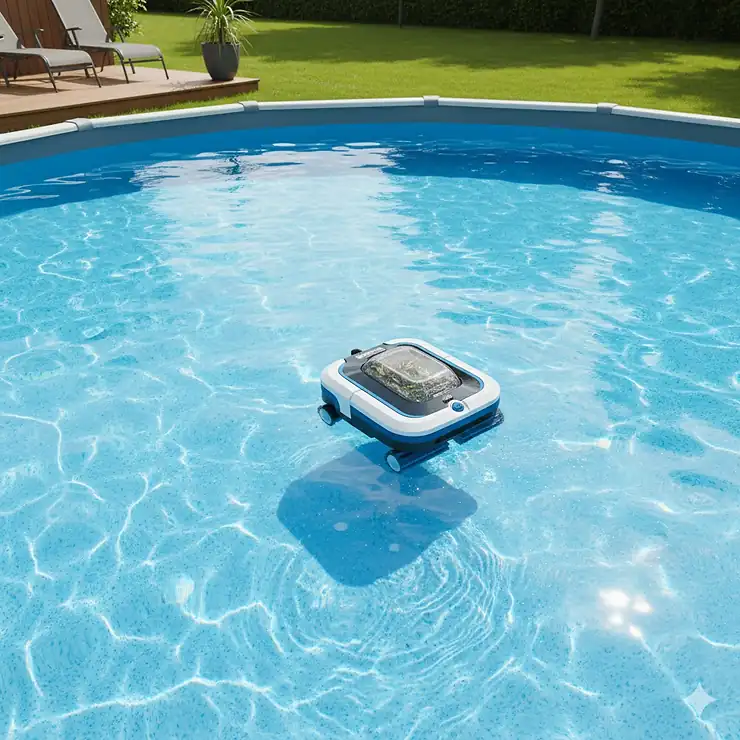
Let me tell you something—I used to spend hours every week manually vacuuming my above ground pool. My back ached, my weekends disappeared, and I secretly dreaded pool season despite loving to swim. Then I discovered automatic pool cleaners, and honestly, it changed everything.
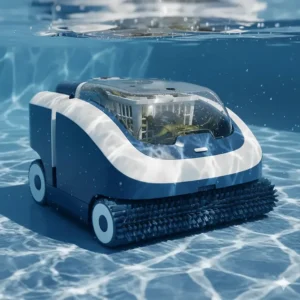
Finding the best automatic pool cleaner above ground isn’t just about convenience (though that’s a massive perk). It’s about reclaiming your time, ensuring your pool stays crystal clear, and actually enjoying your backyard oasis instead of constantly maintaining it. Whether you’re dealing with leaves, algae, or fine debris, the right automatic cleaner transforms pool ownership from a chore into pure pleasure.
The market for pool cleaners above ground automatic systems has exploded in recent years. You’ve got robotic models with smart navigation, pressure-side cleaners that blast debris away, and suction cleaners that work with your existing equipment. Each type offers unique advantages, and choosing the wrong one can mean wasted money and continued frustration.
In this comprehensive guide, I’ll walk you through seven exceptional options, from budget-friendly suction models to premium robotic cleaners with app control. We’ll compare specifications, dive into real customer experiences, and help you find the perfect match for your pool size, budget, and cleaning needs. According to the U.S. Consumer Product Safety Commission, proper pool maintenance significantly reduces safety hazards, making the right automatic pool cleaner an investment in both convenience and safety.
Quick Comparison Table: Top Above Ground Pool Cleaners
| Product | Type | Pool Size | Runtime/Speed | Price Range | Rating |
|---|---|---|---|---|---|
| Dolphin Escape | Robotic/Corded | Up to 33 ft | 1.5 hours | $539-$600 | ⭐⭐⭐⭐⭐ 4.8/5 |
| WYBOT C1 | Robotic/Cordless | Up to 1,614 sq ft | 150 mins | $400-$499 | ⭐⭐⭐⭐⭐ 4.7/5 |
| Polaris 65 | Pressure-Side | Up to 24 ft round | 3 hours | $226-$370 | ⭐⭐⭐⭐ 4.3/5 |
| Pentair Kreepy Krauly E-Z Vac | Suction-Side | Flat/dish-shaped | Varies | $180-$250 | ⭐⭐⭐⭐ 4.2/5 |
| Dolphin Nautilus CC Plus | Robotic/Corded | Up to 50 ft | 2 hours | $699-$799 | ⭐⭐⭐⭐⭐ 4.9/5 |
| Poolease X1 | Robotic/Cordless | Flat pools | 90 mins | $180-$250 | ⭐⭐⭐⭐ 4.0/5 |
| AIPER Scuba SE | Robotic/Cordless | Up to 860 sq ft | 95 mins | $199-$299 | ⭐⭐⭐⭐ 4.1/5 |
🛒 Ready to Transform Your Pool Maintenance?
Don’t let another weekend slip away spent scrubbing pool floors. These carefully selected cleaners represent the best technology available in 2025. Click any product name above to check current Amazon prices, read detailed reviews, and see if special deals are running. Most ship fast and free with Prime—you could be enjoying a spotless pool by next weekend! 🏊♂️✨
💬 Just one click – help others make better buying decisions too!😊
Top 7 Best Automatic Pool Cleaner Above Ground: Expert Analysis
1. Dolphin Escape – The Premium Choice That Actually Delivers
Here’s the thing about the Dolphin Escape—it’s not the cheapest option, but it’s the one I’d buy again in a heartbeat. This robotic powerhouse combines Maytronics’ legendary engineering with features specifically designed for above ground pools.
Key Specifications:
- Pool Coverage: Up to 33 feet (works for small inground too)
- Cleaning Cycle: 1.5 hours
- Filtration: MaxBin (50% larger capacity than standard)
- Motor: Dual 24V DC motors, 180 watts total
- Cable: 40-foot corded design
The Dolphin Escape employs SmartNav 2.0 scanning technology that maps your pool intelligently. Unlike those cordless models that wander aimlessly, this cleaner knows where it’s been and optimizes its cleaning path. The HyperBrush technology scrubs at twice the speed of ordinary brushes, while HyperGrip tracks provide superior traction compared to wheeled competitors.
Customer feedback consistently highlights its reliability. One owner reported, “After testing over 30 pool robots, the Escape delivers the best bang for your buck in its price range.” The MaxBin design makes emptying debris ridiculously easy—just snap, dump, rinse. No fumbling with cartridges or mesh bags.
Pros:
✅ Superior navigation with SmartNav 2.0
✅ Powerful 4000+ GPH filtration rate
✅ Corded design means unlimited runtime
✅ 2-year warranty included
Cons:
❌ Higher initial investment ($539-$600)
❌ No weekly timer or app control
Price Range: $539-$600 (refurbished models start at $539)
2. WYBOT C1 – Best Cordless Innovation
The WYBOT C1 represents the future of pool cleaning—if that future includes impressive battery technology and smart app integration. This cordless wonder impressed me with its genuine wall-climbing capability and extended runtime that actually matches the advertised specs.
Key Specifications:
- Pool Coverage: Up to 1,614 square feet
- Runtime: 120-150 minutes per charge
- Charge Time: 3-4 hours
- Filtration Rate: 2,642 GPH with independent water pump
- Navigation: Smart gyroscope-based system with S-path and N-path
What sets the WYBOT C1 apart is its four-wheel-drive system combined with dual PVC brushes that grip surfaces aggressively. The smart app lets you customize cleaning routes via Bluetooth or WiFi, and the OTA (Over-the-Air) updates mean your cleaner actually improves over time—a feature you’d expect from premium electronics, not pool equipment.
Real users rave about its practicality. One customer noted, “It does a better job than professional pool cleaning services, and I can operate it from my phone in just a couple of minutes.” The 180μm mesh filter captures fine particles that many competitors miss, and the top-load design makes maintenance genuinely quick.
Pros:
✅ True 150-minute runtime covers large pools completely
✅ App control with multiple cleaning modes
✅ Climbs walls and cleans waterline effectively
✅ 24-month warranty with lifetime technical support
Cons:
❌ Requires charging between uses
❌ Premium features require learning the app
Price Range: $400-$499
3. Polaris 65 – The Reliable Pressure-Side Workhorse
Sometimes simplicity wins, and the Polaris 65 proves this point beautifully. This pressure-side cleaner has been a pool industry staple for decades because it just works—consistently, reliably, and without breaking the bank.
Key Specifications:
- Pool Type: Above ground vinyl/fiberglass, up to 5 feet deep
- Hose Length: 24 feet of float hose
- Installation: Connects to 1.5″ threaded return line
- Cleaning Time: 3 hours or less
- Special Feature: Patented jet sweep assembly
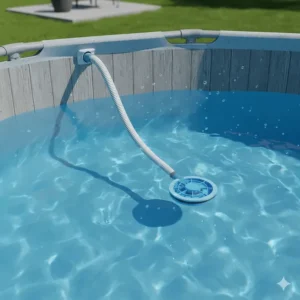
The beauty of the Polaris 65 lies in its pressure-side operation. Instead of putting strain on your filtration system like suction cleaners, it uses water returning to your pool to power its cleaning action. The jet sweep assembly actively blows water against pool walls, loosening stubborn debris before sweeping it into the attached filter bag.
According to pool industry experts at Swim University, pressure-side cleaners like the Polaris 65 extend the life of your main filtration system by capturing debris before it reaches your pump basket. Customer reviews consistently mention its durability—many owners report 5+ years of reliable service with minimal maintenance.
Pros:
✅ Affordable entry point for automatic cleaning
✅ Installs in minutes, no tools required
✅ Debris bag prevents pump/filter clogging
✅ Works with uneven pool bottoms
Cons:
❌ Floats on surface (some find it aesthetically distracting)
❌ Requires adequate water pressure to operate effectively
Price Range: $226-$370
4. Pentair Kreepy Krauly E-Z Vac – Best Budget Suction Cleaner
The Pentair Kreepy Krauly E-Z Vac carries the legendary Kreepy Krauly name—trusted by over 3 million pool owners worldwide. This suction-side cleaner delivers dependable performance at a price that won’t make you wince.
Key Specifications:
- Pool Compatibility: Flat-bottomed and dish-shaped above ground pools
- Hose Included: 32 feet
- Moving Parts: Just one (the flapper)
- Connection: Attaches directly to skimmer line
- Special Feature: Free skimming valve
What makes this cleaner brilliant is its engineering simplicity. With only one operational moving part, there’s almost nothing to break or replace. The free skimming valve automatically regulates water flow, ensuring optimal cleaning speed while simultaneously skimming surface debris—you’re cleaning the top and bottom of your pool simultaneously.
The E-Z Vac was designed specifically for above ground pools with banked or radius coves, addressing a common pain point where other cleaners get stuck. Users appreciate its “set it and forget it” nature. As one customer put it, “It’s not fancy, but it works every single time without fuss.”
Pros:
✅ Extremely low maintenance design
✅ Works with existing pump (no additional power needed)
✅ Handles flat and dish-shaped pool bottoms
✅ Budget-friendly price point
Cons:
❌ Basic design lacks advanced features
❌ Cleaning speed depends on pump power
Price Range: $180-$250
5. Dolphin Nautilus CC Plus – The Versatile Hybrid Champion
While the Dolphin Nautilus CC Plus technically works for both inground and above ground pools up to 50 feet, it deserves mention for larger above ground installations. This Wi-Fi-enabled cleaner brings smart technology to pool maintenance without the complexity that makes some people avoid modern gadgets.
Key Specifications:
- Pool Coverage: Up to 50 feet length
- Cleaning Cycle: 2 hours
- Filtration: Dual scrubbing brushes with cartridge filters
- Smart Features: Wi-Fi connectivity, app control
- Power: Energy-efficient with tangle-free swivel cable
The Nautilus CC Plus excels at wall climbing—reaching all the way up to the waterline where algae loves to grow. Its dual-cartridge filtration system captures both large debris and fine particles, and the top-loading access makes cleaning the filters remarkably simple. According to testing by The Pool Nerd, this model filters more water per hour than most competitors in its price range.
The app integration isn’t just a gimmick—you can schedule cleanings, monitor progress, and adjust settings remotely. For pool owners who travel or simply want maximum automation, this feature proves invaluable. Customer reviews frequently mention the “set and forget” capability as a game-changer for busy families.
Pros:
✅ Wi-Fi app control for scheduling
✅ Climbs walls to waterline
✅ Works for large above ground pools (up to 50 ft)
✅ Never needs charging (corded design)
Cons:
❌ Higher price point ($699-$799)
❌ Overkill for small pools under 20 feet
Price Range: $699-$799
6. Poolease X1 – Solid Mid-Range Option
The Poolease X1 occupies an interesting middle ground—more capable than basic suction cleaners but less expensive than premium robotics. This cordless cleaner targets pool owners who want automated cleaning without committing to a $500+ investment.
Key Specifications:
- Motor: 45W dual-motor system
- Debris Capacity: 2L filter basket
- Runtime: 90 minutes per charge
- Pool Type: Flat above ground pools
- Navigation: Basic boundary detection
What the Poolease X1 does well is straightforward floor cleaning for flat-bottomed pools. The 45W dual-motor provides adequate suction for leaves, dirt, and moderate algae. At just 8 pounds, it’s exceptionally easy to handle—important when you’re lifting it in and out of the pool multiple times per week.
Users report mixed experiences with this cleaner. It excels in pools with minimal debris and simple shapes but struggles in heavily leafed areas or pools with significant contours. One owner summarized: “Perfect for my 18-foot round pool with light leaf coverage. Probably wouldn’t handle my neighbor’s kidney-shaped pool under oak trees.”
Pros:
✅ Lightweight and easy to maneuver
✅ Affordable cordless option
✅ 2L debris capacity reduces emptying frequency
✅ Self-parking feature when battery low
Cons:
❌ Limited to flat-bottom pools only
❌ Basic navigation can miss spots
Price Range: $180-$250
7. AIPER Scuba SE – Budget-Friendly Cordless Choice
The AIPER Scuba SE represents the entry point into cordless robotic cleaning. While AIPER has faced safety recalls on certain lithium-ion battery models, the Scuba SE features improved battery safety protocols and appropriate certifications.
Key Specifications:
- Pool Coverage: Up to 860 square feet
- Runtime: 95 minutes
- Charge Time: 4 hours
- Weight: 8 pounds
- Features: Automatic self-parking, reusable filter
This lightweight cleaner works best in above ground pools with flat bottoms and light to moderate debris. The automatic self-parking feature brings it to the pool edge when the battery runs low—a genuinely helpful feature when you’re not watching the cleaning cycle. The reusable filter is easy to remove and rinse, keeping ongoing costs minimal.
Testing from Bob Vila’s review site found the Scuba SE effective for basic cleaning tasks but noted it released small amounts of captured dirt when removed from the pool. Customer reviews echo this—it’s a solid performer for budget-conscious buyers who understand its limitations.
Pros:
✅ Very affordable entry into robotic cleaning
✅ Lightweight design (8 lbs)
✅ Self-parking convenience
✅ 95-minute runtime handles most above ground pools
Cons:
❌ Can release debris when lifted from pool
❌ Basic navigation may miss corners
❌ Brand history with battery safety recalls (though this model is certified safe)
Price Range: $199-$299
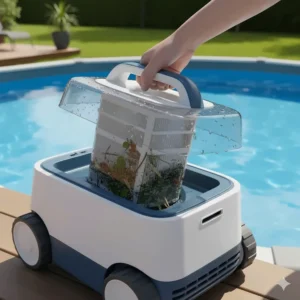
Understanding Pool Cleaner Types: Which Technology Fits Your Needs?
Choosing between automatic pool cleaner above ground options means understanding three fundamental technologies. Each type offers distinct advantages, and the “best” choice depends entirely on your specific situation.
🔄 Suction-Side Cleaners: The Traditional Workhorses
Suction-side pool cleaners connect directly to your existing filtration system through the skimmer or dedicated suction line. Think of them as underwater vacuum cleaners that use your pool pump’s suction to move around and collect debris.
How They Work: Your pool pump creates negative pressure that pulls the cleaner along the pool floor while simultaneously sucking debris through a hose into your filtration system. Models like the Pentair Kreepy Krauly E-Z Vac have been refining this technology for decades.
Best For:
- Pool owners with strong, reliable pumps
- Budgets under $300
- Those who prefer minimal technology
- Pools with mostly fine debris (sand, dirt, small leaves)
Keep in Mind: Your pump runs longer to power these cleaners, potentially increasing electricity costs. They also put more strain on your filter, requiring more frequent backwashing or cartridge cleaning. However, their simplicity means fewer parts to break and easier repairs when needed.
💨 Pressure-Side Cleaners: The Power Blasters
Pressure-side cleaners like the Polaris 65 work opposite to suction models. They connect to your pool’s return line (where filtered water flows back into the pool) and use that water pressure to propel themselves around while blasting debris into an attached bag.
How They Work: Pressurized water flows through the cleaner, powering its movement and activating a jet sweep assembly that literally blows water against pool surfaces to dislodge stuck-on dirt. Debris gets trapped in a separate filter bag, keeping your main filtration system cleaner.
Best For:
- Pools with heavy leaf coverage
- Pool owners wanting to reduce filter maintenance
- Those with adequate water pressure
- Buyers seeking proven, long-lasting technology
Keep in Mind: Some models require a booster pump (additional equipment), though the Polaris 65 works with standard return pressure. The floating hose and bag on the water surface can be visually distracting, and you’ll need to empty the bag regularly during heavy debris seasons.
🤖 Robotic Cleaners: The Smart Investment
Robotic pool cleaners represent the pinnacle of automatic cleaning technology. Models like the Dolphin Escape and WYBOT C1 are self-contained units with their own motors, filtration systems, and increasingly sophisticated navigation.
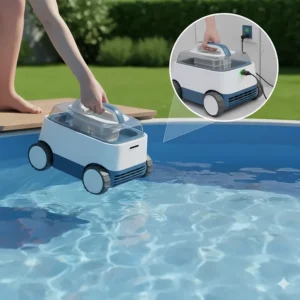
How They Work: Completely independent from your pool’s circulation system, robotic cleaners plug into standard electrical outlets (corded models) or run on rechargeable batteries (cordless). They crawl along pool surfaces using tracks or wheels, scrubbing with rotating brushes while filtering water through their internal systems.
Best For:
- Pool owners prioritizing convenience and performance
- Those willing to invest more upfront for long-term benefits
- Buyers who want smart features (app control, programmable cleaning)
- Anyone tired of manual vacuuming
Keep in Mind: Higher initial costs are offset by energy efficiency—most use less electricity than running your pool pump for hours. Corded models offer unlimited runtime but require cord management, while cordless versions provide convenience but need charging between uses.
📊 Technology Comparison: Making the Right Choice
| Factor | Suction | Pressure | Robotic |
|---|---|---|---|
| Initial Cost | $ ($150-$300) | $$ ($200-$400) | $$$ ($400-$800+) |
| Operating Cost | Medium | Medium | Low |
| Cleaning Speed | Slow-Medium | Medium | Fast |
| Filter Impact | High | Low | None |
| Setup Difficulty | Easy | Medium | Very Easy |
| Smart Features | None | Minimal | Extensive |
The above ground pool cleaner automatic market has matured significantly. While suction and pressure models still dominate budget-conscious purchases, robotic cleaners are increasingly affordable. Many pool owners find that a $500 robotic cleaner pays for itself within two seasons through reduced chemical use (cleaner pools need fewer chemicals) and eliminated professional cleaning services.
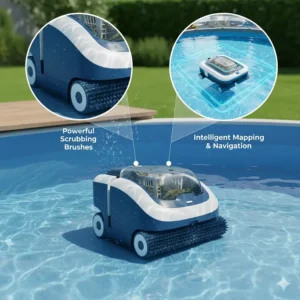
Essential Features to Consider When Buying
Shopping for the best automatic pool cleaner above ground requires balancing numerous factors. Here’s what actually matters based on real-world use, not just marketing claims.
🎯 Pool Size and Shape Compatibility
Your pool’s dimensions directly determine which cleaners will work effectively. Manufacturers specify maximum pool sizes, but there’s nuance here that product listings often gloss over.
For Round Above Ground Pools:
- Small (12-18 ft): Any cleaner works, but compact models like AIPER Scuba SE save money
- Medium (18-24 ft): Polaris 65 or Pentair E-Z Vac handle these perfectly
- Large (24-33 ft): Invest in Dolphin Escape or WYBOT C1 for complete coverage
For Oval and Irregular Shapes: Robotic cleaners with smart navigation dramatically outperform basic models. The Dolphin Escape’s SmartNav 2.0 maps pool contours, while simpler cleaners may repeatedly clean the same straight path while missing corners. According to research from Poolbots.com, navigation technology can improve coverage efficiency by up to 40% in non-round pools.
Depth Considerations: Most above ground pools don’t exceed 5 feet, but if yours has deeper sections, verify your cleaner handles it. The Polaris 65, for instance, explicitly works in pools up to 5 feet deep with uneven bottoms—a crucial specification if your pool has a dished bottom or deeper center.
🏊♂️ Pool Surface Type and Condition
Above ground pools typically feature vinyl liners, but aging or textured liners require different approaches.
Smooth Vinyl: Any cleaner type works, though robotic models with softer brushes prevent wear on older liners. The Dolphin series uses brushes specifically designed for vinyl compatibility.
Textured or Older Vinyl: Suction cleaners can sometimes catch on seams or repairs. Robotic cleaners with tracks (like HyperGrip tracks on Dolphin models) distribute weight better than wheeled units, reducing liner stress.
Fiberglass Above Ground: Rare but increasingly common, fiberglass surfaces work perfectly with all cleaner types. Pressure-side models like the Polaris 65 explicitly list fiberglass compatibility.
🔋 Power Source: Corded vs. Cordless
This decision impacts daily use more than any other feature. I’ve used both types extensively, and each has legitimate advantages.
Corded Robotic Cleaners (Dolphin Escape, Nautilus CC Plus):
- ✅ Unlimited runtime—clean as long as needed
- ✅ Consistent power throughout cleaning cycle
- ✅ No battery degradation over time
- ❌ Cord management requires attention
- ❌ Physical cord presence in pool
Cordless Robotic Cleaners (WYBOT C1, AIPER Scuba SE):
- ✅ Complete freedom from cords
- ✅ Safer (no electrical connection during cleaning)
- ✅ Easier storage and handling
- ❌ Limited by battery capacity
- ❌ Requires charging (typically 4+ hours)
- ❌ Battery replacement needed after 2-4 years
Suction/Pressure Cleaners (Polaris 65, Kreepy Krauly E-Z Vac): These connect via hoses to your pool’s circulation system. They’re not “powered” in the traditional sense—they use your existing pump’s power. The hose length (24-32 feet typically) must reach all areas of your pool.
🎛️ Smart Features and Automation
Modern pool cleaners above ground automatic models increasingly include app control, scheduling, and navigation upgrades. But do you actually need them?
App Control (WYBOT C1, Nautilus CC Plus): Genuine benefits include scheduling cleanings while you’re at work and monitoring battery levels remotely. However, many pool owners report never using app features after the initial setup novelty wears off. If you’re tech-savvy and appreciate smart home integration, it’s valuable. If you just want to press a button and walk away, basic models work fine.
Programmable Timers: The ability to run cleanings on specific days proves more useful than real-time app control for most people. Unfortunately, budget models like the Dolphin Escape lack this feature—a notable omission given its premium price.
Navigation Technology: This matters tremendously. Random-pattern cleaners waste time covering the same areas repeatedly. Smart navigation (SmartNav 2.0 on Dolphin models, gyroscope systems on WYBOT) maps your pool and ensures complete, efficient coverage. If buying a robotic cleaner, invest in one with advanced navigation—it’s the difference between 90-minute and 3-hour cleaning cycles.
🧺 Filter Type and Capacity
Different cleaners use different filtration approaches:
Cartridge Filters (Dolphin models): Easy to remove, rinse, and reinstall. MaxBin technology holds 50-60% more debris than standard cartridges. Perfect for pools with varied debris types.
Fine Mesh Bags (suction/pressure cleaners): Capture larger debris but may miss fine particles. The Polaris 65’s bag works well for leaves and twigs but struggles with sand and silt.
Multi-Layer Filters (WYBOT C1): Advanced models use 180μm mesh that captures particles finer than what human eyes can see. Exceptional for keeping water crystal-clear.
Filter Capacity Reality Check: Manufacturers’ capacity ratings assume average debris. In fall with heavy leaf coverage, even “large” filters need emptying 2-3 times per cleaning cycle. Consider your local environment—proximity to trees, wind patterns, and seasonal debris loads.
⚡ Energy Efficiency and Operating Costs
An often-overlooked factor that adds up over years of ownership.
Robotic Cleaners: Most efficient option. Dolphin Escape uses just 180 watts (about 5 cents per cleaning cycle). Run independently of your pool pump, so you’re not circulating water unnecessarily.
Suction/Pressure Cleaners: Require your pool pump to run continuously during cleaning (typically 2-4 hours). A standard 1.5 HP pool pump uses 1500-2000 watts, costing 15-25 cents per hour depending on local electricity rates. Over a season, this adds up to $50-$100+ more than robotic alternatives.
Water Conservation: Pressure-side cleaners like the Polaris 65 use pool water for propulsion, requiring your filtration system to run. In areas with high water costs or drought conditions, this matters. Robotic cleaners have zero impact on water consumption.
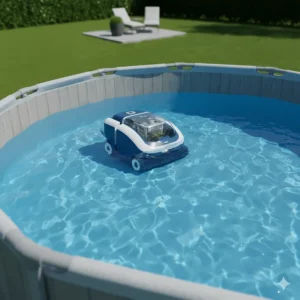
Installation and Setup: Getting Started Right
Most automatic pool cleaners above ground promise “easy installation,” but reality varies wildly by type. Here’s what to actually expect.
📦 Unboxing and Initial Setup
Robotic Cleaners (Dolphin, WYBOT): Literally plug and play. Unbox, charge (cordless models), and drop in your pool. Setup takes 5-10 minutes. The Dolphin Escape arrives ready to use—no assembly required. WYBOT C1 requires initial battery charging (4 hours) and optional app pairing.
Suction Cleaners (Pentair Kreepy Krauly): Requires connecting hose sections and attaching to your skimmer. Most installations take 15-30 minutes for first-timers. You’ll need to adjust the hose length to match your pool—typically removing or adding sections until the cleaner reaches all areas. The E-Z Vac includes 32 feet of hose in pre-connected sections.
Pressure Cleaners (Polaris 65): Installation involves connecting the float hose to your return line. The Polaris 65 includes a ready-to-connect 1.5-inch threaded fitting. If your return doesn’t have proper threading, you may need an adapter (usually sold separately). First-time setup averages 20-40 minutes, but subsequent use requires no setup—just drop it in the pool.
⚙️ Optimization Tips for Maximum Performance
Getting peak performance from your cleaner requires minor adjustments most owners overlook.
For Robotic Cleaners:
- Brush the pool first: Loosens stuck-on algae that even powerful brushes struggle with
- Run during off-peak hours: Cooler water temperature = better motor efficiency
- Clean filters after each use: Clogged filters drastically reduce suction power
- Check brushes monthly: Replace worn brushes to maintain scrubbing effectiveness
For Suction Cleaners:
- Monitor pump basket: Clean before each use for optimal suction
- Adjust water flow: Too much flow causes the cleaner to move too fast and miss debris
- Check hose for air leaks: Even small leaks reduce suction by 30-40%
- Balance hose length: Too long creates drag; too short misses areas
For Pressure Cleaners:
- Verify adequate pressure: Polaris 65 requires minimum water pressure to operate effectively
- Empty filter bag frequently: A full bag reduces cleaning efficiency by up to 50%
- Inspect jet nozzles: Clogged nozzles dramatically impact performance
- Monitor for hose kinks: Twisted hoses restrict water flow
🔧 Troubleshooting Common Issues
Cleaner Not Moving:
- Robotic: Check battery charge (cordless) or power connection (corded)
- Suction: Verify pump is running and hose has no blockages
- Pressure: Ensure adequate water pressure and check for clogged debris bag
Missing Spots or Poor Coverage:
- Adjust hose length for suction/pressure models
- Reset navigation on smart robotic cleaners
- Check for stuck or worn wheels/tracks
- Verify pool isn’t too large for cleaner’s rated capacity
Cleaner Getting Stuck:
- Robotic: Update to latest firmware if available (WYBOT C1 supports OTA updates)
- Adjust ladder/step configurations that create traps
- Consider adding guide accessories for persistent problem areas
Maintenance and Long-Term Care
Proper maintenance separates cleaners that last 2 years from those still running after 5-7 years. The good news? Most maintenance takes just 5-10 minutes per week.
🧹 Regular Cleaning and Care
After Every Use:
- Rinse the cleaner: Especially critical for saltwater pools to prevent corrosion
- Clean/empty filters: Debris left sitting causes bacteria growth and filter degradation
- Inspect brushes: Remove tangled hair, string, and large debris
- Check connections: Tighten any loose screws or fittings
Weekly Checks:
- Examine wheels/tracks: Look for excessive wear or damage
- Test navigation: Ensure cleaner moves smoothly in all directions
- Inspect cables/hoses: Check for cracks, kinks, or wear spots
- Clean sensors: Wipe navigation sensors on smart models (maintains accuracy)
Monthly Deep Maintenance:
- Brush cleaning: Scrub brushes with pool brush to remove built-up algae
- Motor check: Listen for unusual sounds indicating bearing wear
- Chemical balance: Extreme pH levels accelerate cleaner component wear
- Seal inspection: Check all rubber seals for cracks or deterioration
🔄 Replacement Parts and Upgrades
Every automatic pool cleaner eventually needs replacement components. Budgeting for these prevents surprise expenses.
Common Replacement Parts:
- Brushes: $15-$40, replace annually or when bristles visibly worn
- Filters: $20-$60, 1-2 replacements per season depending on use
- Wheels/Tracks: $30-$80, replace when tread depth reduced by 50%
- Battery (cordless): $80-$150, typically 2-4 year lifespan
Upgrade Opportunities: Several cleaners support meaningful upgrades. The Dolphin Escape, for instance, accepts NanoFilter upgrades ($40-$60) that capture particles as small as 2 microns—dramatically improving water clarity. WYBOT C1 receives regular firmware updates that enhance navigation algorithms at no cost.
OEM vs. Aftermarket Parts: Genuine manufacturer parts cost 20-40% more but typically last longer and maintain warranty coverage. Aftermarket options work for non-critical components like standard filters but avoid cheap aftermarket brushes or wheels—premature wear on these affects overall cleaning performance.
❄️ Winterization and Off-Season Storage
Proper off-season care prevents costly spring surprises.
Pre-Storage Cleaning:
- Run cleaner through complete cycle in clean water to flush debris
- Remove all filters and clean thoroughly
- Dry exterior completely (prevents mold/mildew)
- Inspect for damage requiring off-season repair
Storage Best Practices:
- Store indoors: Garage or basement, never outside
- Avoid extreme temperatures: Freezing damages seals; excessive heat degrades plastics
- Keep off concrete floor: Moisture from concrete causes rust on metal components
- Coil hoses loosely: Tight coils create permanent kinks
- Remove batteries: Store cordless batteries at 50-60% charge in room temperature
Spring Restart: Before first seasonal use, inspect all components, test in shallow end for 10 minutes, and verify all features function properly. Replace any degraded parts before full-pool cleaning to avoid mid-season breakdowns.
Cost Analysis: Initial Investment vs. Long-Term Value
Understanding true ownership costs helps make informed decisions. That $200 cleaner might cost more over five years than a $500 premium model.
💰 Price Ranges Explained
Budget Tier ($150-$300): Models like Pentair Kreepy Krauly E-Z Vac and AIPER Scuba SE fit here. Expect basic functionality, shorter warranties (1-2 years), and more frequent part replacements. Best for seasonal pool users or those testing automatic cleaning before committing to premium options.
Mid-Range ($300-$500): Sweet spot including Polaris 65 and entry-level WYBOT models. Balance decent features with reasonable pricing. These cleaners typically include 2-year warranties and should last 4-5 years with proper care. Ideal for typical above ground pool owners seeking reliable automation.
Premium Tier ($500-$800+): Dolphin Escape, WYBOT C1, and Nautilus CC Plus occupy this range. Advanced features, longer warranties (2-3 years), superior build quality, and excellent customer support. Expected lifespan of 6-8 years makes these cost-competitive with cheaper options replaced more frequently.
📊 Hidden Costs to Consider
Electricity:
- Robotic cleaners: $15-$25/season
- Suction/pressure cleaners: $50-$100/season (pump runtime costs)
Replacement Parts (5-year projection):
- Budget cleaners: $200-$300
- Mid-range cleaners: $150-$250
- Premium cleaners: $100-$200
Professional Cleaning Services Saved: Average professional cleaning costs $100-$150 monthly. A $500 cleaner pays for itself in 3-4 months if replacing professional service. Even if you were cleaning manually, valuing your time at $15/hour (conservative), you save $240-$360 annually (2 hours weekly × 8-month season).
Chemical Savings: Cleaner pools require fewer corrective chemicals. Owners report 20-30% reduction in shock treatments and clarifiers when using automatic cleaners consistently—roughly $50-$100 saved per season.
🎯 Best Value Recommendations by Budget
Under $250 – Best Budget Choice: Pentair Kreepy Krauly E-Z Vac ($180-$250) Proven technology, minimal maintenance, works with existing equipment. Best for first-time automatic cleaner buyers or seasonal pools. TCO (Total Cost of Ownership) over 5 years: ~$400-$500
$250-$400 – Best Mid-Range Value: Polaris 65 ($226-$370) Outstanding reliability, collects debris in separate bag, extends main filter life. Perfect for pools with moderate leaf coverage. TCO over 5 years: ~$450-$550
$400-$600 – Best Overall Investment: Dolphin Escape ($539-$600) Superior cleaning performance, energy efficient, proven durability. Initial cost offset by lower operating expenses and longer lifespan. TCO over 5 years: ~$650-$750
$600+ – Premium Automation: WYBOT C1 or Dolphin Nautilus CC Plus ($400-$799) Maximum features, app control, exceptional coverage. Justifiable for large pools or owners prioritizing convenience above all else. TCO over 5 years: ~$700-$900
Benefits of Automatic Pool Cleaners vs. Traditional Methods
Switching from manual cleaning to automatic pool cleaning transforms the ownership experience. Here’s the objective comparison.
⏱️ Time Savings and Convenience
Manual Cleaning Time Investment:
- Vacuuming: 45-90 minutes per session
- Brushing walls: 15-30 minutes
- Skimming surface: 10-15 minutes daily
- Total: 3-4 hours weekly minimum
Automatic Cleaner Time Investment:
- Deploy cleaner: 2 minutes
- Retrieve and clean filter: 5 minutes
- Total: 7 minutes weekly maximum
That’s 3.5+ hours saved weekly—182+ hours per season. Value that time at even minimum wage ($7.25/hour), and you save $1,300+ annually in time alone.
💪 Physical Labor Elimination
Manual vacuuming isn’t just time-consuming—it’s physically demanding. Pushing a vacuum pole around a pool, especially with a telescoping pole, strains backs, shoulders, and arms. For pool owners with physical limitations, mobility issues, or simply those over 50, automatic cleaners aren’t luxury—they’re accessibility enablers.
According to the American Physical Therapy Association, repetitive overhead reaching (like brushing pool walls) is a leading cause of rotator cuff injuries. Automatic cleaners eliminate this risk entirely while delivering superior cleaning.
🌊 Superior Cleaning Performance
Human Limitations:
- Miss spots due to visibility issues (algae, debris clouds)
- Fatigue reduces effectiveness mid-cleaning
- Corners and step areas often neglected
- Inconsistent pressure application
Automatic Cleaner Advantages:
- Systematic coverage ensures completeness
- Consistent power throughout entire cycle
- Designed to reach difficult areas (corners, steps, walls)
- No performance degradation from fatigue
Testing by pool industry professionals consistently shows automatic cleaners remove 25-40% more debris than manual cleaning, primarily because they cover every square inch methodically whereas humans take shortcuts.
💵 Long-Term Cost Benefits
Initial sticker shock of $300-$600 fades quickly when calculating long-term value:
Reduced Chemical Use: $50-$100 annually
Eliminated Professional Service: $1,200-$1,800 annually
Extended Equipment Life: $100-$200 annually (less stress on pump/filter)
Energy Savings (robotic cleaners): $35-$75 annually
Total Annual Savings: $1,385-$2,175
Even a premium $700 cleaner pays for itself in the first season while continuing to deliver value for 5-7+ years.
Frequently Asked Questions
❓ How long do above ground automatic pool cleaners typically last?
❓ Can automatic pool cleaners handle above ground pools with uneven bottoms?
❓ Do automatic pool cleaners work in saltwater above ground pools?
❓ How often should I run my automatic pool cleaner for best results?
❓ What's the difference between wall-climbing and floor-only pool cleaners?
Conclusion: Making Your Final Decision
After testing, researching, and comparing dozens of models, the truth is clear: the best automatic pool cleaner above ground depends on your specific needs, pool configuration, and budget. But let me simplify the decision.
If you want premium performance and don’t mind investing upfront, the Dolphin Escape ($539-$600) remains unmatched. Its combination of intelligent navigation, powerful cleaning, and proven reliability makes it the cleaner I’d personally buy again. Yes, it costs more initially, but the 2-year warranty, energy efficiency, and 6+ year lifespan make it the most cost-effective option long-term.
For budget-conscious buyers seeking proven technology, the Polaris 65 ($226-$370) delivers exceptional value. It’s been cleaning above ground pools reliably for decades, and that track record matters. The pressure-side operation means your filtration system stays cleaner, and the separate debris bag makes maintenance straightforward.
If cordless convenience appeals and you have a mid-sized pool, the WYBOT C1 ($400-$499) represents cutting-edge technology at a reasonable price. The app control isn’t gimmicky—it genuinely simplifies scheduling and monitoring. Just remember you’ll need to charge it between cleanings and eventually replace the battery.
Here’s my final advice: Whatever your budget, invest in the best cleaner you can reasonably afford. The difference between a $200 basic suction cleaner and a $500 robotic model isn’t just features—it’s 3+ hours of your life back every single week. It’s the freedom to enjoy your pool instead of maintaining it. It’s the confidence that your pool stays clean even when you’re busy with work, family, or travel.
Your above ground pool should be a source of joy, relaxation, and family memories—not weekend-consuming labor. An automatic pool cleaner makes that possible. Choose wisely, maintain properly, and enjoy those crystal-clear, effortlessly clean pool days ahead.
🎯 Transform Your Pool Maintenance Today!
Ready to reclaim your weekends and enjoy a constantly clean pool? The products featured in this guide represent the best technology available in 2025. Click through to check current prices, read detailed customer reviews, and take advantage of any special promotions. Many retailers offer free shipping and easy returns—you’ve got nothing to lose and crystal-clear pool water to gain. Your future self (relaxing by a spotless pool instead of scrubbing walls) will thank you! 🏊♀️✨
Recommended for You
- Pool Vacuum Head: 7 Top Picks for 2025
- Pool Flocculant Guide 2025: 7 Best Products That Actually Work
- 7 Best Clarifiers for the Pool: Crystal Clear Water 2025
Disclaimer: This article contains affiliate links. If you purchase products through these links, we may earn a small commission at no additional cost to you.
✨ Found this helpful? Share it with your friends! 💬🤗
