
In This Article
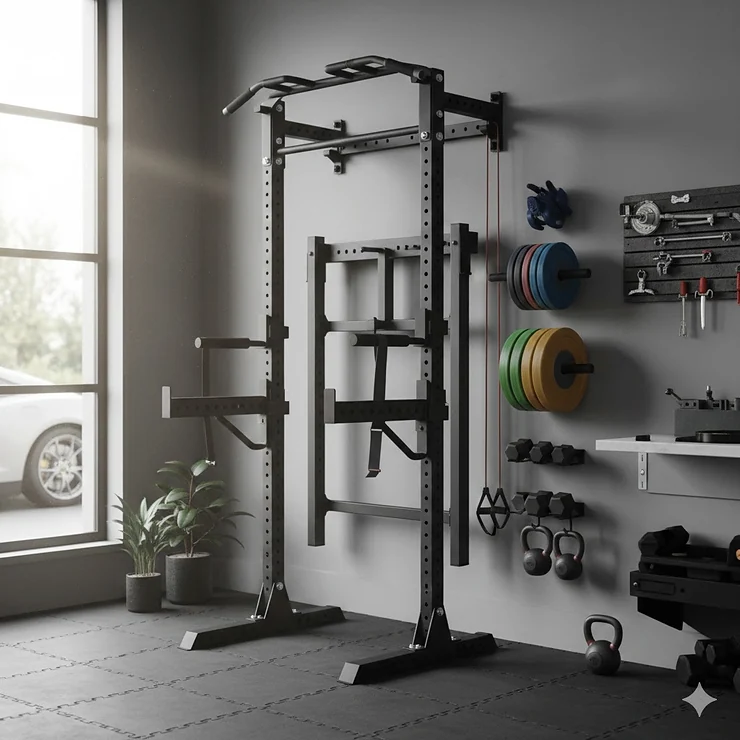
If you’ve ever walked past your cramped home gym and thought there has to be a better way—you’re absolutely right. Wall mounted fitness equipment isn’t just about saving space; it’s about reclaiming your living area while building the body you want. I’ve spent countless hours researching and testing various setups, and here’s what I’ve discovered: the right wall-mounted gear can transform even the smallest apartment into a legitimate training facility.
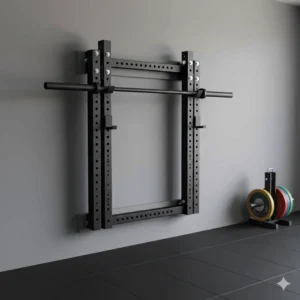
According to the CDC, getting at least 150 minutes of moderate physical activity per week significantly reduces your risk of heart disease, diabetes, and mental health issues. Wall mounted fitness equipment makes hitting these targets infinitely more convenient. You’re not fighting for floor space with bulky machines, and setup time? Pretty much zero once installed. Whether you’re targeting pull-ups, cable work, or full power rack training, these space-efficient solutions deliver commercial gym quality without the monthly membership fees or the awkward small talk.
Quick Comparison Table
| Product | Type | Weight Capacity | Price Range | Best For |
|---|---|---|---|---|
| Titan Fitness Wall-Mounted Pull-Up Bar | Pull-Up Bar | 400 lbs | $75-$100 | Budget & versatility |
| HWOOUSA 2025 Upgrade Pull-Up Bar | Pull-Up Bar | 600 lbs | $80-$110 | Heavy-duty training |
| OPTP Resistance Band Wall Anchor Set | Resistance System | 800 lbs per clip | $25-$45 | Rehabilitation & flexibility |
| Mappding Folding Squat Rack | Squat Rack | 1,100 lbs | $350-$500 | Space-saving strength |
| Torque Wall-Mounted F9 | Functional Trainer | 200 lbs (per stack) | $2,500-$3,500 | Premium cable work |
| Music Boxing Machine 2025 | Boxing Trainer | N/A (foam target) | $60-$120 | Cardio & coordination |
| Professional Adjustable Wall Anchor | Resistance Rail | 400 lbs | $100-$150 | Functional training |
💬 Just one click – help others make better buying decisions too! 😊
Top 7 Wall Mounted Fitness Equipment: Expert Analysis
1. Titan Fitness Adjustable Wall-Mounted Pull-Up Bar
The Titan Fitness Adjustable Wall-Mounted Pull-Up Bar has earned its reputation as one of the most practical pieces of wall mounted fitness equipment you can buy. With its adjustable depth feature (14″ or 22″ from wall), this bar adapts to different exercise needs and ceiling heights.
Key Specifications:
- Weight capacity: 400 lbs
- Bar diameter: 32mm
- Adjustable depths: 14″ or 22″
- Compatible with 16″ stud spacing up to 50″
Price: $74.97 (currently on sale from $99.99)
Customer feedback consistently highlights the easy installation process and rock-solid stability during kipping movements. One user mentioned using it daily for weighted pull-ups with a 45 lb vest without any wobble whatsoever.
✅ Pros:
- Two depth options for different exercises
- Heavy-duty 11-gauge steel construction
- Affordable price point
- Compatible with rings and suspension trainers
❌ Cons:
- Requires proper stud installation
- No multi-grip positions included
2. HWOOUSA 2025 Upgrade Pull-Up Bar
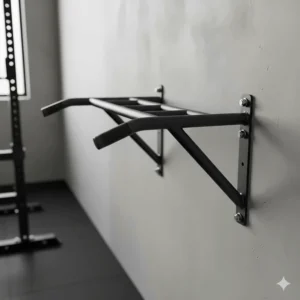
For those who need even more robust wall mounted fitness equipment, the HWOOUSA 2025 Upgrade Pull-Up Bar steps up with a massive 600 lb capacity. This beast is built from 5mm sheet steel with a professional powder coat finish that feels incredible during long training sessions.
Key Specifications:
- Weight capacity: 600 lbs
- Width: 48 inches
- Includes 2 round anchors for accessories
- Multi-grip positioning options
Price: $90-$110
Users rave about the versatility—you can attach resistance bands, TRX straps, heavy bags, and more to those round anchors. One reviewer noted they’ve been using it for gymnastics ring work with their teenage son, and it handles dynamic movements without any concerns.
✅ Pros:
- Exceptional 600 lb weight capacity
- Multiple attachment points
- Fits 16″ and 24″ stud spacing
- Versatile enough for various training styles
❌ Cons:
- Takes up 48″ of wall width
- Installation requires precision
3. OPTP Resistance Band Wall Anchor Set
When it comes to versatile, joint-friendly wall mounted fitness equipment, resistance band systems reign supreme. The OPTP Resistance Band Wall Anchor Set by Bob and Brad offers three mounting clips that each withstand 800 lbs of pull force—that’s serious engineering for something so compact.
Key Specifications:
- Three clips (lower, middle, upper positions)
- 800 lb capacity per clip
- Compatible with all resistance band types
- Minimal wall footprint
Price: $25-$45
Physical therapists love this setup because it allows for targeted rehabilitation exercises at multiple angles. Home gym enthusiasts appreciate how you can create hundreds of movement patterns with just bands and these anchors. The beauty? When you’re done, there’s nothing protruding from your wall.
✅ Pros:
- Extremely affordable
- Three height positions for angle variety
- Perfect for rehab and prehab work
- Takes almost zero space
❌ Cons:
- Requires separate purchase of resistance bands
- Limited to band resistance (no heavy weights)
4. Mappding Folding Squat Rack Wall Mounted
If you’re serious about strength training but short on space, the Mappding Folding Squat Rack represents the perfect marriage of functionality and compactness. This wall mounted fitness equipment folds up in literally 15 seconds, transforming from a full power rack to a slim 5.9″ profile against your wall.
Key Specifications:
- Weight capacity: 1,100 lbs
- Frame: 60x60mm heavy steel
- Includes J-hooks, pull-up bar, 360° landmine
- Folded dimensions: 50.7″L × 5.9″W × 86.2″H
Price: $350-$500
Customer reviews consistently mention the build quality—this isn’t some flimsy folding rack that wobbles under load. One powerlifter reported squatting 405 lbs with complete confidence. The included landmine attachment is a thoughtful touch that opens up rotational training options most competitors don’t offer.
✅ Pros:
- Incredible 1,100 lb capacity
- Space-saving folding design
- Includes multiple attachments
- Powder-coated for durability
❌ Cons:
- Requires proper wall stud mounting
- Assembly takes 30-45 minutes
- Height clearance of 86″ needed
5. Torque Wall-Mounted F9 Fold-Away Functional Trainer
The Torque Wall-Mounted F9 is where wall mounted fitness equipment enters premium territory. This dual-stack cable system folds completely flat to just 14 inches when closed, yet opens into a full-featured functional trainer that rivals any commercial gym setup.
Key Specifications:
- Dual weight stacks (200 lbs each)
- Adjustable pulley positions
- Includes multiple cable attachments
- Closes to 14″ depth
Price: $2,500-$3,500
Yes, it’s an investment—but consider what you’d spend on a gym membership over five years. Users report the smooth cable action and build quality justify the price. One owner mentioned their physical therapist was so impressed, they recommended it to other patients. The integrated storage keeps accessories organized, and the whole unit disappears when company comes over.
✅ Pros:
- Commercial-grade build quality
- Dual independent weight stacks
- Folds completely flat
- Hundreds of exercise options
❌ Cons:
- Premium pricing
- Professional installation recommended
- Requires significant wall space
6. Music Boxing Machine 2025 Upgrade
Who says wall mounted fitness equipment has to be all serious strength training? The Music Boxing Machine 2025 brings gamification to your workouts with LED lights, Bluetooth connectivity, and rhythm-based training that makes cardio actually fun.
Key Specifications:
- 11 game modes with 9 speed levels
- Bluetooth speaker integration
- High-elasticity foam targets
- Includes boxing gloves
Price: $60-$120
This one’s particularly brilliant for families—kids absolutely love the interactive element, and parents appreciate sneaking in HIIT cardio sessions. Reviews mention it’s surprisingly effective for stress relief after work. The foam construction means you can punch as hard as you want without damaging walls or your hands.
✅ Pros:
- Makes cardio engaging and fun
- Safe foam construction
- Multiple difficulty levels
- Compact wall footprint
❌ Cons:
- Not for serious boxing training
- Requires battery or power
- Limited to upper body work
7. Professional 80″ Adjustable Wall Anchor System
The Professional Adjustable Wall Anchor System represents the Swiss Army knife of wall mounted fitness equipment. This 80-inch rail with automatic safety locks lets you position resistance bands or suspension trainers at any height within seconds.
Key Specifications:
- 80″ adjustable range
- 400 lb capacity
- Automatic locking mechanism
- Galvanized steel construction
Price: $100-$150
What sets this apart is the quick-adjustment feature—pull up the red lock, slide to your desired position, release, and it’s secured. Trainers particularly appreciate this for circuit-style workouts where you’re constantly changing heights. The galvanized steel won’t rust, making it suitable even for garage gyms in humid climates.
✅ Pros:
- Fast height adjustments
- Heavy-duty construction
- Versatile training options
- Smooth locking mechanism
❌ Cons:
- Requires 80″ of vertical wall space
- Works best with resistance bands
- Installation requires drilling
Understanding Wall Mounted Fitness Equipment
Wall mounted fitness equipment refers to exercise tools and machines that attach directly to your wall studs, providing stability and functionality while keeping floor space completely clear. Unlike traditional gym equipment that dominates your living area, these systems leverage vertical space—something most home gyms completely overlook.
The WHO guidelines on physical activity emphasize that any amount of physical activity is better than none, and muscle strengthening benefits everyone. Wall-mounted systems remove one of the biggest barriers to consistent exercise: accessibility. When your equipment is always ready and takes zero setup time, you’re far more likely to actually use it.
Think of it this way: traditional home gym equipment is like having a car that you need to assemble every time you want to drive. Wall mounted fitness equipment? That’s having a Tesla already parked and ready. You just walk up and go.
Benefits of Wall Mounted Fitness Equipment
Space Efficiency That Actually Makes Sense
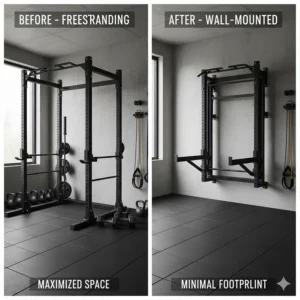
Let’s address the obvious—most apartments and homes don’t have spare rooms gathering dust. Wall mounted fitness equipment literally uses the one resource you’re not using anyway: wall space. A folding squat rack occupies less than 6 inches when stowed, yet provides everything needed for serious strength training. That’s transformative for anyone living in urban areas where square footage costs a fortune.
Financial Benefits Beyond the Price Tag
Yes, quality wall mounted fitness equipment requires an upfront investment. But compare it to annual gym memberships ($500-$1,200/year), gas money for commutes, and time wasted in traffic—suddenly, even premium systems like the Torque F9 pay for themselves within 2-3 years. Budget options like resistance band anchors break even after just two months of gym membership savings.
Workout Consistency Through Convenience
The CDC reports that regular physical activity improves mental health, cognitive function, and sleep quality—but only if you actually do it consistently. Having wall mounted fitness equipment means no excuses about weather, gym hours, or crowds. Your home gym is open 24/7, never judges your workout clothes, and never makes you wait for equipment.
Versatility in a Compact Package
Modern wall mounted fitness equipment isn’t one-dimensional. A single pull-up bar supports dozens of exercises: pull-ups (obviously), chin-ups, hanging leg raises, ring work, suspension training, resistance band attachment, and even heavy bag mounting. That versatility per square inch crushes traditional gym setups.
Types of Wall Mounted Fitness Equipment
Pull-Up Bars and Chin-Up Stations
Pull-up bars represent the foundation of bodyweight training. They range from basic straight bars ($50-$100) to multi-grip systems with neutral, wide, and narrow positions ($100-$200). Look for models with at least 400 lb capacity and multiple mounting depths to accommodate different exercises.
Resistance Band Systems and Anchor Points
These systems shine for rehabilitation, warm-ups, and metabolic conditioning. The OPTP three-clip system mentioned earlier exemplifies the category—minimal hardware, maximum exercise options. They’re particularly valuable for older adults or anyone recovering from injuries who need joint-friendly resistance.
Folding Power Racks and Squat Racks
Folding racks have evolved dramatically. Modern versions like the Mappding rack fold in seconds using gas-assist mechanisms, support 1,000+ lbs, and include accessories like j-hooks, safety arms, and landmines. They’re legitimate alternatives to free-standing racks while reclaiming 15-20 square feet of floor space.
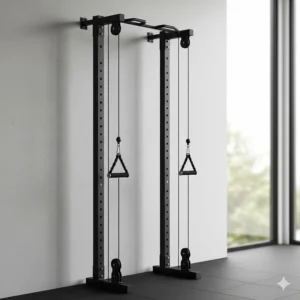
Cable Systems and Functional Trainers
Wall-mounted cable systems provide the smooth, constant tension that free weights can’t match. Premium units like the Torque F9 offer dual weight stacks for bilateral work, while budget options use weight plates and simple pulley systems. The investment scales with your needs and budget.
Specialized Equipment
Beyond the basics, wall mounted fitness equipment includes boxing trainers, dip stations, TRX mounting systems, and climbing holds. These specialized tools address specific training goals while maintaining the space-saving philosophy.
How to Choose Wall Mounted Fitness Equipment
Assess Your Space Realistically
Measure twice, buy once. You need accurate wall measurements including height, width, and most importantly—stud spacing. Standard is 16 inches, but older homes might vary. Check ceiling height for pull-up bars (you need clearance above your head) and ensure there’s adequate space in front for exercises.
Identify Your Training Goals
Are you focused on strength, conditioning, rehabilitation, or general fitness? Strength athletes need robust folding racks. Runners and cyclists might prioritize resistance band systems for injury prevention. Families could benefit from interactive equipment like boxing trainers. Your goals dictate your gear.
Budget Appropriately
Entry-level setups (pull-up bar + resistance anchors) run $100-$200. Mid-range systems (folding rack or basic cable tower) cost $300-$800. Premium solutions (Torque F9, Tonal) exceed $2,500. Remember: this replaces gym memberships, personal trainers, and potentially multiple equipment pieces.
Verify Wall Compatibility
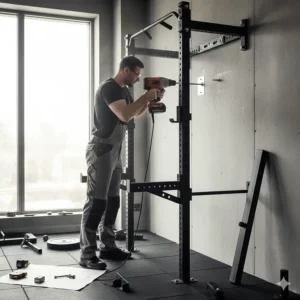
Not all walls handle heavy equipment equally. Wood studs in modern construction easily support pull-up bars and folding racks. Concrete or brick walls need different mounting hardware. Drywall alone supports nothing—you must hit studs or use specialized anchors. When in doubt, consult a contractor.
Consider Installation Requirements
Some wall mounted fitness equipment installs in 30 minutes with basic tools. Others benefit from professional installation, especially expensive functional trainers or systems requiring precise alignment. Factor installation costs into your budget planning.
Installation Tips for Wall Mounted Fitness Equipment
Find Those Studs
Use an electronic stud finder, not just the knock-and-guess method. Mark stud centers with painter’s tape. Remember: studs typically run 16 inches on center, but verify this throughout your mounting area.
Use Proper Hardware
The included lag bolts exist for a reason—they’re rated for specific loads. Don’t substitute hardware store screws “that look about the same.” For concrete walls, use high-quality concrete anchors rated for dynamic loads, not static weight.
Level Everything Meticulously
An unlevel pull-up bar creates weird stress patterns during use. A crooked squat rack feels wrong and could compromise safety. Invest in a quality 4-foot level and take your time during installation.
Test Incrementally
Don’t immediately jump to maximum weight capacity. Test pull-up bars with bodyweight first. Load folding racks gradually. This lets you verify installation quality before committing to heavy training.
Maintain Your Investment
Check mounting bolts every few months for tightness. Inspect cables, pulleys, and moving parts regularly. Apply lubricant to folding mechanisms annually. Quality wall mounted fitness equipment lasts decades with minimal maintenance.
Space-Saving Workout Routines
The Minimalist Strength Routine
Using just a folding rack and pull-up bar:
- Squats: 4 sets of 8-12 reps
- Pull-ups: 4 sets of max reps
- Bench press (with adjustable bench): 4 sets of 8-12 reps
- Overhead press: 3 sets of 8-12 reps
This routine hits every major muscle group in 45 minutes, three times per week. It’s simple, effective, and requires minimal equipment.
Resistance Band Full-Body Circuit
With wall anchors and bands:
- Band squats: 15 reps
- Band chest press: 15 reps
- Band rows: 15 reps
- Band shoulder press: 15 reps
- Band tricep extensions: 15 reps
- Band bicep curls: 15 reps
Complete 3-4 circuits with 60 seconds rest between. This delivers a muscle-building and metabolic boost in just 20-25 minutes.
Cable Conditioning Session
For functional trainer owners:
- Cable chops: 12 each side
- Cable rows: 15 reps
- Cable chest fly: 12 reps
- Cable lat pulldown: 12 reps
- Cable bicep curls: 15 reps
- Cable tricep pushdown: 15 reps
The constant tension from cables maximizes time under load while protecting joints.
Maintenance and Safety Guidelines
Regular Inspection Schedule
Every month, inspect all connection points for looseness or wear. Check cables for fraying, pulleys for smooth operation, and bolts for tightness. This 10-minute routine prevents equipment failure and extends lifespan.
Load Management
Respect weight capacities—they include safety margins, but pushing limits repeatedly degrades components faster. If equipment is rated for 500 lbs, don’t regularly train at 480 lbs. Leave headroom.
Proper Form Matters More
Wall mounted fitness equipment is only as safe as your technique. Poor form on a pull-up causes the same injuries whether you’re using a $50 bar or a $500 one. Prioritize technique over ego lifting.
Teach Household Members
If others use your equipment, teach them proper operation. Show them how folding mechanisms work, what weight capacities mean, and basic safety protocols. A quick tutorial prevents misuse.
Cost Analysis: Wall Mounted vs Traditional Gym Equipment
Initial Investment Comparison
A functional home gym with traditional equipment (power rack, bench, barbell, plates, dumbbells) costs $1,500-$3,000 and occupies 100+ square feet. An equivalent wall-mounted setup (folding rack, pull-up bar, resistance system) costs $500-$1,500 and uses maybe 20 square feet.
Long-Term Value Proposition
Traditional equipment depreciates and eventually gets sold for half the purchase price. Quality wall mounted fitness equipment installed properly lasts decades and often increases home value—yes, potential buyers appreciate built-in fitness solutions.
Hidden Costs of Gym Memberships
Beyond the $50-$100 monthly fee, consider transportation costs, time value of commuting, and opportunity cost of that time. If your gym commute is 30 minutes round trip three times weekly, that’s 78 hours annually spent in transit. What’s your time worth?
Common Mistakes to Avoid
Inadequate Wall Support
The biggest mistake? Assuming all walls can handle heavy loads. Confirm stud locations, use proper hardware, and when in doubt—hire a professional. A failed installation damages walls and could cause injury.
Buying Based on Price Alone
Cheapest isn’t always best with wall mounted fitness equipment. A $40 pull-up bar that fails under load costs way more than a $100 quality option when you factor in wall repairs and potential medical bills.
Ignoring Ceiling Height
Pull-up bars need clearance above your head. Measure your ceiling height, subtract your height, and ensure at least 6-12 inches remain. Nothing ruins workouts like banging your head on every rep.
Overcrowding Equipment
Just because something mounts to walls doesn’t mean you should install everything everywhere. Leave space to actually exercise. A cluttered wall gym is as frustrating as a cluttered traditional one.
Skipping the Manual
Yes, I know—nobody reads instructions. But installation manuals for wall mounted fitness equipment contain crucial load ratings, spacing requirements, and safety information. Spend 10 minutes reading before spending hours installing incorrectly.
Integration with Smart Fitness Technology
Connected Equipment Options
Modern wall mounted fitness equipment increasingly includes smart features. The Music Boxing Machine connects via Bluetooth for rhythm training. Premium systems like Tonal incorporate AI-powered resistance and form tracking. This integration makes solo workouts more engaging.
Fitness App Compatibility
Many resistance band and cable systems work seamlessly with fitness apps that guide workouts. Apps like Caliber, Fitbod, and Strong log exercises, suggest progressions, and track long-term progress. Your wall-mounted gym becomes smarter without expensive dedicated equipment.
Virtual Training Possibilities
Wall mounted fitness equipment enables home-based virtual personal training. Platforms like Future pair you with real trainers who design custom programs for your specific equipment. It’s personalized coaching without the commute or premium gym pricing.
Best Practices for Small Spaces
Vertical Space Optimization
Most people think horizontally when planning gyms. Think vertical instead. Stagger equipment at different heights—pull-up bar near ceiling, resistance anchors at chest height, lower anchors near floor. You’ve just created a three-dimensional training space.
Multi-Functional Equipment Selection
Prioritize wall mounted fitness equipment that serves multiple purposes. A pull-up bar with round anchors supports bar work, ring work, TRX training, resistance bands, and even heavy bags. That’s five equipment categories from one installation.
Folding and Retractable Options
Folding squat racks, retractable cable systems, and removable accessories maximize flexibility. Your living room transforms from workout space to entertaining area in minutes. This versatility is impossible with traditional equipment.
Strategic Equipment Placement
Install frequently-used equipment at convenient heights and locations. Your pull-up bar shouldn’t require a ladder to reach. Resistance band anchors work best where you naturally want to train. Thoughtful placement increases actual usage.
Environmental and Sustainability Considerations
Durability Reduces Waste
Quality wall mounted fitness equipment lasts 15-20+ years with minimal maintenance. Compare this to cheap home gym equipment that fails within 2-3 years and ends up in landfills. The initial investment pays environmental dividends.
Local Manufacturing
Many premium brands like PRx Performance and Titan Fitness manufacture domestically, reducing shipping emissions. Supporting these companies decreases your fitness equipment’s carbon footprint.
Material Selection
Look for powder-coated steel (recyclable and durable), natural rubber grips (biodegradable), and minimal plastic components. These choices matter when equipment eventually reaches end-of-life.
Energy-Free Operation
Unlike treadmills and exercise bikes that require electricity, most wall mounted fitness equipment operates entirely mechanical. Your workouts stay carbon-neutral while you build strength.
FAQ
❓ How much weight can wall mounted fitness equipment safely hold?
❓ Can I install wall mounted fitness equipment in an apartment?
❓ What tools do I need to install wall mounted fitness equipment?
❓ How much space do I actually need for effective workouts with wall mounted fitness equipment?
❓ Is wall mounted fitness equipment suitable for beginners or just advanced athletes?
Conclusion: Building Your Dream Wall-Mounted Home Gym
Wall mounted fitness equipment represents more than just a space-saving solution—it’s a complete reimagining of how we integrate fitness into daily life. Whether you’re working with a tiny apartment or a spacious garage, these systems deliver commercial gym functionality without sacrificing living space or breaking the bank.
Start with the fundamentals: a quality pull-up bar and resistance band anchor system gives you hundreds of exercises for under $150. From there, add complexity based on your goals and budget. Folding racks enable serious strength training. Cable systems provide smooth resistance for muscle building and rehabilitation. Interactive equipment makes workouts engaging for the whole family.
The beauty of this approach? You build your gym incrementally, spreading costs over time while discovering what training styles you actually enjoy. No need to buy everything at once or commit to expensive systems before knowing if you’ll use them consistently.
Remember that the CDC recommends at least 150 minutes of moderate physical activity weekly for significant health benefits. Wall mounted fitness equipment removes every excuse preventing you from hitting that target. Your gym is always open, never crowded, and requires zero commute time. That convenience matters more than any specific piece of equipment.
Take accurate measurements, verify wall structure, invest in quality hardware, and don’t rush installation. Done correctly, your wall-mounted home gym serves you for decades while increasing your home’s value and your personal health. The question isn’t whether wall mounted fitness equipment is worth it—it’s why you waited so long to install it.
✨ Don’t Miss These Exclusive Deals!
🔍 Take your fitness journey to the next level with these carefully selected products. Click on any highlighted item to check current pricing and availability. These tools will help you create authentic training results your family will admire!
Recommended for You
- 7 Best Plate Loaded Fitness Equipment That Transform Your Gym (2025)
- 7 Best Fitness Equipment Rack for Home Gym 2025 (Expert Picks)
- 7 Best Fitness Equipment Storage Solutions (2025 Guide)
Disclaimer: This article contains affiliate links. If you purchase products through these links, we may earn a small commission at no additional cost to you.
✨ Found this helpful? Share it with your friends! 💬🤗
