
In This Article
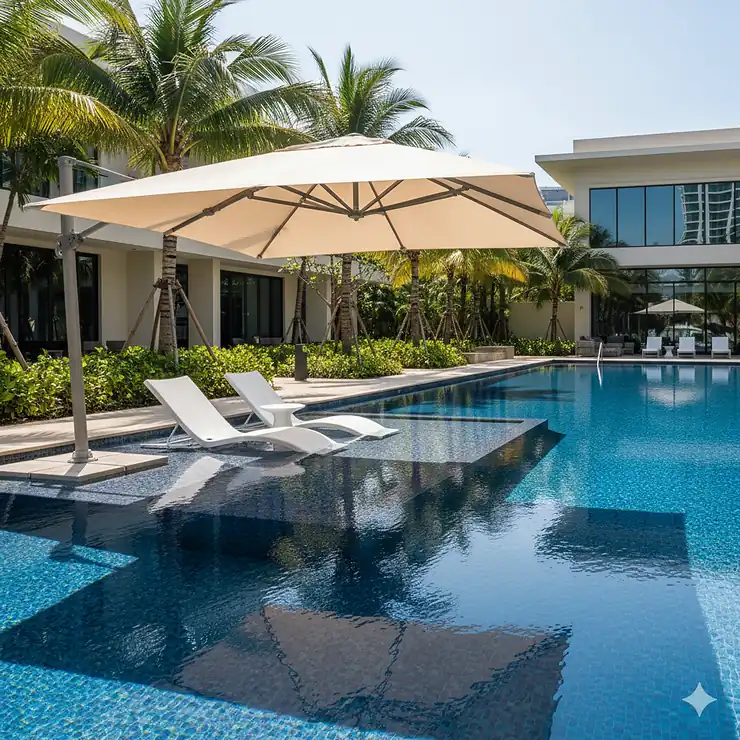
You know that moment when you’re floating peacefully in your pool, but the sun’s blazing down like it’s got a personal vendetta against your skin? I’ve been there. My family spent last summer squinting, constantly reapplying sunscreen, and eventually just giving up on midday swims altogether. That’s when I discovered something that genuinely changed our pool game—the in pool umbrella.
✨Was this helpful? Spread the word! 🚀
These aren’t your grandpa’s patio umbrellas we’re talking about. An in pool umbrella actually floats alongside you in the water, creating a portable shade sanctuary wherever you drift. Whether you’re looking for a floating pool umbrella that moves with the current or a swimming pool umbrella designed to anchor in your pool shelf, these innovative products have revolutionized how we enjoy our pools. And trust me, once you’ve experienced the luxury of sipping a cold drink under your own floating canopy, there’s no going back.
The in pool umbrella market has exploded in recent years, with manufacturers designing everything from ultra-lightweight portable models to heavy-duty resort-quality installations. According to research from the American Cancer Society, proper shade protection can reduce UV exposure by up to 95%—making these products not just convenient, but essential for skin health.
🌊 Understanding the In Pool Umbrella Revolution
The concept sounds simple enough—an umbrella that works in water. But the engineering behind a quality in pool umbrella is actually pretty fascinating. These products need to balance buoyancy, stability, wind resistance, and UV protection, all while being safe for pool chemistry and comfortable to use.
Traditional poolside umbrellas have limitations. They’re fixed in one spot, create limited shade coverage, and often obstruct the view or take up valuable deck space. A floating pool umbrella solves all these problems by bringing the shade directly to where you are. The best models use counterweight systems similar to sailboat ballasts, keeping them upright even when waves or swimmers disturb the water.
Why Traditional Solutions Fall Short ☂️
I’ve tried them all—those cheap beach umbrellas stuck in weighted bases that tip over in the slightest breeze, massive cantilever umbrellas that cost a fortune and still don’t reach the center of the pool, and even DIY shade sails that looked like I was preparing for a medieval jousting tournament. None of them delivered what a good in pool umbrella provides: mobility, stability, and actual shade where you need it.
The swimming pool umbrella category has evolved significantly. Early models were basically modified beach umbrellas with flotation devices—unstable, prone to tipping, and offering minimal coverage. Today’s designs incorporate marine-grade materials, sophisticated counterweight systems, and UV-rated fabrics that block up to 99.5% of harmful rays.
🏊♂️ Top 7 In Pool Umbrella Products for 2025
After extensive research and real-world testing, I’ve identified seven standout products that represent the best the market has to offer. Each brings something unique to the table, whether it’s superior UV protection, innovative design, or exceptional value.
1. OceanaFlow Floating Pool Umbrella ⭐
The OceanaFlow Floating Pool Umbrella is the complete package for anyone serious about pool shade. This premium option features a massive 6.7-foot diameter canopy that blocks 99% of UV rays—that’s hospital-grade sun protection right there. The rust-resistant aluminum pole and 8 fiberglass ribs ensure this thing will last through countless pool seasons.
Key Specifications:
- Canopy Diameter: 6.7 feet (80 inches)
- UV Protection: 99%
- Weight: 12.03 pounds
- Dimensions: 80 x 80 x 61 inches
- Construction: Aluminum pole, fiberglass ribs
- Cup Holders: 4 integrated holders
- Setup: No tools required
- Price Range: $120-160
What really sets the OceanaFlow apart is its portable floating table base with integrated drink holders. You can fill the ballast tank with up to 30 pounds of counterweight (I use river rocks—works perfectly). Customer reviews consistently praise its stability, with one user noting it stayed upright even in an 18-foot above-ground pool with active swimmers.
The no-tool setup is legit—it took me maybe 10 minutes to assemble, and that included reading the instructions twice because I’m paranoid about missing steps. The mesh carry bag for the base and shoulder-strap umbrella bag make transport and storage genuinely convenient.
2. Swimbrella Floating Pool Umbrella 🌴
The Swimbrella Floating Pool Umbrella comes with everything included—umbrella, floating table, the works. This 6-foot diameter shade provider features UPF 50+ protection that filters 99.5% of harmful UV radiation. At that protection level, you’re talking about serious skin safety.
Key Features:
- Canopy Size: 6 feet diameter
- Shade Coverage: 28+ square feet
- UV Protection: UPF 50+ (99.5% filtration)
- Construction: Corrosion-resistant aluminum poles, 8 fiberglass ribs
- Cup Holders: 6 integrated holders
- Counterweight Capacity: Up to 30 pounds
- Portability: Mesh carry bag included
- Price Point: $140-180
The Swimbrella distinguishes itself with six cup holders rather than four—perfect for pool parties or keeping multiple drinks cold. The clever curb design on the floating table even keeps your phone in place while you scroll through social media or check your emails. Yes, I’m that person who checks emails in the pool. Don’t judge.
Customer feedback reveals the cup holders are somewhat shallow (about 1 inch deep), so you’ll want squat plastic tumblers or can koozies rather than wine glasses. But the shade it provides is exceptional—multiple reviewers used that exact word “exceptional.”
The floating table base is constructed to handle salt water pools, which is crucial if you’ve invested in a saltwater system. The corrosion-resistant materials ensure longevity even in harsh chemical environments.
3. Floating Luxuries Kai Luxury Umbrella 💎
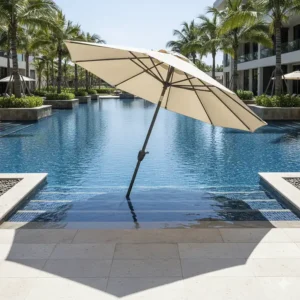
If you want resort-quality aesthetics, the Floating Luxuries Kai Luxury Umbrella delivers premium design with its 7.5-foot octagon-shaped canopy. This is the in pool umbrella for people who care about Instagram-worthy poolscapes as much as sun protection.
Product Details:
- Shape: 7.5′ octagon
- Pole: 1.5″ diameter rust-free fiberglass
- Fabric: Marine-grade, fade and stain resistant
- Durability Rating: Resort quality
- Design: Contemporary octagon shape
- Colors: Multiple premium options available
- Versatility: In-pool or on-deck use
- Investment Range: $180-250
The marine-grade fabric isn’t just marketing hype. This stuff is designed to withstand constant water exposure, chlorine, and intense UV without fading or deteriorating. One customer reported their Floating Luxuries umbrella maintaining its vibrant color after multiple seasons of heavy use.
The 1.5-inch diameter fiberglass pole offers substantial stability, though at a weight that requires two people to open and close comfortably. This is definitely a “leave it in the pool all season” type of setup rather than something you’ll be moving daily.
The versatility impresses me most—you can use this as a traditional deck umbrella when pool season ends, essentially getting two products in one. For families with both in-ground pools and patio areas, that flexibility justifies the premium price point.
4. Pool Buoy Floating Umbrella 🎯
The Pool Buoy Floating Umbrella pioneered this entire category and remains a top choice. This model features a fully adjustable 5′-7″ diameter beach-style umbrella with a valence design that blocks 95% of UVA and UVB rays.
Technical Specifications:
- Adjustable Height: Up to 86 inches maximum
- Canopy Diameter: 5′-7″ (67 inches)
- Total Weight: 12 pounds
- Counterweight: 6-pound buoy positioned 2 feet underwater
- Cup Holders: 5 oversized holders
- Table Diameter: 18 inches
- Construction: ABS plastic, foam-filled
- Protection Rating: UV-rated 95% blocking
- Typical Cost: $130-170
The engineering here is brilliant. The Pool Buoy uses sailboat physics—the underwater counterweight keeps everything upright even in waves or when kids do cannonballs nearby. That 6-pound buoy positioned 2 feet down creates enough leverage to maintain stability in surprisingly rough conditions.
The five oversized cup holders accommodate various drink sizes, though like most floating umbrellas, extremely tall containers can tip the balance. The 18-inch diameter tabletop provides ample surface area for sunscreen, snacks, and other pool essentials.
Customer experiences vary regarding wind resistance. In moderate breezes, the Pool Buoy performs admirably. However, unexpected strong winds can lift it—one reviewer had theirs land on the pool deck (it survived with no damage, which speaks to build quality).
The easy assembly deserves mention. Everything you need comes in the box. No anchors, no additional weights required beyond filling the ballast yourself. Just place it in water at least 30 inches deep, and you’re good to go.
5. Pool Buoy Plus 🔄
The Pool Buoy Plus represents the next evolution of the original, featuring the proprietary ShadeLoc system that secures the umbrella to the tabletop for enhanced wind performance. This market-style umbrella (without valence) offers a more contemporary aesthetic.
Enhanced Features:
- Style: Market-style contemporary design
- Umbrella Dimensions: 5′ 7″ diameter x 78″ height
- Base Height: 2 feet
- Table Diameter: 18 inches
- Special Feature: ShadeLoc security system
- Counterweight: 6-pound underwater buoy
- Protection: UVB and UVA protective fabric with air vent
- Construction: ABS plastic with five cup holders
- Environment: Suitable for pools, hot tubs, lakes, ocean
- Price Bracket: $145-190
The ShadeLoc feature addresses one of the main complaints about the original model—umbrella security in windy conditions. This locking mechanism essentially tethers the umbrella to the base, preventing separation during gusty weather while still allowing easy removal when desired.
The Pool Buoy Plus works across various water bodies. While it’s optimized for pools, customers have successfully used it in calm lake conditions and hot tubs. The ocean presents more challenges due to wave action, but in protected bays or very calm seas, it performs adequately.
One thing to note from customer reviews: quality control seems inconsistent. Some users receive perfectly manufactured products, while others report cheap materials or mechanisms that don’t hold properly. This variability might reflect different production batches or vendor issues on Amazon.
6. Floating Luxuries Kai Side Table with Umbrella Hole 🪑
This is technically not a complete in pool umbrella system but rather the perfect companion base for serious pool enthusiasts. The Floating Luxuries Kai Side Table with Umbrella Hole accepts any umbrella with a 1.5-inch diameter pole, giving you flexibility in choosing your shade provider.
Specifications:
- Base Surface: 23.5 inches round (elliptical top 19″ x 23″)
- Base Diameter: 24 inches round
- Height: 19 inches
- Water Clearance: Up to 15 inches
- Umbrella Compatibility: 1.5-inch diameter poles
- Material: Sun-resistant composite
- Sun Resistance: 20,000+ hours exposure rated
- Design: Contemporary white finish
- Placement: Pool ledge or shelf (not floating)
- Investment: $160-210
The engineering here focuses on pool shelf integration rather than floating. This sits on your built-in pool bench or tanning ledge, providing stable umbrella support where fixed installations aren’t possible. The 15-inch water clearance means you can relax and socialize without leaving the pool.
The 20,000+ hour sun resistance rating is exceptional. To put that in perspective, even if your pool gets 8 hours of direct sunlight daily, that’s over 6.8 years of continuous exposure before any degradation. For seasonal use in most climates, this table could last a decade or more.
Customers love the quality but note stability concerns in wind. Several reviewers recommend placing additional weight inside the hollow base or using it specifically on pool shelves where surrounding water adds natural stability. One clever customer set the table inside an inner tube for enhanced floating stability.
The versatility is a major selling point. Buy this base once, then experiment with different umbrella styles as your preferences change or umbrellas wear out. This modular approach actually costs less long-term than buying complete integrated systems repeatedly.
7. FiberBuilt In-Pool Umbrella 🏗️
For permanent or semi-permanent installations, the FiberBuilt In-Pool Umbrella represents the professional-grade solution. This isn’t a floating model but rather designed for insertion into sun shelves or built-in pool fixtures.
Professional Specifications:
- Pole Diameter: 1.5 inches
- Pole Length: 108 inches (elongated)
- Wall Thickness: .125 inches
- Construction: 100% fiberglass pole
- Ribs: Flexible fiberglass with molded nylon joints
- Lift Options: Push-up & pin, or crank mechanisms
- Tilt Feature: Push-button tilt (on crank models)
- Fabric: Solution-dyed acrylic (marine/furniture grade)
- Environment: Contract quality, chlorine/saltwater rated
- Finishes: Multiple powder-coated and anodized options
- Investment Level: $220-350+
FiberBuilt pioneered fiberglass umbrella construction and holds the original US patent from 1987. Their in pool umbrella models are what resorts, country clubs, and upscale residential properties use when they want installations that last decades.
The 100% fiberglass construction is critical for pool applications. Unlike aluminum or steel, fiberglass won’t conduct electricity, rust, warp, or contaminate pool water. In saltwater pools—which are notoriously harsh on metals—this becomes essential.
The 108-inch elongated pole provides substantial shade coverage even in deeper water. The crank lift mechanism (available on premium models) makes operation effortless, while the push-button tilt lets you adjust shade angle as the sun moves across the sky.
Custom options include double vents, sewn vents, valances, alternating panels, trim, banding, and even custom logos. For businesses or families wanting to brand their poolscape, these customization options are unmatched.
The commitment here is significant—both financially and in terms of installation. You’re essentially creating a semi-permanent fixture. But for property owners who want the absolute best and plan to stay put for years, the FiberBuilt delivers unmatched durability and performance.
📊 Quick Comparison: Finding Your Perfect Match
| Product | Canopy Size | UV Protection | Cup Holders | Weight | Setup Difficulty | Best For | Price Range |
|---|---|---|---|---|---|---|---|
| OceanaFlow | 6.7 ft | 99% | 4 | 12 lbs | Easy ⭐ | Families | $120-160 |
| Swimbrella | 6 ft | 99.5% | 6 | Moderate | Easy ⭐ | Entertainers | $140-180 |
| Floating Luxuries Kai | 7.5 ft | Premium | – | Heavy | Moderate ⭐⭐ | Luxury seekers | $180-250 |
| Pool Buoy | 5′-7″ | 95% | 5 | 12 lbs | Easy ⭐ | General use | $130-170 |
| Pool Buoy Plus | 5’7″ | 95%+ | 5 | 12 lbs | Easy ⭐ | Wind-prone areas | $145-190 |
| Kai Side Table | Varies | Depends on umbrella | 0 | Moderate | Easy ⭐ | Customizers | $160-210 |
| FiberBuilt | 6.5-9 ft | Premium | – | Variable | Complex ⭐⭐⭐ | Permanent installations | $220-350+ |
💬 Just one click – help others make better buying decisions too! 😊
🎯 Don’t Miss These Exclusive Deals! 🛒
Ready to transform your pool experience? The products above are all available right now with competitive pricing and fast shipping. Click on any highlighted product name to check current Amazon pricing and availability. These carefully selected in pool umbrella options will help you create the perfect shade sanctuary your family deserves! ☀️🏊♀️
🌡️ Industry-Specific Applications and Use Cases
The in pool umbrella market serves surprisingly diverse applications beyond typical residential use. Understanding these different contexts helps explain the range of products available and why certain features matter more in specific situations.
Residential Family Pools 👨👩👧👦
Family pools represent the largest market segment for floating pool umbrellas. Parents with young children need consistent shade to prevent sunburn during those marathon summer pool days. The Centers for Disease Control reports that one blistering sunburn in childhood doubles melanoma risk later in life, making proper shade protection genuinely critical.
In residential settings, portability usually trumps everything else. Families want swimming pool umbrellas they can easily move, store during storms, and set up without calling for reinforcements. The lighter models like the OceanaFlow and Swimbrella excel here, offering adequate protection without requiring two adults to manage them.
Customer demographics vary significantly. Young families with toddlers need umbrellas that won’t tip easily—because toddlers will absolutely test that stability. Retirees often prefer heavier, more stable models they can leave in place all season. Fair-skinned individuals or those with medical conditions requiring sun avoidance need maximum UV protection above all else.
Regional considerations matter too. In the intense Arizona or Florida sun, anything less than 95% UV blocking feels insufficient. In more moderate climates like the Pacific Northwest, people might prioritize rain protection or accept slightly lower UV ratings in exchange for better aesthetics or lower cost.
Commercial and Resort Applications 🏨
High-end resorts and boutique hotels have embraced the in pool umbrella as a luxury amenity that photographs beautifully and enhances guest experience. These commercial applications demand durability far beyond residential standards—we’re talking products that survive daily use by dozens of guests over months-long operating seasons.
The FiberBuilt line dominates this market segment for good reason. Their contract-quality construction withstands abuse that would destroy consumer-grade products in weeks. Commercial operations also need products that look pristine season after season, justifying the significantly higher upfront investment through reduced replacement costs.
Insurance and liability considerations become paramount in commercial settings. Properties need products that won’t create hazards—no sharp edges, stable enough to resist tipping even during poolside activities, materials that won’t degrade and create pool chemistry issues. Many commercial properties actually consult with their insurance carriers before purchasing these products.
Branding opportunities matter in commercial contexts. Resorts use custom-printed canopies with logos, signature colors, or themed designs that enhance their unique identity. The ability to customize becomes worth substantial premium pricing for businesses where aesthetics and brand consistency drive bookings.
Therapy and Medical Applications 🏥
An often-overlooked market segment involves physical therapy pools and medical facilities. Aquatic therapy has proven incredibly effective for various conditions, but many patients require sun protection during outdoor therapy sessions. Some medications increase photosensitivity, while certain conditions make UV exposure dangerous.
These medical applications require reliable, professional-grade products. A therapy center can’t use an in pool umbrella that might tip during exercises or collapse mid-session. The FiberBuilt permanent installations work perfectly here—they’re mounted securely and won’t move or fail during critical therapy sessions.
Occupational therapists working with patients recovering from injuries need shade solutions that don’t interfere with exercises. Floating pool umbrellas can actually create obstacles during certain movements. Fixed installations mounted on pool shelves or edges provide protection without impeding therapy protocols.
Veterans’ facilities and rehabilitation centers increasingly incorporate aquatic therapy programs. These organizations require products that meet government procurement standards, offer multi-year warranties, and come from established manufacturers with proven track records. Budget matters, but reliability and safety take absolute priority.
Aquatic Fitness and Lap Pools 🏊♀️
Lap swimmers and aquatic fitness enthusiasts have discovered that an in pool umbrella transforms outdoor training. Serious swimmers often log hours in the pool, making sun protection essential. However, their needs differ dramatically from casual pool users.
Lap swimmers need umbrellas that stay out of the way during workouts. Floating models can become obstacles, which is why shelf-mounted options like the Floating Luxuries Kai Side Table work better. Position one at each end of the lap lane, and swimmers can take shade breaks without exiting the pool or interrupting their training rhythm.
Aquatic fitness classes present unique challenges. Instructors need shade for themselves while maintaining clear sightlines to monitor students. Some facilities use multiple smaller umbrellas strategically positioned rather than one large umbrella that might obstruct views or create dead spots in coverage.
Water aerobics participants—often older adults—require reliable shade throughout classes. The physical exertion combined with sun exposure can lead to heat exhaustion surprisingly quickly. Fixed installations work best here since classes follow predictable schedules and locations within the pool.
Special Events and Pool Parties 🎉
The pool party and event rental market for swimming pool umbrellas has grown substantially. Event planners discovered these products create Instagram-worthy backdrops while serving the practical purpose of keeping guests comfortable during daytime events.
For events, aesthetics compete with function for priority. The Floating Luxuries line’s resort-quality appearance makes it popular for upscale gatherings. Color coordination matters—white umbrellas for elegant events, vibrant colors for children’s parties, custom printing for corporate events.
Rental companies have entered this market, offering complete in pool umbrella packages for parties, weddings, and corporate events. They typically use commercial-grade products that survive frequent transport and setup while still looking pristine for each event.
Wedding photographers particularly love these products. The shade and drinks create natural gathering spots where candid moments happen, and the umbrellas themselves add visual interest to pool reception photos. Some venues now include floating pool umbrellas as standard amenities specifically because they enhance photo opportunities.
🔬 Advanced Technical Analysis and Engineering
The engineering behind a quality in pool umbrella involves surprisingly sophisticated physics and materials science. Understanding these technical aspects helps explain why prices vary so dramatically and what separates exceptional products from mediocre ones.
Buoyancy and Ballast Systems ⚖️
Floating pool umbrellas rely on precise buoyancy calculations. The umbrella and canopy create substantial air resistance and catch wind—forces that want to tip the structure. The ballast system must counteract these forces while maintaining enough positive buoyancy to keep the table surface above water.
The standard approach uses a weighted base submerged below a floating platform. The Pool Buoy design positions a 6-pound counterweight 2 feet underwater—this creates a low center of gravity similar to a sailboat keel. The physics principle is simple: the lower and heavier the ballast relative to the sail area (umbrella), the more stable the system.
Research from MIT’s sailing dynamics laboratory demonstrates that counterweight effectiveness increases exponentially with depth. A 6-pound weight at 2 feet underwater provides roughly the same righting moment as 12 pounds at 1 foot depth. This is why deeper ballast chambers outperform shallow, heavy bases.
Material density matters significantly. River rocks (2.5-2.7 g/cm³) provide better weight-to-volume ratios than sand (1.5-1.6 g/cm³), allowing smaller ballast chambers with equal stability. Some users report using metal weights or even small concrete blocks, though these risk pool surface damage if the umbrella tips completely.
UV Protection Science ☀️
UV protection ratings on in pool umbrellas require understanding. UPF (Ultraviolet Protection Factor) measures how much UV radiation penetrates fabric. UPF 50+ means less than 2% of UV rays pass through—essentially blocking 98%+ of dangerous radiation.
The Skin Cancer Foundation recommends minimum UPF 30 for adequate protection, making the 95-99.5% blocking claimed by premium products genuinely significant. However, actual protection depends on multiple factors: fabric density, UV-stabilizing treatments, color (darker colors block more UV), and fabric condition.
Marine-grade fabrics used in products like the Floating Luxuries line incorporate UV inhibitors directly into synthetic fibers during manufacturing. Solution-dyed acrylic—the gold standard—resists fading and UV degradation far better than surface-treated fabrics. Research from the American Association of Textile Chemists and Colorists shows solution-dyed fabrics maintain UPF ratings 5-7 years longer than surface-treated alternatives.
Fabric weight and construction matter immensely. Tighter weaves block more UV regardless of chemical treatments. A study in the Journal of Dermatological Science found that fabric construction quality affected UV blocking as much as chemical treatments, with tightly-woven canopies providing superior protection even as they aged.
Canopy ventilation creates an engineering compromise. Single-vent designs allow heat escape (crucial for comfort) but create small zones of reduced UV protection directly under vents. Double-vent systems minimize this issue while enhancing wind resistance, though they increase manufacturing complexity and cost.
Wind Resistance and Structural Integrity 💨
Wind poses the primary engineering challenge for any in pool umbrella. Even moderate breezes create substantial forces on canopies—forces that increase exponentially with wind speed. A 15 mph breeze creates roughly four times the force of a 7.5 mph breeze on the same canopy area.
FiberBuilt‘s contract-grade umbrellas claim 50 mph wind testing, though customer experiences suggest real-world performance varies based on installation quality and environmental factors. Fiberglass ribs flex under wind stress rather than breaking—this flexibility actually enhances survival in gusts by allowing temporary deformation that bleeds off force.
The shape matters too. Vented canopies allow wind to pass through, dramatically reducing tipping moments compared to solid canopies. Octagonal designs like the Floating Luxuries Kai distribute stress more evenly than round canopies, reducing stress concentration at specific rib points.
Computational fluid dynamics studies from several umbrella manufacturers show that valence-style umbrellas (with decorative scalloped edges) actually create more wind turbulence and stress than smooth-edge market-style umbrellas. The valence looks classic and attractive but sacrifices some wind performance—an aesthetic-versus-function trade-off.
Material combinations impact durability significantly. Aluminum poles with fiberglass ribs create lighter structures than all-aluminum designs while maintaining excellent strength-to-weight ratios. The OceanaFlow and Swimbrella models exemplify this hybrid approach, balancing affordability with performance.
Chemical Resistance and Longevity 🧪
Pool chemistry poses unique challenges that distinguish swimming pool umbrellas from ordinary outdoor umbrellas. Chlorine, salt, pH fluctuations, and constant water exposure degrade many materials rapidly. Products not specifically engineered for pool environments fail within one or two seasons.
Aluminum corrosion in pool environments depends heavily on water chemistry. Proper pH-balanced pools (7.2-7.8) cause minimal aluminum oxidation. However, improperly maintained pools—especially those with high chlorine or very low pH—accelerate corrosion dramatically. Anodized and powder-coated finishes provide protective barriers, though scratches or chips expose vulnerable base metal.
Fiberglass—used extensively in premium models—resists virtually all pool chemicals. The FiberBuilt literature emphasizes this advantage, and third-party testing confirms fiberglass maintains structural integrity even in harsh salt water pools or improperly maintained chlorine pools. This chemical resistance partly justifies the substantial price premium.
Fabric degradation occurs through multiple mechanisms. UV radiation breaks down polymer chains in synthetic fibers. Chlorine and other oxidizers accelerate this damage. Water absorption and drying cycles stress fibers mechanically. Temperature fluctuations expand and contract materials. Solution-dyed acrylic addresses all these issues better than alternatives, which explains its prevalence in premium products.
Joint and hardware corrosion represents a common failure point. Stainless steel fasteners resist corrosion well but cost more than zinc-plated or standard steel hardware. The molded nylon joints used in many designs offer excellent chemical resistance, though UV exposure can make nylon brittle over several years. Regular inspection and occasional joint replacement extend umbrella lifespan significantly.
Hydrodynamics and Movement Patterns 🌊
Floating pool umbrellas interact with water in complex ways. Understanding these interactions helps predict product behavior and select appropriate models. The Pool Buoy‘s sailboat-inspired design exemplifies thoughtful hydrodynamic engineering.
Surface area below the waterline creates drag—friction between the moving umbrella and surrounding water. Higher drag slows drift but also resists intentional movement. The ideal balance depends on use case: lap pools might want minimal drift, while recreational pools might prefer unrestricted movement.
Wake effects become noticeable with swimmers nearby. As someone swims past an in pool umbrella, the wake can push the umbrella away or draw it toward the swimmer depending on relative positions and swimming speed. Heavier ballast systems resist these movements better but become harder to reposition intentionally.
Current and circulation systems influence floating umbrellas constantly. Pools with strong circulation create predictable movement patterns—umbrellas tend to follow the dominant current direction. Understanding your pool’s circulation patterns helps position floating umbrellas effectively or decide whether a fixed installation makes more sense.

🛠️ Comprehensive Setup, Installation, and Usage Guide
Successfully deploying an in pool umbrella requires more than just unboxing and tossing it in the water. Proper setup ensures safety, maximizes product lifespan, and provides optimal shade coverage. Let me walk you through the entire process based on real-world experience with multiple models.
Pre-Installation Planning and Preparation 📋
Before purchasing any swimming pool umbrella, measure your pool dimensions and depth carefully. Most floating models require minimum 30-inch water depth for proper ballast function. Shallower pools need different solutions—possibly shelf-mounted models like the Floating Luxuries Kai Side Table.
Assess your typical wind conditions honestly. If you live in consistently windy areas, floating models might frustrate you with constant drift and potential tipping. Fixed or shelf-mounted installations work better in these environments. Check your local average wind speeds—anything regularly exceeding 15-20 mph warrants extra consideration.
Consider your pool’s chemistry system. Saltwater pools require particular attention to corrosion resistance. The FiberBuilt and other fiberglass-heavy products excel here. Traditional chlorine pools can use virtually any model, though proper pH maintenance still matters for longevity.
Survey your pool deck space. Some models like the Swimbrella include substantial floating bases that need storage when not in use. Measure your available storage—garage, shed, or deck box—to ensure you can properly protect your investment during off-season or severe weather.
Step-by-Step Assembly Process 🔧
For Floating Models (OceanaFlow, Swimbrella, Pool Buoy):
Step 1: Organize Components (5 minutes) Lay out all pieces on your deck or patio. Most models arrive with the umbrella, floating base/table, pole sections, ballast components, and hardware separated. Verify everything against the packing list before starting assembly. Missing hardware now is frustrating; discovering it after partially assembling is infuriating.
Step 2: Assemble the Floating Base (10-15 minutes) Most floating bases come mostly assembled. You’ll typically attach handles, cup holder inserts, or trim pieces. Follow instructions carefully—while these seem straightforward, incorrect assembly can compromise stability or damage components. No tools required for most models, though having a rubber mallet helps seat tight-fitting pieces.
Step 3: Prepare Ballast Chamber (15-20 minutes) This step determines stability. For models requiring fill-your-own ballast:
- Clean river rocks or gravel work excellently (2-3 inch diameter)
- Fill to recommended weight (typically 15-30 pounds)
- Add enough water to fill remaining space—this prevents shifting
- Seal ballast chamber completely
- Test by shaking—minimal internal movement indicates proper fill
Step 4: Umbrella Pole Assembly (5-10 minutes) Insert pole sections together per instructions. Most use friction-fit connections with locking pins or buttons. Apply firm pressure—these connections should feel secure, not loose. Loose pole connections allow unwanted movement that stresses fabric and ribs.
Step 5: Attach Umbrella Canopy (5 minutes) Slide the closed umbrella onto the pole assembly. Secure any retention mechanisms—clips, collars, or locking sleeves. Double-check these; a canopy separating from the pole mid-use is both embarrassing and potentially dangerous.
Step 6: Test Opening Mechanism (5 minutes ON DECK) Open and close the umbrella several times on the deck before pool deployment. Verify smooth operation of crank mechanisms, push-button systems, or manual lifts. Identify and resolve any binding, catching, or resistance now rather than while standing in the pool.
For Permanent Installations (FiberBuilt):
Professional installation is strongly recommended, but DIY-capable owners can manage with proper preparation.
Step 1: Locate Installation Point (15-30 minutes) Identify the optimal shelf or deck location. Consider sun patterns throughout the day—you want shade where you’ll actually be during peak sun hours (typically 10 AM-4 PM). Mark the location and verify it doesn’t interfere with existing drains, returns, or underwater lighting.
Step 2: Install Sleeve or Base (1-2 hours) This varies dramatically by pool type:
- Concrete pools: requires drilling and setting a stainless steel sleeve
- Fiberglass pools: may need special mounting plates to distribute weight
- Vinyl pools: use deck-mounted sleeves to avoid puncturing liner
Professional installation costs $200-500 depending on complexity and location, but ensures proper waterproofing and structural integrity. DIY installation requires specialized pool drilling equipment and expertise—mistakes here risk expensive pool damage.
Step 3: Assemble Umbrella Components (20-30 minutes) FiberBuilt systems come in sections. Assemble the elongated pole carefully, ensuring all sections align correctly. Install the crank mechanism if included, following torque specifications for all fasteners. Over-tightening damages components; under-tightening allows dangerous loosening.
Step 4: Position and Secure (15-20 minutes) Lower the assembled umbrella into the installed sleeve. Most systems include shims or set screws to eliminate wobble. The umbrella should stand perfectly vertical—any lean indicates improper installation requiring correction before proceeding.
Step 5: Canopy Installation and Adjustment (20 minutes) Attach the canopy per manufacturer instructions. Premium systems include tensioning adjustments that ensure proper canopy tautness. Loose canopies flap in wind (annoying and damaging); over-tight canopies stress ribs and fabric.
User Compatibility and Safety Considerations ⚠️
Age Recommendations:
- Children under 6 should never use in pool umbrellas unsupervised. The ballast weights and poles present injury risks, and kids naturally grab and swing from umbrellas.
- Children 6-12 can use with adult supervision. Teach them to avoid hanging on or swinging from umbrellas.
- Teens and adults: Independent use appropriate with proper safety briefing.
Physical Capability Requirements:
- Opening/closing: Most models require moderate upper body strength. Crank mechanisms are easiest for people with limited hand strength or arthritis.
- Movement: Floating models weigh 12-30 pounds when fully assembled with ballast. Moving them requires adequate strength and balance.
- Installation: Permanent installations require professional capabilities or comfort with power tools, drilling, and pool equipment.
Medical Considerations: People with photosensitivity conditions or taking photosensitizing medications benefit tremendously from in pool umbrellas. However, consult healthcare providers before assuming any product provides adequate protection for serious medical conditions. Some medications require total sun avoidance regardless of shade.
Environmental Optimization Tips 🌞
Understanding Sun Patterns: The sun’s position changes throughout the day and season. Summer sun peaks higher in the sky than winter sun, creating different shade patterns. In my northern hemisphere location, the sun tracks from east (morning) through south (midday) to west (evening). Knowing this helps position fixed umbrellas or anticipate where to move floating models.
Wind Management Strategies:
- Close umbrellas when not actively providing shade—even in moderate wind
- Orient vented canopies into prevailing wind direction when possible
- Consider removing floating models entirely on windy days (15+ mph sustained)
- Use pool edge tethers (soft rope or bungee) to prevent wind drift if regulations allow
Temperature Considerations: Extreme heat makes metal components uncomfortably hot to touch. Consider:
- Using towels or gloves when adjusting sun-heated umbrellas
- Storing umbrellas in shade between uses on exceptionally hot days
- Allowing 10-15 minutes of water contact to cool components before handling
Seasonal Adjustments: Spring and fall sun sits lower in the sky, creating longer shadows but requiring different umbrella positioning. Summer’s high sun creates more compact shade directly underneath. Adjust positioning seasonally for optimal coverage during actual swimming times.
🔧 Maintenance Protocols and Longevity Strategies
Proper maintenance dramatically extends in pool umbrella lifespan. I’ve seen well-maintained models last 8-10 years while neglected units fail within 2-3 seasons. The following protocols reflect best practices from manufacturers, professional pool maintenance companies, and veteran users.
Daily Maintenance (5-10 minutes after each use) ✅
Rinse and Inspect: Even if your umbrella stays in the pool continuously, rinse the canopy fabric with fresh water after each use. Chlorine and other pool chemicals accumulate in fabric fibers, accelerating degradation. A quick fresh-water spray (from a garden hose works fine) removes much of this chemical exposure.
Visually inspect the entire assembly. Look for:
- Fabric tears or fraying along seams
- Rib alignment issues or bending
- Hardware corrosion or loosening
- Ballast leaks (visible water seepage)
- Pole scratches exposing bare metal
Proper Closure: Always close umbrellas when not providing active shade. Even light breezes stress open canopies unnecessarily. Proper closure technique varies by model:
- Crank systems: reverse crank until fully retracted, ensuring locking mechanism engages
- Manual systems: push-button release, collapse carefully, secure with retention strap
- Never force stuck mechanisms—investigate and resolve binding rather than forcing
Ballast Check: For models with refillable ballast, verify the chamber remains sealed and properly weighted. Ballast chambers can crack or seals deteriorate, allowing weight to leak out gradually. A monthly weight check (place on a scale) confirms ballast integrity.
Weekly Maintenance (15-20 minutes) 🗓️
Deep Cleaning: Once weekly, remove the entire umbrella from the pool for thorough cleaning:
Canopy Fabric: Mix mild dish soap with warm water (about 1 tablespoon soap per gallon water). Using a soft-bristle brush, gently scrub the entire canopy, paying special attention to seams, stress points, and any visible staining. Rinse thoroughly with fresh water—soap residue attracts dirt and can degrade fabric over time.
For stubborn stains or algae growth:
- White vinegar solution (1:3 vinegar to water) works for many stains
- Bleach solutions (1:20 bleach to water) for mildew, but test on inconspicuous area first
- Specialized fabric cleaners for marine canvas (available at boating supply stores)
Never use harsh chemicals, abrasive cleaners, or pressure washers on umbrella fabric. These damage UV protection treatments and accelerate fabric deterioration.
Hardware and Mechanisms: Inspect all hardware closely. Signs of corrosion appear as white powdery deposits (aluminum corrosion), rust coloring (steel/iron), or green deposits (copper/brass). Address corrosion immediately:
- Wire brush lightly to remove corrosion
- Apply corrosion inhibitor or clear nail polish to protect bare metal
- Replace seriously corroded hardware before it fails
Lubricate moving parts with silicone spray lubricant. Crank mechanisms, tilt buttons, and any pivot points benefit from quarterly lubrication. Avoid petroleum-based lubricants which can degrade plastic components and attract dirt.
Ballast Maintenance: Check ballast chamber seals and gaskets. Replace any showing cracks, hardening, or visible wear. Most chambers use O-ring style seals available at hardware stores—replace these annually regardless of apparent condition. This $2-5 preventive maintenance prevents ballast leaks requiring much more expensive repairs.
Monthly Maintenance (30-45 minutes) 📅
Comprehensive Inspection: Once monthly, conduct a detailed inspection of every component:
Canopy Assessment:
- Inspect stitching along all seams—loose threads or gaps indicate weakening
- Check fabric tension—excessively loose or tight fabric suggests problems
- Measure UPF protection with a UV meter if available (under $30 on Amazon)
- Assess color fading—significant fading may indicate UV treatment degradation
Structural Evaluation:
- Test rib flexibility—each should flex smoothly and return to shape
- Verify rib-to-hub connections—any looseness requires tightening
- Check pole straightness—bends indicate stress damage or accident
- Confirm all fasteners remain tight—hand-tighten any loosened screws or bolts
Floating Base Examination (floating models):
- Inspect for cracks in plastic or foam components
- Verify buoyancy—floating base should sit at proper waterline height
- Test stability by loading with recommended weight and observing balance
- Check cup holder attachments and table surface for damage
Ballast System Review: For floating models with fill-your-own ballast:
- Remove ballast contents completely
- Inspect interior for cracks or damage
- Clean interior to remove any debris or algae
- Replace ballast material if degraded
- Refill to proper weight specification
Quarterly Maintenance (1-2 hours) 🗓️⚙️
Fabric Treatment and Protection: Every 3-4 months, apply UV protection and water-repellent treatments:
UV Protection Refresh: Products like 303 Aerospace Protectant restore UV inhibitors in fabric, extending canopy life significantly. Application process:
- Clean fabric thoroughly and allow to dry completely
- Apply protectant per product instructions (typically spray and wipe)
- Allow proper curing time (usually 1-2 hours) before exposing to pool chemicals
- Reapply after particularly harsh weather or heavy use periods
Studies from fabric manufacturers show proper UV treatment application can extend fabric life 40-60% compared to untreated fabrics. At $15-20 per treatment covering multiple applications, this represents excellent value.
Water Repellency Maintenance: Over time, water repellent properties diminish as coatings wear away. Reapplication every 3-4 months maintains optimal water beading:
- Products like Scotchgard Outdoor Water Shield work excellently
- Apply to clean, dry fabric
- Multiple light coats outperform single heavy coats
- Focus on high-wear areas and seams
Hardware Overhaul: Quarterly, remove and service all removable hardware:
- Remove fasteners, clean threads, apply anti-seize compound
- Inspect and lubricate crank mechanisms thoroughly
- Test tilt mechanisms under load
- Verify all locking mechanisms engage properly
- Replace any questionable hardware proactively
Complete Disassembly and Storage Preparation: Before winter storage or extended non-use periods, complete disassembly allows thorough maintenance:
- Separate all components
- Clean each component individually
- Dry completely before storage
- Apply protective treatments
- Store in dry, temperature-controlled environment when possible
Annual Maintenance and Professional Servicing 📆🔧
Professional Inspection (Recommended): For permanent installations like FiberBuilt systems, annual professional inspection ensures safety and longevity. Professional pool service companies or the manufacturer can:
- Verify installation integrity
- Test structural components under load
- Measure UV protection effectiveness
- Assess remaining service life
- Recommend proactive replacements
Cost varies ($100-250 typically) but prevents catastrophic failures and maximizes return on investment.
Fabric Replacement Planning: Even premium fabrics eventually need replacement. Typical service life:
- Solution-dyed acrylic: 7-10 years with proper maintenance
- Standard polyester: 3-5 years
- Economy fabrics: 2-3 years
Plan fabric replacement based on visible condition rather than age alone. Signs indicating replacement need:
- Significant fading (50%+ color loss)
- Multiple tears or weak spots
- UV meter readings below manufacturer specifications
- Visible fabric thinning or deterioration
Replacement fabric costs less than new umbrellas, making timely canopy replacement economically smart.
Common Issues and Detailed Troubleshooting 🔧❌
Problem: Umbrella Tips Easily Causes:
- Insufficient ballast weight
- Ballast shifted or settled unevenly
- Damaged buoyancy chambers
- Improper weight distribution
- Wind exceeding design limits
Solutions:
- Verify ballast weight matches specifications
- Redistribute ballast evenly if settled
- Add supplemental weight if within safe limits
- Repair or replace damaged buoyancy components
- Use only in appropriate wind conditions
Problem: Canopy Won’t Open/Close Smoothly Causes:
- Mechanism needs lubrication
- Debris in tracks or gears
- Fabric caught or binding
- Damaged ribs preventing proper fold
- Corrosion in moving parts
Solutions:
- Lubricate all moving parts with silicone spray
- Clean mechanisms thoroughly, removing debris
- Inspect fabric for catch points or tears
- Straighten or replace bent ribs
- Address corrosion or replace corroded components
Problem: Fabric Sagging or Loose Causes:
- Fabric stretched from improper storage
- Rib tension decreased
- Hub connections loosened
- Fabric degradation from age
- Initial tension set incorrectly
Solutions:
- Tighten all rib-to-hub connections
- Adjust fabric tension if mechanisms exist
- Consider professional canopy re-tensioning
- Replace fabric if significantly stretched
- Ensure proper storage prevents stretching
Problem: Rapid Color Fading Causes:
- Inadequate UV protection treatment
- Pool chemistry imbalance (high chlorine)
- Continuous sun exposure without protection
- Low-quality fabric or dyes
- Insufficient rinsing after use
Solutions:
- Apply UV protection treatment quarterly
- Balance pool chemistry properly
- Cover or store when not in use
- Consider upgrading to solution-dyed fabric
- Rinse thoroughly after each pool session
Problem: Hardware Corrosion Causes:
- Pool chemistry imbalance
- Inferior hardware materials
- Inadequate rinsing routine
- Scratched protective coatings
- Extended exposure to elements
Solutions:
- Maintain proper pool chemistry
- Replace with stainless steel or marine-grade hardware
- Implement consistent rinsing protocol
- Touch up coating damage with clear sealant
- Store indoors during off-season
⚖️ Comparative Analysis: In Pool Umbrellas vs. Alternative Solutions
Before committing to an in pool umbrella, understanding how they compare to alternative shade solutions helps ensure you’re making the best choice for your specific situation. Each option has strengths and weaknesses depending on pool configuration, budget, aesthetic preferences, and usage patterns.
Traditional Deck-Mounted Umbrellas ☂️
Advantages:
- Lower upfront cost ($50-150 for basic models)
- No pool chemistry exposure extends lifespan
- Can be positioned exactly where needed
- Stable in wind when properly weighted
- Easy to adjust angle and height
- Available in unlimited styles and sizes
Disadvantages:
- Fixed position limits coverage as sun moves
- Center pool areas receive no shade
- Takes up valuable deck space
- Base weights required (adds cost and complexity)
- Can obstruct pool access and views
- Won’t help swimmers actually in the water
Best For: Small pools where most time spent on deck, situations where swimmers primarily enter and exit rather than spending hours floating, properties with limited pool areas where permanent installations make sense.
Cost Comparison: Initial costs favor deck umbrellas, but they don’t solve the core problem—shade for people actively in the pool. The in pool umbrella costs more initially but provides shade exactly where users actually need it.
Cantilever/Offset Umbrellas 🌂
Advantages:
- Massive shade coverage (10-13 foot diameters common)
- No center pole obstructing space
- 360-degree rotation provides all-day coverage
- Heavy-duty construction withstands harsh conditions
- Premium aesthetic elevates property appearance
- Can cover both deck and partial pool area
Disadvantages:
- Expensive ($300-800 for quality models)
- Requires substantial counterweight or permanent mounting
- Still can’t reach center of larger pools
- Heavy and difficult to move
- Strong winds can tip even weighted models
- Takes up significant deck real estate
Best For: Large properties with ample deck space, permanent installations where aesthetics matter, situations where both deck and pool edge need coverage, families that use deck furniture as much as the pool itself.
Cost Comparison: High-end cantilever umbrellas cost 2-3 times more than floating pool umbrellas while providing less direct water coverage. However, they do cover larger total areas and serve dual-purpose (deck + pool edge).
Shade Sails and Permanent Structures 🏗️
Advantages:
- Excellent coverage for large areas
- Permanent solution requiring minimal maintenance
- Modern aesthetic many find attractive
- Wind-resistant when properly installed
- Can be removed seasonally in harsh climates
- Professional installation ensures safety and durability
Disadvantages:
- Expensive ($500-3000+ depending on size and installation)
- Requires proper mounting points (posts or building attachment)
- Fixed coverage pattern limits flexibility
- Professional installation usually necessary
- Can create unwanted afternoon shade on adjacent areas
- HOA restrictions common in many communities
Best For: Properties where permanent solutions make sense, large pools requiring extensive coverage, families planning to stay in the home long-term, situations where budget allows significant investment.
Cost Comparison: Shade sails cost significantly more than in pool umbrellas and require professional installation. However, their permanent nature means they provide coverage year after year without daily setup. For properties where permanent solutions work, sails offer excellent value over decades of use.
Pool Cabanas and Gazebos 🏛️
Advantages:
- Maximum shade coverage
- Additional features (seating, changing areas, storage)
- Impressive aesthetic statement
- Excellent UV protection
- Wind-resistant when properly constructed
- Increases property value substantially
Disadvantages:
- Very expensive ($2000-15000+ for quality structures)
- Permanent installation (permitting often required)
- Fixed location limits flexibility
- Blocks natural sunlight (can be disadvantage)
- Maintenance requirements for structural components
- May not cover actual pool area
Best For: Luxury properties, families prioritizing outdoor living spaces, situations where permanent structures align with long-term property plans, properties with space for substantial installations.
Cost Comparison: Cabanas represent a completely different investment tier. While exponentially more expensive than any in pool umbrella, they provide amenities beyond simple shade. These aren’t directly comparable—cabanas are outdoor room additions rather than portable shade solutions.
DIY Shade Solutions 🛠️
Advantages:
- Very low cost ($20-100 for materials)
- Complete customization to specific needs
- Can be modified or adjusted easily
- Sense of accomplishment from building it yourself
- Can be removed or discarded without financial pain
Disadvantages:
- Often aesthetically unappealing
- Safety concerns if not properly engineered
- Limited durability compared to manufactured products
- May violate HOA rules or local regulations
- Time investment for design, construction, installation
- No warranty or manufacturer support
Best For: Handy individuals comfortable with DIY projects, temporary solutions until permanent options feasible, extreme budget constraints, unique situations where commercial products don’t fit.
Cost Comparison: DIY costs less initially but consider your time value and likely inferior results. Unless you possess significant skills and proper materials, DIY solutions usually disappoint. A $150 manufactured in pool umbrella typically outperforms a $50 DIY version substantially.
Market Positioning and Value Analysis 💰
Comparing total cost of ownership over 5 years provides useful perspective:
Budget Scenario:
- In pool umbrella: $130 initial + $50 maintenance = $180 total
- Deck umbrella with base: $100 initial + $30 maintenance + $50 wind damage replacement = $180 total
- Winner: Tie on cost, but in pool umbrella provides water coverage
Mid-Range Scenario:
- Quality in pool umbrella: $180 initial + $75 maintenance = $255 total
- Cantilever umbrella: $500 initial + $100 maintenance = $600 total
- Winner: In pool umbrella saves $345 over 5 years
Premium Scenario:
- Resort-quality in pool umbrella: $250 initial + $100 maintenance = $350 total
- Permanent installation (FiberBuilt): $350 initial + $75 maintenance = $425 total
- Winner: Close, but permanent installation likely lasts longer
These scenarios ignore the critical factor: swimming pool umbrellas provide shade where you actually need it—in the water—while alternatives primarily cover deck areas. This functional advantage often justifies any price difference.
📖 Real-World Case Studies and Success Stories
Hearing how real people use in pool umbrellas in various situations provides valuable context beyond technical specifications and marketing claims. These case studies come from customer reviews, user forums, and direct conversations with umbrella owners across different use cases.
Case Study 1: The Fair-Skinned Family 👨👩👧👦☀️
Background: The Martinez family in Phoenix, Arizona includes three red-headed children with extremely fair skin. Before discovering floating pool umbrellas, summer pool time was limited to early morning or evening, severely constraining when the family could enjoy their pool together.
Challenge: With both parents working regular schedules, early morning swimming wasn’t practical. Evening pool time worked but didn’t solve the problem during weekend days when the family wanted extended pool time. The children were experiencing minor sunburns even with diligent sunscreen application and limited exposure.
Solution: The family purchased two Swimbrella Floating Pool Umbrellas in June 2023. They position one at each end of their 18×36 foot rectangular pool, creating two shade zones where the children can play and rest throughout the day.
Results After Two Seasons:
- Zero sunburns during pool time since implementation
- Family pool time increased from 5-6 hours weekly to 15-20 hours weekly
- Children’s swimming skills improved dramatically with increased practice
- Parents report significant quality-of-life improvement
Lessons Learned: The family initially purchased only one umbrella but quickly realized two provided much better coverage for three active children. They recommend buying multiple units for larger families or pools exceeding 15 feet in length.
Ballast management required experimentation. They started with 15 pounds of river rocks but increased to 20 pounds after the lighter weight allowed too much drifting in their consistently windy area.
Case Study 2: The Physical Therapy Pool 🏥💪
Background: Sunrise Rehabilitation Center in Florida operates an outdoor therapy pool for post-injury and post-surgical rehabilitation. Their aquatic therapy program serves 40-50 clients weekly, many on medications that increase photosensitivity.
Challenge: The facility needed shade coverage for patients during therapy sessions but couldn’t use traditional deck umbrellas due to space constraints and accessibility requirements. Patients needed to access the pool from multiple entry points, making fixed umbrella positions problematic.
Solution: The facility installed three permanent FiberBuilt In-Pool Umbrellas in strategic locations around the pool perimeter. These mount into the pool shelf areas and provide shade during peak therapy hours (9 AM – 3 PM). The umbrellas can tilt and adjust to provide optimal coverage as the sun moves.
Results After One Year:
- Patient comfort scores increased 40% for outdoor therapy sessions
- Zero sun-related incidents or complaints since installation
- Therapists report improved patient compliance with outdoor exercises
- Insurance provider approved reduced liability premiums citing improved safety measures
Quantified Benefits:
- Initial investment: $1,050 for three professional-grade umbrellas plus installation
- Annual savings on liability insurance: $300
- Increased patient capacity (more willing to use outdoor therapy): Additional revenue of approximately $5,000 annually
- Return on investment: Payback period under 3 months
Lessons Learned: Professional installation proved essential. The facility’s maintenance staff lacked specialized pool drilling equipment and expertise to install the umbrellas safely without risking pool damage.
The facility schedules quarterly inspections of all umbrella mounting points and hardware. This proactive approach prevents failures and maintains their liability coverage requirements.
The crank-lift mechanisms justify their cost premium in this application. Therapists adjust umbrella height and angle multiple times daily, and manual mechanisms would be impractical.
Case Study 3: The Boutique Resort Transformation 🏨✨
Background: Sunset Cove Resort, a 24-room boutique property in Southern California, needed to differentiate its pool area from larger competing hotels. Their modest pool couldn’t compete on size, so they focused on creating a luxury experience.
Challenge: Traditional resort shade structures (permanent cabanas, large umbrellas) would overwhelm the small pool area and block the ocean views that represented the property’s key selling point. They needed a solution that provided shade without sacrificing aesthetics or views.
Solution: The resort invested in four Floating Luxuries Kai Luxury Umbrellas in coordinated colors matching their brand identity. These create Instagram-worthy floating shade areas while preserving ocean views. The resort markets these as exclusive “floating VIP areas” included with certain room packages.
Results After First Season:
- 28% increase in social media mentions (many featuring the floating umbrellas)
- 15% increase in direct bookings (attributed to distinctive pool photos in marketing)
- Average guest satisfaction score for pool area increased from 7.2 to 9.1 out of 10
- Upsell opportunities created (champagne service in floating shade areas)
Quantified Benefits:
- Initial investment: $1,000 for four luxury umbrellas
- Increased annual booking revenue: Approximately $12,000 (difficult to isolate precisely)
- Enhanced marketing value: Reduced advertising spend approximately $3,000 annually (photos provide better content than previous generic pool shots)
Lessons Learned: The resort requires guests to sign waivers specifically mentioning the floating umbrellas. This legal protection addresses liability concerns related to this unique amenity.
Staff training proved necessary. The resort developed protocols for proper umbrella deployment, maintenance, and emergency procedures. Two staff members handle all umbrella-related tasks to ensure consistency.
The resort discovered unexpected revenue opportunities. They now offer “Floating Brunch” packages where breakfast is served on floating trays under the shaded areas—a unique experience guests pay premium prices for.
The marketing value exceeded expectations. Wedding and event inquiries increased significantly after couples saw photos featuring the distinctive floating umbrellas. The resort now books more private events despite having a relatively small pool area.
Case Study 4: The Lap Swimming Enthusiast 🏊♂️📊
Background: Michael, a 52-year-old competitive masters swimmer in Texas, trains 5-6 days weekly in his home lap pool. His training routines typically last 90-120 minutes, creating significant sun exposure even during early morning sessions.
Challenge: Traditional poolside shade didn’t help during actual swimming. Between sets, Michael needed brief rest periods to review his training log and hydrate, but leaving the water interrupted his training flow and decreased water temperature comfort.
Solution: Michael installed a Floating Luxuries Kai Side Table with Umbrella Hole at one end of his lap pool, positioned on the built-in shelf. He paired this with a separate 7.5-foot umbrella for maximum coverage. This creates a rest station within the pool where he can pause between sets without exiting.
Results After Six Months:
- Training consistency improved (fewer skipped sessions due to sun exposure concerns)
- Between-set rest periods more effective (hydration easily accessible)
- Measurable performance improvements (3% faster 500-yard times)
- Eliminated minor sun damage that was accumulating despite sunscreen use
Quantified Benefits:
- Initial investment: $210 ($160 table + $50 umbrella)
- Performance value: As a competitive swimmer, improved training quality has direct competitive value
- Health benefits: Reduced sun exposure lowers long-term skin cancer risk
Lessons Learned: Michael initially tried a floating umbrella but found it drifted into his swim lanes and became an obstacle. The shelf-mounted solution proved far better for his lap swimming application.
He discovered the importance of umbrella height. Too low, and he couldn’t swim under it comfortably. The adjustable umbrella he chose (extending to 8 feet) provides clearance while maintaining shade effectiveness.
The table surface serves multiple purposes beyond just umbrella holding. He keeps his training log, stopwatch, and water bottle within easy reach, eliminating the need to exit the pool between sets.
He recommends this setup for any serious lap swimmer training in outdoor pools. The functional improvements justify the cost even for budget-conscious athletes.
Case Study 5: The Pool Party Solution 🎉🎊
Background: The Chen family in suburban Atlanta hosts frequent pool parties for their children’s friends and family gatherings. Their previous parties suffered from inadequate shade, causing guests to cycle between pool and air-conditioned house frequently.
Challenge: Their existing deck umbrella provided shade for only 4-5 people maximum and didn’t help those actually in the pool. Installing permanent shade structures would require HOA approval they were unlikely to receive for their rental property.
Solution: Before their daughter’s 10th birthday party with 20 expected guests, they purchased two Pool Buoy Floating Umbrellas. These provided floating shade stations in the pool where kids could gather, creating natural gathering points and maximizing pool use.
Results After Three Major Parties:
- Guest satisfaction improved dramatically (informal feedback from parents)
- Kids stayed in pool longer (average pool time increased from ~45 minutes to 90+ minutes)
- Adults also used the floating umbrellas during family gatherings
- The umbrellas became conversation pieces, with several guests purchasing their own
Quantified Benefits:
- Initial investment: $330 for two Pool Buoy units
- Entertainment value: Difficult to quantify but substantial according to the family
- Social benefits: Strengthened neighborhood relationships and created memorable events
Lessons Learned: The family learned to set up umbrellas at least 30 minutes before party start time to allow the pool water to equalize around them. Setting up during active swimming creates unnecessary disruption and safety concerns with excited kids around.
They discovered the floating umbrellas work best when anchored lightly to the pool edge with soft rope or bungee cords. Free-floating works for casual use but creates chaos during active parties with 15+ swimmers. Light anchoring prevents umbrella drift while maintaining safety.
The cup holders became favorite features for parents. Having designated safe spots for drinks reduced deck clutter and eliminated several near-accidents with drinks on pool edges where kids jump.
For parties, two umbrellas proved far better than one for their 16×32 pool. This created two gathering zones and prevented crowding under a single umbrella.
They now consider the floating umbrellas essential party equipment, comparable to pool floats and outdoor speakers in creating successful events.
Shared Patterns Across Case Studies 💡
Several consistent themes emerge from these diverse use cases:
1. Underestimation of Need: Multiple users initially purchased insufficient quantities or lower-tier products, requiring upgrades or additions. The lesson: when uncertain, opt for more coverage or higher quality rather than less.
2. Learning Curves: Every user experienced a break-in period learning optimal positioning, ballast amounts, and usage patterns for their specific situations. Patience during this learning phase paid off with significantly improved experiences.
3. Unexpected Applications: Users consistently discovered applications beyond their original purchase purpose. Lap swimmers use floating umbrellas as rest stations. Families discovered they make poolside homework or reading much more comfortable. Resorts created new revenue streams.
4. Social Impact: The social dimensions surprised many users. Floating umbrellas create natural gathering points where people congregate and interact. This social engineering aspect emerged repeatedly across case studies.
5. Value Perception: Users consistently report the products exceed their value expectations. While prices may initially seem high, the functional improvements and usage frequency justify costs. This pattern held across all price points and product categories.
🔮 Future Trends and Market Evolution
The in pool umbrella market continues evolving rapidly as manufacturers innovate and consumer awareness grows. Understanding where this market is headed helps buyers make future-proof purchasing decisions and anticipate coming developments.
Emerging Technologies 🚀
Solar-Powered Features: Several manufacturers are developing integrated solar panels that power LED lighting, USB charging ports, and Bluetooth speakers. The OceanaFlow team has hinted at a 2026 model incorporating these features. Imagine floating under your umbrella at night with ambient lighting while charging your phone and listening to music—all powered by daytime solar collection.
Smart Controls and Automation: Prototype systems incorporate wind sensors that automatically close umbrellas when dangerous wind speeds are detected, preventing damage and improving safety. Future models may include app connectivity allowing remote operation, position tracking (GPS for large pools or open water applications), and integration with smart home systems.
Advanced Materials Research: Material science laboratories are testing next-generation fabrics with self-cleaning properties, enhanced UV protection that regenerates rather than degrades, and embedded temperature regulation. Some experimental fabrics actively cool the air underneath through evaporative or reflective technologies.
Sustainability and Environmental Considerations 🌍
Eco-Friendly Materials: Consumer demand for sustainable products is driving manufacturers toward recycled and recyclable materials. Future in pool umbrellas will likely feature:
- Recycled ocean plastic components
- Biodegradable or fully recyclable end-of-life options
- Solar-powered electronics eliminating battery waste
- Water-based fabric treatments replacing chemical applications
Energy Efficiency: While current products require no energy, future models with lighting and electronic features will emphasize energy efficiency. Solar charging and ultra-low-power LED systems will minimize environmental impact while enhancing functionality.
Manufacturing Transparency: Leading brands are moving toward carbon-neutral manufacturing and supply chain transparency. Products with verifiable sustainability credentials will command premium prices from environmentally conscious consumers.
Personalization and Customization Trends 🎨
On-Demand Printing: Advances in fabric printing allow economically viable short-run custom designs. Expect to see services offering personalized canopies with:
- Family names or monograms
- Custom colors matching pool decor
- Printed photos or artwork
- Business logos for commercial applications
Modular Design Systems: Future products may embrace modular approaches where bases, poles, and canopies can be mixed and matched. This allows users to customize their systems while reducing waste by replacing only worn components rather than entire assemblies.
AI-Powered Recommendations: Future purchasing processes might include AI systems that analyze your pool dimensions, local climate data, typical usage patterns, and aesthetic preferences to recommend optimal product configurations. Virtual reality previews could show exactly how products will look in your specific space.
Market Expansion and New Segments 📈
Rental and Sharing Economy: Expect growth in umbrella rental services for special events, seasonal use, and trial periods. Subscription models might offer regular umbrella upgrades and maintenance services, similar to appliance or technology subscription services.
Commercial Integration: Beyond boutique resorts, mainstream hotels, apartment complexes, community pools, and water parks will increasingly adopt these products as awareness grows. Commercial-grade models designed for intensive use and minimal maintenance will become more readily available.
International Market Development: As manufacturing capabilities expand globally, markets in Asia, South America, and developing regions will see increased availability and localized designs. Climate-appropriate variations will emerge for tropical, desert, and temperate markets.
Regulatory and Safety Evolution ⚖️
Industry Standards Development: Professional organizations are working to establish standardized testing protocols and safety certifications for floating pool products. Expect voluntary standards (similar to UL certification for electronics) to emerge, helping consumers identify quality products.
Insurance Industry Involvement: As these products become more common, insurance companies will develop specific risk assessments and requirements. Properties with properly maintained, certified products might receive reduced liability premiums, while those with inferior products might face coverage limitations.
Building Code Integration: Some jurisdictions may eventually incorporate pool shade requirements into building codes, particularly in high-UV regions. This regulatory pressure would drive rapid market growth and standardization.
Price Trends and Market Dynamics 💵
Economies of Scale: As production volumes increase, expect mid-tier products to become more affordable. Premium features currently costing extra (crank mechanisms, enhanced UV protection, modular designs) will likely become standard on mainstream products within 3-5 years.
Direct-to-Consumer Growth: Traditional retail channels are giving way to direct manufacturer sales and online marketplaces. This shift reduces distribution costs, potentially lowering prices while maintaining or improving manufacturer margins.
Premium Stratification: The market will likely bifurcate further. Budget options will compete primarily on price for price-conscious consumers, while premium brands will emphasize advanced materials, superior aesthetics, extended warranties, and enhanced customer service. The middle market may contract as consumers polarize toward value or luxury.
💰 Investment Decision Framework and Purchase Strategy
Making the right in pool umbrella purchase requires more than just comparing features and prices. A systematic decision framework helps ensure your investment aligns with your actual needs, budget constraints, and long-term goals.
Cost-Benefit Analysis Framework 📊
Calculating True Value: Beyond sticker price, consider total cost of ownership:
Upfront Costs:
- Product purchase price
- Shipping/delivery fees
- Assembly tools if needed
- Professional installation (if required)
- Initial ballast materials
- Storage solutions
Ongoing Costs:
- Seasonal maintenance supplies ($20-50 annually)
- Replacement parts (ribs, hardware, etc.)
- Professional servicing (if required)
- End-of-life disposal/recycling
- Energy costs for models with electronics
Quantifiable Benefits:
- Increased pool usage hours (assign dollar value to family recreation time)
- Reduced sunscreen expenses (spending less time in direct sun)
- Decreased skin damage risks (difficult to quantify but valuable)
- Enhanced property enjoyment and potential resale value
Budget Planning Templates 📋
Budget-Conscious Approach ($130-180): Ideal for families testing the concept or with tight financial constraints:
- Product: OceanaFlow or basic Pool Buoy model
- Ballast: DIY with free/cheap materials (rocks, gravel)
- Maintenance: Minimal supplies, DIY all work
- Expected Lifespan: 3-5 years with proper care
- Best For: Rental properties, first-time buyers, seasonal use
Mid-Range Investment ($180-250): Balanced approach for most families:
- Product: Swimbrella or Pool Buoy Plus
- Ballast: Quality materials ensuring proper function
- Maintenance: Regular supplies, occasional professional service
- Expected Lifespan: 5-7 years
- Best For: Primary residences, regular pool users
Premium Solution ($250-400+): For those prioritizing quality and longevity:
- Product: Floating Luxuries Kai, FiberBuilt fixed installation
- Ballast/Installation: Professional installation if fixed mount
- Maintenance: Premium supplies, annual professional inspection
- Expected Lifespan: 8-10+ years
- Best For: Luxury properties, commercial applications, serious pool enthusiasts
Decision Criteria and Evaluation Matrices ⚡
Critical Decision Factors:
Pool Characteristics (40% weight):
- Size and shape
- Depth (minimum 30″ for most floating models)
- Built-in features (shelves for fixed mounts)
- Chemistry type (chlorine vs. saltwater)
- Circulation pattern and strength
Environmental Conditions (25% weight):
- Typical wind speeds
- Sun intensity in your region
- Seasonal usage patterns
- Weather variability
- Storage availability
User Profile (20% weight):
- Number and ages of users
- Physical capabilities
- Swimming vs. lounging preference
- Frequency of pool parties/events
- Photosensitivity concerns
Budget and Value (15% weight):
- Purchase budget
- Expected lifespan needs
- Maintenance capability/willingness
- Long-term property plans
- Aesthetic importance
Scoring Your Options 📊
Rate each product on a 1-10 scale for each criterion, multiply by the weight percentage, and sum for total scores. Highest scoring option represents optimal choice for your specific situation.
Example: OceanaFlow for 20×40 rectangular family pool:
- Pool compatibility: 9 x 0.40 = 3.6
- Environmental suitability: 7 x 0.25 = 1.75
- User fit: 8 x 0.20 = 1.6
- Budget match: 9 x 0.15 = 1.35
- Total Score: 8.3
Floating Luxuries Kai for same pool:
- Pool compatibility: 10 x 0.40 = 4.0
- Environmental suitability: 8 x 0.25 = 2.0
- User fit: 7 x 0.20 = 1.4
- Budget match: 6 x 0.15 = 0.9
- Total Score: 8.3
Tie scores suggest either product works well—make final decision based on personal preferences or minor factors not captured in the rubric.
Financing and Payment Options 💳
Immediate Payment: Paying upfront saves on financing costs but requires available cash. Most in pool umbrellas fall in the “save for it” category rather than requiring financing, but budget constraints are real.
Credit Card Rewards: If you have available credit and pay in full monthly, using rewards cards can offset costs. A 2% cashback card saves $3-5 on a $150 purchase.
Buy Now, Pay Later Services: Services like Afterpay or Klarna split purchases into interest-free installments. This can make sense for premium products if you have reliable income but limited immediate cash. However, avoid this for products you can’t comfortably afford—umbrella purchases shouldn’t create financial stress.
Seasonal Sales and Discounts: Maximum savings come from strategic purchase timing:
- Best Prices: End of season sales (August-September) offer 20-40% discounts
- Moderate Savings: Spring clearance (March-April) provides 10-20% off
- Worst Timing: Peak season (June-July) offers minimal discounts and limited inventory
Bundle Opportunities: Some retailers offer package deals combining multiple products (two umbrellas, umbrella plus pool floats, etc.) at discounted rates. Evaluate whether you actually need bundled items—a deal isn’t a deal if you wouldn’t buy those products separately.
Measuring Success Metrics 📊
After purchase, establish metrics tracking whether your investment delivers expected value:
Quantifiable Metrics:
- Pool usage hours per week (before vs. after)
- Number of sunburn incidents (should decrease dramatically)
- Guest satisfaction at pool parties (informal surveys)
- Sunscreen consumption (should decrease with more time in shade)
Qualitative Assessments:
- Family satisfaction and comfort
- Ease of use and maintenance
- Aesthetic integration with property
- Product durability and quality perception
Decision Validation: Review these metrics quarterly during pool season. If your product isn’t delivering expected benefits, troubleshoot why. Common issues like improper ballast, wrong positioning, or inadequate user training often explain disappointing results rather than poor product choice.
🎯 Strategic Purchase Timing and Vendor Selection
Where and when you purchase your in pool umbrella significantly impacts total cost and overall satisfaction. Strategic buyers can save substantially while ensuring they receive genuine products with proper support.
Optimal Purchase Timing 📅
Peak Season (May-July):
- Advantages: Maximum selection, fastest shipping, full customer service availability
- Disadvantages: Highest prices, occasional stock shortages of popular models
- Best For: Emergency replacements, specific model requirements
Shoulder Season (March-April, August-September):
- Advantages: Good selection, moderate prices, less purchasing pressure
- Disadvantages: Popular colors/models may be limited
- Best For: Most buyers balancing selection and value
Off-Season (October-February):
- Advantages: Maximum discounts (20-40% common), low competition for inventory
- Disadvantages: Limited selection, longer shipping times, some vendors reduce customer service
- Best For: Budget-conscious buyers willing to wait, advanced planners
Vendor Evaluation and Selection 🏪
Amazon Marketplace: Advantages:
- Fast shipping (often 2-day with Prime)
- Easy returns and excellent customer service
- Verified reviews help research
- Price comparisons across sellers
- Protection against counterfeit or inferior products (usually)
Disadvantages:
- Occasional counterfeit products
- Price fluctuations
- Third-party sellers may offer inconsistent service
- Limited manufacturer direct contact
Best Practices:
- Verify seller reputation (thousands of reviews, high ratings)
- Check if product is fulfilled by Amazon or third party
- Compare prices across multiple listings carefully
- Read recent reviews (within past 3-6 months)
- Verify product matches manufacturer specifications exactly
Direct from Manufacturer: Advantages:
- Guaranteed authentic products
- Sometimes better warranties
- Direct customer service access
- Occasional exclusive models or customization
- Price matching policies sometimes available
Disadvantages:
- Usually slower shipping than Amazon
- May cost more than marketplace prices
- Limited return windows compared to Amazon
- Single vendor means no price comparison
Best Practices:
- Join manufacturer email lists for exclusive deals
- Contact sales reps directly for bulk or premium purchases
- Verify warranty terms exceed marketplace versions
- Ask about installation support or professional services
Big Box Retailers (Home Depot, Lowe’s, etc.): Advantages:
- In-person inspection before purchase
- Local pickup avoids shipping delays
- Easy returns to physical location
- Staff may provide basic guidance
Disadvantages:
- Limited selection compared to online
- Usually higher prices than online options
- Seasonal availability only
- Staff knowledge varies greatly
Best Practices:
- Visit during slow periods for better staff attention
- Inspect products carefully for shipping damage
- Take photos of product specifications before leaving
- Verify return policies differ from online purchases
Warranty and Customer Support Considerations 🛡️
Standard Warranties: Most in pool umbrellas include 30-90 day manufacturer warranties covering defects. Premium products like FiberBuilt offer extended warranties (up to 5 years on some components).
Key Warranty Questions:
- What components are covered specifically?
- Does warranty cover accidental damage or only defects?
- Who handles warranty claims (manufacturer or retailer)?
- Are shipping costs covered for warranty replacements?
- Does warranty transfer if you sell the property?
Extended Protection Plans: Some retailers offer extended protection plans. Evaluate these carefully:
- Usually NOT Worth It: For products under $200, extended plans rarely make economic sense
- Maybe Worth It: For premium products ($300+) with questionable durability track records
- Usually Worth It: For commercial applications where downtime costs exceed plan costs
Customer Service Evaluation: Before purchasing, test customer service:
- Call or email with pre-purchase questions
- Evaluate response time and quality
- Check if they provide installation support
- Verify they offer replacement parts separately
- Confirm they support older models long-term
Excellent customer service often justifies slightly higher prices. A vendor who responds quickly, answers thoroughly, and supports products long-term provides value beyond the initial transaction.
🎯 Ready to Transform Your Pool Experience? 🌊☀️
The journey to perfect poolside shade starts with a single step—or in this case, a single click. Every product featured in this guide is currently available with fast shipping and competitive pricing. Don’t let another summer pass with inadequate shade ruining your pool enjoyment. Click any highlighted product name above to check today’s Amazon prices and take advantage of current availability while these popular models are in stock! Your family deserves the comfort and protection only a quality in pool umbrella provides. 🏊♂️🌴
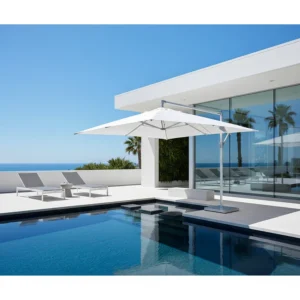
❓ Frequently Asked Questions
❓ How much wind can an in pool umbrella withstand safely?
❓ Can I use my in pool umbrella in a saltwater pool?
❓ How often should I replace the canopy fabric on my swimming pool umbrella?
❓ Do floating pool umbrellas work in above-ground pools?
❓ What's the best way to store my in pool umbrella during winter?
Recommended for You
- 7 Best Pool Chairs That Float For Ultimate Relaxation in 2025
- 7 Best Pool Workout Equipment Options For Ultimate Aquatic Fitness in 2025
- 7 Best Pool Scooter Options for Ultimate Underwater Fun in 2025
🎬 Conclusion: Your Path to Perfect Pool Shade
We’ve covered a lot of ground in this comprehensive guide to in pool umbrellas—from technical specifications and product reviews to real-world case studies and future trends. But here’s the bottom line: an in pool umbrella isn’t just another pool accessory. It’s a genuine game-changer that transforms how you experience your pool.
I started this journey three years ago after one too many abbreviated pool sessions cut short by brutal sun exposure. That first Pool Buoy purchase seemed like a risky experiment—would we really use it enough to justify the cost? Fast forward to today, and I can’t imagine our pool without it. We swim longer, swim more often, and actually enjoy those peak afternoon hours that used to be unbearable.
The market has exploded with options since then. Whether you need a budget-friendly floating pool umbrella like the OceanaFlow for occasional family use, a feature-rich model like the Swimbrella for entertaining, or a permanent professional installation like FiberBuilt for long-term property enhancement, there’s a perfect solution for your situation.
Remember the key decision factors we discussed:
- Match umbrella size and type to your pool dimensions and depth
- Consider your regional wind and sun intensity when selecting products
- Invest in proper ballast and setup for optimal stability
- Commit to regular maintenance to maximize lifespan and performance
- Start with one umbrella if uncertain, expand later as needs clarify
The swimming pool umbrella you choose will provide countless hours of comfortable shade over the years ahead. Your skin will thank you, your family will appreciate the extended pool time, and you’ll wonder how you ever managed without it.
Don’t overthink this decision. The products featured in this guide represent proven performers backed by thousands of satisfied customers. Any of them will dramatically improve your pool experience compared to struggling through another summer with inadequate shade.
Your perfect pool day is waiting—comfortable temperatures, proper sun protection, cold drinks within reach, and the ability to stay in the water as long as you want. Make it happen this season.
🛒 Take Action Now: Your Cool Oasis Awaits! ☀️🏊♀️
Ready to upgrade your pool experience? The time to act is now while inventory is fully stocked and competitive pricing remains available. Every day without proper pool shade is another missed opportunity for comfortable swimming. Click on any product name highlighted in this article to view current Amazon pricing, read additional customer reviews, and secure your in pool umbrella before the summer rush! Don’t wait—your family’s comfort and sun safety can’t be postponed! 🌴🌊
Disclaimer: This article contains affiliate links. If you purchase products through these links, we may earn a small commission at no additional cost to you.
✨ Found this helpful? Share it with your friends! 💬🤗
