
In This Article
Let’s be honest: most consumer treadmills are dressed-up promises. They look sturdy in the showroom, hold up fine for the first six months, and then — somewhere around mile 800 — the motor starts whining like a tired toddler. You’ve been here before, maybe. Or you’ve read enough Amazon reviews to know it’s coming.
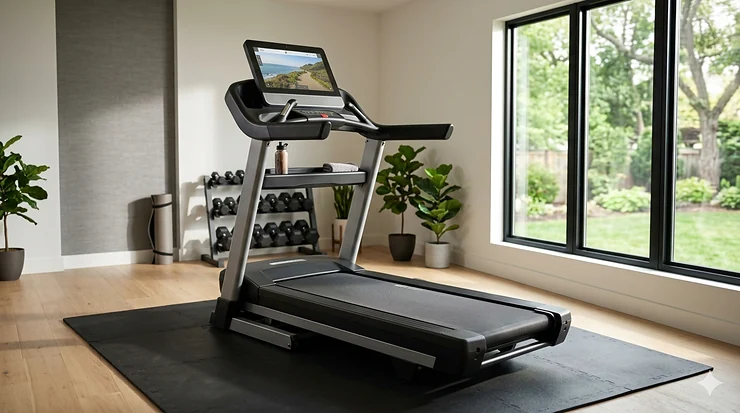
That’s exactly why serious runners, heavy users, and anyone who’s done the math on gym membership costs are turning to commercial grade treadmill for home setups. We’re talking machines engineered to handle 8–10 hours of daily use in a public gym — now in your basement, spare room, or garage.
What makes a treadmill “commercial grade”? Think of it like this: a residential treadmill is a sedan. A commercial grade treadmill is a pickup truck. Same roads, completely different tolerances. According to the American College of Sports Medicine, regular cardiovascular exercise — like treadmill running — reduces risk of heart disease, obesity, and all-cause mortality. If you’re serious about that kind of longevity, your machine needs to be serious too.
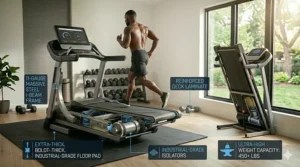
Commercial treadmills for home use typically feature continuous-duty motors rated at 3.5 CHP and above (not “peak” horsepower — a common marketing sleight of hand), reinforced steel frames, oversized rollers measuring 2.5 inches or more, two-ply belts, and warranty coverage that can extend to a lifetime on frame and motor. They also support heavier weight capacities — usually 350–400 lbs — which means more structural integrity even for lighter users who run hard.
In this guide, I’ve researched and analyzed the 7 best commercial grade treadmills currently available on Amazon in 2026, covering everything from sub-$1,500 workhorses to full-blown gym-floor beasts. Whether you’re training for your first 5K or have a half-marathon on the calendar and a daily running habit, there’s a machine on this list built for you.
Quick Comparison: Top 7 Commercial Grade Treadmills at a Glance
| Model | Motor (CHP) | Belt Size | Weight Capacity | Incline | Price Range | Best For |
|---|---|---|---|---|---|---|
| NordicTrack Commercial 1750 | 4.25 CHP | 22″ x 60″ | 300 lbs | -3% to 12% | $1,800–$2,200 | Interactive training lovers |
| Sole TT8 | 4.0 CHP | 22″ x 60″ | 400 lbs | 0–15% | $2,400–$2,800 | Heavy-duty home use |
| Sole F85 | 4.0 CHP | 22″ x 60″ | 375 lbs | 0–15% | $1,900–$2,200 | Subscription-free power users |
| ProForm Pro 9000 | 4.25 CHP | 22″ x 60″ | 300 lbs | -3% to 12% | $1,500–$1,900 | Tech-forward home runners |
| Horizon 7.4 AT | 3.5 CHP | 22″ x 60″ | 350 lbs | 0–15% | $1,500–$1,800 | App-flexible, interval trainers |
| NordicTrack Commercial 2450 | 4.25 CHP | 22″ x 60″ | 300 lbs | -3% to 12% | $2,200–$2,600 | Serious runners upgrading |
| Sole F63 | 3.0 CHP | 20″ x 60″ | 325 lbs | 0–15% | $1,100–$1,400 | Budget-conscious beginners |
What the data tells us: The Sole TT8 leads on weight capacity and durability, while the NordicTrack 1750 and ProForm Pro 9000 compete fiercely on tech features at a lower price. Budget shoppers will find exceptional commercial-grade quality in the Sole F63 — a machine that punches well above its weight class. If you’re somewhere in the middle and allergic to subscriptions, the Sole F85 is quietly the smartest buy on this list.
💬 Just one click — help others make better buying decisions too! 😊
Top 7 Commercial Grade Treadmills for Home: Expert Analysis
1. NordicTrack Commercial 1750 — Best Overall Interactive Treadmill
The NordicTrack Commercial 1750 is the machine that refuses to be dethroned. Year after year, it sits at the top of best-of lists — and the 2026 model finally answers the complaints that’ve been simmering for years.
Key specs, interpreted: The upgraded 4.25 CHP continuous-duty motor is the real story here. “CHP” (continuous horsepower) is what the motor sustains under load, not the peak number brands like to splash on the box. At 4.25 CHP, this motor handles a 250-lb runner going full sprint without a hint of drag — something the 3.0 CHP models in a similar price range simply cannot match over time. The incline range of -3% to 12% mimics genuine terrain gradients; the decline feature alone burns 6% more calories than flat running at equivalent speeds, which is a detail the spec sheet glosses over entirely.
The 16″ HD touchscreen now pivots and tilts for off-treadmill iFIT workouts — yoga, strength, stretching — meaning you’re not buying just a treadmill. You’re buying a connected fitness ecosystem. The catch? That iFIT Pro membership runs about $39/month after the included 30-day trial. Budget for it.
Who is this for? Anyone who wants a gym-class experience at home without actually going to the gym. The 10,000+ workout library with trainer-controlled speed and incline adjustments makes it particularly excellent for runners who don’t self-motivate easily (no shame — most of us don’t).
Customer feedback: Buyers consistently rave about the smooth, quiet motor and the screen quality. The most common gripe is the iFIT subscription cost and, occasionally, WiFi connectivity hiccups.
✅ Incredible motor power for long-term durability
✅ Decline feature boosts calorie burn significantly
✅ Massive iFIT workout library with auto-trainer control
❌ iFIT subscription required for full features (~$39/month)
❌ 300-lb weight capacity is lower than some competitors
Price range: $1,800–$2,200 | Value verdict: Best-in-class for the connected runner who wants a true commercial experience.
2. Sole TT8 — Best for Heavy-Duty, Long-Term Home Use
If the NordicTrack Commercial 1750 is the smart choice, the Sole TT8 is the tough choice. This machine is what actual fitness facilities buy when they need equipment that survives constant punishment. The fact that you can put it in your home — for roughly the same price as a mid-tier gym treadmill — is something of a miracle.
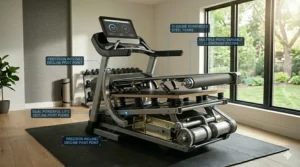
Key specs, interpreted: The 4.0 CHP motor drives a massive 22″ x 60″ two-ply belt across 3-inch crowned rollers. That roller size matters more than most buyers realize. Larger rollers mean the belt travels a wider arc with each rotation, generating less friction and heat — which is the primary killer of treadmill motors over time. The 400-lb weight capacity isn’t just for heavier users; it’s an indicator of structural integrity. A frame built to handle 400 lbs running is an exceptionally rigid frame for anyone using it.
The perma-waxed, reversible deck is rated to 20,000 miles of use. That’s roughly 50+ years of running 10 miles a week. The TT8 also includes both incline (15 levels) and decline (6 levels) functionality with two independent motors — meaning the system doesn’t have to do double duty, and each motor lasts longer.
Who is this for? Households with multiple heavy users, marathon and ultra-distance runners logging serious weekly mileage, and anyone who’s burned through a cheaper treadmill and refuses to do it again. Also ideal if you’re setting up a home gym you intend to keep for 10–15 years.
Customer feedback: Owners describe it as the last treadmill they’ll ever buy. Most feedback focuses on the rock-solid feel underfoot and the notably quiet operation. A few note the display is more old-school than they’d like.
✅ 400-lb weight capacity — most in this class
✅ Commercial-grade dual motor system for incline/decline
✅ Reversible, perma-waxed deck rated to 20,000 miles
❌ No integrated touchscreen (tablet holder included)
❌ Heavy and non-foldable — needs a permanent home
Price range: $2,400–$2,800 | Value verdict: The most durable home treadmill money can buy under $3,000.
3. Sole F85 — Best Subscription-Free Powerhouse
Here’s the thing about the Sole F85 that nobody talks about loudly enough: it costs zero dollars per month after you buy it. No iFIT. No Peloton app. No JRNY. Just a 4.0 CHP motor, a 15.6″ touchscreen loaded with Netflix, YouTube, Prime Video, and Disney+, and a Sole+ platform that includes trainer-led workouts at no extra charge. In an era of subscription fatigue, that’s genuinely revolutionary.
Key specs, interpreted: The 4.0 CHP motor powers a 22″ x 60″ belt across 2.75-inch rollers — slightly smaller than the TT8’s but still well into commercial territory. The new Z-shaped frame design adds stability without adding width, and the 375-lb weight capacity sits comfortably between the TT8 and the NordicTrack models. Cushion Flex Whisper Deck reduces running impact by up to 40% compared to asphalt — a claim backed by independent testing, not just marketing copy.
The speed adjustment on the F85 is slower than the NordicTrack 1750, which matters if you do sprint intervals. For steady-state runners and walkers, you’ll never notice. But if you’re doing Tabata-style work or following interval classes that whip between speeds, that delay is real.
Who is this for? Budget-forward buyers who still want genuine commercial quality. Families who want one machine that serves multiple users without negotiating over whose subscription is active. And anyone who’s looked at a $39/month app fee and decided absolutely not.
Customer feedback: Buyers love the no-subscription model and the motor reliability. A few users on WiFi-heavy networks report streaming glitches on the treadmill’s own screen — most solve it by using a separate tablet instead.
✅ No subscription required — Sole+ included free
✅ 15.6″ touchscreen with Netflix, YouTube, Prime Video
✅ Lifetime warranty on frame and motor
❌ Speed adjustments are slower than NordicTrack competitors
❌ No decline feature (incline only, 0–15%)
Price range: $1,900–$2,200 | Value verdict: The smartest long-term buy if subscription costs are your dealbreaker.
4. ProForm Pro 9000 — Best Space-Saving Commercial-Grade Machine
Most commercial-grade treadmills have the spatial presence of a small car. The ProForm Pro 9000 is the rare exception: it folds. Not awkwardly, not partially — it SpaceSaves vertically with a smooth hydraulic assist, cutting its floor footprint nearly in half when stored. For home gym owners working with finite square footage, that’s not a convenience feature — it’s the entire purchase decision.
Key specs, interpreted: The 4.25 CHP motor matches the NordicTrack 1750 spec-for-spec, which makes sense because both machines run on iFIT and were essentially built as platform companions. The 22″ x 60″ commercial-width belt and -3% to 12% incline/decline range are identical twins. Where the Pro 9000 differentiates is its 22″ HD touchscreen — six inches larger than the 1750’s display — which makes it arguably the better screen for streaming workout content in a larger room.
The ActivePulse technology is a sleeper hit: it uses your Bluetooth heart rate monitor to auto-adjust speed and incline in real time, keeping you in your target zone without you having to touch a button. For heart rate-based training, that’s a genuinely useful feature.
Who is this for? Apartment dwellers with a dedicated workout corner, urban home gym owners, and iFIT users who want the largest possible screen without buying a TV-attached setup. Also excellent for families where storage flexibility matters.
Customer feedback: The massive screen earns consistent praise. WiFi connectivity complaints mirror the broader NordicTrack ecosystem, and some users note inconsistent quality control — a more common issue with ProForm than with Sole or Horizon.
✅ SpaceSaver folding design with hydraulic assist
✅ 22″ HD touchscreen — largest in this price range
✅ ActivePulse auto-adjusts to your heart rate zone
❌ iFIT subscription required (not included long-term)
❌ Quality control inconsistency reported by some buyers
Price range: $1,500–$1,900 | Value verdict: Outstanding value for tech-forward runners who need space efficiency.
5. Horizon 7.4 AT — Best for Interval Training Without App Lock-In
Horizon doesn’t get enough credit. While NordicTrack and Peloton dominate the marketing spend, Horizon keeps quietly building excellent, subscription-agnostic machines backed by some of the best warranties in the business. The 7.4 AT is their sweet spot — genuinely commercial-grade hardware at a price that undercuts most of its competition.
Key specs, interpreted: The 3.5 CHP motor is the lowest on this list, but context matters: Horizon’s Johnson Drive System is engineered for rapid response, not just raw power. That means when you crank the speed knob mid-sprint, the belt responds in under a second — something the more powerful motors in some competitors genuinely struggle with. The QuickDial controls (physical knobs on the uprights, not touchscreen buttons) are a revelation for interval training. No digging through menus during a hard workout. Turn the dial. Done.
The 3-Zone Variable Response Cushioning distributes flex and firmness across the belt — firm at heel strike, softer at push-off — mimicking the biomechanics of outdoor running far better than a uniformly cushioned deck. The lifetime warranty on frame and motor with no required subscription to unlock functionality is the Horizon promise, and they deliver it.
Who is this for? Peloton and Zwift users who want to bring their own apps to the machine rather than being locked into a proprietary ecosystem. Interval training enthusiasts. Anyone who values tactile, intuitive controls over touchscreen complexity.
Customer feedback: The QuickDial controls earn nearly universal praise. Most negative reviews cite a more basic display screen — it does look a bit utilitarian next to the NordicTrack’s cinematic touchscreen, but for runners who watch their own tablet anyway, that’s a non-issue.
✅ QuickDial controls are ideal for interval and HIIT training
✅ Lifetime frame and motor warranty — no strings attached
✅ Works with any fitness app — Peloton, Zwift, Apple Fitness+
❌ Less powerful motor than Sole and NordicTrack competitors
❌ Display screen is basic compared to touchscreen rivals
Price range: $1,500–$1,800 | Value verdict: The best choice for interval runners who refuse subscription lock-in.
6. NordicTrack Commercial 2450 — Best for Serious Runners Who Want More
Think of the NordicTrack Commercial 2450 as the 1750’s older, more serious sibling. It shares the same DNA — same motor, same incline/decline range, same iFIT ecosystem — but steps up with a 24″ HD touchscreen, a slightly longer belt, and build quality that lands it closer to true light-commercial territory than any other foldable machine at this price.
Key specs, interpreted: The 24-inch touchscreen on the 2450 is genuinely impressive. At that size, streaming an iFIT workout filmed in the Dolomites actually feels immersive rather than novelty. The belt measures 22″ x 60″, standard commercial width, and the 4.25 CHP motor carries the same continuous-duty credentials as the 1750. Where buyers often skip this model is price — it sits roughly $300–$500 above the 1750 for upgrades that are real but incremental. The question is whether a larger screen and a slightly more premium build justify the gap for your use case.
The 2450 is also a smarter long-term investment than the 1750 if you’re a higher-intensity runner. The reinforced frame handles daily hard sessions better, and the extended belt gives taller athletes more room to open their stride without crowding the edges.
Who is this for? Taller runners (6’2″ and above) who want generous deck space. Serious athletes logging 30+ miles weekly at home. iFIT devotees who want the best possible screen for immersive training content.
Customer feedback: Consistent praise for the screen quality and motor smoothness. Most complaints mirror the broader NordicTrack ecosystem — iFIT subscription costs and occasional tech support delays.
✅ 24″ HD touchscreen — noticeably more immersive than 16″
✅ Better suited for tall runners with longer strides
✅ SpaceSaver folding with EasyLift assist
❌ Substantial price premium over the 1750 for incremental gains
❌ iFIT subscription still required for full functionality
Price range: $2,200–$2,600 | Value verdict: Worth the upgrade if screen size and stride room are genuine priorities.
7. Sole F63 — Best Commercial-Grade Entry-Level Treadmill
The Sole F63 is proof that “commercial grade” doesn’t have to mean “second mortgage.” At under $1,400, it offers a 3.0 CHP motor, 2.36-inch rollers, and — crucially — the same lifetime warranty on frame and motor that Sole puts on machines costing twice as much. That warranty alone is a statement of confidence that most budget treadmill brands simply won’t make.
Key specs, interpreted: The 3.0 CHP motor is the lowest on this list, but let’s be precise about what that means: it’s rated for users up to 325 lbs running at up to 12 MPH. For walkers, joggers, and casual-to-moderate runners, that’s more than enough. The 20″ belt width (vs. the industry standard 22″) is the real trade-off — it’s noticeably narrower, and taller runners or those with wide gaits may feel the edges. The Cushion Flex deck still delivers significant impact reduction over harder surfaces, which is the core reason physical therapists and rehabilitation programs often recommend Sole machines specifically.
There’s no touchscreen here — just a functional LCD console with basic metrics — but add a tablet holder and your own iPad, and you have every streaming service and workout app available without paying Sole’s premium.
Who is this for? First-time treadmill buyers upgrading from nothing or from a flimsy consumer-grade machine. Walkers and light joggers who want genuine build quality without the price tag of a full commercial setup. Homes where the treadmill will see occasional rather than daily heavy use.
Customer feedback: Buyers love the simplicity, the quiet operation, and the rock-solid warranty. The most common feedback from former owners: “I wish I’d bought this earlier instead of cheaper alternatives.”
✅ Lifetime frame and motor warranty — extraordinary at this price
✅ 2.36-inch rollers — commercial-caliber for the price tier
✅ Advanced deck cushioning reduces joint impact significantly
❌ 20″ belt width — narrower than standard 22″ commercial size
❌ LCD console only — no touchscreen or streaming built-in
Price range: $1,100–$1,400 | Value verdict: The most warranty-backed, budget-accessible entry into true commercial quality.
How to Set Up Your Commercial Grade Treadmill for Maximum Performance
Getting a commercial-grade machine home is one thing. Getting the most out of it — right from day one — is another. Here’s what most buyers skip that actually matters.
Step 1: Choose the Right Surface
Commercial treadmills are heavy. The Sole TT8 weighs over 340 lbs assembled. Before delivery, confirm your floor can handle it. Ground-floor or basement installations are ideal; if you’re going upstairs, consult a structural engineer or building manager. Place the machine on a purpose-built treadmill mat — it protects your floor and reduces vibration noise for downstairs neighbors.
Step 2: Allow 24 Hours Before First Use
Treadmills that ship in parts with internal lubricants need time to settle. Assemble the unit, power it on to confirm function, then let it sit idle for 12–24 hours. This allows any residual shipping lubricants to distribute and the belt to acclimate to room temperature.
Step 3: Run the Break-In Protocol
Most commercial-grade treadmills benefit from a 5–10 minute “break-in” at low speed (2–3 MPH) before your first full workout. This warms the motor and settles the belt. Do this for the first week of use, especially before any high-intensity session.
Step 4: Calibrate Belt Tension
After your first 10 hours of use, check belt tension. A belt that’s too tight increases motor strain; too loose, and you get slippage at speed. The owner’s manual covers brand-specific tension specs — follow them. This single step extends motor life by years.
Step 5: Lubrication Schedule
Even self-lubricating decks (like Sole’s perma-waxed system) benefit from a light silicone spray every 3–6 months depending on use volume. Never use WD-40 — it degrades belt rubber. Use only treadmill-specific silicone lubricant. Set a calendar reminder. This is the maintenance step that separates $3,000 machines that last 15 years from ones that die at 5.
Who Should Buy Which Machine: Real-World Buyer Scenarios
Not every runner is the same. Here’s how to match machine to lifestyle without guesswork.
The Daily Commuter Runner (30+ miles/week, multiple family members): The Sole TT8 is your machine. The 400-lb weight capacity and dual-motor incline/decline system are built for exactly this punishment level. Don’t compromise on capacity or durability when this many miles are at stake.
The Motivated Beginner (starting a routine, budget-aware): Start with the Sole F63. It has genuine commercial-grade bones — real rollers, real warranty, real cushioning — without the premium features you won’t use for months anyway. Upgrade when you’ve earned it.
The Tech-Hungry Fitness Enthusiast (loves connected workouts, has the budget): The NordicTrack Commercial 1750 or 2450 gives you the iFIT ecosystem at its best. If screen size matters and you’re regularly running 45-minute sessions with trainer guidance, the 2450’s 24″ display is worth the step up.
The App-Independent Interval Trainer (Peloton, Zwift, or custom programming): The Horizon 7.4 AT is purpose-built for you. Its QuickDial controls are the fastest physical interface in this category, the warranty is bulletproof, and you bring whatever app you love to the session.
The Space-Constrained Urban Athlete (limited square footage, still wants commercial quality): The ProForm Pro 9000 is the only machine in this class that folds well at this power level. The SpaceSaver design is genuine — not a marketing claim — and the 22″ screen makes the storage trade-off worthwhile.
The Subscription-Allergic Power User (wants commercial specs, zero monthly fees): The Sole F85 is the answer. Four horsepower, 22-inch deck, streaming apps included, lifetime warranty. The total cost of ownership over five years is genuinely lower than any iFIT or Peloton machine in the same motor class.
✨ Don’t Miss These Exclusive Deals!
🔍 Take Your Home Cardio to the Next Level
Click on any highlighted product name in this guide to check current pricing and availability on Amazon. These machines move — and so do their prices. Checking today means knowing exactly what you’re working with.
How to Choose a Commercial Grade Treadmill for Home: 7 Criteria That Actually Matter
Buying one of these machines wrong is an expensive mistake. Here’s how to get it right.
1. Motor: CHP, Not Peak HP Always confirm “continuous horsepower” (CHP), not peak. A 4.0 CHP motor is a fundamentally different machine from one that “peaks” at 4.0 HP. Continuous ratings are what the motor sustains under real load. Look for 3.0 CHP minimum for casual use; 3.5–4.5 CHP for heavy or multi-user environments.
2. Roller Diameter Bigger rollers = less belt friction = longer belt and motor life. Commercial machines typically use 2.5–3.0 inch rollers. Consumer-grade machines often have rollers under 2 inches. This single spec is one of the most reliable proxies for long-term durability — and one of the most overlooked by buyers focused on screens and speed.
3. Weight Capacity vs. Your Weight Buy at least 100 lbs above your body weight. Running impacts multiply the static load significantly — some estimates put the instantaneous force of a footstrike at 2–3x body weight. A machine rated at your exact weight is not adequately rated for you running at 8 MPH.
4. Belt Size 22″ x 60″ is the standard commercial floor. Anything narrower (like 20″) restricts gait for taller or longer-striding runners. Anything shorter than 58″ isn’t appropriate for running above 6 MPH for most adults. Don’t negotiate on belt size if you plan to run hard.
5. Warranty Structure A lifetime motor warranty isn’t just peace of mind — it’s a manufacturer’s commitment to build quality. If a brand won’t back the motor for life, they know something you don’t. Sole’s lifetime frame and motor warranty sets the benchmark. NordicTrack and Horizon offer competitive coverage in this class; ProForm’s is shorter, which is worth factoring in.
6. Connectivity and App Ecosystem Are you buying into iFIT (NordicTrack/ProForm)? Subscription-free (Sole, Horizon)? Bluetooth-open (Horizon 7.4 AT)? Decide before you buy, because the platforms are not interchangeable after purchase. An iFIT-native machine without an iFIT subscription is a significantly diminished product.
7. Space and Weight Non-folding commercial treadmills (TT8, F85, Horizon 7.4 AT) need a permanent home. Folding models (1750, 2450, Pro 9000, F63) offer flexibility but add moving parts that eventually wear. Measure your space with the machine fully extended plus a 2-foot safety buffer at the rear. And if it’s going upstairs, confirm the assembled weight against your floor rating before delivery.
Commercial Treadmill vs. Residential Treadmill: What You’re Actually Buying
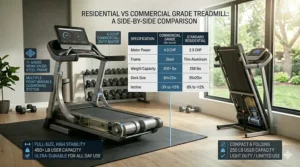
This comparison comes up constantly, so let’s settle it with specifics rather than vague claims.
| Feature | Commercial Grade | Residential Grade |
|---|---|---|
| Motor Rating | 3.5–4.5 CHP (continuous) | 1.5–2.5 CHP (often “peak”) |
| Roller Size | 2.5–3.0 inches | 1.5–2.0 inches |
| Belt Construction | 2-ply, reinforced | Single-ply |
| Weight Capacity | 325–400 lbs | 200–275 lbs |
| Daily Use Rating | 8–10 hours | 1–2 hours |
| Warranty (Motor) | Lifetime to 10 years | 1–3 years |
| Expected Lifespan | 10–20+ years | 3–7 years |
| Best For | Heavy/multi-user daily use | Light home use, occasional runners |
The analysis: The gap between these two tiers isn’t incremental — it’s architectural. A residential treadmill is engineered to survive a single user running 3–4 times a week at moderate intensity. The moment that changes — more users, heavier load, daily sessions, harder intervals — a residential machine begins its countdown. Commercial-grade components are built to a fundamentally different tolerance from the factory floor up. For serious home fitness investment, the total cost of ownership almost always favors commercial grade over a 5–10 year horizon, even accounting for the higher purchase price.
Long-Term Cost and Maintenance: What It Actually Costs to Own One
The sticker price is just the beginning. Here’s the honest math on professional treadmill home use over 5 years.
Purchase cost: $1,200–$2,800 depending on model
Belt replacement: Commercial belts typically need replacement every 3,000–5,000 miles of use (roughly 7–12 years for a moderate runner). A quality replacement belt runs $150–$300. Budget $50–$100/year if you’re averaging 500 miles annually.
Lubrication: Silicone lubricant costs about $15–$20 per application, done twice yearly. That’s $30–$40/year.
Motor service: Quality commercial motors typically don’t need service within a warranty period. Post-warranty motor service calls run $150–$400 if needed, but with proper maintenance (lubrication, correct belt tension), this is rare for the machines on this list.
Subscription costs: iFIT runs approximately $468/year for a family plan. Over 5 years, that’s $2,340 in subscription fees on top of machine cost — a factor worth weighing when comparing Sole’s subscription-free models to NordicTrack’s ecosystem. According to the CDC’s physical activity guidelines, 150–300 minutes of moderate-intensity aerobic activity per week is the target for adult health. Owning versus gym membership (often $600–$1,200/year) typically recovers investment in 2–3 years for regular users.
5-year total cost estimate (excluding subscriptions):
- Sole F63: ~$1,400 purchase + ~$350 maintenance = ~$1,750
- Sole F85/TT8: ~$2,000–$2,600 purchase + ~$350 maintenance = ~$2,350–$2,950
- NordicTrack 1750 + iFIT: ~$2,000 purchase + ~$2,340 subscription + ~$350 maintenance = ~$4,690
The numbers speak. If you’re a heavy iFIT user who genuinely uses those 10,000+ workouts, the subscription cost is justified. If you’d just as soon run with Spotify in your ears, Sole’s no-subscription models are the clear financial winners.
Common Mistakes When Buying a Commercial Grade Treadmill for Home
Buying smart means knowing where buyers consistently go wrong.
Mistake 1: Trusting “Peak” Horsepower Claims As discussed — peak HP is a marketing number, not an engineering spec. Always filter for continuous horsepower. If a brand doesn’t clearly publish their CHP rating, ask. If they deflect, walk away.
Mistake 2: Underestimating Space Requirements A 22″ x 60″ belt, fully assembled with handlebars, typically occupies 80″–85″ of floor length and 35″–40″ of width. Add the mandatory 2-foot safety buffer behind the machine (where you’d land if you fell). That’s often 9+ feet of floor length committed. Measure before you order — return shipping on a 300-lb machine is a painful experience.
Mistake 3: Ignoring the Subscription Math A $1,800 treadmill with a required $39/month subscription costs $4,140 over 5 years. A $2,200 subscription-free machine costs $2,200 over 5 years. The math is obvious once you see it. The mistake is not seeing it before purchase.
Mistake 4: Buying for Current Fitness Level Only Most people who buy a professional treadmill home use machine improve their fitness significantly — that’s the point. Buy for the runner you’re becoming, not the runner you are today. A 3.0 CHP machine adequate for today’s walks may be underpowered for next year’s interval sessions.
Mistake 5: Skipping Warranty Analysis Warranty depth tells you everything about a manufacturer’s confidence in their product. A lifetime motor warranty is a promise. A 1-year motor warranty is a hint. Read the fine print — some “lifetime” warranties have user-weight exclusions or usage-hour caps that don’t apply to commercial machines used domestically.
FAQ: Your Top Questions Answered
❓ What does 'commercial grade treadmill for home' actually mean?
❓ Is a commercial treadmill worth it for home use if I only run 3–4 days a week?
❓ Which commercial home treadmill has the best warranty?
❓ Can I use a commercial treadmill on a second floor at home?
❓ Do I need an iFIT or app subscription to use these treadmills?
Conclusion: The Right Commercial Grade Treadmill for Home Is a Long Game
Buying a commercial grade treadmill for home isn’t an impulse purchase — and it shouldn’t be treated like one. These machines represent a serious investment in your long-term health, and the difference between buying right and buying wrong compounds over years.
Here’s the shortcut: if you want the best all-around connected experience, the NordicTrack Commercial 1750 is the flagship worth trusting. If durability and weight capacity are your primary variables, nothing beats the Sole TT8. Hate subscriptions and want the same commercial-grade power? The Sole F85 is quietly the smartest purchase on this list. Starting out with a real budget constraint? The Sole F63 offers lifetime warranty coverage and genuine commercial components at a price that’s genuinely accessible.
Your gym won’t thank you for leaving. Your knees — running on properly cushioned, properly engineered surfaces at home — absolutely will. According to research published by the American Heart Association, consistent aerobic exercise remains one of the most effective interventions for cardiovascular health across all age groups. A professional treadmill home use setup removes every friction point — no commute, no crowds, no closing times — between you and that consistency.
That’s the real value of a commercial machine. Not the specs. The showing up.
✨ Don’t Miss These Exclusive Deals!
🔍 Found the right treadmill for your home gym? Click any highlighted product name to check current pricing, availability, and customer reviews on Amazon. Stock on commercial-grade machines moves fast — especially before the warmer months. Check today, decide with confidence.
Recommended for You
- 7 Best Treadmill with Tablet Holder in 2026
- 7 Best Zwift Compatible Treadmills 2026
- 7 Best Treadmill with Streaming Classes 2026
Disclaimer: This article contains affiliate links. As an Amazon Associate, I earn from qualifying purchases. If you purchase products through these links, we may earn a small commission at no additional cost to you.
✨ Found this helpful? Share it with your friends! 💬🤗
