
In This Article
A stationary bike looks harmless. It parks in the corner like a sleeping golden retriever, right up until you start pedaling. Then the vibration travels, the rear stabilizers grind into your finish, and every drop of sweat heads for the seams between your floorboards. A good exercise bike mat is the cheapest insurance policy in your home gym.
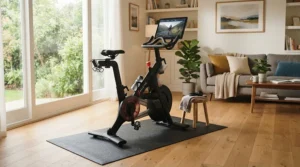
Maybe you ride a flywheel-driven stationary bike in a spare bedroom, or a spin bike in a rental with thin floors. Either way, the surface underneath takes abuse nobody warns you about. Bike feet focus a lot of weight onto a few square inches. Add a cleated shoe stepping on and off, and you get dents, scuffs, and a low hum your downstairs neighbor will definitely mention.
An exercise bike mat spreads the load, soaks up vibration, catches sweat, and keeps the machine from creeping. Here’s the twist most roundups skip: not every mat is friendly to every floor. Some PVC and rubber products can interact with finishes over time. A bike mat for hardwood floors therefore deserves more thought than “thick and black.”
This guide compares seven real mats across budget, mid-range and premium tiers. It translates each spec sheet into everyday meaning, then walks through setup, troubleshooting and the hardwood caveats. Everything rests on published specs and aggregated reviewer sentiment, so you’ll see where the evidence is strong and where it’s thin.
What Is an Exercise Bike Mat?
An exercise bike mat is a protective floor pad, usually 4-7 mm of PVC, EVA foam or rubber, placed beneath a stationary or spin bike. It shields flooring from scratches, sweat and dents, dampens vibration and noise, and helps keep the bike from sliding during hard efforts.
Shoppers use many labels for roughly the same idea. A bike floor mat is the everyday name. Floor protection underlays are thinner layers that sit between a machine and delicate flooring. Scratch prevention mats stress the surface-protection job over noise control. Equipment base pads are the compact, often smaller pieces that sit directly under a machine’s feet. A spin bike mat is simply a mat sized for the narrow, tall footprint of a spin bike.
The difference matters because the job changes by room. Carpet needs dent resistance. Tile needs noise control and grip. Hardwood needs all of that plus chemical caution. Keep that framing in mind as you read the product analysis below.
Quick Comparison: Exercise Bike Mat Options at a Glance
| Product | Size | Thickness | Material | Price Range | Best For |
|---|---|---|---|---|---|
| CycleClub Premium 6mm Mat | 30″ x 60″ | 6 mm | PVC | Around $25-$40 | Value-first buyers |
| CyclingDeal 7mm Trainer Mat | 30″ x 60″ | 7 mm | PVC | Around $30-$50 | Noise-sensitive apartments |
| Wahoo KICKR Mat | 36″ x 78″ | 6 mm | “6P free” PVC | Around $80-$90 | Smart-trainer setups |
| Alpcour 36×78 Trainer Mat | 36″ x 78″ | 7 mm | PVC | Around $40-$60 | Extra coverage and mounting room |
| Marcy MAT-366 Equipment Mat | 36″ x 78″ | 0.25″ (about 6 mm) | EVA foam | Mid-$40s and up | Multi-machine rooms |
| Crostice 6mm Bike Mat | 30″ x 60″ | 6 mm | PVC | Around $30-$45 | Peloton-style bikes |
| Sunny Health & Fitness No. 083 Mat | 51″ x 23.5″ | 4.2 mm | PVC foam | Under $30 | Tight budgets, small footprints |
Prices are ranges at the time of research and may vary, so check current price before buying. Looking at the table, the CycleClub Premium 6mm Mat and the CyclingDeal 7mm Trainer Mat deliver the best protection per dollar for typical spin bikes. The Wahoo KICKR Mat costs roughly double because you’re paying for a brand name and a longer 36″ x 78″ footprint. Budget shoppers should note that the Sunny Health & Fitness No. 083 Mat is thinner and smaller, which matters if your bike’s stabilizers extend past 23.5 inches.
💬 Just one click — help others make better buying decisions too!😊
Top 7 Exercise Bike Mat Picks: Expert Analysis
1. CycleClub Premium 6mm Mat — best all-round value
The standout here is balance: thick enough to matter, cheap enough to stop overthinking. The 30″ x 60″ footprint with 6 mm (about 0.24 inch) of PVC fits under most spin bikes and compact uprights from stabilizer to stabilizer. Its dual-sided texture grips the floor below and the bike’s feet above, which is what stops the mat from skating when you dismount in a hurry. The listing also says the mat can be trimmed to size, a quiet superpower in an oddly shaped room.
Based on the spec comparison, this suits first-time buyers, renters, and anyone who wants a dependable spin bike mat without boutique pricing. Where it gets snug is width: 30 inches is tight for bikes with wide rear stabilizers. Reviewers consistently say the mat lies flat and resists curling. The most common complaint is a faint new-PVC smell that fades with airing.
Pros:
- ✅ Dual-sided texture resists sliding
- ✅ Wipe-clean surface, easy upkeep
- ✅ Can be trimmed to fit odd spaces
Cons:
- ❌ 30-inch width is snug for wide bikes
- ❌ Initial plastic smell needs airing out
Price: around $25-$40, which makes the CycleClub Premium 6mm Mat an easy value verdict for most households.
2. CyclingDeal 7mm Trainer Mat — thickest cushioning for the money
An extra millimeter sounds trivial, but at 7 mm this mat is the thicker of the two entry-tier PVC options, and thickness is the main lever for vibration control. The 30″ x 60″ version (30″ x 72″ is also offered) pairs a soft body with a hardened top layer that tolerates cycling cleats. The listing also describes non-slip surfaces on both sides.
On paper, that thickness makes it a smart noise-control choice for upstairs apartments, where the transmitted rumble causes more complaints than the sound itself. It’s also the most validated mat in this group. One roundup cites more than 9,100 reviews averaging 4.8 stars, although that figure comes from a third party, so confirm it on the listing. Common themes are easy cleaning and solid vibration damping. Some reviewers say it can shift on slick floors, and others note a light odor out of the box.
Pros:
- ✅ 7 mm body absorbs vibration well
- ✅ Waterproof surface wipes clean fast
- ✅ Large review pool builds confidence
Cons:
- ❌ Can creep on very slick floors
- ❌ Faint new-PVC smell at first
Price: around $30-$50, so the CyclingDeal 7mm Trainer Mat is a strong value for noise-sensitive riders.
3. Wahoo KICKR Mat — premium build with a generous footprint
The standout is coverage. At 36″ x 78″ and 6 mm, the Wahoo KICKR Mat gives you room for the bike, the front wheel area, and a place to stand while you clip in. Wahoo lists the material as “6P free” PVC, a nod to avoiding a group of regulated phthalate plasticizers. That is a health-labeling claim, not a promise that the mat is gentle on a floor finish. A beveled edge sits low to reduce trip risk.
Despite the trainer branding, it works under spin bikes and upright bikes too. Reviewer data is thinner here: small retailer review pools are mixed. Some owners praise multi-year durability and say sweat wipes off easily. One mentioned an odor, and another called the noise damping merely “okay.” Treat the noise claims as plausible rather than proven.
Pros:
- ✅ Roomy 36″ x 78″ coverage zone
- ✅ Beveled edges lower trip risk
- ✅ Sweat-shedding, wipe-clean surface
Cons:
- ❌ Costs roughly double entry-tier options
- ❌ Mixed feedback on noise damping
Price: around $80-$90, a fair verdict only if you want the larger footprint or value the brand.
4. Alpcour 36×78 Trainer Mat — mounting room and a carry bag
Think of this one as a runway. The Alpcour 36×78 Trainer Mat pairs 7 mm of foam-soft PVC with a hardened, textured top that handles cleats, plus beveled edges that sit nearly flush with the floor. A carry bag is included, which is a genuinely useful extra if you roll the mat away between sessions in a shared space.
The 36-inch width solves the problem that frustrates owners of the narrower 30-inch mats: stabilizers hanging off the edge. Roundups describe it as flattening quickly after unrolling and feeling sturdy underfoot. One Amazon storefront listing shows a 4.6-star average across 114 ratings. Drawbacks include its size in compact rooms and, per one reviewer, strong initial off-gassing that needed several days of airing.
Pros:
- ✅ Wide 36-inch footprint covers stabilizers
- ✅ Beveled edges and carry bag included
- ✅ 7 mm cushioning with cleat-friendly top
Cons:
- ❌ Oversized for very small spaces
- ❌ Possible strong smell when new
Price: around $40-$60, which is good mid-range value if width is your priority.
5. Marcy MAT-366 Equipment Mat — foam comfort for multi-machine rooms
The standout is the material. The Marcy MAT-366 Equipment Mat uses quarter-inch EVA foam (about 6 mm), measures 78″ x 36″, and weighs about 6.4 pounds. EVA is a different chemistry from vinyl, and the soft, closed-cell feel is noticeably more forgiving underfoot. It also gives you room to stretch beside the bike or park a bench nearby.
Reviewers describe the bike feeling stable and the surface staying put. One roundup calls it excellent for multi-equipment setups but overkill for a lone trainer. My analytical caution: soft foam can compress under narrow, concentrated feet over months of heavy use, so check for dents. Even though EVA isn’t vinyl, a sealed mat on hardwood still traps moisture, so the care steps later in this guide still apply.
Pros:
- ✅ Soft, cushioned EVA feel underfoot
- ✅ Huge 78″ x 36″ coverage
- ✅ Simple wipe-with-damp-cloth cleaning
Cons:
- ❌ Foam may dent under narrow feet
- ❌ Overkill for a single compact bike
Price: mid-$40s range for the 36″ x 60″ sibling, with the Marcy MAT-366 Equipment Mat a solid pick if you share the space.
6. Crostice 6mm Bike Mat — Peloton-friendly fit
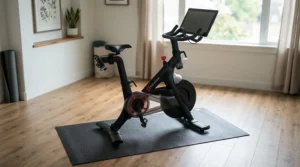
The standout is targeted sizing. The Crostice 6mm Bike Mat is marketed around Peloton Bike and Bike Plus footprints, in 30″ x 60″ and 36″ x 72″ versions, with 6 mm of sweat-resistant PVC and a dual-sided design for stability.
On paper, that sizing is its real value. Many universal mats leave a connected bike’s front stabilizer hanging half-on, half-off, which can tilt the frame slightly. A mat sized to the footprint removes that guesswork. Roundups credit the dual-sided build with long-term stability and easy upkeep. I couldn’t verify a deep pool of independent reviews for this exact model, so treat performance claims as manufacturer-level until more reviews accumulate.
Pros:
- ✅ Sized for popular connected-bike footprints
- ✅ Dual-sided design aids stability
- ✅ Sweat-resistant, easy-clean surface
Cons:
- ❌ Limited independent review data
- ❌ 6 mm gives less vibration damping than 7 mm
Price: around $30-$45, a reasonable verdict for connected-bike owners, as the Crostice 6mm Bike Mat makes sense if your bike matches its stated fit.
7. Sunny Health & Fitness No. 083 Mat — cheapest way to cover a small footprint
The standout is price. The Sunny Health & Fitness No. 083 Mat measures 51″ x 23.5″ with a 4.2 mm high-density PVC foam body, and Sunny sells it in four sizes up to 90″ x 39.5″. The 4.2 mm thickness is the thinnest here, so expect less vibration damping than the 6-7 mm contenders.
It suits compact recumbent bikes, under-desk bikes, and anyone protecting carpet from a light machine. Reviewers on retailer pages report ratings around 4.6 to 4.8 stars. Buyers praise the fit, grip and absence of a strong chemical smell. Roundups warn that mats under about 24″ x 48″ leave stabilizers exposed on many bikes, so measure your footprint first.
Pros:
- ✅ Low entry price for basic protection
- ✅ Four sizes cover many machines
- ✅ Reviewers report little plastic smell
Cons:
- ❌ Thin 4.2 mm limits noise reduction
- ❌ Small size can expose stabilizers
Price: under $30, so the Sunny Health & Fitness No. 083 Mat is a smart verdict for light-duty, tight-budget setups.
Top 7 Comparison: Footprint, Review Signal and Fit
| Product | Footprint | Review Signal (Aggregated) | Standout | Best For |
|---|---|---|---|---|
| CycleClub Premium 6mm Mat | 30″ x 60″ | Positive; faint odor noted | Value | First-time buyers |
| CyclingDeal 7mm Trainer Mat | 30″ x 60″ | Very large review pool, strong average | Thickness | Apartment renters |
| Wahoo KICKR Mat | 36″ x 78″ | Small pools, mixed | Brand and size | Serious indoor cyclists |
| Alpcour 36×78 Trainer Mat | 36″ x 78″ | Mid-4s stars on listings | Width | Wide-stabilizer bikes |
| Marcy MAT-366 Equipment Mat | 36″ x 78″ | Positive in roundups | EVA comfort | Shared home gyms |
| Crostice 6mm Bike Mat | 30″ x 60″ | Limited verifiable data | Peloton-style sizing | Connected bikes |
| Sunny Health & Fitness No. 083 Mat | 51″ x 23.5″ | Mid-to-high 4s stars | Price | Light-duty setups |
The pattern is clear. Thickness and width, not price, separate the pack: the CyclingDeal 7mm Trainer Mat and Alpcour 36×78 Trainer Mat lead on cushioning, while the Marcy MAT-366 Equipment Mat leads on coverage. The Wahoo KICKR Mat earns its premium mainly through footprint and brand, not a measured performance gap. If your budget is tight, the CycleClub Premium 6mm Mat captures most of the benefit at a fraction of the price.
How to Set Up and Maintain Your Exercise Bike Mat (First 30 Days)
A mat only works if it’s installed with care. These steps cost nothing and prevent the most common complaints.
- Air it out first. Unroll the mat in a ventilated room and leave it flat for 24 to 72 hours. Most PVC options, including the CycleClub Premium 6mm Mat and Alpcour 36×78 Trainer Mat, can arrive with a faint smell that dissipates.
- Prep the floor. Sweep, then dry the surface completely. Grit trapped underneath acts like sandpaper, which defeats the whole point of scratch prevention mats.
- Center the bike. Place all feet and stabilizers fully on the mat, leaving a few inches of margin at the sides.
- Check level and stability. Rock the frame gently. If it wobbles, the culprit is usually an uneven foot adjuster, not the mat.
- Do a week-one lift. Pull the mat up after seven days, wipe the floor, and look for moisture or marks.
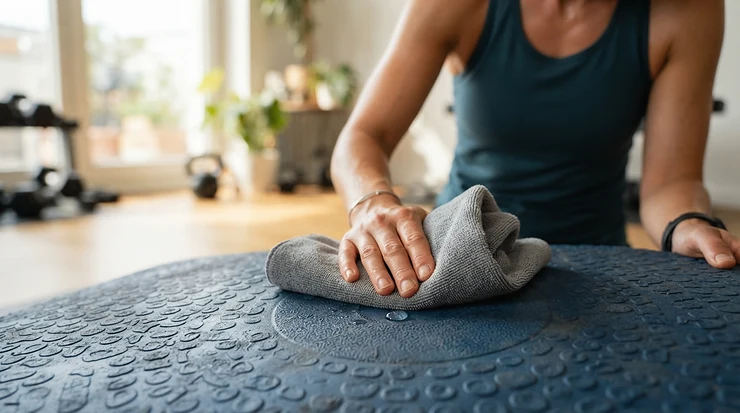
- Clean weekly. Use a damp cloth with mild soap and dry it thoroughly. Skip harsh solvents, which can degrade PVC and foam.
- Rotate monthly. Lift the mat for a few hours so the floor can breathe, then reposition it slightly.
The first-month habits matter most, because they establish a routine that protects both the mat and the floor. If you ride daily, move the schedule up: lift and wipe every two weeks. That small ritual is the difference between a mat that quietly protects for years and one that traps humidity against a finish.
Real-World Scenarios: Matching an Exercise Bike Mat to Your Home
Specs mean little until they meet a real room. Here are three profiles built from common situations.
The second-floor renter on hardwood. Budget: around $30-$60. Four 30-minute rides per week, early mornings. The priority is noise and hardwood safety. The CyclingDeal 7mm Trainer Mat or Alpcour 36×78 Trainer Mat fits best because 7 mm of cushioning does the most for vibration. Pair it with a breathable layer and a weekly lift, as covered in the hardwood section below.
The family basement gym. Budget: mid-range. One spin bike, one treadmill, plus a bench. Carpet over concrete means moisture and dents matter more than noise. The Marcy MAT-366 Equipment Mat gives you a big, forgiving surface you can step across, and its EVA foam is comfortable for floor stretching afterward. Because carpet pile can bunch under a mat, confirm the mat sits flat after the first week.
The cleats-and-data cyclist. Budget: premium. A smart trainer or high-end spin bike, five rides weekly, long sessions. The Wahoo KICKR Mat or the Alpcour 36×78 Trainer Mat gives you the wide landing zone for clipping in and out. Frequency here makes the cost-per-use argument easy to accept.
For context, the CDC’s adult physical activity guidelines recommend at least 150 minutes of moderate activity weekly. That’s about five 30-minute rides, which means any bike you buy is going to get real, repeated use on your floor.
✨ Don’t Miss These Exclusive Deals!
🔍 Take your home cycling setup to the next level with these carefully selected products. Click on any highlighted item to check current pricing and availability. These mats will help you create a quieter, cleaner, floor-friendly workout space your whole household will appreciate!
Common Problems and Fixes for Your Bike Floor Mat
Even good mats misbehave. These are the problems reviewers raise most often and how to solve them.
The mat slides on the floor. Slick finishes cause this, and it’s a recurring theme in feedback on the CyclingDeal 7mm Trainer Mat. First, clean the floor and the mat’s underside, because dust kills grip. If it still creeps, try a thin non-slip underlay that is rated safe for your flooring type.
A chemical smell lingers. New PVC off-gasses. Airing the mat flat in a ventilated room for a few days usually solves it. Reviewers of the Sunny Health & Fitness No. 083 Mat report less odor, which suggests formulations vary.
Dents form under the bike’s feet. Concentrated weight can compress softer mats over time, which is a particular watch-out with foam like the Marcy MAT-366 Equipment Mat. Shift the mat by an inch every month so the load doesn’t always land in the same spot.
Edges curl. Roll the mat the opposite direction for an hour, or place it in a warm room flat. Flat-lying mats like the CycleClub Premium 6mm Mat tend to resist this.
Noise still travels downstairs. Thickness helps, but it isn’t magic. Add a second layer, such as a dense rug pad under a PVC mat, to break up the vibration path further.
Sweat pools around the edge. Bevels help. If sweat reaches the floor, add a small towel at the front.
How to Choose an Exercise Bike Mat: 6 Steps
- Measure your bike’s footprint. Measure from the outer edge of the front stabilizer to the rear, then side to side. Add at least 4 inches of margin so no foot hangs off.
- Match thickness to your noise goal. Choose 6-7 mm if neighbors or downstairs rooms matter. Anything near 4 mm protects surfaces but does little for vibration.
- Pick the material for your floor. PVC offers cleat-friendly toughness. EVA foam offers softness. Hardwood requires the extra checks in the dedicated section below.
- Check the texture. Dual-sided traction, grip below and above, is the difference between a stable setup and a creeping one.
- Look for bevels and flat-lay. Beveled edges reduce trip risk, and a mat that flattens fast saves you from corner-curl headaches.
- Verify reviews and warranty. Prefer large review pools and clear return terms. If review data is thin, as it is for some brands here, treat claims cautiously.
The honest shortcut: for most spin bikes, a 6-7 mm PVC mat at about 30″ x 60″ or larger is the sweet spot. Move up to 36″ x 78″ if your stabilizers are wide or you want a spacious mounting area.
Common Mistakes When Buying an Exercise Bike Mat
Shoppers repeat the same few errors, and each is avoidable.
Buying by price alone. The cheapest mat is rarely the best fit. A thin, small mat can cost less than a coffee date and still leave your stabilizers exposed.
Ignoring the footprint. Mats under roughly 24″ x 48″ frequently miss the stabilizers on common bikes. Measure before you click.
Assuming “for hardwood floors” means “safe forever.” Seller claims about hardwood use are marketing statements. Flooring-industry guidance is more cautious about sealed PVC and rubber products over time.
Forgetting the floor underneath. Grit, humidity and spilled sweat all get trapped. A mat is protection, not a force field.
Never lifting the mat. Even the best product needs ventilation. A monthly lift takes two minutes and prevents most long-term surprises.
Overlooking cleat compatibility. If you ride in clipless shoes, choose a hardened top layer such as those on the Alpcour 36×78 Trainer Mat and CyclingDeal 7mm Trainer Mat. Soft foam surfaces, including the Marcy MAT-366 Equipment Mat, can scuff more under cleats.
Exercise Bike Mat vs Alternatives: Do You Really Need One?
Plenty of people try to skip the dedicated product. Here’s how the usual substitutes stack up.
| Option | Floor Protection | Noise and Vibration | Hardwood Risk | Best For |
|---|---|---|---|---|
| Dedicated exercise bike mat | High | Moderate to high | Moderate (material-dependent) | Most home gyms |
| No mat | None | None | Scratches and dents | Nobody |
| Area rug | Low to moderate | Low | Backing can mark | Temporary setups |
| Yoga mat | Low | Low | Often non-breathable | Floor workouts only |
| Interlocking EVA tiles | Moderate | Moderate | Edges can shift | Multi-machine rooms |
| Rubber stall mat | High | High | High (plasticizers) | Concrete or garage floors |
A purpose-built exercise bike mat wins because it’s sized, textured and rated for the load and the sweat. A yoga mat compresses flat and slides, and a rug can slip or shed fibers. If your priority is raw vibration control and the floor is concrete, a heavy rubber mat is hard to beat, but over wood it carries the most risk.
Floor Protection Underlays
Floor protection underlays are thin layers that sit between a machine and delicate flooring. They shine as a second layer: a felt or natural-fiber underlay under a PVC mat adds breathability and a bit of extra damping.
Scratch Prevention Mats
Scratch prevention mats focus on the surface job. They’re ideal under lighter bikes where vibration isn’t the issue, which is where a mat like the Sunny Health & Fitness No. 083 Mat fits.
Equipment Base Pads
Equipment base pads are compact cups or pads under individual feet. They’re useful for stabilizer points, but they don’t catch sweat or tame whole-frame vibration, so they work best as a complement.
Features That Actually Matter in a Bike Floor Mat (And Those That Don’t)
Marketing copy shouts about “military-grade” this and “ultra-premium” that. Here’s what to focus on.
Thickness (6-7 mm). This is the single biggest lever for vibration. Going below 5 mm trades noise control for a lower price.
Material chemistry. Vinyl and rubber products rely on plasticizers to stay flexible, and those compounds can migrate over time. That is why flooring guides flag certain materials for hardwood, vinyl plank and similar finishes. A “6P free” PVC label, as on the Wahoo KICKR Mat, speaks to a specific chemical group, not to finish compatibility.
Dual-sided texture. Grip against the floor and grip against the bike. This is the feature that stops creeping.
Beveled edges. They reduce trip risk and keep the mat close to flush, a benefit of both the Alpcour 36×78 Trainer Mat and the Wahoo KICKR Mat.
Hardened top surface. Essential for cleats, and a real advantage for any bike floor mat used by clipless riders.
Features that rarely matter: color options, embossed logos, and “luxury” packaging. They cost money and change nothing about floor protection.
Use this filter and the shortlist from the earlier sections shrinks quickly to two or three serious candidates.
Bike Mat for Hardwood Floors: A Safety and Care Guide
Hardwood is where good intentions go wrong, so let me be direct. Flooring professionals widely warn that rubber and vinyl-backed products can discolor finishes through plasticizer migration, and that non-breathable coverings can trap moisture. The National Wood Flooring Association publishes care guidance, and manufacturers’ own warranties often include similar caution. I can’t tell you any specific mat will or won’t harm your floor, because finish type, humidity and time all play a part.
A practical protocol for a bike mat for hardwood floors:
- Read your floor manufacturer’s care guide. Some finishes explicitly prohibit non-breathable mats.
- Add a breathable layer. A felt or natural-fiber underlay between the floor and the mat reduces direct contact with the finish.
- Test a corner. Place the mat for a few weeks and inspect for haze or yellowing before committing.
- Lift and ventilate monthly. Wipe both surfaces dry and let the floor breathe.
- Control humidity. Wood moves with moisture, so keep the room stable.
- Stop at the first sign of discoloration. Remove the mat immediately.
If you’re choosing among the seven picks, the Marcy MAT-366 Equipment Mat uses EVA rather than vinyl, which is a different chemistry. Even so, treat any sealed mat with the same ventilation routine. When hardwood is precious, the extra layer is cheap insurance.
Long-Term Cost and Maintenance: What an Exercise Bike Mat Really Costs
Total cost of ownership is where mats quietly shine. Say you spend around $35 on a quality mat and ride 150 times a year for three years. That’s about 450 rides, which works out to under a dime per ride. Compare that with professionally refinishing even a modest area of hardwood, which typically runs into the hundreds of dollars or more depending on size and region. Even one prevented scuff pays for the mat.
Maintenance is similarly cheap. A damp cloth and mild soap handles routine cleaning. Budget a replacement every three to five years if the surface starts to crack, curl, or lose grip. Higher-priced picks such as the Wahoo KICKR Mat mainly buy a larger footprint and brand confidence. A CyclingDeal 7mm Trainer Mat or CycleClub Premium 6mm Mat gives you most of the practical benefit at a lower cost per ride.
The hidden cost is neglect. A mat that’s never lifted or cleaned can become the very thing it was meant to prevent. Build the monthly routine in from week one, and the math stays in your favor.
Frequently Asked Questions
❓ Can I use a yoga mat under my exercise bike?
❓ What size spin bike mat should I buy?
❓ Does a bike floor mat really reduce noise for downstairs neighbors?
❓ Will an exercise bike mat stain my floor?
❓ How often should I clean my exercise bike mat?
Conclusion
Picking the right exercise bike mat comes down to four decisions: footprint, thickness, material, and floor type. For most households, a 6-7 mm PVC mat around 30″ x 60″ does the job. The CycleClub Premium 6mm Mat is the value pick, and the CyclingDeal 7mm Trainer Mat is the pick for noise-sensitive apartments. If your stabilizers run wide, the Alpcour 36×78 Trainer Mat gives you the extra room, while the Wahoo KICKR Mat adds brand confidence at a higher price. Shared gyms suit the Marcy MAT-366 Equipment Mat, connected bikes suit the Crostice 6mm Bike Mat, and tight budgets suit the Sunny Health & Fitness No. 083 Mat.
Whichever you choose, remember the hardwood rules: read your floor’s care guide, add a breathable layer, and lift the mat monthly. The best floor protection is the combination of a good product and a good routine.
✨ Ready to protect your floors?
🔍 Compare the seven mats above, click any highlighted product to check current pricing and availability, and give your home gym the quiet, scratch-free foundation it deserves! 🚴♂️
Recommended for You
- Platform Pedals For Spin Bike: 7 Ultimate Picks For 2026
- Dual Sided Bike Pedals: 7 Best Picks Compared For 2026
- SPD Pedals For Spin Bike: 7 Ultimate Picks For 2026
Disclaimer: This article contains affiliate links. As an Amazon Associate, I earn from qualifying purchases. If you purchase products through these links, we may earn a small commission at no additional cost to you.
✨ Found this helpful? Share it with your friends! 💬🤗
