
In This Article
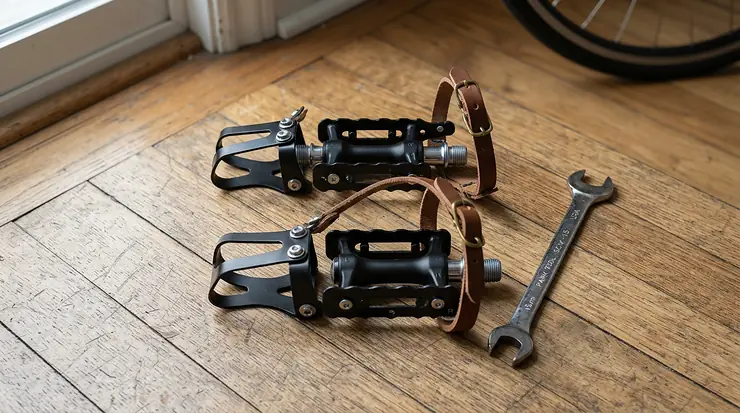
Exercise bike pedals with straps are platform pedals fitted with a toe cage and an adjustable strap. They hold your foot over the pedal spindle, so you can ride in ordinary sneakers without your feet sliding, lifting, or wandering off mid-sprint. Think of them as seatbelts for your soles.
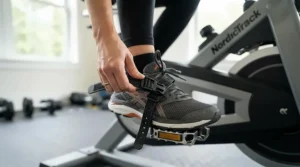
Nobody tells you this when you unbox a new bike: the stock pedals are usually an afterthought. Cheap plastic, a slick top surface, a strap that stretches by week three. Then the resistance goes up, the sweat comes out, and one foot skates off the front like a hockey puck. That’s not a fitness problem. It’s a hardware problem, and it’s fixable for roughly the price of a decent lunch.
Toe cages have been around for well over a century. As Wikipedia’s overview of the bicycle pedal explains, there are two classic ways to attach a shoe to a pedal: a basket-and-strap device, or clipless pedals paired with special shoes. Indoors, the basket-and-strap route wins for millions of riders because it asks for nothing except the shoes already by your door.
This guide is built on spec analysis and patterns in published reviews, not on staged “test-ride diaries.” You’ll get seven real options. They range from bare-bones replacement pedals exercise bike owners can swap in ten minutes to dual-sided hybrids that handle cleats and sneakers. You’ll also get plain-English advice on thread sizes, bike pedal cages, and the foot retention systems you’re really choosing between. Prices appear as ranges only, so check current price before you buy.
Let’s get your feet planted.
Quick Comparison: Exercise Bike Pedals With Straps at a Glance
| Product | Thread | Retention Style | Best For |
|---|---|---|---|
| DRBIKE Replacement Bike Pedals with Strap | 9/16″ | Adjustable rubber strap | Budget swaps on spare bikes |
| Beyoung Exercise Bike Pedals with Straps | 9/16″ | Wide platform, roughly 13″ straps | Bigger feet, daily riders |
| YBEKI Pro-Grade Spin Bike Pedals | 9/16″ | Padded 4-way adjustable straps | Heavier riders, HIIT |
| BUCKLOS Bike Pedals with Toe Cages and Straps | 9/16″ | Aluminum cage and strap | Indoor/outdoor crossover |
| Sunny Health & Fitness Indoor Cycle Bike Pedal Regular (Caged) Set | 9/16″ | Maker-matched cage and strap | Sunny bike owners |
| Marque Indoor Exercise Bike Pedals | 9/16″ | Dual-sided: cage plus SPD | Shared bikes, mixed shoes |
| Kamparts 1/2″ Pedals with Auto-Adjustable Straps | 1/2″ | Auto-adjusting straps | Bikes with 1/2″ crank threads |
Thread size is the real dividing line here. Six of these seven use the 9/16-inch standard, which is why the DRBIKE, Beyoung, and YBEKI pairs suit so many bikes. The Kamparts set is the odd one out at 1/2 inch, so it’s the one to double-check before you click anything. If you’re unsure which group your bike falls into, the compatibility section below settles it in about two minutes.
💬 Just one click — help others make better buying decisions too!😊
Top 7 Exercise Bike Pedals With Straps: Expert Analysis
1. DRBIKE Replacement Bike Pedals with Strap — best budget swap for stock pedals
If your factory pedals feel like slippery dinner plates, this is the low-drama fix. It’s a 9/16-inch pair with an adjustable rubber strap and an anti-slip top surface, and the left and right pedals are clearly marked. That matters because a mixed-up pedal can cross-thread a crank arm in about four seconds. The roundup I consulted lists a 90-day guarantee too.
Rubber straps tend to shrug off sweat better than fabric ones that stretch and sag. Based on the spec sheet, this is a like-for-like replacement rather than a performance upgrade. That’s a compliment. It suits beginners, guest-room bikes, and anyone who just wants secure feet without a research project. Wrench installation is standard, so any basic tool kit covers it.
On reviews, I couldn’t verify a large, current review base for this exact listing. Weigh the specs and the guarantee over star counts, and read the latest customer feedback yourself before buying.
Pros:
- ✅ Standard 9/16″ thread fits most bikes
- ✅ Clear left/right markings prevent cross-threading
- ✅ Simple rubber strap resists sweat
Cons:
- ❌ Minimal padding on longer sessions
- ❌ Limited independent review data
Price range: typically under $25 at the time of research; check current price. Verdict: strong value if you want basic, dependable retention.
2. Beyoung Exercise Bike Pedals with Straps — widest platform for bigger feet
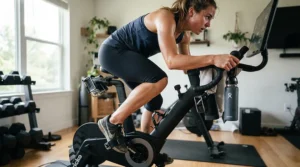
The standout here is real estate. These pedals are wider and longer than many stock sets, which puts more shoe under your foot. The 9/16-inch pair comes with roughly 13-inch rubber straps and weighs just under 884 grams for the set. It’s listed under model W2005126304A1, and you’ll need a wrench or spanner to install it.
More platform means less pressure concentrated under the ball of the foot. That helps in flat-soled sneakers, where a small pedal can leave a “hot spot” after 30 minutes. The weight is irrelevant to ride feel, since your bike’s flywheel does the heavy lifting. Longer straps also help if you wear bulky trainers or thick socks.
Reviewer sentiment is the strongest of the seven where I could verify it. A 2026 roundup reported around 4.5 stars from roughly 196 users at the time of research. Treat that as directional, since ratings drift.
Pros:
- ✅ Generous platform spreads foot pressure
- ✅ Roughly 13″ straps suit chunky sneakers
- ✅ Positive aggregated rating reported
Cons:
- ❌ Wrench or spanner required for installation
- ❌ No warranty terms found in my sources
Price range: around the $20-$30 range; check current price. Verdict: the best everyday all-rounder for bigger feet.
3. YBEKI Pro-Grade Spin Bike Pedals — padded straps for long, hard sessions
YBEKI’s listing pairs 9/16-inch alloy spindles with 4-way adjustable straps, a 500-pound load capacity, and a 12-month warranty. It’s marketed as compatible with Peloton, Schwinn, and Sunny bikes. A roundup also describes memory-foam padding and diamond-cut treads.
Read the 500-pound figure as headroom, not a target. It suggests the pedal body and spindle won’t be the weak link for heavier riders or explosive HIIT efforts. The padded strap is the practical upgrade. Instep pressure is a common complaint with thin straps on long rides, and cushioning spreads it out. Multi-way adjustment also helps if your shoes vary between trainers and stiffer gym shoes.
On reviews, I found mostly the manufacturer’s own claims, and percentages like “more grip” are marketing, not measurements. Independent verification was thin, so check the current review tally.
Pros:
- ✅ Padded straps ease instep pressure
- ✅ High load capacity for heavier riders
- ✅ 12-month warranty listed
Cons:
- ❌ Performance claims are manufacturer-sourced
- ❌ Pricier than plain replacement pairs
Price range: roughly $25-$45 range; check current price. Verdict: worth the premium for frequent, intense riders.
4. BUCKLOS Bike Pedals with Toe Cages and Straps — aluminum cages that cross over outdoors
The hook is metal. This 9/16-inch aluminum set is listed for indoor exercise bikes and outdoor cycling, and it’s sold as compatible with the Peloton Bike for regular shoes. That crossover means one purchase can move between your spin bike and a commuter.
Aluminum cages hold their shape under repeated foot pressure better than soft plastic ones, which can flex and let your toe wander. The outdoor angle carries a caution, though. Cages plus straps can trap the foot in a fall, so I’d favor these indoors or on gentle rides. If you use them on the road, loosen the strap a notch.
Retailer data is thin. A Walmart listing at the time of research showed a 4.3-star average on just 16 reviews, and that small sample tells you very little. Treat the aluminum spec as the main argument here.
Pros:
- ✅ Metal cages resist flexing
- ✅ Doubles as an outdoor bike pedal
- ✅ Starts near the budget end
Cons:
- ❌ Small review sample so far
- ❌ Straps can trap the foot outdoors
Price range: starting around $20 (retailer listing at the time of research); check current price. Verdict: a solid pick if you want one set for both bikes.
5. Sunny Health & Fitness Indoor Cycle Bike Pedal Regular (Caged) Set — maker-matched fit for Sunny bikes
This is the 2-piece toe-cage-and-strap set, catalog code SFP-B01-PD, sold by the brand itself. It fits a 9/16-inch shaft. Sunny’s own guidance says most of its bikes use 9/16-inch threads. The exceptions are models SF-B1203, SF-B1918, and P8100, which use 1/2 inch.
A manufacturer-matched part removes the biggest replacement-pedal risk, which is buying the wrong thread. If you own a Sunny cycle, this is the closest thing to an “it just fits” answer. The trade-off is that OEM-style parts aim for like-for-like function, not premium upgrades. Expect a functional cage and strap, not memory foam or fancy tread patterns.
I couldn’t verify meaningful customer review data for this specific parts listing. Its value lies in fitment certainty and easy support, not in glowing feedback.
Pros:
- ✅ Made for the brand’s own bikes
- ✅ Includes cages and adjustable straps
- ✅ Manufacturer fit guidance available
Cons:
- ❌ No premium padding or extras
- ❌ Fitment beyond Sunny bikes is your call
Price range: roughly $20-$40 range; check current price. Verdict: the safest choice for Sunny owners.
6. Marque Indoor Exercise Bike Pedals — flip between sneakers and SPD cleats
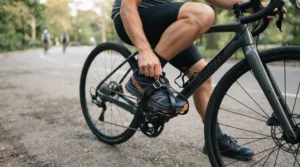
Two pedals in one. Marque’s set has a flat platform with a toe cage and strap on one side and a Shimano SPD-compatible cleat mechanism on the other. SPD cleats come included. The body is aluminum, the axle is a Cr-Mo 9/16-inch spindle, and the listing describes three sealed bearings.
Dual-sided design solves the shared-bike problem. One rider clips in with cycling shoes and another flips the pedal and pedals in sneakers, with no tools between them. Sealed bearings should stay smooth longer in a sweaty, dusty spare room, which is a real long-term advantage over plain bushings.
I couldn’t verify a robust current review base, so this rests on its spec sheet. That’s a fair basis given the design, but check the latest customer feedback before buying.
Pros:
- ✅ Cage side and SPD side in one pedal
- ✅ Sealed bearings for smooth rotation
- ✅ SPD cleats included in the set
Cons:
- ❌ Costs more than plain cage pedals
- ❌ Independent review data was limited
Price range: roughly $35-$60 range; check current price. Verdict: best value for mixed-shoe households.
7. Kamparts 1/2″ Pedals with Auto-Adjustable Straps — rare 1/2″ thread with replaceable straps
Not every bike uses 9/16-inch threads. This Kamparts pair comes with auto-adjustable straps and a 1/2-inch thread, and the listing references various Star Trac bikes. The same catalog sells replacement PVC straps separately, which is unusually practical.
Auto-adjusting straps tighten as your foot slides in, and that’s handy when you’re dashing between exercisers. Wearing out the straps first is common, so buying strap replacements instead of whole pedals is the sensible economics. The vital warning: match the thread first. A 1/2-inch pedal doesn’t belong in a 9/16-inch crank, and forcing it damages the arm.
Reviews were not verifiable for this listing. Its case rests on catalog specs and support parts availability.
Pros:
- ✅ Replaceable straps extend lifespan
- ✅ Auto-adjust design speeds mounting
- ✅ Covers the less-common 1/2″ thread
Cons:
- ❌ Fit depends on exact bike model
- ❌ No independent reviews verified
Price range: roughly $30-$60 range; check current price. Verdict: the right call when your bike needs 1/2-inch pedals.
Top 7 Comparison: Specs, Price Ranges, and Review Signal
| Product | Thread | Price Range | Review Signal | Best For |
|---|---|---|---|---|
| DRBIKE | 9/16″ | Under $25 | Limited verified data | Budget swaps |
| Beyoung | 9/16″ | ~$20-$30 | ~4.5 stars reported (roundup) | Everyday riders |
| YBEKI | 9/16″ | ~$25-$45 | Mostly maker claims | Heavy HIIT users |
| BUCKLOS | 9/16″ | From ~$20 | Small sample | Indoor/outdoor use |
| Sunny Health caged set | 9/16″ | ~$20-$40 | Not verified | Sunny owners |
| Marque | 9/16″ | ~$35-$60 | Limited verified data | Shared bikes |
| Kamparts | 1/2″ | ~$30-$60 | Not verified | 1/2″ thread bikes |
The pattern is clear. Under $30 you get dependable basics, and the extra $15 to $30 buys padding (YBEKI), dual-mode versatility (Marque), or replaceable parts (Kamparts). The review column is the honest caveat: only Beyoung carried a meaningful aggregated rating in my research. So treat every price and rating as a snapshot, and verify current details on the listing.
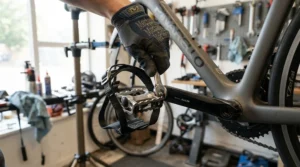
How to Install Exercise Bike Pedals With Straps in 15 Minutes
Good hardware still fails if it’s installed crookedly. Here’s the short, practical routine.
- Confirm the thread. Check the crank arm or manual for 9/16 inch or 1/2 inch before you buy or unbox anything.
- Identify left and right. Pedals are stamped “L” and “R” for a reason.
- Know the reverse-thread rule. The right pedal tightens clockwise, but the left pedal has a left-hand thread and tightens counterclockwise. This is because precession would otherwise loosen a normally threaded left pedal under pedaling load.
- Start by hand. Thread each pedal in gently, and if it binds, back it out instead of forcing it.
- Snug it with a wrench. Some sets need a 15 mm wrench, so check your pedal’s instructions. Recheck tightness after your first week, then occasionally.
- Set the strap. Place it just behind the ball of your foot, snug but not numbing. Practice sliding out before your first hard interval.
Common mistakes in the first 30 days: overtightening straps until your toes tingle, skipping the left-hand thread rule, and never rechecking bolts. Also, don’t stretch a single strap hole to compensate for a shoe that’s too wide. Move up a size or swap to longer straps such as those on the Beyoung set.
Real-World Scenarios: Matching Pedals to Your Life
Specs are abstract. Here are three imaginary riders and the reasoning behind each pick.
Scenario 1: The beginner on a modest upright bike. You ride three mornings a week, thirty minutes each, in a spare room. Your budget is tight and your shoes are old trainers. The DRBIKE pair or the wider Beyoung set covers you. Low-impact cycling is a gentle way to build fitness, and as Healthline’s stationary bike guide notes, a stationary bicycle puts less stress on the joints than some other cardio machines. Secure feet make that low-impact promise easier to keep.
Scenario 2: The shared household. One partner owns cycling shoes with SPD cleats, the other rides in sneakers, and you have one bike. The Marque dual-sided pedals solve this without swapping hardware. Flip the pedal, adjust the strap, ride.
Scenario 3: The heavier rider doing intervals. You do sprint intervals four days a week and worry about flex under load. The YBEKI pair’s 500-pound rating and padded straps are aimed at exactly this. Its padding also spreads instep pressure over the longer efforts.
If none of these fit, the decision framework below helps: pick by shoe type first, thread size second, and budget last.
Problem → Solution: Fixing Common Pedal-Strap Headaches
Problem 1: Your foot slides sideways. Your platform is probably too narrow or the strap is sitting too far forward. Move the strap behind the ball of the foot, or step up to a wider platform like the Beyoung pedals.
Problem 2: The strap stretches or loosens. Fabric and cheap plastic buckles fatigue over time. Replaceable-strap systems like Kamparts let you renew the part that wears out first, and rubber straps such as the DRBIKE ones handle sweat better than fabric.
Problem 3: Your instep goes numb. You’ve likely overtightened. Loosen one notch, wear stiffer soles, or try padded straps such as the YBEKI set.
Problem 4: A pedal creaks or works loose. Recheck seating and the left-hand thread rule, and confirm you didn’t cross-thread the arm. A pedal that keeps loosening deserves inspection, not repeated hard cranking.
Problem 5: You can’t exit fast enough. Leave a little slack and practice slowly. Dual-sided designs like Marque let you flip to a strapless-style platform when you’d rather ride free.
How to Choose Exercise Bike Pedals With Straps
Follow these six steps in order.
- Match the thread size. Identify 9/16 inch or 1/2 inch first. Everything else is secondary if it doesn’t screw in.
- Pick your shoe strategy. Sneakers point to cages and straps, while cycling shoes point to SPD hybrids like Marque.
- Check platform width. Bigger shoes need bigger platforms, and a Beyoung-style deck helps here.
- Inspect strap quality. Look for adjustability range, padding, and whether replacement straps exist.
- Confirm load rating and build. Heavier riders should favor higher ratings, such as the 500-pound figure on the YBEKI listing.
- Verify warranty and fit claims. Seek clear terms and don’t rely on marketing percentages.
The most overlooked step is number one. A gorgeous pedal in the wrong thread is a very expensive paperweight.
Bike Pedal Cages and Toe Cages and Straps: How They Actually Work
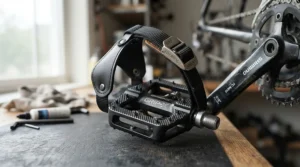
Bike pedal cages are the front “baskets” that surround your toes. The straps loop over the top and cinch behind the ball of your foot. Together, toe cages and straps do two jobs: they stop your foot from sliding forward, and they let you pull up slightly on the upstroke, which recruits your hamstrings and hip flexors more evenly.
The design is old, and it sticks around because it’s forgiving. As one reference on bicycle pedals notes, the basket-and-strap approach was standard until clipless systems took over in racing. For indoor riding, though, you don’t need race-day efficiency. You need a stable foot.
Metal cages, like those on the BUCKLOS set, resist bending. Plastic cages, as on many budget pedals, are lighter and quieter. Straps come as rubber, PVC, nylon, or padded versions, and each has trade-offs in stretch, comfort, and durability. Whichever style you choose, place the strap behind the ball of the foot, where your shoe narrows, and it will hold better.
Replacement Pedals Exercise Bike Owners Need to Get Right: Thread Size and Fit
Buying replacement pedals exercise bike setups demand is mostly a thread-size question. According to Sheldon Brown’s bicycle pedal guide, most pedals have 9/16-inch by 20 tpi threads, while pedals for one-piece cranks are 1/2 inch by 20 tpi.
That single fact explains why the Kamparts 1/2-inch pedals exist and why the Sunny Health caged pedal set mentions exceptions. Sunny notes that most of its bikes use 9/16 inch, with a few models on 1/2 inch.
How do you check? Look at your bike’s manual, inspect the crank arm hole, or contact the manufacturer with your model number. If the new pedal starts easily by hand and feels smooth, you’re likely fine. If it binds, stop, because forcing threads can wreck an expensive crank.
Worn crank threads are the other trap. Some roundup notes suggest wrapping the axle with tape for a tighter fit, but I’d treat that as a temporary bandage. For a stripped crank, get a proper repair or replacement.
Foot Retention Systems and Toe Clip Alternatives Compared
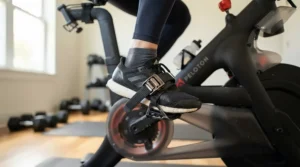
Foot retention systems fall into a few families, and understanding them stops you from over- or under-buying.
| Option | Shoes Needed | Quick Exit | Upstroke Power | Best For |
|---|---|---|---|---|
| Toe cages and straps (DRBIKE, Beyoung) | Any sneakers | Moderate | Good | Everyday indoor riders |
| Strapless toe clips | Any sneakers | Easy | Light | Casual riders |
| Clipless SPD-style (Marque SPD side) | Cycling shoes with cleats | Twist-out | Excellent | Performance riders |
| Power-grip-style straps | Almost any shoe | Moderate | Good | Riders wanting simplicity |
| Bare platform | Any shoes | Easiest | None | Warm-up or recovery riding |
Toe clip alternatives deserve an honest look. Strapless clips offer light retention with easy exits, while clipless pedals give the strongest connection but require dedicated shoes. Reviewers of add-on toe clip kits sometimes report that mounting them means drilling holes or hunting for longer screws, which is why a complete pedal set like the BUCKLOS or Sunny Health option is usually less fiddly.
The table shows a clear trade-off. Straps sit in the sweet spot of cost, shoe flexibility, and security. If you already own SPD shoes, the Marque hybrid gives you both worlds without changing pedals between rides.
Secure Pedaling Platform: Features That Actually Matter (And Those That Don’t)
A secure pedaling platform isn’t about brand names. It’s about a few physical details.
What matters:
- Platform width and grip. A textured, concave, or diamond-patterned top keeps soles from skating. The wide deck of the Beyoung pedals is the clearest example.
- Strap adjustability and padding. The YBEKI padding earns its place on long rides.
- Bearing quality. Sealed bearings, as on the Marque pedals, resist sweat and dust.
- Correct thread and clear L/R marks. Non-negotiable.
What matters less:
- Pedal weight. On a flywheel bike, a few grams won’t change your ride.
- Fancy colors and glow-in-the-dark labels. Cute, but they won’t improve your workout.
- Big marketing percentages. “48% more grip” style claims rarely come with test methods, so trust verified specs instead.
Ask this question of any feature: does it change how firmly my foot stays where it should be? If the answer is no, don’t pay extra for it.
What to Expect: Real-World Performance
Straps change the feel of pedaling more than most people expect. Once your foot is held, you can pull through the top of the stroke, not just push down. Riders often notice smoother, rounder circles and less mental energy spent “managing” their feet.
There’s a learning curve, though. The first sessions can feel slightly restricted, because your foot can’t drift as freely. Give it a week. Start with the strap one notch looser than you think you need, then tighten as you gain confidence.
Comfort is the other half. Thin straps can press on the top of the foot during long rides, while padded straps such as the YBEKI design spread that pressure. Expect a firmer, more connected feel on aluminum-caged options like the BUCKLOS pedals, and a slightly softer feel on plastic ones. And remember that pedals can’t fix a poorly fitted bike, so check your saddle height before blaming the hardware.
Long-Term Cost & Maintenance
Total cost of ownership is where cheap and premium pedals converge more than you’d think.
| Tier | Typical Range | Examples | Trade-Off |
|---|---|---|---|
| Budget | Under about $25 | DRBIKE, BUCKLOS | Basic padding, simpler build |
| Mid | About $20-$45 | Beyoung, Sunny Health caged set, YBEKI | Better fit or comfort features |
| Premium | About $30-$60 | Marque, Kamparts | Versatility or replaceable parts |
A $20 pedal that lasts two years costs less per month than a $50 pedal replaced in three, but the calculation flips if a premium pair lasts four or five years and serves two riders. The Marque dual-sided design is the clearest “pays back over time” case for a shared bike.
Maintenance is light. Wipe pedals after sweaty rides, check tightness monthly, and inspect straps for fraying every few months. Replaceable straps, like those offered in the Kamparts catalog, turn a small wear item into a small fix instead of a full replacement. Prices vary, so check current price before deciding.
Frequently Asked Questions
❓ How tight should exercise bike pedals with straps be?
❓ Can I add toe cages to my existing pedals instead of buying new ones?
❓ Do straps help if I have knee pain?
❓ What shoes work best with pedals with straps?
❓ How often should I replace exercise bike pedal straps?
Conclusion
The best exercise bike pedals with straps aren’t the flashiest. They’re the ones that fit your thread size, suit your shoes, and stay put when your legs are screaming. For most riders, the Beyoung set delivers the strongest all-around mix of platform width and positive reported sentiment. Budget buyers will find the DRBIKE and BUCKLOS pairs hard to argue with. Heavier riders and interval fans should look hard at the YBEKI padded design, while Sunny owners can lean on the Sunny Health caged pedal set for fitment confidence.
Shared bikes with mixed footwear point to Marque, and 1/2-inch crank owners have a clear route through Kamparts. Whatever you choose, verify the thread first, install carefully, mind the left-hand thread, and start with slightly looser straps than instinct suggests.
Secure feet make workouts feel better, and a better feel makes you ride more often. That’s the whole game.
Recommended for You
- Ergonomic Exercise Bike Seat: 7 Best Picks For Back Pain 2026
- Bike Seat For Peloton: 7 Comfortable Saddle Upgrades In 2026
- Gel Bike Seat For Exercise Bike: 7 Picks That Save Your Butt (2026)
Disclaimer: This article contains affiliate links. As an Amazon Associate, I earn from qualifying purchases. If you purchase products through these links, we may earn a small commission at no additional cost to you.
✨ Found this helpful? Share it with your friends! 💬🤗
