
In This Article
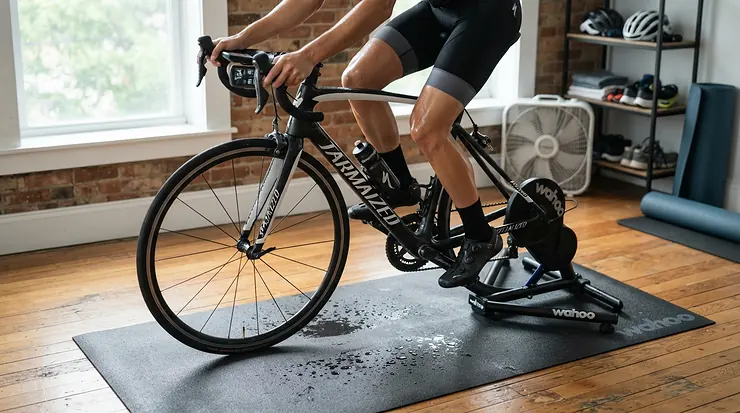
A noise reduction bike mat is a dense foam or PVC floor mat that sits beneath an indoor bike, smart trainer, or spin bike. It absorbs vibration, cushions impact, and takes the edge off the low-frequency hum that travels through your floor. It won’t turn your setup into a library. But the right noise reduction bike mat can be the difference between a ride your downstairs neighbor never notices and a broom-handle serenade at 6:15 a.m.
Here’s what most people get wrong. Trainer noise comes in two flavors. There’s airborne sound, like the whir of a flywheel and the chirp of a chain. And there’s structure-borne vibration, the thump-hum that sneaks through joists and turns the ceiling below into a speaker. Basic soundproofing principles treat these as separate problems. A mat is a vibration tool first and a sound tool second. That’s why the phrase “soundproof bike mat” is more marketing poetry than physics.
So this guide cuts through the poetry. You’ll get seven real mats compared on thickness, size, materials, and what reviewers keep saying. You’ll also get setup advice, buying mistakes to dodge, and a decision framework. Along the way we’ll cover anti-vibration bike mat basics, why a quiet bike floor mat works best as part of a system, and which acoustic dampening pads and neighbor-friendly accessories are worth adding. We’ll also look at vibration isolation mats, the engineering cousin of what you’re shopping for.
One honesty note: this article draws on manufacturer specs, retailer listings, and published roundups, not my own lab bench. Where the evidence is thin, I’ll say so.
Quick Comparison: 7 Noise Reduction Bike Mat Options at a Glance
| Mat | Size | Thickness | Material | Price Range | Best For |
|---|---|---|---|---|---|
| Wahoo KICKR Mat | 36″ x 78″ | 6 mm | 6P-free PVC | Around $80-$90 | Direct-drive owners wanting full coverage |
| Garmin Tacx Rollable Trainer Mat | 70.8″ x 35.4″ | 6 mm | Water-repellent foam | Around $80-$90 | Riders who need rollable storage |
| Saris Trainer Mat | About 63-65″ x 36″ | Varies by listing | PVC foam | Around $80 | Upper-floor, vibration-first setups |
| Kinetic by Kurt Trainer Mat | 36″ x 78″ | Check listing | Check listing | Mid-range (check current price) | Wheel-on fluid trainers |
| CyclingDeal Bike Trainer Floor Mat | 30″ x 60″ | 7 mm | Soft PVC | Budget tier (check current price) | Spin bikes on a budget |
| Crostice 6mm Bike Trainer Mat | 30″ x 60″ | 6 mm | ECO PVC | Budget tier (check current price) | Permanent bike or treadmill spots |
| Cycleclub 6mm Bike Mat | Check listing | 6 mm | Check listing | Budget tier (check current price) | Peloton-style bikes |
Looking at the table, thickness is surprisingly uniform: 6 mm is the common baseline, and the CyclingDeal Bike Trainer Floor Mat goes to 7 mm. The real differences are footprint and price. The Wahoo KICKR Mat and the Kinetic by Kurt Trainer Mat give you a full 78 inches of runway, while the 30″ x 60″ budget mats suit compact bikes better than a long road-bike-plus-trainer rig. Budget buyers should measure first and skip the “it’ll probably fit” gamble.
💬 Just one click — help others make better buying decisions too!😊
Top 7 Noise Reduction Bike Mat Picks: Expert Analysis
1. Wahoo KICKR Mat — biggest footprint for direct-drive riders
At 36 by 78 inches, this mat is long enough that you can step on and off in cycling shoes without touching bare floor. Wahoo lists it at 6 mm thick, made from 6P-free PVC, with an anti-slip texture and a beveled edge. In practice, 6 mm is the thickness most roundups treat as the minimum for meaningful vibration damping, and the bevel means fewer toe-stubbing ledges.
Based on the spec comparison, this is a vibration-and-sweat shield first and a “quiet” product second. Wahoo itself says the material helps reduce noise, not erase it. That’s honest, and it’s the right expectation for any anti-vibration bike mat.
Retail reviewers describe it as sturdy, wide, and easy to wipe down. One reviewer reported that neighbors who previously heard their rides noticed nothing after the switch, while another said it dampens noise only “somewhat.” Reviews therefore agree on quality and differ on magnitude. Some mention pressure marks that fade overnight.
Pros:
- ✅ Generous 36″ x 78″ coverage for full rigs
- ✅ Anti-slip surface keeps trainer feet planted
- ✅ Wipe-clean, sweat-resistant PVC
Cons:
- ❌ Costs more than generic mats of similar thickness
- ❌ Large footprint is awkward to store
Price range: around $80-$90. It’s a premium for brand polish, but worth it if you want one mat that simply fits.

2. Garmin Tacx Rollable Trainer Mat — rolls up for tight spaces
If your trainer lives in a living room that doubles as a living room, rollability matters. This 6 mm water-repellent foam mat measures roughly 70.8 by 35.4 inches and weighs just under six pounds. It rolls up and tucks into a closet.
What does that mean for noise? Foam of this thickness cushions the trainer’s feet and damps the vibration that otherwise travels into the floor. Garmin positions it for Tacx direct-drive trainers, but nothing about the geometry stops it working under other trainers of similar footprint.
One European retailer shows a 4.8 out of 5 average across 29 reviews for the Rollable version. Buyers repeatedly mention that it dampens trainer noise, feels firm, and keeps the trainer stable. A recurring complaint is price: one reviewer called it steep “for a piece of plastic,” while still calling it indispensable. Another noted creases from tight packaging, so unroll it early.
Pros:
- ✅ Rolls up for easy apartment storage
- ✅ Water-repellent foam wipes clean fast
- ✅ Consistently high retailer rating
Cons:
- ❌ Pricey for a foam rectangle
- ❌ Packaging creases can linger initially
Price range: around $80-$90. Worth it for small spaces where storage beats square footage.
3. Saris Trainer Mat — dense, vibration-first design for upstairs flats
Saris sells this mat on a simple promise: it deadens the whirr, stops the trainer from “walking,” and wipes clean with soap and water. Listings describe black PVC foam at roughly 63 to 65 inches by 36 inches.
Here’s the catch. Thickness is inconsistently listed, and one bundled Saris kit lists a 4 mm mat. Warranty terms also differ by retailer, ranging from one year to lifetime. Verify both before you buy.
A UK review site that compared four trainer mats rated the Saris best for vibration damping because it’s dense and heavy. That’s a single publisher’s opinion, but the logic holds up: mass and density matter more than a marketing label for upper-floor setups.
On reviews, verified owner feedback is thin. A few retail comments call it wide with good thickness, but I couldn’t find a large, independent review pool.
Pros:
- ✅ Dense PVC foam aimed at sound absorption
- ✅ Helps prevent trainer “walking”
- ✅ Wipes clean with soap and water
Cons:
- ❌ Thickness is inconsistently listed
- ❌ Warranty terms vary by seller
Price range: around $80. Good value if the density claims hold for the version you receive.
4. Kinetic by Kurt Trainer Mat — lightweight and sized for wheel-on trainers
This is the pragmatic pick for fluid-trainer owners. At 36 by 78 inches, it’s wide enough that one roundup says it works even under the splayed legs of a Kinetic Rock & Roll trainer.
What the spec sheet won’t tell you, but user reports suggest, is the weight. Reviewers describe it as very light for its size, which makes moving and storing easier. They also say it’s thick enough to absorb vibration and noticeably cuts the racket from a Road Machine fluid trainer.
The common complaint is cleats. One reviewer said the surface catches when stepping off and twisting, so wear sneakers or clip out on the floor. Thickness and material specifics aren’t consistently published, so check the listing.
Wheel-on trainers tend to be louder than direct-drive units, so a mat here is a first step rather than a cure. Forum riders in apartments often report that trainer type drives complaints, and a mat alone won’t hush a loud fluid unit.
Pros:
- ✅ Light and easy to move or store
- ✅ Length fits bike plus trainer footprint
- ✅ Wipe-clean surface protects floors
Cons:
- ❌ Cleats can catch when dismounting
- ❌ Thickness not clearly published
Price range: check current price; it sits in the mid-range tier. A solid match if you already ride a Kinetic.
5. CyclingDeal Bike Trainer Floor Mat — plush 7 mm cushion on a budget
Seven millimeters makes this the thickest mat on the list, and several roundups crown it best overall or best for noise control. It’s soft PVC, 30 by 60 inches, which suits spin bikes and compact trainers.
Thicker foam generally absorbs more vibration before it reaches the floor, which is why it keeps winning “quiet” comparisons. One review site reported roughly 30% less perceived trainer noise on a 7 mm mat versus a thin foam mat. That’s a subjective figure from a single publisher, so treat it as directional.
The trade-off is size. At 60 inches, a road bike on a wheel-on trainer may overhang the edge, so measure first. Also note that one roundup listed a much thinner 3 mm version, so confirm the thickness in the listing you’re buying.
On reviews, I could verify mostly editorial praise rather than a large pool of owner reviews, so that’s a gap worth knowing.
Pros:
- ✅ Thickest cushioning on this list
- ✅ Budget-friendly entry point
- ✅ Soft PVC protects wood, tile, and carpet
Cons:
- ❌ 60-inch length may be tight for road setups
- ❌ Listing thickness varies between sellers
Price range: budget tier, so check current price. Best value for compact bikes.
6. Crostice 6mm Bike Trainer Mat — dual-sided grip for permanent setups
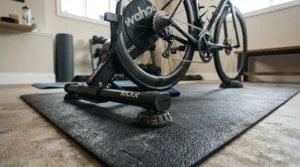
Built for Peloton-style bikes, treadmills, and rowers, this 30 by 60 inch ECO PVC mat is described as non-slip, waterproof, and sweatproof. One roundup highlights its dual-sided design, aimed at long-term stability and easier cleaning.
For permanent installations, that stability is the whole point. A mat that stays flat and doesn’t creep means your anti-vibration bike mat keeps doing its job after month six. Roundups also say its 6 mm build beats thinner 4 mm alternatives for vibration and noise damping.
On reviews, I found strong editorial endorsement but not a large verified owner pool, so judge it by its specs and return policy.
Pros:
- ✅ 6 mm thickness suits heavy bikes
- ✅ Waterproof, sweat-resistant surface
- ✅ Works across bikes, treadmills, and rowers
Cons:
- ❌ Smaller footprint than 78-inch mats
- ❌ Limited verified owner feedback
Price range: budget tier; check current price. A smart pick for a spare-room spin bike.
7. Cycleclub 6mm Bike Mat — 6 mm cushion sized for Peloton-style bikes
One roundup named this its best overall for a durable, no-fuss mat that handles sweat, noise, and floor protection. Another compared it with thinner 4 mm Cycleclub variants, which means thickness varies across the brand’s range.
That makes the 6 mm label the thing to confirm. If you own a Peloton-style bike, it already ships with a mat, but a larger replacement can add coverage and an extra damping layer.
A forum rider with a Peloton reported years in an apartment with no complaints from neighbors below, thanks to a decent mat. Another noted that out-of-the-saddle effort can still make noise. Both observations suggest a mat helps, but rider behavior matters.
Verified owner reviews are limited in my research, so lean on the return policy.
Pros:
- ✅ 6 mm build for solid vibration damping
- ✅ Sized for Peloton-style bikes
- ✅ Durable, wipe-clean surface
Cons:
- ❌ Thinner 4 mm versions exist; check listing
- ❌ Limited verified owner feedback
Price range: budget tier; check current price. Good value if the thickness checks out.
Side-by-Side: What Each Mat Does Best
| Mat | Standout Strength | Watch-Out | Best For |
|---|---|---|---|
| Wahoo KICKR Mat | Full coverage, bevel edge | Premium price | Wahoo KICKR owners |
| Garmin Tacx Rollable Trainer Mat | Rolls up | Packaging creases | Small apartments |
| Saris Trainer Mat | Density for damping | Inconsistent specs | Upper floors |
| Kinetic by Kurt Trainer Mat | Light, long | Cleat catch | Fluid trainers |
| CyclingDeal Bike Trainer Floor Mat | 7 mm cushion | Shorter length | Budget spin bikes |
| Crostice 6mm Bike Trainer Mat | Dual-sided stability | Smaller size | Permanent setups |
| Cycleclub 6mm Bike Mat | Peloton sizing | Thickness varies | Peloton-style bikes |
Reading this table, the Saris Trainer Mat and Wahoo KICKR Mat are the safest bets if vibration is your main worry, while the Garmin Tacx Rollable Trainer Mat wins on storage. If budget is the priority, the CyclingDeal Bike Trainer Floor Mat gives the most cushion per dollar, provided it fits your bike.
Setup Guide: Installing Your Noise Reduction Bike Mat for Maximum Quiet
A mat is only as good as where you put it. Here’s the order I’d follow.
- Pick the room wisely. Ground-floor rooms are ideal because there’s no neighbor beneath you. On upper floors, avoid the room directly over a bedroom or living area, and consider a corner that aligns with load-bearing walls, which are stiffer and less prone to flexing.
- Let the mat relax. Unroll it flat for a day. Rolled mats like the Garmin Tacx Rollable Trainer Mat can keep packaging creases, and flat mats settle faster.
- Center every contact point. Trainer feet, wheel-on legs, and bike stands should all sit on the mat. A foot hanging off the edge defeats the purpose.
- Level the trainer. An uneven trainer rocks, and rocking creates thumps. Adjust the feet until it’s planted.
- Add decoupling pads if needed. Heavy-duty anti-vibration rubber pads, similar to those used under washing machines, can go under each contact point for an extra layer. Check your trainer’s manual first.
- Ride mindfully. Out-of-the-saddle sprints and sudden high-wattage accelerations spike vibration. Schedule hard intervals for daytime when building noise is naturally higher.
- Clean weekly. Wipe with mild soap and water so grit doesn’t grind into the surface.
During your first 30 days, listen and ask. A quick word with the person below you tells you more than any decibel chart.

Real-World Scenarios: Which Quiet Bike Floor Mat Fits Your Life?
Scenario 1: Third-floor apartment, direct-drive trainer, 6 a.m. rides. Budget is flexible, frequency is five days a week. Start with the Saris Trainer Mat or the Wahoo KICKR Mat, then add rubber decoupling pads. Vibration is your enemy, and you want density plus coverage.
Scenario 2: Condo spare room, Peloton-style bike, tight budget. You ride three times a week and the floor is laminate. The Crostice 6mm Bike Trainer Mat or Cycleclub 6mm Bike Mat gives 6 mm of cushion at a budget price. Confirm thickness and size before you click.
Scenario 3: Ground-floor garage, fluid trainer, concrete floor. Noise bothers nobody below, so floor protection and grip matter most. The Kinetic by Kurt Trainer Mat is a sensible, lightweight fit.
Scenario 4: Studio apartment, limited storage. The Garmin Tacx Rollable Trainer Mat lets you roll up and stash the mat after each ride, which keeps the room usable.
The pattern is simple: the higher your floor and the thinner your walls, the more you should invest in density, coverage, and layering.
✨ Don’t Miss These Exclusive Deals!
🔍 Take your indoor cycling setup to the next level with these carefully selected products. Click on any highlighted item to check current pricing and availability. These tools will help you create a calm, neighbor-friendly training space you’ll actually enjoy using!
How to Choose a Noise Reduction Bike Mat: 7 Steps
The best noise reduction bike mat is the thick, dense, correctly sized one that stays put. Follow these steps.
- Start with your floor level. Upper floors need density and layering; ground floors mostly need protection.
- Aim for 6 mm or more. Roundups consistently treat 6 mm as the effective minimum for vibration damping, with 7 mm better.
- Measure your footprint. Include trainer legs, the bike’s wheelbase, and a step-on zone.
- Check material and density. Closed-cell PVC or foam resists sweat and compresses less than a thin yoga mat.
- Look for anti-slip texture. A mat that creeps lets your trainer walk.
- Confirm the listed thickness. Several brands sell thinner variants under similar names.
- Plan for add-ons. Decide whether you’ll layer rubber pads or a second mat.
For example, a long road bike on a wheel-on trainer needs closer to 78 inches, while a spin bike works fine on 60. And if your trainer is loud in the air, no mat will fix that, so factor trainer type into the plan.
Soundproof Bike Mat vs Anti-Vibration Bike Mat: What Each Actually Does
Search for a soundproof bike mat and you’ll find dozens of listings promising silence. The honest version is more modest. A mat does not seal a room, so it can’t be soundproof in the true sense. One UK review site says it plainly: a mat does not silence a trainer, it deadens the low-frequency vibration that travels through floors, and that is the noise that causes neighbor complaints.
An anti-vibration bike mat targets that structure-borne energy. Engineers call the approach passive vibration isolation, using rubber pads, cork, or dense closed-cell foam to absorb and damp mechanical waves. The same source notes that vibrations are never eliminated, only greatly reduced.
So what should you expect? A good mat softens the thump and hum. It won’t mute the freehub click, the chain, or a screaming flywheel. Think of it as turning the volume knob down, not hitting mute. That’s why vibration isolation mats, the industrial cousins of bike mats, often use thicker, denser, purpose-engineered elastomers, and why layering gets closer to real isolation.
Beyond the Mat: Acoustic Dampening Pads and Neighbor-Friendly Accessories
Think of the mat as the base layer. Acoustic dampening pads and a few neighbor-friendly accessories can finish the job.
Anti-vibration rubber pads. Placed under each trainer foot, they decouple the frame from the mat. Guides for apartment riders describe them as dramatically reducing low-frequency hum, though always check your trainer’s manual first.
A second layer. One forum rider reported using an extra mat between a Wahoo KICKR trainer and a regular mat. Another said a third layer still wasn’t enough, which is a useful reality check: layers help, but they have limits.
A front wheel riser or trainer tire. On wheel-on setups, a dedicated tire reduces airborne roar.
A cork-and-plywood platform. Some riders build a small sub-floor, borrowing the logic of acoustic flooring in multi-tenant buildings.
Neighbor communication. The cheapest accessory of all. A heads-up and a promise to avoid late intervals often beats hardware.
Together, these neighbor-friendly accessories turn a good mat into a system.
Features That Actually Matter (And Those That Don’t)
Matters:
- Thickness (6 mm+). Direct impact on vibration absorption.
- Density. Dense material resists compression under heavy trainers.
- Size. If your trainer hangs off the edge, you lose the benefit.
- Non-slip surface. Stops the trainer from creeping.
- Cleanability. Sweat and bike grease are guaranteed.
Matters less:
- Brand logos. The Wahoo KICKR Mat and Garmin Tacx Rollable Trainer Mat are fine mats, but a logo doesn’t damp vibration.
- Fancy textures. Pleasant, but not a noise factor.
- “Soundproof” claims. Treat as marketing.
- Color. Black hides grime; that’s about it.
On paper, this means you can often skip the premium badge and buy thickness and size. But if you own a matching ecosystem trainer, brand-fit mats like the Wahoo KICKR Mat make setup simple.
Common Mistakes When Buying a Quiet Bike Floor Mat
- Assuming one mat solves everything. If the trainer is loud, a quiet bike floor mat helps but doesn’t cure it.
- Ignoring thickness. Listings for similar-sounding mats range from 3 to 7 mm.
- Buying too small. A 60-inch mat under a long bike and wheel-on trainer leaves legs hanging off.
- Choosing a thin yoga mat. It compresses too easily to damp vibration.
- Skipping leveling. A rocking trainer thumps regardless of mat quality.
- Placing the setup over a bedroom. Room choice can matter more than mat choice.
- Forgetting cleats. Some mats, like the Kinetic by Kurt Trainer Mat per one reviewer, catch cleats when you step off.
Spotting these early saves returns, refunds, and awkward hallway conversations.
Noise Reduction Bike Mat vs Bare Floor, Carpet, and Yoga Mat
| Option | Vibration Damping | Sweat/Floor Protection | Cost | Best For |
|---|---|---|---|---|
| Noise reduction bike mat (6-7 mm) | Good | Excellent | Low to mid | Most apartment riders |
| Bare hardwood or tile | None | Poor | Free | Ground-floor only |
| Carpet | Moderate | Poor (absorbs sweat) | Free | Ground floors |
| Thin yoga mat | Low | Fair | Low | Short-term fixes |
| Mat plus rubber pads | Best | Excellent | Mid | Upper floors |
The table makes the point: a dedicated mat beats bare floors and yoga mats on both damping and protection, while a mat-plus-pad combo is the strongest option short of building a platform. One forum rider noted a rubber trainer mat did a better job than a yoga mat at absorbing vibration, which matches the logic above. If you live above someone, I’d skip the yoga mat entirely.
Long-Term Cost & Maintenance
A mat in the $80-$90 range sounds steep, but consider cost per ride. If you train four times weekly, a mat that lasts two years covers roughly 400 sessions, which works out to pennies each. Budget mats cost less up front but may compress or curl sooner, so factor in replacement.
Maintenance is easy:
- Wipe with mild soap and water after sweaty sessions.
- Let it dry before rolling a rollable mat like the Garmin Tacx Rollable Trainer Mat.
- Rotate position occasionally so trainer feet don’t dent the same spot.
- Inspect for permanent compression; a flattened mat damps less.
Compare that with the cost of a noise dispute or a new trainer. Forum riders suggest trying mats first, then pads, then a quieter trainer if complaints persist. Total cost of ownership favors starting with the mat.
Decibels, Hearing, and Being a Decent Neighbor
Let’s put numbers on it. Manufacturer and review figures for popular direct-drive trainers cluster around 59-61 dB, though how those numbers are measured varies. One review site’s rule of thumb is that units above 65 dB can bleed through a standard apartment wall, and that people sharing walls should look for 58 dB or lower.
Hearing safety isn’t your concern here. The CDC’s NIOSH program defines hazardous noise as 85 dBA or higher. It also reminds us decibels are logarithmic: a sound 10 dB louder is ten times more intense. So small dB differences matter more than they look, which is why every bit of vibration damping counts.
Your real audience is next door, not your eardrums. Ride mindfully, schedule hard sessions at civil hours, and pair your mat with pads. That’s what makes a setup truly neighbor-friendly.
FAQ
❓ Do noise reduction bike mats actually quiet a trainer for downstairs neighbors?
❓ How thick should a quiet bike floor mat be?
❓ Can I use a treadmill or yoga mat under my bike trainer?
❓ Will a bike mat leave marks on hardwood floors?
❓ Is a soundproof bike mat enough, or do I need a quieter trainer?
Conclusion
Here’s the short version. A noise reduction bike mat won’t make your trainer disappear, but it quietly does the heavy lifting where it counts: vibration. Thickness around 6-7 mm, enough length to cover your whole rig, and a grippy, wipe-clean surface are the non-negotiables.
If you want the safest all-round pick, the Wahoo KICKR Mat and Saris Trainer Mat lead on coverage and density. The Garmin Tacx Rollable Trainer Mat wins when storage is tight. Budget buyers should look hard at the CyclingDeal Bike Trainer Floor Mat, Crostice 6mm Bike Trainer Mat, and Cycleclub 6mm Bike Mat, and the Kinetic by Kurt Trainer Mat suits fluid-trainer riders. Add rubber pads, pick your riding hours wisely, and your neighbors may never know you exist.
Remember, prices and availability change, so check current pricing before you buy.
✨ Ready for quieter rides?
🔍 Click on any highlighted mat above to check current pricing and availability, and give your floors, your neighbors, and your sanity the upgrade they deserve! 🚴♂️
Recommended for You
- Heavy Duty Bike Mat: 7 Best Picks For 2026
- Exercise Bike Mat: 7 Proven Picks That Protect Floors (2026)
- Platform Pedals For Spin Bike: 7 Ultimate Picks For 2026
Disclaimer: This article contains affiliate links. As an Amazon Associate, I earn from qualifying purchases. If you purchase products through these links, we may earn a small commission at no additional cost to you.
✨ Found this helpful? Share it with your friends! 💬🤗
