
In This Article
Remember that first time you walked into a commercial gym? The intimidation factor was real, right? Between waiting for equipment and dealing with sweaty bench hogs, I knew there had to be a better way. That’s when I started researching the perfect bench press setup for home gym spaces.
Here’s the thing about creating your own bench press setup for home gym – it’s not just about buying a bench and calling it a day. You need the right combination of safety, functionality, and space efficiency. Whether you’re a powerlifting enthusiast pushing serious weight or someone just starting their fitness journey, your home gym bench press station needs to match your goals without breaking the bank.
The bench press remains one of the most effective compound movements for building upper body strength, targeting your pectoralis major, anterior deltoids, and triceps. According to research published in the Journal of Strength and Conditioning Research, proper bench press training can increase muscle thickness by up to 8% in just two weeks when done correctly. But here’s the catch – you need the right setup to make that happen safely and effectively.
In this comprehensive guide, I’ll walk you through everything you need to know about choosing the perfect bench press setup for home gym spaces. From complete bench press equipment to squat rack with bench press combinations, we’ll cover all your options. Let’s dive in and find the setup that’ll transform your home gym into a strength-building powerhouse! 💪
Quick Comparison Table: Top Bench Press Setups
| Product | Type | Weight Capacity | Key Feature | Price Range | Best For |
|---|---|---|---|---|---|
| OPPSDECOR 6-in-1 Set | Complete System | 900 lbs | Squat rack + bench combo | $200-$300 | All-in-one solution |
| Valor Fitness Combo Rack | Rack & Bench | 500 lbs | Adjustable safety catches | $250-$350 | Multi-purpose training |
| REP Fitness FB-5000 | Competition Bench | 1,000 lbs | IPF-certified height | $240-$280 | Serious lifters |
| FLYBIRD Adjustable | Foldable Bench | 800 lbs | ASTM-certified quality | $150-$200 | Space-conscious users |
| MAIDOMA 8-in-1 | Complete Station | 1,500 lbs | Leg dev + preacher curl | $350-$450 | Full-body workouts |
| GMWD Chest Press | Machine System | 1,200 lbs | Independent arms | $400-$550 | Machine training |
| FitGoods Foldable | Adjustable Bench | 660 lbs | 2-second fold design | $120-$170 | Budget-friendly |
💬 Just one click – help others make better buying decisions too!😊
Top 7 Bench Press Setup for Home Gym: Expert Analysis
1. OPPSDECOR 6-in-1 Olympic Weight Bench Set with Squat Rack – Best Complete Bench Press Equipment
If you’re looking for the ultimate all-in-one bench press setup for home gym, the OPPSDECOR 6-in-1 Olympic Weight Bench Set delivers exceptional value. This isn’t just a bench – it’s a complete home gym bench press station that combines a weight bench, barbell rack, squat rack, leg developer, and preacher curl station.
Key Specifications:
- Premium thickened tubular steel construction
- 900 lbs maximum weight capacity
- 4-position backrest adjustments
- 6 barbell rack height positions
- Foldable design for space saving
The construction quality impressed me right away. The thickened steel frame feels rock-solid, and the widened foot base provides excellent stability even during heavy lifts. Customer feedback consistently highlights how the multiple adjustment positions make this bench press rack for home incredibly versatile for different exercise angles.
✅ Pros:
- True 6-in-1 functionality eliminates need for multiple pieces
- Safety bar catches included for solo training
- Easy assembly with clear instructions
- Excellent stability during heavy compound movements
❌ Cons:
- Requires significant floor space when fully set up
- Barbell and weights sold separately
Price: $200-$300 Customer Insight: Users love that it handles everything from flat bench presses to squats and leg extensions, making it perfect for those building their first complete bench press equipment setup.
2. Valor Fitness Bench Press and Squat Rack Combo – Best Squat Rack with Bench Press
The Valor Fitness Bench Press and Squat Rack Combo is a game-changer for anyone serious about their squat rack with bench press training. This half power cage design brings commercial gym functionality to your garage or basement.
Key Specifications:
- High-quality steel construction with reinforced frame
- 500 lb weight capacity
- Six adjustable height positions (22.5″ to 32″)
- Four 8.5″ Olympic plate storage pegs
- Protective safety catch liners
What makes this stand out as a bench press rack for home is its versatility. The adjustable safety catches provide six different height positions, making it suitable for lifters of all sizes. The protective rubber liners prevent barbell damage – a thoughtful touch that shows Valor understands what home gym owners need.
✅ Pros:
- Compact footprint ideal for garage gyms
- No bolting required due to stable design
- Integrated plate storage keeps workspace organized
- Works perfectly for both squats and bench variations
❌ Cons:
- 500 lb capacity lower than some alternatives
- Requires 7′ Olympic barbell (won’t work with shorter bars)
Price: $250-$350 Customer Insight: Reviewers consistently praise the easy assembly and solid construction. One user noted, “It’s light enough to move but sturdy enough to handle my 250 lb lifting range easily.”
3. REP Fitness FB-5000 Competition Flat Bench – Best for Serious Powerlifters
For those who take their bench press setup for home gym seriously, the REP Fitness FB-5000 Competition Flat Bench is the gold standard. Meeting International Powerlifting Federation height standards at 16.9 inches, this bench is built for performance.
Key Specifications:
- 3″ x 3″ 11-gauge steel frame construction
- 1,000 lbs weight capacity
- 4″ thick high-density CleanGrip™ pad
- Tripod foot design for optimal leg drive
- Industrial roller wheels for easy movement
The engineering behind this bench is impressive. The tripod base design keeps the front post out of your way, allowing for proper foot placement and maximum leg drive during heavy lifts. According to expert reviews from Garage Gym Reviews, the FB-5000 offers one of the best value propositions in the market. The CleanGrip™ vinyl material is genuinely grippy – you’re not sliding around during max effort sets.
✅ Pros:
- IPF competition-height certified
- Extremely stable under heavy loads
- Multiple color options available
- Comes with handle and wheels for portability
❌ Cons:
- Flat-only design (no incline/decline adjustments)
- Premium pricing compared to budget options
Price: $240-$280 (standard pad) | $270-$310 (wide pad) Customer Insight: Powerlifters love this bench for competition prep. One user stated, “The height matches exactly what I’ll use at meets, making my training more specific and effective.”
4. FLYBIRD Adjustable Weight Bench ASTM-Certified – Best Home Gym Bench Press Station for Versatility
The FLYBIRD Adjustable Weight Bench brings ASTM-certified quality to the foldable bench category. With an impressive 800 lbs capacity and versatile adjustment options, this home gym bench press station punches well above its price point.
Key Specifications:
- ASTM safety certification
- 800 lbs maximum weight capacity
- Adjustable angles: 90° to -30° (FID capability)
- 30-inch extended backrest
- Compact folding design
The standout feature here is the extended 30-inch backrest, which provides better support for taller users. The bench adjusts through nine different positions, from 90-degree upright for shoulder presses all the way to -30-degree decline for lower chest work. Research from PMC’s muscle activation studies shows that varying bench angles activates different muscle fibers, making this versatility crucial for complete chest development.
✅ Pros:
- ASTM certification ensures quality standards
- True decline capability (rare at this price)
- Folds flat for under-bed storage
- 30″ backrest accommodates taller lifters
❌ Cons:
- Some users report adjustment pins can be stiff initially
- Pad firmness may feel hard for some preferences
Price: $150-$200 Customer Insight: Home gym enthusiasts appreciate the space-saving design without sacrificing stability. “It’s my complete bench press equipment solution in one compact package,” one reviewer noted.
5. MAIDOMA 8-in-1 Olympic Weight Bench Set – Best Complete Bench Press Equipment with Attachments
Talk about comprehensive! The MAIDOMA 8-in-1 Olympic Weight Bench Set is a true complete bench press equipment powerhouse with an incredible 1,500 lbs capacity. This isn’t just a bench press rack for home – it’s practically an entire gym.
Key Specifications:
- Heavy-duty construction rated for 1,500 lbs
- Includes leg extension/curl attachment
- Preacher curl pad integrated
- Adjustable squat rack with safety catches
- Foldable design with US stock availability
The 1,500 lb capacity isn’t just marketing fluff – the reinforced steel construction genuinely handles serious weight. What impressed me most is how they integrated eight different training functions without creating a bulky, unwieldy monster. The safety bar catches are essential for solo training, and the leg developer attachment adds lower-body training options most benches skip entirely.
✅ Pros:
- Exceptional 1,500 lb weight capacity
- True 8-in-1 functionality (not exaggerated)
- Safety catches for bench press training alone
- Leg extension and curl capabilities included
❌ Cons:
- Larger footprint than simple benches
- Assembly requires 1-2 hours and patience
- Higher price point than basic options
Price: $350-$450 Customer Insight: Buyers love the versatility for full-body workouts. “It replaced three separate pieces of equipment in my garage gym,” shared one satisfied customer.
6. GMWD Chest Press Machine 1200LBS – Best Bench Press Safety Equipment Home Solution
The GMWD Chest Press Machine takes a different approach to your bench press setup for home gym by offering a machine-based system with independent converging arms. This is bench press safety equipment home users can trust.
Key Specifications:
- Industrial-strength 1,200 lb capacity
- Independent converging arm design
- Four height adjustment settings
- Premium bearing system for smooth movement
- Adjustable flat/incline bench included
The independent converging arms are the real differentiator here. Unlike fixed-path machines, these arms allow for a more natural pressing motion that reduces joint strain. According to research on bench press biomechanics, natural movement patterns during pressing exercises reduce shoulder stress while maintaining muscle activation. The premium bearings ensure silent, smooth operation – your neighbors won’t hate you at 6 AM!
✅ Pros:
- Excellent for shoulder-friendly training
- Dual-function for chest and shoulder work
- Very stable platform for heavy lifting
- Quiet operation with quality bearings
❌ Cons:
- Takes up more floor space than free-weight benches
- Fixed machine path (less sport-specific)
- Higher investment than traditional setups
Price: $400-$550 Customer Insight: Users recovering from injuries appreciate the controlled movement. “After a rotator cuff issue, this lets me train chest without aggravating my shoulder,” one buyer explained.
7. FitGoods Foldable Weight Bench Press – Best Budget Bench Press Setup for Home Gym
Don’t let the budget-friendly price fool you – the FitGoods Foldable Weight Bench Press delivers solid performance as an entry-level bench press setup for home gym. With 660 lbs capacity and innovative 2-second folding mechanism, it’s perfect for apartment dwellers and first-time buyers.
Key Specifications:
- 660 lbs weight capacity
- Revolutionary 2-second fold design
- 9 adjustable backrest positions
- -15° decline capability for sit-ups
- 80% space savings when stored
The folding mechanism is genuinely impressive – just remove a pin and fold. Within seconds, it’s slim enough to slide under a bed or into a closet. The nine backrest positions provide versatility from flat to incline to decline, making this a surprisingly complete home gym bench press station for the price. The -15° decline angle provides optimal support for sit-ups and lower chest work.
✅ Pros:
- Exceptional value for money
- Genuinely quick 2-second folding
- Nine adjustment positions
- Lifetime warranty included
❌ Cons:
- Lower capacity than heavy-duty options
- Pad may feel less premium than higher-end benches
- Not ideal for serious powerlifters
Price: $120-$170 Customer Insight: Budget-conscious buyers love the quality-to-price ratio. “It’s everything I needed without the $400+ price tag,” one happy customer shared.
Understanding Bench Press Setup for Home Gym Fundamentals
What is a Bench Press Setup for Home Gym?
A bench press setup for home gym typically consists of three core components working together: a sturdy weight bench that can handle your training loads, a barbell rack or safety system to support the weight, and proper safety equipment to train alone without a spotter.
Think of it like building a car – you need the chassis (bench), the engine (barbell and weights), and safety features (racks, catches, collars). According to the National Strength and Conditioning Association, a proper bench press setup should accommodate your height, allow proper foot placement, and provide safety mechanisms for solo training. The bench height should be approximately 17-18 inches from the floor to the top of the pad, matching international competition standards for optimal biomechanics.
Modern home gym bench press stations have evolved dramatically. We’re not talking about the wobbly benches from the 1980s basement gyms. Today’s setups incorporate features like adjustable safety catches, integrated plate storage, quick-fold mechanisms, and even converging arm systems that rival commercial gym equipment.
Why Every Home Gym Needs Proper Bench Press Setup
Your bench press isn’t just about chest gains – it’s a full-body compound movement that builds functional strength. When done correctly with the right setup, bench pressing offers benefits that extend far beyond aesthetics.
Strength and Muscle Development
Research from GoodRx’s analysis of bench press benefits shows that bench press training builds significant muscle mass in your pectoralis major, anterior deltoids, and triceps brachii. But here’s what most people miss – it also strengthens your back, core, and even legs through proper leg drive technique.
Bone Density and Longevity
Studies published in Medicine and Science in Sports and Exercise demonstrate that resistance training like bench pressing increases bone density, which becomes crucial as we age. Starting a proper bench press routine in your home gym today is investing in your mobility 20-30 years from now.
Functional Strength Transfer
Ever notice how much easier it is to push a stalled car or move furniture after months of bench pressing? That’s because the movement pattern translates directly to real-world pushing activities. Athletes in sports like football, hockey, boxing, and even golf benefit from increased bench press strength.
Mental Health Benefits
There’s something uniquely satisfying about the bench press. Progressive overload – gradually adding weight to the bar – provides tangible, measurable progress that boosts confidence and mental well-being. Having this capability in your home gym means you can train whenever stress hits, not just when the commercial gym is open.
Essential Components of a Complete Bench Press Equipment Setup
The Bench: Foundation of Your Setup
Choosing the right bench is like choosing the right mattress – you’ll be spending a lot of quality time on it, so comfort and support matter. Here’s what separates an excellent bench from a mediocre one.
Construction Quality
Look for benches built with 11-gauge or thicker steel. Anything thinner starts getting wobbly under heavy loads. The REP Fitness FB-5000, for example, uses 3″ x 3″ 11-gauge steel tubing, which explains its rock-solid 1,000 lb rating. Welding quality matters too – poor welds mean early failure points.
Pad Thickness and Material
A good bench pad should be 2-4 inches thick with high-density foam. Too thin and you’ll feel the plywood base; too thick and you lose stability. The vinyl covering should have some grip to it – CleanGrip™ materials or textured vinyl keep you from sliding during max efforts. Some lifters prefer firmer pads for better force transfer, while others prioritize comfort for higher-rep work.
Adjustability Considerations
Flat benches excel at one thing and do it extremely well. Adjustable benches offer versatility with incline and decline positions but may have a “gap” between the seat and back pad. Zero-gap designs like those from Ironmaster solve this but cost more. According to muscle activation research, flat, incline at 30-45 degrees, and decline at -15 to -25 degrees each target slightly different muscle fibers.
Stability Features
The base design dramatically affects stability. Tripod designs with a single front post allow better foot positioning for leg drive. Four-post designs offer more stability but can interfere with foot placement. Rubber feet prevent sliding on smooth floors, while wheels help with portability. The best designs integrate both.
Barbell Rack Systems: Safety First
Your barbell rack for home determines whether you can train safely alone. This is non-negotiable safety equipment that could save you from serious injury.
J-Hooks and Height Adjustability
J-hooks should have protective UHMW plastic liners to prevent barbell damage. Multiple height positions (typically 1-inch increments) let you dial in the perfect racking position. Too high and you’re doing a weird shoulder shrug to unrack; too low and you’re wasting energy just getting the bar off the rack.
Safety Catch Systems
Safety catches, spotter arms, or safety pins are your backup when training alone. They should catch the barbell if you fail a rep, preventing it from crushing your chest. The Valor Fitness combo rack includes six adjustable safety positions with protective rubber padding – exactly what you need for solo training sessions.
Integrated vs. Standalone Racks
Integrated systems like the OPPSDECOR 6-in-1 combine the bench and rack into one unit, saving space and ensuring everything works together. Standalone systems offer more flexibility but require more floor space and careful positioning. For home gyms under 100 square feet, integrated systems make more sense.
Weight Capacity Reality Check
Manufacturer weight ratings often include your body weight, the bar, and the plates. If you weigh 180 lbs, use a 45 lb bar, and load 225 lbs of plates, you’re at 450 lbs total. A 500 lb rated rack provides minimal safety margin. Go for at least 50% over your projected maximum – if you’re benching 300 lbs total, get an 800-1,000 lb rated system.
Barbells and Weight Plates: The Load
You can have the world’s best bench and rack, but without quality barbells and plates, you’re just sitting on expensive furniture.
Standard vs. Olympic Barbells
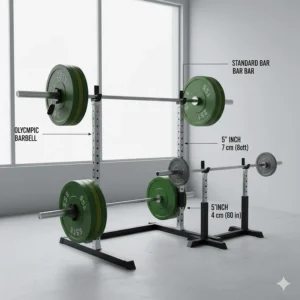
Standard barbells have 1-inch diameter sleeves and typically max out around 200-300 lbs total capacity. Olympic barbells have 2-inch sleeves, weigh 45 lbs, and can handle 1,000+ lbs. For any serious bench press setup for home gym, Olympic is the only way to go. The extra diameter also provides better grip and spin characteristics.
Plate Selection Strategy
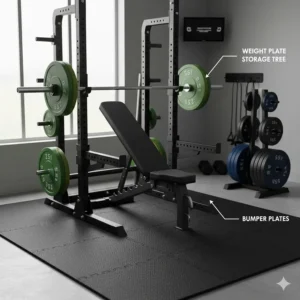
Start with pairs of 45s, 25s, 10s, 5s, and 2.5s. This gives you 5 lb progression increments, which is crucial for sustainable strength gains. Iron plates are cheapest and most durable. Bumper plates protect your floor if you drop them but take up more bar sleeve space. Competition plates are precise to 10 grams but cost significantly more.
Collar Necessity
Spring collars are cheap but can slip during sets. Lockjaw collars are quick to adjust and secure. Competition collars offer the most security but take longer to change. Never bench press without collars – uneven plate slippage can cause serious injury as the bar tilts unexpectedly.
Choosing the Right Bench Press Rack for Home: Space Considerations
Measuring Your Available Space
Before falling in love with a particular bench press setup for home gym, get real about your space constraints. I’ve seen too many people buy equipment that barely fits, then abandon it because the gym feels cramped and uncomfortable.
Minimum Space Requirements
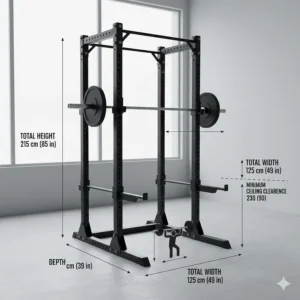
For a basic flat bench setup, you need approximately 8 feet long by 4 feet wide of floor space – that’s 32 square feet. Add a squat rack with bench press combo and you’re looking at 10 feet by 6 feet minimum (60 square feet). Don’t forget ceiling height – you need at least 8 feet for overhead pressing and proper bar clearance.
The “Exercise Zone” Concept
Beyond the equipment footprint, you need clearance for loading plates, walking around the bench, and emergency bailout space. I recommend adding 2-3 feet of clearance on all sides. That bumps our basic setup to a 12′ x 8′ zone (96 square feet).
Multi-Use Space Solutions
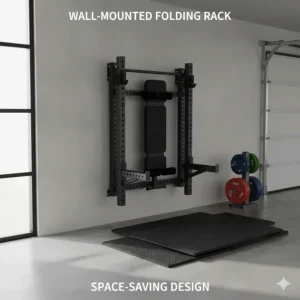
Foldable benches like the FitGoods model save 80% of floor space when stored. Wall-mounted fold-away racks from companies like PRx Performance disappear when not in use. If your home gym doubles as a guest room or office, these space-saving solutions become essential rather than optional.
Ceiling Height Considerations
Standard ceiling height in most homes is 8 feet. That works fine for bench press, but if you’re adding a squat rack with bench press capabilities, you’ll be doing overhead presses that require clearance.
A 6-foot tall person with arms extended overhead reaches about 8 feet. Add a loaded barbell (another 2-3 inches) and you’re bumping your ceiling. Nine-foot ceilings provide comfortable clearance; eight-foot ceilings work but feel constraining. Seven-foot ceilings seriously limit your exercise options.
Flooring Protection and Sound Dampening
Your floor takes a beating in a home gym. Dropped weights, shuffling feet, and bench movement all cause wear and noise.
Rubber Flooring Options
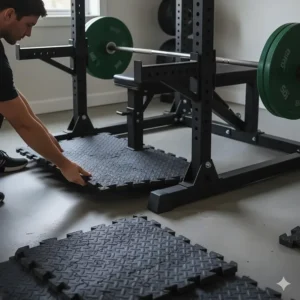
Horse stall mats (4′ x 6′ x 3/4″) are the home gym standard – cheap, durable, and effective. They cost about $40-60 each at tractor supply stores. Interlocking foam tiles work for lighter loads but compress under heavy equipment. Purpose-built gym flooring from Rogue or Rep costs more but looks cleaner.
Vibration and Noise Control
Neighbors below you? Sound dampening matters. Rubber flooring helps, but for apartments, consider adding a layer of dense foam underneath. The OPPSDECOR benches have wide rubber feet that distribute weight and reduce noise, making them apartment-friendly options.
Installation and Setup: Getting Your Bench Press Station Ready
Assembly Best Practices
Most complete bench press equipment arrives partially assembled, requiring 30 minutes to 2 hours of work depending on complexity.
Tools You’ll Actually Need
Despite what manufacturers claim, you’ll want more than just the included Allen wrench. A socket wrench set speeds up assembly dramatically. A rubber mallet helps seat components without damaging finishes. Have a level handy to ensure your bench sits flat – an unlevel bench creates uneven bar paths that can cause injury.
Two-Person Jobs
Benches with integrated racks like the MAIDOMA 8-in-1 are heavy and awkward. Get a friend to help position components during assembly. What takes 90 minutes solo can be done in 30 minutes with help, and you won’t risk dropping expensive equipment.
Safety Checks Before First Use
Before loading weight, perform these critical safety checks.
Bolt Torque Verification
All bolts should be tight but not over-torqued (which can strip threads). After initial assembly, wait 24 hours then retighten everything – components settle and bolts can loosen slightly. Check bolts monthly during regular use.
Weight Capacity Testing
Start with just the bar and gradually add weight over several sessions. This isn’t about doubting the manufacturer’s rating – it’s about ensuring your assembly is correct and getting comfortable with how the equipment handles load.
Safety Catch Positioning
Set safety catches to about 2-3 inches below your chest when lying on the bench. This allows full range of motion while catching the bar if you fail a rep. Test the catch height with just the bar before adding weight.
Training Programs for Your Home Gym Bench Press Station
Beginner Program: Building the Foundation
If you’re new to bench pressing, focus on technique before weight. Your first 4-6 weeks should establish proper motor patterns.
Week 1-2: Movement Pattern
- 3 sessions per week
- 3 sets of 8-10 reps with just the bar (45 lbs)
- Focus: bar path, shoulder blade positioning, leg drive setup
- Rest 2-3 minutes between sets
Week 3-4: Adding Load
- 3 sessions per week
- 3 sets of 8 reps at 50-60% estimated max
- Include paused reps (1-second chest pause)
- Record all sets to check form
Week 5-6: Progressive Overload
- 3 sessions per week
- Pyramid up: 10 reps, 8 reps, 6 reps, increasing weight each set
- First experience with real fatigue
- Add one backoff set at 50% for technique practice
Intermediate Strength Program
Once you can bench press your bodyweight for 5+ reps, you’re ready for structured programming.
The Texas Method Approach
Monday (Volume): 5 sets of 5 reps at 85% of Friday’s weight
Wednesday (Light/Technical): 3 sets of 5 reps at 70% Monday’s weight
Friday (Intensity): Work up to 1 set of 5 reps at new PR weight
This progression works exceptionally well for home gym training because it’s simple, doesn’t require multiple exercises, and produces steady strength gains for 6-12 months.
Advanced Powerlifting Focus
For those chasing big numbers or competing in powerlifting, specificity matters.
Competition Prep Block
12 weeks out: Volume work (5×5 at 80%)
8 weeks out: Hypertrophy (4×8 at 70%)
4 weeks out: Strength (3×3 at 90%)
2 weeks out: Peak (singles at 95%+)
Competition week: Opener at 90%, taper volume
The REP Fitness FB-5000’s competition-height design becomes crucial here – training at the exact height you’ll compete with eliminates variables and builds confidence.
Maintenance and Longevity of Your Bench Press Setup for Home Gym
Regular Maintenance Schedule
Quality equipment lasts decades with proper care. Neglect it and even premium gear fails prematurely.
Monthly Tasks
- Inspect all bolts and connections for tightness
- Check upholstery for tears or wear spots
- Clean vinyl pads with mild soap and water
- Lubricate moving parts (wheels, adjustment pins)
- Verify safety catch function
Quarterly Deep Maintenance
- Full bolt removal, cleaning, and thread inspection
- Check welded joints for cracks
- Deep clean under bench where chalk and dust accumulate
- Inspect barbell knurling and spin
- Replace any worn rubber feet or protective pads
Common Issues and Solutions
Wobbly Bench Syndrome
Usually caused by loosened bolts or unlevel floor. Retighten all connections first. If the problem persists, use rubber shims under legs to level the bench. The FLYBIRD and FitGoods benches include adjustable feet specifically for this issue.
Sticky Adjustment Mechanisms
Adjustment pins can become stiff with rust or debris. Remove pins monthly and clean with steel wool. Apply a light coating of silicone spray – never use thick grease that attracts dirt.
Pad Wear and Replacement
Vinyl pads typically last 3-5 years with regular use. When replacement time comes, many benches accept third-party pads. The Thompson Fat Pad, for example, fits most 4-bolt pattern benches and provides an upgrade from stock pads.
Extending Equipment Lifespan
Environmental Protection
Garage gyms face temperature extremes that indoor setups avoid. In winter, metal becomes brittle; in summer, vinyl softens and can degrade. If possible, maintain temperatures between 50-80°F. Use dehumidifiers in humid climates to prevent rust.
Weight Distribution Wisdom
Don’t store heavy plates on barbell racks long-term – it stresses components unnecessarily. The OPPSDECOR and Valor racks include dedicated plate storage designed to handle this load.
Protective Covers
When not in use, throw a sheet or tarp over your equipment. It sounds simple, but protecting your bench from dust, moisture, and accidental impacts adds years to its life.
Accessories to Enhance Your Complete Bench Press Equipment
Essential Add-Ons
Barbell Collars
Lockjaw collars ($30-40) are the gold standard for home gyms. They’re quick to adjust, extremely secure, and last for years. Spring collars work but can slip during heavy sets.
Weight Storage Solutions
Plate trees keep your gym organized and prevent tripping hazards. Wall-mounted plate holders save floor space but require proper stud mounting. The integrated storage on the Valor Fitness combo rack is clever space-saving design.
Bench Press Slingshot
This specialized training tool ($60-90) helps overload the top portion of bench press, breaking through plateaus. It’s particularly useful when training alone without a spotter for heavy singles.
Performance Enhancers
Wrist Wraps
Once you’re pressing 200+ lbs, wrist wraps ($20-40) provide joint support and compression. They create a cast-like feeling around your wrist, preventing hyperextension under heavy loads.
Lifting Belts
Yes, even for bench press! A belt increases intra-abdominal pressure and trunk stability. Many powerlifters wear belts for heavy bench work. Quality leather belts ($80-150) last decades.
Chalk and Chalk Stand
Liquid chalk ($10-15) is less messy than traditional block chalk. It improves bar grip significantly, especially during high-rep sets when hands get sweaty. A small chalk bowl or stand keeps your gym tidy.
Technology Integration
Velocity Based Training Devices
Tools like the RepOne sensor ($300) or Perch ($100/month) measure bar velocity, helping you auto-regulate training intensity. When bar speed drops below threshold, you know you’re fatigued and should stop.
Video Analysis Setup
A simple phone holder ($15-30) positioned for side-angle video transforms your training. Review each set between sessions to catch form breakdown before it becomes habitual.
Common Mistakes to Avoid with Bench Press Setup for Home Gym
Setup Errors That Sabotage Results
Buying Too Much Too Soon
I see this constantly – new lifters drop $2,000 on equipment before knowing what they actually need. Start with a solid bench and basic barbell set. Add the squat rack, specialty bars, and attachments after 3-6 months when you understand your training style.
Ignoring Ceiling Height
The MAIDOMA 8-in-1 is fantastic equipment, but if you have 7-foot ceilings, you can’t safely use the squat rack function. Measure twice, buy once.
Skimping on Safety Equipment
The $50 you save by skipping safety catches could cost you an ER visit. When choosing complete bench press equipment, safety features are non-negotiable.
Training Mistakes That Limit Progress
No Progressive Overload
Your body adapts to stress by getting stronger. If you bench the same 135 lbs every week for months, you won’t improve. Add 5 lbs when you can complete all prescribed reps with good form. The small plates (2.5 lbs) become crucial for sustainable progression.
Inconsistent Technique
Grip width varying between sessions, different touch points on your chest, and inconsistent foot positioning all reduce your ability to track progress accurately. Film yourself or use reference points on the barbell to maintain consistency.
Neglecting Assistance Work
Bench press is the main exercise, but your shoulders, triceps, and upper back need attention too. Overhead pressing, rows, and close-grip work support your main lift. The adjustable benches like the FLYBIRD make it easy to add these variations.
Recovery and Injury Prevention
Inadequate Warmup
Jumping straight to working weight is asking for injury. Start with empty bar for 10-15 reps, then pyramid up: 95×8, 135×5, 185×3, then working weight. This process wakes up your nervous system and lubricates joints.
Training Through Pain
Muscle soreness is normal; sharp, pinpoint pain is not. If something hurts beyond normal muscle fatigue, stop immediately. The GMWD chest press machine’s independent arms help lifters work around minor injuries while maintaining training stimulus.
Budget Breakdown: Planning Your Bench Press Setup for Home Gym Investment
Starter Budget ($300-500)
Core Equipment:
- FitGoods Foldable Bench: $150
- CAP Barbell 7′ Olympic Bar: $100
- Basic iron plate set (255 lbs): $200
- Spring collars: $10
- Rubber mat (single): $50
Total: ~$510
This gets you training immediately with upgrade paths later. The foldable bench saves space while you’re starting out.
Mid-Range Setup ($800-1,200)
Core Equipment:
- FLYBIRD Adjustable Bench: $180
- Quality Olympic bar (Rogue/Rep): $250
- Iron plate set (365 lbs): $400
- Lockjaw collars: $40
- Rubber flooring (3 mats): $150
- Plate storage tree: $80
Total: ~$1,100
This setup provides everything needed for years of serious training with room to grow.
Premium Complete System ($1,500-2,500)
Core Equipment:
- REP Fitness FB-5000 or MAIDOMA 8-in-1: $400
- Premium power bar: $350
- Competition plate set (495 lbs): $800
- Valor Fitness squat rack: $300
- Professional rubber flooring: $250
- Accessories (wraps, belt, chalk): $150
Total: ~$2,250
This is buy-once, cry-once territory. Quality equipment that handles any training goal for decades.
Hidden Costs to Consider
Shipping and Delivery
Heavy equipment incurs significant shipping costs. Some companies offer free shipping over certain thresholds. The OPPSDECOR and FitGoods products often include free shipping, while specialty items from Rogue or Eleiko can add $100-200 to your cost.
Assembly Help
If you hire assembly help, budget $50-150 depending on complexity and local labor rates.
Ongoing Maintenance
Replacement bolts, upholstery cleaner, lubricants, and eventual pad replacement add up. Budget $50-100 annually for maintenance supplies.
Space-Saving Solutions for Home Gym Bench Press Station
Foldable and Portable Options
The FitGoods 2-second fold system isn’t just marketing – it genuinely transforms your space when gym time ends. After your workout, fold the bench and slide it under a bed or behind a couch. You reclaim 80% of the floor space for normal living.
Wall-mounted fold-away systems take this further. PRx Performance makes racks that fold flat against the wall when not in use. Pair this with a portable bench and you have a functional gym that disappears completely between sessions.
Vertical Storage Strategies
When floor space is limited, think vertical. Wall-mounted plate storage, vertical barbell holders, and hanging accessory racks utilize wall space effectively. The Valor Fitness rack’s integrated plate storage demonstrates this concept – it stores weights vertically on the rack itself rather than requiring separate floor space.
Multi-Function Equipment Benefits
Why own five pieces of equipment when one does everything? The MAIDOMA 8-in-1 and OPPSDECOR 6-in-1 systems replace multiple standalone pieces. Sure, they cost more upfront, but calculate the cost of buying a bench, squat rack, leg extension, preacher curl station, and plate storage separately – the all-in-one approach saves money and space.
Upgrading Your Setup Over Time
Starting Simple, Building Smart
My recommendation for new home gym owners: start with a quality adjustable bench (FLYBIRD or similar) and basic barbell setup. Train with this for 3-6 months. You’ll learn what exercises you actually do regularly versus what sounds cool in theory.
After this discovery period, add complementary equipment. If you squat frequently, invest in a dedicated squat rack with bench press capabilities like the Valor Fitness combo. If you focus on bodybuilding-style training, the GMWD chest press machine might better suit your needs.
When to Upgrade vs. Replace
Benches typically outlast their owners’ lifting careers if maintained properly. The REP Fitness FB-5000, for example, has a 10+ year lifespan with regular use. However, as your training evolves, what you need changes.
A flat bench might serve you perfectly for two years, but then you start wanting incline work for upper chest development. Rather than replacing the flat bench, add an adjustable bench. Now you have specialized equipment for different purposes.
Selling Used Equipment
Quality equipment holds value remarkably well. A used Rogue or REP bench in good condition sells for 60-70% of retail on local marketplaces. Document your equipment condition with photos, note any wear or modifications, and be honest about the age. Someone starting their gym journey will appreciate the value.
Safety Protocols for Solo Home Gym Training
The Reality of Training Alone
Most home gym owners train solo. There’s no spotter to save you when you miscalculate your strength. This makes proper safety equipment and protocols non-negotiable.
Proper Safety Catch Setup
Safety catches should sit 2-3 inches below your chest when lying on the bench. Too high and they interfere with full range of motion; too low and they won’t catch a failed rep. Test the catch height with just the bar before adding weight. The OPPSDECOR and MAIDOMA systems include adjustable safety catches specifically for this purpose.
The Roll of Shame
When you fail a rep without safety equipment, you need to “roll of shame” the barbell down your torso to your hips, then sit up. It’s embarrassing but safe if done correctly. Never try to press a failed rep multiple times – you’ll just exhaust yourself further.
Emergency Protocols
Training Partner Check-ins
Text a friend before and after heavy training sessions. If they don’t hear from you within your typical workout window, they can check on you. This simple protocol could save your life if you get pinned under a bar.
Phone Accessibility
Keep your phone within arm’s reach of the bench, not across the room. If you do get injured, you need to call for help immediately.
Progressive Loading
Never jump from 135 lbs to 225 lbs without working up. Progressive sets reveal when you’re having an off day before you load weight you can’t handle.
Comparing Bench Press Setup for Home Gym vs. Commercial Gym
Advantages of Home Setup
Convenience Factor
No driving, no waiting for equipment, no gym hours restrictions. Train at 5 AM or 11 PM – your schedule, your rules. Over a year, this convenience saves 50+ hours of commute time.
Long-term Cost Savings
A $1,500 home setup costs roughly the same as 2-3 years of commercial gym membership at $50/month. After year three, you’re training free while gym members keep paying.
Hygiene Control
Your bench, your sweat, your cleaning standards. In the COVID era, this matters to many people. Plus, you’re not lying in someone else’s sweat puddle between sets.
Customization Freedom
Set up your gym exactly how you want. Choose your music volume, temperature, décor, and equipment spacing. Paint the walls neon green if you want – it’s your space.
What You Give Up
Social Motivation
Training alone requires intrinsic motivation. There’s no hype crew watching you attempt a PR. Some people thrive on this independence; others struggle without external accountability.
Equipment Variety
Commercial gyms offer dozens of machines, multiple bench angles, and specialty equipment. Your home setup focuses on essentials. This actually benefits beginners by removing choice paralysis but can limit advanced bodybuilders.
Expert Guidance
Commercial gyms provide staff who can teach technique and provide spotting. Home gym owners must self-educate through videos, articles, and online coaching. The investment in knowledge becomes part of your home gym journey.
The Hybrid Approach
Many serious lifters maintain both a home bench press setup for home gym convenience and a gym membership for accessory work and social training. Use your home setup for main strength work 3-4 days weekly, hit the commercial gym 1-2 days for variety and motivation.
FAQ: Your Bench Press Setup for Home Gym Questions Answered
❓ How much does a quality bench press setup for home gym cost in 2026?
❓ Can I bench press safely without a spotter at home?
❓ What's better for home gym - adjustable bench or flat bench?
❓ How much space do I need for a home gym bench press station?
❓ What weight capacity should I look for in a bench press rack for home?
Conclusion: Building Your Perfect Bench Press Setup for Home Gym
Creating the ideal bench press setup for home gym isn’t about buying the most expensive equipment or cramming the latest gadgets into your garage. It’s about understanding your goals, respecting your space constraints, and investing in quality pieces that support years of consistent training.
The seven setups we’ve covered offer solutions for every situation. Budget-conscious? The FitGoods Foldable Bench delivers solid performance at $120-170. Need comprehensive functionality? The MAIDOMA 8-in-1 provides complete bench press equipment with an impressive 1,500 lb capacity. Serious about powerlifting? The REP Fitness FB-5000 brings competition-grade quality to your home.
Remember these key takeaways: Safety equipment isn’t optional when training alone – adjustable safety catches save lives. Quality trumps quantity – one excellent bench outperforms three mediocre ones. Progressive overload drives results – consistently adding weight beats fancy equipment every time. And finally, maintenance extends equipment lifespan dramatically – those monthly bolt checks and quarterly deep cleans preserve your investment for decades.
Your home gym bench press station represents freedom – freedom from gym hours, crowded equipment, and monthly fees. It’s an investment in your health, strength, and independence that pays dividends every single day you walk into your personal training space.
Whether you’re just starting with the budget-friendly FitGoods bench or going all-in with a premium squat rack with bench press combo from Valor Fitness, the most important factor is consistency. The best bench press setup for home gym is the one you actually use regularly. Start with quality basics, train consistently, add equipment as needs arise, and enjoy the journey of building both your strength and your perfect home gym sanctuary.
Now stop reading and start lifting! Your home gym bench press station is waiting. 💪🏋️♂️
Recommended for You
- Flat Bench vs Adjustable Bench: 7 Best Options for 2026 🏋️
- 7 Best Weight Benches for Home Gym: Expert Rankings 2026
- 7 Best Wall Mounted Home Gyms 2026 – Save 70% Space Fast
Disclaimer: This article contains affiliate links. If you purchase products through these links, we may earn a small commission at no additional cost to you.
✨ Found this helpful? Share it with your friends! 💬🤗
