
In This Article
Listen, I’ve trained in fancy gyms with rows of gleaming machines and paid monthly fees that made my wallet cry. But here’s what nobody tells you: the most effective muscle-building equipment is probably sitting unused in your spare room, or could be for less than a single year’s gym membership.
Building a calisthenics home gym isn’t just about saving money—though you’ll pocket hundreds of dollars annually. It’s about unlocking a training method that ancient Greek warriors and modern special forces both swear by. Bodyweight training builds functional strength that actually translates to real-world movements, unlike that fancy chest press machine that only works one specific angle.
The beauty of calisthenics lies in its brutal simplicity. You’re not isolating tiny muscle fibers; you’re teaching your entire body to work as one coordinated unit. Pull-ups engage your back, biceps, core, and grip simultaneously. Dips hammer your chest, triceps, and shoulders while demanding shoulder stability. These compound movements create the kind of strength that looks good and performs even better.
What makes a calisthenics home gym truly special is the freedom it provides. No more waiting for equipment, no more rushing through workouts because someone’s hovering nearby, and definitely no more gym bros giving unsolicited advice. Your home setup becomes your personal training sanctuary where you can fail, experiment, and push limits without judgment.
In this comprehensive guide, I’ll walk you through the seven essential pieces of equipment that form the foundation of an elite calisthenics home gym. These aren’t random recommendations—they’re battle-tested tools that thousands of athletes use to build impressive physiques and superhuman strength, all from the comfort of their homes.
Quick Comparison Table
| Equipment | Price Range | Skill Level | Space Required | Versatility |
|---|---|---|---|---|
| Pull-Up Bar | $20-$60 | Beginner-Advanced | Minimal (doorway) | ⭐⭐⭐⭐ |
| Parallettes | $30-$120 | Beginner-Advanced | Small (portable) | ⭐⭐⭐⭐⭐ |
| Gymnastic Rings | $25-$80 | Intermediate-Advanced | Minimal (hanging) | ⭐⭐⭐⭐⭐ |
| Resistance Bands | $15-$50 | All Levels | Minimal | ⭐⭐⭐⭐⭐ |
| Power Tower | $120-$300 | Beginner-Advanced | Medium-Large | ⭐⭐⭐⭐ |
| Push-Up Bars | $15-$40 | Beginner-Intermediate | Minimal | ⭐⭐⭐ |
| Dip Belt/Weighted Vest | $25-$150 | Intermediate-Advanced | None | ⭐⭐⭐⭐ |
💬 Just one click – help others make better buying decisions too!😊
Top 7 Calisthenics Home Gym Equipment: Expert Analysis
1. Iron Gym Total Upper Body Workout Bar – The Foundation of Every Setup
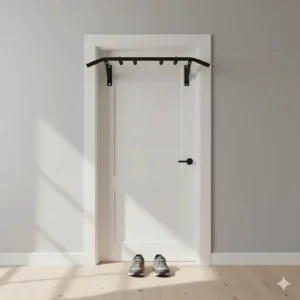
Let me start with the non-negotiable essential: a quality pull-up bar. The Iron Gym Total Upper Body Workout Bar has been the gold standard for doorway pull-up bars since I can remember, and for good reason.
This doorway-mounted beast supports up to 300 pounds and requires zero screws or drilling. The leverage-based installation means you simply hang it over any standard doorframe (24-32 inches), and your body weight keeps it securely in place. The multi-grip design offers wide, narrow, neutral, and hammer grip positions, allowing you to target your back and arms from every conceivable angle.
Key Specifications:
- Weight capacity: 300 lbs
- Adjustable width: 24-32 inches
- Material: Heavy-duty steel construction
- Grip positions: 4 different angles
What separates this from cheaper alternatives is the foam padding that protects your doorframe and the curved grip design that reduces wrist strain during neutral-grip pull-ups. Customers consistently praise its stability, noting that it doesn’t wobble or slip even during explosive kipping pull-ups.
✅ Pros:
- No permanent installation required
- Multiple grip positions for varied muscle targeting
- Padded contact points protect doorframes
❌ Cons:
- Limited range of motion compared to mounted bars
- May not fit uniquely-sized doorframes
Price: Typically $25-$35 on Amazon
2. BALANCE CALISTHENICS Pro Metal Wooden Parallettes – The Versatility Champion
Here’s where your calisthenics home gym starts getting serious. The BALANCE CALISTHENICS Pro Metal Wooden Parallettes bundle delivers professional-grade equipment at a fraction of gym prices.
These parallettes feature imported beech wood handles mounted on heavy-duty steel frames with a weight capacity of 500 pounds. The 12-inch height provides optimal clearance for dips, L-sits, and handstand push-ups, while the non-slip base keeps them rock-solid on any surface.
What makes this bundle exceptional is what’s included: the parallettes themselves, a carrying bag for portability, grip tape for customization, wrist wraps for joint protection, and a carrying strap. It’s basically everything you need to start training advanced movements immediately.
Key Specifications:
- Height: 12 inches
- Weight capacity: 500 lbs
- Handle material: Imported beech wood
- Base width: Adjustable for stability
The beech wood handles absorb sweat naturally, providing superior grip compared to metal or plastic alternatives. Users report that the ergonomic handle design significantly reduces wrist discomfort during extended handstand practice.
✅ Pros:
- Complete bundle includes essential accessories
- Natural wood absorbs moisture for better grip
- Ultra-stable base prevents tipping during dips
❌ Cons:
- Heavier than plastic alternatives (affects portability)
- Premium price point compared to basic models
Price: Approximately $80-$120 on Amazon
3. GORNATION Olympic Birchwood Gymnastics Rings – The Skill Development Tool
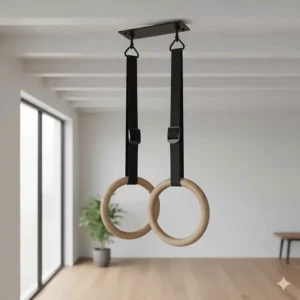
If you want to fast-track your upper body development and unlock advanced calisthenics skills, gymnastic rings are absolutely essential. The GORNATION Olympic Birchwood Gymnastics Rings represent the pinnacle of quality in this category.
These rings feature Olympic-standard dimensions (18cm diameter, 2.8cm thickness) crafted from premium birch wood. The 4.5-meter adjustable straps feature sewn-in measurement markings, making it effortless to set equal heights and track your progression over time.
Key Specifications:
- Ring diameter: 18cm (Olympic standard)
- Strap length: 4.5 meters (adjustable)
- Weight capacity: 300kg (660 lbs) per strap
- Material: Premium birch wood
Birch wood offers unmatched grip properties. Unlike plastic rings that become slippery with sweat, or metal rings that feel harsh and cold, birch wood naturally absorbs moisture while maintaining a comfortable temperature. This makes them ideal for extended training sessions.
The numbered straps eliminate the frustrating guesswork of achieving equal ring heights. Simply match the numbers, and you’re ready to train. This seemingly small feature prevents muscle imbalances and makes setup take seconds instead of minutes.
✅ Pros:
- Superior natural grip compared to plastic or metal
- Precise measurement markings for equal heights
- Includes premium carry bag and instructions
❌ Cons:
- Requires overhead mounting point (pull-up bar, beam, or tree branch)
- Learning curve for stabilization exercises
Price: Around $60-$80 on Amazon
4. WHATAFIT Resistance Bands Set – The Progressive Overload Solution
Progressive overload is the secret sauce of muscle growth, and the WHATAFIT Resistance Bands Set makes it accessible for every fitness level. This complete package includes five resistance bands ranging from 10 to 150 pounds of resistance.
Each band is color-coded (Yellow: 10-35 lbs, Blue: 25-65 lbs, Green: 30-80 lbs, Black: 50-125 lbs, Red: 65-150 lbs), allowing you to precisely control resistance as you progress. The bands are constructed from premium natural latex that maintains elasticity even after thousands of repetitions.
Key Specifications:
- Resistance range: 10-150 pounds
- Material: 100% natural latex
- Band count: 5 different resistances
- Includes: Door anchor, handles, ankle straps, carry bag
What makes these bands invaluable for a calisthenics home gym is their dual functionality. Beginners can use them to assist with pull-ups and dips, effectively reducing body weight until strength develops. Advanced athletes use them to add resistance to bodyweight exercises, creating weighted variations without needing actual weights.
The included door anchor transforms any door into an anchor point for over 100 exercises. Chest flies, tricep extensions, bicep curls, leg curls, face pulls—the list goes on. You’re essentially getting a complete gym’s worth of exercise variety from a bundle that fits in a shoebox.
✅ Pros:
- Five resistance levels accommodate all fitness levels
- Versatile use for assistance or added resistance
- Complete accessory package included
❌ Cons:
- Latex can degrade with prolonged sun exposure
- Requires proper storage to maintain elasticity
Price: Typically $30-$50 on Amazon
5. Sportsroyals Power Tower – The All-in-One Station
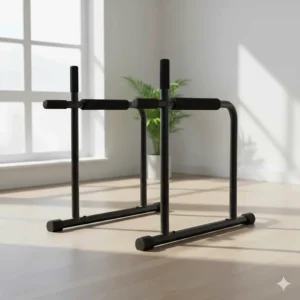
When floor space isn’t a constraint, the Sportsroyals Power Tower becomes the centerpiece of your calisthenics home gym. This freestanding unit combines pull-up bar, dip station, knee raise station, and push-up handles into one robust frame.
The adjustable height (60-90 inches) accommodates users from 5’2″ to 6’6″, making it genuinely suitable for the whole family. The thick steel frame supports up to 450 pounds, meaning even heavily muscled athletes or those using weighted vests can train confidently.
Key Specifications:
- Height range: 60-90 inches (adjustable)
- Weight capacity: 450 lbs
- Footprint: 43 x 37 inches
- Material: Commercial-grade steel tubing
The padded backrest and elbow supports on the dip station allow you to isolate your core during leg raises without shoulder fatigue. The neutral-grip handles reduce shoulder stress during pull-ups, making this excellent for athletes recovering from injuries or managing shoulder issues.
Assembly takes about 45 minutes with two people, and the wide base provides exceptional stability. Several users note they can perform explosive muscle-ups without any wobbling or tipping, which speaks volumes about the structural integrity.
✅ Pros:
- Multiple exercise stations in single unit
- Adjustable height fits various user sizes
- Stable enough for explosive movements
❌ Cons:
- Requires significant floor space (roughly 4×3 feet)
- Assembly can be challenging for one person
Price: Generally $150-$220 on Amazon
6. Perfect Fitness Multi-Grip Push-Up Bars – The Wrist-Saver Essential
Push-ups are the bread and butter of calisthenics, but doing hundreds of reps on a hard floor wreaks havoc on your wrists. The Perfect Fitness Multi-Grip Push-Up Bars solve this problem elegantly while unlocking new training variations.
These compact bars feature ergonomic grips that maintain your wrists in a neutral position, eliminating the hyperextension that causes pain during floor push-ups. The angled design also increases your range of motion, allowing deeper chest stretches and greater muscle activation.
Key Specifications:
- Height: 5 inches
- Weight capacity: 400 lbs
- Grip positions: 3 angles (wide, narrow, neutral)
- Material: Steel frame with foam grips
The three grip positions let you emphasize different muscle groups. Wide grips hammer your chest, close grips target triceps, and the neutral position creates a balanced push. The non-slip base works on carpet, hardwood, tile, or even grass for outdoor training.
What users appreciate most is the portability. These weigh less than two pounds combined and stack for easy storage. Throw them in a backpack, and you’ve got a complete upper body workout anywhere—hotel rooms, parks, backyards, you name it.
✅ Pros:
- Protects wrists from hyperextension pain
- Increases push-up range of motion
- Extremely portable and affordable
❌ Cons:
- Limited to push-up variations only
- Not suitable for handstand push-ups (too low)
Price: Around $20-$30 on Amazon
7. CAP Barbell Dip Belt with Bumper Plates – The Strength Multiplier
Eventually, your body weight alone won’t provide enough resistance to keep building strength. That’s when the CAP Barbell Dip Belt becomes essential for continued progression.
This heavy-duty belt features a 36-inch chain with a carabiner attachment, allowing you to add weight plates during dips, pull-ups, and chin-ups. The padded neoprene belt distributes weight comfortably across your hips, preventing the bruising and discomfort associated with cheaper alternatives.
Key Specifications:
- Chain length: 36 inches
- Weight capacity: Supports plates up to 100+ lbs
- Material: Reinforced nylon with neoprene padding
- Closure: Heavy-duty buckle
Pair this with CAP Barbell’s rubber-coated bumper plates (available in 10, 25, 35, 45 lbs), and you’ve got a progressive loading system that can take you from intermediate to elite strength levels. The rubber coating protects your floors and reduces noise—crucial considerations for home training.
The beauty of weighted calisthenics is the strength transfer. A weighted pull-up with 45 pounds doesn’t just make you better at weighted pull-ups; it makes your unweighted pull-ups feel effortless. Suddenly you can bang out 20+ reps, perform one-arm pull-up progressions, and unlock skills that seemed impossible before.
✅ Pros:
- Comfortable padding prevents hip bruising
- Compatible with standard weight plates
- Transforms bodyweight exercises into strength builders
❌ Cons:
- Requires separate purchase of weight plates
- Not suitable for complete beginners
Price: Dip belt $25-$35, Bumper plates $40-$100 depending on weight
Understanding What Makes a Calisthenics Home Gym Effective
Building muscle and strength at home requires understanding fundamental training principles. The misconception that you need expensive machines or heavy barbells keeps people trapped in costly gym memberships, but science tells a different story.
Muscle growth responds to mechanical tension, metabolic stress, and muscle damage—all achievable through bodyweight training. A properly executed pull-up creates the same muscle-building stimulus as a lat pulldown, often with better core engagement and functional strength transfer.
The key advantage of calisthenics home gym equipment is movement freedom. Unlike machines that lock you into fixed paths, bodyweight exercises require stabilizer muscle activation. Your core fires constantly to maintain proper form, your smaller muscle groups engage to control movement, and your nervous system learns to coordinate complex movement patterns.
This creates what researchers call “functional hypertrophy”—muscle that doesn’t just look impressive but performs incredibly. You’re not building beach muscles; you’re building bodies capable of impressive feats of strength, endurance, and coordination.
Another often-overlooked benefit is joint health. Calisthenics naturally respects your body’s biomechanics because you’re moving through natural ranges of motion. There’s no forced internal rotation of shoulders, no excessive knee shear, no spinal compression from heavy loads. Your joints stay healthier over the long term.
Space Requirements and Home Gym Layout Strategies
One of the biggest obstacles people face is space constraints. Here’s the reality: you can build an exceptional calisthenics home gym in an area as small as 6×6 feet.
The doorway pull-up bar requires zero floor space. Parallettes and gymnastic rings store in a closet when not in use. Resistance bands fit in a drawer. Only the power tower demands permanent real estate, but even that occupies less space than a traditional weight bench setup.
For apartment dwellers, consider foldable or portable options. The pull-up bar removes instantly if you need to reclaim your doorway. Rings hang from the pull-up bar or a ceiling beam, then unhook in seconds. This flexibility means your living room transforms from workout zone to relaxation space in minutes.
If you have a spare room, garage, or basement, the layout possibilities expand dramatically. Mount a wall-mounted pull-up bar for maximum stability and range of motion. Install anchor points in ceiling joists for gymnastic rings. Designate a corner for your power tower. Add rubber flooring mats to protect surfaces and reduce noise.
The ideal layout provides clear space around each exercise station. You need roughly three feet of clearance in all directions for safe movement. This prevents accidentally hitting furniture during kipping pull-ups or swinging ring exercises.
Progressive Training Programs for All Skill Levels
Equipment means nothing without a structured training program. Here’s how to progress systematically with your calisthenics home gym.
Beginner Phase (Months 1-3): Focus on foundational movement patterns. Use resistance bands to assist pull-ups and dips until you can perform 5 clean reps unassisted. Master perfect-form push-ups, squats, and planks. Your goal is building the base strength and movement quality that everything else builds upon.
Intermediate Phase (Months 4-9): Increase volume and introduce skill progressions. Work toward 10+ pull-ups and dips. Begin gymnastic ring training with basic rows and holds. Add weighted variations using your dip belt. Experiment with L-sits on parallettes and basic handstand holds against walls.
Advanced Phase (Month 10+): Chase specific skills and strength goals. Perhaps you want muscle-ups, front levers, planches, or one-arm pull-up progressions. This phase becomes highly individualized based on your interests and strengths.
The common thread across all phases is progressive overload. You must consistently increase difficulty through more reps, added weight, harder variations, or shorter rest periods. Your muscles adapt to stress, so you must continually challenge them with novel stimuli.
Rest days matter tremendously. Calisthenics can be deceptively demanding on tendons and connective tissues. Schedule at least two full rest days weekly, and consider active recovery sessions with light stretching or mobility work.
Common Mistakes to Avoid When Building Your Setup
The biggest mistake newcomers make is buying random equipment without a coherent plan. That adjustable dumbbell set might seem useful, but it doesn’t integrate with calisthenics training methodology. Stay focused on the seven essentials outlined in this guide.
Another trap is buying the cheapest possible equipment. A $15 pull-up bar that collapses mid-set isn’t a bargain—it’s a hospital bill waiting to happen. Invest in quality gear that supports your body weight safely. The price difference between budget and mid-range equipment is often just $20-30, but the safety and durability difference is enormous.
Skipping warm-ups and mobility work leads to injuries, especially as you progress to advanced movements. Spend 5-10 minutes before each session doing dynamic stretching, joint rotations, and progressive loading. Your 40-year-old shoulders will thank you.
Many people also underestimate the importance of proper form. Sloppy pull-ups with excessive kipping might inflate your rep count, but they’re also shortchanging your muscle development and increasing injury risk. Record yourself, seek feedback, and prioritize quality over quantity.
Finally, don’t neglect lower body training. While this guide focuses on upper body equipment (because that’s where calisthenics shines most), your legs need attention too. Pistol squats, Bulgarian split squats, and explosive jump variations build impressive leg strength without equipment.
Maintenance and Longevity Tips for Your Equipment
Quality equipment lasts decades with minimal maintenance. Here’s how to protect your investment.
Pull-up bars need periodic checks of mounting hardware. Inspect doorframe contact points monthly for wear, and tighten any loose bolts. The foam padding can degrade over time; replace it when you notice cracking or compression.
Wooden equipment like parallettes and gymnastic rings requires basic care. Wipe them down after sweaty sessions to prevent moisture damage. Some users apply food-safe mineral oil annually to preserve the wood grain and prevent drying. Avoid storing in extreme temperatures or direct sunlight.
Resistance bands are the most vulnerable equipment. Never store them in hot cars or leave them in direct sunlight—UV rays break down latex quickly. After use, wipe off sweat and chalk, then store in a cool, dark place. Lightly dusting with baby powder occasionally prevents bands from sticking together and extends their lifespan.
Steel equipment like power towers resist rust better with a quick wipe-down after use. If you’re training in a humid environment like a basement or garage, consider a light coating of silicone spray on metal parts to prevent corrosion.
Budget Breakdowns: Three Investment Levels
Not everyone has the same budget, so here are three approach levels.
Budget-Conscious ($100-$200)
Equipment:
- Basic doorway pull-up bar: $25
- Simple wooden parallettes: $35
- Resistance band set: $30
- Push-up bars: $20
- Basic gymnastic rings: $30
This starter package provides everything needed for comprehensive upper body development. You sacrifice some durability and features, but you can absolutely build impressive strength with this setup.
Mid-Range Optimal ($300-$500)
Equipment:
- Quality doorway or wall-mounted pull-up bar: $50
- Premium parallettes with accessories: $100
- High-quality gymnastic rings: $70
- Professional resistance band set: $50
- Push-up bars: $25
- Dip belt: $30
- Initial weight plates: $75
This tier delivers the best value proposition. The quality jump from budget equipment is significant, but you’re not paying premium prices for marginal improvements.
Premium Complete ($600-$1,000)
Equipment:
- Power tower or wall-mounted rig: $250
- Premium parallettes: $120
- Top-tier gymnastic rings: $80
- Complete resistance band system: $80
- Weighted vest (alternative to dip belt): $100
- Thick rubber floor mats: $150
- Full set of bumper plates: $200+
This creates a home setup rivaling any commercial gym. The durability means you’re investing once for equipment that lasts 10+ years.
Comparing Calisthenics vs Traditional Weight Training
| Factor | Calisthenics Home Gym | Traditional Weight Gym |
|---|---|---|
| Initial Investment | $100-$1,000 | $300-$3,000+ |
| Monthly Costs | $0 | $30-$100 (membership) |
| Space Required | 6×6 feet minimum | 10×10 feet minimum |
| Exercise Variety | High (200+ exercises) | Very High (300+ exercises) |
| Functional Strength | Excellent | Good |
| Muscle Isolation | Limited | Excellent |
| Injury Risk | Low-Moderate | Moderate-High |
| Portability | Excellent | None |
Both approaches build muscle effectively. Calisthenics excels at functional movement, core integration, and relative strength. Traditional weights excel at isolated muscle development and progressive overload precision. Many elite athletes combine both methodologies.
The calisthenics advantage shines in sustainability. You’re not locked into monthly fees or dependent on facility hours. Your equipment doesn’t become obsolete, doesn’t require upgrades, and travels with you if you move. It’s training freedom in its purest form.
FAQ: Your Calisthenics Home Gym Questions Answered
❓ Can beginners build muscle with calisthenics home gym equipment?
❓ How long does calisthenics equipment typically last?
❓ Is a calisthenics home gym suitable for building serious muscle mass?
❓ What space do I realistically need for calisthenics training?
❓ How do I prevent injuries when training at home?
Conclusion: Your Path to Calisthenics Excellence Starts Now
Building a calisthenics home gym represents more than acquiring equipment—it’s claiming ownership of your fitness journey. No more excuses about gym hours, crowded equipment, or monthly fees. Your training success depends entirely on your dedication and consistency.
The seven equipment pieces outlined here form a complete training system that scales from beginner to elite athlete. Start with the fundamentals (pull-up bar, parallettes, resistance bands), then expand as your skills and budget allow. Each piece unlocks new exercise variations and progression pathways.
Remember that equipment quality matters significantly. That extra $20-30 for mid-range gear instead of bottom-barrel budget options often means the difference between equipment that lasts one year versus ten years. Your body deserves tools that support it safely.
The calisthenics community is remarkably welcoming and supportive. Join online forums, follow YouTube channels, engage with social media groups. Learn from others’ experiences, share your own progress, and remember that everyone started exactly where you are now.
Your transformation begins with that first pull-up bar installation, that first set of parallettes, that first resistance band workout. The investment is minimal compared to the returns: a stronger, leaner, more capable body that serves you for decades to come.
Stop dreaming about what’s possible and start building the calisthenics home gym that makes those dreams inevitable. Your future self—standing in front of the mirror after six months of dedicated training—will thank you for taking this step today.
Recommended for You
- 7 Best Functional Trainer for Home Gym 2026 (Expert Tested)
- 7 Best Compact Home Gym Equipment That Save Space (2026)
- Best Multi Station Home Gym 2026: Top 7 Picks That Actually Work
Disclaimer: This article contains affiliate links. If you purchase products through these links, we may earn a small commission at no additional cost to you.
✨ Found this helpful? Share it with your friends! 💬🤗
