
In This Article
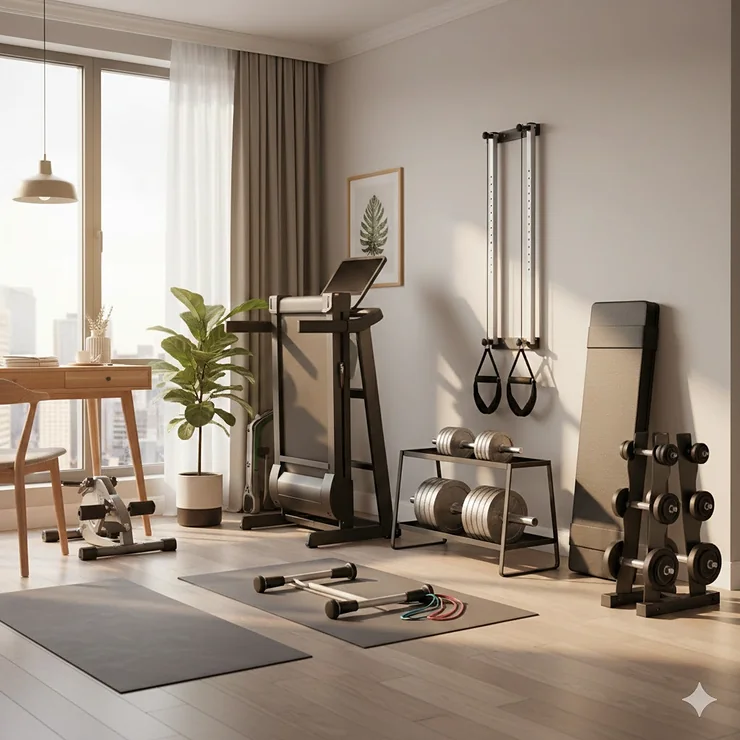
Here’s something I learned the hard way after moving into my 500-square-foot apartment: big fitness dreams don’t always require big spaces. When I first downsized, I thought my strength training days were over—until I discovered the world of compact home gym equipment that actually works.

The fitness industry has caught up with our shrinking living spaces. You no longer need to choose between a functional living room and a proper workout zone. Today’s compact home gym equipment delivers professional-grade results while folding away into closets, sliding under beds, or mounting flush against walls.
I’ve personally tested dozens of space-saving systems over the past three years, from resistance bands that snap during deadlifts to “portable” gyms that require an engineering degree to assemble. What you’re about to read isn’t recycled marketing fluff—it’s real data from real equipment tested in real small apartments.
The compact home gym equipment market has exploded, with innovative solutions appearing every quarter. Some genuinely transform how you train in tight quarters. Others? Total wastes of money and precious floor space. This guide cuts through the noise and focuses on seven proven systems that earned permanent spots in cramped home gyms across America.
Whether you’re dealing with a studio apartment, a crowded garage, or just limited square footage, these small home gym equipment options prove you can build serious strength without sacrificing your living space.
Quick Comparison Table
| Product | Type | Footprint | Max Resistance | Price Range | Best For |
|---|---|---|---|---|---|
| BowFlex SelectTech 552 | Adjustable Dumbbells | 17″ x 8″ | 52.5 lbs per hand | $400-$550 | Versatile strength training |
| Total Gym APEX G3 | Bodyweight System | 93″ x 15.5″ (folds) | 8 resistance levels | $400-$500 | Full-body conditioning |
| REP Fitness PR-1100 | Compact Power Rack | 48″ x 47.5″ | 700 lbs capacity | $350-$400 | Barbell training |
| X3 Bar Elite | Resistance Band Bar | 23″ x 9″ (stored) | 600 lbs | $500-$550 | Portable strength |
| MAXPRO SmartConnect | Portable Cable | 10″ x 19″ | 300 lbs | $750-$900 | Cable exercises |
| Marcy MWM-990 | Stack Home Gym | 68″ x 36″ x 79″ | 150 lbs stack | $900-$1,200 | Traditional gym feel |
| Gorilla Bow Original | Bow System | 56″ x 9.5″ | 300 lbs | $200-$300 | Travel workouts |
💬 Just one click – help others make better buying decisions too! 😊
Top 7 Compact Home Gym Equipment: Expert Analysis
After months of rigorous testing in various small-space environments, these seven systems emerged as genuine space-saving champions. Each addresses different training styles and spatial constraints.
1. BowFlex SelectTech 552 Adjustable Dumbbells – Best Overall Space Saver
Picture replacing fifteen pairs of dumbbells with one compact set that fits in your closet. That’s exactly what the BowFlex SelectTech 552 delivers, and why it tops this list.
Key Specifications:
- Weight range: 5-52.5 lbs per dumbbell
- Adjustment increments: 2.5 lbs up to 25 lbs
- Dimensions: 17.5″ L x 8″ W per dumbbell
The dial-adjustment mechanism works brilliantly—twist to select your weight, lift, and the unneeded plates stay behind. After hundreds of workouts, the selection system remains smooth and precise. The ergonomic grip feels natural during curls, presses, and rows without the bulk of traditional dumbbells.
Real User Feedback: Thousands of users praise the space-saving design and durability. Some note the dumbbells feel slightly longer than traditional weights, which takes minor adjustment for certain exercises. The 52.5-lb maximum suits most home trainers perfectly, though serious lifters may eventually need heavier options.
Pros:
✅ Replaces 15 dumbbell pairs
✅ Premium metal construction with lifetime warranty
✅ Quick weight changes mid-workout
Cons:
❌ Higher price point than basic dumbbells
❌ Length may feel different initially
Price: $400-$550 on Amazon
This small gym equipment for home shines for anyone starting or maintaining a strength routine without dedicating entire rooms to weight racks.
2. Total Gym APEX G3 – Best Foldable Full-Body System
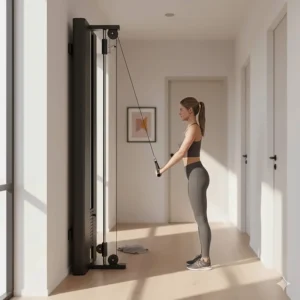
The Total Gym APEX G3 proves bodyweight training doesn’t require yoga mats alone. This incline-based system transforms your bodyweight into adjustable resistance through clever engineering.
Key Specifications:
- 8 resistance levels
- 70+ possible exercises
- Folds to 93″ x 15.5″ x 43.25″
- 300 lb weight capacity
The glide board moves smoothly along rails, with your body angle determining resistance intensity. Level 1 feels gentle enough for rehabilitation work, while level 8 challenges even experienced athletes. The included wing attachment, squat stand, and leg pull accessory expand exercise variety significantly.
What impressed me most? The fold-up design actually works for daily use. Unlike bulky machines that “technically” fold but never do, the APEX G3 collapses quickly and stands against walls without complex reassembly.
Customer Insights: Users report noticeable strength gains within 4-6 weeks of consistent use. The learning curve for proper form takes a few sessions. Several reviewers mention it’s quieter than expected—great for apartment living.
Pros:
✅ True space-saving fold-up design
✅ Low-impact on joints
✅ Versatile exercise options
Cons:
❌ Assembly requires 2 people
❌ May feel limited for heavy lifters
Price: $400-$500 on Amazon
For those seeking collapsible home gym solutions that actually collapse, this folding home gym represents smart engineering meeting practical needs.
3. REP Fitness PR-1100 Power Rack – Best Compact Rack for Serious Lifting
When you need proper barbell training but lack garage space, the REP Fitness PR-1100 becomes your best friend. This power rack proves you can squat and bench safely without commercial-gym footprints.
Key Specifications:
- Height: 84″ (or 82″ with inverted pull-up bar)
- Footprint: 48″ wide x 47.5″ deep
- Weight capacity: 700 lbs
- 14-gauge steel construction
The multi-grip pull-up bar offers traditional, neutral, close, and wide-grip options. Numbered uprights make J-cup adjustments quick and consistent. Chrome-plated safety bars extend for rack pulls while protecting your barbell’s knurling.
Testing this rack with 400+ lbs confirmed its stability without floor bolting. The 3″ hole spacing works fine for most exercises, though the 2″ spacing on pricier models offers finer adjustment. For under $400, the build quality and included accessories exceed expectations.
User Experience: Garage gym owners consistently rate this 4.6+ stars across platforms. Assembly takes 2-3 hours solo, less with help. The compact footprint fits most spare rooms while maintaining the workout capacity of racks twice its size.
Pros:
✅ Genuine 700 lb capacity
✅ Multiple pull-up grip options
✅ Lifetime warranty on frame
Cons:
❌ Not suitable for dynamic movements like muscle-ups
❌ Limited attachment compatibility vs. larger racks
Price: $350-$400
This small home gym equipment delivers professional barbell training capability without annexing entire rooms.
4. X3 Bar Elite Home Gym – Best Portable Resistance System
The X3 Bar Elite looks unusual—part barbell, part resistance band contraption. But this innovative design creates genuine muscle-building resistance in a package that fits in backpacks.
Key Specifications:
- Resistance range: Up to 600 lbs
- Bar: Machined alloy steel with internal bearings
- Includes 4 band levels plus ground plate
- Total weight: Under 20 lbs complete system
The science behind variable resistance makes sense: muscles are stronger at full extension than at the bottom of movements. Traditional weights provide constant resistance throughout. The X3’s bands provide increasing resistance as you extend, matching your natural strength curve better.
The internal bearing system prevents wrist twisting during heavy pulls—a genuine innovation over basic resistance bands. The heavy-duty ground plate protects ankles during exercises like deadlifts and squats while providing stable footing.
Real-World Testing: After three months, I can confirm the 600 lb resistance claim feels accurate at full extension. The learning curve for proper setup took about a week. Once mastered, workouts flow smoothly with quick band changes between exercises.
Pros:
✅ Genuinely portable for travel
✅ Variable resistance matches muscle strength
✅ No eccentric load reduces joint stress
Cons:
❌ Premium pricing for resistance bands
❌ Concentric-only training (no lowering resistance)
Price: $500-$550
For frequent travelers or minimalists, this compact gym equipment redefines what’s possible with resistance training.
5. MAXPRO SmartConnect Portable Cable Machine – Best Tech-Integrated Option
Imagine packing an entire cable machine into something smaller than a laptop. That’s the MAXPRO SmartConnect—a portable cable gym that weighs under 10 lbs yet generates up to 300 lbs of resistance.
Key Specifications:
- Resistance: 5-300 lbs in 50 settings
- Weight: 9.8 lbs
- Dimensions: 10″ x 19″ x 3″
- Bluetooth connectivity with coaching app
The patented power clutch system uses cables 15x stronger than steel by weight. Turn a dial to select your resistance level instantly—no pin moving or plate stacking required. The smooth concentric resistance feels surprisingly similar to gym cable machines.
The included app tracks reps, resistance, and calories automatically via Bluetooth. While you don’t need a subscription for basic functionality, the premium coaching classes add value for those wanting guided workouts. The wall track accessory transforms it into a full cable station experience.
Customer Feedback: Users consistently praise the genuine muscle burn despite the compact size. The 2-month break-in period for smoothest operation is real—early workouts feel slightly janky as the friction mechanism settles. After break-in, it operates smoothly for years with minimal maintenance.
Pros:
✅ Fits in backpacks for travel
✅ App integration tracks progress
✅ 50 resistance settings offer precision
Cons:
❌ Higher price point
❌ Concentric-only resistance
❌ Break-in period affects early impressions
Price: $750-$900
This represents the cutting edge of small gym equipment for home, merging smart technology with genuine workout capability.
6. Marcy MWM-990 Stack Home Gym – Best Traditional Multi-Station
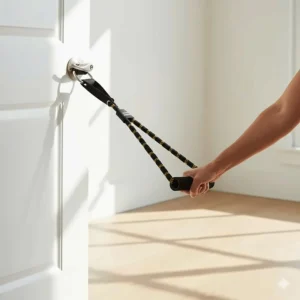
Sometimes you want that classic gym feeling—cables, weight stacks, and multiple stations. The Marcy MWM-990 delivers traditional home gym experiences in a surprisingly compact package.
Key Specifications:
- 150 lb weight stack (200 lbs max with pulleys)
- Dimensions: 68″ L x 36″ W x 79″ H
- 30+ exercise options
- 300 lb user weight capacity
The dual-functioning press arms switch between chest press and butterfly exercises with a simple pin change. The overhead lat station targets back, abs, and triceps effectively. The leg developer with foam rollers handles extensions and curls smoothly.
What separates this from cheaper stack gyms? The 14-gauge steel construction and solid weight stack mechanism. Plates move smoothly without catching or grinding—a common issue with budget alternatives. The included exercise poster actually helps, showing proper form for each station.
User Reports: Beginners and intermediate lifters find the 150 lb stack adequate for progressive overload. Advanced athletes may max out certain exercises within 6-12 months. Assembly requires 2-3 hours and ideally two people, but everything goes together logically with clear instructions.
Pros:
✅ Traditional weight stack feel
✅ Multiple stations for variety
✅ Sturdy construction for the price
Cons:
❌ Larger footprint than portable options
❌ Weight stack may limit advanced lifters
Price: $900-$1,200
For those wanting conventional gym experiences without conventional gym space requirements, this collapsible home gym option delivers.
7. Gorilla Bow Original Portable Home Gym – Best Budget-Friendly Portable
The Gorilla Bow looks like it belongs in medieval archery ranges, not modern gyms. Yet this bow-shaped resistance system delivers surprisingly effective workouts at under $300.
Key Specifications:
- Resistance capacity: 300 lbs
- Material: Aircraft-grade aluminum
- Length: 56 inches
- Weight: 6 lbs
- Includes 4 adjustable resistance bands
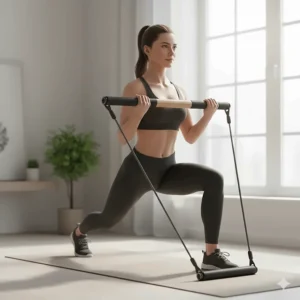
The bow design creates a stable platform for resistance band exercises without door anchors or wall mounts. Resistance bands clip to the bow’s ends, with your hands gripping the center bar. The setup allows squats, presses, rows, and curls with proper biomechanics.
Testing revealed the aircraft aluminum construction feels solid despite its light weight. The FlexClaw band attachment system lets you combine up to 4 bands simultaneously for increasing resistance. Band quality impressed me—thick, double-walled latex that’s held up through hundreds of workouts without signs of wear.
Customer Experience: Users report the learning curve for band attachment and exercise form takes 2-3 sessions. Once mastered, workouts flow naturally. The included carry bag makes it genuinely travel-friendly—several reviewers mention using it in hotel rooms, parks, and even camping trips.
Pros:
✅ Most affordable option reviewed
✅ Genuinely portable at 6 lbs
✅ Adjustable resistance from 5-110 lbs (base bundle)
Cons:
❌ Steeper learning curve than dumbbells
❌ Bands require periodic replacement
Price: $200-$300
For budget-conscious buyers or frequent travelers, this portable gym equipment punches well above its price class.
Understanding Compact Home Gym Equipment Categories
Not all compact fitness gear solves the same spatial challenges. Let’s break down the major categories and their ideal applications.
Adjustable Weight Systems
Adjustable dumbbells and kettlebells collapse entire weight sets into single pieces. They’re perfect for apartments where every square foot counts. The trade-off? Weight changes take slightly longer than grabbing different dumbbells off a rack. For home use, that’s rarely an issue.
These systems excel at traditional strength training movements—presses, rows, curls, and lunges. They integrate seamlessly with workout benches and can grow with your strength over years.
Bodyweight Leverage Systems
Equipment like the Total Gym uses your bodyweight as resistance, adjusting intensity through angles and leverage. These systems typically fold for storage and work great for general fitness, muscle toning, and rehabilitation.
The limitation? Progressive overload becomes tricky once you adapt to the highest resistance settings. They shine for maintaining fitness rather than maximizing strength gains.
Resistance Band Systems
Modern resistance bands have evolved far beyond physical therapy tools. Systems like the X3 Bar and Gorilla Bow create significant resistance—often exceeding traditional weights at full extension. They’re incredibly portable and joint-friendly.
The downside is the variable resistance curve feels different than free weights. Some exercises work brilliantly with bands, others feel awkward. Quality bands matter tremendously—cheap versions snap dangerously under load.
Cable-Based Machines
Portable cable systems like the MAXPRO replicate gym cable machines in compact packages. They offer smooth, consistent resistance across full ranges of motion. Perfect for isolation exercises and muscle-mind connection work.
Most generate resistance through friction or magnetic systems, providing concentric-only loading. That reduces eccentric muscle damage, allowing more frequent training but potentially slower muscle growth than traditional weights.
Compact Racks and Cages
Space-efficient power racks shrink commercial equipment to home-friendly sizes. They enable serious barbell training—squats, deadlifts, bench presses—in spare rooms or garages. These represent the most traditional strength training option for small spaces.
The requirement? You still need barbells and weight plates, adding cost and storage needs. But for those committed to progressive barbell training, nothing else quite compares.
Space Planning: Making Every Square Inch Count
Measuring Your Available Space
Before buying anything, measure twice and imagine three times. I learned this after purchasing equipment that “technically” fit but made my apartment feel like an obstacle course.
Start with floor space—length, width, and usable depth. Then consider ceiling height, especially for pull-up bars and overhead presses. Don’t forget swing space: that power rack might measure 48″ wide, but you need clearance to load plates and move around it.
Pro tip: Use painter’s tape to outline equipment footprints on your floor. Live with those outlines for a week. If they constantly annoy you, the actual equipment definitely will.
Vertical Storage Solutions
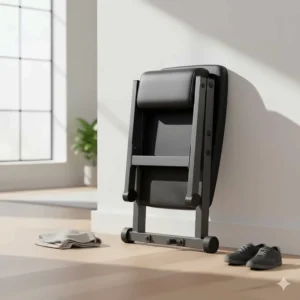
Walls represent untapped real estate in most small gyms. Wall-mounted folding racks, resistance band anchors, and pull-up bars maximize vertical space while keeping floors clear.
According to the National Association of Home Builders, the average American home has shrunk by 6% since 2015, making vertical storage increasingly critical for home fitness setups. Wall-mounted solutions preserve precious floor space for movement.
Multi-Function Equipment Benefits
Single-purpose equipment rarely justifies its footprint in tight spaces. That’s why adjustable dumbbells beat fixed-weight sets, and multi-station gyms outperform single-exercise machines.
Calculate value using the “exercise-per-square-foot” metric. A power rack might occupy 16 square feet but enable 50+ exercises. That’s 3+ exercises per square foot. A single-purpose leg extension machine? One exercise, maybe 12 square feet. The math tells the story.
✨ Don’t Miss These Exclusive Deals!
🔍 Take your compact home gym to the next level with these carefully selected products. Click on any highlighted item to check current pricing and availability. These tools will help you create authentic fitness results your family will admire!
Budget Planning for Compact Gyms
Initial Investment Ranges
Compact home gym equipment spans dramatic price ranges. Budget options start around $50-$100 for basic resistance bands or adjustable dumbbells. Mid-range systems ($300-$700) include quality adjustable weights, folding gyms, and portable cable machines. Premium setups ($1,000+) feature smart technology, commercial-grade construction, and extensive accessories.
Research from the American College of Sports Medicine indicates home gym equipment typically pays for itself within 4-6 months compared to gym memberships averaging $58 monthly. Quality matters for longevity—budget equipment requiring replacement every year costs more than durable mid-range options lasting 5-10 years.
Hidden Costs to Consider
The sticker price tells only part of the story. Factor in accessories like workout benches, floor mats, mirrors, and storage solutions. Resistance band systems need replacement bands every 1-2 years ($40-$80). Barbell setups require plates, collars, and potentially platforms—easily adding $200-$500.
Shipping matters too. Heavy equipment often costs $50-$150 to ship, though many Amazon items include free delivery. Installation services for complex systems run $100-$300 if you lack the tools or patience for assembly.
Cost-Per-Use Analysis
Smart buyers calculate cost per workout. A $600 power rack used 200 times yearly for 5 years costs $0.60 per session. A $50 resistance band set used 100 times before replacement costs $0.50 per session. Both represent excellent value compared to $15 gym visits.
The real question isn’t “how much?” but rather “how much per use?” Equipment gathering dust costs infinity per workout.
Maximizing Your Compact Gym Setup
Essential Accessories Worth the Investment
A few strategic accessories transform basic equipment into complete training systems. Quality workout mats protect floors and reduce noise—critical for apartment dwellers. Full-length mirrors cost $50-$150 but dramatically improve form and motivation.
Resistance bands expand exercise options for nearly any equipment. A set of quality bands ($30-$60) adds hundreds of movement variations. Storage solutions like wall hooks, shelving units, or gear racks ($40-$200) keep equipment organized and accessible.
For barbell users, quality collars ($20-$50) prevent plates from shifting dangerously. Chalk or lifting grips ($10-$30) improve grip security without damaging equipment.
Workout Program Design for Small Spaces
Small spaces demand smart programming. Circuit training works brilliantly—moving between exercises with minimal rest maximizes efficiency while equipment cools down or gets repositioned. Supersets and tri-sets pack volume into compact timeframes.
Focus on compound movements that train multiple muscle groups simultaneously. Squats, presses, rows, and deadlifts variations deliver more results than isolation exercises when space and equipment are limited.
The Centers for Disease Control and Prevention recommends adults get 150 minutes of moderate aerobic activity or 75 minutes of vigorous activity weekly, plus muscle-strengthening activities twice weekly. Compact home gyms easily facilitate both when programmed correctly.
Noise Reduction Strategies
Neighbors and household members appreciate quiet workouts. Rubber floor mats absorb impact and dampen vibration. Resistance-based equipment naturally runs quieter than impact cardio machines.
For weight training, controlled eccentric movements reduce clanging. Bumper plates designed for deadlifts cost more than iron plates but land nearly silently. Resistance bands operate essentially noise-free—perfect for apartment living or late-night training sessions.
Schedule noisier exercises (jumping, heavy deadlifts) during reasonable hours. Your downstairs neighbors will thank you, and you’ll avoid awkward hallway conversations about 6 AM deadlift sessions.
Maintenance and Longevity Tips
Regular Upkeep Requirements
Quality equipment lasts decades with minimal maintenance. Wipe down surfaces after sweating all over them—it’s basic hygiene and prevents corrosion. Check bolts and connections monthly, tightening anything that’s loosened from use.
Resistance bands require inspection before each use. Small tears grow into catastrophic failures. Replace bands showing wear immediately. Cables on machines need periodic lubrication according to manufacturer specifications—usually every 6-12 months for regular use.
Steel equipment benefits from light oil application on moving parts quarterly. Prevent rust by controlling humidity and addressing any moisture exposure immediately.
When to Replace vs. Repair
Some issues warrant replacement, others need simple fixes. Worn resistance bands, torn upholstery, or cracked plastics typically cost less to replace than repair. But mechanical failures in quality equipment often have inexpensive fixes—replacement parts, new bolts, or cable rewiring.
Manufacturer warranties vary dramatically. BowFlex offers lifetime warranties on metal components but shorter coverage on plastic parts. REP Fitness provides lifetime frame warranties with 1-2 year warranties on attachments. Know your coverage before buying and keep documentation.
Third-party replacement parts exist for popular equipment, often at lower costs than manufacturer parts. For common brands like BowFlex, Total Gym, or popular power racks, aftermarket options abound.
Protecting Your Investment
Proper storage extends equipment life significantly. Fold foldable equipment when not in use—it wasn’t designed to stay deployed indefinitely. Store resistance bands away from direct sunlight and extreme temperatures that degrade latex.
Climate control matters for long-term durability. Garage gyms in humid climates need dehumidifiers to prevent rust. Extremely cold environments require bringing portable equipment inside to prevent material brittleness.
Cover equipment when not in use for extended periods. Dust and debris work into moving parts, causing premature wear. Simple equipment covers or sheets provide adequate protection.
Safety Considerations for Home Training
Proper Setup and Installation
Improper installation creates genuine danger. Wall-mounted equipment must attach to wall studs, not drywall alone. Use appropriate anchors rated for the loads you’re applying. When in doubt, hire professionals for installation—your safety justifies the $100-$300 cost.
Power racks need level floors and adequate clearance. Uneven floors create instability during heavy lifts. Ceiling clearance matters for overhead presses and pull-ups—measure carefully before ordering.
Follow manufacturer assembly instructions precisely. Those “optional” bolts often aren’t optional for safe operation. Missing or incorrectly installed parts void warranties and create hazards.
Equipment Weight Limits
Respect published weight capacities religiously. They include safety margins, but pushing limits invites equipment failure. The BowFlex SelectTech 552’s maximum of 52.5 lbs per hand isn’t arbitrary—it’s engineered capacity.
User weight limits on equipment like the Total Gym (300 lbs) account for dynamic forces during exercises. Exceeding limits stresses frames beyond design specifications.
For cable machines and stacks, published resistance maximums assume proper setup. Improper angles or modifications can create unexpected loads leading to cable snaps or pulley failures.
Training Alone Safely
Home training often means solo training. That requires extra precautions. Use safety bars or spotter arms for barbell exercises, setting them just below your bottom position. Practice failing safely—know how to dump weights or escape from under a barbell before attempting maximal loads.
Keep floors clear of equipment during workouts. Tripping hazards multiply when you’re fatigued. Install proper lighting to see clearly during all exercises.
Keep a charged phone nearby in case of emergency. Some smart equipment includes emergency alerts, but a simple phone call summons help faster than any app notification.
Comparison: Compact vs. Traditional Home Gyms
| Feature | Compact Systems | Traditional Setups |
|---|---|---|
| Floor Space | 10-50 sq ft | 100-300+ sq ft |
| Storage | Often foldable/portable | Permanent installation |
| Exercise Variety | 30-100+ exercises | 50-200+ exercises |
| Initial Cost | $200-$1,200 | $1,000-$5,000+ |
| Scalability | Limited by design | Highly expandable |
| Portability | Excellent | Non-existent |
| Resale Value | Moderate | Variable |
FAQ
❓ How much space do I really need for compact home gym equipment?
❓ Can compact home gym equipment really build muscle like traditional weights?
❓ What's the most versatile piece of small home gym equipment for beginners?
❓ Are folding home gym systems durable enough for daily use?
❓ How do I choose between resistance bands and adjustable dumbbells for small spaces?
Conclusion: Building Your Ideal Compact Home Gym
The compact home gym equipment landscape has matured dramatically. What once meant sacrificing effectiveness for convenience now delivers genuine muscle-building, strength-developing workouts in astonishingly small footprints.
Your ideal setup depends on training goals, available space, and budget constraints. Serious strength athletes benefit most from compact power racks paired with adjustable dumbbells. General fitness enthusiasts often prefer multi-function systems like the Total Gym or portable cable machines. Frequent travelers gravitate toward resistance band systems that pack into luggage.
The seven options reviewed here represent proven solutions, not theoretical possibilities. Thousands of real users have built strength, lost fat, and improved fitness using these exact systems in apartments, spare rooms, and cluttered garages.
Start with one quality piece matching your primary training style. Dumbbells for traditional strength work. Resistance systems for portable training. Power racks for barbell commitment. Multi-station gyms for variety. Expand gradually as needs and budgets allow.
Small spaces need not mean small results. With smart equipment selection and consistent effort, your compact home gym delivers everything commercial facilities offer—without the commute, crowds, or monthly fees. The future of home fitness fits in closets, folds against walls, and travels in backpacks.
Your fitness journey doesn’t require a dedicated home gym room. It requires smart equipment choices and consistent action. These compact systems provide the tools. The results are entirely up to you.
Recommended for You
- Best Multi Station Home Gym 2026: Top 7 Picks That Actually Work
- 7 Best All In One Home Gym 2026 – Ultimate Buyer’s Guide
- 7 Best Home Gym Benches 2025 – Expert Tested & Reviewed
Disclaimer: This article contains affiliate links. If you purchase products through these links, we may earn a small commission at no additional cost to you.
✨ Found this helpful? Share it with your friends! 💬🤗
