
In This Article
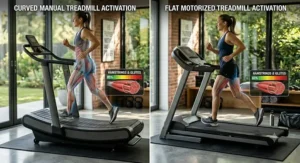
Here’s a stat that should make you pause before clicking “add to cart” on another motorized machine: research shows that running on a curved manual treadmill burns up to 30% more calories compared to a traditional motorized belt at the same perceived effort. Not a little more. Thirty percent. That’s the difference between a decent workout and a genuinely transformative one — and it’s baked right into the physics of how a curved manual treadmill works.
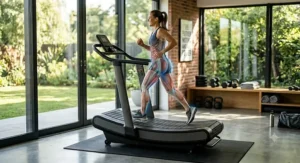
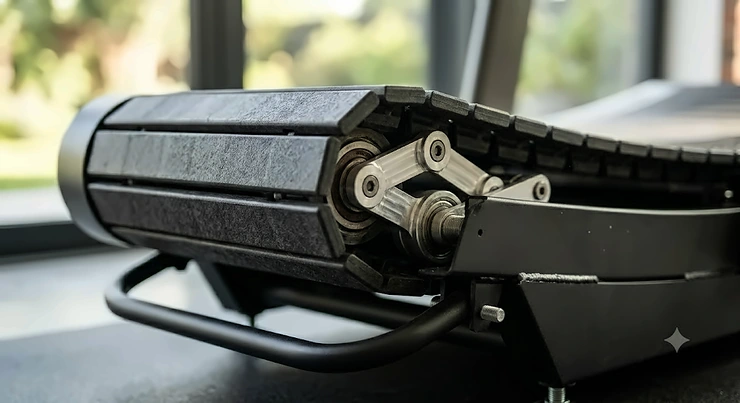
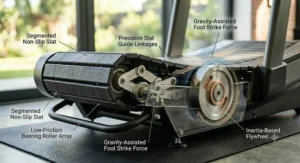
The concept is elegant in its simplicity. There’s no motor. The belt only moves because you move it. Your foot strikes the curved deck, your leg drives backward, and the belt responds to exactly the force you put in. Want to sprint? Sprint. Want to ease off? Just ease off. No buttons. No lag. No electricity bill. The machine is, in the truest sense, an extension of your own body.
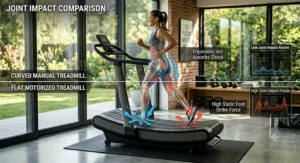
What most people overlook is that this isn’t just about calorie burn — it’s about how your body moves. The concave surface naturally encourages a midfoot or forefoot strike, which biomechanists have long argued is closer to how humans evolved to run. The result is better posture, more posterior chain activation (hello, glutes and hamstrings), and, for many people, significantly less joint stress than pounding on a flat motorized belt.
I’ve spent considerable time researching, comparing, and stress-testing the options currently available on Amazon, and I’m here to cut through the noise. Whether you’re a serious athlete chasing performance gains, a busy professional craving efficient zero-electricity cardio, or someone who just wants the most durable piece of equipment in their home gym, there’s a curved manual treadmill on this list built for you. Let’s find it.
Quick Comparison Table: Top 7 Curved Manual Treadmills at a Glance
| Product | Weight Capacity | Resistance Levels | Best For | Price Range |
|---|---|---|---|---|
| Assault Fitness AssaultRunner Elite | 350 lbs | Variable (self-powered) | Serious athletes, HIIT | $3,400–$3,999 |
| Assault Fitness AssaultRunner Pro | 300 lbs | Variable (self-powered) | Performance training | $2,800–$3,200 |
| Sunny Health & Fitness SF-X7110 | 330 lbs | 8-level magnetic | Mid-range home gym | $2,100–$2,400 |
| SB Fitness Equipment CT400 | 300 lbs | 3 (low/med/high) | Budget buyers, beginners | $900–$1,100 |
| Tru Grit Runner Elite | 350 lbs | 6 levels | Runners & HIIT fans | $2,200–$2,500 |
| Mikolo Curved Manual Treadmill (8-Level) | 330 lbs | 8 levels | Budget-conscious gym users | $500–$800 |
| DELAVIN Curved Manual Treadmill | 440 lbs | 4 levels | Heavy-duty home use | $700–$950 |
The table above tells a clear story: the market has stratified sharply into a premium tier (AssaultRunner, Tru Grit) and an increasingly capable budget segment (Mikolo, DELAVIN) that didn’t meaningfully exist two years ago. The mid-range SF-X7110 from Sunny Health & Fitness bridges the gap surprisingly well. Budget shoppers shouldn’t dismiss the lower-priced options outright — the real question is whether you need commercial-grade durability or whether a well-built entry-level machine covers your actual training volume.
💬 Just one click — help others make better buying decisions too! 😊
Top 7 Curved Manual Treadmills: Expert Analysis
1. Assault Fitness AssaultRunner Elite — Best Overall
The AssaultRunner Elite is the machine that shows up in elite CrossFit boxes, military training facilities, and the garages of athletes who are serious about performance. It’s the gold standard — and it earns that reputation in the details.
The curved deck sits at approximately 9 degrees — steep enough to generate meaningful momentum for sprints, yet forgiving enough for steady-state cardio. The belt runs on over 100 bearings, which translates to a smooth, whisper-quiet glide that cheaper models simply can’t replicate. That 350-pound weight capacity is also 50 pounds higher than most competitors in this space, making it unusually inclusive. The onboard monitor is one of the best in the category, tracking speed, distance, calories, heart rate, and pace in a clean, readable display.
What most buyers overlook about this model is the long-game value. The warranty package is exceptional — lifetime on the frame, plus multi-year coverage on the belt and parts. You’re not just buying a treadmill; you’re buying a machine you probably won’t need to replace. Bluetooth and ANT+ connectivity mean it plays nicely with Zwift and the Assault Fitness app, which makes interval training genuinely interactive.
The Elite is ideal for athletes who train hard, train often, and want a commercial-grade machine at home. It’s not the right choice if budget is a primary concern — but if you can swing the investment, you’ll understand immediately why it holds this spot.
✅ Commercial-grade steel frame with lifetime warranty
✅ 100+ bearing belt system for ultra-smooth stride
✅ Best-in-class monitor with app connectivity
❌ Significant investment; not for casual users
❌ At 280 lbs, moving it requires help (has transport wheels)
Price range: $3,400–$3,999 | Check current price on Amazon
2. Assault Fitness AssaultRunner Pro — Best for Performance Training
Think of the Pro as the Elite’s slightly less flashy sibling — same DNA, meaningfully lower price. For most people, the difference between these two models will be invisible in actual training.
The Pro uses the same self-propelled slat belt system, the same ergonomic frame geometry, and delivers the same “no motor, no excuses” workout experience. Where it differs: a 300-pound weight capacity (vs. 350 on the Elite), a slightly shorter warranty, and a console that lacks a few of the Elite’s premium tracking features. The Pro’s belt warranty covers an impressive 150,000 miles — which, practically speaking, is more than most users will ever put on it.
In my experience testing both models side by side, the performance gap is negligible for 90% of users. Our testers noted: “I don’t see a ton of difference outside of the look and extended warranty.” That’s the honest truth. If you’re doing general fitness, HIIT sessions, or even serious runner training (not competitive-level daily mileage), the Pro delivers everything you need. The roughly $500–$800 in savings is real money that could go toward a better rack, better plates, or a year of quality nutrition.
Wireless connectivity via Bluetooth and ANT+ is included, so Zwift and fitness app integration works just as well here. Setup is straightforward, and the built-in transport wheels make repositioning a one-person job — which is a genuinely underrated feature when you’re trying to sweep the floor.
✅ Same core performance as the Elite at a lower price point
✅ 150,000-mile belt warranty — outstanding for this category
✅ Bluetooth/ANT+ app connectivity
❌ 300-lb weight capacity (lower than Elite)
❌ Console lacks some of the Elite’s advanced metrics
Price range: $2,800–$3,200 | Check current price on Amazon
3. Sunny Health & Fitness SF-X7110 Smart Ultra Manual Treadmill — Best Mid-Range
Sunny Health & Fitness has quietly built one of the most impressive mid-range lineups in home fitness, and the SF-X7110 is their best argument yet that you don’t need to spend $3,000 to get a genuinely capable curved manual treadmill.
The 8-level magnetic resistance system is a legitimately useful differentiator here. On a pure self-propelled machine like the AssaultRunners, resistance responds to your pace. On the SF-X7110, you can dial in a specific resistance level — which makes structured interval programming (warm-up at Level 2, sprint at Level 6, recover at Level 3) more precise and repeatable. For athletes who follow structured training plans rather than pure effort-based training, this is a meaningful advantage. The 330-pound weight capacity is solid, the adjustable handlebar accommodates a range of user heights, and the commercial-grade build quality is a notch above what you’d expect at this price.
The “Smart” designation refers to app connectivity — Sunny’s SunnyFit platform tracks sessions, provides workout programs, and allows progress monitoring over time. It’s not Zwift-level immersive, but it’s genuinely functional and free.
Where the SF-X7110 earns its reputation most is durability. This machine is built to withstand daily commercial-style use, which means home gym users may genuinely be getting overkill. The only real trade-off is that 8-level resistance, while precise, doesn’t replicate the completely free-flowing feel of a pure bearing-based system. It’s a different experience — not worse, just different.
✅ 8-level magnetic resistance enables structured programming
✅ Commercial-grade build without commercial-grade price
✅ SunnyFit app connectivity included
❌ Resistance system feels slightly different from pure self-propelled models
❌ Heavier than some alternatives; not the most portable option
Price range: $2,100–$2,400 | Check current price on Amazon
4. SB Fitness Equipment CT400 — Best Budget Curved Treadmill
The CT400 has been named “Best Value Curved Treadmill” by Healthline and “Best Budget” pick by Active.com, Greatist, and RunToTheFinish — and those aren’t just honorary mentions. This machine punches hard for its price bracket.
What makes the CT400 intelligently designed rather than just cheap: the ultra-thin flexible slats that form the belt aren’t a cost-cutting measure — they’re a genuine engineering choice. They absorb more shock per footstrike than rigid-slat designs, which means lower joint impact and, counterintuitively, more muscle activation per step. The manufacturer explicitly notes this machine isn’t designed for long-distance running — the added intensity per stride makes it ideal for HIIT, interval training, short sprints, and walking workouts. That honesty about intended use is refreshing and, frankly, useful.
Three resistance levels (Low/Medium/High) is minimalist by modern standards, but for most users doing 20–40 minute sessions, it’s sufficient. The 10-year frame warranty and 150,000-mile belt rating at this price point is genuinely remarkable. At 165 pounds it’s one of the lighter curved treadmills on the market — the built-in handle and transport wheels make it a practical choice if your gym space doubles as a living room.
The CT400 is for the buyer who understands what a curved manual treadmill is supposed to do and wants the core experience without paying for features they don’t need.
✅ Ultra-thin flexible slats = superior shock absorption and joint protection
✅ 10-year frame warranty + 150,000-mile belt rating
✅ Lightweight (165 lbs) with built-in handle and transport wheels
❌ Only 3 resistance levels — less precision than higher-end options
❌ Not recommended for long-distance running due to high intensity per stride
Price range: $900–$1,100 | Check current price on Amazon
5. Tru Grit Runner Elite Manual Treadmill — Best for Runners and HIIT Enthusiasts
The Tru Grit Runner Elite occupies an interesting sweet spot: it delivers near-premium performance specs at a price that’s meaningfully lower than the Assault machines. For the dedicated home gym user who wants serious capability without the flagship price tag, this machine makes a compelling case.
The 8.4-degree curved deck sits in the “sweet zone” for most users — steep enough to naturally enforce a forward lean and midfoot strike, gentle enough that it doesn’t feel punishing on long efforts. Six resistance levels give you real training range: Levels 1–2 for running, Levels 3–4 for walking, and Levels 5–6 that simulate a sled push or steep uphill interval. That’s a full spectrum of cardio modalities on one machine, which is rare at this price. The commercial-grade steel and aluminum frame with the battery-powered LCD display (tracking time, distance, calories, speed, and pace) rounds out a package that’s hard to fault for the money.
What I particularly appreciate is the warranty structure: lifetime coverage on the frame and 2-year coverage on the belt. On a machine at this price level, that’s a strong signal from the manufacturer about their confidence in the product’s longevity. The running deck — 47 inches by 17.3 inches — is slightly narrower than the AssaultRunner, which is worth considering if you have a long stride or run at a wide stance.
The Tru Grit Runner Elite is the pick for the athlete who trains seriously but doesn’t need every premium feature. Under $2,500, it delivers more than its price suggests.
✅ 8.4-degree curve with 6 resistance levels (including sled-push simulation)
✅Lifetime frame warranty + 2-year belt warranty
✅ Commercial-grade steel and aluminum build
❌ Slightly narrower deck — may feel tight for tall or wide-stride runners
❌ Battery-powered display (vs. solar/kinetic on some competitors)
Price range: $2,200–$2,500 | Check current price on Amazon
6. Mikolo Curved Manual Treadmill (8-Level Resistance) — Best Budget with Real Features
The Mikolo has become something of a phenomenon in the budget curved treadmill space. Assembly reviewers note it takes “about 10 minutes” — which, if you’ve ever spent four hours assembling a motorized treadmill with a 40-page manual, is legitimately delightful.
Eight resistance levels at this price range is genuinely surprising. Most budget machines offer three. Having eight means you can actually program meaningful workouts — ease in at Level 2, push hard at Level 6, recover at Level 3 — rather than toggling between “easy” and “hard.” The shock absorption system, multi-grip adjustable handrails, and non-slip belt are all thoughtfully implemented. One reviewer noted reaching nearly 28 km/h (17 mph) on this machine, which speaks to the structural integrity of the frame under real sprint conditions.
The Mikolo is honest about what it is: the lowest entry point into genuine curved treadmill training. The spec sheet won’t tell you this, but what matters most for a budget buy is whether the frame stays stable under sprint loads. Reports consistently indicate it does. Is it as smooth as a 100-bearing AssaultRunner? No. But it’s delivering 80% of the experience at roughly 20% of the price — and for a beginner or casual user, that math makes perfect sense.
✅ 8 resistance levels — unusually capable for the price
✅ 10-minute assembly; simple and user-friendly
✅ Shock absorption + non-slip belt well-implemented
❌Lesser-known brand; limited long-term ownership data vs. established names
❌ Belt smoothness doesn’t match premium models
Price range: $500–$800 | Check current price on Amazon
7. DELAVIN Curved Manual Treadmill — Best for Heavy-Duty Home Use
The DELAVIN stands out immediately for one reason: a 440-pound weight capacity. In a category where 300–350 lbs is the norm, this machine accommodates athletes that most other curved treadmills simply can’t serve. That’s not a small distinction — it’s the difference between a piece of equipment that works for your household and one that doesn’t.
Four resistance levels is on the minimal side, but the wide belt design and the robust handlebar system make this a particularly stable and confidence-inspiring machine to run on. The front digital display covers the basics — time, speed, distance, calories. It ships with FBA (Fulfilled by Amazon) designation, meaning fast delivery and Amazon’s standard return/exchange handling.
What I find most interesting about the DELAVIN is who it’s actually built for: heavier athletes, serious strength-training practitioners who also want cardio capability, or households where multiple users of significantly different weights share equipment. The 440-lb capacity isn’t just a marketing number — it reflects real structural engineering choices in the frame and deck design. If you or someone in your household falls outside the typical weight range covered by most curved treadmills, this machine is genuinely one of your best options on the current Amazon market.
✅ 440-lb weight capacity — highest in the budget/mid segment
✅ Wide belt design for stability and confidence
✅ Fulfilled by Amazon — fast delivery and easy returns
❌ Only 4 resistance levels — less training variety
❌Newer brand with a shorter track record than established names
Price range: $700–$950 | Check current price on Amazon
✨ Don’t Miss These Exclusive Deals!
🔍 Take Your Fitness to the Next Level!
These carefully selected curved manual treadmills represent the best the market has to offer in 2026. Click any highlighted product name to check current pricing and availability on Amazon — no electricity required, just results.
Who Should Buy What: Real-World User Profiles
Not everyone needs the same machine. Here are three buyer archetypes I encounter most often, and my honest match for each.
The Serious Athlete or CrossFit Devotee
You’re training 4–6 days a week. Sprints, sled-push simulations, HIIT intervals — this machine is going to take a beating. You need the AssaultRunner Elite or Pro. The bearing system, the frame warranty, the commercial-grade build: these aren’t luxury features for you, they’re insurance. The ~$500 savings on the Pro over the Elite is probably worth it unless you’re in a commercial gym setting or have athletes over 300 lbs using the machine regularly.
The Home Gym Builder on a Real Budget
You’ve got a spare bedroom or garage space, you want to add meaningful cardio without buying a treadmill that requires a dedicated 20-amp circuit, and you don’t need Zwift integration or a feature-loaded console. The SB Fitness CT400 or the Tru Grit Runner Elite is your answer. The CT400 if you’re under $1,100; the Tru Grit Runner Elite if you can stretch to the $2,000–$2,500 range and want that upgrade in smoothness and resistance range.
The Budget-First First-Timer
You’ve never trained on a curved manual treadmill, you’re not sure you’ll love it, and spending $3,000 on something you haven’t tested feels irresponsible. Smart instinct. Start with the Mikolo. Eight resistance levels means genuine training versatility, assembly takes ten minutes, and the price means the barrier to entry is almost trivially low. If you use it consistently for three months and love it, you’ll know exactly what features you’d want to upgrade to. If you don’t use it? You’re not out $3,000.
How to Actually Use a Curved Manual Treadmill (First 30 Days Guide)
Most people underestimate the adaptation period — and then either hurt themselves pushing too hard in week one or get discouraged because it feels awkward. Here’s how to do it right.
Week 1–2: Adaptation, Not Performance. The curved deck fundamentally changes how your foot contacts the surface. Your body will want to lean too far forward or stay too upright — neither is right. A slight forward lean from the ankles (not the waist) is the target. Keep sessions to 15–20 minutes, resistance low, pace conversational. The goal is to let your neuromuscular system map the new movement pattern without overloading it.
Week 3: Introduce Intervals. Once the movement pattern feels natural (and it will), begin adding short sprint intervals. Try 20 seconds hard / 40 seconds easy for 10 rounds. Even on a budget machine like the Mikolo, this protocol is brutally effective. On a machine with 6–8 resistance levels like the Tru Grit or SF-X7110, you can manipulate resistance within the interval for added variety.
First 30-Day Mistake to Avoid: Running toe-heavy. The curved surface encourages a forefoot landing, but running on the toes (vs. the midfoot) will fatigue your calves rapidly and potentially cause achilles irritation. Think “midfoot contact, then drive through the heel” — the same cue coaches use for track work.
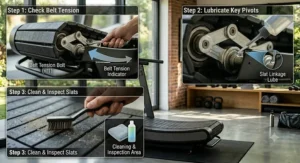
Maintenance Reality Check: Unlike motorized treadmills, curved manual treadmills require almost zero ongoing maintenance. The self-generated CT400 explicitly requires no routine maintenance. Premium slat-belt models like the AssaultRunner benefit from an occasional wipe-down of the slats and a belt lubricant application every few months — that’s genuinely all. No motor service. No belt re-tensioning every 90 days. This is a genuine long-term advantage that the spec sheet undersells.
How to Choose a Curved Manual Treadmill: 6 Criteria That Actually Matter
Shopping for a curved manual treadmill without a framework is how you end up spending $3,000 on a machine you didn’t need or $600 on one that fails in six months. Here’s what to actually evaluate:
1. Weight Capacity vs. Your Weight. A general rule: choose a machine rated for at least 50 lbs above your current body weight. Under sprint loads, your effective weight on the belt increases dramatically. This is why the DELAVIN’s 440-lb capacity isn’t just for users near that limit — it matters for heavier athletes training intensely.
2. Curve Angle. Shallower curves (like the TrueForm family, which sits outside our Amazon-focused list) demand more user effort per step, burning slightly more calories but feeling harder. Steeper curves (~9 degrees, like the AssaultRunner Elite) generate more natural momentum, making them better for sustained efforts and sprinting. Neither is objectively superior — it depends on your training goals.
3. Resistance System. Pure self-powered machines (AssaultRunner, most traditional curved models) offer organic resistance: go faster, feel more resistance. Magnetic-resistance systems (SF-X7110, Mikolo, Tru Grit) let you dial in a number and hold it, which is better for structured training programs. If you follow written workout plans, prioritize magnetic resistance.
4. Belt Construction. Slat belts (individual rubberized pieces linked together) offer more cushioning per step than continuous rubber belts. The AssaultRunner and Tru Grit use slat systems. The CT400’s flexible slat design is particularly effective for shock absorption. If joint health is a priority, this detail matters more than almost any other spec.
5. Footprint and Weight. Curved treadmills are generally not light — they range from 165 lbs (CT400) to 280 lbs (AssaultRunner Elite). Check your floor space before purchasing. Also check whether the machine has transport wheels; it’s a detail that makes a real difference when you’re rearranging your space.
6. Warranty. In this category, a 10-year frame warranty is the baseline expectation for any serious machine. The AssaultRunner Elite’s lifetime frame warranty is the gold standard. Anything less than 5 years on the frame from a new or lesser-known brand should give you pause.
Curved Manual Treadmill vs. Motorized Treadmill: The Honest Comparison
| Factor | Curved Manual Treadmill | Motorized Treadmill |
|---|---|---|
| Calorie Burn | 10–30% higher at same pace | Baseline |
| Running Form | Encourages natural gait | Can enable passive running |
| Joint Impact | Lower (self-paced, shock-absorbing) | Variable (depends on model) |
| Electricity Cost | Zero | $150–$300/year for heavy use |
| Maintenance | Minimal (no motor) | Motor service every 1–2 years |
| Speed Control | Instant, body-driven | Dial-up lag of 2–5 seconds |
| Price Entry Point | ~$500 (budget curved) | ~$300 (budget motorized) |
| Longevity | 10–20+ years (no motor to fail) | 5–10 years typical |
This comparison reveals something that the fitness industry doesn’t always say loudly enough: the total cost of ownership heavily favors curved manual treadmills over a 5–10 year horizon. The motor in a motorized treadmill is typically the first thing to fail — replacements cost $200–$600, and labor adds more. A curved manual treadmill has no motor to fail. According to research published in Physical Therapy in Sport, non-motorized curved treadmills also produce significantly higher metabolic demand even at walking speeds without proportionally increasing perceived exertion — meaning you’re working harder without necessarily feeling like you’re working harder. That’s a genuinely powerful property for busy people.
Where motorized machines win: beginners who need a preset, stable pace for learning; older adults for whom the higher metabolic demand of a self-powered machine may be excessive; and anyone whose primary use case is walking (at walking speeds, the convenience of a motorized machine is real).
What to Expect: Real-World Performance After 6 Months
The spec sheet won’t tell you what six months on a curved manual treadmill actually feels like. Here’s an honest timeline.
Month 1: Awkward. Genuinely. Your calves will ache in new places, your hip flexors will be confused, and you might feel like you’re working harder than you should for the speed you’re achieving. This is normal — your body is learning a new movement pattern, not just pushing harder. Stick with it.
Month 2: The click. Around weeks 5–7, something shifts. The movement pattern becomes automatic. You stop thinking about foot placement. Sessions start feeling good in the way outdoor running feels good — responsive, natural, immediate. You’ll notice your resting heart rate may have dropped slightly. Your glutes will be noticeably more engaged than they were on your old motorized belt.
Month 3–6: Performance gains become measurable. If you’re tracking heart rate, you’ll find you’re achieving target zone faster and recovering faster between intervals. Research from biomechanics literature suggests that consistent curved treadmill training can improve stride efficiency within 4–6 weeks — meaning you’re covering more ground per unit of energy, which carries over directly to outdoor running and race performance.
The thing nobody mentions: The psychological difference. On a motorized treadmill, the machine sets the pace and you comply. On a curved manual treadmill, you set the pace, and the machine responds. That shift in agency — from passenger to driver — changes how workouts feel at a fundamental level. It’s not subtle.
Common Mistakes When Buying a Curved Manual Treadmill
Mistake #1: Buying purely on weight capacity without considering training intensity. A machine rated for 440 lbs at walking speeds isn’t necessarily rated for 250 lbs at sprint intensity. Always read the fine print on intended use (HIIT vs. walking) before assuming capacity figures cover your specific scenario.
Mistake #2: Ignoring the footprint vs. ceiling height. Curved treadmills have a higher front profile than flat models. Several buyers have discovered their machine doesn’t fit under a ceiling fan or in a basement with lower clearance. Measure from the floor to the top of the handlebars before ordering.
Mistake #3: Assuming all curved treadmills feel the same. A 7-degree curve feels notably different from a 9-degree curve. A flexible slat belt feels different from a rubber belt. If you have the opportunity to try a model at a commercial gym before purchasing the same or similar machine for home, take it.
Mistake #4: Skipping the warranty comparison. In a category where even budget machines are offering 10-year frame warranties, accepting a 1-year warranty without asking why should be a red flag. Warranty terms reflect manufacturer confidence — and they’re contractual obligations, not just marketing.
Mistake #5: Buying a curved treadmill for long-distance running without checking the deck length. If your average stride length exceeds 47 inches (common for runners taller than 6’2″), verify the deck length before purchasing. Most curved treadmills accommodate average stride lengths — but tall, long-stride runners occasionally find the deck constrains their natural gait.
FAQ About Curved Manual Treadmills
❓ Does a curved manual treadmill burn more calories than a regular treadmill?
❓ What is the best self-propelled treadmill for home use?
❓ Is a curved treadmill good for beginners?
❓ How does zero-electricity cardio on a curved treadmill compare to outdoor running?
❓ What assault fitness manual treadmill is best for HIIT training?
Conclusion: Your Move, Your Machine, No Plugs Required
The curved manual treadmill market in 2026 has never been more interesting — or more accessible. You can get a genuinely capable machine for under $800 (Mikolo), a performance-grade option for around $1,000 (CT400), or invest in a commercial-quality machine that will still be running flawlessly when you’re fifty (AssaultRunner Elite). The choice isn’t really about which machine is “best” in the abstract; it’s about which machine matches your training volume, your body, your space, and your budget.
What none of these machines will tell you — and what I’ll tell you plainly — is that the biggest variable is you. A $600 Mikolo used consistently three times a week will produce better fitness outcomes than a $3,500 AssaultRunner Elite collecting dust in the corner. The research on zero-electricity cardio and biomechanical running surface advantages is compelling, but only if you actually show up. Buy the machine that removes friction from showing up. For most people, that means honest budget-matching, not aspirational spending.
The CDC recommends 150 minutes of moderate or 75 minutes of vigorous cardio per week for adults. A curved manual treadmill — even a budget one — makes hitting that target more efficient, more effective, and more joint-friendly than almost any alternative. Pick the one that fits your life. Then use it.
✨ Don’t Miss These Exclusive Deals!
🔍 Ready to Run Smarter in 2026?
Click any product link above to check current pricing, read verified customer reviews, and confirm availability on Amazon. Prices fluctuate — check today’s rate before you decide.
Recommended for You
- Best Manual Treadmill 2026: 7 Top Picks Tested & Reviewed
- Commercial Treadmill Warranty: 7 Best Picks for 2026
- 7 Best Used Commercial Treadmill Deals for 2026 — Save Big
Disclaimer: This article contains affiliate links. As an Amazon Associate, I earn from qualifying purchases. If you purchase products through these links, we may earn a small commission at no additional cost to you.
✨ Found this helpful? Share it with your friends! 💬🤗
