
In This Article
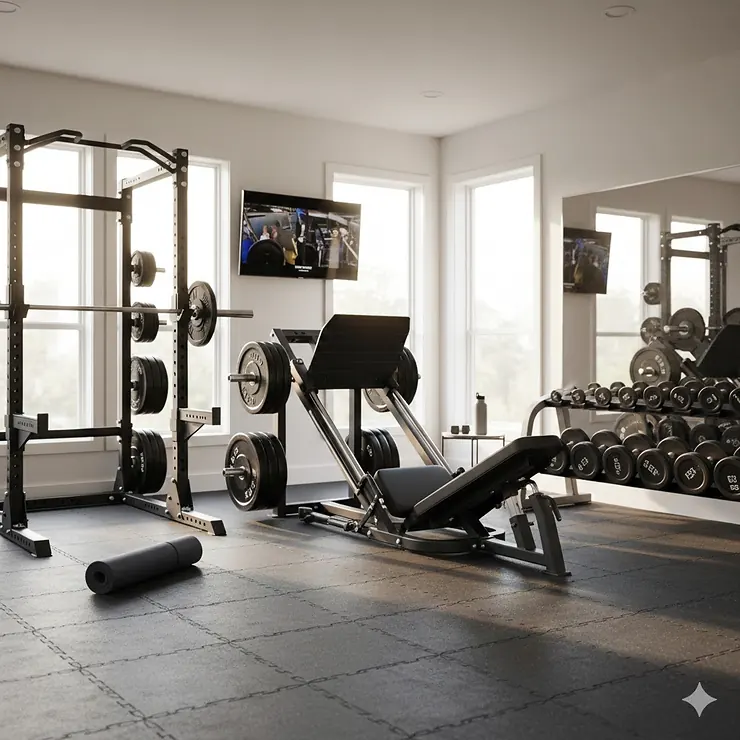
Building a complete home gym with leg press capabilities might just be the smartest fitness investment you’ll make in 2026. I’ve spent years testing gym equipment, and there’s something uniquely satisfying about having professional-grade leg training right in your garage or spare room. You know that feeling when you’re crushing a leg day at the commercial gym, waiting 20 minutes for the leg press because someone’s doing Instagram selfies on it? Yeah, those days are over.
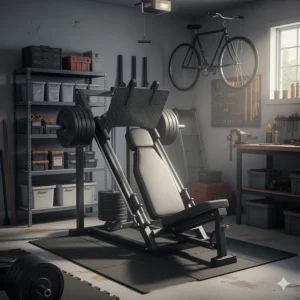
The beauty of a home gym with leg press functionality goes beyond convenience. Research from the National Center for Biotechnology Information shows that leg press exercises provide exceptional lower body strength gains while reducing spinal compression compared to traditional squats. For anyone dealing with back concerns or simply wanting safer progressive overload, this equipment becomes absolutely essential.
What makes 2026 particularly exciting is the evolution of compact, multi-functional designs. Modern home gym with leg press systems now pack commercial-quality features into spaces that would’ve seemed impossible five years ago. We’re talking about machines that combine leg press, hack squat, calf raises, and complete upper body stations—all without requiring a warehouse-sized room.
Quick Comparison Table
| Product | Weight Stack/Capacity | Price Range | Best For | Rating |
|---|---|---|---|---|
| Marcy MWM-7454 | 150 lb stack | $600-$800 | Budget buyers | ⭐⭐⭐⭐ 4.2/5 |
| Body-Solid P1LP | 160 lb stack | $900-$1,200 | Mid-range value | ⭐⭐⭐⭐☆ 4.5/5 |
| Marcy MWM-0623 | 120 lb stack | $500-$700 | Space savers | ⭐⭐⭐⭐ 4.3/5 |
| Body-Solid GLPH1100 | 1,000 lb capacity | $1,600-$2,000 | Serious lifters | ⭐⭐⭐⭐⭐ 4.7/5 |
| Force USA Compact | 660 lb capacity | $1,000-$1,300 | Innovation seekers | ⭐⭐⭐⭐⭐ 4.8/5 |
| Valor CC-10 | 400 lb capacity | $380-$450 | Minimal footprint | ⭐⭐⭐⭐ 4.4/5 |
| Inspire M3 | 215 lb stack | $2,500-$3,000 | Premium quality | ⭐⭐⭐⭐⭐ 4.6/5 |
💬 Just one click – help others make better buying decisions too! 😊
Top 7 Home Gym with Leg Press: Expert Analysis
1. Marcy MWM-7454 Home Gym – Best Budget-Friendly Option
The Marcy MWM-7454 delivers shocking value for anyone building their first home gym with leg press capabilities. This all-in-one system packs a lat pulldown, leg press station, cable pulley system, and Smith machine into surprisingly compact dimensions (73″ L x 37″ W x 78″ H).
Key Specifications:
- 150-pound weight stack with smooth selectorized resistance
- Dual-function press arms with integrated pec fly
- Built-in leg press station with adjustable footplate
- Compact footprint under 80 inches tall
Price Range: $600-$800
The leg press component handles users up to 6’2″ comfortably, though taller individuals might feel slightly cramped at full extension. Customer feedback consistently praises the straightforward assembly process—most users complete setup within 3-4 hours with basic tools.
✅ Pros:
- Exceptional value for complete home gym package
- Space-efficient vertical design
- Smooth cable system requires no adjustments between exercises
❌ Cons:
- Weight stack may feel limiting for advanced lifters
- Leg press range of motion shorter than dedicated machines
2. Body-Solid Powerline P1LP Home Gym – Best Mid-Range Value
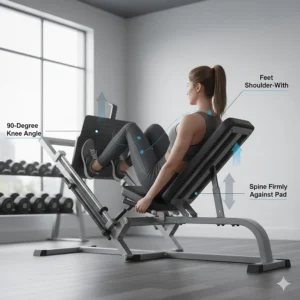
Body-Solid’s reputation for bombproof construction shines through in the P1LP, a thoughtfully engineered home gym with leg press that bridges the gap between budget and premium categories. The pre-welded frame assembly cuts setup time dramatically while ensuring rock-solid stability during heavy pressing movements.
Key Specifications:
- 160-pound weight stack (expandable to 210 pounds)
- Ergonomically correct press arms for natural movement
- Side-mountable leg press station (left or right)
- Ten-year frame warranty, one-year parts
Price Range: $900-$1,200
What sets the P1LP apart is the attention to biomechanics. The press arms follow natural arcing patterns that reduce joint stress, while the leg press station’s positioning allows genuine depth without uncomfortable hip compression. Users consistently report this machine feels far more expensive than its price tag suggests.
✅ Pros:
- Pre-welded construction speeds assembly by hours
- Expandable weight stack for progressive training
- Exceptional build quality at reasonable price
❌ Cons:
- Leg press sold as separate attachment
- Requires 7′ x 8′ minimum floor space
3. Marcy MWM-0623 All-in-One System – Best for Small Spaces
The MWM-0623 represents Marcy’s answer to the eternal home gym dilemma: maximum functionality, minimum footprint. This cleverly designed home gym with leg press features a unique rotating seat that enables quick transitions between upper body and leg exercises without requiring separate stations.
Key Specifications:
- 120-pound selectorized weight stack
- Full-swivel 180-degree rotating seat
- Tri-action press arms with multiple grip positions
- Four-position adjustable back pad
Price Range: $500-$700
The rotating seat innovation deserves special mention. Instead of moving between stations or adjusting multiple components, you simply spin the seat to access the leg press platform. This design philosophy extends throughout—everything adjusts quickly via pop-pins and simple mechanisms that don’t require tools during workouts.
✅ Pros:
- Innovative space-saving rotating seat design
- Quick exercise transitions boost workout efficiency
- Adjustable footplate mounts on either side
❌ Cons:
- 120 lb stack limits progression for strong lifters
- Compact design may feel cramped for users over 6’3″
4. Body-Solid GLPH1100 Leg Press/Hack Squat – Best for Serious Training
If you’re ready to invest in legitimate commercial-quality equipment, the GLPH1100 stands as the gold standard for dedicated home gym with leg press setups. This isn’t a compromise machine—it’s what you’ll find in professional training facilities, engineered to handle brutal leg day punishment year after year.
Key Specifications:
- 1,000-pound weight capacity (plate-loaded)
- Quad-track roller system with diamond plate footplates
- Dual functionality: leg press and hack squat
- Extra heavy-duty 2″ x 4″ 11-gauge steel mainframe
Price Range: $1,600-$2,000
The GLPH1100’s quad-track roller system creates eerily smooth movement under heavy loads. I’m talking about loading 600+ pounds and experiencing zero binding or catching—the kind of engineering that separates hobbyist equipment from serious training tools. The quick flip-and-lock back pads transition between exercises in seconds, and the three lockout positions provide genuine safety without requiring a spotter.
✅ Pros:
- Commercial-grade construction built for decades of use
- Incredibly smooth quad-track roller system
- Versatile: leg press, hack squat, calf raises
❌ Cons:
- Requires Olympic weight plates (sold separately)
- Substantial footprint demands dedicated space
- Assembly complexity requires 4-6 hours and assistance
5. Force USA Compact Leg Press & Hack Squat – Most Innovative Design
The Force USA Compact earned Garage Gym Reviews’ “Most Innovative Leg Press” award in 2025, and five minutes using this machine explains why. This home gym with leg press capabilities delivers three machines worth of functionality (leg press, hack squat, calf raise) in a footprint that actually fits home gyms.
Key Specifications:
- 660-pound weight capacity with lifetime frame warranty
- Oversized 31.5″ x 27.5″ adjustable footplate
- Hover-Glide track system for ultra-smooth motion
- 30-degree angled frame accommodates heights 5’2″ to 6’4″
Price Range: $1,000-$1,300
Force USA’s proprietary Hover-Glide mechanism represents genuine innovation in leg press technology. Traditional machines use wheels or bearings, but this system creates floating resistance that eliminates the typical “sticky points” during reps. The oversized footplate isn’t just marketing—it genuinely enables foot positioning variety that targets different muscle groups without switching equipment.
✅ Pros:
- Space-efficient design without compromising performance
- Revolutionary Hover-Glide track feels incredibly smooth
- Versatile footplate angles attack muscles differently
❌ Cons:
- Currently experiencing high demand with limited stock
- Premium price point for compact design
6. Valor Fitness CC-10 Vertical Leg Press – Best Minimal Footprint
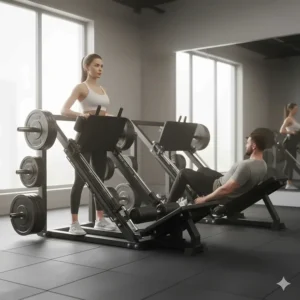
The Valor CC-10 embraces old-school vertical leg press design with modern engineering refinements. This home gym with leg press functionality proves you don’t need elaborate machines to build powerful legs—sometimes simplicity and solid construction deliver better results than complexity.
Key Specifications:
- 400-pound plate capacity on solid steel construction
- Vertical design requires just 52″ x 65″ floor space
- High-density dual-layer vinyl padding
- Compatible with standard and Olympic plates
Price Range: $380-$450
Vertical leg presses offer unique advantages: the positioning naturally encourages full range of motion, the compact vertical footprint saves dramatic floor space, and the simple mechanics mean virtually nothing can break or require maintenance. The CC-10 nails this classic design while adding thoughtful modern touches like ergonomic neck padding and multiple safety catch positions.
✅ Pros:
- Incredibly affordable for plate-loaded equipment
- Tiny footprint perfect for garage or apartment gyms
- Durable construction handles years of heavy use
❌ Cons:
- Vertical position may feel awkward initially
- Limited to leg-focused exercises only
- Getting in/out position requires slight learning curve
7. Inspire Fitness M3 Multi-Gym – Best Premium Home Gym
The Inspire M3 represents the pinnacle of integrated home gym with leg press design. This commercial-quality system combines independent press arms, leg curl/extension station, built-in crunch bench, and full leg press capability in a surprisingly compact 40″ x 73″ footprint that rivals machines twice its size.
Key Specifications:
- 215-pound weight stack with smooth pulley action
- Independent press arms for balanced development
- Seated leg curl/extension station with adjustable pads
- Patented seated crunch bench with weighted resistance
Price Range: $2,500-$3,000
What justifies the premium investment? The M3 delivers genuinely commercial gym experiences through precision engineering that budget systems simply can’t match. The independent press arms reveal strength imbalances immediately, the leg press attachment provides full extension range without back compression, and the heavy-duty steel construction ensures this becomes your last home gym purchase.
✅ Pros:
- Commercial-quality construction and smooth operation
- Comprehensive muscle group targeting in compact design
- Unique seated crunch bench with progressive resistance
❌ Cons:
- Premium price point requires serious budget commitment
- Leg press requires separate attachment purchase
- Complex assembly best handled by professionals
💡 Don’t Miss These Exclusive Deals!
🔍 Ready to transform your home workouts? Click on any highlighted product name above to check current Amazon pricing and availability. These carefully selected machines will help you build the powerful lower body strength you’ve been chasing. Compare features, read recent customer reviews, and find the perfect home gym with leg press for your space and goals!
Understanding Home Gym with Leg Press Benefits
Why does a home gym with leg press deserve such prominent placement in your training arsenal? The science behind leg press training reveals benefits that extend far beyond simple muscle building. Studies published in the Journal of Sports Medicine demonstrate that leg press exercises activate the quadriceps, hamstrings, and glutes while significantly reducing spinal compression compared to traditional barbell squats.
The Biomechanical Advantages
Traditional squats demand exceptional core stability, perfect form, and often a spotter for safety. A quality home gym with leg press removes these barriers while maintaining training effectiveness. The supported back position distributes load across a larger surface area, protecting the lumbar spine during heavy resistance training. This makes leg pressing particularly valuable for individuals recovering from back injuries or those with mobility limitations.
Research from Goethe University’s Institute of Sports Science comparing eight weeks of leg press training versus squat training found both exercises delivered comparable strength gains. However, leg press participants reported fewer instances of form breakdown and could consistently train closer to muscular failure without safety concerns. For home training environments where spotters aren’t available, this safety margin becomes crucial.
Building Muscle Mass and Strength
The leg press enables progressive overload in ways that complement but differ from free weight training. Because stability demands decrease, lifters typically handle 30-40% more weight on leg press machines compared to equivalent squat training. This increased loading capacity provides powerful stimulus for muscle hypertrophy, particularly in the quadriceps which receive concentrated tension throughout the movement.
According to research published in the Journal of Strength and Conditioning Research, single-leg press variations significantly improve athletic performance metrics including sprint speed and jump height. The bilateral deficit—where combined single-leg strength exceeds double-leg performance—means your home gym with leg press can address strength imbalances that compound exercises might miss.
Rehabilitation and Injury Prevention
Physical therapists frequently prescribe leg press exercises during knee and hip rehabilitation protocols. The controlled movement pattern with adjustable resistance allows gradual strength rebuilding without excessive joint stress. A study examining post-knee replacement rehabilitation found maximal strength training programs incorporating leg presses accelerated functional recovery compared to traditional low-intensity protocols.
The adjustability factor proves particularly important here. Most quality home gym with leg press systems offer foot positioning variations that shift emphasis between muscle groups. Placing feet higher on the footplate increases hamstring and glute activation while reducing knee travel. Lower foot placement maximizes quadriceps engagement. This versatility enables targeted strengthening around injured or vulnerable joints.
What Makes the Best Home Gym with Leg Press?
Build Quality and Durability
Commercial-grade steel construction separates machines that last decades from those requiring replacement within years. Look for home gym with leg press systems featuring minimum 11-gauge steel in load-bearing components. Welded joints consistently outperform bolted connections for long-term stability, though quality bolted systems allow easier disassembly if you relocate.
Weight capacity specifications tell important stories about engineering integrity. A machine rated for 600+ pounds doesn’t just accommodate heavy lifters—it indicates structural overbuilding that ensures smooth operation even at moderate loads. Those extra-thick steel plates and reinforced pivot points that support extreme weight also eliminate wobble and flexing during regular training.
Smooth Resistance Mechanics
The difference between cheap and premium leg press mechanisms becomes obvious within three repetitions. Quality systems employ precision bearings, bushed guide rods, or specialized track systems that create frictionless motion. The Force USA Hover-Glide and Body-Solid quad-track systems exemplify engineering that transforms the pressing experience from acceptable to exceptional.
Weight stack machines require careful cable routing and pulley placement to maintain consistent resistance curves. The best home gym with leg press designs position pulleys to match natural strength curves—providing appropriate challenge throughout the entire range of motion rather than creating dead spots or excessive difficulty at specific points.
Space Efficiency Versus Functionality
Modern home gym with leg press designs increasingly prioritize compact footprints without sacrificing training effectiveness. The breakthrough came when manufacturers realized vertical orientations, rotating seats, and modular attachments could deliver complete workout systems in spaces previously considered too small for serious equipment.
Measure your available space carefully, remembering to account for user clearance beyond stated dimensions. A machine measuring 6 feet long requires additional space for entry/exit, weight plate storage, and comfortable movement around the equipment. Most quality systems need 8′ x 10′ minimum floor space when accounting for practical usage rather than just equipment footprint.
Adjustability and User Accommodation
Height adjustability determines whether a home gym with leg press serves your entire household or becomes sized for one person. The best systems accommodate users from 5’2″ through 6’6″ through seat positioning, back pad angles, and footplate adjustments. Look for quick-adjust mechanisms using pop-pins rather than requiring tools for modifications—you’ll actually use adjustable features if they’re convenient.
Foot platform size matters more than many realize. Oversized plates measuring 30+ inches wide enable stance variation that targets muscles differently. Narrow stance emphasizes quadriceps, wide stance recruits more glute and adductor involvement, and foot rotation angles create further variation without changing machines.
Different Types of Home Gym with Leg Press Systems
All-in-One Multi-Station Gyms
Integrated systems combine leg press capabilities with upper body stations, creating comprehensive training solutions in unified frames. The Marcy and Body-Solid Powerline systems exemplify this category, offering leg press attachments alongside lat pulldown, chest press, and cable stations. According to Wikipedia, companies like BowFlex pioneered this integrated approach in the 1980s, though modern systems far exceed those early designs.
These multi-station designs suit beginners and intermediate lifters building complete home gyms from scratch. The trade-off involves somewhat compromised leg press performance compared to dedicated machines—weight stack limits, smaller footplates, and shorter range of motion commonly appear in compact integrated designs.
Dedicated Leg Press/Hack Squat Combos
Standalone machines like the Body-Solid GLPH1100 and Force USA models focus exclusively on lower body training. This specialization enables engineering refinements impossible in multi-function systems: heavier weight capacities, smoother track systems, larger footplates, and genuine hack squat functionality through adjustable back support positioning.
Serious lifters and those specifically targeting lower body development benefit most from dedicated designs. The substantial investment (typically $1,500-$2,500) makes sense when leg training comprises significant training volume or when existing equipment already handles upper body work.
Vertical Leg Press Designs
The Valor CC-10 represents traditional vertical leg press engineering updated with modern materials and safety features. This configuration positions users lying horizontally while pressing weight directly overhead. The vertical orientation provides natural full range of motion and requires minimal floor space—often fitting against walls in areas unsuitable for angled designs.
Vertical presses demand proper technique since poor form creates legitimate safety risks. However, experienced lifters often prefer the vertical position for its natural movement pattern and psychological benefits—there’s something uniquely motivating about pressing heavy weight straight up against gravity.
How to Choose the Right Home Gym with Leg Press
Step 1: Define Your Training Goals
Determine whether you’re building general fitness, focusing on lower body development, or requiring rehabilitation-friendly equipment. General fitness enthusiasts often find multi-station systems most economical, while serious strength athletes typically require dedicated leg press capabilities. Those recovering from injuries should prioritize smooth resistance, extensive adjustability, and lower starting weight options.
Step 2: Assess Your Available Space
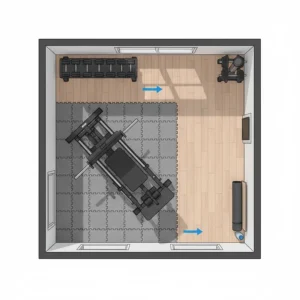
Measure floor dimensions accounting for entry/exit clearance, not just equipment footprint. Consider ceiling height for vertical designs and door width if moving equipment between rooms. Create a to-scale floor plan showing equipment placement, weight storage, and movement space—seeing actual spatial requirements prevents expensive purchase mistakes.
Step 3: Establish Your Budget
Quality home gym with leg press systems span from $500 budget options through $3,000+ premium machines. Remember that initial purchase price represents just one cost component. Factor Olympic weight plates ($200-$500 for starter sets), protective flooring ($100-$300), assembly costs ($200-$400 if hiring professionals), and potential delivery fees.
Step 4: Research Build Quality and Reviews
Investigate manufacturer reputations through resources like Garage Gym Reviews and verified Amazon customer feedback. Pay particular attention to comments about customer service quality since even well-built equipment occasionally requires replacement parts or warranty service. Frame warranties of 10+ years indicate manufacturer confidence in structural integrity.
Step 5: Compare Specifications Directly
Create comparison charts listing weight capacity, stack size, footplate dimensions, height adjustability range, and warranty coverage. Don’t assume higher prices automatically mean better specifications—the mid-range category often delivers surprising value when comparing objective measurements rather than brand recognition.
Step 6: Consider Future Expansion
Will this home gym with leg press system grow with your strength gains? Machines with expandable weight stacks, accessory compatibility, and plate-loaded designs offering unlimited capacity provide longer useful lifespans than fixed-limit systems. The ability to add 50-100 pounds of additional resistance extends equipment relevance by years.
Step 7: Verify Warranty and Support
Comprehensive warranties covering frame (lifetime to 10 years), parts (1-3 years), and labor (often limited) protect your investment. Research customer service responsiveness through recent reviews—manufacturers offering phone support, replacement parts availability, and responsive communication demonstrate commitment beyond initial sales.
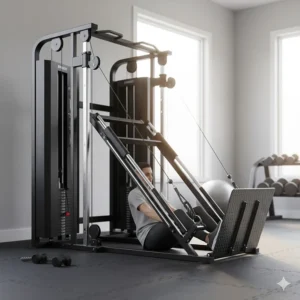
Setting Up Your Home Gym with Leg Press
Foundation and Flooring Considerations
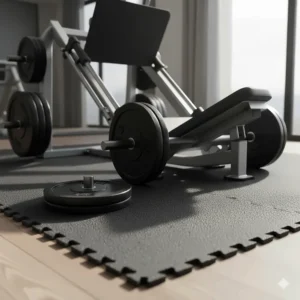
Proper flooring protects both your equipment and home structure. Rubber mats measuring 3/4″ thickness provide adequate impact absorption for most residential installations. Interlocking puzzle mats offer flexibility for irregular spaces, while solid rubber rolls create commercial-grade surfaces that handle heavy dropped weights without damage.
Consider noise transmission to adjacent rooms or floors below. Additional sound-dampening underlayment beneath rubber mats significantly reduces vibration transfer through floor joists. For second-floor installations, consult building codes regarding load-bearing capacity—most home gym with leg press systems plus users exceed 500 pounds, approaching residential floor load limits.
Assembly Best Practices
Budget 6-8 hours for multi-station gym assembly, 4-6 hours for dedicated leg press machines. Work with at least one assistant for large components—attempting single-person assembly risks injury and often damages equipment through dropping or forcing misaligned parts. Lay out all components before starting, verifying nothing arrived damaged or missing.
Follow manufacturer instructions precisely regarding bolt torque specifications. Over-tightening crushes pulley housings and cracks welded joints, while under-tightening creates dangerous movement during use. If assembly instructions seem unclear or parts don’t fit smoothly, contact customer service before forcing connections—five minutes on the phone prevents hours of disassembly later.
Safety Zone Planning
Establish minimum 3-foot clearance on all sides of your home gym with leg press equipment. This prevents injuries from contacting walls during exercises and allows emergency exits if equipment malfunctions. Keep weight storage organized and accessible without requiring reaching across active training areas.
Install proper lighting eliminating shadows on weight stacks and adjustment pins. Many injuries occur from misaligned weight selections or improperly secured adjustments rather than training itself. Adequate illumination plus deliberate pre-exercise verification prevents most setup-related accidents.
Maximizing Your Home Gym with Leg Press Investment
Progressive Training Protocols
Research from Eastern Illinois University demonstrates that single-set leg press training once or twice weekly produces statistically similar strength gains in untrained individuals. This efficiency makes home gym with leg press equipment particularly valuable—you achieve significant results without marathon training sessions.
Begin with 2-3 sets of 8-12 repetitions at weights allowing 1-2 reps remaining before failure. Progress by adding weight (2.5-5 pounds weekly), increasing repetitions (aim for 15 before adding weight), or reducing rest intervals (90 seconds down to 60). Track workouts using smartphone apps or simple notebooks—documented progress accelerates results through accountability.
Exercise Variation Techniques
Foot positioning creates entirely different training stimulus without changing equipment. High foot placement emphasizes hamstrings and glutes while reducing quadriceps involvement. Low placement maximizes quad activation. Wide stance recruits adductors and glutes more heavily than narrow stance positions.
Single-leg pressing eliminates bilateral deficit effects while revealing strength imbalances. Reduce total weight by 60-70% when transitioning from double-leg to single-leg variations—most people discover their legs working independently handle far less than combined efforts suggest. Address these imbalances through focused single-leg work every third leg session.
Complementary Exercises
Pair your home gym with leg press training with exercises targeting muscle groups and movement patterns leg pressing doesn’t fully address. Bulgarian split squats develop stabilizer muscles, Romanian deadlifts strengthen hamstrings through hip hinge patterns, and calf raises (possible on most leg press footplates) complete lower body development.
According to research from BarBend, combining wall sits with leg press training builds exceptional muscular endurance. Hold wall sit positions for 30-60 seconds between leg press sets—this pre-exhaust technique intensifies subsequent pressing work while developing mental toughness.
Maintenance and Longevity
Quality home gym with leg press equipment requires minimal maintenance but benefits enormously from basic care. Wipe down vinyl padding after sweating workouts preventing accelerated deterioration. Lubricate weight stack guide rods monthly using dry silicone spray—avoid oil-based lubricants that attract dust and create sticky residue.
Inspect cable condition quarterly, watching for fraying near attachment points and pulley contact zones. Replace cables showing even minor damage immediately—cable failures under load create dangerous projectile situations. Most manufacturers stock replacement cables ranging $20-$50, making preventive replacement far cheaper than injury treatment.
Home Gym with Leg Press vs. Traditional Gym Memberships
Cost Analysis Over Time
The average American gym membership costs $58 monthly according to 2026 market data. Over five years, this totals $3,480 before accounting for annual increases or enrollment fees. A quality home gym with leg press system ranging $1,000-$2,000 reaches break-even within 17-34 months, after which every month represents pure savings.
Factor additional gym membership costs: transportation expenses (fuel or public transit), time investment (commute, parking, equipment waiting), and psychological barriers (weather, fatigue, social anxiety). These hidden costs often exceed membership fees themselves. Home equipment eliminates all these friction points, making consistent training dramatically easier.
Convenience and Consistency Benefits
Research consistently shows workout adherence correlates more strongly with convenience than motivation. Having your home gym with leg press available 24/7 removes excuses about gym hours, childcare scheduling, or commute logistics. This accessibility translates to measurable consistency improvements.
Studies from the American Council on Exercise demonstrate that home exercisers maintain routines more successfully than gym members over 12-month periods. The elimination of commute time and social pressure creates sustainable habits rather than burst enthusiasm followed by dropout.
Common Mistakes to Avoid
Prioritizing Price Over Quality
Budget constraints matter, but purchasing inadequate equipment wastes money entirely. A $400 home gym with leg press that breaks within 18 months or provides uncomfortable, ineffective training costs more than a $1,200 system lasting decades. Calculate cost per workout over expected lifespan rather than focusing solely on purchase price.
Warning signs of quality compromise include weight stacks under 150 pounds, steel tubing thinner than 2″ x 2″, plastic components in load-bearing applications, and warranties under five years on frame components. These indicators predict equipment failures long before achieving return on investment.
Neglecting Proper Form
Home training without instructor supervision requires self-education about proper technique. Incorrect leg press form—particularly allowing knees to cave inward or extending incompletely—creates injury risks and limits training effectiveness. Invest time watching reputable instructional videos from sources like Healthline before beginning serious training.
Record yourself performing exercises using smartphone cameras positioned at various angles. Compare your form to expert demonstrations, watching specifically for knee tracking over toes, maintaining neutral spine position, and controlling eccentric (lowering) portions rather than dropping weight.
Underestimating Space Requirements
Equipment dimensions represent minimum footprints without accounting for user clearance, weight storage, or access paths. A home gym with leg press measuring 6′ x 7′ realistically needs 10′ x 10′ floor space for comfortable, safe usage. Attempting to squeeze equipment into inadequate spaces creates frustrating, potentially dangerous training environments.
Before purchasing, create full-scale floor templates using cardboard or masking tape outlining equipment footprints plus three-foot clearance zones. Live with these templates for several days, ensuring they don’t block doors, windows, or create traffic flow problems.
Maintenance and Care Guide
Daily Maintenance Checklist
✅ Wipe down all padding and contact surfaces with disinfectant wipes
✅ Inspect cable alignment and pulley function before workouts
✅ Verify weight stack pins fully engage selected weights
✅ Check adjustment pins securing seat, back pad, and footplate positions
✅ Remove weights and return machine to neutral position after use
Monthly Maintenance Tasks
Clean guide rods and linear bearings using clean cloth removing dust and debris. Apply dry silicone lubricant to weight stack guide rods and sliding components—avoid WD-40 or petroleum-based products that attract dirt. Inspect all bolts and connection points, tightening any showing looseness using appropriate tools.
Test safety catch mechanisms under no-load conditions, verifying they engage securely at all adjustment positions. These features save you from injury during equipment malfunctions or training miscalculations—their proper function deserves regular verification.
Annual Professional Servicing
Consider hiring qualified fitness equipment technicians for comprehensive annual inspections. Professionals identify cable wear, bearing degradation, and structural issues before they become safety hazards. Service costs typically range $150-$300 but prevent expensive repairs and dangerous failures.
Most manufacturers offer service contracts or can recommend authorized technicians in your area. This professional relationship becomes particularly valuable for complex home gym with leg press systems featuring numerous moving parts and adjustment mechanisms.
Frequently Asked Questions
❓ How much does a good home gym with leg press cost in 2026?
❓ Can beginners use a home gym with leg press safely?
❓ What's better for home use: vertical or angled leg press?
❓ How often should I use my home gym with leg press for best results?
❓ Do I need Olympic weight plates or will standard plates work?
Conclusion: Transform Your Home Workouts Today
Investing in the right home gym with leg press represents more than purchasing equipment—you’re building sustainable fitness infrastructure that eliminates excuses and enables consistent progress. Whether you choose the budget-friendly Marcy MWM-7454, the innovative Force USA Compact, or the premium Inspire M3, you’re creating training opportunities that commercial gyms simply can’t match.
The machines we’ve reviewed represent the finest home gym with leg press options available in 2026, each excelling in specific categories while delivering reliable performance across the board. Remember that the best equipment is whichever you’ll actually use consistently. A mid-range system you utilize three times weekly produces infinitely better results than a premium machine gathering dust.
Take action today by measuring your available space, establishing your realistic budget, and clicking through to examine current pricing on your top choices. Your future self—the one with powerful, well-developed legs and years of consistent training behind them—will thank you for making this investment.
Don’t let another year pass watching others achieve their fitness goals while you remain stuck in analysis paralysis. The perfect home gym with leg press for your situation exists on this list. Choose wisely, train consistently, and watch your strength soar.
Recommended for You
- 7 Best Leg Press for Home Gym 2026
- 7 Best Calisthenics Home Gym Setups That Transform Your Body (2026)
- 7 Best Functional Trainer for Home Gym 2026 (Expert Tested)
Disclaimer: This article contains affiliate links. If you purchase products through these links, we may earn a small commission at no additional cost to you.
✨ Found this helpful? Share it with your friends! 💬🤗
