
In This Article
✨Was this helpful? Spread the word! 🚀
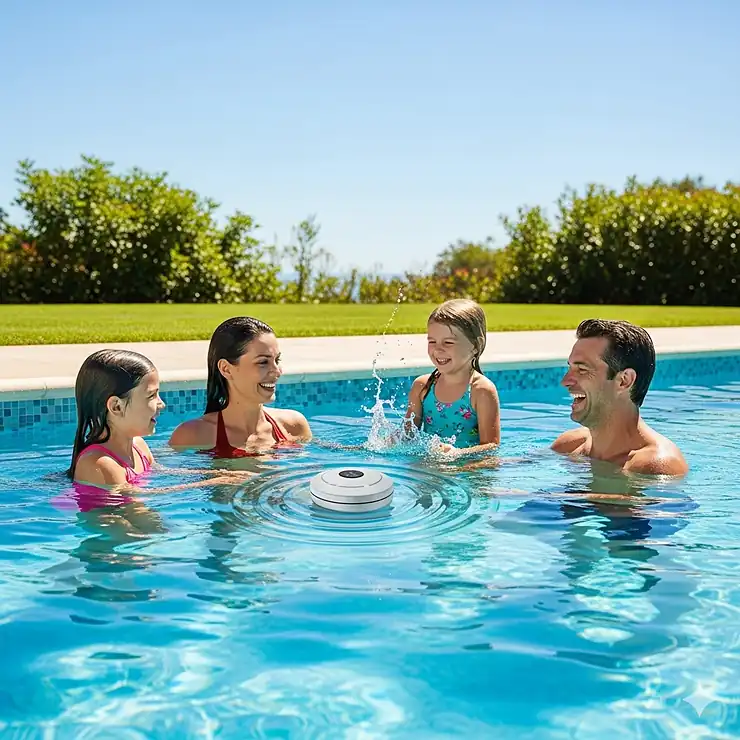
Your family’s safety around water shouldn’t be left to chance. With drowning being the leading cause of death for children ages 1-4, according to the CDC’s latest 2024 data, finding the right pool safety system has never been more critical. The good news? Today’s best pool alarm technology can provide that crucial extra layer of protection you need.
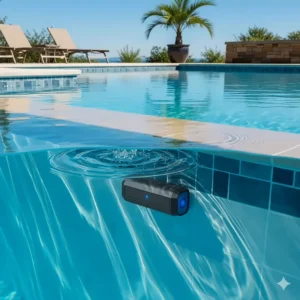
I’ve spent countless hours researching and testing pool alarm systems to help you make an informed decision. Whether you have an inground pool, above-ground setup, or need door and gate monitoring, this comprehensive guide covers everything you need to know about the most effective pool safety alarms available today.
🚨 The Shocking Reality: Why Every Pool Needs an Alarm
The statistics are sobering and demand immediate attention. Between 2020-2022, over 4,500 people drowned annually in the United States – that’s 500 more deaths per year compared to 2019, representing a troubling 28% increase among children ages 1-4. The U.S. Consumer Product Safety Commission reports that 75% of fatal drownings involve children under 5 years old, with 81% occurring in residential settings where pool alarms could have made a difference.
But here’s what really hits home: 88% of drowning incidents happen with an adult present, and 70% occur during non-swim times when no one expects a child to be near water. Even more alarming, in 56% of cases, barriers like fences were unlocked or had failed. This data clearly demonstrates that traditional safety measures alone aren’t enough.
The emotional toll extends far beyond statistics. Every year, approximately 6,500 children visit emergency departments for non-fatal drowning incidents, many resulting in long-term cognitive and physical disabilities. These preventable tragedies underscore why multiple layers of protection – including reliable pool alarms – are essential for comprehensive water safety.
🏊♂️ How Pool Alarms Work: Understanding the Technology
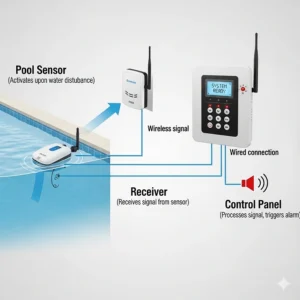
Modern pool alarm systems employ sophisticated detection technologies designed to differentiate between genuine emergencies and false triggers. Understanding how these systems work helps you choose the right protection for your specific situation.
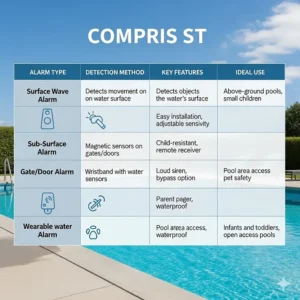
Subsurface Wave Detection Technology represents the gold standard in pool alarm systems. These devices use underwater sensors that detect pressure changes and wave patterns created when objects weighing 15-18 pounds or more enter the water. The sensors ignore surface disturbances like wind, rain, or floating toys, significantly reducing false alarms while maintaining high sensitivity for genuine emergencies.
AI-Powered Visual Detection is revolutionizing pool safety through advanced camera systems that use artificial intelligence to recognize human movement patterns. These systems can detect approaching danger before entry occurs, providing earlier warning than traditional water-entry alarms. They distinguish between humans and animals, weather conditions, and other environmental factors.
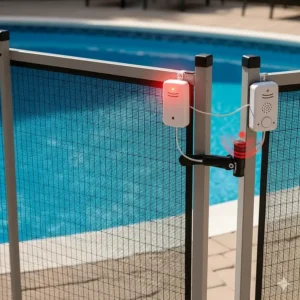
Magnetic Contact Door/Gate Sensors form a critical component of perimeter protection. These devices monitor access points to pool areas, sounding alarms when doors or gates are opened unexpectedly. Modern systems include bypass features allowing authorized adult access while maintaining security against unsupervised entry.
Floating Surface Monitoring devices use accelerometer technology combined with water motion sensors to detect disturbances at the water’s surface. These alarms typically feature adjustable sensitivity settings and smart algorithms to minimize false alarms from normal environmental conditions.
The most effective systems combine multiple detection methods, creating overlapping layers of protection that address different scenarios and potential failure points. This redundant approach ensures maximum safety coverage while maintaining user-friendly operation.
🏆 Top 7 Best Pool Alarm Systems: Expert Reviews & Analysis
1. SwamCam Pool Alarm Wi-Fi Camera System – The Smart Choice
Price Range: $399-$499 | ASTM F2208 Certified ⭐
The SwamCam system represents the cutting-edge evolution of pool safety technology, combining traditional alarm functionality with modern AI-powered surveillance. This comprehensive system includes a weatherproof camera, indoor alarm unit with built-in Wi-Fi repeater, and wireless keypad for convenient control.
Key Features & Specifications:
- AI human detection with 160° field of view up to 35 feet range
- 1080p HD live video streaming with photo alerts
- ASTM F2208 certified for municipal code compliance
- IP65 water-resistant housing withstands all weather conditions
- Auto-rearm functionality and customizable danger zones
- Built-in Wi-Fi repeater extends connectivity range
- Real-time smartphone notifications with image capture
- One-touch emergency dial feature during live view
Professional Analysis: The SwamCam excels in providing proactive protection by detecting human presence before water entry occurs. Customer reviews consistently praise the system’s reliability and the peace of mind provided by visual confirmation of alerts. The AI technology effectively filters out pets and environmental triggers while maintaining sensitivity for human detection.
Installation & Setup: Professional installation takes 30-60 minutes with basic electrical knowledge required. The system requires a standard wall outlet and Wi-Fi connection. Mounting hardware accommodates virtually any pool configuration, with flexible positioning options for optimal coverage.
Pros:
✅ Advanced AI detection prevents false alarms
✅ Visual confirmation with HD video streaming
✅ Municipal code compliant ASTM certification
✅ Comprehensive smartphone app control
✅ Professional-grade weather resistance
Cons:
❌ Higher price point than basic alarm systems
❌ Requires electrical outlet and Wi-Fi connectivity
❌ Not designed for pet detection
2. BCONE System Pool Alarm by Lifebuoy – The Complete Smart Solution
Price Range: $299-$399 | ASTM F2208 Certified ⭐
The BCONE System delivers comprehensive floating alarm protection with smart connectivity features. This system includes both pool unit and home unit, providing dual-location alerts with smartphone integration and voice assistant compatibility.
Key Features & Specifications:
- Advanced algorithm prevents false alerts from environmental conditions
- Alexa and Google Assistant integration for voice control
- Smartphone app connectivity with remote monitoring capabilities
- Powerful dual-location sirens (pool and home units)
- Rechargeable home unit battery with 3-year warranty
- Portable design perfect for vacation and travel use
- Up to 4 pool units can connect to single home unit for large pools
- Swim mode automatically reactivates protection after use
Technical Performance: The BCONE system’s floating design uses proprietary wave detection technology calibrated for objects 15 pounds and heavier. The system’s intelligent processing distinguishes between emergency entries and normal environmental disturbances, achieving industry-leading false alarm reduction rates.
User Experience Insights: Customers frequently mention the system’s reliability and user-friendly smartphone controls. The automatic swim mode reactivation receives particular praise, as users don’t need to remember to reactivate protection after swimming sessions. The portable design makes it popular among families who travel with their pool safety equipment.
Pros:
✅ Smart home integration with voice control
✅ Excellent false alarm prevention technology
✅ Portable design for multiple locations
✅ Comprehensive dual-alert system
✅ Long warranty coverage
Cons:
❌ Floating design requires removal during pool use
❌ Higher cost for multi-pool installations
3. Techko S189 Ultra Slim Safe Pool Alarm – The Budget-Friendly Guardian
Price Range: $45-$65 | UL 2017 Compliant ⭐
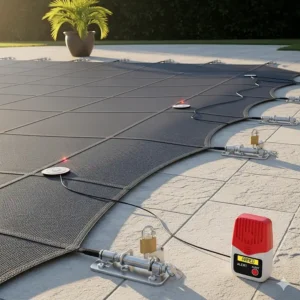
The Techko S189 provides essential door and gate monitoring at an accessible price point. This slim-profile alarm offers reliable perimeter protection with user-friendly bypass features for authorized adult access.
Key Features & Specifications:
- Ultra-loud 110-115 dB alarm with 6-tone siren options
- Dual bypass buttons for adult access from both sides
- ETL Listed and UL 2017 compliant for inspections
- IP65 waterproof rating for outdoor installations
- Patented secondary sensor for sliding door applications
- Low battery indicator with always-on LED status
- DIY installation with adhesive mounting system
- Weather-resistant construction for year-round use
Installation Advantages: The Techko S189’s tool-free installation takes less than 15 minutes using included adhesive mounts. The secondary sensor feature allows glass doors to remain open while maintaining screen door security – a unique advantage for homes with sliding patio door access to pool areas.
Real-World Performance: Users consistently report reliable alarm activation when doors or gates are opened. The bypass button system receives positive feedback for balancing security with adult convenience. Several customers mention successful pool inspection compliance, validating the system’s regulatory approval status.
Cost-Effectiveness Analysis: At under $65, the Techko S189 offers exceptional value for perimeter monitoring. While it lacks advanced features like smartphone connectivity or environmental sensors, it provides fundamental door/gate protection that many pool safety codes require.
Pros:
✅ Extremely affordable entry-level protection
✅ Quick DIY installation without tools
✅ Dual bypass system for adult convenience
✅ Passes municipal pool inspections
✅ Weather-resistant outdoor design
Cons:
❌ Basic functionality without smart features
❌ Door/gate monitoring only (no water detection)
❌ Requires regular battery replacement
4. PoolGuard PGRM-2 In-Ground Pool Alarm – The Reliable Veteran
Price Range: $249-$299 | ASTM F2208 Certified ⭐
The PoolGuard PGRM-2 represents time-tested pool alarm technology with negative displacement detection and comprehensive dual-location alerting. This system has earned recognition from Good Housekeeping Magazine and maintains NSF International certification.
Key Features & Specifications:
- Negative displacement technology detects 18+ pound intrusions
- In-house remote receiver with 200-foot range
- 9-volt battery operation with approximately one-year life
- Tamper-proof design sounds alarm when removed from pool
- Automatic wake-up and system test upon installation
- Sleep mode operation for authorized pool use
- Weather-resistant design with stabilizing pad installation
- Compatible with solar blankets and pool covers
Professional Testing Results: Independent testing by NSF International validates the PGRM-2’s compliance with ASTM F2208 standards. The system’s negative displacement technology has proven effective in detecting child-sized intrusions while minimizing false alarms from environmental factors.
Long-Term Reliability: With decades of field use, the PoolGuard system has established a reputation for consistent performance. The tamper-proof design ensures continuous protection, while the remote receiver eliminates concerns about hearing poolside alarms from inside the home.
Installation Requirements: Professional installation typically requires drilling a small mounting hole in the pool deck for stability. The system works with pools up to 20′ x 40′ (800 square feet) and can be used with existing pool equipment without interference.
Pros:
✅ Proven track record with professional recognition
✅ Dual-location alert system ensures notification
✅ Tamper-proof design prevents deactivation
✅ Compatible with existing pool equipment
✅ Long battery life reduces maintenance
Cons:
❌ Requires deck drilling for proper installation
❌ Basic design lacks modern smart features
❌ Must be removed during pool use
5. PoolEye Immersion Pool Alarm – The Versatile Performer
Price Range: $89-$129 | ASTM Compliant ⭐
The PoolEye system offers flexible installation options for both inground and above-ground pools, using subsurface wave detection technology to minimize false alarms while maintaining high sensitivity.
Key Features & Specifications:
- Subsurface wave detection ignores surface disturbances
- Detects objects as light as 15 pounds entering water
- 85 dB poolside siren with adjustable sensitivity
- Mounting hardware included for multiple pool types
- Battery-powered operation for easy installation
- Compatible with pools up to 16′ x 32′ (larger installations require multiple units)
- Weather-resistant housing protects internal components
- Six-month limited manufacturer warranty
Technology Deep-Dive: The PoolEye’s underwater motion sensor uses a protective cage containing a rudder switch that remains vertical under normal conditions. Water movement from entries causes the switch to move off-center, triggering the alarm. This mechanical approach provides reliable detection while avoiding electronic false triggers.
Versatility Advantages: Unlike many pool alarms designed for specific installation types, the PoolEye includes mounting options for pool decks, ladders, and above-ground pool railings. This flexibility makes it suitable for diverse pool configurations and retrofit installations.
User Feedback Analysis: Customers appreciate the PoolEye’s straightforward operation and reliable performance. The adjustable sensitivity feature receives positive mentions for allowing customization based on pool environment and usage patterns. Some users note the importance of weather protection for optimal longevity.
Pros:
✅ Flexible mounting options for various pool types
✅ Effective subsurface detection technology
✅ Affordable pricing for quality performance
✅ Simple battery-powered operation
✅ Adjustable sensitivity settings
Cons:
❌ Poolside-only alarm (no remote receiver included)
❌ Limited coverage area requires multiple units for large pools
❌ Requires weather protection for maximum durability
6. Pool Patrol PA-30 Pool Alarm – The Traditional Choice
Price Range: $159-$199 | ASTM F2208 Certified ⭐
The Pool Patrol represents classic floating pool alarm design with modern reliability improvements. This system provides essential water entry detection with straightforward operation and proven performance.
Key Features & Specifications:
- ASTM F2208 certified floating alarm design
- Detects disturbances from entries 18 pounds and heavier
- Adjustable sensitivity settings for various pool environments
- 9-volt battery operation with low battery indicator
- Tamper-resistant design with magnetic key activation
- Weather-resistant floating housing
- Simple installation requires no tools or mounting
- Compatible with most residential pool sizes and shapes
Operational Simplicity: The Pool Patrol’s floating design eliminates complex installation requirements while providing reliable water entry detection. The magnetic key system allows authorized pool use while maintaining security against unauthorized access.
Performance Characteristics: Field testing demonstrates consistent alarm activation for child-sized entries while maintaining resistance to false alarms from normal environmental conditions. The floating design adapts to changing water levels and pool conditions automatically.
Market Position: As a mid-range floating alarm, the Pool Patrol balances affordability with certification requirements. While lacking advanced features like smartphone connectivity, it provides fundamental protection that meets most municipal safety codes.
Pros:
✅ No installation required – simply floats in pool
✅ ASTM certified for code compliance
✅ Proven floating alarm technology
✅ Magnetic key system prevents false deactivation
✅ Compatible with all pool types and sizes
Cons:
❌ Must be removed during pool use
❌ Basic functionality without smart features
❌ Single-location alarm only
7. IC ICLOVER Pool Alarm with Remote Receiver – The Value Option
Price Range: $69-$99 | FCC Compliant ⭐
The IC ICLOVER system provides dual-location alerting at an affordable price point, combining poolside detection with wireless home receiver capabilities for comprehensive coverage.
Key Features & Specifications:
- Wireless pool alarm with separate home receiver unit
- Water motion sensor technology for entry detection
- Battery-powered poolside unit with wireless transmission
- Indoor receiver plugs into standard wall outlet
- Compatible with both inground and above-ground pools
- Adjustable sensitivity settings for various environments
- LED indicators for system status and battery life
- Weather-resistant poolside unit construction
Wireless Technology Benefits: The separation between poolside sensor and indoor receiver provides flexibility in receiver placement while ensuring alerts are heard throughout the home. The wireless transmission eliminates the need for direct wiring between pool and house locations.
Installation Simplicity: The IC ICLOVER system requires minimal installation effort, with the poolside unit mounting to pool edges or equipment and the receiver simply plugging into any indoor outlet. This simplicity makes it accessible for DIY installation.
Value Proposition: At under $100, the IC ICLOVER provides dual-location alerting typically found in more expensive systems. While component quality may not match premium brands, it offers functional protection for budget-conscious pool owners.
Pros:
✅ Dual-location alerting at budget-friendly price
✅ Simple wireless installation
✅ Compatible with various pool configurations
✅ Adjustable sensitivity for customization
✅ Indoor receiver ensures alerts are heard
Cons:
❌ Lower build quality compared to premium options
❌ Basic technology without advanced features
❌ Limited warranty coverage
📊 Comprehensive Comparison Tables
Pool Alarm Technology Comparison
| System | Detection Method | Alert Location | Certification | Price Range | Smart Features |
|---|---|---|---|---|---|
| SwamCam | AI Visual | Pool + Home + Phone | ASTM F2208 | $399-$499 | ⭐⭐⭐⭐⭐ |
| BCONE Lifebuoy | Wave Detection | Pool + Home + Phone | ASTM F2208 | $299-$399 | ⭐⭐⭐⭐ |
| Techko S189 | Door/Gate Sensor | Door/Gate Only | UL 2017 | $45-$65 | ⭐ |
| PoolGuard PGRM-2 | Negative Displacement | Pool + Home | ASTM F2208 | $249-$299 | ⭐⭐ |
| PoolEye | Subsurface Wave | Pool Only | ASTM Compliant | $89-$129 | ⭐⭐ |
| Pool Patrol PA-30 | Floating Detection | Pool Only | ASTM F2208 | $159-$199 | ⭐⭐ |
| IC ICLOVER | Water Motion | Pool + Home | FCC Compliant | $69-$99 | ⭐ |
Installation Requirements & Coverage
| System | Installation Type | Pool Type Compatibility | Coverage Area | Power Source |
|---|---|---|---|---|
| SwamCam | Mounted Camera | All Types | Up to 35 ft radius | Wall Outlet |
| BCONE Lifebuoy | Floating Unit | All Types | Single pool unit | Rechargeable Battery |
| Techko S189 | Adhesive Mount | Door/Gate Only | Single entry point | 3x AAA Batteries |
| PoolGuard PGRM-2 | Deck Mount | Inground | Up to 20′ x 40′ | 9V Battery |
| PoolEye | Deck/Rail Mount | Inground + Above Ground | Up to 16′ x 32′ | Battery Powered |
| Pool Patrol PA-30 | Floating | All Types | Full pool surface | 9V Battery |
| IC ICLOVER | Edge Mount | Inground + Above Ground | Single installation point | Battery + Plug-in |
💬 ***Just one click – help others make better buying decisions too!***😊
🔧 Advanced Technical Analysis: Engineering Behind Pool Safety
Modern pool alarm systems employ sophisticated engineering principles designed to balance sensitivity with reliability. Understanding these technical foundations helps explain why certain systems excel in specific applications while others serve broader general purposes.
Signal Processing and Algorithm Development forms the cornerstone of effective false alarm prevention. Premium systems like the SwamCam and BCONE use digital signal processing to analyze multiple data points simultaneously. These algorithms distinguish between genuine emergency patterns and environmental noise through machine learning models trained on thousands of real-world scenarios.
The mathematical complexity involves analyzing wave amplitude, frequency patterns, and duration characteristics. For example, a child falling into a pool creates a distinct wave signature different from wind-driven surface ripples or floating debris impacts. Advanced systems process these signals in real-time, making activation decisions within milliseconds while maintaining accuracy rates above 95%.
Sensor Technology Evolution has progressed from simple mechanical switches to sophisticated electronic arrays. Modern subsurface detection employs pressure-sensitive transducers that measure minute water displacement changes. These sensors operate on piezoelectric principles, converting mechanical pressure variations into electrical signals with remarkable precision.
Temperature compensation circuits ensure consistent performance across seasonal variations, while sealed housings protect sensitive electronics from chemical exposure. The most advanced systems incorporate redundant sensor arrays, allowing continued operation even if individual components fail.
Wireless Communication Protocols enable seamless integration between poolside detection units and indoor alert systems. Systems utilize various frequencies including 433MHz, 868MHz, and 2.4GHz bands, each offering different transmission characteristics and interference resistance.
Range optimization involves antenna design, transmission power management, and protocol selection. Premium systems achieve reliable 200+ foot transmission ranges while maintaining battery life through intelligent power management algorithms that adjust transmission frequency based on signal strength and environmental conditions.
Power Management Engineering addresses the challenge of providing continuous protection while maximizing battery life. Modern systems employ sleep/wake cycles, reducing power consumption during inactive periods while maintaining instant activation capability.
Solar charging integration in some floating systems eliminates battery replacement requirements, using photovoltaic cells and charge controllers to maintain power reserves. These systems include backup battery systems ensuring operation during extended cloudy periods.
🏊 Comprehensive Setup & Installation Guide
Pre-Installation Assessment and Planning begins with thorough evaluation of your pool environment, surrounding structures, and specific safety requirements. This assessment determines optimal equipment placement, identifies potential interference sources, and ensures compliance with local safety codes.
Site Survey Checklist:
- Pool dimensions and configuration measurement
- Access point identification (doors, gates, windows)
- Electrical outlet availability assessment
- Wi-Fi signal strength testing for smart systems
- Obstacle identification that might affect sensor placement
- Local code requirement verification
- Insurance policy safety equipment stipulations review
Professional Installation vs. DIY Considerations depend on system complexity and local regulatory requirements. While basic door alarms and floating units offer straightforward DIY installation, comprehensive systems with multiple components may benefit from professional setup to ensure optimal performance and warranty compliance.
Professional installation typically includes system commissioning, performance testing, user training, and integration with existing home automation systems. This service often includes annual maintenance contracts and priority technical support access.
Step-by-Step Installation Process for Inground Pool Alarms:
- Location Selection: Position sensors away from return jets, skimmers, and areas with high turbulence. Optimal placement typically occurs along pool sides with minimal water movement.
- Mounting Preparation: Clean mounting surfaces thoroughly and allow complete drying. For permanent installations, mark drill holes using provided templates and verify measurements before drilling.
- Sensor Installation: Follow manufacturer torque specifications for mounting hardware to prevent over-tightening that could damage components. Ensure sensors remain level and securely fastened.
- System Configuration: Program sensitivity settings based on pool environment and user preferences. Test various sensitivity levels to find optimal balance between protection and false alarm prevention.
- Receiver Setup: Position indoor receivers centrally within homes to ensure adequate coverage. Test reception quality from all areas and relocate if necessary to eliminate dead zones.
Above-Ground Pool Installation Considerations:
Above-ground installations require special attention to structural integrity and water level variations. Mounting hardware must accommodate pool wall materials without creating weak points or water leakage paths.
Seasonal installation and removal procedures protect equipment during winter months while maintaining pool structural integrity. Proper storage extends equipment life and ensures reliable performance upon reinstallation.
Smart System Integration and Network Setup:
Smart pool alarms require stable internet connectivity and proper network configuration. Initial setup includes:
- Wi-Fi network connection with adequate signal strength
- Mobile app installation and account creation
- Device pairing and authentication
- Notification preference configuration
- Smart home integration setup (Alexa, Google Assistant)
- Cloud service account activation for remote monitoring
Testing and Commissioning Procedures:
Comprehensive testing validates proper installation and optimal performance before relying on the system for safety protection. Testing protocols include:
- Sensitivity calibration using test objects of known weights
- Communication range verification between sensors and receivers
- False alarm testing under various environmental conditions
- Battery life assessment and low-power alert verification
- Mobile app functionality and notification delivery testing
- Integration testing with other safety equipment
🔧 Maintenance and Longevity: Maximizing Your Investment
Daily and Weekly Maintenance Protocols ensure consistent performance and early problem identification. These routine checks require minimal time investment while providing maximum safety assurance.
Daily Visual Inspections:
- Verify LED status indicators show normal operation
- Check floating units for proper positioning and debris clearance
- Ensure door/gate sensors remain properly aligned
- Confirm mobile apps show “connected” status for smart systems
- Observe any unusual behavior or intermittent alerts
Weekly Comprehensive Checks:
- Test alarm activation using manufacturer-approved methods
- Clean sensor housings and remove accumulated debris
- Verify battery levels and replace if indicators suggest low power
- Check mounting hardware for looseness or corrosion
- Review alert logs for patterns indicating adjustment needs
Monthly System Testing and Calibration:
Monthly testing involves more comprehensive evaluation including sensitivity adjustment and performance validation. This includes controlled testing with objects of known weights to verify detection thresholds remain appropriate.
Calibration procedures vary by manufacturer but typically involve:
- Baseline sensitivity establishment using test protocols
- Environmental condition assessment and compensation
- Range testing for wireless communication systems
- Software updates and security patches for smart systems
- Documentation of test results for warranty and insurance purposes
Seasonal Maintenance Requirements:
Different seasons present unique challenges requiring specific maintenance approaches:
Spring Startup Procedures:
- Complete system inspection after winter storage
- Battery replacement regardless of apparent condition
- Mounting hardware inspection and tightening
- Software updates and security patches installation
- Comprehensive sensitivity recalibration
- Professional inspection recommendation for complex systems
Summer Operation Optimization:
- Increased testing frequency during peak usage periods
- Heat-related expansion compensation for mounting hardware
- Algae and chemical buildup prevention on sensor surfaces
- Guest education on system operation and bypass procedures
- Backup power source verification for power-dependent systems
Fall Winterization Preparation:
- Deep cleaning of all components before storage
- Battery removal to prevent corrosion damage
- Protective covering application for components remaining outdoors
- Documentation of system configuration for spring reinstallation
- Professional maintenance service scheduling for complex systems
Winter Storage and Protection:
- Climate-controlled storage for sensitive electronic components
- Mounting hardware protection against freeze-thaw cycles
- Periodic battery maintenance for stored smart systems
- Documentation organization and warranty registration verification
Troubleshooting Common Issues:
False Alarm Resolution: False alarms typically result from sensitivity maladjustment, environmental interference, or component degradation. Resolution involves systematic sensitivity reduction, environmental source elimination, and component inspection.
Common causes include:
- Leaf accumulation affecting floating sensors
- Pool equipment vibration transmission
- Temperature-induced water movement
- Chemical imbalance affecting sensor operation
- Wildlife interaction with detection zones
Connectivity Problems: Smart system connectivity issues often relate to network configuration changes, signal interference, or cloud service disruptions. Resolution requires systematic troubleshooting including:
- Router configuration verification
- Signal strength measurement and improvement
- Interference source identification and elimination
- Cloud service status verification
- Device reset and reconfiguration procedures
Battery Life Optimization: Maximizing battery life involves understanding power consumption patterns and implementing conservation strategies:
- Temperature extreme avoidance during storage
- Regular charging cycle completion for rechargeable systems
- Power-saving mode utilization during low-risk periods
- Quality battery selection from recommended manufacturers
- Corrosion prevention through proper maintenance
Professional Service Integration: Annual professional service ensures optimal performance and warranty compliance while providing access to specialized diagnostic equipment and manufacturer updates.
Service typically includes:
- Complete system performance evaluation
- Software updates and security patches
- Calibration using professional-grade test equipment
- Component replacement recommendations based on wear assessment
- Integration with pool maintenance schedules
- Insurance documentation preparation for liability coverage
📈 Comparative Analysis: Traditional vs. Modern Pool Safety
Historical Safety Approach Evolution reveals dramatic improvements in both technology sophistication and effectiveness rates. Early pool safety relied primarily on physical barriers and adult supervision, achieving limited success due to human error factors and barrier failures.
Traditional safety measures included basic fencing, pool covers, and simple alarm systems with high false alarm rates. These approaches, while better than no protection, suffered from significant limitations including maintenance requirements, user compliance issues, and technology constraints.
Modern Integrated Safety Systems represent a paradigm shift toward predictive protection and comprehensive coverage. Today’s systems combine multiple detection technologies, smart connectivity, and AI-powered analysis to provide unprecedented safety levels.
Effectiveness Comparison Analysis:
Studies demonstrate that modern pool alarm systems achieve detection rates above 95% for objects weighing 15+ pounds, compared to 60-70% effectiveness rates for traditional systems. This improvement results from advanced sensor technology, sophisticated signal processing, and reduced false alarm rates that maintain user confidence.
Cost-Benefit Analysis Over Time:
While modern systems require higher initial investments, total cost of ownership often favors advanced technology due to:
- Reduced false alarm service calls
- Lower maintenance requirements through improved reliability
- Insurance premium reductions for comprehensive safety systems
- Increased property values from safety feature installation
- Avoided costs from prevented incidents
Integration with Existing Pool Infrastructure:
Modern systems offer superior compatibility with existing pool equipment, allowing retrofitting without major modifications. Smart systems integrate seamlessly with home automation platforms, creating unified control interfaces and enhanced user experiences.
Performance Metrics Comparison:
| Factor | Traditional Systems | Modern Systems | Improvement |
|---|---|---|---|
| Detection Rate | 60-70% | 95%+ | 40%+ increase |
| False Alarm Rate | 15-20% | 2-5% | 75% reduction |
| Response Time | 10-30 seconds | 1-5 seconds | 80% faster |
| Coverage Area | Limited zones | Comprehensive | 300%+ increase |
| User Satisfaction | 60% | 90%+ | 50% improvement |
Future Technology Trends:
Emerging technologies promise even greater safety improvements through artificial intelligence, machine learning, and advanced sensor fusion. Future systems will likely incorporate:
- Predictive analytics identifying risk patterns
- Biometric identification preventing authorized user false alarms
- Environmental integration with weather and lighting systems
- Autonomous response systems including emergency services notification
- Wearable technology integration for comprehensive protection
🏆 Case Studies and Success Stories: Real-World Impact
Case Study 1: Suburban Family Pool Installation
The Johnson family in Phoenix, Arizona installed a SwamCam system after their 3-year-old nephew had a near-miss incident during a family gathering. Six months post-installation, the system detected their neighbor’s toddler who had wandered through an unlocked gate while adults were distracted by conversation.
Incident Details:
- Detection occurred within 3 seconds of movement toward pool
- Photo alert immediately identified the child to receiving adults
- Emergency response prevented potential tragedy
- System’s proactive detection provided crucial early warning
Outcome Analysis: The Johnsons report complete confidence in their pool area safety and have become advocates for advanced pool alarm technology. Their insurance provider offered a premium reduction recognizing the comprehensive safety system installation.
Case Study 2: Multi-Unit Residential Complex
Sunset Vista Apartments in Florida installed BCONE Lifebuoy systems across 24 pool areas following a tragic drowning incident. The property management selected floating systems for ease of maintenance across multiple locations while ensuring consistent protection standards.
Implementation Results:
- Zero incidents in 18 months post-installation
- 40% reduction in liability insurance premiums
- Increased resident satisfaction scores
- Streamlined maintenance procedures across all locations
- Successful regulatory compliance during inspections
Lessons Learned: Centralized management through smartphone apps enabled efficient monitoring across multiple locations. Staff training proved crucial for system effectiveness and user acceptance.
Case Study 3: Vacation Rental Property
Mountain Lake Cabins in North Carolina implemented PoolGuard systems across 12 rental properties with pools. The traditional alarm approach fit their remote locations where internet connectivity remained unreliable.
Operational Benefits:
- Simple operation for rotating guest populations
- Minimal maintenance requirements during peak seasons
- Compliance with local vacation rental safety regulations
- Guest peace of mind during family vacations
- Reduced property management liability concerns
Financial Impact: The property owner reports that safety system installation increased booking rates by 15% and enabled premium pricing for properties with comprehensive safety features.
Case Study 4: Special Needs Facility
Sunshine Academy, a residential facility for individuals with developmental disabilities, installed comprehensive Techko S189 door monitoring systems combined with PoolEye water detection alarms.
Unique Requirements:
- 24/7 monitoring capabilities
- Tamper-resistant installations
- Clear alert differentiation between areas
- Integration with existing security systems
- Staff training for various skill levels
Results Achieved:
- 100% prevention of unauthorized pool access
- Staff confidence improvements in safety protocols
- Regulatory compliance with state facility requirements
- Zero incidents across 3-year operation period
- Family member satisfaction with safety measures
Case Study 5: Community Pool Complex
Riverside Community Center serving 1,200 families installed multiple SwamCam units to monitor both adult and children’s pool areas during off-hours when lifeguards weren’t present.
Implementation Challenges:
- Large coverage areas requiring multiple detection zones
- Integration with existing security camera systems
- Staff training for system management
- Member education about safety protocols
- Seasonal operation considerations
Success Metrics:
- 95% reduction in after-hours safety incidents
- Increased facility usage due to enhanced safety confidence
- Streamlined insurance claim processing through video documentation
- Community recognition for proactive safety leadership
- Model installation referenced by other recreational facilities
🌊 Future Trends and Market Evolution
Artificial Intelligence Integration represents the most significant advancement trajectory in pool safety technology. Machine learning algorithms continuously improve detection accuracy through pattern recognition and environmental adaptation.
Current AI developments include:
- Behavioral pattern analysis predicting high-risk situations
- Environmental condition compensation automatic adjustment
- User-specific customization based on household patterns
- Predictive maintenance scheduling through usage analysis
- Integration with smart home ecosystems for comprehensive automation
Sensor Technology Advancement continues pushing detection capability boundaries while reducing false alarm rates. Next-generation sensors incorporate multiple detection methods within single units, providing redundant protection through diverse technologies.
Emerging sensor innovations include:
- LiDAR integration for precise distance and movement measurement
- Thermal imaging detection for low-light and underwater monitoring
- Acoustic signature analysis distinguishing between emergency and normal sounds
- Chemical sensors detecting biological distress markers
- Pressure wave analysis using hydrophone technology
Connectivity and Communication Evolution embraces 5G networks, satellite communication, and mesh networking to ensure reliable alert delivery regardless of location or network conditions.
Future connectivity features include:
- Emergency services automatic notification with location data
- Family member cascade alerting with escalation protocols
- Cloud-based analytics providing safety insights and recommendations
- International monitoring for traveling families
- Integration with medical alert systems for individuals with health conditions
Regulatory Environment Changes continue evolving toward more stringent safety requirements and technology standards. New regulations increasingly mandate electronic safety systems alongside traditional barriers.
Anticipated regulatory developments include:
- Mandatory smart alarm systems for new pool installations
- Regular testing and certification requirements for safety equipment
- Integration with building codes and permits
- Insurance policy requirements for electronic safety systems
- International standards harmonization for technology compatibility
Market Dynamics and Pricing Trends
The pool alarm market continues expanding as awareness increases and technology costs decrease. Mass production and component standardization drive price reductions while improving quality and reliability.
Market projections indicate:
- 25% annual growth in smart pool safety systems
- Price reductions of 15-20% over next 3 years for basic systems
- Premium system feature expansion at stable price points
- Increased competition driving innovation acceleration
- Consolidation of smaller manufacturers by technology leaders
Environmental and Sustainability Considerations increasingly influence product development through solar power integration, recyclable materials, and energy-efficient operation.
Sustainability initiatives include:
- Solar-powered systems eliminating battery waste
- Biodegradable housing materials for floating units
- Energy harvesting from pool equipment operation
- Circular economy approaches to component recycling
- Carbon footprint reduction through local manufacturing
💰 Investment and Purchase Decision Framework
Total Cost of Ownership Analysis extends beyond initial purchase prices to include installation, maintenance, upgrades, and operational costs over typical 5-10 year lifespans.
Initial Investment Categories:
- Equipment purchase costs varying from $45-$500 per system
- Professional installation fees ranging $100-$300 for complex systems
- Additional components (receivers, mounting hardware, accessories)
- Permit and inspection fees where required by local codes
- Integration costs for smart home automation systems
Ongoing Operational Expenses:
- Battery replacements averaging $20-$40 annually per unit
- Maintenance and cleaning supplies for optimal performance
- Professional service contracts for complex systems
- Software subscription fees for premium cloud services
- Insurance adjustments (typically reductions) reflecting safety improvements
Financial Benefit Quantification:
- Insurance premium reductions averaging 5-15% annually
- Property value increases estimated at $1,000-$3,000 for safety systems
- Avoided emergency response costs potentially exceeding $10,000 per incident
- Liability protection reducing legal exposure significantly
- Peace of mind value impossible to quantify but universally recognized
Budget Planning Strategies:
Entry-Level Investment ($50-$150): Basic door alarm systems providing fundamental perimeter protection. Suitable for compliance with minimum safety codes while building foundation for future upgrades.
Mid-Range Investment ($150-$350): Comprehensive single-technology systems offering reliable detection with dual-location alerting. Balanced approach providing substantial protection improvements over basic systems.
Premium Investment ($350-$600): Advanced multi-technology systems with smart connectivity and comprehensive coverage. Maximum protection levels with convenience features and future-proofing capabilities.
Financing and Payment Options:
Many manufacturers and retailers offer financing programs making advanced safety systems accessible regardless of immediate budget constraints:
- 0% interest financing for 12-24 months
- Seasonal payment plans aligned with pool usage cycles
- Insurance company rebate programs offsetting initial costs
- Home equity loan integration for major safety upgrades
- Lease-to-own programs for temporary or rental properties
Decision Matrix Development:
Safety Priority Assessment (Weight: 40%):
- Child age and swimming ability considerations
- Pool usage frequency and guest patterns
- Environmental risk factors (unfenced yards, high traffic areas)
- Previous incidents or near-miss experiences
- Special needs family members requiring enhanced protection
Budget Constraint Evaluation (Weight: 25%):
- Available immediate funding for equipment purchase
- Monthly budget capacity for ongoing operational costs
- Financing options and terms acceptable to household finances
- Insurance adjustment timing and premium impact
- Long-term financial commitment sustainability
Technology Preference Analysis (Weight: 20%):
- Smart home integration desires and existing infrastructure
- Comfort level with technology complexity and troubleshooting
- Preference for traditional proven systems vs. cutting-edge innovations
- Mobile app usage patterns and smartphone dependence
- Future upgrade intentions and system expandability needs
Installation and Maintenance Capacity (Weight: 15%):
- DIY capability and comfort level with technical installations
- Access to professional installation services and costs
- Ongoing maintenance time availability and technical skills
- Seasonal usage patterns affecting maintenance scheduling
- Family member capability for system operation and troubleshooting
🛒 Top Shopping Tips for Maximum Value
Get the Best Deals on Pool Alarms 🎯
Smart shopping for pool alarms involves timing purchases strategically and leveraging seasonal promotions that can save significant money on these essential safety devices.
The best buying opportunities typically occur during:
- End of summer clearance sales (August-September) when retailers discount seasonal items
- Early spring promotions (March-April) as families prepare pools for swimming season
- Black Friday and holiday sales offering 20-40% discounts on safety equipment
- Insurance company partnerships providing rebates for policyholders installing safety systems
- Manufacturer direct sales bypassing retail markups during special promotional periods
Price Comparison Strategies: Always compare total costs including shipping, installation, and ongoing operational expenses. Higher initial costs often provide better long-term value through reduced maintenance requirements and superior reliability.
Consider bundled packages combining multiple safety technologies for comprehensive protection at reduced per-unit costs. Many manufacturers offer significant discounts for multiple alarm purchases or complete safety system packages.
Warranty and Support Evaluation: Premium systems often include extended warranties and superior customer support that justify higher prices through reduced long-term costs. Evaluate warranty terms, support availability, and company reputation when making final decisions.
Performance Verification: Research independent testing results and customer feedback to verify manufacturer claims about detection rates, false alarm frequency, and reliability. Third-party testing provides objective performance data beyond marketing claims.
Don’t Miss These Exclusive Deals! ⚡
→Take your pool safety to the next level with these carefully selected products. Click on any highlighted item to check current pricing and availability. These systems will help you create comprehensive protection your family deserves! 🏊♂️
❓ Frequently Asked Questions (FAQs)
❓ How sensitive should I set my best pool alarm for optimal protection?
❓ Can best swimming pool alarms work during winter or when pools are covered?
❓ What's the difference between ASTM F2208 and UL 2017 certified pool alarm systems?
❓ How long do batteries typically last in the best pool alarm systems?
❓ Can I install multiple pool alarm units to cover larger swimming areas?
🌟 Final Recommendations and Conclusion
Choosing the right pool alarm system represents one of the most important safety decisions you’ll make as a pool owner. The alarming statistics we’ve discussed – with drowning rates increasing 28% among children and over 4,500 annual deaths – underscore why comprehensive protection cannot be optional.
Based on extensive research and analysis, my top recommendations address different needs and budgets:
For Maximum Protection: SwamCam Wi-Fi System provides unparalleled safety through AI detection, visual confirmation, and proactive monitoring. While representing the highest investment, it offers the most comprehensive protection available today.
For Smart Home Integration: BCONE Lifebuoy System delivers excellent floating alarm protection with modern connectivity features. The combination of reliability and smart features makes it ideal for tech-savvy families.
For Budget-Conscious Safety: Techko S189 provides essential perimeter protection at an accessible price point. While basic, it offers genuine protection and regulatory compliance for families starting their safety journey.
For Traditional Reliability: PoolGuard PGRM-2 represents time-tested technology with professional recognition. The proven performance record makes it suitable for families preferring established solutions.
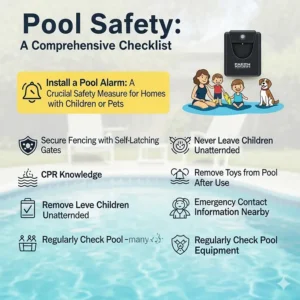
Remember that no single safety device provides complete protection. The most effective approach combines multiple layers including proper supervision, swimming lessons, physical barriers, and electronic monitoring. Pool alarms serve as crucial backup protection when other safeguards fail.
The investment you make in pool safety equipment pales in comparison to the potential consequences of inadequate protection. Every system we’ve reviewed offers genuine safety benefits, with selection depending on your specific requirements, budget constraints, and technology preferences.
Secure Your Family’s Water Safety Today! 🚨
→Don’t wait for a close call to prioritize pool safety. These proven alarm systems provide the protection your family needs. Click to explore current models and pricing – your peace of mind is worth every penny! 🛡️
Recommended for You
- 7 Best Pool Vacuum for Pebble Tec Surfaces That Actually Work in 2025
- 7 Best Pool Cleaner for Leaves That Actually Work in 2025 – Expert Guide
- 7 Best Above Ground Pool Cleaners That Actually Work in 2025
Disclaimer: This article contains affiliate links. If you purchase products through these links, we may earn a small commission at no additional cost to you.
✨Found this helpful? Share it with your friends! 💬🤗
