
In This Article
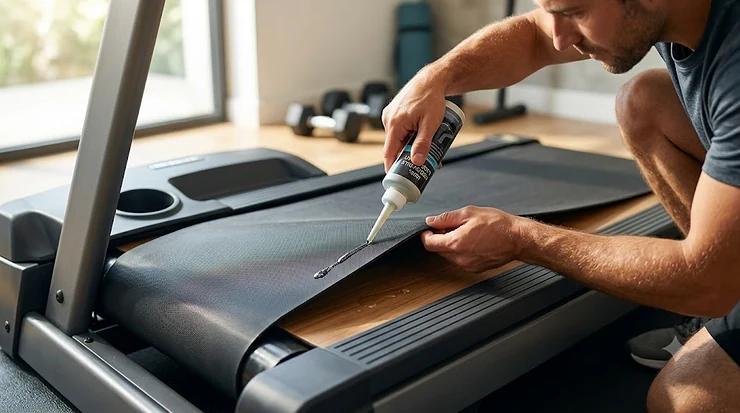
Your treadmill belt is squeaking like a rusty porch swing, and you’re standing there in your running shoes wondering if this is the moment your home gym officially becomes a very expensive coat rack. Take a breath. The fix is almost always cheaper and simpler than people expect. Learning how to lubricate treadmill belt surfaces properly is a five-minute task that most owners put off for years, usually right up until the motor starts groaning under the extra friction.
What is treadmill belt lubrication? It’s the process of applying a thin layer of silicone lubricant between the walking belt and the deck underneath it, reducing friction so the belt glides instead of drags. Skip it, and you’re forcing the motor to work overtime — which is how a $15 bottle of lubricant turns into a $200 motor repair bill.
This guide walks through exactly how to lubricate treadmill belt components step by step, breaks down seven real silicone lubricants worth buying in 2026, and digs into the maintenance habits that separate treadmills that last a decade from ones that die in year three. We’ll cover everything from a proper treadmill lubrication spray technique to how often you actually need to do this (spoiler: probably less often than you think, but more often than you’re currently doing it).
Quick Comparison Table
Before we get into the deep dive, here’s the fast version for anyone standing in the fitness aisle right now, phone in hand, trying to make a decision in under ninety seconds.
| Lubricant Type | Format | Best For | Typical Price Range |
|---|---|---|---|
| Squeeze bottle with tube | Liquid silicone | Precise, controlled application | Under $15 |
| Aerosol/pump spray | Sprayed silicone | Fast coverage on wider belts | $15-$20 range |
| Maintenance kit | Lubricant + cleaner + tools | New owners wanting an all-in-one setup | $30-$45 range |
| Disposable single-use packets | Pre-measured silicone | Travel, gyms, infrequent users | Under $15 |
The squeeze-bottle-with-tube format dominates this category for a reason: it gives you control over exactly where the silicone lands, which matters more than most buyers assume, because over-lubricating creates its own problems (more on that later). Spray formats trade some of that precision for speed, which is genuinely useful if you’ve got a wide commercial-style belt to cover. If you’re a first-time treadmill owner who’d rather not think about any of this again for a year, the maintenance kit route bundles everything so you’re not guessing.
💬 Just one click — help others make better buying decisions too!😊
💬 Found a favorite already? Bookmark this page so you can come back and grab it before your next lubrication cycle!
Top 7 Treadmill Belt Lubricants: Expert Analysis
We looked at real, currently available products across price tiers — budget squeeze bottles, mid-range applicator systems, and a full maintenance kit — to build out this list. Every product here uses 100% silicone, which matters immensely: petroleum-based oils like WD-40 will actually break down the rubber-and-fabric composite most belts are made from, according to treadmill maintenance specialists, so silicone isn’t a preference here, it’s a requirement.
| Product | Format | Compatibility | Best For | Price Range |
|---|---|---|---|---|
| Impresa 100% Silicone Treadmill Lubricant | Squeeze bottle + tube | Most major brands | Budget-conscious buyers | Under $12 |
| Noosa Life Treadmill Belt Lubricant | Squeeze bottle + tube | NordicTrack, Sole, ProForm, Horizon, LifeSpan | Best overall applicator design | $12-$16 range |
| NordicTrack Treadmill Maintenance Kit | Kit (lube + cleaner + towel) | NordicTrack, most brands | New owners wanting a full kit | $35-$45 range |
| iMovR EasySpray Silicone Lubricant | Spray bottle | Walking pads, desk treadmills | Fast, low-effort application | $15-$20 range |
| Spot On Premium Treadmill Belt Lubricant | Squeeze bottle + patented tube | Nautilus, Landice, Sole, Horizon, and more | Precision under-belt reach | $12-$16 range |
| techMotion Lift & Spray Silicone Lubricant | Spray extension bottle | Nearly all treadmill types | Multi-purpose households | Under $14 |
| Action Fitness Silicone Treadmill Lubricant | Dual applicator (tube + spout) | Treadmills, ellipticals, bikes | Versatility across equipment | $11-$15 range |
Looking at this lineup, the spread between the cheapest and priciest options isn’t really about lubricant quality — nearly all of them use comparable pure-silicone formulas. What you’re actually paying for is applicator design, bottle volume, and whether you want a bundled kit versus a standalone bottle. Buyers on a tight budget can grab any of the sub-$14 options without sacrificing performance, while the NordicTrack kit earns its premium by solving an entirely different problem: giving new owners a complete maintenance toolkit instead of a single-purpose bottle.
✨ Don’t Miss These Exclusive Deals!
🔍 Take your treadmill maintenance routine to the next level with these carefully selected lubricants. Click on any highlighted product to check current pricing and availability. A few dollars of prevention now can save you hundreds in motor repairs later!
1. Impresa 100% Silicone Treadmill Lubricant — best budget squeeze bottle
The Impresa bottle earns its spot at the top of the budget tier by keeping things dead simple: a 4-ounce Boston round bottle with a precision twist top and an included extension tube. Made in the USA, it’s formulated to be non-toxic and odorless, which matters more than you’d think if your treadmill lives in a bedroom or basement rec room. Compatibility is broad — it’s specifically called out as working with NordicTrack and Schwinn machines, two of the most common home treadmill brands in the US.
Who should buy this: anyone replacing an empty bottle who doesn’t want to overthink the decision. Based on the spec comparison against pricier options, there’s no meaningful performance gap here — you’re getting the same 100% silicone base that $20 bottles use, just in a no-frills package. Reviewers consistently note that the extension tube makes reaching the center of the belt manageable without fully detaching or loosening it, which is the single biggest time-saver in this whole process.
Pros:
- ✅ Genuinely budget-friendly without a lower-grade formula
- ✅ Compatible with most major treadmill brands
- ✅ Extension tube reaches belt center without disassembly
Cons:
- ❌ Smaller bottle means more frequent reorders
- ❌ Basic packaging compared to kit-style competitors
Expect this to sit around $10-$12 depending on retailer promotions. For the price, it’s hard to beat as a straightforward, no-drama restock.
2. Noosa Life Treadmill Belt Lubricant — most refined applicator system
What sets Noosa Life apart isn’t the silicone itself — it’s the applicator engineering. The bottle includes a flexible extension tube built specifically to slide under a wide belt and deliver a controlled, even stream without you needing to loosen or realign anything. That “safe-close design” detail matters more in practice than it sounds on paper: cheaper tubes tend to drip or clog after a few uses, and a clogged applicator is exactly the kind of small annoyance that makes people quietly stop maintaining their treadmill altogether.
This one is explicitly formulated for compatibility with NordicTrack, Sole, ProForm, Horizon, and LifeSpan machines — essentially the entire mainstream home treadmill market. Aggregated customer sentiment around Noosa Life’s lubricant line tends to highlight the mess-free application and the fact that a single bottle covers several lubrication cycles before running dry. What most buyers overlook about applicator-tube lubricants generally is that the tube length directly determines how far under the belt you can actually reach — Noosa Life’s roughly 10-inch extension covers most 20-inch-wide belts without a struggle.
Pros:
- ✅ Precision applicator reduces mess and waste
- ✅ Wide brand compatibility across major manufacturers
- ✅ Safe-close cap prevents storage leaks
Cons:
- ❌ Premium applicator design pushes price above bare-bones options
- ❌ Tube may still be short for oversized commercial belts
Price typically lands in the $12-$16 range, and given how much friction (pun intended) the applicator removes from the process, it’s a reasonable mid-tier pick.
3. NordicTrack Treadmill Maintenance Kit — best all-in-one kit
If you just unboxed a treadmill and have zero interest in researching separate cleaning supplies, lubricant, and a replacement safety key down the road, this kit solves that in one purchase. Along with the silicone lubricant and applicator tube, it bundles an 8-ounce bottle of cleaning spray, a cleaning guide, and a towel meant to cut down on dust buildup around the deck.
Here’s what the spec sheet won’t tell you outright: the lubricant formula inside this kit is functionally the same 100% silicone base used across most of this list, so you’re not getting some proprietary NordicTrack-only chemistry — you’re paying for the convenience of a complete kit. That’s a fair trade for someone who owns their first treadmill and would rather have a labeled, self-contained solution than assemble one from three different Amazon orders. One documented customer account described a treadmill that had sat idle for a year and kept stalling after 10-15 minutes of use; after applying this kit’s lubricant, the stalling stopped entirely — a useful real-world data point for anyone whose machine has been gathering dust.
Pros:
- ✅ Complete kit covers lubrication and general cleaning
- ✅ Ideal starting point for brand-new treadmill owners
- ✅ Includes cleaning guide for ongoing upkeep
Cons:
- ❌ Noticeably pricier than standalone lubricant bottles
- ❌ Some buyers note the applicator tube feels flimsy over time
At around $35-$45, this is squarely a premium pick — worth it if you value the bundle, less so if you already own cleaning supplies and just need lubricant.
4. iMovR EasySpray 100% Silicone Treadmill Belt Lubricant Spray — fastest application
Spray-format lubricants solve a different problem than squeeze bottles: speed. The iMovR EasySpray comes in an 8-ounce bottle designed to coat wider swaths of belt quickly, which is particularly useful for owners of desk treadmills and walking pads where the belt surface is often broader relative to the machine’s footprint than a standard running treadmill.
Here’s the honest tradeoff worth weighing: sprays sacrifice some precision for coverage. You’ll want to protect the surrounding floor or mat during application since overspray is more likely than with a targeted applicator tube. On the plus side, a treadmill lubrication spray format means no lifting or contorting to slide a tube under the belt — you’re applying from above or the side, depending on your machine’s design, which is genuinely easier if you have limited mobility or a bad back.
Pros:
- ✅ Fast, even coverage across wide belts
- ✅ No need to lift or loosen the belt for access
- ✅ Well suited to desk treadmills and walking pads
Cons:
- ❌ Less precise than tube-based applicators
- ❌ Overspray risk without a protective mat underneath
Expect a price in the $15-$20 range for the 8-ounce bottle — a reasonable premium for the convenience if your daily routine already involves a desk treadmill you don’t want to crawl under.
5. Spot On Premium Treadmill Belt Lubricant — best precision reach
The standout here is the patented 8-inch application tube paired with a precision twist cap — essentially a hybrid between the ease of a squeeze bottle and the targeted reach of a longer applicator. Spot On lists an unusually broad compatibility roster, covering Nautilus, Epic, Landice, LifeSpan, NordicTrack, Sole, ProForm, Life Fitness, Horizon, Schwinn, Precor, Vision, and several other brands — useful if you’re not entirely sure what silicone-based lubricant your specific treadmill manufacturer recommends.
Each 4-ounce bottle is rated for roughly four applications, which manufacturers frame as enough for a full year of standard maintenance under typical use. Based on the spec comparison, that math tracks with the industry-standard quarterly lubrication interval most manufacturers recommend. What stands out in the design is the dual-cap system: a twist spout for general use and the extension tube specifically for full-width, under-belt coverage, letting you choose the right tool depending on whether you’re doing routine upkeep or a deeper application.
Pros:
- ✅ Exceptionally broad brand compatibility list
- ✅ Dual-cap design offers flexible application methods
- ✅ Bottle sizing aligns with a full year of standard use
Cons:
- ❌ 4-ounce size may run short for larger commercial belts
- ❌ Twist cap seal reportedly loosens with repeated travel
Priced typically between $12 and $16, it’s a smart pick if you want one bottle that’s guaranteed to match whatever brand you own.
6. techMotion Lift & Spray 100% Silicone Treadmill Belt Lubricant — best multi-purpose household pick
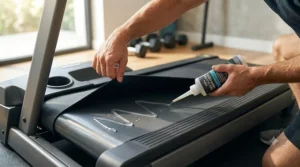
This one takes a slightly different approach: lift the belt from the side, spray directly onto the deck, and you’re done — no tube insertion required at all. It’s marketed as compatible with nearly all treadmill types, with one notable manufacturer exception (Star Trac units, which use different lubrication specs), so it’s worth double-checking your owner’s manual before buying if you’re on a commercial-grade machine.
What makes techMotion worth a mention beyond pure treadmill use is its stated versatility — the same 100% silicone formula doubles as a fix for squeaky door hinges, garage doors, and other household friction points. That’s not just marketing fluff; silicone spray genuinely is a decent general-purpose lubricant, so if you’re the type who’d rather buy one bottle for five household annoyances than five specialized products, this covers more ground. The manufacturer’s first-use instructions specify holding the spray trigger down fully for about two seconds to prevent an air-lock leak, then walking on the treadmill for five minutes afterward to let the lubricant spread evenly rather than pool in one spot.
Pros:
- ✅ No belt-lifting or tube insertion needed for application
- ✅ Doubles as a general household silicone spray
- ✅ Dries quickly without leaving an oily residue
Cons:
- ❌ Not compatible with Star Trac equipment
- ❌ Spray format less precise than tube applicators
Typically priced under $14, this is a solid pick for anyone who wants one bottle that earns its keep beyond just the treadmill.
7. Action Fitness 100% Silicone Treadmill Lubricant for Belt Maintenance — best cross-equipment versatility
Action Fitness ships with dual applicators — an 11-inch extension tube for full-width under-belt lubrication plus a twist spout for general maintenance — giving you flexibility depending on the job at hand. The formula is explicitly positioned for use beyond treadmills alone: ellipticals, exercise bikes, and even door hinges are called out as compatible applications, which stretches the value of a single bottle considerably if your home gym has more than one machine.
The core value proposition here is reducing belt hesitation — that subtle stutter-step feeling where the belt catches slightly before releasing, which most owners chalk up to “just how treadmills feel” without realizing it’s a friction problem with a five-minute fix. Regular application, per the manufacturer’s guidance, both quiets the machine and reduces wear on the motor and belt simultaneously, which is really the whole point of this entire category of product.
Pros:
- ✅ Dual applicators cover both quick and deep maintenance
- ✅ Works across multiple types of fitness equipment
- ✅ Reduces belt hesitation for smoother, quieter runs
Cons:
- ❌ 4-ounce bottle is on the smaller side for heavy users
- ❌ Multi-purpose marketing can feel like overreach to skeptics
Priced in the $11-$15 range, with a two-pack option often available at a modest per-ounce discount for households running multiple machines.
Practical Usage Guide: How To Apply Treadmill Lubricant
Knowing how to lubricate treadmill belt surfaces correctly saves you from the two most common mistakes: using too little (which does nothing) and using too much (which causes belt slippage and tracking problems). Here’s the process that actually works, regardless of which of the seven products above you choose.
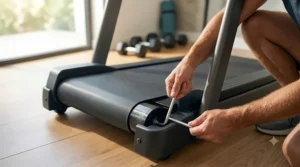
First, unplug the treadmill entirely — this isn’t optional, it’s a basic safety step before working near any moving mechanical part. Next, locate the sides of the walking belt and gently lift one edge away from the deck, just enough to slide your applicator tube or spray nozzle underneath without forcing anything. If you’re using a squeeze bottle with an extension tube, insert it about halfway under the belt’s width, then squeeze while slowly pulling the tube back out, laying down a consistent line of lubricant from the center toward the edge. Repeat on the opposite side so the coverage meets roughly in the middle of the belt.
Once both sides are done, plug the treadmill back in and walk on it at a slow, comfortable pace for about five minutes. This step isn’t optional filler — it’s what actually spreads the lubricant evenly across the full belt-deck contact surface instead of leaving it pooled in two lines. Skipping this step is a common first-30-days mistake: new owners apply lubricant correctly, skip the walk-in period, and then wonder why one section of the belt still squeaks. A quick maintenance-schedule note: mark your calendar for reapplication every 3 months or roughly every 130-150 miles of use, whichever arrives first, and you’ll rarely deal with a dry, noisy belt again.
Real-World Scenarios: Matching the Right Lubricant to Your Situation
Abstract product specs only get you so far — here’s how three different treadmill owners might actually approach this decision.
The apartment dweller with a desk treadmill: Limited floor space, a compact walking-pad-style machine, and zero desire to disassemble anything during a lunch break. The iMovR EasySpray or techMotion Lift & Spray both make sense here, since neither requires lifting the belt with any real effort, and application takes under two minutes.
The new treadmill owner setting up a home gym: Just unboxed a $1,200 machine and wants one purchase that handles lubrication and general cleaning without a second Amazon order. The NordicTrack Treadmill Maintenance Kit is the obvious fit — yes, it costs more, but it removes the guesswork entirely for someone still learning their machine’s quirks.
The budget-focused household with an older treadmill: A five-year-old machine, a tight monthly budget, and a belt that’s started squeaking. Impresa or Spot On both deliver the core silicone formula at the lowest price point, and neither sacrifices the compatibility or applicator quality that actually matters for the job.
How To Choose the Right Treadmill Belt Lubricant
Picking between seven similar-looking silicone bottles gets easier with a short checklist. Here’s the reasoning behind each factor, not just the factor itself:
- Confirm it’s 100% silicone. Petroleum-based products degrade rubber belt material over time — this is non-negotiable regardless of brand.
- Check your manufacturer’s specific recommendation. Some brands, like Star Trac, use different lubrication specs than the industry standard.
- Match the applicator to your machine’s belt width. A short tube on a commercial-width belt means incomplete coverage.
- Consider your physical setup. Limited mobility or a hard-to-access treadmill favors spray formats over tube insertion.
- Factor in bottle size against your household’s equipment count. One elliptical plus one treadmill will drain a 4-ounce bottle roughly twice as fast as treadmill-only use.
- Weigh kit versus standalone bottle. New owners benefit from kits; anyone restocking benefits from standalone value.
- Don’t chase the cheapest option blindly. At this price tier, the silicone itself is rarely the differentiator — applicator quality and bottle volume are where the real value gaps show up.
Common Mistakes When Buying Treadmill Lubricant
The single most common mistake is grabbing a general-purpose silicone spray from the hardware store instead of a treadmill-specific formula. It sounds like it should work — silicone is silicone, right? Not quite. Treadmill-specific lubricants are formulated with a particular viscosity that matches the tight tolerance between belt and deck; hardware-store sprays are often too thin, migrating away from the contact surface faster than they should.
A second mistake: buying based on bottle size alone without checking applicator design. A larger bottle with a poor-quality tube that clogs after two uses is a worse purchase than a smaller bottle with a reliable applicator, because you’ll end up wasting product fighting the tool instead of applying it efficiently. Third, some buyers skip checking brand compatibility notes entirely, assuming “universal” claims apply to every single machine — as noted above, at least one popular brand (Star Trac) uses a different lubrication system, and applying the wrong type can cause more harm than the squeaky belt it was meant to fix.

Treadmill Lubrication Frequency: What to Expect
This is probably the most googled follow-up question in this entire category, and the answer is more precise than most people assume. Most manufacturers recommend lubrication every 3 months or every 130-150 miles of accumulated use, whichever milestone hits first — meaning a household running the treadmill five days a week hits that mileage threshold faster than a once-a-week walker, even if both are checking a calendar that says “quarterly.”
Watch for the tell-tale signs that lubrication frequency needs adjusting rather than relying purely on the calendar: a new squeak, a stiff or hesitant belt movement, unusual motor strain, or — worth taking seriously — a faint burning smell, which signals friction has already progressed past the “annoying noise” stage. Reach a hand under the belt periodically; if you can’t feel a slight film of moisture, it’s time to reapply regardless of how many weeks have passed since the last cycle. Climate matters too — households in drier climates or those running space heaters near the treadmill may find the silicone breaks down slightly faster, warranting a shortened interval.
Belt Care Instructions & Maintenance Procedures
Lubrication is one piece of a larger belt care routine, and treating it as the only maintenance procedure your treadmill needs is a common oversight. Proper belt care instructions extend beyond the lubricant bottle itself.
Start with belt tension and alignment — a belt that’s drifting to one side, even slightly, creates uneven friction that no amount of silicone will fully correct. Most treadmills include adjustment bolts at the rear rollers specifically for this. Check tension roughly every few months by lifting the belt’s edge; if you can lift it more than 3 inches off the deck at the center, it likely needs tightening per your owner’s manual instructions. Second, keep the area under and around the deck free of dust and debris, since accumulated grit acts like sandpaper against the lubricated surface, undermining the very friction reduction you just paid for. A quick wipe-down with a dry cloth after workouts, plus a deeper vacuum of the motor housing every few months, prevents this buildup from ever becoming a real problem. Third, treat your treadmill belt conditioner routine and your belt tension checks as a paired maintenance procedure rather than separate tasks — doing them together, on the same quarterly schedule, means you’re never lubricating a misaligned belt or tightening a dry one.
Safety, Regulations & Compliance Considerations
Treadmill maintenance isn’t purely about performance — it intersects directly with safety. According to the Consumer Product Safety Commission, treadmills are involved in more reported injuries than most other categories of home exercise equipment, and while the overwhelming majority of those incidents involve usage errors rather than mechanical failure, a poorly maintained belt does raise real risk. A belt that’s under-lubricated can stutter or catch unexpectedly mid-stride, which is exactly the kind of surprise that leads to a fall.
Fitness equipment safety guidance generally recommends visual and functional checks before each use, with more thorough inspections — including belt condition — done on a regular schedule rather than only when something already sounds wrong. That aligns with the quarterly lubrication interval covered earlier: treating maintenance as scheduled prevention rather than reactive troubleshooting is the difference between catching a dry belt early and discovering it mid-run. If you ever notice a burning smell, sudden speed changes, or the belt failing to respond predictably, stop using the machine immediately and inspect it before your next session — these are the same categories of mechanical failure that have prompted official safety warnings for treadmill models in the past.
Long-Term Cost & Maintenance: Is Lubrication Actually Worth It?
Let’s talk numbers, because “extends motor life” is a vague claim until you attach a dollar figure to it. A bottle of silicone lubricant runs somewhere between $10 and $20 depending on format, and a bottle typically lasts a full year of standard quarterly application. That’s roughly $40-$80 in total lubricant spend across five years of ownership.
Compare that to the alternative: a treadmill motor replacement or repair, which commonly runs into the hundreds of dollars once you factor in parts and labor, not counting the downtime of shipping your machine to a repair shop or waiting for a technician. Even factoring in belt replacement — which happens eventually regardless of maintenance, just on a much longer timeline with proper lubrication — the total cost of ownership math heavily favors staying consistent with a $12 bottle every few months over gambling on a dry belt slowly grinding down expensive internal components. This is the kind of value/ROI comparison that rarely gets discussed in a product listing, but it’s the entire reason this maintenance category exists in the first place.
| Maintenance Approach | Annual Cost | Long-Term Risk |
|---|---|---|
| Consistent quarterly lubrication | ~$15-$25/year | Low — belt and motor wear at expected rate |
| Occasional/inconsistent lubrication | ~$10-$15/year | Moderate — uneven wear, possible early belt replacement |
| No lubrication routine | $0 direct spend | High — accelerated motor strain, costly repairs |
The table above makes the tradeoff obvious once it’s laid out side by side: skipping lubrication doesn’t actually save money, it just defers a much larger cost to a less predictable date. Consistent, scheduled maintenance is the cheapest option on this list by a wide margin once you account for what happens when a motor fails outside of warranty.
Treadmill Lubrication for Different Types of Users
Not every household approaches this the same way, and matching your maintenance habit to your actual usage pattern matters more than following a generic schedule.
Beginners and casual walkers: If you’re using the treadmill two or three times a week for walking, you’ll likely land closer to the 3-month mark than the mileage threshold. A basic squeeze-bottle lubricant like Impresa is more than sufficient, and there’s no need to overspend on a kit you won’t fully use.
Serious runners logging daily mileage: Hitting 130-150 miles takes considerably less time here, so check the “moisture test” under the belt monthly rather than waiting for the calendar. A larger-capacity bottle or a two-pack option, like Action Fitness’s multi-pack, reduces how often you’re reordering.
Multi-equipment households: If your treadmill shares space with an elliptical or exercise bike, a versatile formula like Action Fitness or techMotion — both explicitly compatible across equipment types — stretches your maintenance budget further than treadmill-only formulas.

Frequently Asked Questions
❓ How often should I lubricate my treadmill belt?
❓ Can I use WD-40 on a treadmill belt?
❓ How much lubricant should I apply to a treadmill belt?
❓ Do all treadmills need silicone lubricant?
❓ What happens if I never lubricate my treadmill belt?
Conclusion
Learning how to lubricate treadmill belt surfaces properly isn’t complicated, but it’s one of those small habits that quietly determines whether your treadmill lasts three years or twelve. The seven products covered here span every reasonable use case, from the budget-friendly Impresa bottle to the fully bundled NordicTrack kit, and the actual application process takes less time than a warm-up walk once you’ve done it a couple of times.
The bigger takeaway is the mindset shift: treat this as scheduled prevention on a quarterly calendar reminder, not a reactive fix you scramble for once the squeaking starts. Pair consistent lubrication with basic belt tension checks and regular dust removal, and you’re looking at a machine that keeps its motor and belt in genuinely good shape for years past what casual, reactive maintenance would ever achieve. A $12 bottle and five spare minutes really is the whole difference.
✨ Ready to keep your treadmill running smoothly for years to come? Pick the lubricant that matches your setup, mark your calendar for next quarter, and give your belt the five minutes of care it’s been waiting for!
Recommended for You
- Best Treadmill Lubricant 2026: 7 Picks That Actually Save Motors
- Treadmill Mat Thickness: 7 Best Mats Tested for 2026
- 7 Best Extra Large Treadmill Mats for 2026 (Buyer’s Guide)
Disclaimer: This article contains affiliate links. As an Amazon Associate, I earn from qualifying purchases. If you purchase products through these links, we may earn a small commission at no additional cost to you.
✨ Found this helpful? Share it with your friends! 💬🤗
