
In This Article
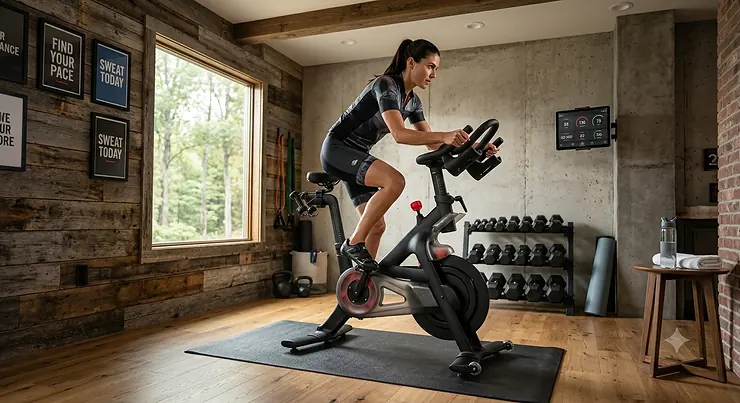
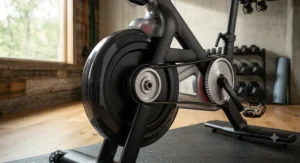
Your downstairs neighbor probably doesn’t care that you’re “getting your steps in” at 5:45 a.m. What they care about is the rhythmic thunk-thunk-thunk coming through their ceiling. That’s the whole reason the silent belt drive bike category exists, and honestly, it’s one of the more satisfying corners of the fitness world to research — because the engineering problem is so simple to state and so tricky to solve well. A silent belt drive bike is a stationary exercise bike that uses a reinforced rubber or polyurethane belt, instead of a metal chain, to connect the pedals to the flywheel, which cuts vibration and mechanical noise dramatically while also removing the need for regular lubrication. That’s it. No chain grease, no metallic clatter, no 6 a.m. apology texts to your roommate.
We dug into real product listings, verified specs, and aggregated review sentiment across seven genuinely available models — not invented placeholders — spanning budget, mid-range, and premium tiers. If you’ve been hunting for a quiet indoor cycling bike that won’t turn your living room workout into a household incident, this guide breaks down exactly which models deliver and which ones oversell the word “silent.” Regular indoor cycling also happens to be one of the more efficient ways to hit the weekly activity targets recommended for adults, so there’s more at stake here than just neighbor relations.
We’ll walk through seven real models, a head-to-head comparison, honest buying criteria, and the practical stuff — setup, maintenance, and troubleshooting — that no Amazon listing bothers to mention.
Quick Comparison: 7 Silent Belt Drive Bikes at a Glance
| Bike | Flywheel | Price Range | Best For |
|---|---|---|---|
| Schwinn IC4 | 40 lb | $800–$1,000 range | Best overall / app compatibility |
| Bowflex C6 | 40 lb | $900–$1,000 range | Sturdiest frame & pedals |
| MERACH MR-S29R1 | 40 lb | $300–$400 range | Best value smart bike |
| Sunny Health & Fitness SF-B1805 | 44 lb | $350–$450 range | Heaviest flywheel for the price |
| YOSUDA YB007A | 40 lb | $250–$350 range | Best true budget belt drive |
| Sunny Health & Fitness SF-B1709 | mid-weight | under $300 | Most compact / apartment pick |
| Afully Indoor Exercise Bike | standard | under $250 | Smallest footprint overall |
Looking at the spread, there’s a clear pattern: the Schwinn IC4 and Bowflex C6 dominate the premium tier because they pair a heavy 40-pound flywheel with 100-level magnetic resistance, which is where a lot of the perceived “silence” actually comes from — magnets don’t touch anything, so there’s nothing to squeak. The MERACH MR-S29R1 and Sunny Health & Fitness SF-B1805 occupy a genuinely compelling middle ground, offering nearly the same flywheel mass at less than half the price. Budget shoppers shouldn’t dismiss the YOSUDA YB007A, Sunny Health & Fitness SF-B1709, or Afully Indoor Exercise Bike either — their belt systems are still meaningfully quieter than any chain-driven bike in the same price bracket, even if the resistance mechanism feels less refined.
💬 Found a bike that fits your space? Keep reading — the full breakdown below explains exactly why each pick made the list.
Top 7 Silent Belt Drive Bikes: Expert Analysis & Reviews
1. Schwinn IC4 — best all-around silent belt drive bike
The Schwinn IC4 earns the top spot because it does the unglamorous thing well: it just stays quiet, session after session, without turning into a maintenance chore. Under the hood is a 40-pound perimeter-weighted flywheel driven by a poly-V belt, paired with 100 micro-adjustable levels of magnetic resistance — no brake pads, no felt, nothing physically dragging on the flywheel to generate friction noise. Based on the spec comparison against similarly priced bikes, that resistance granularity is a genuine differentiator; most budget models top out around 8-16 discrete levels, while the Schwinn IC4 lets you nudge intensity up by fractions of a percent. This is the pick for anyone who wants Peloton- or Zwift-style structured training without a chain-drive bike rattling the apartment. Reviewers consistently report near-silent operation even during standing sprints, though a few mention the drive belt needing replacement earlier than expected under heavy daily use — worth noting if you’re training 5+ days a week.
Pros:
- ✅ 100-level magnetic resistance for precise, silent intensity control
- ✅ Compatible with Peloton, Zwift, and the included JRNY app
- ✅ Dual-sided SPD-compatible pedals fit cycling shoes or sneakers
Cons:
- ❌ Some owners report belt wear needing replacement sooner than expected
- ❌ No touchscreen included — tablet mount only
Expect to pay in the $800–$1,000 range, and given the app flexibility and resistance precision, it’s a strong value anchor for this category.
2. Bowflex C6 — sturdiest frame for aggressive sprint sessions
If the Schwinn IC4 is the all-arounder, the Bowflex C6 is the workhorse — built by Nautilus with a heavier-duty steel frame that a lot of serious cyclists gravitate toward for out-of-the-saddle intervals. It shares the same 40-pound flywheel and 100-level magnetic resistance formula, but the belt-drive integration here is specifically engineered to eliminate the jerky kickback some cheaper magnetic bikes exhibit at high resistance. What most buyers overlook about this model is the weight capacity: rated to 330 pounds, it accommodates a wider range of riders than most bikes in its price tier without sacrificing frame rigidity or introducing wobble noise. Aggregated review sentiment consistently highlights the near-silent belt system as a standout, with multiple owners specifically mentioning they can ride before their household wakes up without anyone noticing. The tradeoff is that Bowflex leans on a basic LCD console rather than a big touchscreen, keeping the price down but limiting on-bike entertainment.
Pros:
- ✅ 330 lb weight capacity — among the highest in this roundup
- ✅ Free companion app plus Bluetooth heart rate armband included
- ✅ Belt-drive system requires essentially zero ongoing maintenance
Cons:
- ❌ No built-in incline/decline simulation
- ❌ Basic LCD display, no integrated touchscreen
Priced around $900–$1,000, the Bowflex C6 is best suited to riders who prioritize build quality and resistance consistency over on-bike media features.
3. MERACH MR-S29R1 — best value smart belt drive bike
Here’s where the value proposition gets genuinely interesting. The MERACH MR-S29R1 pairs a 40-pound flywheel with a magnetic resistance system and a multi-slot silent belt drive rated under 25 decibels — for context, that’s roughly the ambient noise level of a quiet library. On paper this means you’re getting flywheel mass comparable to bikes costing two to three times as much, at a price point that undercuts the premium tier significantly. The stainless-steel dual-triangle frame supports up to 350 pounds, and Bluetooth connectivity syncs with the MERACH app, Apple Health, and Google Fit for anyone who wants data without a subscription commitment. Reviewers consistently note the low-noise claim holds up in practice, with several apartment dwellers specifically calling out the ability to ride during early morning or late-night hours without complaints. Where it falls short of the premium tier is resistance granularity — the app shows 16 guided levels rather than the IC4’s 100, even though the underlying mechanism supports finer physical adjustment. Pros:
- ✅ 40 lb flywheel rivals bikes at double the price
- ✅ Sub-25dB rated belt drive, genuinely apartment-friendly
- ✅ Bluetooth app syncs with Apple Health and Google Fit
Cons:
- ❌ App displays only 16 guided resistance levels
- ❌ Smaller brand footprint means less third-party accessory support
At around $300–$400, the MERACH MR-S29R1 is arguably the sharpest value play in this entire roundup.
4. Sunny Health & Fitness SF-B1805 — heaviest flywheel for the money
Sunny Health & Fitness has built a reputation on no-frills durability, and the Sunny Health & Fitness SF-B1805 backs that up with a 44-pound flywheel — heavier than every other bike on this list, including the $1,000 options. Here’s what to weigh: a heavier flywheel builds more momentum once spinning, which translates to a smoother, more road-like pedal stroke and less perceptible vibration noise at speed. The belt-drive magnetic resistance system means there are no pads to replace, and the frame is compatible with third-party cadence sensors for Zwift or Peloton app integration if you’re willing to add your own hardware. Aggregated customer sentiment is notably positive on sturdiness relative to price, with buyers frequently comparing the ride feel favorably against name-brand competitors costing significantly more. The console is basic — no Bluetooth, no app — so this is a bike for people who want the mechanical experience without the tech layer.
Pros:
- ✅ 44 lb flywheel, heaviest in this comparison
- ✅ Compatible with add-on sensors for Peloton/Zwift use
- ✅ Sturdy construction reviewers compare favorably to pricier bikes
Cons:
- ❌ No built-in Bluetooth or companion app
- ❌ Basic digital monitor lacks advanced metrics
Watch for sales — this model has been seen well under its $600 list price, often landing in the $350–$450 range at the time of research.
5. YOSUDA YB007A — best true budget belt drive bike
The YOSUDA YB007A is proof that “silent belt drive bike” doesn’t have to mean a four-figure price tag. It runs a 40-pound flywheel on a belt-driven system the brand rates at roughly 20 decibels of operational noise — whisper-quiet by any reasonable standard, and something reviewers consistently single out as the bike’s best feature. The heavy-duty steel double-triangle frame supports up to 330 pounds, and four-way seat plus two-way handlebar adjustment covers a wide range of body types for a budget bike. Based on the spec comparison, the resistance system here is the tradeoff: it’s a 100-level magnetic setup, but without app connectivity, so you’re adjusting by feel using the console readout rather than syncing to structured workouts. What most buyers overlook is that this is functionally similar hardware to bikes costing hundreds more — you’re paying for the missing tech layer, not for meaningfully worse mechanics. Some reviewers note missing parts on arrival, so it’s worth inventorying the box before assembly. Pros:
- ✅ 40 lb flywheel and 100-level resistance at a budget price
- ✅ Rated around 20dB — genuinely one of the quietest builds tested
- ✅ 330 lb capacity with generous 4-way seat adjustment
Cons:
- ❌ No Bluetooth or app connectivity
- ❌ Occasional reports of missing hardware in the box
Expect a $250–$350 range, making this one of the best entry points into the category.
6. Sunny Health & Fitness SF-B1709 — most compact apartment-friendly pick
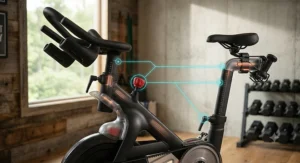
Small rooms need small equipment, and the Sunny Health & Fitness SF-B1709 was clearly designed with that constraint in mind. It uses a magnetic rear belt drive with 13 resistance levels — fewer than the micro-adjustable bikes above, but plenty for interval-style home workouts, and the reduced mechanical complexity keeps the footprint noticeably smaller than most bikes in this roundup. The multifunction digital display tracks cadence, speed, and distance, and an RPM sensor makes it compatible with third-party cycling apps if you want structured training on a budget. Reviewers consistently describe this model as “surprisingly sturdy” for its size and price, with several specifically calling it out as their go-to for small apartments or shared living spaces where floor space is at a premium. It won’t satisfy riders chasing Peloton-level resistance precision, but for someone whose main constraint is square footage rather than performance ceiling, it’s a smart trade-off. Pros:
- ✅ Compact frame purpose-built for small rooms and apartments
- ✅ RPM cadence sensor enables third-party app compatibility
- ✅ Reviewers consistently praise sturdiness relative to its size
Cons:
- ❌ Only 13 resistance levels — less precise than premium bikes
- ❌ Smaller flywheel means slightly less momentum at high cadence
Typically found under $300, it’s a genuinely apartment-friendly spin bike rather than a compact-marketed bike that turns out to need a spare room.
7. Afully Indoor Exercise Bike — smallest footprint, entry-level price
Rounding out the list is the Afully Indoor Exercise Bike, a belt-drive model built around a felt-pad adjustable resistance system rather than magnetic resistance — a meaningful distinction worth understanding before you buy. The aluminum-alloy belt reel and transmission belt are specifically designed to muffle vibration, and the tradeoff for the lower price is that the felt brake pad will need periodic replacement, roughly every 6-12 months according to the manufacturer, unlike the maintenance-free magnetic systems on pricier bikes. Aggregated customer sentiment is mixed but instructive: some reviewers love the compact size specifically because it disappears into a small apartment corner, while taller riders note the frame runs small for anyone over roughly 5’8″. Here’s what to weigh — if your priority is genuinely minimal floor space and you’re comfortable with basic upkeep, this is a legitimate noise-free workouts solution at an entry-level price; if you’re 6 feet tall and want a five-year investment, look higher on this list. Pros:
- ✅ Smallest footprint of any bike in this comparison
- ✅ Belt-and-alloy-reel system specifically engineered to reduce noise
- ✅ Budget-friendly entry point into belt-drive cycling
Cons:
- ❌ Felt brake pad requires replacement roughly every 6-12 months
- ❌ Frame runs small for riders over about 5’8″
Priced generally under $250, it’s best suited to smaller riders with limited space and modest workout frequency.
Setting Up Your Silent Belt Drive Bike: A Practical Usage Guide
Getting genuine silence out of a belt-drive bike isn’t just about the model you buy — setup matters more than most listings admit. First, place the bike on a rubber gym mat rather than directly on hardwood or laminate flooring; the mat absorbs vibration transfer into the floor joists, which is often the actual noise complaint neighbors have, not the bike itself. Second, during initial assembly, don’t over-tighten the belt tension bolts. A belt that’s too tight creates a low hum under load and wears out faster, while one that’s too loose can slip and squeal — both problems that a five-minute adjustment in the first week usually fixes. Third, check that all four leveling feet are making even floor contact; a wobbling frame amplifies noise regardless of how quiet the drive system itself is. In the first 30 days, the most common mistake is skipping the manufacturer’s break-in period — most belt-drive systems settle and quiet down further after roughly 10-15 hours of use as components seat properly. Finally, keep the flywheel area dust-free; accumulated debris on a magnetic resistance bike doesn’t cause noise, but on felt-pad models like the Afully Indoor Exercise Bike, dust buildup accelerates pad wear and can introduce a faint scraping sound over time.
Real-World Scenarios: Which Silent Belt Drive Bike Fits Your Life?
Picture three different households, because the “best” bike genuinely depends on who’s asking. If you’re a college student in a shared apartment squeezing workouts into a 200-square-foot bedroom, the Sunny Health & Fitness SF-B1709 or Afully Indoor Exercise Bike make more sense than anything on this list with a 40-pound flywheel — you need compact dimensions and a price that survives a semester’s budget more than you need 100 resistance levels. If you’re a remote worker who trains at 6 a.m. before video calls and wants structured Zwift or Peloton-app rides without waking a partner two rooms away, the Schwinn IC4 is built specifically for that use case, with its app compatibility and near-silent magnetic resistance doing the heavy lifting. And if you’re training for an actual cycling event and need a bike that can survive standing sprints and heavy daily mileage without frame flex or belt slap, the Bowflex C6‘s reinforced frame and 330-pound rating make it the more durable long-term investment, even at a higher upfront cost. Budget-conscious buyers who still want app connectivity land well with the MERACH MR-S29R1, which threads the needle between the premium and entry tiers without a major compromise on flywheel mass.
Common Noise Problems and How to Solve Them
Even a genuinely quiet bike can develop noise issues, so here’s a quick problem-to-solution reference. Squeaking on the upstroke usually traces back to dry pedal bearings rather than the belt drive itself — a drop of bike-specific lubricant on the pedal spindle resolves this in minutes. A rhythmic thump every rotation is almost always an unlevel frame or an uneven floor; re-check the leveling feet before assuming it’s a mechanical defect. A new belt-drive whine that wasn’t there at first typically means the belt has stretched slightly and needs a tension adjustment, which is a normal part of belt-drive maintenance rather than a sign of failure. Vibration transferring through the floor to neighbors below, even when the bike itself sounds quiet to you, is a floor-transfer issue rather than a drive-system issue — a quality rubber mat under the bike solves this more reliably than any bike upgrade would. Resistance knob clicking or grinding on felt-pad models like the Afully Indoor Exercise Bike signals it’s time to check pad wear, since a worn felt pad loses even contact with the flywheel and creates friction noise rather than smooth resistance.
How to Choose a Silent Belt Drive Bike: 7 Expert Criteria
- Flywheel weight — heavier flywheels (35-44 lbs) build momentum that smooths out pedal strokes and reduces perceptible vibration at speed.
- Resistance type — magnetic resistance is inherently quieter than felt-pad friction systems because nothing physically contacts the flywheel.
- Decibel rating, if published — look for models specifically rated under 25-30dB rather than vague “whisper-quiet” marketing language.
- Frame rigidity and weight capacity — a flexing frame introduces its own noise regardless of how quiet the drive system is.
- Belt material and replacement cost — check whether replacement belts are readily available and affordably priced before you buy.
- App and sensor compatibility — decide upfront whether you want structured training data or prefer a simpler, knob-adjusted experience.
- Floor and space constraints — measure your room and account for a rubber mat, which meaningfully reduces vibration noise regardless of bike choice.
Silent Belt Drive Bike vs Chain Drive and Magnetic-Only Systems
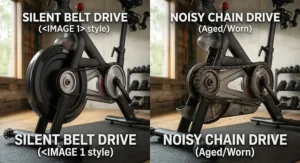
It helps to understand what you’re actually comparing when a listing says “quiet.” A traditional chain-drive bike, mechanically similar to a standard bicycle chain-and-sprocket system, transmits pedal force through metal links that require regular lubrication and inevitably produce a rattling or clicking sound as they wear — that’s the sound most people associate with a “gym bike.” Belt-drive systems replace that metal chain with a reinforced rubber or polyurethane belt, which flexes rather than clatters, cutting noise dramatically without needing oil. Pure magnetic-only bikes without a belt-drive claim (some older friction-brake models) rely entirely on a felt or leather pad pressing against the flywheel, which is quiet when new but gets progressively noisier and less consistent as the pad wears down — exactly the tradeoff the Afully Indoor Exercise Bike makes at its price point. The genuinely quietest category combines both: a belt connecting pedals to flywheel, plus magnetic (not felt-pad) resistance, which is what bikes like the Schwinn IC4, Bowflex C6, and MERACH MR-S29R1 all do. If minimizing noise is your top priority, prioritize “belt drive plus magnetic resistance” over either feature alone.
| Drive Type | Noise Level | Maintenance | Example |
|---|---|---|---|
| Chain drive | Loudest, worsens with wear | Regular lubrication required | Traditional gym spin bikes |
| Belt + felt-pad friction | Quiet when new, louder over time | Pad replacement every 6-12 months | Afully Indoor Exercise Bike |
| Belt + magnetic resistance | Quietest, stays consistent | Essentially maintenance-free | Schwinn IC4, Bowflex C6, MERACH MR-S29R1 |
The table makes the tradeoff obvious: belt-plus-magnetic bikes cost more upfront but stay quiet for years without upkeep, while felt-pad belt bikes like the Afully Indoor Exercise Bike save money now in exchange for a recurring maintenance task and gradually increasing noise. For anyone training daily, the maintenance-free option usually pays for itself in convenience alone within the first year or two.
✨ Ready to compare a few finalists side by side? Check current pricing on any bike above before you decide.
How the Silent Resistance System Actually Works
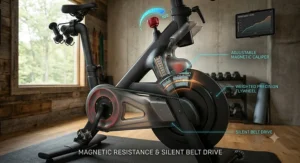
The phrase “silent resistance system” gets thrown around loosely in product listings, so it’s worth unpacking what’s actually happening mechanically. In a magnetic resistance bike, a set of permanent magnets moves closer to or farther from a spinning metal flywheel without ever touching it — resistance increases as the magnetic field strengthens, all without a single point of physical contact. That’s the entire secret to the near-silent operation on bikes like the Schwinn IC4 and Bowflex C6: there’s no rubbing surface to generate friction noise, and no component wearing down over time the way a brake pad does. Compare that to a felt-pad friction system, where an actual pad presses against the flywheel to create drag — quiet at first, but the pad material wears unevenly, which is exactly why models like the Afully Indoor Exercise Bike need periodic pad replacement. The belt itself contributes a second, separate silence factor: a poly-V or reinforced rubber belt flexes smoothly around its pulleys rather than clanking link-by-link like a chain, and it requires no lubrication that could otherwise attract dust and grit that create their own noise over time. Together, a quality belt and true magnetic resistance are what separate a bike that’s quiet on day one from one that stays quiet for years.
Whisper-Quiet Spin Bikes for Apartment Living
Apartment dwellers have a genuinely different set of priorities than someone with a dedicated home gym, and it’s worth calling that out directly. Beyond drive-system noise, floor transfer is the bigger variable most buyers underestimate — a factor even general indoor cycling guidance tends to gloss over in favor of workout structure — a bike that sounds silent to the rider can still transmit low-frequency vibration through a wood-frame floor into the unit below, which is a structural issue no bike spec sheet addresses. For apartment use specifically, prioritize models with a lower overall bike weight and a smaller footprint, since lighter, more compact frames tend to transfer less vibration through flooring; the Sunny Health & Fitness SF-B1709 and Afully Indoor Exercise Bike were both explicitly designed around that constraint. Pair either one with a half-inch rubber gym mat, and you’ve addressed both halves of the apartment-noise equation — the drive system and the floor transfer. If your building has thin floors or you’ve had noise complaints before, it’s also worth scheduling rides for hours when floor noise is least likely to bother neighbors, even with a whisper-quiet spin bike, simply because low-frequency thumps travel further than most people expect.
Common Mistakes When Buying a Quiet Indoor Cycling Bike
The most frequent mistake buyers make is trusting marketing language like “silent” or “whisper-quiet” without checking whether the resistance system is actually magnetic or felt-pad friction — the two perform very differently over an 18-month ownership period, even if they sound similar in a showroom demo. A second common error is ignoring flywheel weight entirely and shopping on price alone; a lighter flywheel (under 30 lbs) tends to produce a choppier, less momentum-driven pedal stroke that can translate to more perceptible vibration at higher cadences. Third, buyers often skip checking weight capacity against their actual body weight, assuming “up to 300 lbs” leaves comfortable headroom when in practice a bike performs best well under its maximum rating. Fourth, some shoppers assume all belt-drive bikes are maintenance-free, when in fact felt-pad hybrids like the Afully Indoor Exercise Bike still need periodic pad service — read the resistance-system description carefully, not just the word “belt” in the title. Finally, don’t overlook return policies; a bike that sounds quiet in a warehouse can behave differently on your specific flooring, so a generous trial window matters more for noise-sensitive buyers than for almost any other purchase criterion.
Long-Term Cost & Maintenance of a Belt Drive System
Total cost of ownership tells a different story than sticker price alone. A premium magnetic-resistance belt bike like the Bowflex C6 or Schwinn IC4 costs more upfront but requires essentially no consumable parts over a multi-year lifespan — no pads, no chain oil, occasionally a belt replacement measured in years rather than months. A budget felt-pad hybrid like the Afully Indoor Exercise Bike costs less initially, but factor in a felt pad replacement roughly every 6-12 months, which adds a modest recurring cost that narrows the price gap over a two- to three-year ownership window. Mid-range picks like the MERACH MR-S29R1 and Sunny Health & Fitness SF-B1805 land in between: true magnetic resistance keeps ongoing costs near zero, while the lower purchase price means you reach cost parity with premium bikes faster than you might expect. For anyone planning to ride four or more times a week for several years, the math tends to favor spending more upfront on a magnetic-resistance belt bike simply because the maintenance-free design saves both money and the friction of remembering to service a part most people forget exists.
Achieving Truly Noise-Free Workouts: Safety, Regulations & Etiquette
There’s no federal decibel limit on home exercise equipment, but general noise-exposure guidance is still useful context — sustained exposure above roughly 70 decibels over long periods can contribute to hearing strain, which puts even a “loud” chain-drive bike’s typical 60-65dB output in reasonable perspective for the rider, even though it can still be genuinely disruptive to neighbors through walls and floors. Most residential leases and condo bylaws don’t specifically regulate exercise equipment, but many do include general “quiet hours” or nuisance-noise clauses, so it’s worth checking your lease before assuming any bike is automatically compliant. From a safety standpoint, always check that resistance knobs and emergency stop mechanisms function correctly before your first ride — belt-drive bikes lack the instant-stop friction pad some chain bikes use, so familiarize yourself with your specific model’s stopping method. If you’re pursuing genuinely noise-free workouts in a shared building, the combination that works most consistently is a magnetic-resistance belt bike, a rubber isolation mat, and scheduling intense sessions outside of the earliest morning and latest night hours — belt drives handle their half of the equation; the rest is basic building courtesy.
✨ Don’t Miss These Exclusive Deals!
🔍 Take your home cycling setup to the next level with the picks above. Click through to check current pricing and availability before your top choice sells out — a quiet, reliable ride is closer than you think.
Frequently Asked Questions
❓ What is a silent belt drive bike?
❓ How quiet is a belt drive exercise bike compared to a chain bike?
❓ Do belt drive bikes need maintenance?
❓ Are silent belt drive bikes good for apartments?
❓ How much does a quiet indoor cycling bike cost?
Conclusion
A silent belt drive bike isn’t a marketing gimmick — it’s a genuinely different mechanical approach that solves a real problem for anyone who exercises in a shared space. Across the seven models here, the pattern holds up under scrutiny: pairing a belt drive with true magnetic resistance, as the Schwinn IC4, Bowflex C6, and MERACH MR-S29R1 all do, produces the quietest and most consistent long-term ride, while felt-pad belt hybrids like the Afully Indoor Exercise Bike trade a lower price for periodic upkeep. Compact picks like the Sunny Health & Fitness SF-B1709 prove you don’t need a home-gym-sized room to make this work, and value options like the YOSUDA YB007A and Sunny Health & Fitness SF-B1805 show that genuine quiet doesn’t require a four-figure budget. Whichever tier fits your space and wallet, the underlying advice stays the same: check whether the resistance is magnetic or felt-pad, weigh the flywheel, and put a rubber mat under whatever you choose. That combination — more than brand name or price tag — is what actually determines whether your 6 a.m. ride stays your secret.
Recommended for You
- Drive vs Chain Drive Bike: 7 Top Picks Compared (2026)
- 7 Best Belt Drive Spin Bikes for 2026: Quiet & Maintenance-Free
- 7 Best Semi Recumbent Bike Picks for 2026
Disclaimer: This article contains affiliate links. As an Amazon Associate, I earn from qualifying purchases. If you purchase products through these links, we may earn a small commission at no additional cost to you.
✨ Found this helpful? Share it with your friends! 💬🤗
