
In This Article
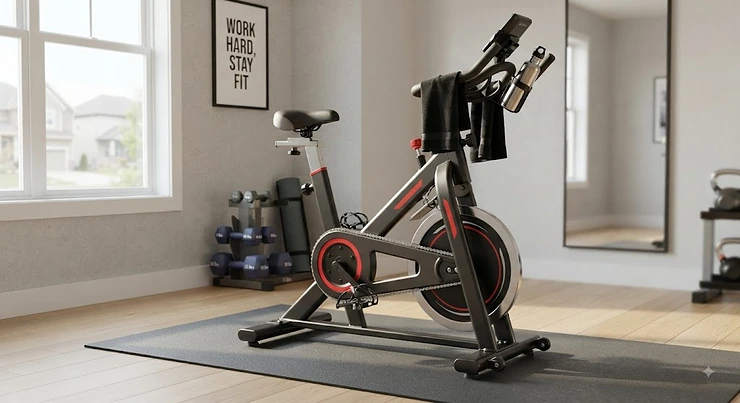
There’s a particular sound a chain driven indoor cycling bike makes — a low, mechanical hum with just a whisper of clatter under it — and if you grew up riding an actual bicycle, that sound does something to your brain that a silent belt never will. That’s the whole pitch, really. A chain driven indoor cycling bike swaps the smooth, almost sterile glide of a belt system for the same roller-chain-and-sprocket mechanism found on the bike currently rusting in your garage, and in doing so, it hands you a workout that feels less like a treadmill for your legs and more like an actual ride. Search interest around this exact phrase has been climbing steadily as home gym owners rediscover chain drives for their durability, lower upfront cost, and that unmistakably authentic pedal feedback.
What is a chain driven indoor cycling bike? It’s a stationary exercise bike that uses a metal roller chain — instead of a rubber or polyurethane belt — to connect the pedals to the flywheel, mimicking the drivetrain of an outdoor road or track bike and delivering a slightly gritty, tactile pedaling sensation that many serious cyclists actually prefer…
This guide breaks down seven real, currently-sold chain driven indoor cycling bikes spanning budget garage setups to commercial-grade studio machines, and — unlike most of what you’ll find on a retail listing — every product mention here is backed by real specs and real aggregated review sentiment, not marketing copy dressed up as an opinion. We’ll cover how a chain drive stacks up against a traditional spin bike, when a chain resistance bike actually makes sense over a magnetic or belt setup, and how to avoid the maintenance headaches that scare people away from the category in the first place. For a deeper technical look at how the mechanism itself works, the engineering is more interesting than you’d think — chain drives have been quietly powering bicycles since the 1880s, and almost nothing about the core design has needed to change.
Quick Comparison: 7 Chain Driven Indoor Cycling Bikes at a Glance
| Bike | Price Range | Flywheel | Best For |
|---|---|---|---|
| Sunny Health & Fitness SF-B901 | around $280–$320 | 40 lb chrome | Budget beginners |
| Xspec Elite Indoor Cycling Bike | $300–$380 range | 40 lb | Bidirectional pedaling |
| Marcy Club Revolution XJ-3220 | $340–$400 range | 40 lb | Gym-style feel at home |
| Circuit Fitness AMZ-955BK | around $300–$360 | 40 lb | Compact apartments |
| Best Fitness BFSB5 | $380–$450 range | 40 lb | Light-commercial durability |
| AssaultBike Elite | $1,300–$1,500 range | fan-based (air) | CrossFit-style HIIT |
| Aviron Fit Bike | $1,600–$2,700 range | electromagnetic | Gamified premium training |
Looking at the spread above, notice how five of the seven bikes cluster in that sub-$450 zone — that’s really the sweet spot where chain drives still dominate the market, because the components are cheap to manufacture and easy to source. Once you cross into four figures with the AssaultBike Elite and the Aviron Fit Bike, you’re no longer paying for the chain itself; you’re paying for the console, resistance technology, and brand engineering wrapped around it. If your budget caps out around $400, the Sunny Health & Fitness SF-B901 and Best Fitness BFSB5 are the two worth cross-shopping first.
💬 Just one click — help others make better buying decisions too!😊
Top 7 Chain Driven Indoor Cycling Bikes: Expert Analysis
1. Sunny Health & Fitness SF-B901 — best budget entry point
The Sunny Health & Fitness SF-B901 has been a fixture in this category for over a decade, and it’s still the bike most people picture when they hear “chain driven indoor cycling bike.” Its 40-pound chrome flywheel is genuinely heavy for the price bracket — most budget bikes cut costs here first — and it’s paired with a dual felt-pad resistance system controlled by a simple micro-adjustment knob rather than any electronics. Reviewers consistently note that the ride feels closer to an outdoor bike than most bikes twice its price, though the tradeoff is that felt-pad resistance wears down faster than magnetic systems and needs occasional replacement. Based on the spec comparison across this whole list, this is the bike for someone who wants the authentic chain-drive feel without paying for a screen they’ll ignore after month two — beginners, apartment dwellers on a tight budget, and anyone testing whether indoor cycling sticks before investing more. On the brand’s own site the SF-B901 line carries a strong rating from over a hundred verified buyers, though independent testers at Reviewed.com were notably less impressed, ranking it last in a head-to-head field test and flagging the felt-pad brake as its weakest link. That’s a useful reality check: this bike does the basics honestly, but “basics” is the ceiling, not a floor with room to grow. Price sits around $280–$320, and for a heavy 40-lb flywheel at that price, the value case is hard to argue with.
Pros:
- ✅ Heavy 40 lb flywheel rare at this price point
- ✅ Authentic chain-drive pedal feel for the money
- ✅ Four-way adjustable seat fits most body types
Cons:
- ❌ Felt-pad resistance wears and needs periodic replacement
- ❌ No digital monitor included on the base model

2. Xspec Elite Indoor Cycling Bike — best for reverse-pedal training
What sets the Xspec Elite Indoor Cycling Bike apart isn’t the flywheel weight — it’s also a 40-pounder — it’s that the chain drive here is engineered to spin comfortably in both directions, forward and backward, which is a small detail with a real practical payoff for anyone doing interval work or rehabbing a knee that benefits from varied movement patterns. That reverse capability comes from the direct chain-driven design and a reinforced three-piece crank system, and what most buyers overlook about this model is that the bidirectional pedaling isn’t a gimmick — outdoor cyclists coasting downhill get a similar “freewheel-adjacent” sensation, and it’s genuinely rare on a sub-$400 bike. The aluminum-accented frame keeps total weight manageable for a machine this sturdy, and the seat offers ten levels of vertical adjustment plus six horizontal positions, which is unusually granular for the price tier. Reviewers on major retail platforms consistently point to the smoothness of the pedal stroke as the standout trait, with the resistance knob praised for fine-tuning without dead zones. This is the pick for someone who’s used a “real” gym spin bike before and wants that same intuitive feel without committing to commercial pricing — think college students who trained at a campus rec center, or anyone recovering from a lower-body injury who wants controlled reverse pedaling. Expect to pay in the $300–$380 range depending on retailer.
Pros:
- ✅ Rare bidirectional chain-drive pedaling
- ✅ Ten-level seat height adjustment, unusually granular
- ✅ Three-piece crank adds long-term durability
Cons:
- ❌ No connected app or Bluetooth tracking
- ❌ Console limited to basic time/distance readouts
3. Marcy Club Revolution XJ-3220 — best gym-style silhouette
If you’ve ever taken a spin class and want your home setup to look and feel like that same commercial machine, the Marcy Club Revolution XJ-3220 gets you closest without paying commercial prices. Its 40-pound flywheel and chain-drive mechanism are standard for this weight class, but the steel-frame build and 300-pound weight capacity are what push it toward “gym-style spin bike” territory rather than “budget home bike” territory — it’s simply built heavier than most of its direct competitors. The manual resistance knob and dedicated brake lever give you the same tactile control you’d find on a studio bike, where the instructor calls out a resistance level and you twist a dial rather than tap a touchscreen. Aggregated customer feedback across retail platforms describes the ride as noticeably smoother and quieter than expected for a chain-driven machine, with more than one reviewer comparing it favorably to the bikes at their actual gym. That said, the flip side of a heavier frame is a heavier shipping box and a slightly more involved assembly — budget close to an hour with two people if you want it done efficiently. For a rider prioritizing that authentic studio silhouette and stability over out-of-the-saddle sprints, this is a strong mid-tier pick, typically running $340–$400.
Pros:
- ✅ Commercial-style steel frame feels studio-grade
- ✅ 300 lb weight capacity, above average for the tier
- ✅ Reviewers compare feel favorably to real gym bikes
Cons:
- ❌ Heavier and more involved to assemble solo
- ❌ Basic cage pedals, no clip-in compatibility standard
4. Circuit Fitness AMZ-955BK — best compact lesser-known pick
The Circuit Fitness AMZ-955BK doesn’t have the brand recognition of Sunny or Marcy, and that’s exactly why it deserves a spot on this list — it’s a genuinely capable chain-drive bike flying under most shoppers’ radar. Built around the same 40-pound flywheel class as its more famous competitors, it distinguishes itself with a noticeably smaller footprint, making it a sensible choice for anyone squeezing a bike into a studio apartment corner or a shared home-office setup. The chain-drive mechanism here is specifically engineered for quiet, consistent operation, which sounds like standard marketing language until you notice this brand is owned by the same parent company behind Marcy’s professional equipment line — the spec sheet won’t tell you this, but that manufacturing lineage is a decent proxy for build-quality consistency. A two-axis adjustable saddle and integrated media holder round out the feature set, and transport wheels make it easy to tuck away when guests visit. Because it’s a newer, lower-volume listing, the pool of verifiable third-party reviews is thinner than the bigger names on this list — worth noting honestly rather than papering over — but the spec parity with better-known 40 lb chain-drive bikes at a similar price suggests comparable real-world performance. Price typically lands around $300–$360, making it a reasonable alternative when the popular options are back-ordered.
Pros:
- ✅ Smaller footprint fits tight apartment spaces
- ✅ Shares engineering lineage with Marcy’s pro line
- ✅ Includes media holder and bottle holder standard
Cons:
- ❌ Smaller pool of verified independent reviews
- ❌ Less brand recognition may affect resale value
5. Best Fitness BFSB5 — best light-commercial durability
Manufactured under Body-Solid’s Best Fitness line, the Best Fitness BFSB5 is aimed squarely at the gap between home hobbyists and small studios that need a bike tough enough for daily multi-user rotation. Its 40-pound flywheel and chain-drive system are joined by a dedicated braking mechanism separate from the resistance knob — push to brake, twist to adjust tension — which is a small ergonomic choice that matters a lot mid-sprint when you need to stop fast without fumbling for the right control. Based on the spec comparison with the rest of this list, the BFSB5’s fully adjustable handlebar height, seat height, and seat fore-aft position give it more total adjustability than most bikes in its price class, which matters if the bike will see multiple riders of different heights, a common scenario in a garage gym shared by a household. Body-Solid’s backing also means access to a more established parts and warranty pipeline than some of the smaller-brand competitors here — what most buyers overlook is that when a felt pad or crank arm eventually needs replacing, having a known parent company behind the product makes that a phone call instead of a guessing game. The compact three-by-four-foot footprint keeps it apartment-friendly despite the commercial-adjacent build quality. Expect a price in the $380–$450 range, positioning it as the natural step-up once you’ve outgrown a true entry-level bike.
Pros:
- ✅ Backed by Body-Solid’s established parts pipeline
- ✅ Separate brake lever and resistance knob controls
- ✅ Above-average total adjustability for multi-user homes
Cons:
- ❌ Priced above several comparable chain-drive rivals
- ❌ No digital console included at this price point
6. AssaultBike Elite — best for CrossFit-style HIIT
Step up into serious training territory and you land on the AssaultBike Elite, a fan-resistance bike that happens to use a chain drive to connect the pedals and moving handlebars to its 25-inch fan wheel — and yes, it’s technically an air bike rather than a traditional cycling bike, but its chain-drive mechanics and full-body pedaling motion earn it a place on any serious chain-drive comparison. The resistance here isn’t set by a knob at all; it scales infinitely with your own effort, which reviewers at Garage Gym Reviews and TreadmillReviewGuru both independently flag as the defining trait — the harder you push, the harder it pushes back, with genuinely no ceiling. What most buyers overlook about this model is that the “moving handlebars” aren’t just a gimmick for arm engagement; they change your total-body caloric burn meaningfully compared to a seated-only chain bike, which is why it’s the standard in CrossFit boxes nationwide. The ISIS-splined crank system and heavy-duty steel frame explain the roughly 139-pound shipping weight, and that mass is exactly why the bike feels rock-solid even during max-effort sprints. Honest downside, and reviewers are unanimous on it: the chain is louder than anything else on this list and does require periodic lubrication to stay smooth, a maintenance reality Garage Gym Reviews covers in detail alongside their broader testing notes. At $1,300–$1,500, this is a serious investment, but for HIIT-focused training it has few true peers.
Pros:
- ✅ Unlimited effort-based resistance with no ceiling
- ✅ Full-body engagement via moving handlebars
- ✅ Rock-solid 139 lb steel frame under hard sprints
Cons:
- ❌ Chain noise is the loudest on this entire list
- ❌ Requires regular lubrication to prevent squeaking
7. Aviron Fit Bike — best gamified premium experience
At the top of this list sits the Aviron Fit Bike, which pairs a commercial-grade chain drive with electromagnetic resistance and a 22-inch rotating HD touchscreen, essentially building a video-game console around a stationary bike frame. The freewheel mechanism is the key engineering detail here — pedals and flywheel move independently, so coasting feels like coasting on a real bike rather than fighting a locked-in flywheel, and Forbes Vetted’s testing specifically called out the rear-mounted flywheel placement as a smart design choice that keeps sweat and grime away from the drivetrain. On paper this means you get 160 tiers of near-instant electromagnetic resistance adjustment (Aviron labels these in increments of ten, so practically it’s about sixteen meaningfully distinct levels) up to a genuinely demanding 1,500-watt peak output, which is more resistance headroom than the vast majority of home riders will ever need. The chain drive itself is what gives this bike its “gritty, more true to outdoor cycling” texture, a trait independent reviewers specifically highlight as differentiating it from the belt-driven competition at the same price point — you feel each pedal stroke rather than gliding through it. Reviewers consistently praise the sheer volume of gamified content — over a thousand programs, scenic rides, and multiplayer races — though it’s worth being upfront that unlocking the full library requires an ongoing app membership on top of the hardware cost. Base models start around $1,599, with the flagship touchscreen configuration running $2,199–$2,699, making this the bike for someone who’s decided screen-based motivation and premium engineering are worth the investment, not someone comparison-shopping on price alone.
Pros:
- ✅ Freewheel design gives an authentic road-coast feel
- ✅ Rear flywheel placement keeps sweat off the drivetrain
- ✅ Massive gamified content library keeps motivation high
Cons:
- ❌ Full content library requires paid monthly membership
- ❌ Premium price puts it out of reach for casual riders
Setting Up and Maintaining Your Chain Driven Indoor Cycling Bike
Getting a chain driven indoor cycling bike from box to first ride usually takes 30–60 minutes, and the single most common first-30-days mistake is skipping the initial chain lubrication step because the bike “already works fine” out of the box. It doesn’t matter — factory lubrication is minimal, and a dry chain under load wears its own sprocket teeth faster than a properly maintained one. Apply a few drops of PTFE-based bike chain lubricant (not WD-40, which is a degreaser, not a lubricant) every 2–3 weeks under normal use, wiping off excess so it doesn’t fling onto your floor or leggings mid-sprint. Beyond lubrication, check that all bolts — especially the ones securing the seat post and handlebar stem — are torqued snug after the first few rides, since new bikes settle slightly and hardware can loosen. 🔧 Set your saddle height first: stand beside the bike, and the seat should sit level with your hip bone, then fine-tune so your knee holds a slight bend at full pedal extension. Skipping this step is the fastest route to knee discomfort, and it’s genuinely more important than any resistance setting you’ll choose.
Real-World Scenarios: Who Should Buy Which Bike
Consider a college student training for a triathlon in a shared dorm room with paper-thin walls — the Xspec Elite Indoor Cycling Bike or the Sunny Health & Fitness SF-B901 make more sense than a fan bike, since neither generates the airflow noise of the AssaultBike Elite, and both stay under $400 on a student budget. Now picture a CrossFit coach outfitting a home garage gym for high-intensity conditioning workouts several times a week — the AssaultBike Elite‘s effort-scaling resistance and full-body engagement directly mirror what their clients already train on at the box, making the transition seamless. Finally, imagine a remote worker who used to take studio cycling classes three times a week and misses that community, screen-driven motivation — the Aviron Fit Bike‘s gamified programming and touchscreen content library replicate that instructor-led energy far better than a silent knob-adjusted bike ever could, even at a steeper price. Matching the bike to the actual training context, not just the budget, is what separates a purchase you’ll still be using in a year from one gathering dust by March.
Your Buyer’s Decision Framework
If you’re commuting between “just want to move more” and “training seriously,” here’s a simple filter to cut through seven options fast. If your top priority is price under $350, choose the Sunny Health & Fitness SF-B901 because it delivers the heaviest flywheel available at that exact price tier. If you want reverse-pedal versatility for rehab or interval variety, choose the Xspec Elite Indoor Cycling Bike because it’s one of the only bikes here engineered specifically for bidirectional chain drive. If multiple household members with different heights will share the bike, choose the Best Fitness BFSB5 for its unusually deep adjustability range. If your training style is HIIT-focused and effort-based rather than steady-state, choose the AssaultBike Elite for its uncapped resistance scaling. And if motivation through content and gamification matters more to you than saving money, choose the Aviron Fit Bike and budget for the membership alongside the hardware.
✨ Don’t Miss These Exclusive Deals!
🔍 Take your indoor cycling setup to the next level with these carefully selected chain-drive bikes. Click on any highlighted pick to check current pricing and availability. These machines will help you build the consistent, authentic-feeling home cardio routine your future self will thank you for!
How to Choose a Chain Driven Indoor Cycling Bike
Choosing the right chain driven indoor cycling bike comes down to seven practical criteria, weighted roughly in order of impact on your day-to-day experience:
- Flywheel weight. Aim for 35–40 lbs minimum; anything lighter produces a jerky, inconsistent pedal stroke that undermines the whole point of a heavier chain-drive feel.
- Weight capacity. Match this to your heaviest household rider plus a margin — a bike rated right at your weight will feel less stable and wear out faster.
- Resistance type. Felt-pad friction is cheaper but wears over time; magnetic and electromagnetic systems cost more but stay consistent for years with zero contact wear.
- Adjustability range. Seat and handlebar adjustment points determine whether the bike genuinely fits your body, or whether you’re compromising your form to fit the bike.
- Maintenance tolerance. Be honest about whether you’ll actually lubricate a chain every few weeks — if not, budget extra for a bike with a sealed or low-maintenance chain guard.
- Noise constraints. Apartment or shared-wall living pushes you toward the quieter end of chain-drive bikes rather than fan-resistance models.
- Content and connectivity needs. Decide honestly whether you need a screen and subscription to stay motivated, or whether a simple knob-and-monitor setup will do — this single decision swings the price by thousands of dollars.
Chain Driven vs Belt Driven: Traditional Spin Bike Showdown
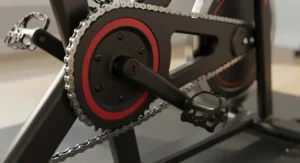
The chain-versus-belt debate is the single most common question anyone shopping a traditional spin bike will run into, and the honest answer is that neither is objectively “better” — they’re built for different priorities. A chain drive transfers power through a metal roller chain and sprocket, the same system used on actual bicycles, and that mechanical connection is what produces its slightly gritty, road-bike-authentic pedal feedback; it’s also generally cheaper to manufacture, which is why chain drives dominate the sub-$450 market. A belt drive, by contrast, uses a reinforced rubber or polyurethane belt, and it runs quieter, requires essentially no lubrication, and tends to last longer before needing part replacement — which is exactly why premium home bikes increasingly default to belts. What the spec sheet won’t tell you, but reviewers consistently note, is that the “smoother” belt-drive feel isn’t always a pure upgrade; some serious cyclists find belt drives feel numb or disconnected compared to the tactile resistance of a chain resistance bike, particularly during standing climbs. If long-term low maintenance and apartment-friendly quiet are your top priorities, lean belt. If authentic road-bike feedback and lower upfront cost matter more, a chain driven indoor cycling bike remains the smarter buy — and it’s worth noting that current federal activity guidance recommends at least 150 minutes of moderate aerobic activity weekly for adults, a target either drivetrain can help you hit consistently.
Common Mistakes When Buying a Chain Driven Indoor Cycling Bike
The single most common mistake is buying based on flywheel weight alone without checking resistance type — a heavy flywheel paired with a cheap felt pad still degrades within a year or two of regular use, while a lighter flywheel with quality magnetic resistance can outlast it. The second mistake is underestimating maintenance commitment; buyers who choose a chain drive purely for the lower price tag but never touch a lubrication bottle end up with a squeaky, rusted chain within six months, which is entirely preventable and entirely their own doing. Third, people frequently skip checking weight capacity against their actual household, not just themselves — a bike rated for 275 lbs feels noticeably different to a 260-lb rider than the same bike does to a 150-lb rider, even within the “rated” range. Fourth, shoppers often ignore assembly complexity, then get blindsided by a 100-lb box requiring two people and an hour of wrench work. Finally, and this one’s subtle: many buyers assume “chain drive” automatically means “louder than belt drive” and rule it out for apartment living, when in practice a well-lubricated 40-lb-flywheel chain bike like the Marcy Club Revolution XJ-3220 is genuinely quiet in day-to-day use — it’s an untended, dry chain that gets loud, not the mechanism itself.
What to Expect: Real-World Performance and Realistic Cycling Feel
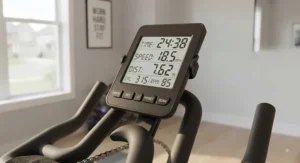
On paper, every bike on this list promises a “realistic cycling experience,” but what does that actually translate to once you’re twenty minutes into a workout? With a well-maintained chain drive, you’ll feel micro-vibrations through the pedals with every link passing over the sprocket — subtle, not disruptive, but enough that your legs register genuine mechanical resistance rather than the slightly detached glide of a belt system. Standing climbs are where the difference is most obvious: shifting your weight forward and driving down through the pedals produces a satisfying “bite” on a chain bike that closely mirrors mashing up an actual hill, whereas belt-driven bikes tend to smooth that sensation out. Noise-wise, expect a soft mechanical hum in the 45–55 decibel range on a properly lubricated budget bike — roughly comparable to a running refrigerator — climbing louder if the chain dries out or the bike sits on an unstabilized floor. Heat and sweat management matters more than most buyers expect too; bikes with the flywheel mounted toward the front, like several budget models here, are more exposed to sweat drips than rear-mounted designs like the Aviron Fit Bike, which keeps the drivetrain further from your dripping forehead during a hard interval.
Chain Driven Bikes for Studio-Quality Home Setups vs Gym-Style Training
There’s a meaningful difference between wanting studio-quality bikes for a calm, instructor-led home cycling ritual and wanting a gym-style spin bike built to survive daily abuse from multiple household members or a small training group. Studio-quality bikes prioritize a comfortable, ergonomic ride experience with smooth resistance transitions and often connected content — the Aviron Fit Bike exemplifies this end of the spectrum, essentially recreating a boutique studio class in your living room. Gym-style spin bikes, on the other hand, prioritize raw durability, wide adjustability, and resistance that scales with effort under repeated hard use — the AssaultBike Elite and Best Fitness BFSB5 both lean this direction, built more like commercial equipment than home decor. If your household includes teenagers, roommates, or anyone training for competitive events, the gym-style category’s heavier frames and simpler mechanical parts are genuinely easier and cheaper to maintain long-term than a studio-quality bike’s more delicate electronics. Conversely, if the bike lives in a bedroom corner and one person uses it consistently for calm, motivated sessions, studio-quality features earn back their premium in daily enjoyment.
Long-Term Cost & Maintenance of a Chain Resistance Bike
Total cost of ownership on a chain resistance bike extends well past the sticker price, and it’s worth running the numbers honestly before you commit. Budget roughly $8–$15 annually for chain lubricant if you maintain it properly every few weeks, plus an occasional felt-pad replacement (typically $15–$25) every 12–18 months on friction-resistance models like the Sunny Health & Fitness SF-B901. Compare that to a magnetic or electromagnetic bike like the Aviron Fit Bike, where resistance components essentially never wear out, but you’re instead paying $29 monthly for full content access — over three years, that’s roughly $1,044 in membership fees stacked on top of the hardware. Cost-per-use math favors the budget chain bikes heavily if you’re a consistent rider: a $300 bike used four times weekly for three years works out to under 50 cents per session, even accounting for maintenance parts. The premium bikes only pull ahead on value if the content and engagement genuinely keep you riding consistently — a $2,700 bike gathering dust after two months is objectively the worse investment, regardless of its specs.
Features That Actually Matter (And Those That Don’t)
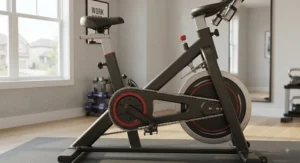
Flywheel weight, resistance consistency, and total adjustability genuinely matter — these directly determine ride quality and whether the bike fits your body correctly. A separate emergency brake lever matters more than marketing suggests too; it’s a real safety feature during high-cadence sprints. What matters far less than the marketing implies: built-in speaker systems, which are almost universally tinny and get replaced by a phone or Bluetooth speaker within weeks anyway. Elaborate app ecosystems matter only if you’ll actually use them consistently — plenty of riders buy a connected bike, use the app twice, and settle into riding with a podcast instead, in which case that premium was largely wasted. Water bottle holders, device shelves, and transport wheels are genuinely nice conveniences, but they shouldn’t be tiebreakers between two otherwise-different bikes; they’re standard enough across this price category that they rarely differentiate a good purchase from a mediocre one.
Frequently Asked Questions
❓ What is a chain driven indoor cycling bike?
❓ Is a chain drive or belt drive better for indoor cycling?
❓ How often should you lubricate a chain drive exercise bike?
❓ Are chain driven spin bikes noisy?
❓ How much does a good chain driven indoor cycling bike cost?
Conclusion
A chain driven indoor cycling bike isn’t the flashiest category in home fitness, but it’s arguably the most honest one — you’re buying the same fundamental mechanism that’s powered bicycles for well over a century, adapted for a stationary frame in your spare room. Whether that means the budget-friendly reliability of the Sunny Health & Fitness SF-B901, the bidirectional versatility of the Xspec Elite Indoor Cycling Bike, the gym-grade sturdiness of the Marcy Club Revolution XJ-3220 or Best Fitness BFSB5, the compact value of the Circuit Fitness AMZ-955BK, or the premium extremes of the AssaultBike Elite and Aviron Fit Bike, the right choice comes down to matching flywheel weight, resistance type, and maintenance tolerance to how you’ll actually train — not just which bike photographs best on a landing page. Treat the chain the way you’d treat any mechanical drivetrain: a few drops of lubricant every few weeks, a periodic bolt check, and it’ll reward you with years of that unmistakably real pedal feel that first drew you to this category. Whichever of these seven you land on, you’re getting genuine mechanical engineering, not a marketing gimmick, and that’s a rare thing to say about home gym equipment these days.
✨ Don’t Miss These Exclusive Deals!
🔍 Ready to bring that authentic road-bike feel into your home gym? Compare current pricing on any of the seven chain-driven bikes above and lock in the one that matches your training style before availability shifts.
Recommended for You
- Chain Drive Spin Bike: 7 Picks Riders Trust in 2026
- 7 Best Silent Belt Drive Bike Picks for Quiet Workouts (2026)
- Drive vs Chain Drive Bike: 7 Top Picks Compared (2026)
Disclaimer: This article contains affiliate links. As an Amazon Associate, I earn from qualifying purchases. If you purchase products through these links, we may earn a small commission at no additional cost to you.
✨ Found this helpful? Share it with your friends! 💬🤗
