
In This Article
✨Was this helpful? Spread the word! 🚀
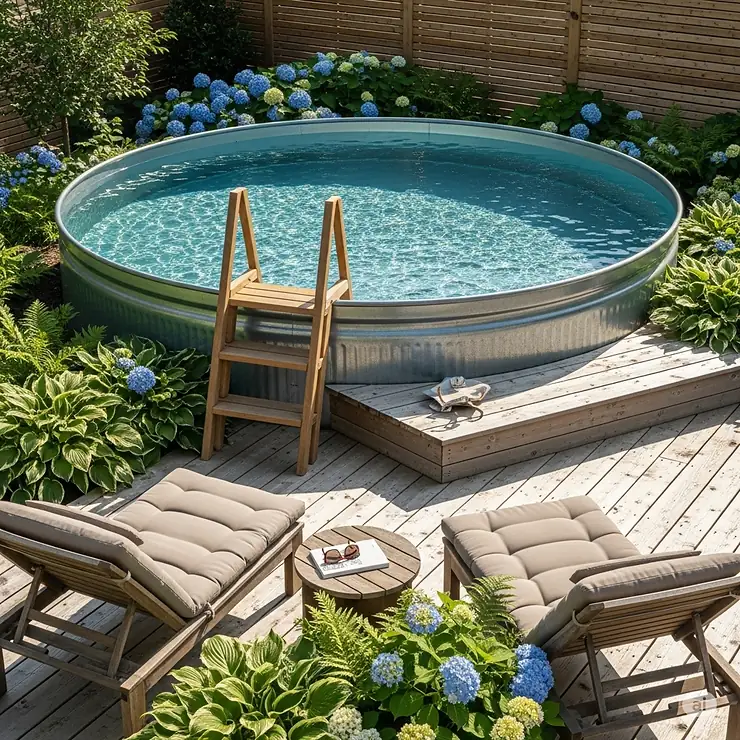
Converting your backyard into a refreshing oasis doesn’t require breaking the bank or months of construction. The large stock tank pool trend has revolutionized how Americans think about affordable, stylish swimming solutions. These versatile containers, originally designed for livestock watering, now provide families with an incredible way to beat the heat while adding rustic charm to outdoor spaces.

You might be wondering why large stock tank pools have become the hottest backyard trend across the United States. Actually, these pools offer a perfect blend of functionality, affordability, and Instagram-worthy aesthetics that traditional pools simply can’t match. Unlike expensive in-ground installations that can cost $50,000 or more, furthermore, a well-chosen large stock tank pool delivers immediate gratification at a fraction of the cost.
What makes large stock tank pools particularly appealing is their incredible versatility. Additionally, they serve multiple purposes beyond swimming – from ice baths and hot tubs to unique planters and water features. However, choosing the right large stock tank pool requires understanding the different materials, sizes, and features available in today’s market.
Quick Comparison: Top Large Stock Tank Pools
| Product | Material | Capacity | Dimensions | Price Range | Best For |
|---|---|---|---|---|---|
| Rubbermaid 300-Gallon | Structural Foam | 300 gallons | 63.25″L x 69″W x 25″D | $269-$399 | Durability & Longevity |
| Tarter 8′ Round WTR82 | Galvanized Steel | 700 gallons | 96″ diameter x 24″H | $549-$599 | Traditional Look |
| Behlen Country 8′ Round | Galvanized Steel | 706 gallons | 96″ diameter x 24″H | $529-$579 | Farm Authenticity |
| Hastings HP208 Poly | Polyethylene | 625 gallons | 96″ diameter x 28″H | $379-$429 | UV Resistance |
| Century Products CP82BLK | Polyethylene | 650 gallons | 96″ diameter x 30″H | $449-$499 | Modern Design |
| Hastings 10′ Plastic | HDPE Virgin Poly | 1100 gallons | 120″ diameter x 28″H | $699-$899 | Maximum Capacity |
💬 Just one click – help others make better buying decisions too!😊
⭐ Don’t Miss These Exclusive Deals!
→ Transform your backyard with these carefully selected large stock tank pools. Click on any highlighted product to check current pricing and availability. These pools will help you create the perfect outdoor oasis your family will love! 🏊♀️
Understanding Large Stock Tank Pool Materials and Construction
When selecting your ideal large stock tank pool, you’ll encounter three primary material options, each offering distinct advantages. Moreover, understanding these materials helps you make an informed decision based on your specific needs, budget, and aesthetic preferences.
Galvanized Steel: The Traditional Choice
Galvanized steel remains the most popular choice for large stock tank pools, particularly for those seeking an authentic rustic appearance. Consequently, brands like Tarter and Behlen have perfected their manufacturing processes over decades, producing tanks that withstand harsh agricultural conditions.
The Tarter 8′ Round WTR82 stands out as America’s most trusted large stock tank pool option. Subsequently, this 700-gallon powerhouse features 22-gauge hot-dipped galvanized steel construction with a poly vinyl floor for enhanced leak protection. Furthermore, its robust design means livestock can’t damage it, so your family’s swimming activities certainly won’t pose any problems.
What sets galvanized steel apart is its thermal properties. Specifically, these tanks heat up quickly in direct sunlight, extending your swimming season naturally. Additionally, the corrugated sidewalls provide superior structural integrity, preventing bowing even when filled to capacity with water and swimmers.
However, galvanized coatings can deteriorate over time, especially when exposed to pool chemicals. Therefore, many owners opt for plastic tank inserts or careful chemical management to preserve their investment.
Structural Foam: Modern Innovation
The Rubbermaid Commercial Products 300-Gallon tank represents cutting-edge structural foam technology. Actually, this injection-molded polyethylene construction creates a cellular structure that’s both lightweight and incredibly durable.
Unlike traditional plastics, structural foam resists weathering, cracking, and UV damage without requiring special treatments. Moreover, the seamless construction eliminates leak-prone joints and welds common in other designs. Nevertheless, the 300-gallon capacity makes it perfect for smaller families or as a secondary cooling station.
One significant advantage of structural foam is its resistance to pool chemicals. Specifically, chlorine won’t corrode or discolor the material, ensuring your large stock tank pool maintains its appearance year after year. Furthermore, the lighter weight makes installation and repositioning significantly easier than steel alternatives.
High-Density Polyethylene: Premium Performance
Premium polyethylene options like the Hastings HP208 deliver exceptional performance for discerning pool owners. Notably, virgin HDPE construction means no recycled materials compromise the tank’s integrity or safety.
These advanced plastics offer superior UV resistance compared to galvanized steel, maintaining their color and structural properties even under intense sunlight. Additionally, they’re completely immune to rust, corrosion, and chemical degradation.
The Century Products CP82BLK showcases modern poly tank design with its sleek black finish and increased depth options. Subsequently, the 30-inch height provides a more immersive swimming experience while maintaining the large stock tank pool aesthetic.

Top 7 Large Stock Tank Pool Products: Detailed Analysis
1. Rubbermaid Commercial Products 300-Gallon – The Reliable Workhorse
This industry-leading large stock tank pool has earned its reputation through decades of reliable performance. Specifically designed with a convenient 1.5-inch drain plug, moreover, the oversized drainage system simplifies cleaning and seasonal maintenance.
Specifications:
- Capacity: 300 gallons
- Dimensions: 63.25″L x 69″W x 25″D
- Material: Structural Foam
- Weight: Approximately 75 lbs empty
- Warranty: Limited manufacturer warranty
- Price Range: $269-$399
Customer reviews consistently praise its durability, with many reporting 10+ years of trouble-free service. However, some users note occasional drain valve leaking, which proper installation with plumber’s tape typically resolves.
Pros:
✅ Lightweight for easy positioning
✅ Chemical resistant construction
✅ Seamless design prevents leaks
✅ Multiple size options available
Cons:
❌ Smaller capacity than round options
❌ Oval shape limits seating arrangements
❌ Premium pricing for the capacity
2. Tarter 8′ Round WTR82 – America’s Favorite
The Tarter WTR82 represents the gold standard for large stock tank pools among serious enthusiasts. Built in Kentucky using American steel, consequently, this tank embodies traditional craftsmanship with modern manufacturing precision.
Specifications:
- Capacity: 700 gallons
- Dimensions: 96″ diameter x 24″ height
- Material: 22-gauge galvanized steel with poly vinyl floor
- Weight: Approximately 176 lbs empty
- Warranty: Manufacturing defect coverage
- Price Range: $549-$599
Agricultural heritage means this tank handles abuse that would destroy lesser alternatives. Furthermore, the poly vinyl floor eliminates rust concerns while maintaining authentic steel sidewalls.
Pros:
✅ Maximum durability for active families
✅ Authentic rustic appearance
✅ Excellent heat retention properties
✅ Proven track record over decades
Cons:
❌ Heavy weight requires multiple people for positioning
❌ Sharp edges need careful handling during installation
❌ Galvanized coating may require future maintenance
3. Behlen Country 8′ Round – Farm-Authentic Excellence
Behlen’s reputation in agricultural equipment extends perfectly to the large stock tank pool market. Essentially, their 706-gallon tank offers virtually identical capacity to Tarter while featuring subtle design differences that some owners prefer.
Specifications:
- Capacity: 706 gallons
- Dimensions: 96″ diameter x 24″ height
- Material: G90 galvanized steel with corrugated sidewalls
- Weight: Approximately 180 lbs empty
- Warranty: Manufacturing quality guarantee
- Price Range: $529-$579
The corrugated sidewalls provide exceptional structural strength while creating visual interest that enhances rustic appeal. Additionally, the heavy-duty construction ensures this large stock tank pool will serve multiple generations.
Pros:
✅ Slightly lower cost than comparable Tarter models
✅ Distinctive corrugated pattern adds character
✅ Excellent structural integrity
✅ Wide availability through farm supply stores
Cons:
❌ Limited color options
❌ Requires careful chemical balance management
❌ Installation requires substantial preparation
4. Hastings HP208 Poly – Modern Convenience
For more detailed information about plastic stock tank pool options, you might want to explore our comprehensive guide on material selection and longevity.
The Hastings HP208 represents the perfect compromise between traditional aesthetics and modern convenience. Specifically, the polyethylene construction eliminates rust concerns while maintaining the classic round large stock tank pool profile.
Specifications:
- Capacity: 625 gallons
- Dimensions: 96″ diameter x 28″ height
- Material: Virgin polyethylene with UV inhibitors
- Weight: Approximately 85 lbs empty
- Warranty: Limited warranty against manufacturing defects
- Price Range: $379-$429
The additional height compared to steel alternatives provides enhanced swimming depth while the lighter weight simplifies installation significantly.
Pros:
✅ Rust and corrosion proof
✅ Lighter weight than steel alternatives
✅ Enhanced UV protection
✅ Chemical resistant surface
Cons:
❌ May require additional structural support
❌ Limited color options
❌ Plastic appearance may not suit all tastes
5. Century Products CP82BLK – Contemporary Style
The Century Products CP82BLK brings contemporary design to the large stock tank pool category. Furthermore, the sleek black finish creates a sophisticated appearance that complements modern outdoor living spaces.
Specifications:
- Capacity: 650 gallons
- Dimensions: 96″ diameter x 30″ height
- Material: High-density polyethylene
- Weight: Approximately 95 lbs empty
- Warranty: Manufacturer’s limited warranty
- Price Range: $449-$499
The increased 30-inch height provides the deepest swimming experience available in standard large stock tank pools while maintaining manageable installation requirements.
Pros:
✅ Deepest standard option available
✅ Contemporary black finish
✅ Excellent chemical resistance
✅ Competitive pricing for capacity
Cons:
❌ Deeper height may require steps for children
❌ Black color shows debris more readily
❌ Limited availability in some regions
6. Hastings 10′ Plastic Round – Maximum Capacity Champion
When space allows and maximum capacity is your priority, consequently, the Hastings 10′ Plastic Round delivers an impressive 1,100 gallons of refreshing capacity.
Specifications:
- Capacity: 1,100 gallons
- Dimensions: 120″ diameter x 28″ height
- Material: 100% virgin HDPE
- Weight: Approximately 150 lbs empty
- Warranty: Manufacturing quality guarantee
- Price Range: $699-$899
This extra large stock tank pool accommodates larger families comfortably while providing space for swimming rather than just soaking.
Pros:
✅ Largest capacity in standard round format
✅ Superior polyethylene construction
✅ Accommodates 6-8 people comfortably
✅ Excellent value per gallon
Cons:
❌ Requires significant space for installation
❌ Higher shipping costs due to size
❌ May require additional filtration capacity
7. Behlen Country 78-Gallon – Compact Option
For those seeking a large stock tank pool experience in limited space, the Behlen Country 78-Gallon provides an entry-level option that’s perfect for testing the waters before committing to larger installations.
Specifications:
- Capacity: 78 gallons
- Dimensions: 36″ diameter x varying height
- Material: Galvanized steel
- Weight: Approximately 35 lbs empty
- Warranty: Standard manufacturing warranty
- Price Range: $99-$149
While technically smaller than other options, this tank offers the large stock tank pool experience for individuals, small children, or as an auxiliary cooling station.
Pros:
✅ Most affordable entry point
✅ Easy single-person installation
✅ Perfect for testing the concept
✅ Excellent for children or pets
Cons:
❌ Limited capacity for family use
❌ Requires frequent refilling
❌ Less swimming, more soaking
Industry-Specific Applications and Professional Use Cases
Beyond residential applications, large stock tank pools serve diverse professional and commercial purposes across multiple industries. Moreover, understanding these applications helps homeowners appreciate the versatility and quality standards these products must meet.
Agricultural and Livestock Operations
Obviously, large stock tank pools originated in agricultural settings where reliable water storage means survival for livestock operations. Specifically, ranchers require tanks that withstand extreme weather, aggressive animals, and continuous use without failure.
Professional ranchers report that quality tanks like the Tarter WTR82 serve cattle herds for decades without replacement. Furthermore, the ability to maintain water quality in challenging environments translates perfectly to backyard pool applications.
Aquaculture and Fish Farming
Commercial fish farming operations frequently utilize large stock tank pools for breeding, quarantine, and grow-out applications. Consequently, these systems require materials that won’t leach chemicals or affect water chemistry.
The Rubbermaid 300-Gallon tank’s structural foam construction makes it particularly suitable for aquaculture applications. Additionally, the seamless design eliminates crevices where harmful bacteria might accumulate.
Therapeutic and Wellness Centers
Cold water therapy and hydrotherapy facilities increasingly incorporate large stock tank pools into their treatment protocols. Specifically, the controlled environment allows precise temperature management for various therapeutic applications.
Professional testimonials from physical therapy centers highlight the durability required for continuous use. Moreover, easy cleaning and sanitization capabilities make these tanks ideal for medical applications.
Event and Hospitality Industries
Wedding venues, festivals, and hospitality businesses use large stock tank pools to create unique experiences for guests. Subsequently, the rustic aesthetic appeals to couples seeking authentic, Instagram-worthy wedding photos.
Event planners note that transportability allows them to create pop-up cooling stations at outdoor venues. Furthermore, the authentic appearance enhances themed events without requiring permanent installations.
Research and Educational Facilities
Universities and research institutions utilize large stock tank pools for aquatic research, student projects, and educational demonstrations. Specifically, the controlled environment allows researchers to study aquatic ecosystems in laboratory settings.
Educational applications require tanks that students can safely handle while maintaining professional durability standards. Additionally, the transparent nature of research requires chemical-resistant materials that won’t contaminate experiments.
Advanced Technical Analysis and Engineering Principles
Understanding the engineering principles behind large stock tank pool design helps owners make informed decisions and optimize their installations for maximum enjoyment and longevity.
Structural Engineering and Load Distribution
The physics governing large stock tank pool stability involves understanding hydrostatic pressure, weight distribution, and foundation requirements. Specifically, a 700-gallon tank weighs approximately 5,800 pounds when filled, creating substantial ground pressure.
Proper foundation preparation requires calculating load-bearing capacity based on soil composition and drainage characteristics. Furthermore, failure to provide adequate support can result in uneven settling, tank distortion, and catastrophic failure.
The corrugated sidewalls common in galvanized tanks serve as structural elements, distributing pressure loads more effectively than smooth walls. Additionally, the curved geometry naturally resists outward pressure forces better than rectangular designs.
Material Science and Durability Analysis
Modern large stock tank pool materials undergo rigorous testing to ensure they withstand ultraviolet radiation, temperature cycling, and chemical exposure. Specifically, UV stabilizers prevent polymer degradation that would otherwise cause brittleness and failure.
Galvanized coatings protect underlying steel through both barrier protection and galvanic action. However, pool chemicals can accelerate zinc consumption, particularly in improperly balanced water. Furthermore, understanding pH relationships helps extend coating life significantly.
Structural foam technology creates cellular structures that provide strength-to-weight ratios superior to solid plastics. Moreover, the closed-cell design prevents water absorption that would lead to freeze-thaw damage in cold climates.
Thermal Dynamics and Heat Transfer
Large stock tank pools demonstrate fascinating thermal behavior that affects user comfort and operating costs. Specifically, steel tanks conduct heat rapidly, warming quickly in sunlight but also losing heat efficiently at night.
The thermal mass of 700 gallons provides significant temperature stability once heated, moderating daily temperature swings. Additionally, dark-colored tanks absorb solar radiation more effectively than light-colored alternatives.
Heat retention strategies include thermal covers, wind barriers, and strategic positioning to maximize solar gain. Furthermore, understanding thermal dynamics helps optimize pool location for extended seasonal use.
Filtration and Water Quality Engineering
Proper filtration system sizing depends on bather load, environmental factors, and desired water quality standards. Specifically, the CDC recommends complete water turnover every 6-8 hours for recreational pools.
Large stock tank pools require filtration systems capable of handling the unique challenges of smaller water volumes with potentially high bather density. Moreover, the limited depth affects chemical distribution and mixing patterns.
Circulation patterns in round tanks create different flow dynamics than traditional rectangular pools. Consequently, proper inlet and outlet positioning ensures adequate water movement and chemical distribution throughout the system.
Comprehensive Setup and Installation Guide
Successful large stock tank pool installation requires careful planning, proper preparation, and attention to safety details that ensure years of trouble-free enjoyment.
Site Selection and Preparation
Choosing the optimal location for your large stock tank pool involves evaluating multiple factors including sun exposure, drainage, accessibility, and aesthetic integration with existing landscaping.
Ideal locations receive 6-8 hours of direct sunlight daily to maximize natural heating while avoiding low-lying areas where standing water might accumulate. Furthermore, proximity to electrical service simplifies pump and lighting installation.
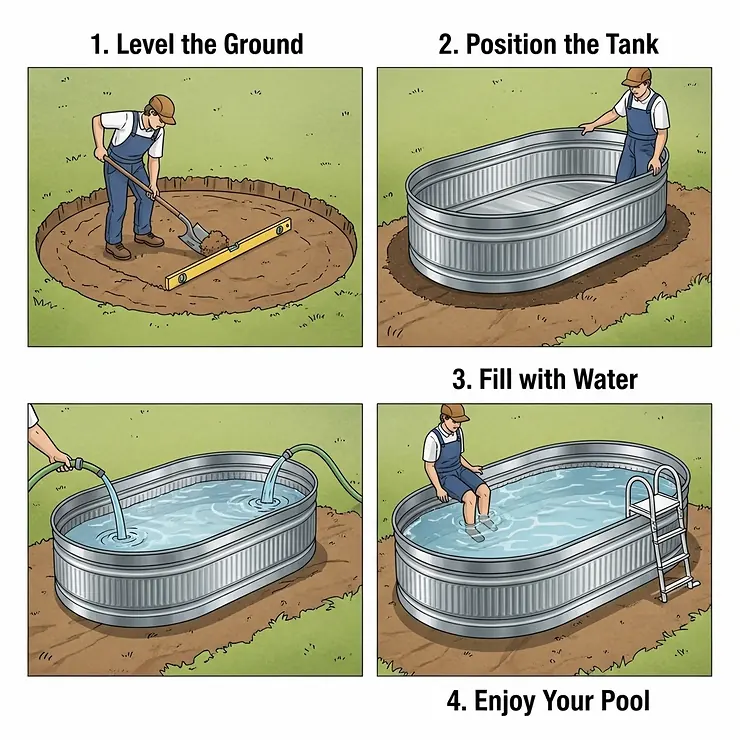
Ground preparation begins with removing all vegetation and organic material that might decompose and create settling. Subsequently, excavating 2-4 inches below grade provides a level foundation while improving drainage around the perimeter.
Foundation Requirements and Base Preparation
Professional installation standards require a foundation capable of supporting the full weight of water, swimmers, and dynamic loads from use. Specifically, compacted gravel bases provide excellent drainage while distributing loads evenly.
The foundation should extend at least 6 inches beyond the tank perimeter on all sides to prevent edge loading and provide access for maintenance. Additionally, landscape fabric beneath the gravel prevents weed growth while maintaining drainage.
Proper grading ensures water drains away from the tank rather than pooling around the base. Moreover, French drains or other subsurface drainage may be necessary in areas with poor natural drainage.
Filtration System Installation
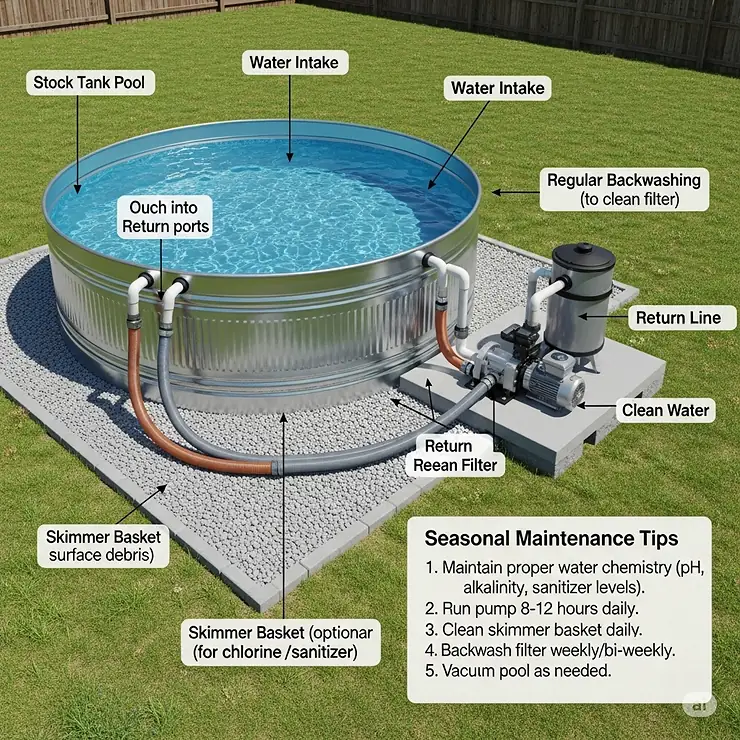
Modern large stock tank pools require professional-grade filtration systems to maintain water quality and swimmer safety. Specifically, systems must circulate the entire pool volume multiple times daily while removing debris and contaminants.
The most popular choice, the Intex sand filter system, provides excellent performance when properly sized for your tank’s capacity. Furthermore, installation requires cutting precise holes for inlet and outlet fittings using appropriate hole saws.
Skimmer installation significantly improves surface cleaning capability while the bottom drain ensures complete water circulation. Additionally, proper plumbing techniques prevent leaks that could undermine the foundation.
Electrical and Safety Considerations
All electrical installations around large stock tank pools must comply with local codes and National Electrical Code requirements for swimming pool installations. Specifically, GFCI protection is mandatory for all electrical equipment.
Professional electricians should handle all electrical connections, particularly for 220V pumps and heating systems. Moreover, proper grounding and bonding protect against electrical hazards that could prove fatal.
Emergency shutoff switches must be easily accessible from the pool area while remaining secure from accidental activation. Furthermore, proper lighting enhances safety during evening use.
Chemical System Startup
Initial water treatment establishes the foundation for ongoing water quality management throughout the swimming season. Specifically, proper pH adjustment and sanitizer levels prevent algae growth and ensure swimmer safety.
Testing and adjusting total alkalinity first provides pH stability that simplifies ongoing maintenance. Subsequently, establishing proper chlorine levels according to CDC guidelines protects against waterborne illnesses.
Initial shocking with higher chlorine concentrations eliminates any contaminants introduced during filling and installation. Additionally, allowing 24-48 hours before swimming ensures chemical levels stabilize within safe ranges.
Maintenance Schedules and Longevity Optimization
Proper maintenance extends large stock tank pool life while ensuring safe, enjoyable swimming experiences. Moreover, understanding maintenance requirements helps budget for ongoing costs and plan seasonal activities.
Daily Maintenance Routines
Daily inspections take only minutes but prevent minor issues from becoming major problems. Specifically, checking water levels, skimming surface debris, and monitoring equipment operation maintains optimal conditions.
Water level monitoring prevents pump damage from running dry while ensuring proper skimmer operation. Furthermore, maintaining proper levels prevents stress on tank walls from uneven water pressure.
Temperature monitoring helps optimize chemical dosing since higher temperatures accelerate chemical consumption and bacterial growth. Additionally, daily temperature logs help identify equipment problems before they cause damage.
Weekly Deep Cleaning Protocols
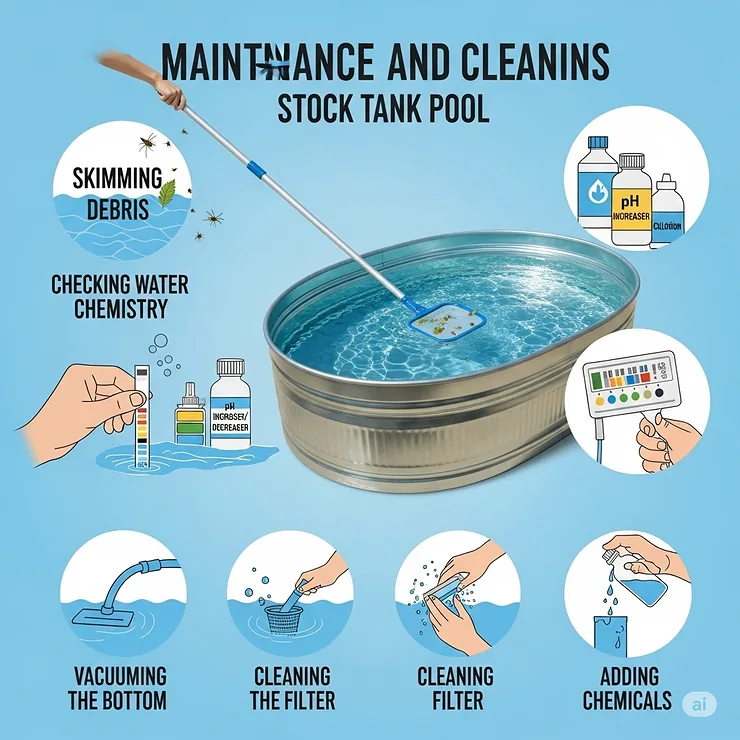
Weekly maintenance involves more thorough cleaning and water testing to ensure continued water quality and system performance. Specifically, comprehensive testing includes pH, chlorine, total alkalinity, and calcium hardness measurements.
Brushing tank walls and bottom removes biofilm and algae before they become visible problems. Moreover, thorough brushing improves chemical effectiveness by exposing contaminants to sanitizers.
Filter cleaning or replacement maintains flow rates and filtration effectiveness while extending equipment life. Furthermore, proper filter maintenance prevents pressure buildup that could damage pump components.
Monthly System Inspections
Monthly inspections focus on equipment condition, foundation stability, and potential problems that develop gradually over time. Specifically, pump inspections include checking for leaks, unusual noises, and proper pressure readings.
Tank inspections examine the structure for signs of stress, corrosion, or damage that might require attention. Additionally, foundation inspections ensure proper drainage and stability.
Chemical system inspections verify proper equipment operation while checking supply levels for upcoming needs. Moreover, reviewing chemical consumption patterns helps optimize dosing schedules.
Seasonal Preparation and Winterization
Seasonal maintenance varies significantly between climates, with northern installations requiring comprehensive winterization while southern locations may operate year-round.
Winterization in freezing climates requires completely draining the system and protecting equipment from freeze damage. Specifically, removing all water from pumps, filters, and plumbing prevents expensive freeze damage.
Tank protection during winter storage includes proper covering to prevent debris accumulation while allowing air circulation. Furthermore, securing covers prevents wind damage while protecting the tank surface.
Spring startup reverses the winterization process while inspecting for any damage that occurred during storage. Additionally, thorough cleaning and fresh water filling prepare the system for another season of enjoyment.
Troubleshooting Common Issues
Understanding common problems and their solutions prevents frustration while maintaining water quality and system performance. Specifically, cloudy water usually indicates filtration problems, chemical imbalances, or excessive bather loads.
Algae growth typically results from inadequate sanitizer levels, poor circulation, or excessive nutrients from environmental contamination. Moreover, addressing the underlying cause prevents recurring problems.
Equipment problems often develop gradually, making early detection and intervention crucial for preventing costly repairs or replacements. Furthermore, maintaining spare parts for common wear items minimizes downtime.
Comparative Analysis: Large Stock Tank Pools vs Traditional Alternatives
Understanding how large stock tank pools compare to traditional swimming options helps homeowners make informed decisions based on their specific needs, budgets, and property constraints.
Cost Analysis: Initial Investment and Long-term Ownership
Traditional in-ground pools typically cost $35,000-$65,000 for professional installation, not including ongoing maintenance, utilities, and eventual renovation needs. In contrast, a complete large stock tank pool setup costs $1,000-$3,000 including the tank, filtration, and basic accessories.
The dramatic cost difference allows families to enjoy swimming benefits immediately rather than saving for years to afford traditional pool installation. Furthermore, the lower investment reduces financial risk while providing flexibility to upgrade or relocate as needs change.
Operating costs favor large stock tank pools significantly due to smaller water volumes requiring less chemical treatment and energy for circulation. Additionally, the ability to drain and refill seasonally eliminates expensive water treatment and chemical balancing required for year-round operation.
Maintenance costs for traditional pools include professional service, expensive equipment replacement, and potential structural repairs that can exceed the complete cost of a large stock tank pool system. Moreover, homeowner’s insurance premiums often increase substantially with traditional pool installations.
Installation Timeline and Complexity
Professional pool installation typically requires 6-12 weeks from permitting to completion, depending on weather, soil conditions, and contractor availability. Conversely, motivated homeowners can complete large stock tank pool installation in a weekend with basic tools and preparation.
The simplified installation process eliminates the need for heavy excavation equipment, specialized contractors, and complex permitting requirements that delay traditional pool projects. Furthermore, the ability to relocate or modify the installation provides flexibility unavailable with permanent pools.
Traditional pools require extensive site preparation including utility marking, excavation, and often significant landscaping restoration. Additionally, access requirements for construction equipment may necessitate temporary fencing removal or landscape destruction.
Large stock tank pools require minimal site disturbance while providing the flexibility to experiment with different locations before committing to permanent landscaping integration. Moreover, the installation process actually improves property drainage when properly executed.
Performance and User Experience Comparison
Swimming performance differs significantly between large stock tank pools and traditional alternatives, with each offering distinct advantages for different users and activities.
Traditional pools excel for serious swimming, diving, and athletic training due to their size, depth, and lane configurations. However, most residential pools primarily serve as social gathering spaces rather than athletic facilities.
Large stock tank pools optimize social interaction through their circular design that encourages conversation and shared experiences. Furthermore, the intimate size creates a more relaxed atmosphere that many families prefer over the formality of traditional pools.
Water temperature management favors large stock tank pools due to their smaller volume and enhanced solar heating capability. Additionally, the ability to drain and refill with warmer water provides immediate temperature control unavailable with larger pools.
Safety considerations vary between pool types, with large stock tank pools offering enhanced supervision capability due to their compact size. Moreover, the limited depth reduces diving risks while remaining suitable for swimming and water exercise.
Integration with Outdoor Living Spaces
Modern outdoor living emphasizes flexibility, sustainability, and authentic experiences that align perfectly with large stock tank pool characteristics. Specifically, the rustic aesthetic complements natural landscaping and sustainable design principles.
Traditional pools often dominate outdoor spaces, requiring significant design accommodation and limiting landscape flexibility. Conversely, large stock tank pools integrate naturally into existing landscapes while enhancing rather than overwhelming outdoor environments.
The ability to relocate large stock tank pools seasonally allows optimization for different activities and seasonal sun patterns. Furthermore, winter storage options free up space for other seasonal activities like outdoor dining or fire pits.
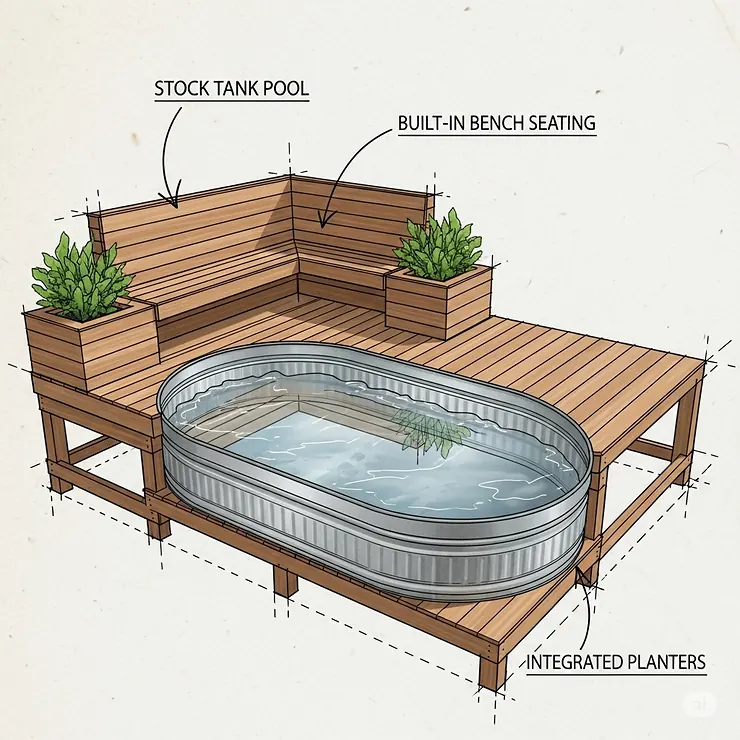
Landscape integration opportunities include surrounding deck construction, privacy screening, and complementary water features that enhance the overall outdoor experience. Additionally, the authentic agricultural aesthetic appeals to current design trends emphasizing natural materials and sustainable practices.
Case Studies and Real-World Success Stories
Examining actual installations and user experiences provides valuable insights into the practical benefits and potential challenges of large stock tank pool ownership.
Family Recreation: The Johnson Family Experience
The Johnson family in Austin, Texas transformed their backyard with a Tarter 8′ Round WTR82 that has provided five years of reliable service. Initially skeptical about the 700-gallon capacity, they discovered that the compact size actually enhanced family bonding by encouraging closer interaction.
Their installation included a surrounding deck with built-in seating, strategic landscaping for privacy, and a simple filtration system that maintains crystal-clear water with minimal effort. Moreover, their teenagers prefer the unique aesthetic over traditional pools at friends’ houses.
Total investment including the tank, filtration, deck construction, and landscaping totaled $4,200 compared to $45,000 quotes for traditional pool installation. Furthermore, their property taxes didn’t increase since the installation doesn’t constitute a permanent improvement.
The family reports year-round use in their climate, with winter sessions becoming a unique experience that neighbors often request to join. Additionally, the ability to quickly heat the smaller water volume extends their swimming season significantly.
Wellness and Therapy: Mountain View Recovery Center
Mountain View Recovery Center in Colorado incorporated multiple large stock tank pools into their holistic treatment program, utilizing both hot and cold water therapy protocols. Specifically, they installed three Rubbermaid 300-Gallon tanks for different temperature applications.
The structural foam construction proved ideal for continuous use while resisting damage from frequent chemical treatment required for medical applications. Moreover, the seamless design simplifies sanitization protocols required in healthcare settings.
Patient feedback consistently rates the authentic, non-clinical atmosphere as therapeutic in itself, contrasting sharply with traditional hospital-style hydrotherapy equipment. Furthermore, the outdoor installation provides nature connection that enhances treatment effectiveness.
Operational costs remain minimal compared to traditional hydrotherapy pools, allowing the center to offer services that would otherwise be economically unfeasible. Additionally, the modular approach allows capacity adjustment based on seasonal demand.
Commercial Entertainment: Rustic Roots Event Venue
Rustic Roots Event Venue in Nashville created a unique attraction using multiple large stock tank pools of varying sizes for their wedding and event services. Subsequently, their installation became a signature feature that books events months in advance.
Their fleet includes two Hastings HP208 tanks and one Century Products CP82BLK positioned strategically around their venue for both aesthetic appeal and functional use. Moreover, the polyethylene construction withstands continuous use while maintaining appearance.
Event feedback consistently highlights the unique photo opportunities and authentic atmosphere created by the installation. Furthermore, the ability to relocate tanks allows customization for different event types and sizes.
Revenue generation from the enhanced booking demand recovered the complete installation cost within the first season. Additionally, maintenance costs remain minimal compared to traditional water features or permanent pool installations.
Urban Oasis: The Metropolitan Rooftop Project
A Chicago apartment building created a unique rooftop amenity using carefully selected large stock tank pools designed to withstand urban wind loads and weight restrictions. Specifically, the building management chose multiple Hastings 10′ Plastic tanks for maximum capacity while minimizing structural loading.
Engineering analysis confirmed that the distributed loading approach met structural requirements while providing residents with a unique amenity unavailable in competing buildings. Moreover, the polyethylene construction eliminated corrosion concerns from urban air pollution.
Resident satisfaction surveys rank the rooftop pools as the most valued amenity, contributing to reduced turnover and premium rental rates. Furthermore, the unique feature generates significant social media attention that aids marketing efforts.
Operational success led to expansion plans for the building management company’s other properties, demonstrating the commercial viability of creative large stock tank pool applications.
Agricultural Innovation: Heritage Farm Agritourism
Heritage Farm in Virginia leveraged their agricultural background to create an agritourism experience featuring large stock tank pools alongside traditional farm activities. Consequently, visitors experience authentic farm life while enjoying modern recreational amenities.
Their installation uses original Behlen Country tanks still serving livestock during weekdays while transforming into family swimming areas for weekend visitors. Moreover, the authentic agricultural setting provides educational value alongside recreation.
Visitor feedback consistently praises the authentic experience that contrasts sharply with artificial tourist attractions. Furthermore, the integration of traditional and recreational uses demonstrates practical sustainability principles.
Revenue diversification helped the farm maintain agricultural operations while providing stable income that supports traditional farming activities. Additionally, the educational component introduces urban families to agricultural heritage and sustainable practices.
Future Trends and Market Evolution
The large stock tank pool market continues evolving rapidly as manufacturers innovate and consumers discover new applications for these versatile products.
Emerging Technologies and Innovation Directions
Smart pool technology increasingly integrates with large stock tank pools through app-controlled chemical monitoring, automated dosing systems, and remote temperature management. Specifically, these innovations bring traditional pool convenience to the more affordable platform.
Solar heating systems designed specifically for large stock tank pools provide extended season use while maintaining the sustainable, off-grid appeal that attracts many users. Moreover, integrated heating elements eliminate the complexity of external heat exchangers.
Advanced filtration technologies including UV sterilization and ozone generation offer chemical-free water treatment options that appeal to environmentally conscious users. Furthermore, these systems reduce ongoing chemical costs while improving water quality.
Modular accessories including integrated seating, cup holders, and entertainment systems transform basic tanks into complete outdoor entertainment centers. Additionally, quick-connect systems simplify seasonal setup and breakdown.
Market Trends and Consumer Behavior Evolution
Consumer preferences increasingly favor authentic, sustainable experiences over artificial alternatives, driving continued growth in the large stock tank pool market. Specifically, social media influence showcases creative installations that inspire new applications.
Urbanization trends create demand for compact recreation solutions suitable for smaller yards and alternative spaces like rooftops and courtyards. Moreover, rental properties benefit from amenities that don’t require permanent installation or major investment.
The wellness movement drives interest in cold water therapy, ice baths, and hydrotherapy applications that large stock tank pools accommodate perfectly. Furthermore, the ability to quickly change water temperature supports various therapeutic protocols.
Economic uncertainty encourages consumers to seek affordable alternatives to expensive traditional installations while maintaining quality of life improvements. Additionally, the lower commitment level appeals to increasingly mobile lifestyles.
Sustainability and Environmental Considerations
Environmental consciousness drives innovation in eco-friendly materials, chemical-free treatment options, and energy-efficient accessories. Specifically, manufacturers respond to consumer demand for sustainable recreation solutions.
Water conservation benefits include the ability to recycle pool water for landscape irrigation, reducing total household water consumption compared to traditional pools. Moreover, seasonal draining allows participation in drought conservation efforts.
Local manufacturing of tanks and accessories reduces transportation impacts while supporting regional economies. Furthermore, the durability of quality tanks reduces replacement frequency and associated environmental costs.
Integration with renewable energy systems including solar heating and filtration creates completely off-grid recreation solutions. Additionally, the lower energy requirements make renewable power systems economically viable.
Personalization and Customization Possibilities
Custom tank modifications including integrated planters, lighting systems, and decorative elements allow homeowners to create unique installations that reflect personal style. Specifically, the agricultural foundation provides authentic rustic appeal while accepting modern enhancements.
Color customization through painting, wraps, or powder coating allows integration with any design aesthetic while maintaining functional performance. Moreover, advanced coating systems provide enhanced durability and weather resistance.
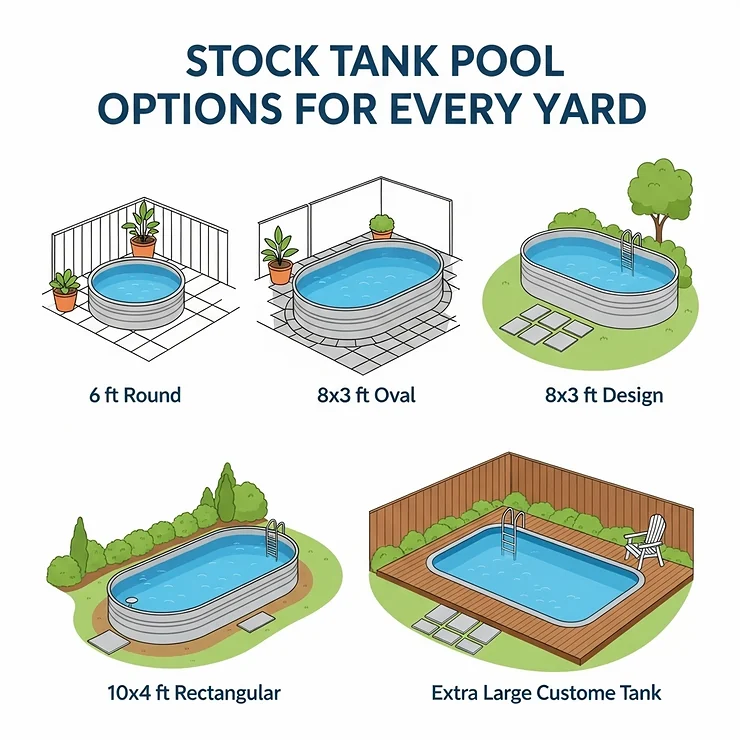
Size customization through multiple tank installations creates complex recreational areas suitable for larger families or entertainment purposes. Furthermore, different tank sizes accommodate various activities from children’s play to adult relaxation.
Integrated landscaping designs transform simple tank installations into complete outdoor living environments that rival expensive traditional installations. Additionally, the flexibility allows seasonal modifications and continuous improvement.
Industry Predictions and Upcoming Developments
Market growth projections indicate continued expansion as more consumers discover the benefits of large stock tank pools over traditional alternatives. Specifically, word-of-mouth recommendations drive adoption faster than traditional advertising.
Manufacturer consolidation may reduce product diversity while improving quality standards and availability. However, the agricultural foundation ensures multiple suppliers will continue serving this growing market.
Regulatory development may address safety standards, installation requirements, and water quality guidelines specific to residential tank pool installations. Moreover, standardization could simplify permitting and insurance considerations.
International expansion opportunities exist as global consumers seek affordable recreation solutions suitable for diverse climates and economic conditions. Furthermore, the agricultural heritage translates easily across cultural boundaries.
Investment Decision Framework and Purchase Strategy
Making the optimal large stock tank pool investment requires systematic evaluation of needs, constraints, and available options to ensure maximum satisfaction and value.
Needs Assessment and Requirements Analysis
Family size and age distribution significantly influence optimal tank selection, with larger families benefiting from increased capacity while smaller households might prefer compact convenience. Specifically, planning for 75-100 gallons per regular user provides comfortable capacity.
Usage patterns affect tank selection, with frequent swimmers benefiting from deeper options while occasional users might prefer easier entry and exit. Moreover, intended activities including exercise, relaxation, or entertainment influence size and accessory requirements.
Climate considerations affect material selection, heating requirements, and seasonal use planning. Furthermore, understanding local weather patterns helps optimize tank placement and accessory selection for maximum seasonal enjoyment.
Available space constraints include not only footprint requirements but also access for installation, maintenance, and potential future relocation. Additionally, utility access for electrical and water connections affects placement options and installation costs.
Budget Planning and Financial Analysis
Total cost analysis includes the tank purchase price, delivery, foundation preparation, filtration equipment, electrical installation, and ongoing maintenance expenses. Specifically, budgeting 50-75% of tank cost for complete installation provides realistic expectations.
Financing options through retailers, credit cards, or home improvement loans allow larger installations while managing cash flow impact. Moreover, the lower total investment compared to traditional pools reduces financial risk and qualification requirements.
Seasonal cost distribution includes higher setup costs during installation followed by modest ongoing expenses for chemicals, utilities, and replacement parts. Furthermore, the ability to drain seasonally reduces winter utility costs in northern climates.
Return on investment considerations include property value impact, recreation value, and health benefits that justify the expenditure. Additionally, the relatively low investment provides excellent value for the recreation and lifestyle benefits received.
Vendor Selection and Purchase Process
Authorized dealer networks provide better warranty support, installation advice, and ongoing parts availability compared to discount retailers. Specifically, agricultural suppliers often provide superior customer service due to their experience with tank applications.
Online retailers offer competitive pricing and broader selection but may lack local support for installation questions or warranty issues. Moreover, shipping costs for large tanks can eliminate apparent savings from online purchases.
Direct manufacturer purchases provide the best warranty coverage while ensuring authentic products rather than counterfeit alternatives. Furthermore, manufacturers often provide installation guidance and technical support unavailable elsewhere.
Local availability varies significantly by region, with agricultural areas providing better selection and pricing than urban markets. Additionally, transportation costs increase substantially when tanks must be shipped long distances.
Installation Planning and Project Management
Professional installation provides guaranteed results while eliminating homeowner liability for potential problems. Specifically, contractors experienced with tank installations understand foundation requirements and electrical safety considerations.
DIY installation saves significant costs while providing personal satisfaction but requires careful attention to safety and local code requirements. Moreover, homeowner installation maintains complete control over quality standards and timeline.
Phased installation approaches allow spreading costs over time while testing the concept before committing to complete systems. Furthermore, starting with basic installations allows learning and optimization before adding expensive accessories.
Seasonal timing affects both cost and installation ease, with spring installations providing optimal soil conditions while fall installations allow winter planning and preparation. Additionally, contractor availability varies seasonally in many markets.
Quality Assurance and Performance Monitoring
Initial performance testing includes water quality verification, equipment operation checking, and safety inspection before regular use begins. Specifically, allowing 48-72 hours for chemical stabilization ensures safe swimming conditions.
Ongoing monitoring establishes baseline performance metrics that help identify developing problems before they require expensive corrections. Moreover, regular documentation helps optimize chemical usage and maintenance schedules.
Warranty registration and documentation preservation protects against future problems while ensuring available recourse for defective products. Furthermore, maintaining installation records helps with future modifications or troubleshooting.
Performance optimization continues throughout ownership as users discover preferences and seasonal variations that affect operation. Additionally, gradual improvements often provide better results than attempting perfect installation initially.
FAQs: Large Stock Tank Pool Questions Answered
❓ How long do large stock tank pools typically last with proper maintenance?
❓ What's the minimum space required for installing an 8-foot large stock tank pool?
❓ Can I heat my large stock tank pool during colder months?
❓ Do large stock tank pools require special permits or inspections?
❓ What's the best way to keep my large stock tank pool water crystal clear?
⭐ Transform Your Backyard Today!
→ Ready to create your perfect outdoor oasis? These carefully selected large stock tank pools offer unbeatable value and years of family enjoyment. Click on any highlighted product to check current pricing and availability! 🏊♀️✨
Recommended for You
- 7 Best Plastic Stock Tank Pool Options for Ultimate Backyard Fun in 2025
- 7 Best Pool Screen Enclosure Solutions for Ultimate Protection in 2025
- 7 Best Swimming Pool Screen Enclosures That Transform Your Backyard in 2025
Disclaimer: This article contains affiliate links. If you purchase products through these links, we may earn a small commission at no additional cost to you.
✨ Found this helpful? Share it with your friends! 💬🤗
