
In This Article
✨Was this helpful? Spread the word! 🚀
Listen, I get it. You’ve probably walked past your pool a hundred times, squinting at that grimy waterline and promising yourself you’ll deal with it “next weekend.” But here’s the thing about pool tile scum – it doesn’t wait for your schedule. That stubborn white ring around your pool’s waterline? It’s not just unsightly. It’s a combination of calcium deposits, body oils, sunscreen residue, and mineral buildup that’s basically laughing at your regular cleaning routine.
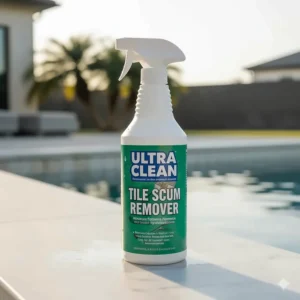
I remember the first time I tried tackling my pool’s scum line with dish soap and a regular brush. Spoiler alert: it was an absolute disaster. After three hours of scrubbing that left my arms feeling like noodles, I’d barely made a dent. That’s when I discovered that cleaning pool tile scum isn’t about elbow grease alone – it’s about using the right cleaner for the job.
A proper pool tile scum remover works by chemically breaking down those stubborn deposits rather than forcing you to scrape them off manually. Whether you’re dealing with fresh scum buildup or years-old calcium scaling, there’s a specialized product designed to tackle your specific problem. The market offers everything from gentle spray-on solutions to heavy-duty industrial formulas, and honestly, knowing which one to choose can feel overwhelming.
In this comprehensive guide, we’ll explore the seven best tile scum removers for pools that actually deliver results. We’ll break down what makes each product unique, who should use them, and how to get the most bang for your buck. According to the Centers for Disease Control and Prevention, maintaining clean pool surfaces isn’t just about aesthetics – it’s crucial for water quality and swimmer safety.
Quick Comparison Table
| Product | Best For | Price Range | Application Time | Surface Type |
|---|---|---|---|---|
| Guardian Pool & Tile Cleaner | Heavy calcium buildup | $25-$65 | 1-7 days | All surfaces |
| CLR Calcium, Lime & Rust Remover | Multi-purpose cleaning | $5-$15 | 2 minutes | Non-porous only |
| STAR BRITE Waterline Cleaner | Oily scum & sunscreen | $12-$18 | 30 seconds | Multiple surfaces |
| Bio-Dex #300 Tile Cleaner | Professional-grade | $20-$30 | 5-10 minutes | Tile, stone, concrete |
| EasyCare Scaletec Plus | Preventative treatment | $30-$45 | 2-4 weeks | All pool surfaces |
| LayorCare Heavy Calcium Releaser | Thick calcium deposits | $25-$35 | Multiple applications | Outdoor surfaces |
| US Pumice Pool Blok | Manual scrubbing | $8-$15 | Immediate | Tile, concrete, grout |
💬 Just one click – help others make better buying decisions too!😊
Top 7 Pool Tile Scum Remover Products: Expert Analysis
1. Guardian Pool & Tile Cleaner
Let me tell you about a game-changer. Guardian Pool & Tile Cleaner isn’t your average pool cleaner – it’s specifically engineered to target calcium carbonate, which is the primary culprit behind that white, crusty waterline. What sets this remover for pool tile scum apart is its biodegradable formula that actually works while you’re doing something else.
The science behind Guardian is pretty fascinating. Instead of using harsh mineral acids, it binds specifically with calcium molecules, breaking apart the entire deposit structure. This means you’re not just dissolving the surface layer – you’re getting deep into older, stubborn buildup. Customers consistently report visible results after just one application, though heavier scaling requires weekly treatments.
Key Specifications:
- Available sizes: 32 oz ($28), 1 quart ($30), 1 gallon ($45), 2 gallons ($65)
- pH-neutral, non-corrosive formula
- Biodegradable and environmentally friendly
Customer Feedback: Pool owners love that this remover for scum on pool tile works progressively without constant scrubbing. One verified buyer noted: “After spending $1,500 on professional quotes, I tried Guardian and eliminated my calcium ring for under $50.” However, some customers mention it takes multiple applications for decades-old scaling.
Pros:
✅ Targets calcium specifically without harsh acids
✅ Safe for tile glaze, grout, and pool equipment
✅ Works continuously after application
Cons:
❌ Requires patience for heavy buildup
❌ Not effective on porous natural stone
2. CLR Calcium, Lime & Rust Remover
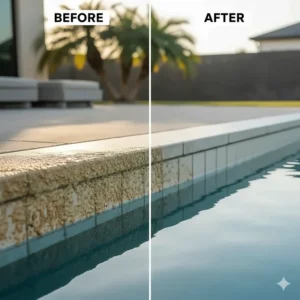
Now, here’s where things get interesting. While CLR isn’t specifically marketed as a tile scum remover for pool use, it’s become a secret weapon for many pool owners dealing with light to moderate calcium deposits. Part of the EPA’s Safer Choice Program, CLR offers a more accessible option you can grab at your local hardware store.
Here’s the catch though – CLR works fast, which is both its superpower and its kryptonite. You get exactly two minutes from application to rinse-off. Any longer and you risk etching your tile glaze. This makes CLR perfect for quick maintenance cleaning but less ideal for severe buildup situations. It’s particularly effective as a pool tile scum line remover for newer deposits.
Key Specifications:
- Multiple sizes: 28 oz ($5), 26 oz spray 2-pack ($11-$13)
- Fast-acting formula (2-minute maximum contact time)
- Multi-surface capabilities beyond pool use
Customer Feedback: Users appreciate the versatility and quick results. According to reviews, CLR shines on glass, stainless steel, and ceramic surfaces. The downside? It’s not formulated for pool tiles specifically, and the manufacturer explicitly warns against use on natural stone or galvanized metals.
Pros:
✅ EPA Safer Choice certified
✅ Widely available and affordable
✅ Effective on multiple surface types
Cons:
❌ Cannot be used on pool tiles per manufacturer
❌ Requires strict time limits to prevent etching
❌ May produce toxic fumes if mixed with chlorine
3. STAR BRITE Home Pool Waterline Cleaner
Here’s something different: STAR BRITE specializes in removing the greasy, oily scum that comes from sunscreen, body oils, and perspiration – not calcium deposits. If you’re looking for a pool tile waterline scum remover that tackles that grimy film above your waterline, this is your answer.
The formula is acid-free, which means you can use it freely without worrying about damaging vinyl liners or fiberglass surfaces. Just spray it on, wait 30 seconds, wipe with the included Magic Sponge, and rinse. It’s almost too easy. However, and this is crucial, STAR BRITE explicitly does NOT remove calcium or hard water buildup. Think of it as a scum remover pool tile cleaner for organic deposits, not mineral ones.
Key Specifications:
- 32 oz spray bottle ($12-$18)
- Acid-free, no harsh fumes
- Includes Star brite Magic Sponge for application
Customer Feedback: Pool owners rave about how quickly it removes that sun-baked scum line. One reviewer noted: “My dark blue tiles look brand new after just one application.” The limitation? You’ll need a different product for calcium deposits – this is strictly for organic buildup.
Pros:
✅ Safe for vinyl, tile, fiberglass, and plaster
✅ Fast 30-second application time
✅ No harsh chemical smell
Cons:
❌ Does NOT remove calcium or mineral deposits
❌ Not for printed vinyl liners or painted surfaces
4. Bio-Dex #300 Tile Cleaner
Welcome to the professional-grade category. Bio-Dex #300 is what pool service technicians reach for when they encounter serious calcium problems. This gel-like formula contains a mixture of hydrochloric, phosphoric, and hydrofluoric acids – which sounds terrifying because it kind of is. You absolutely need personal protective equipment for this one.
The viscosity of Bio-Dex #300 is its secret weapon. Unlike liquid cleaners that drip and run, this thick gel stays exactly where you put it, giving it time to dissolve even stubborn calcium scaling. Professional pool cleaners consistently rate it as one of the most effective removers for pool tile scum when dealing with severe cases. Just remember: this is serious chemistry that demands respect and proper safety measures.
Key Specifications:
- 1 quart bottle ($20-$30)
- Professional-grade acid blend
- Gel consistency for vertical surfaces
Customer Feedback: According to Trouble Free Pool community members, Bio-Dex #300 “dissolves scale that other products can’t touch.” However, the hydrofluoric acid component makes it dangerous – it doesn’t burn skin immediately but absorbs and destroys underlying tissue.
Pros:
✅ Professional strength for severe calcium
✅ Gel formula sticks to vertical surfaces
✅ Trusted by pool service professionals
Cons:
❌ Requires PPE (gloves, goggles, ventilation)
❌ Contains dangerous hydrofluoric acid
❌ Not suitable for DIY beginners
5. EasyCare Scaletec Plus Descaler and Stain Remover
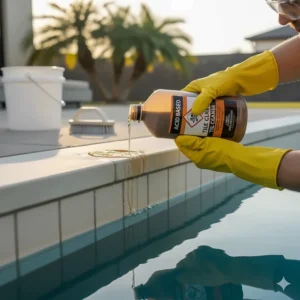
Now we’re talking about prevention as much as cure. EasyCare Scaletec Plus represents a completely different approach to pool tile scum removal. Instead of scrubbing and spot-treating, you pour this directly into your pool water and let it work systemically over 2-4 weeks.
The Synertec formula uses super-sequestration technology (fancy term for grabbing onto calcium molecules) to dissolve scale from surfaces and redissolve it into pool water where your filter can catch it. It’s non-acidic, which means it’s safer to handle and won’t damage any pool surface type. Plus, it actually protects and cleans salt cell generators, optimizing chlorine output. For maintaining clean tiles rather than emergency cleaning, this scum remover for pool tiles offers unbeatable convenience.
Key Specifications:
- 64 oz bottle ($30-$45) treats up to 20,000 gallons
- Non-acidic, virtually phosphate-free (2.4%)
- Provides 3 months of protection after initial treatment
Customer Feedback: Users appreciate the “set it and forget it” approach. One review stated: “One bottle cleared my 18,000-gallon pool’s scaling in four weeks with zero scrubbing.” The trade-off is patience – results take weeks, not hours. Some customers with severe old scaling needed multiple bottles.
Pros:
✅ No scrubbing or pool draining required
✅ Safe for all pool surface types
✅ Protects equipment and salt cells
Cons:
❌ Results take 2-4 weeks to appear
❌ Multiple bottles needed for severe cases
❌ Higher upfront cost than spray cleaners
6. LayorCare Heavy Calcium Releaser
When you’re facing truly stubborn calcium deposits, LayorCare Heavy Calcium Releaser enters the chat. This product is designed specifically for heavy, thick calcium buildup on pool tiles, decks, natural stone, and rock water features. It’s ready-to-use straight from the bottle with no mixing required.
What makes LayorCare different is its approach to thick deposits. While some products try to dissolve calcium, LayorCare works by penetrating and loosening even old, hardened scale. The formula is non-toxic and won’t affect your pool’s pH balance, which is a huge plus. One quart covers approximately 75 square feet, making it economical for targeted tile cleaning rather than whole-pool treatment.
Key Specifications:
- 1 quart bottle ($25-$35)
- Ready-to-use, no dilution needed
- Non-toxic, pH-neutral formula
Customer Feedback: Reviews are mixed. Some users report excellent results on stubborn deposits, while others found it required “a lot of work for a small area.” The consensus seems to be that it works best when combined with mechanical scrubbing – it softens the calcium so you can remove it more easily with a brush or pumice stone.
Pros:
✅ Targets heavy calcium specifically
✅ Won’t change pool water chemistry
✅ Safe for natural stone and rock features
Cons:
❌ Still requires scrubbing before and after
❌ Multiple applications often necessary
❌ More expensive per ounce than competitors
7. US Pumice Pool Blok (PB-12)
Let’s wrap up with the OG of pool tile cleaning tools. US Pumice Pool Blok isn’t a chemical cleaner at all – it’s natural volcanic pumice stone formed into blocks that physically abrade away calcium deposits, rust, mold, and stains. Sometimes, you just need good old-fashioned friction.
The beauty of pumice is its unique property: it’s hard enough to remove stubborn deposits but soft enough that it wears down as you use it, conforming to your tile’s shape. It’s eco-friendly, non-toxic, chemical-free, and won’t affect your pool’s pH balance. Pool maintenance experts often recommend pumice as the final step after chemical treatments to remove any remaining fine scale.
Key Specifications:
- Pack of 2 blocks ($8-$15)
- 100% natural pumice stone
- Safe for tile, grout, concrete, and gunite
Customer Feedback: According to pool professionals on industry forums, pumice stones work best on ceramic and porcelain tiles but should be avoided on glass tiles or high-gloss surfaces. Users appreciate that it provides immediate results – you can literally see the calcium coming off as you scrub. However, it’s labor-intensive and can take “hours for heavy scaling.”
Pros:
✅ Chemical-free, eco-friendly option
✅ Immediate visible results
✅ Very affordable
Cons:
❌ Labor-intensive manual scrubbing
❌ Can scratch glass tile and glazed surfaces
❌ Wears down quickly on severe deposits
🛒 Ready to Restore Your Pool’s Sparkle?
These top-rated pool tile scum removers are just a click away! Each product offers unique benefits for different cleaning needs. Check current prices and availability on Amazon to find the perfect solution for your pool. Start your transformation today! ✨
Understanding Pool Tile Scum: What’s Really Happening
Ever wondered why some pools develop that nasty white ring while others stay pristine? The answer lies in understanding the chemistry of pool tile scum formation. According to water chemistry experts, scum buildup results from a perfect storm of conditions that most pool owners inadvertently create.
The Science Behind Calcium Scaling
Calcium scaling occurs when your pool water’s calcium hardness levels exceed 400 parts per million (ppm). As water evaporates at the waterline, it leaves behind concentrated minerals that crystallize on your tile surface. The technical term is “calcium carbonate precipitation,” but you can just call it annoying.
Here’s what actually happens: when water evaporates, dissolved solids like calcium, salt, and silicates can’t evaporate with it. They’re left behind in increasingly concentrated forms until they precipitate out of solution and bond to your tile surface. This process is driven by concentration changes, not chemical imbalances, which explains why even perfectly balanced pools develop waterline scale over time.
Organic vs. Mineral Scum
Not all scum is created equal, and this is where many pool owners go wrong with their cleaning approach. Organic scum comes from body oils, sunscreen, cosmetics, and perspiration. This creates that greasy, yellowish film you see just above the waterline. Mineral scum, on the other hand, is the white, chalky calcium carbonate we’ve been discussing.
The crucial difference? Organic scum requires a degreaser or surfactant-based cleaner (like STAR BRITE), while mineral deposits need acid-based or chelating agents (like Guardian or Bio-Dex). Using the wrong type of remover pool tile scum cleaner is like trying to cut steak with a spoon – technically possible but wildly inefficient.
Why Your Regular Pool Cleaner Doesn’t Work
Your standard pool maintenance chemicals are designed to sanitize water, not remove bonded calcium deposits. Chlorine kills bacteria and algae. pH balancers keep water chemistry stable. But neither of these products contains the chelating agents or acids necessary to break calcium’s molecular bonds with tile surfaces.
Think of it this way: regular pool chemicals maintain your water’s cleanliness, while specialized tile cleaners tackle surface deposits. They’re complementary tools, not substitutes. This is why pool professionals always recommend a separate tile scum remover pool maintenance routine alongside your regular chemical treatment.
How to Choose the Best Pool Tile Scum Remover
Picking the right scum remover for pool tiles involves more than grabbing the first bottle you see. After working with dozens of products and talking to pool maintenance professionals, I’ve developed a framework for making the smartest choice. Let’s break it down systematically.
Assess Your Deposit Type
First things first: what exactly are you dealing with? Walk up to your pool and run your fingernail across the scum line. If it feels greasy or oily and your nail glides across it, you’re dealing with organic buildup from body oils and sunscreen. If it feels rough, crusty, and your nail catches on it, that’s mineral calcium deposits.
Here’s a pro tip: pour a capful of white vinegar or pool acid slowly over a small affected area. Does it bubble and fizz? That’s newer calcium carbonate reacting. No reaction? You’ve got older, harder scale or possibly organic scum. This simple test tells you whether you need a calcium-specific remover pool tile scum product or an organic scum cleaner.
Consider Your Tile Material
Not all tiles can handle aggressive cleaners. Glass tiles are particularly sensitive and can be scratched by pumice stones or etched by strong acids. Natural stone tiles require pH-neutral, acid-free cleaners to avoid discoloration or surface damage. Ceramic and porcelain tiles are more forgiving but can still be damaged by prolonged acid exposure.
Check your pool’s installation documents to identify your tile type. If you’re unsure, assume the more delicate option and choose a gentler cleaner. You can always upgrade to a stronger product if needed, but you can’t undo damage from an overly aggressive first attempt with a tile scum remover pool cleaner.
Evaluate Buildup Severity
Be honest with yourself about the condition of your tiles. Fresh scum that’s accumulated over a few weeks responds to gentle spray-on cleaners like STAR BRITE or diluted CLR. Moderate buildup from a season or two needs intermediate products like Guardian that work progressively. Heavy scaling that’s years old? You’re looking at professional-grade options like Bio-Dex #300 or the systematic approach of EasyCare Scaletec Plus.
A good rule of thumb: if you can’t easily scratch off the deposit with your fingernail, you’re dealing with moderate to heavy buildup. If it’s so thick you can measure its depth, you need the big guns. Don’t waste money on weak products that can’t handle your situation.
Safety and Application Considerations
How much hands-on involvement do you want? Some people don’t mind spending a Saturday scrubbing their pool tiles with proper protective equipment. Others would rather pour something in the water and walk away for a month. There’s no wrong answer, but your preference should guide your product choice.
Products like EasyCare Scaletec Plus offer convenience at the cost of patience – results take weeks but require zero scrubbing. Chemical cleaners like Guardian or Bio-Dex provide faster results but demand more active application and safety precautions. Pumice stones give immediate feedback but require significant physical effort.
Also consider your sensitivity to chemical fumes and your ability to maintain proper ventilation. If you have respiratory issues or work in a confined pool area, avoid acid-based cleaners and opt for acid-free alternatives like STAR BRITE or the gentler formulations of Guardian.
Step-by-Step Application Guide for Pool Tile Scum Removers
Preparing Your Pool and Workspace
Before you apply any remover for pool tile scum, proper preparation saves time and prevents problems. Start by lowering your pool’s water level about 4-6 inches below the tile line you’re cleaning. This gives you full access to the problem area and prevents your cleaner from being immediately diluted by pool water.
Gather your supplies: the cleaner of choice, appropriate brushes or sponges (soft nylon for delicate tiles, scotch-brite pads for tougher surfaces), a garden hose for rinsing, and personal protective equipment. For chemical cleaners, that means chemical-resistant gloves, safety goggles, and old clothes you don’t mind staining. Work on an overcast day or during cooler hours – some cleaners can evaporate too quickly in direct hot sun, reducing effectiveness.
Set up proper ventilation if you’re using acid-based products. If your pool area is enclosed or has poor airflow, consider using a fan to direct fumes away from your breathing zone. Never work alone when using professional-grade chemicals like Bio-Dex #300 – have someone nearby in case of accidents.
Application Techniques for Chemical Cleaners
For spray-on products like Guardian or STAR BRITE, work in small sections about 3-4 feet wide. Apply the cleaner liberally across the tile, ensuring complete coverage of scum deposits. Different products have different “dwell times” – the period you let them sit before scrubbing or rinsing. Guardian can be left indefinitely, actually working better over several days. STAR BRITE needs just 30 seconds. CLR demands exactly 2 minutes maximum.
With gel-based cleaners like Bio-Dex #300, use a sponge or brush to apply a thick layer directly to the calcium deposits. The gel’s thickness is its advantage – it won’t drip or run, maintaining constant contact with the deposit. Apply it, let it sit for the recommended time, then use a Scotch-Brite pad or soft brush to loosen remaining deposits before rinsing thoroughly.
For water-added treatments like EasyCare Scaletec Plus, follow the dosing chart precisely. Pour the product around your pool’s perimeter, then run your pump for 24 hours to distribute it evenly. Lower your chlorine level to 1-3 ppm and avoid shocking your pool during the treatment period. After 2-4 weeks, you’ll notice scale falling away from tiles as you brush them during regular maintenance.
Scrubbing and Rinsing Best Practices
Once your chemical cleaner has done its job softening deposits, it’s time for mechanical removal. Use overlapping circular motions rather than straight back-and-forth scrubbing – this provides more consistent pressure and better results. Apply moderate, steady pressure; you’re not trying to sand the glaze off your tiles, just remove the loosened scale.
For pumice stones, wet both the stone and the tile surface before starting. Use light to moderate pressure and let the stone’s abrasive properties do the work. You’ll see calcium coming off in a white powder – that’s what success looks like. Replace or flip your pumice block when it becomes smooth, as it loses effectiveness once worn down.
Rinsing is critical, especially with acid-based cleaners. Use a garden hose with good pressure to thoroughly flush away both the cleaner and dissolved deposits. Work from top to bottom so dirty rinse water doesn’t run back over cleaned areas. With products like Bio-Dex #300 or CLR, rinsing must be thorough and immediate to prevent tile damage from overexposure.
Post-Treatment Pool Maintenance
After successfully removing tile scum, refill your pool to its normal level. Test and balance your water chemistry, paying particular attention to calcium hardness levels. If your calcium hardness is above 400 ppm, consider partially draining and refilling with fresh water to prevent immediate re-scaling. According to pool chemistry guidelines, ideal calcium hardness ranges from 200-400 ppm.
Run your pool’s circulation system for at least 24 hours after treatment to help remove any dissolved deposits floating in the water. Vacuum the pool thoroughly and clean your filter – it’s likely caught a lot of the calcium and debris you’ve removed from tiles. Backwash or clean your filter as needed.
Establish a regular tile maintenance schedule to prevent future buildup. A quick weekly scrub with your regular pool brush can prevent most scum accumulation. For chemical-free maintenance, products like EasyCare Scaletec Plus can be added monthly at a maintenance dose (1 oz per 1,000 gallons) to keep tiles scale-free indefinitely.
Common Mistakes When Using Pool Tile Scum Removers
Choosing the Wrong Product for Your Situation
I see this constantly: someone grabs CLR because it’s cheap and available, then wonders why it damaged their expensive glass tiles. Or they buy STAR BRITE hoping to remove calcium deposits, then complain when it doesn’t work. The biggest mistake in using any scum remover pool tile cleaner is mismatching product to problem.
Remember our earlier discussion: organic scum needs degreasers, calcium deposits need chelating agents or acids, and different tile types tolerate different chemicals. Using an acid-based cleaner on natural stone or glass tile can permanently etch the surface. Applying a degreaser to calcium scale is like using a butter knife on concrete – ineffective and frustrating.
Before purchasing any product, read both its intended use AND its contraindications. Don’t let marketing copy seduce you; pay attention to what surfaces it’s safe for and what types of deposits it removes. When in doubt, test on a small, inconspicuous area first. That 2-inch test spot could save you from destroying 200 linear feet of expensive pool tile.
Ignoring Safety Precautions
Here’s something that needs to be said bluntly: professional-grade pool chemicals can seriously hurt you. Acid-based cleaners like Bio-Dex #300 aren’t scary because of legal liability; they’re scary because hydrofluoric acid absorbed through skin can destroy underlying tissue without you immediately feeling it. This isn’t fear-mongering – it’s chemistry.
Yet I’ve watched pool owners spray acid cleaners in enclosed areas without ventilation, wearing shorts and flip-flops. I’ve seen people mix different cleaners hoping for better results, creating toxic fume cocktails. Never mix chemicals. Never work without proper PPE. Never assume “just a quick job” doesn’t require safety measures. One of the most common incidents with pool chemicals involves eye exposure – something completely preventable with basic safety goggles.
Also, remember that even “safer” EPA-certified products deserve respect. Some pool tile scum removers can cause skin irritation or respiratory issues in sensitive individuals. Read and follow safety instructions, not because they’re legally required, but because they’re based on actual adverse event reports from people who didn’t.
Impatience and Over-Application
This one gets people every time with products like Guardian or Scaletec Plus. The instructions say “results in 2-4 weeks,” but after three days of not seeing dramatic changes, people either give up or assume they need to double-dose. Neither approach works well.
Chemical cleaners need time to break molecular bonds between calcium and your tile surface. That process doesn’t happen instantly, especially with old, thick deposits. Over-applying product wastes money and can actually impede effectiveness – more isn’t always better in chemistry. With Guardian, for example, the product works best when applied and left, then reapplied weekly. Constant reapplication doesn’t speed things up.
Conversely, some people think one application of a quick-acting product should solve years of neglect. If your tile hasn’t been properly cleaned in five years, one bottle of anything probably won’t fully restore it. Set realistic expectations based on your starting condition and follow the manufacturer’s recommended treatment schedule for best results.
Neglecting Prevention After Cleaning
You’ve just spent hours and significant money restoring your pool tiles to their former glory. The hard work is done, right? Wrong. Without establishing a preventive maintenance routine, you’ll be back to square one within months. This might be the costliest mistake of all – not in immediate dollars, but in wasted effort and repeated expense.
After successfully removing tile scum, the smart move is implementing a regular tile care routine. This doesn’t mean weekly deep cleaning with harsh chemicals. It means brushing your tiles during regular pool maintenance, maintaining proper water chemistry (especially calcium hardness), and using monthly maintenance doses of preventive products like Scaletec Plus.
Many pool owners clean their tiles once, feel great about the results, then completely ignore them until the problem returns. It’s like only cleaning your house when guests are coming – technically possible, but much harder than regular upkeep. A five-minute weekly tile brush-down prevents the need for another four-hour chemical treatment session.
Cost Analysis: What to Expect When Buying Pool Tile Scum Removers
Initial Investment Breakdown
Let’s talk dollars and sense. A 32 oz bottle of Guardian runs about $28, treating roughly 800-1,000 square feet of tile with light to moderate buildup. If you’ve got a standard residential pool with approximately 150 linear feet of tile, one bottle might handle your entire perimeter – or might not, depending on deposit severity.
Meanwhile, a 2-pack of CLR at $11-$13 seems like a steal until you realize its 2-minute maximum contact time means you’re cleaning about 10 square feet per application before frantically rinsing. For that same 150 feet of tile, you could need 6-8 bottles, bringing your real cost to $33-$52. Suddenly Guardian looks more economical despite its higher per-unit price.
EasyCare Scaletec Plus at $30-$45 per 64 oz bottle treats up to 20,000 gallons but might require 3-6 bottles for a heavily scaled pool of that size. That’s $90-$270 for a single treatment. However, after initial cleanup, you only need maintenance doses costing about $12-$15 monthly. Over a season, that’s actually cheaper than multiple applications of spot treatments.
Long-Term Maintenance Costs
Here’s where the real financial picture emerges. One-time cleaning products like Guardian or Bio-Dex require re-purchase only when problems return. If you’re diligent about water chemistry and regular maintenance, that might be once per year or less – call it $30-$50 annually.
Preventive products like Scaletec Plus require ongoing investment but eliminate the need for intensive cleaning sessions. At 1 oz per 1,000 gallons monthly, a 64 oz bottle maintains a 20,000-gallon pool for about 3 months. That’s roughly $45 per year in maintenance doses, but you’re saving potentially $200-$500 in professional tile cleaning services or your own labor costs.
Pumice stones seem incredibly affordable at $8-$15 per 2-pack, but consider the hidden cost: your time and physical effort. If it takes four hours to scrub your entire pool’s tile line with pumice, and you value your time at even $20/hour, that’s an $80 “labor cost” on top of the $15 product cost. Suddenly, a $45 pour-and-wait product doesn’t seem expensive at all.
DIY vs. Professional Service Comparison
Professional pool tile cleaning typically costs $2-$6 per linear foot, depending on your region and deposit severity. For 150 feet of tile, you’re looking at $300-$900 per service. Bead blasting services (the most effective professional method) often exceed $1,000 for a full pool perimeter.
Compare that to DIY costs: even buying multiple premium products like Guardian ($50), Bio-Dex ($30), pumice stones ($15), and safety equipment ($25) totals about $120. That’s less than half the cost of even a basic professional cleaning. If your DIY attempt successfully cleans your tiles, you’ve saved several hundred dollars.
However, there’s a breakeven point. If your scaling is so severe that DIY methods only partially work, you might spend $120 on products, invest 8+ hours of labor, and still need to hire professionals afterward. In such cases, going straight to professional service makes more financial sense. Honestly assess your situation: moderate buildup from 1-2 years is usually DIY-friendly; severe scaling from 5+ years of neglect often requires professional intervention regardless of product choice.
Environmental and Health Considerations
Eco-Friendly Options
Not everyone wants to dump harsh chemicals around their pool, especially if you have kids, pets, or environmental concerns. Products like Guardian Pool & Tile Cleaner and EasyCare Scaletec Plus specifically market their biodegradable, eco-friendly formulations. But what does that actually mean in practical terms?
Guardian uses renewable resources and doesn’t contain phosphates, brighteners, or harsh mineral acids like muriatic (hydrochloric), phosphoric, or oxalic acid. Its formula is designed to meet Federal BioPreferred standards, meaning it contains bio-based ingredients from renewable sources rather than petroleum-derived chemicals. When you rinse Guardian off your tiles, you’re not introducing heavy metals or persistent pollutants into your pool or surrounding environment.
Scaletec Plus is virtually phosphate-free (2.4%) and non-acidic, making it safer for aquatic environments if your pool water eventually drains to a natural watershed. However, “eco-friendly” doesn’t mean “completely harmless” – these products still alter chemical conditions and should be used according to instructions. The environmental advantage is primarily in biodegradability and reduced toxicity compared to industrial-grade acid cleaners.
Safety for Swimmers and Pets
A common question: when can people swim after using a tile scum remover pool treatment? The answer varies dramatically by product. Surface-applied cleaners like Guardian or STAR BRITE only require thorough rinsing before swimming can resume – typically within an hour after treatment. You’re cleaning a small area, rinsing thoroughly, and not significantly affecting pool water chemistry.
Water-added products like Scaletec Plus allow immediate swimming after application because they’re designed to be safe at recommended concentrations. The product works systemically at low parts-per-million levels that don’t irritate skin or eyes. This makes it particularly appealing for families with young children or frequent pool use.
On the flip side, acid-based products like Bio-Dex #300 require completely different handling. Any direct contact with skin demands immediate, prolonged flushing with water. Areas treated with Bio-Dex should be thoroughly rinsed before anyone touches them, and the product should never enter pool water in concentrated form. If you’re working with pets that might lick treated surfaces, acid-based cleaners pose serious risks that milder alternatives don’t.
Proper Disposal Methods
What do you do with leftover product or rinse water? Never pour concentrated pool chemicals down storm drains – they often lead directly to natural waterways without treatment. For surface-applied cleaners, rinse water naturally enters your pool or surrounding lawn, where it’s dramatically diluted. This is generally acceptable for biodegradable products, but check local regulations, especially in drought-prone areas with strict water usage rules.
Leftover product in bottles can usually be stored according to manufacturer guidelines for future use. Keep them in their original containers, tightly sealed, away from heat and sunlight. Store acids and alkalis separately – never on the same shelf where a leak could cause them to mix. Most liquid pool chemicals maintain effectiveness for 1-2 years when properly stored.
For disposal of empty containers, rinse them thoroughly with water (allowing rinse water to enter your pool for dilution) before recycling if local programs accept chemical containers. Never repurpose empty chemical containers for food, beverages, or other household uses – residue can remain even after washing, creating serious cross-contamination risks.
Frequently Asked Questions
❓ Can I use regular household cleaners like vinegar or baking soda to remove pool tile scum?
❓ How often should I use a pool tile scum remover to maintain clean tiles?
❓ Will pool tile scum removers harm my pool's finish or equipment?
❓ What's the difference between calcium scale and algae on pool tiles?
❓ Can I prevent pool tile scum from forming in the first place?
Conclusion
Choosing the right pool tile scum remover doesn’t have to feel overwhelming once you understand the fundamentals. We’ve explored seven distinct products, each with specific strengths: Guardian for calcium-focused cleaning, CLR for quick multi-purpose use (despite manufacturer warnings), STAR BRITE for organic scum, Bio-Dex for professional-grade challenges, Scaletec Plus for systematic prevention, LayorCare for heavy deposits, and pumice for chemical-free abrasion.
Your ideal choice depends on three factors: deposit type (organic vs. mineral), buildup severity (light to heavy), and tile material (glass, ceramic, natural stone). Light organic scum responds beautifully to STAR BRITE’s 30-second application. Moderate calcium buildup suits Guardian’s progressive approach. Severe, years-old scaling might demand Bio-Dex’s professional-grade formula or Scaletec Plus’s systematic water treatment.
Remember that effective tile maintenance combines the right product with proper technique and realistic expectations. No cleaner instantly erases five years of neglect in one application. Similarly, even the best remover for pool tile scum won’t maintain results without proper water chemistry and regular maintenance. Balance your approach: intensive cleaning when necessary, preventive maintenance consistently, and periodic assessment of your pool’s specific needs.
The real secret? Start treatment as soon as you notice buildup. That faint white line appearing at your waterline responds to gentle cleaners and minimal effort. Wait until it’s a quarter-inch-thick calcium crust, and you’re committing to hours of work or professional service costs. Your pool is an investment worth protecting, and clean tiles dramatically improve both aesthetics and property value.
🎯 Transform Your Pool Today!
Don’t let stubborn scum ruin another pool season. The products we’ve reviewed are proven solutions used by thousands of satisfied pool owners. Click any highlighted product name to check current pricing and customer reviews. Your sparkling clean pool is just a few clicks away! 🏊♂️💦
Recommended for You
- Pool Tile Cleaning Brush: 7 Best Choices for 2025
- Best Automatic Pool Cleaner Above Ground: 7 Top Picks 2025
- Pool Vacuum Head: 7 Top Picks for 2025
Disclaimer: This article contains affiliate links. If you purchase products through these links, we may earn a small commission at no additional cost to you.
✨ Found this helpful? Share it with your friends! 💬🤗
